Deep into Kontos: Simplicity is the ultimate sophistication — one gateway to effortlessly accessible chain abstraction
TechFlow Selected TechFlow Selected
Deep into Kontos: Simplicity is the ultimate sophistication — one gateway to effortlessly accessible chain abstraction
No need to worry about private keys or recovery phrases, no need to consider whether there's enough gas fee on the destination chain, supports cross-chain transactions and transfers.
 Navigating Web3 tides with focused insights
By TechFlow
The wheels of history roll forward, but not everything progresses.
In February 2014, Bitcoin ATMs began appearing at Boston’s train station. You didn’t need to understand how they worked—just insert cash, enter your address, and the BTC you bought would be sent directly to your wallet.
Back then, there was no Ethereum, no L1s or L2s. Everything was slow, yet simple enough.

Now it's July 2024, and things have become complicated. Imagine a user boarding a high-speed train from that same Boston station, traveling through ten years of technological evolution, full of hope, only to arrive in today’s crypto world—what would they encounter?
They might struggle to take even a single step.
Hundreds of L1s and L2s now claim their own territories, competing for attention and liquidity. Meanwhile, users must master seed phrases, signatures, authorizations, cross-chain transfers, gas deposits, differences between EVM and non-EVM chains—and more.
For users, this is nothing short of regression and torment.
Ten years later, transaction demand has only grown; yet our experience in the crypto world may be worse than during Bitcoin’s primitive early days.
Amid calls to “make everything simpler,” the term chain abstraction has never drawn more attention. Industry pioneers see it as a white knight—the key technology to rescue us from fragmented user experiences in the multi-chain era.
While “chain abstraction” frequently appears in high-level technical discussions, we’d rather see tangible products that immediately improve real-world user experience—and ideally, ones that are extremely simple.
With this mindset, searching for a dark horse that makes chain abstraction truly elegant and minimal, Kontos caught our eye:
The first ZKP-powered, user-centric omnichain infrastructure. No need to worry about private keys or seed phrases, no need to pre-fund gas on target chains—full support for cross-chain trading and transfers.
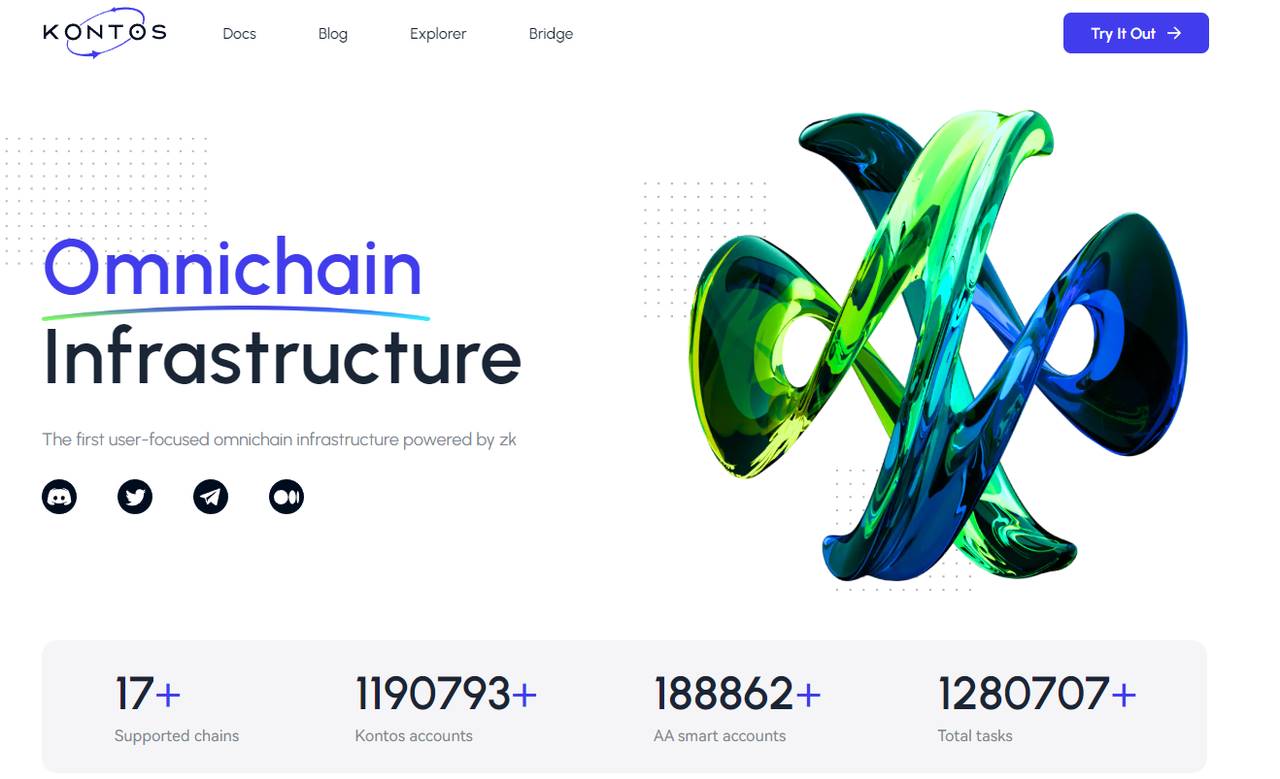
More importantly, when using Kontos, you only see one intuitive entry point—everything else is abstracted away behind the scenes, much like that old Bitcoin ATM at the train station: intent equals outcome, thought equals action.
After a decade of twists and turns, a cycle returns—simple products often win the market.
If you're interested in such products and the concept of chain abstraction, let’s dive into this piece together—to find remedies for broken user experiences within the evolution of chain abstraction, and explore how Kontos achieves true simplicity.
Simple Transactions: The Foundation of Chain Abstraction
Before diving into Kontos’ specific product features, it’s worth understanding more about chain abstraction itself.
When did you first hear the term “chain abstraction”?
A narrative gains traction only when rooted in genuine pain points—even if some adopt it sincerely while others merely ride the hype. As Illia, NEAR’s co-founder, astutely observed earlier this year:
"End users don't care about underlying blockchains. They just want apps to work."
This simple, fundamental desire feels unattainable amid today’s complex Web3 landscape. We have countless chains to choose from, endless modules to use, and abundant assets to play with—yet precisely because of this abundance, we face increasing friction caused by fragmented liquidity and modularized functionality.
You must carefully manage multiple wallets and seed phrases, master various cross-chain bridges, reserve gas fees on desired chains, and figure out what exactly distinguishes one L1 from another L2.
But really—should this be something ordinary users need to understand?
No other industry expects its users to master so many technical skills. In most industries, users are gods—simply served well;
But in Web3, users are forced into becoming experts—constantly vigilant, technically literate, and self-reliant due to exposed complexity, cumbersome operations, and frequent accidents.
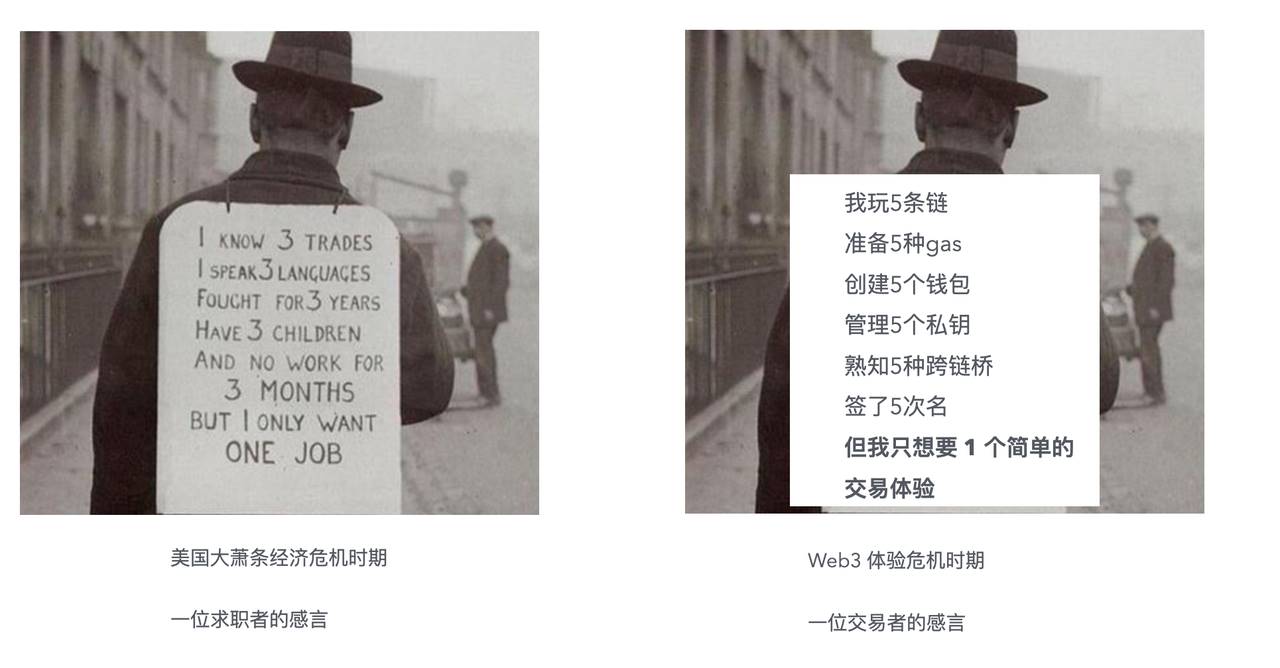
In 1929, America suffered the Great Depression—skilled job seekers couldn’t land basic jobs. In 2024, the Web3 world constantly faces an experience crisis—users skilled in complex operations still can’t get a simple trading experience.
Across echoes of history, on-chain transaction demand never ceases, yet simple transaction experiences remain elusive.
And if we trace back the origins of this lack of simplicity, patterns emerge:
In 2015, Ethereum’s original dual-account design (EOA and CA) introduced innovation—but also sowed problems. EOAs cannot independently execute complex contract logic, making multi-functional interactions impossible, and forcing regular users to bear the fatal burden of managing private keys;
Thus, poor account management and clunky transaction interaction gave rise to “account abstraction”;
In 2020, Polkadot launched with a relay chain and parachain architecture—an early model of inter-chain communication, offering an initial solution to liquidity fragmentation in the coming multi-chain era, and touching upon cross-chain interoperability issues.
Thus, the difficulty of cross-chain interoperability elevated the concept of “omnichain”;
In 2023, NEAR realized that the explosion of L1s and L2s degraded user experience and that blockchains themselves must be abstracted from users. Other projects reached similar conclusions and began pushing forward.
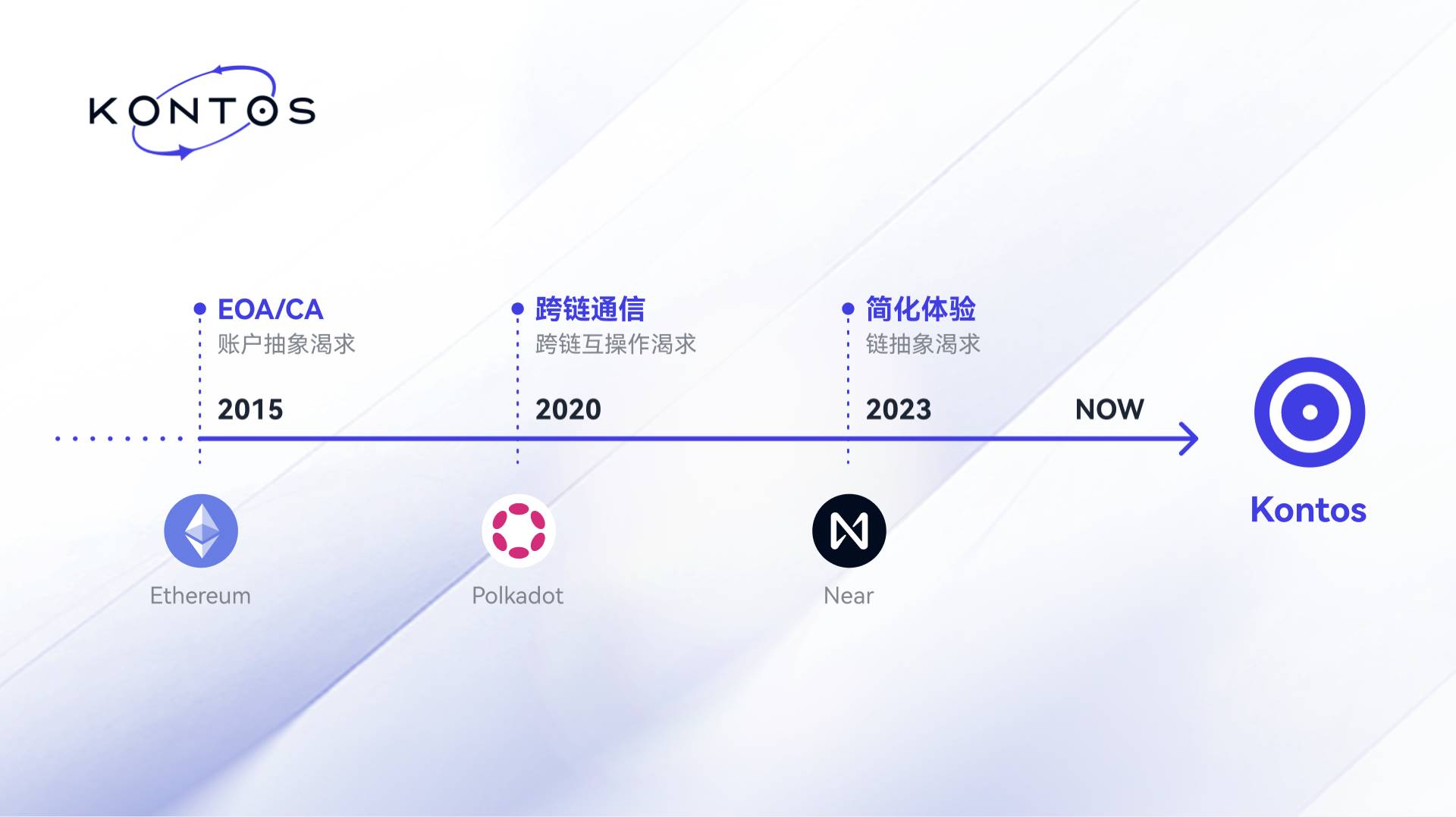
All these layers of complexity culminated in “chain abstraction” stepping center stage in the pursuit of better user experience throughout crypto’s development.
Now, it’s Kontos’ turn.
One Entry, Infinite Possibilities
Everyone talks about chain abstraction—but what do end users actually see?
Whether a chain enables abstraction or provides an SDK for it, users don’t care.
What users feel most directly is the entry point.
So with Kontos, what you first notice is just an interface resembling a wallet—listing assets, trading, transferring—all prioritizing transaction needs.
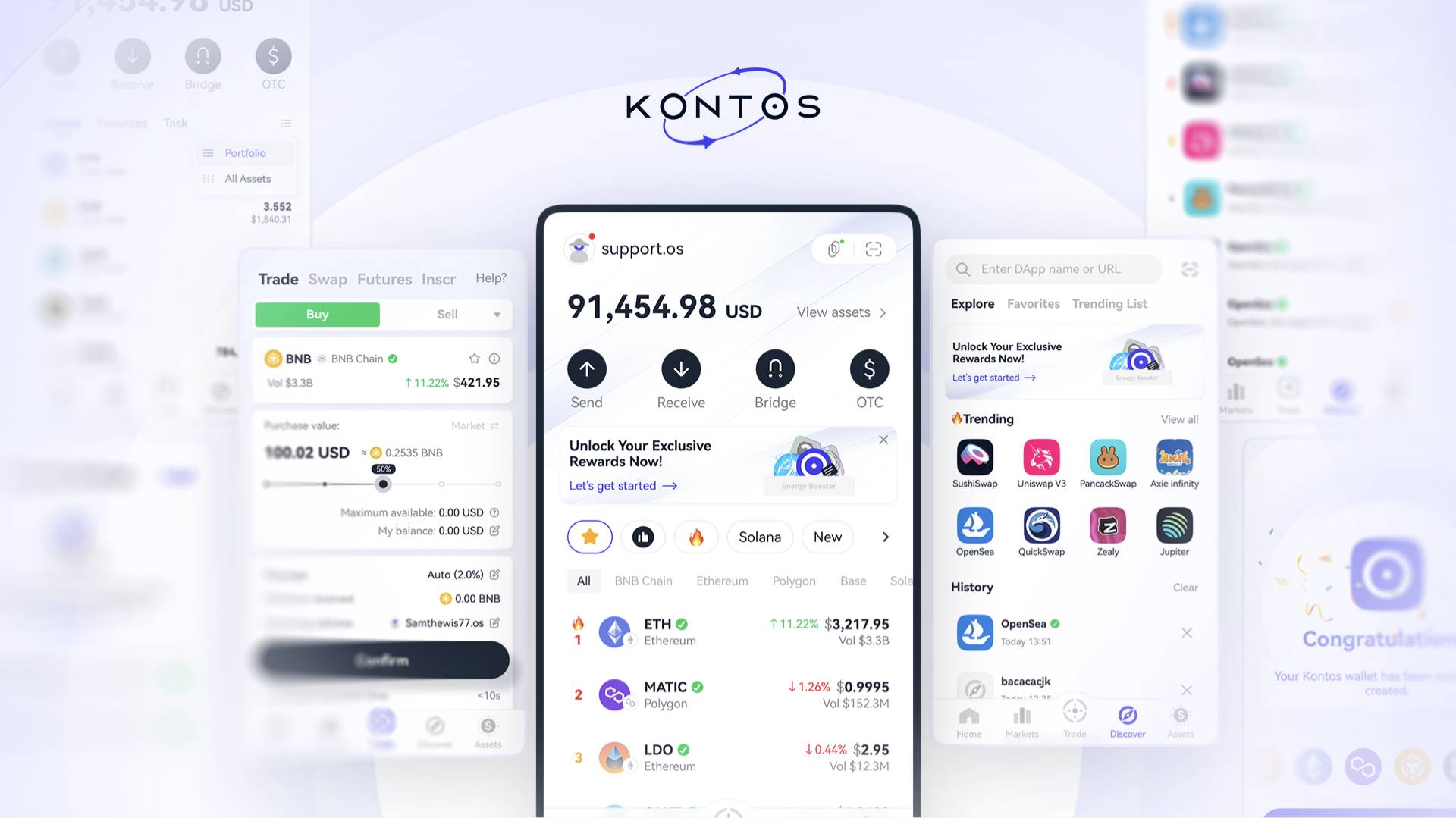
But this entry point encompasses everything.
Kontos delivers the benefits of chain abstraction in a subtle way—complexities of native blockchain applications are fully abstracted into a unified interface layer, creating a chain-agnostic global access point for anyone who wants it.
This access point is the entry you see—every complexity is encapsulated, so much so that you might think this is simply a non-complex wallet.
Yet, as you go deeper, you begin to sense an elegance of profound simplicity.
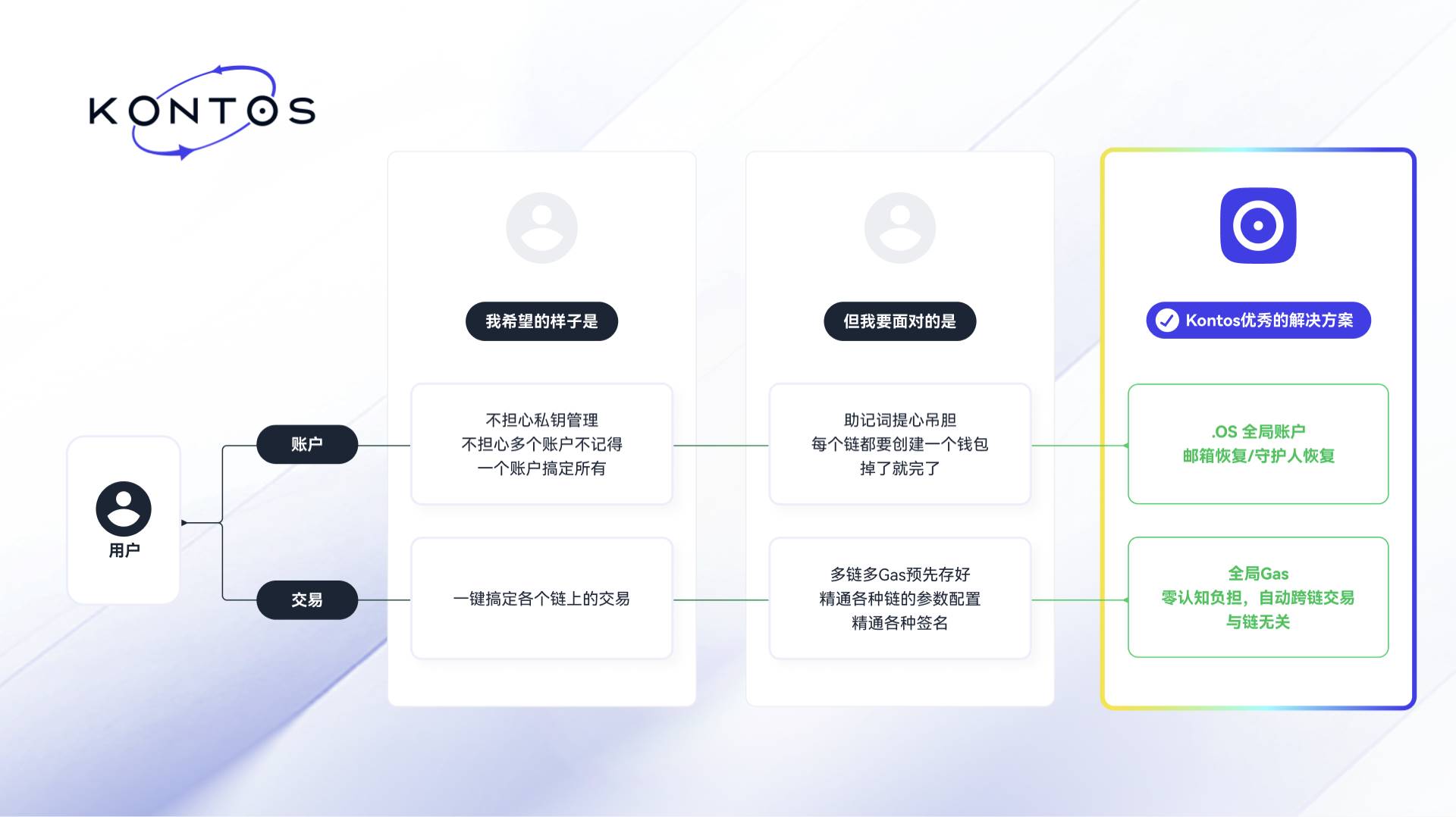
First, account creation.
You can register a wallet simply via a “username”—completely free from managing private keys or seed phrases. Then you’ll discover this username manages all your assets across all chains, without needing to switch RPCs or networks like MetaMask, nor needing to understand them at all.
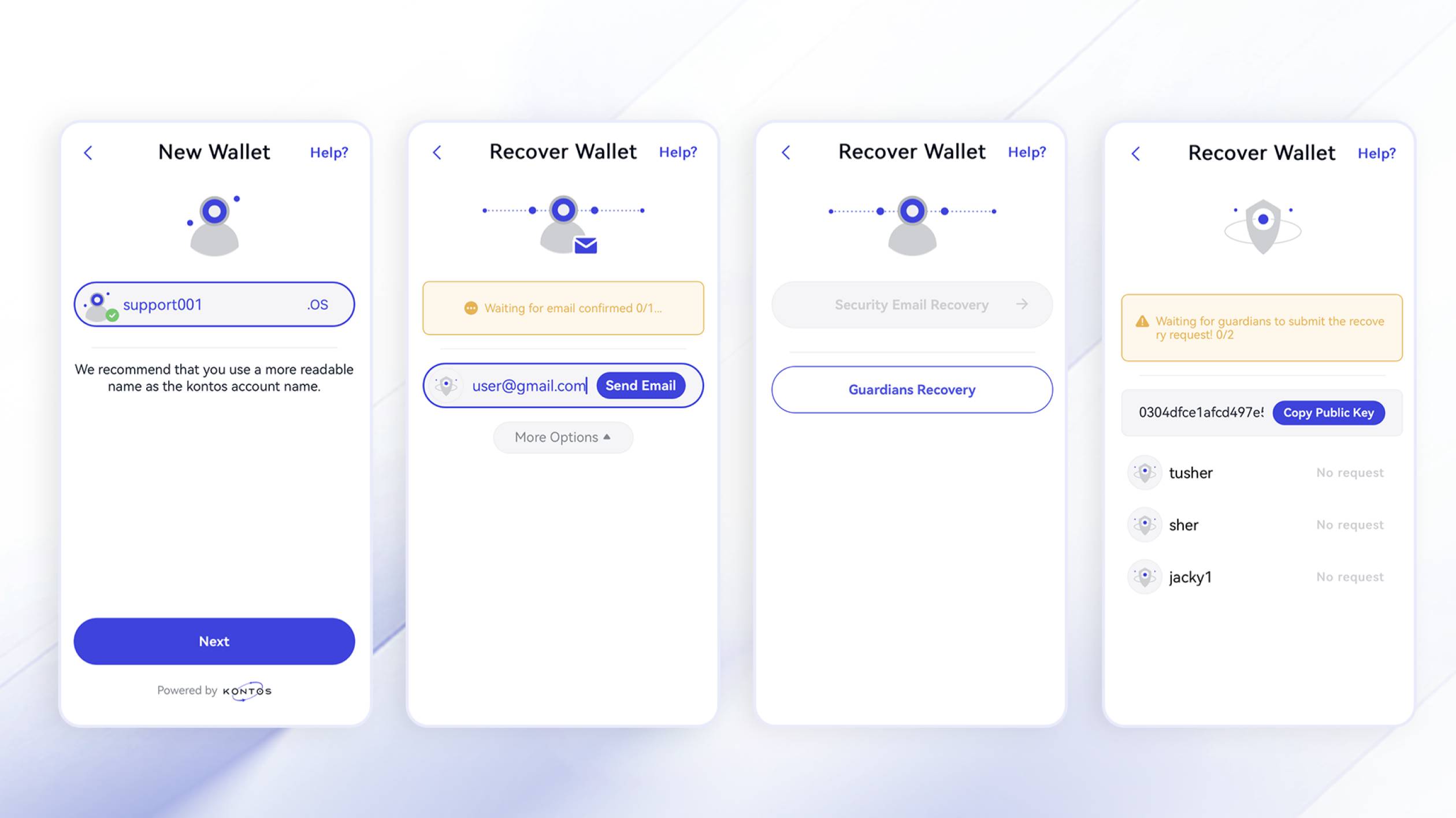
Regarding account recovery, Kontos offers two intuitive methods: email recovery and guardian recovery. With the former, after setting up a secure email, you recover your account by receiving a verification email. With the latter, you designate guardians, send them your public key, and they confirm recovery within Kontos—essentially social recovery, as Vitalik Buterin often advocates.
The benefit is obvious: users avoid learning complex cryptography, public-private key pairs, or key management—delivering a Web2-like user experience.
Crypto accounts shouldn’t scare new users or burden experienced ones. Kontos achieves remarkable simplicity here—but behind it lies immense engineering effort:
This .OS username serves as a universal account, integrating social login, authentication, and wallet functions when connecting different L1s/L2s—so you only experience one username managing everything.
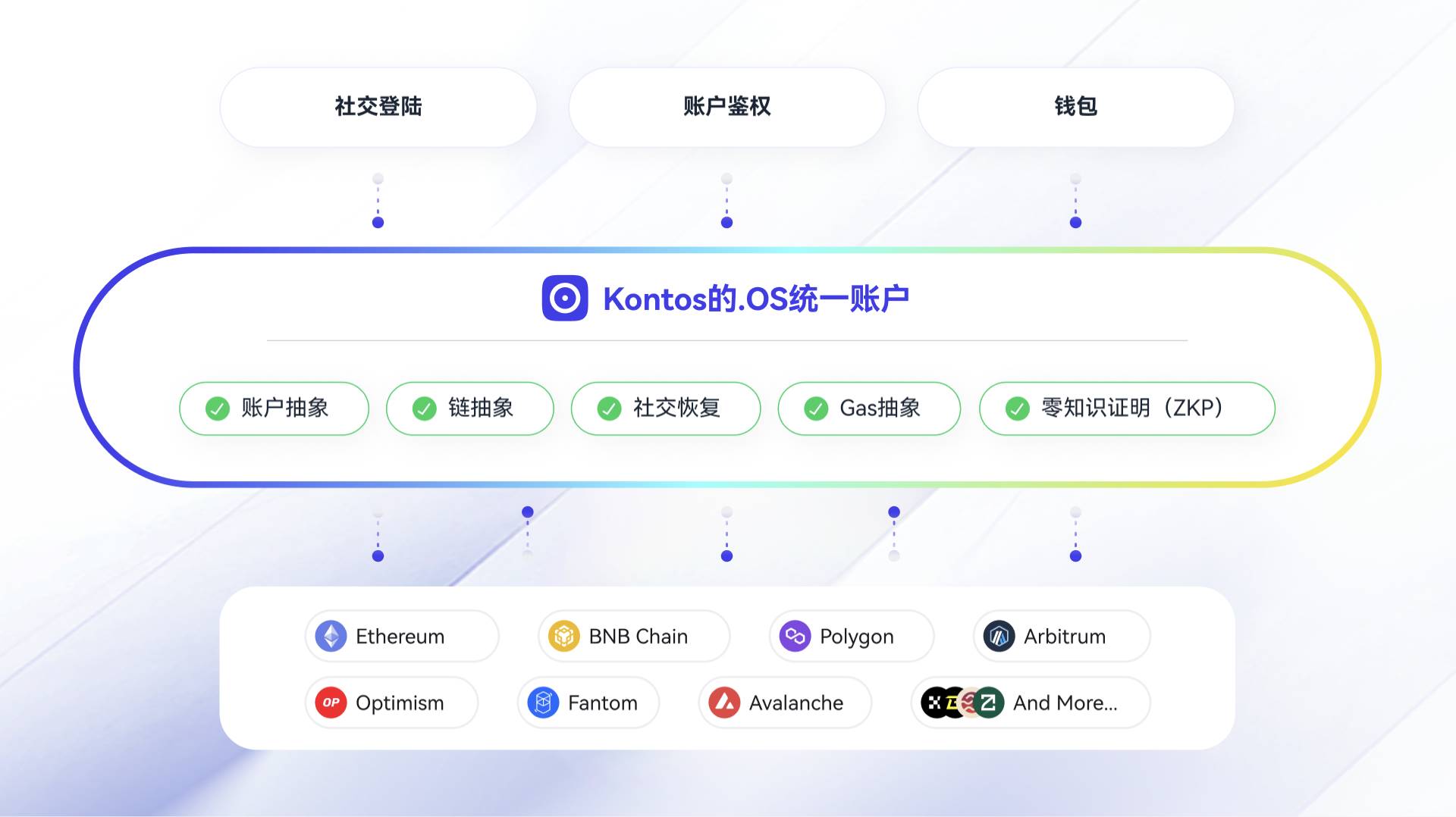
Second, transactions are truly “chain-agnostic.”
Kontos currently integrates 17 blockchain networks. Users don’t need to worry about which chain they’re on or whether they have gas on the target chain.
As shown below, you can initiate a purchase request directly on Kontos—using USDT on Polygon to seamlessly swap for PEPE on Arbitrum. The system automatically calculates required fees and wraps up the exchange logic;
Lacking gas on Arbitrum isn’t an issue—you don’t even need to grasp the hard truth that gas must be pre-funded on different chains. You just pay one fee and complete the trade.
You freely swap any token for any token—Kontos becomes a useful “magic portal.” This is a direct demonstration of chain abstraction’s value, much like driving a car without worrying about engines, gears, or internal mechanics—just drive.
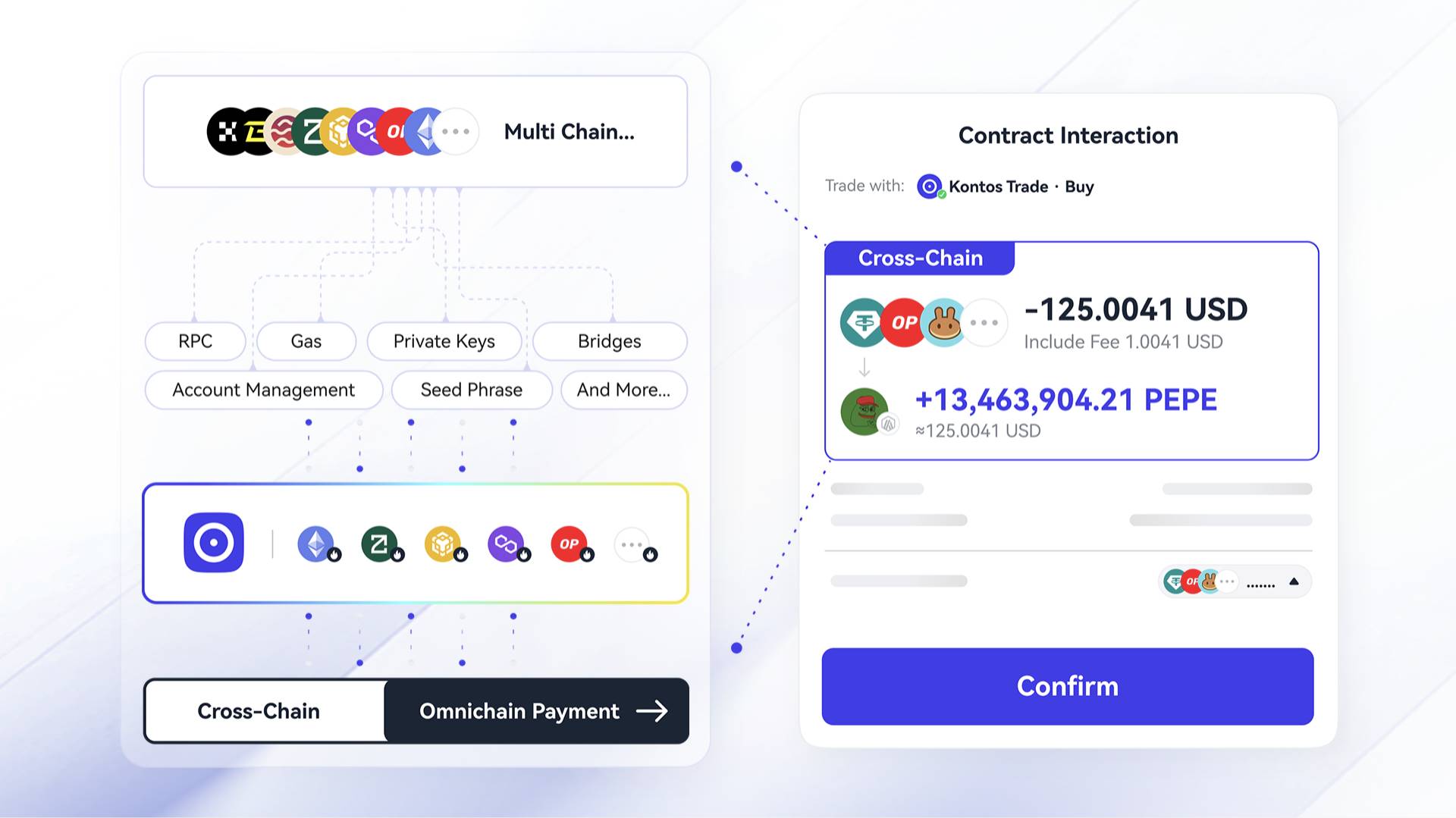
Anyone familiar with cross-chain knows you must learn each chain’s rules, understand how bridges execute transactions, sign repeatedly, identify optimal paths, track multi-step asset conversions, etc.
With Kontos, transferring assets requires none of that—you don’t need to understand execution rules or handle repeated signatures and interactions.
Still, how is such smooth cross-chain swapping and universal gas achieved?
Kontos acts as a universal multi-chain hub. When users submit a task, they only need to focus on two factors: the target asset they want, and their payment capability.
This is because Kontos introduces a Broker role—a user agent responsible for handling all on-chain transaction details. When a user submits a request, the Broker assesses their payment ability and, based on real-time market conditions, uses the user’s payment assets to acquire the target asset. During this process, the Broker independently decides how to cover gas fees on the destination chain.
To users, this entire process is transparent. They only need to ensure sufficient funds to cover total costs—the specifics of gas payment and exchange logistics are handled entirely by the Broker.
This design drastically simplifies user workflows, delivering a seamless, intuitive experience. Users no longer manage gas tokens across chains or decipher complex routing. Kontos encapsulates these complexities within the Broker layer, allowing users to focus solely on their intent.
It should be emphasized, however, that while Brokers offer great convenience, users retain absolute control over their assets. Brokers can only perform tasks explicitly authorized by users—they cannot access funds arbitrarily. This ensures asset security.
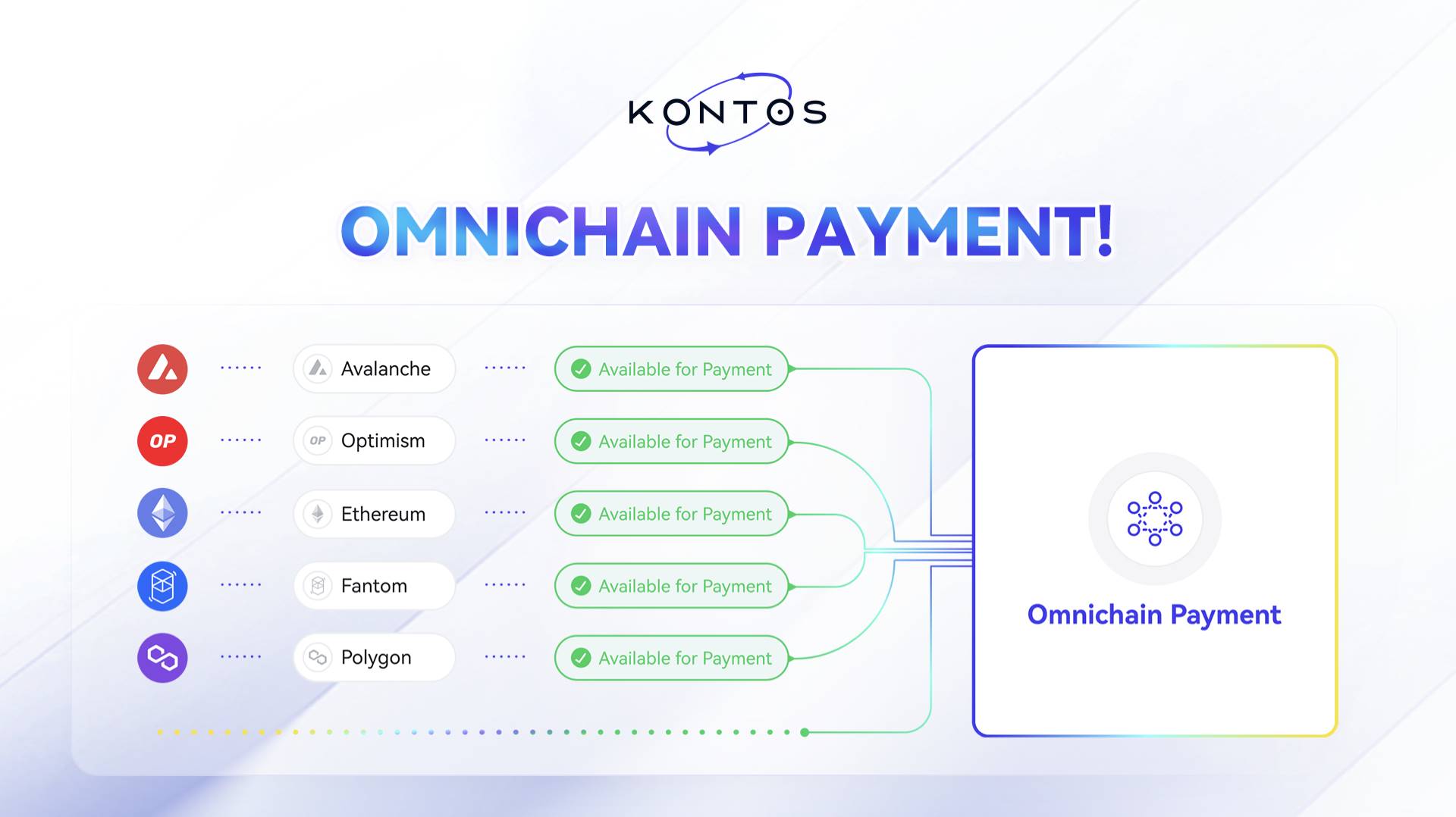
Within the layered design of account management, asset control, and transaction handling, the true meaning of chain abstraction emerges:
No need to care about processes—complex operations abstracted into “one-click completion,” thought becomes action, intent becomes result.
Overall, we find Kontos highly intuitive and easy to use—ideal as a first wallet for crypto newcomers, or as a liberating alternative for seasoned users seeking better experience.
The less users need to worry about, the more aligned it is with natural usage logic—and the greater the value of the entry point.
Currently, Kontos offers Discord, PC, and mobile wallet versions. Interested users can click here to try it out.
Technical Encapsulation: Complexity for Ourselves, Simplicity for Users
On the user-facing side, Kontos presents an exceptionally simple interface.
Giving simplicity to users and keeping complexity for ourselves—a design philosophy that demands deep technical encapsulation. Thus, though “chain abstraction” sounds concise, it involves a collective encapsulation of multiple components that should never be exposed to users.
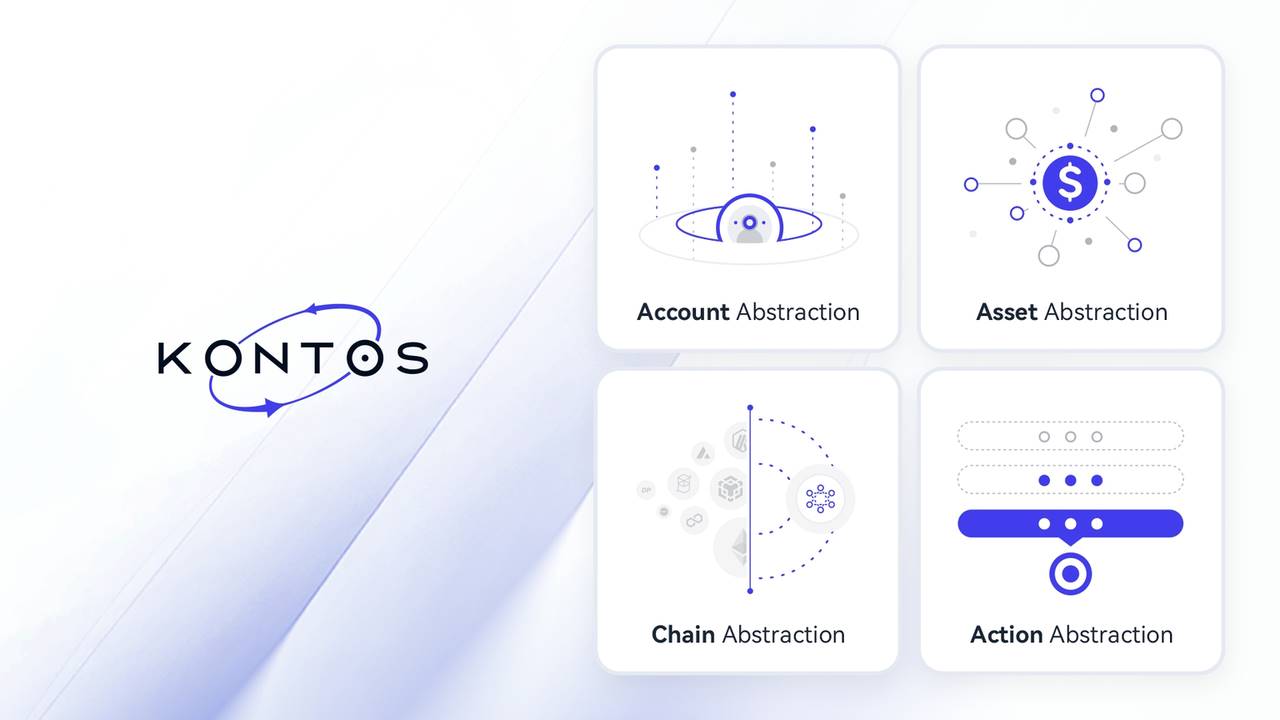
Digging deeper into Kontos’ core, you’ll recognize familiar buzzwords—each carefully considered and refined in practice.
For example, you may have heard chain abstraction defined as effortless access and interaction across various blockchains.
But in implementation, Kontos relies on several unsung heroes: target chain state synchronization + ZK proofs + Broker network.
Confusing? Let’s break it down.
Lightweight Client Verification: Kontos runs a lightweight client per chain on its network to obtain block headers and states from other chains, directly verifying their correctness on Kontos—enabling validation of any chain’s state.
ZK Proofs: When other chains need to verify Kontos’ state, Kontos uses recursive zk-SNARK proofs. Other chains only need to verify the final zk-SNARK proof to confirm the validity of numerous Kontos blocks—greatly improving cross-chain verification efficiency.
Broker: When users perform cross-chain operations on external chains, Broker services prepay fees and assets—making user experience smoother.
Likewise, you may have heard account abstraction described as decoupling account functions and permissions on blockchains, enabling more complex operations.
Kontos goes further, designing a two-layer model: the top layer uses human-friendly usernames (XXX.OS) for registration, easy to remember and manage; the bottom layer maps usernames to AA accounts across public chains.
This enables both social recovery and passwordless, seedless operation simultaneously.
Additionally, you might overlook asset abstraction—Kontos acting as a universal gas hub, letting users pay transaction fees with any asset on any blockchain.
Combined with chain abstraction, it’s like traveling abroad without worrying about local environments or lacking local currency.
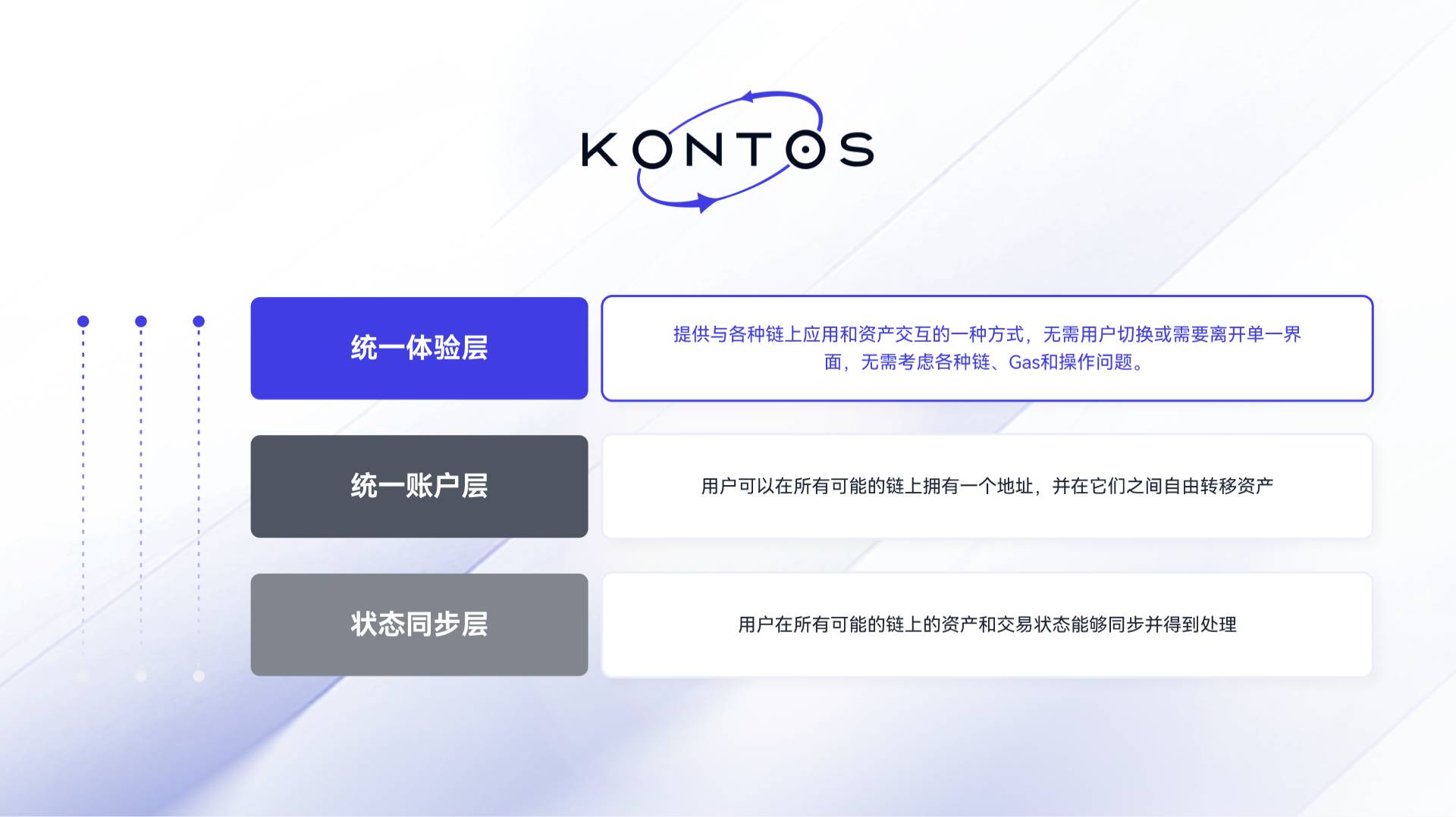
Ultimately, these abstractions combine into “behavioral abstraction”: users achieve their intent with one click, powered by multiple backend components working in concert.
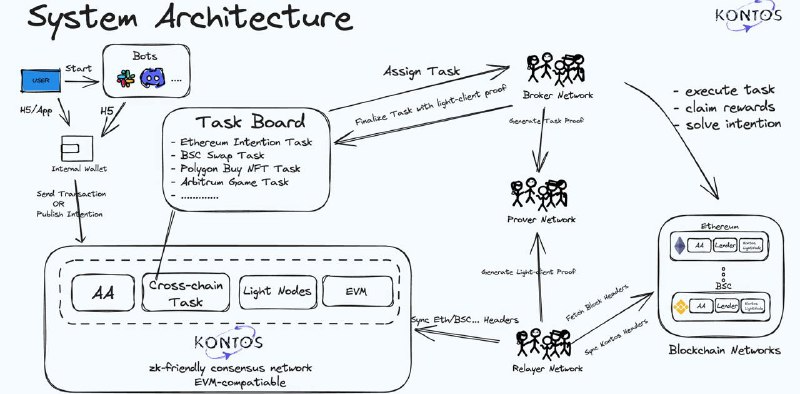
Now let’s open the hood and see how something seemingly simple—“buying Degen tokens on Base using USDT from Polygon”—is actually executed within Kontos:
-
User initiates task: via H5 page or app, requests to buy Degen tokens on Base using USDT on Polygon.
-
User’s purchase intent is posted to a task board, which assigns it to the Broker network.
-
Nodes in the Broker network receive the task and begin executing cross-chain operations. Upon completion, they generate a task proof.
-
Task proof is sent to the Prover network, which validates it and generates a light-client proof.
-
Relayer network synchronizes block headers between Polygon and Base, and relays Kontos’ block headers to those chains—ensuring consistency and security of cross-chain data.
In the end, complexity stays with us, simplicity goes to users—achieving an almost imperceptible, seamless experience.
Great infrastructure makes itself invisible—users only feel smooth front-end interactions. And every trader’s ultimate dream is simplicity itself.
Moreover, under this design, a critical yet often overlooked aspect is security.
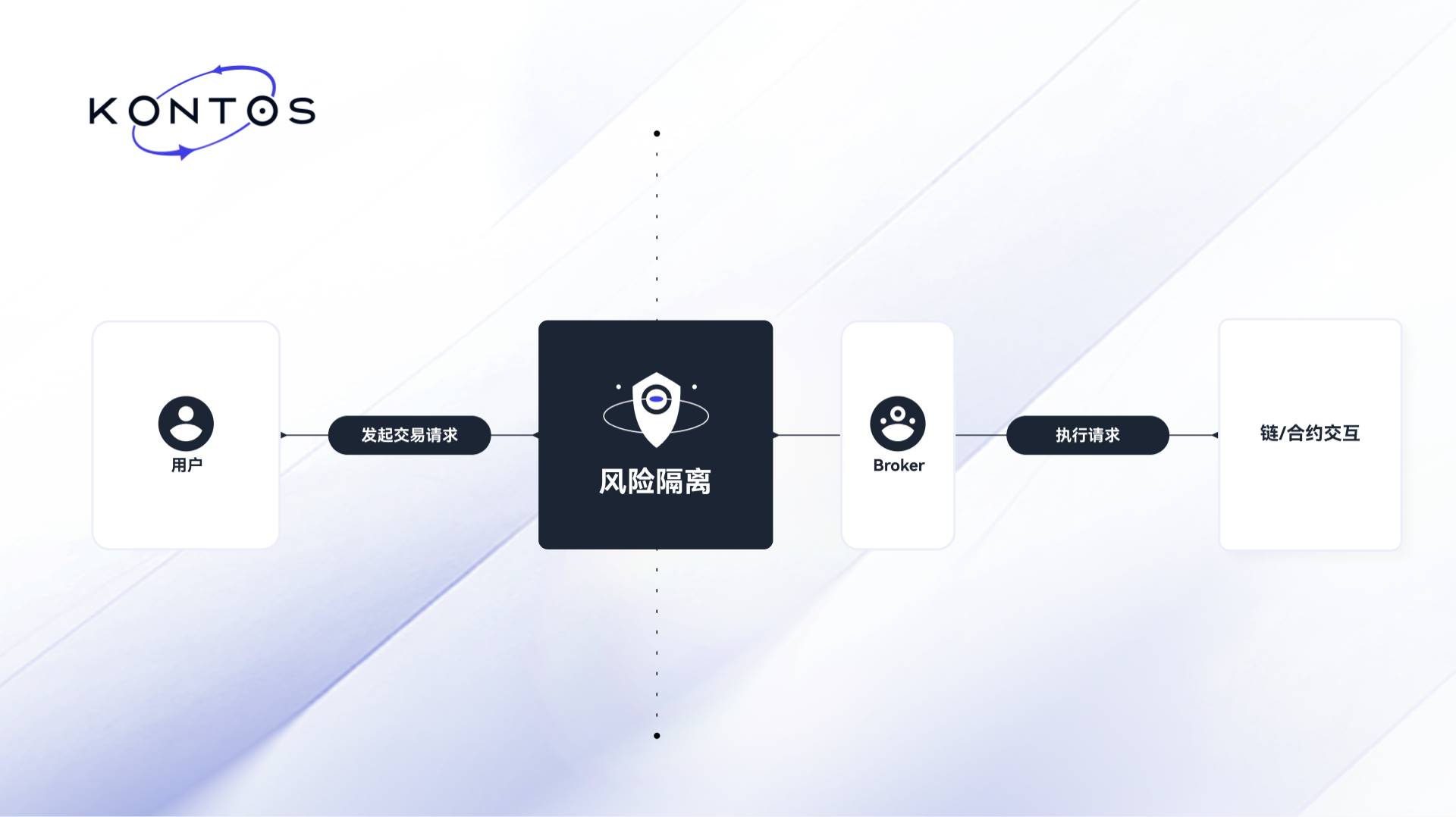
Since signing and executing transactions are separated into two roles (user and Broker), users don’t directly execute transactions—instead, other participants act on their behalf.
Users only need to click a button to sign. They can outsource all on-chain needs to experienced actors, who then handle finding optimal execution paths.
These experienced actors assume risks associated with interacting across different L1/L2 applications, varying gas fees in different tokens, reorg risks (with conflicting chain versions), and other execution risks.
By taking on these steps and risks, solvers price their services accordingly into user fees.
In this model, users don’t need to grapple with the complexities and risks of using on-chain products and services—those become problems for specialized agents in the market to solve.
Not CEX, Yet Better Than CEX: The Future
While researching Kontos and tracing the evolution of chain abstraction, I kept asking: what is the ideal form of a chain abstraction product?
Perhaps the ideal form already existed—it was just not pure enough.
Recall the CEX we know best—isn’t it a form of chain abstraction?
You don’t care which chain your assets are on, nor manage keys—you deposit, withdraw, and trade freely. True, CEX operates off-chain, using databases to mirror on-chain states, yet delivers the very experience chain abstraction aims for.
From a more decentralized, crypto-native perspective, chain abstraction may evolve into an on-chain version of CEX—experience-first, tech-encapsulated.
A popular saying goes: “The future has arrived—it’s just unevenly distributed.”
Chain abstraction will inevitably become a shortcut to mass adoption. Whoever ships a ready product first will capture user minds earliest.
Today’s scattered, underused projects may one day lead the charge in superior Web3 UX.
Right now, Kontos excels in both product experience and technical architecture—offering true elegance and fluidity, definitely “worth trying.” Whether it becomes the “only choice,” however, depends on its GTM strategy and broader market dynamics.
Furthermore, as Kontos accumulates usage around DID, we can anticipate richer services around open data, retrieval, and analytics.
Where there’s demand, there’s a market—but who will dominate the chain abstraction space? Only time will tell.
Join TechFlow official community to stay tuned
Telegram:https://t.me/TechFlowDaily
X (Twitter):https://x.com/TechFlowPost
X (Twitter) EN:https://x.com/BlockFlow_News
 深潮TechFlow