How does decentralized recruitment platform Bondex break through the challenges of traditional platforms?
TechFlow Selected TechFlow Selected
How does decentralized recruitment platform Bondex break through the challenges of traditional platforms?
Bondex introduces referral bonuses as an incentive, allowing participants to earn fiat currency, stablecoins, or tokens.
 Navigating Web3 tides with focused insights
Author: 1912212.eth, Foresight News
Globally, talent recruitment generally falls into two categories: referral-based hiring and job platform apps. The former relies on trust, while the latter depends on screening. Typically, when a company hires talent, it often pays high fees across multiple job platforms to obtain resumes and other information, followed by extensive manual screening—an effort- and time-intensive process. In contrast, referral-based hiring can save companies significant costs, as personal trust serves as a form of endorsement.
Since everything in the Web3 world can be decentralized, why not recruitment? Bondex combines traditional hiring with peer referrals, distributing referral rewards and platform revenues directly to users.
Bondex recently raised $4 million in funding, with participation from Animoca Brands and others. Additionally, in late March, it conducted a public sale on CoinList at $0.08 per token, raising over $6.5 million.
What is Bondex?
Bondex is a Web3-enabled decentralized talent network that creates a decentralized job market, giving both Web3 natives and newcomers access to employment opportunities.
Bondex incentivizes all users through tokenized rewards, allowing individuals to take on one or more roles: job seeker, referrer, recruiter, or employer.
Bondex uses tokens to encourage active participation in network growth. More importantly, users’ network data no longer belongs to the platform but remains under user ownership and control. Furthermore, its value-sharing model enhances transparency and efficiency in recruitment while reducing hiring costs.
Whether job seekers or recruiters, users must deposit BOND points to perform actions on Bondex after logging into the official website or downloading the app. These points can be earned by completing profiles or purchased directly. However, if a resume or application is rejected, the recipient declines the request or does not respond within 14 days, or the candidate fails the screening phase, the attempt is deemed unsuccessful and BOND points are deducted. These points factor into eligibility for token airdrops.
Similarities and Differences
Core operations resemble traditional job platforms
Unlike some Web3 applications, Bondex actively incorporates strengths from traditional job platforms rather than relying solely on token issuance. Bondex offers products on desktop and has launched its app on broader-access channels such as Apple and Google Play stores. It also introduced BOND points, rewarding users for profile completion—similar to traditional platforms where points can unlock features like resume promotion.
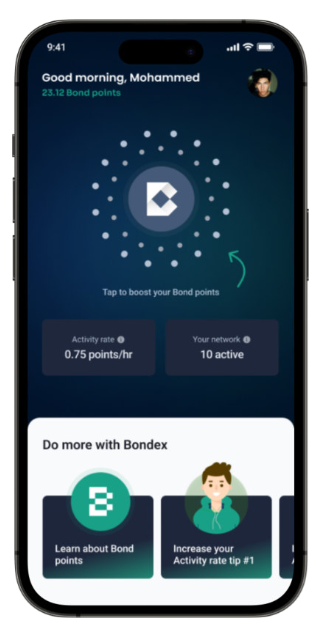
In terms of user experience, Bondex closely mirrors traditional job websites, significantly lowering the learning curve for new users.
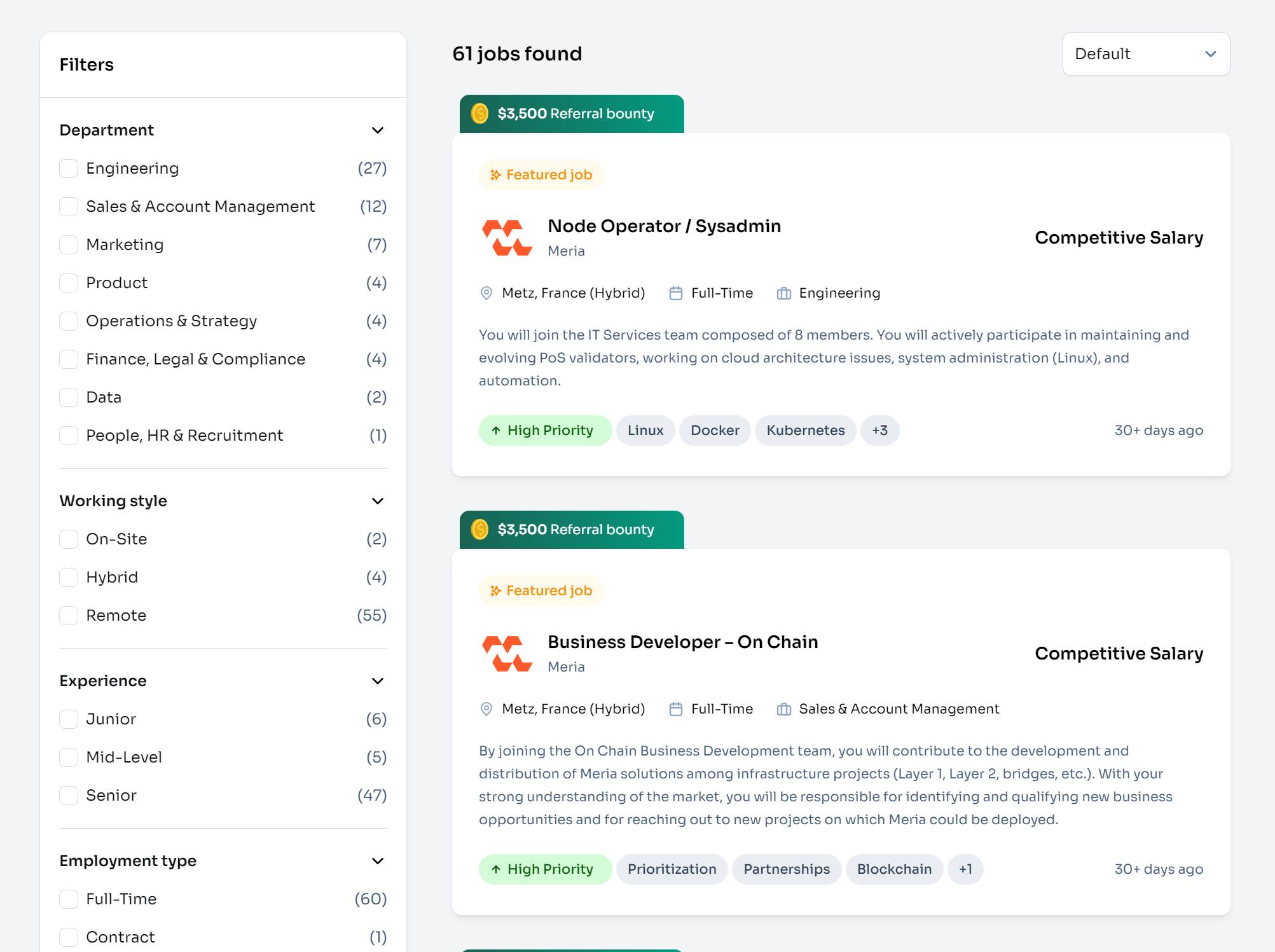
Notably, Bondex received a grant in May this year to develop a Telegram Mini App on TON, planning to officially launch it in Q3 of this year.
So what sets it apart?
Referral bonuses are clearly priced
Bondex introduces referral bonuses as an incentive, enabling participants to earn fiat, stablecoins, or tokens. How does this differ from traditional Web2 giants? The key difference lies in accessibility—previously, only employees of large corporations could participate in referral programs, whereas Bondex opens the channel to everyone. Moreover, not all top talent use multiple job apps; many remain hidden on Twitter, Telegram, and similar platforms. Now, users simply share a referral link, allowing candidates to apply via that link.
Additionally, referral bonuses were traditionally opaque, but Bondex makes all referral rewards transparently priced, increasing transparency and motivating users to promote jobs.
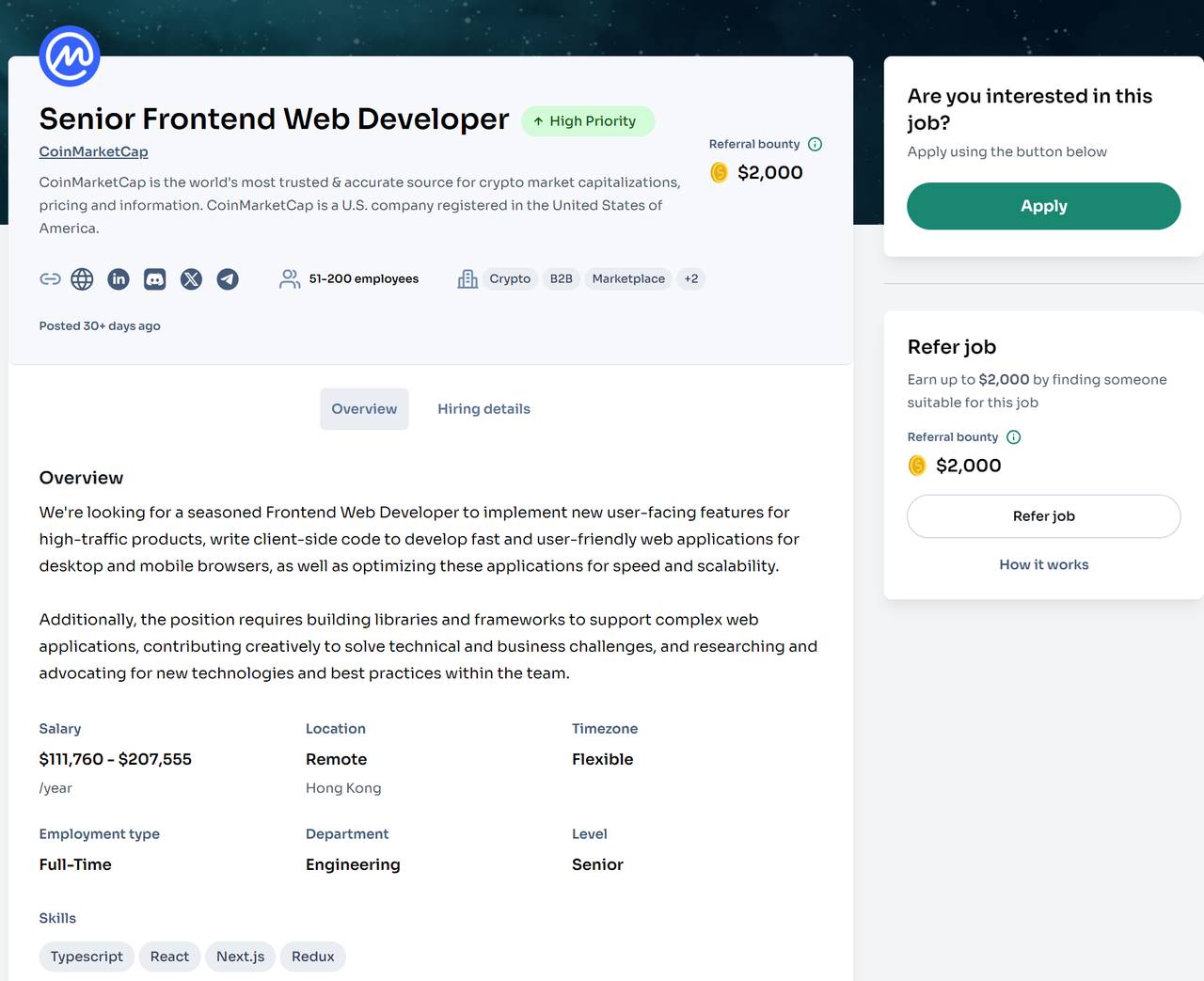
As shown in the image, job listings prominently display the reward amount for successful referrals. This means that once a referred candidate is successfully hired and confirmed, the referrer receives the bonus.
Reduced hiring costs
In traditional recruitment, employers spend considerable time and effort screening candidates. They also pay substantial membership fees on platforms to download resumes and access talent pools. When using headhunters, costs rise even further—most of which go to third-party intermediaries. While these services do provide value, they come at a relatively high cost.
Bondex focuses specifically on the Web3 talent pool. Due to its vertical focus, both job seekers and employers save significant time. Additionally, Bondex leverages machine learning and an internal talent assessment team to evaluate candidates’ skills and role fit, conducting tests and interviews to quickly verify authenticity for employers, thereby reducing hiring costs.
Platform revenue shared with users
Traditional job platforms act as intermediaries, freely collecting vast amounts of user data and resumes, yet users receive none of the platform’s earnings. Instead, this data is sold to employers for substantial profits.
Bondex issues its own token and distributes governance rights to token holders. It commits to using platform revenue to repurchase its native token BDXN on public markets and regularly distribute it to users—initially quarterly, transitioning toward monthly distributions. Revenue sources for BDXN include:
-
In-app purchases
-
Company membership fees
-
Promotional income
-
Traffic and advertising revenue
-
Bounties
-
Premium user membership fees
The final airdrop amount users receive will depend on three factors: user reputation score, quality and frequency of interactions within the network, and the number of staked tokens.
Tokenomics
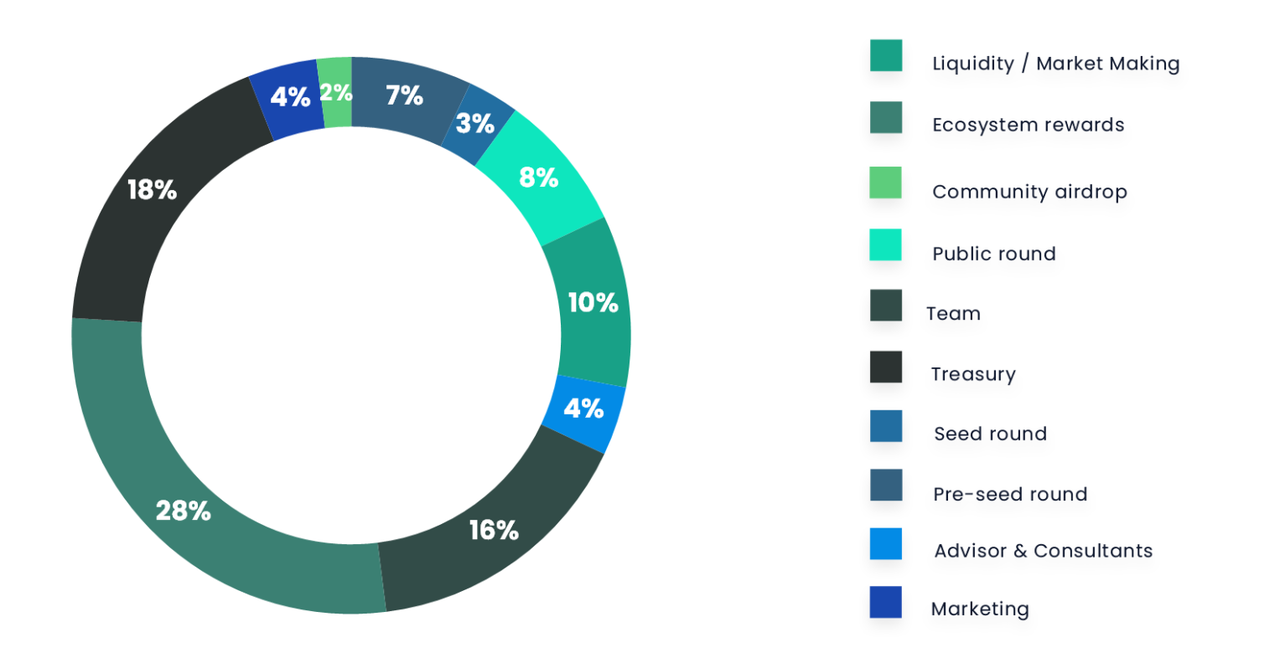
The total supply of its native token BDXN is 1 billion, allocated as follows: 7% angel round, 3% seed round, 8% public sale, 10% liquidity/market making, 4% advisors, 16% team, 28% ecosystem incentives, 18% treasury, 4% marketing, and 2% airdrops.
Minimum requirements for user airdrop eligibility include: completing a full profile, uploading a resume, successfully inviting and registering three contacts, and using the platform for at least three months. Airdrops will be distributed at BDXN’s TGE (Token Generation Event), scheduled for July 10. On that day, the official announcement confirms listing on a major exchange.
BDXN token utility includes three aspects: value redistribution (through user airdrops and Bond point exchanges) and staking, governance rights for holders, and generating returns for users.
According to Bondex’s official whitepaper, beyond the TGE and token distribution plans, the team plans to build on-chain professional identities, add discovery and messaging features, an education marketplace, and a news feed.
Join TechFlow official community to stay tuned
Telegram:https://t.me/TechFlowDaily
X (Twitter):https://x.com/TechFlowPost
X (Twitter) EN:https://x.com/BlockFlow_News
 Foresight News


![In-depth Analysis of Trade[XYZ]: How Were 92 Markets and 98% HIP-3 Trading Volume Established?](https://upload.techflowpost.com/upload/images/20260716/20260716061117965147.jpeg?x-oss-process=image/resize,p_50/quality,q_80)