









How Zebec Network is Building the Visa for DePIN and RWA赛道
TechFlow Selected TechFlow Selected
How Zebec Network is Building the Visa for DePIN and RWA赛道
Factors such as multiple intermediaries, lack of standards, low efficiency, insufficient transparency, and high costs make blockchain payments highly promising.
 Navigating Web3 tides with focused insights
Author: 1912212.eth, Foresight News
As blockchain technology continues to evolve, many outdated financial infrastructures are in urgent need of transformation. Payment methods such as credit cards, which users perceive as convenient and fast, actually involve complex systems with numerous intermediaries—the ultimate costs of which are still borne by consumers.
An example illustrates the underlying process clearly. When a user makes a payment to a merchant, the merchant sends the transaction information to the acquiring bank (the merchant’s bank), which forwards the transaction request to the credit card network (such as Visa or Mastercard). The network then relays the request to the issuing bank (the consumer's bank). The issuing bank verifies the consumer's credit limit and account status before deciding whether to authorize the transaction.
If approved, the issuing bank sends an authorization code back through the credit card network to the acquiring bank, and finally the merchant receives confirmation. At the end of the day, the merchant submits all authorized transactions to the acquiring bank for batch processing. The acquiring bank forwards these batched transactions to the credit card network, which then distributes them to the respective issuing banks.
Multiple intermediaries, lack of standardization, inefficiency, opacity, and high costs create significant opportunities for blockchain-based payments. Zebec Network is one such blockchain payment infrastructure.
From Zebec Protocol to Zebec Network
Founded in 2021, Zebec initially built its operations on Solana, focusing on a blockchain payment streaming system that enables real-time, continuous cash flows for financial transactions including salaries, payments, investments, and purchases.
In February 2022, Zebec completed a $15 million private placement round led by Distributed Global and Solana Ventures, with participation from Lightspeed, Circle, Alameda Research, DST Global Partners, Coinbase, OKX Ventures, and others. Shortly after, its public IDO raised an additional $13 million, bringing total funding to $28 million.
In March this year, Zebec Protocol underwent a rebranding, updating its name to Zebec Network. It shifted focus from pure salary payment streaming to becoming a decentralized fund infrastructure for RWA (Real World Assets) cash flows and released Whitepaper V2.
Its suite of products and services includes Zebec Cards, RWA payments, Layer-3 chain Nautilus, DePIN, and asset management.
Zebec Prepaid and Debit Cards (Black Card)
At the end of 2023, Zebec launched the Zebec Instant Card—a non-custodial prepaid card supporting multiple blockchains with zero payment fees. The Zebec prepaid card is available in over 130 countries and regions, backed by Visa and Mastercard, allowing users to spend cryptocurrency instantly in everyday shopping using their chosen fiat currency without transaction fees.
Additionally, Zebec introduced its Black Card service—an equivalent to a debit card—with a fee of approximately 1% and no annual charges. Official data shows that over 1,000 cards were activated within about a week, compatible with Bitcoin, Ethereum, and BNB Chain.
RWA Payment Streaming Application: WageLink
Zebec’s application WageLink integrates blockchain capabilities into traditional payroll systems, enabling near-zero-cost cross-border remittances and USDC-based salary payments. It also provides salary management tools such as early wage access, budgeting, bill payments, and payment cards—all within a single unified app.
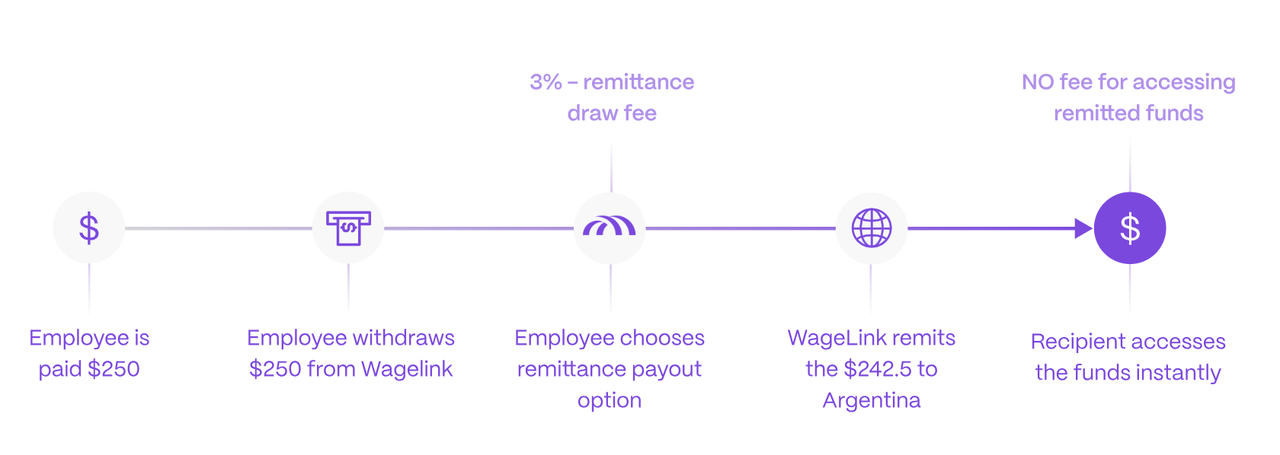
In May this year, Zebec strengthened its collaboration with RWA protocol Ondo and integrated its stablecoin USDY.
According to official website data, it has reached 250 enterprise clients, processed over $1 billion in total transfers, and achieved a monthly active user count of 50,000.
DePIN
As essential infrastructure for Web3 payments, physical devices are a necessity. In its updated whitepaper, Zebec announced it will launch POS devices supporting Zebec Network—offering merchants and consumers an integrated cryptocurrency payment processing solution.
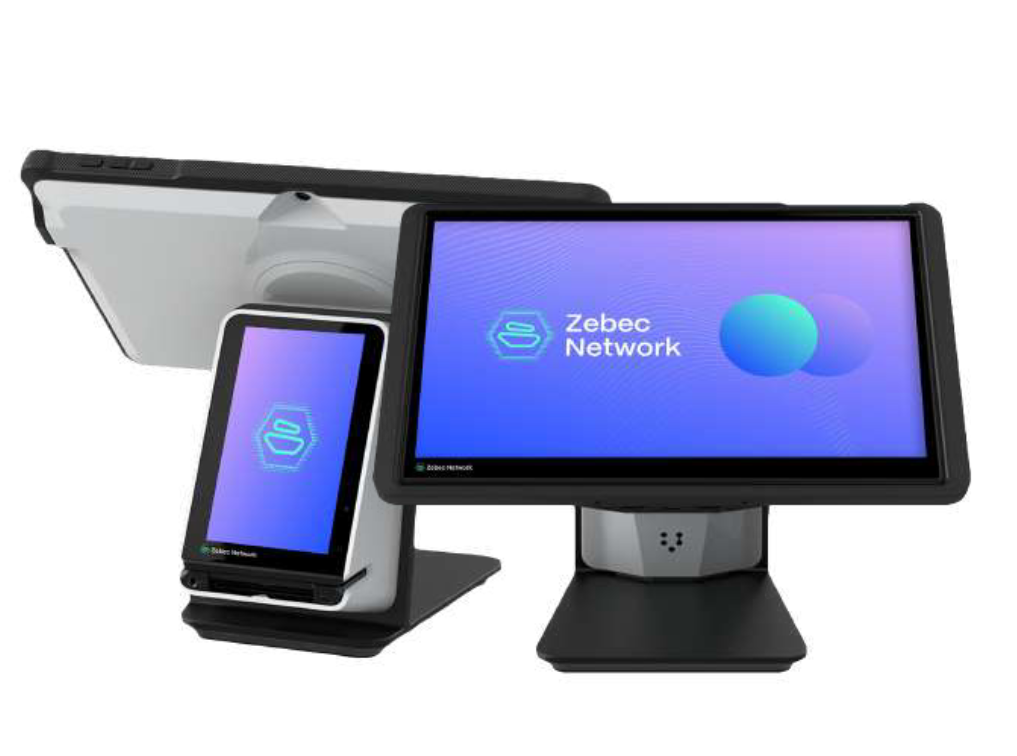
These devices utilize a decentralized infrastructure gateway to enable direct peer-to-peer transactions. The official website has already opened pre-order registration.
Layer-3 Chain: Nautilus
In 2023, Zebec developed its Layer-3 chain—Nautilus. Designed as a high-performance, modular blockchain, Nautilus is optimized to support Zebec’s RWA payment flows and DePIN infrastructure.
According to its whitepaper, the architecture uses OP Rollups with an initial TPS capacity exceeding 2,000, supporting use cases in payments, DeFi, and gaming.
To date, official data indicates total transactions have exceeded only 3.09 million—a figure that still lags significantly behind leading L1 or L2 chains.
Zebec Treasury
This feature primarily serves individuals, investors, and enterprises by offering secure fund management. Funds are safeguarded via multi-signature wallets and automated smart contracts, and the system has undergone audits by multiple security firms.
ZBCN Token Economics
The ZBCN token allocation is as follows: 4% market makers, 6% public sale, 9% seed round, 11% private round, 20% contributors, and 50% for community and rewards. Following the rebranding, the token name changed from ZBC to ZBCN, and the total supply was split 10x to 100 billion tokens.
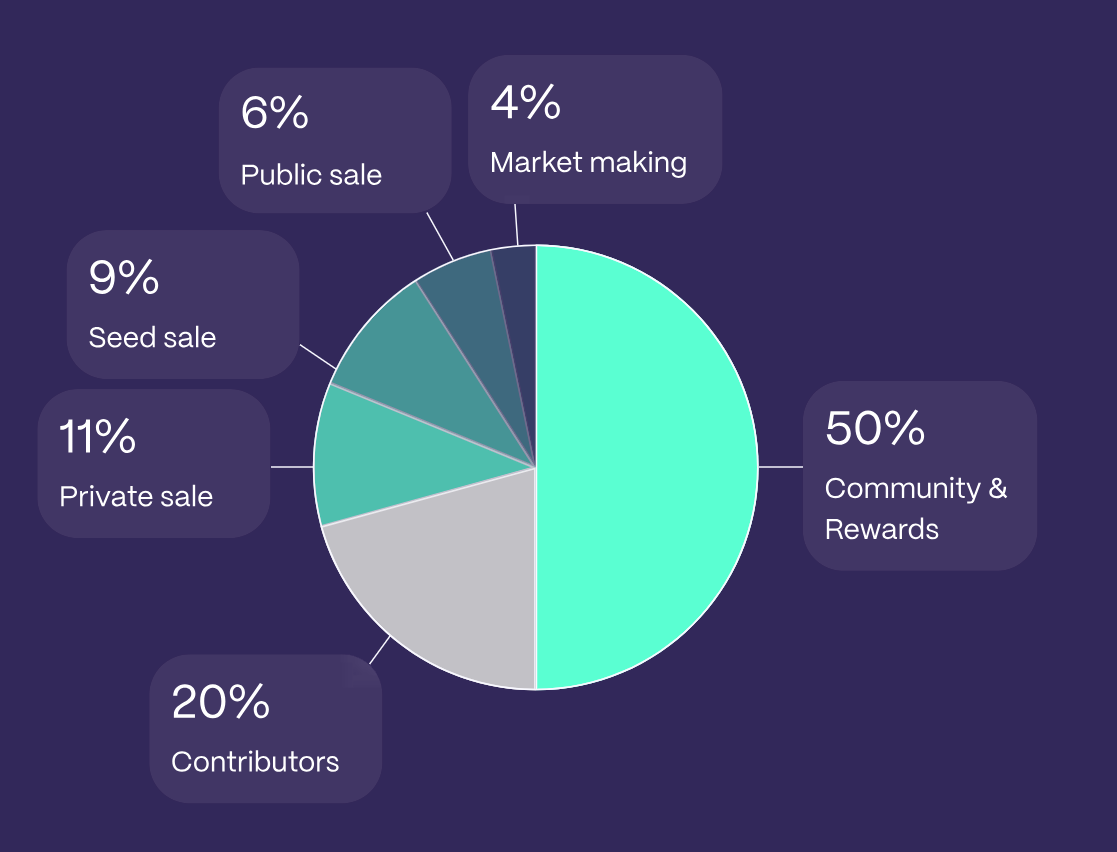
The public sale portion was immediately unlocked, while seed, private, and contributor allocations have a 6-month lock-up followed by 3-year linear vesting. Data shows the current circulating supply is 50.58 billion.
ZBCN tokens serve dual purposes: governance voting and utility functions. Beyond participating in governance proposals, ZBCN can be used as gas fees, collateral within ecosystem protocols, and qualify holders for select airdrops.
Future Roadmap
Zebec’s published 2024 roadmap consists of five major areas. For DePIN, the focus will be on onboarding more partners and strengthening alliances in logistics and supply chain sectors. WageLink aims to integrate with human capital management systems such as ADP and UKG to streamline payroll processes. The prepaid card will expand support to more public blockchains and integrate services like Coinbase Pay to enhance functionality. Treasury management will deepen collaborations with RWA protocols to offer cross-chain asset management solutions. Finally, Zebec plans to strengthen AI integration across product features to improve intelligence and efficiency.
Join TechFlow official community to stay tuned
Telegram:https://t.me/TechFlowDaily
X (Twitter):https://x.com/TechFlowPost
X (Twitter) EN:https://x.com/BlockFlow_News
 Foresight News






