








Movement Labs: Powering Move Language to Usher in a New Era of Customized Blockchain Solutions
TechFlow Selected TechFlow Selected
Movement Labs: Powering Move Language to Usher in a New Era of Customized Blockchain Solutions
Movement Labs emphasizes the security and efficiency of smart contracts, while also demonstrating significant improvements over existing technologies.
 Navigating Web3 tides with focused insights
Author: Chain Tea House
1. Project Overview
Movement Labs is a blockchain technology company that advances its innovative blockchain network by adopting and extending the capabilities of the Move programming language.
Movement Labs proposes that achieving a secure future for blockchain requires a new paradigm—specifically, adopting the Move language. Move introduces the concept of "resources," which have strict ownership models and conservation principles, ensuring precise control and tracking of digital assets or tokens. This resource-based programming model is a key innovation of Move, offering a secure and intuitive way to manage digital assets.
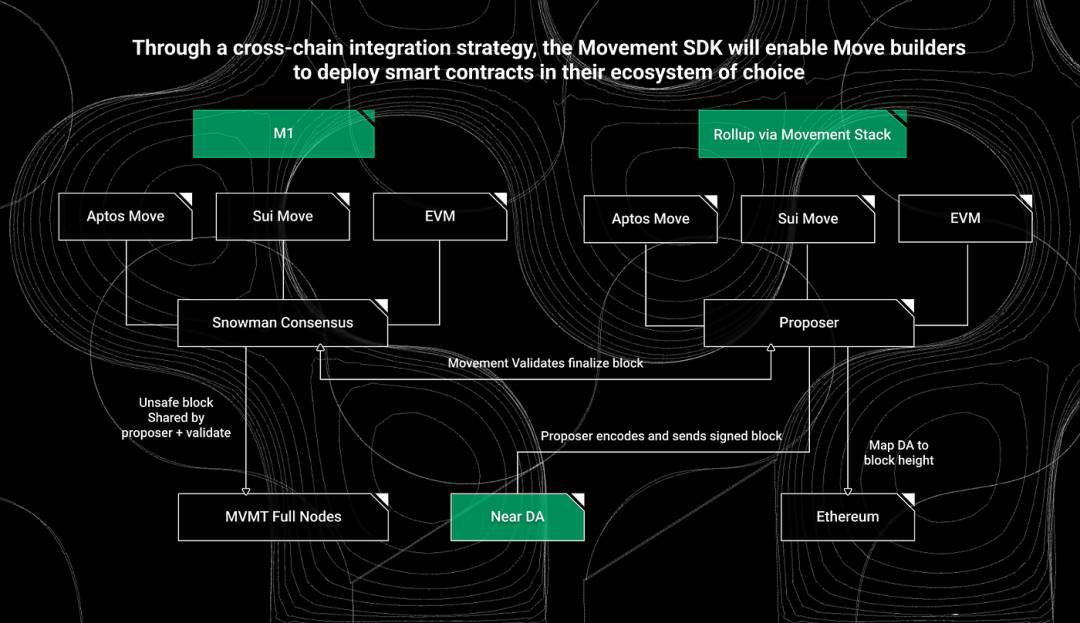
Building on the Move language, Movement Labs has developed Move-based products such as M1 and M2, aimed at enhancing blockchain interaction and smart contract functionality. M1 is designed as a community-first network capable of extremely high transaction throughput and instant finality. M2, on the other hand, is an innovative Layer 2 solution supporting both Sui Move and Aptos Move, while also integrating the Ethereum Virtual Machine (EVM), enabling Ethereum-compatible applications to run on this platform.
In addition, Movement Labs offers a comprehensive suite of development tools, including SDKs and CLI, to support developers in building and deploying smart contracts on its platform. Through these tools, Movement Labs aims to bring the advantages of the Move language to a broader developer community and drive progress across the entire blockchain industry.
2. Core Mechanisms
2.1 Move Language
The Move language is the core programming language adopted and extended by Movement Labs for its blockchain platform. Originally developed by Facebook for the Libra project (later renamed Diem), Move was designed to provide a secure, flexible, and scalable method for writing and executing smart contracts.
Below are detailed explanations of Move’s key features and how Movement Labs adopts and extends this language:
2.1.1 Core Features of Move Language
1. Resource-Oriented Programming Model:
The central concept of the Move language is "resources"—a special data type whose instances follow strict ownership and lifecycle management rules. Resources cannot be copied or discarded arbitrarily; they can only be explicitly moved between accounts.
This model prevents double-spending and accidental loss of resources, significantly enhancing the security and traceability of digital assets.
2. Enforced Ownership and Access Control:
Move resources have clearly defined ownership, meaning each resource has a verifiable owner, and ownership transfers must be explicitly executed through code.
This ownership model helps prevent common smart contract vulnerabilities such as reentrancy attacks and unauthorized access to assets.
3. Type and Memory Safety:
Move is statically typed and supports automatic memory management, reducing traditional programming errors and common security vulnerabilities.
Its type system and compile-time checks ensure code safety and correctness.
2.1.2 Adoption and Extension of Move by Movement Labs
1. Enhanced Smart Contract Security:
Movement Labs uses the Move language to strengthen the security of its smart contracts. Given the frequent security flaws and attacks faced by smart contracts, Move's resource-oriented and ownership-based model provides Movement Labs with a natural defense mechanism.
2. Interoperability and Scalability of Blockchain Platforms:
Leveraging Move’s flexibility and extensibility, Movement Labs has implemented various innovative features in its blockchain solutions, such as efficient transaction processing and advanced smart contract capabilities on the M1 and M2 platforms.
The M2 platform specifically integrates the Ethereum Virtual Machine, allowing Move not only to function within Movement Labs’ own blockchain environment but also to interoperate with other platforms like Ethereum.
3. Development Tools and Community Support:
To promote adoption of the Move language and its platform, Movement Labs provides a comprehensive set of development tools, including SDKs and CLI. These tools simplify the development and deployment process for Move smart contracts, making it easier for developers to build and test their applications.
Additionally, Movement Labs actively collaborates with the developer community by providing documentation, tutorials, and direct technical support to encourage more developers to adopt the Move language.
In summary, the Move language provides Movement Labs with a powerful framework to enhance the security, interoperability, and scalability of its blockchain solutions. Through this resource-oriented programming model, Movement Labs not only better manages and protects digital assets but also drives technological advancement and innovation throughout the blockchain ecosystem.
2.2 M1
Movement Labs' M1 platform is a highly innovative blockchain solution designed with a community-centric philosophy, emphasizing security, efficiency, and scalability. It represents a key implementation of Move language and technology by Movement Labs, demonstrating how theoretical concepts can be transformed into practical, high-performance blockchain products.
Below is a detailed overview of M1, covering its design philosophy, functionalities, and role within the Movement Labs ecosystem.
2.2.1 Design Philosophy and Core Objectives
M1 is described as a "community-first" blockchain, designed to achieve extremely high transaction processing capacity and instant transaction finality. The core objective of M1 is to support complex transactions and smart contract functions using the high security and customizability of the Move language, while ensuring platform reliability and user-friendliness.
2.2.2 Key Features and Capabilities
1. High Transaction Throughput:
M1 is optimized to handle large-scale transaction volumes, with enhanced data structures and network protocols supporting high-frequency and massive transaction processing—critical for financial services and other applications requiring high-performance blockchain technology.
2. Instant Transaction Finality:
M1 provides instant transaction finality, meaning once a transaction is confirmed by the blockchain network, it becomes irreversible, increasing transaction security and immutability.
3. Native Resource Management and Smart Contract Execution:
By leveraging Move’s resource-oriented characteristics, M1 manages digital assets like physical goods, where each asset has clear ownership and lifecycle, helping prevent illegal duplication or operational errors.
4. Customizable Module System:
M1 supports a customizable module system, allowing developers and enterprises to tailor functionalities and smart contracts according to specific needs, enabling flexible adaptation to diverse business scenarios.
2.2.3 Role in the Movement Labs Ecosystem
M1 is not just an independent blockchain product—it also serves as a "distributed consensus sequencer" within the Movement Labs ecosystem. This role enables M1 to act as a central node for transaction and data processing across the entire Movement Labs network, supporting various applications and services.
2.2.4 Technical and Security Advantages
Snowman Consensus Mechanism:
M1 utilizes an improved Snowman consensus mechanism—a gossip-based consensus algorithm that allows nodes to reach agreement through simulated social communication ("gossiping"). This mechanism supports participation from a larger number of nodes and faster consensus speeds, making it one of the key technologies enabling M1 to handle massive transaction volumes.
Integration with Move Virtual Machine:
Smart contracts and transaction logic on M1 are executed on the Move Virtual Machine, inheriting all the security and functional benefits of the Move language, including type safety, resource safety, and precise permission controls.
M1 is an innovative blockchain solution proposed by Movement Labs. By combining high-performance processing, instant transaction finality, and the advanced security features of the Move language, it delivers a powerful and reliable blockchain platform for users and developers. Its integration and role within the Movement Labs ecosystem make it not only a standalone product but also a key driving force advancing the entire ecosystem forward.
2.3 M2
Movement Labs' M2 is an innovative Layer 2 solution designed to enhance the functionality and efficiency of Ethereum. By integrating the Move language, M2 creates a cross-platform bridging system that strengthens compatibility with Ethereum and expands support for other Move-based blockchains such as Sui and Aptos.
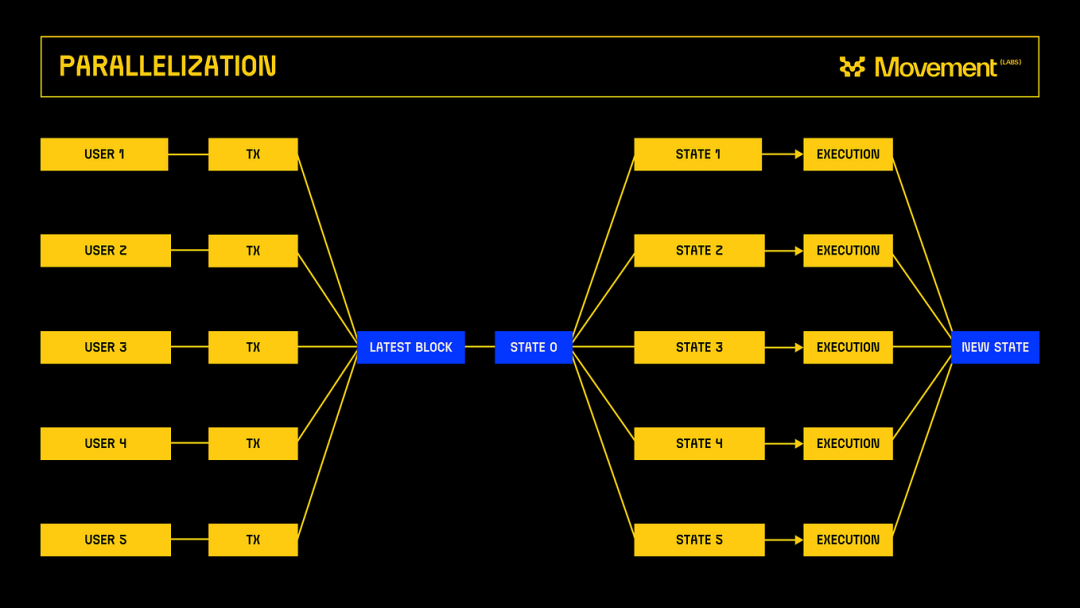
Below is a detailed overview of M2, including its design goals, core features, technical implementation, and role within the Movement Labs ecosystem.
2.3.1 Design Goals and Core Features
1. Enhancing Ethereum’s Scalability and Interoperability:
As a Layer 2 solution, M2’s primary goal is to boost Ethereum’s processing capacity, reduce transaction costs, and enable seamless interoperability with other Move-based blockchain systems.
2. Supporting Multiple Move-Based Blockchains:
M2 supports not only Ethereum but also integrates other Move-language blockchains like Sui and Aptos, enabling it to process diverse blockchain transactions and smart contracts on a unified platform.
3. Enhancing Smart Contract Functionality and Security:
By leveraging Move’s resource safety and strong typing system, M2 provides a more secure and reliable environment for executing complex smart contracts, reducing common vulnerabilities and security issues in smart contract development.
2.3.2 Technical Implementation and Innovations
1. Embedded Ethereum Virtual Machine (EVM) Interpreter:
M2 includes an embedded EVM interpreter, enabling execution of standard Ethereum smart contracts alongside those written in Move. This is a major innovation, allowing developers to use two different programming languages on the same platform.
2. zk-Move: Utilizing Zero-Knowledge Proofs:
M2 plans to implement zk-Move, a technology using zero-knowledge proofs to enhance privacy and security. This will give M2 advantages not only in speed and cost-efficiency but also in privacy protection.
3. Robust Consensus Mechanism and Transaction Processing:
M2 leverages improved consensus algorithms and parallel processing techniques to increase transaction throughput and reduce latency—crucial for large-scale applications and high-frequency trading.
2.3.3 Role in the Movement Labs Ecosystem
Acting as a Connector and Accelerator:
M2 plays a pivotal role in the Movement Labs ecosystem—not only serving as a bridge connecting different blockchains but also improving overall ecosystem efficiency and flexibility. With M2, Movement Labs can offer a versatile, high-performance platform supporting a wide range of applications and services.
Driving Blockchain Adoption:
M2’s multi-platform support and high-performance features make it a powerful tool for promoting wider adoption of the Move language and blockchain technology. By offering an efficient and highly compatible solution, it lowers the barrier for enterprises and developers entering the blockchain space.
Overall, M2 is a highly innovative Layer 2 solution proposed by Movement Labs. By integrating the Move language with Ethereum, it creates an efficient, secure environment capable of operating across multiple blockchain platforms. This technological innovation not only improves transaction processing and reduces costs but also enhances interoperability and security across the entire blockchain ecosystem.
2.4 Movement SDK
Movement Labs’ Movement SDK is a critical development tool designed to provide developers with a powerful and flexible toolkit to facilitate and simplify the use of the Move language and related technologies. This SDK supports Movement Labs’ core mission of advancing blockchain security, interoperability, and innovation through the Move language.
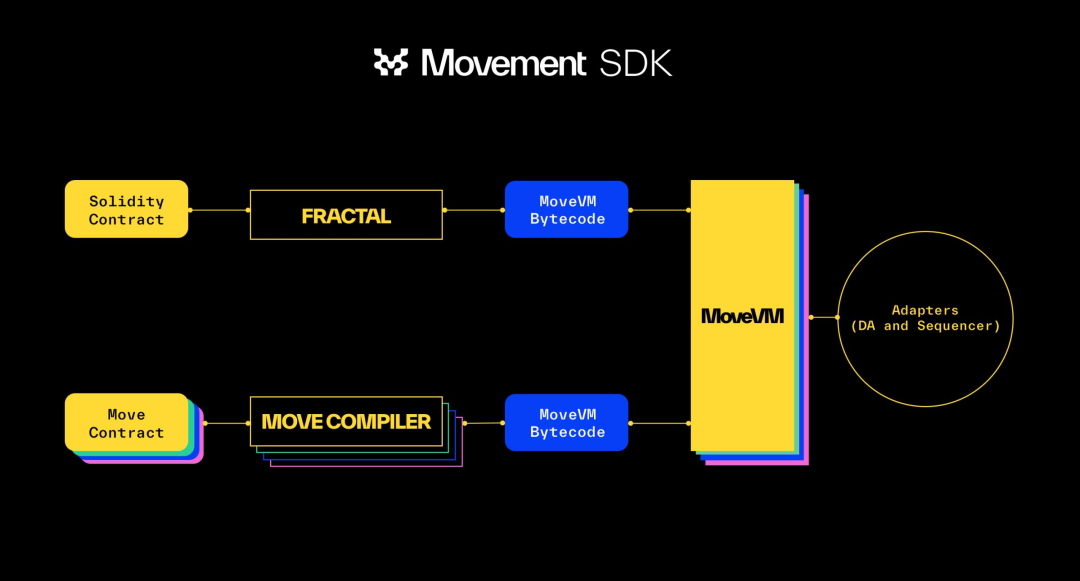
Below is a detailed overview of the Movement SDK, including its features, use cases, and potential impact on developers.
2.4.1 Core Features and Characteristics
1. Comprehensive Development Tools:
The Movement SDK provides a full suite of tools, including compilers, debuggers, and environments for deploying and testing smart contracts. These tools are designed to streamline the development process, making it easier for developers to build, test, and optimize Move-based applications.
2. Highly Integrated Environment:
The SDK supports not only Move-language smart contracts but also integrates with other mainstream blockchain platforms and languages such as Ethereum and its smart contract language Solidity. This integration allows developers to work with multiple tech stacks in a unified environment, enhancing development flexibility and product adaptability.
3. Simplified Resource Management:
By leveraging Move’s resource-oriented features, the SDK offers advanced resource management tools, enabling developers to precisely control and manage assets and permissions within smart contracts.
2.4.2 Use Cases and Applications
1. Smart Contract Development:
The SDK is tailored for Move-language and smart contract developers, especially suitable for applications requiring high security and reliability, such as financial services and asset management.
2. Education and Research:
The Movement SDK is also designed as an educational tool to help academics, students, and researchers learn and experiment with blockchain technology. It offers extensive documentation and sample code to aid understanding of Move language fundamentals and blockchain programming.
3. Enterprise Solutions:
For enterprise developers, the SDK provides the stability and scalability needed to build enterprise-grade applications. It supports large-scale blockchain solutions and complex business logic, enabling enterprises to securely integrate blockchain technology into existing IT infrastructures.
2.4.3 Impact on Developers
Lowering the Entry Barrier:
By offering easy-to-use tools and extensive documentation, the Movement SDK lowers the barrier to entry for blockchain and smart contract development. This enables beginners and non-professional developers to participate in and leverage this technology.
Driving Innovation:
By simplifying complex programming tasks and offering innovative programming models, the SDK encourages developers to explore new application scenarios and business models. This could lead to new entrepreneurial opportunities and market expansion.
Supporting Multi-Platform Development:
The SDK’s multi-platform support allows developers to design and deploy applications across different blockchain environments, enhancing application adaptability and survivability in the market.
In summary, the Movement SDK is a key technology provided by Movement Labs. By delivering comprehensive development tools and resources, it greatly accelerates the adoption of the Move language and related blockchain technologies. It not only empowers developers to create secure and efficient blockchain applications but also fosters innovation and growth across the broader blockchain landscape.
2.5 Movement CLI
Movement Labs’ Movement CLI (Command Line Interface) is a powerful tool for developers, designed to simplify and accelerate the development process of Move language and related technologies via command-line operations. As part of the Movement SDK, Movement CLI enables developers to efficiently manage, compile, test, and deploy smart contracts and applications written in Move. Below is a detailed overview of Movement CLI, including its features, usage methods, and importance in the development workflow.
2.5.1 Core Features
1. Project Management:
Movement CLI provides a series of commands to initialize new Move projects, manage dependencies and configurations, and organize file structures. These capabilities greatly simplify project creation and maintenance.
2. Compilation and Build:
The CLI tool allows developers to easily compile Move code and detect syntax and logical errors, providing rapid feedback to help fix issues during development.
3. Automated Testing:
Movement CLI supports automated testing, allowing developers to write and execute test cases to verify smart contract functionality and performance—essential for ensuring quality and security.
4. Deployment and Migration:
Using the CLI, developers can deploy completed smart contracts to local, test, or production blockchain networks. The CLI also supports migration scripts to manage deployment states of smart contracts across different stages.
2.5.2 Usage Methods
Command-Line Operations:
Movement CLI enables developers to perform various operations through simple command-line instructions. For example, use `move init` to create a new project, `move build` to compile, or `move test` to run tests.
IDE Integration:
Although CLI is command-line based, it can be integrated with modern IDEs and code editors to provide a richer development experience. Developers can leverage CLI functionality within their preferred environments.
2.5.3 Importance in Development Workflow
Efficiency and Speed:
CLI tools improve development efficiency by automating routine tasks like compilation and testing. This enables faster iteration and shorter development cycles.
Flexibility and Control:
Compared to GUIs, command-line interfaces offer greater flexibility and control. Developers can precisely manage every step and customize workflows as needed.
Extensibility:
Designed with extensibility in mind, developers can add new commands or modify existing ones based on project requirements, adapting to evolving development needs and environments.
In conclusion, Movement CLI is a key tool provided by Movement Labs to the developer community. It supports efficient development and operation with the Move language, making complex blockchain projects simpler and more straightforward. Through this tool, Movement Labs not only enhances accessibility to the Move ecosystem but also promotes growth and innovation within the developer community.
3. Team / Partnerships / Funding
3.1 Team
The Movement Labs team consists of several experienced industry experts with deep technical backgrounds and broad industry experience. Below are brief profiles of key team members:
-
Rushi Manche – Co-founder of Movement Labs and former software engineer at Aptos. His expertise lies in software development and blockchain technology, particularly in applying the Move language and blockchain infrastructure.
-
Cooper Scanlon – Another co-founder of Movement Labs, who previously built and audited the first yield aggregator using the Move language. Cooper brings extensive entrepreneurial and technical experience in blockchain and cryptocurrency.
-
Andy Bell – Engineering Director at Movement Labs. Prior to joining, he served as Vice President of Engineering at Biconomy and CTO at Ajuna. His technical leadership is crucial to developing efficient and secure blockchain solutions at Movement Labs.
3.2 Partnerships
Movement Labs has formed several strategic partnerships aimed at strengthening its technological foundation and expanding its influence in blockchain and specific industry applications. Key collaborations include:
1. Strategic Alliance with Gaimin and BNB
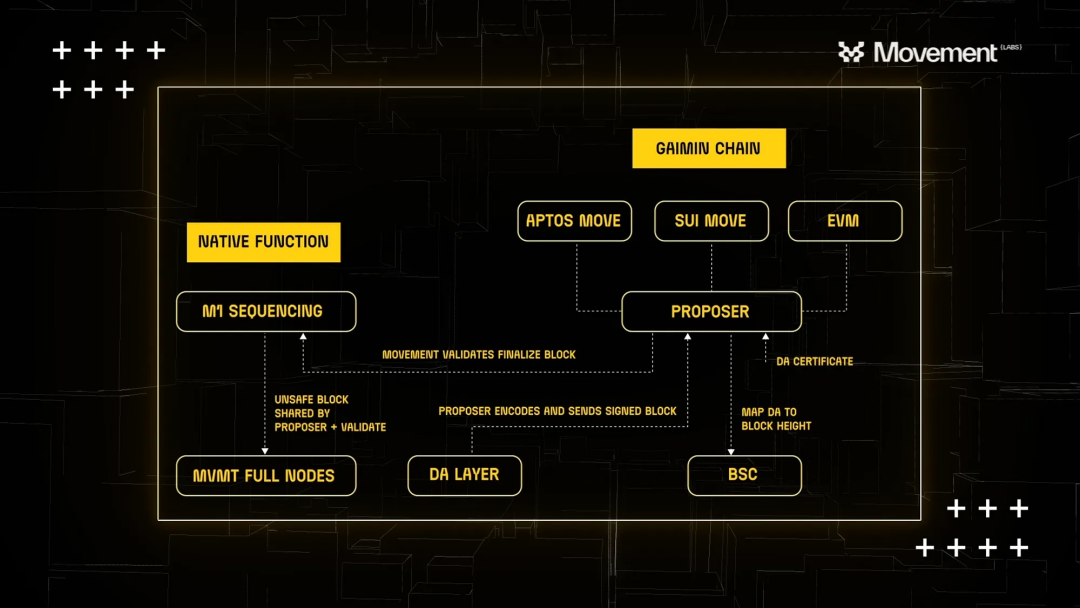
Movement Labs has formed a strategic alliance with Gaimin and BNB Chain to jointly drive innovation in blockchain gaming. This collaboration leverages each party’s technical strengths to create an efficient, user-centric blockchain gaming ecosystem. Gaimin contributes a resource utilization platform, BNB Chain brings robust blockchain capabilities, and Movement Labs provides advanced technical solutions.
2. Collaboration with Henry to Develop a Modular Commerce Platform
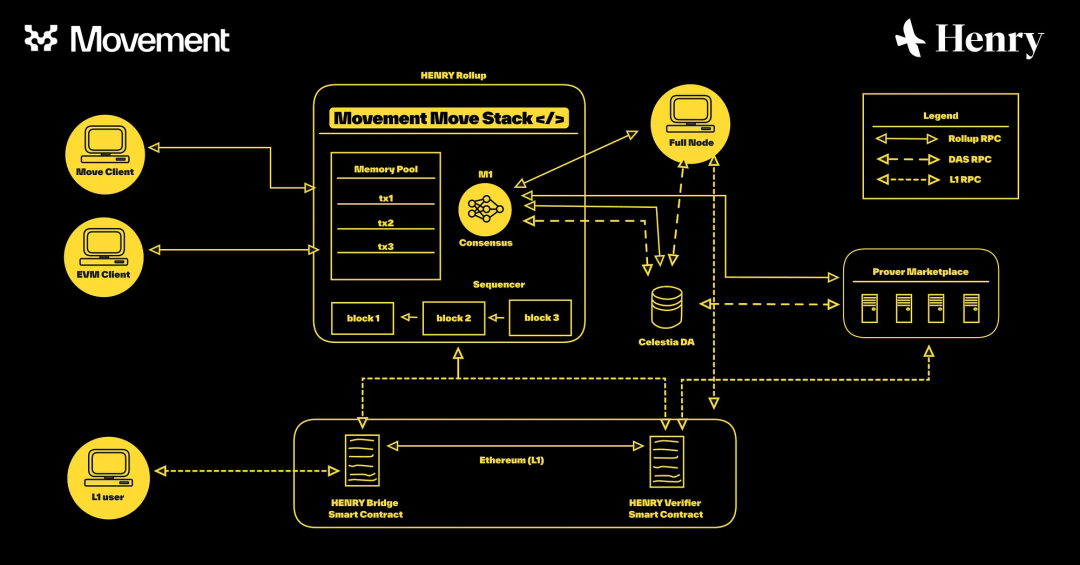
Through its partnership with Henry, Movement Labs introduced the world’s first modular commerce platform, seamlessly integrating blockchain technology into commercial activities. The platform offers services such as crypto cashback rewards and NFT-based loyalty programs, greatly simplifying enterprise adoption of blockchain while enhancing customer engagement and loyalty.
3. Deep Collaboration with Thala Labs
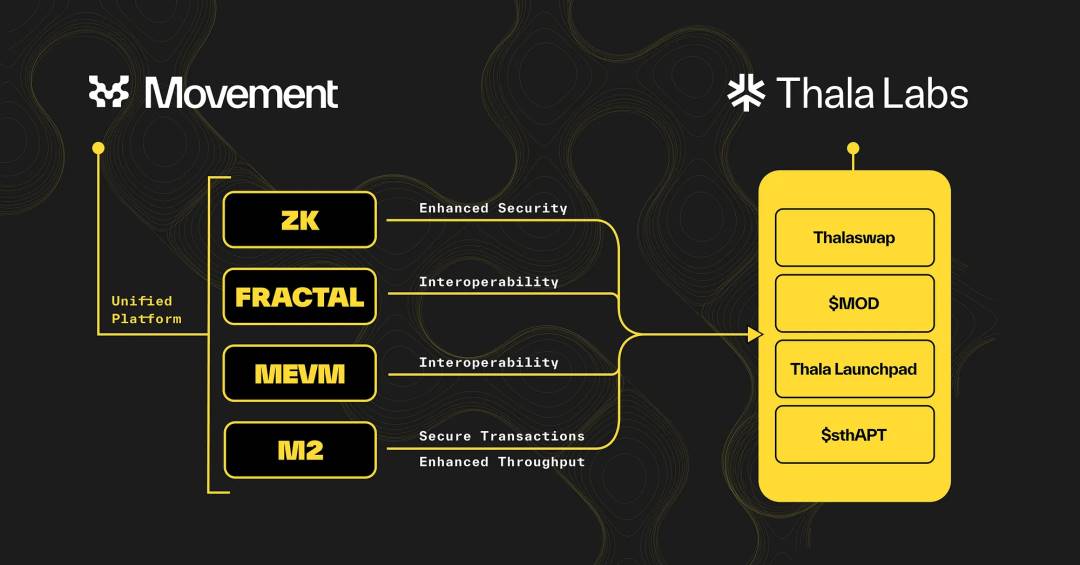
Movement Labs’ collaboration with Thala Labs focuses on advancing Move-based decentralized finance (DeFi). This partnership leverages Thala Labs’ DeFi platform and Movement Labs’ technology—especially the M2 network—to enhance scalability, security, and user experience. Thala Labs uses this technical collaboration to deliver an integrated DeFi solution including decentralized exchanges, stablecoins, and liquid staking.
3.3 Funding
Movement Labs’ funding history reflects strong growth and market confidence in the blockchain sector. Below is a summary of its major funding rounds:
1. Pre-Seed Round: In September 2023, Movement Labs raised $3.4 million in a pre-seed round led by Varys Capital and DAO5. The funds were allocated to early-stage development and launching the Movement SDK, aiming to deliver a secure and high-performance Move environment for the blockchain ecosystem.
2. Seed Round: Later in 2023, Movement Labs secured another $3.4 million in seed funding to further support product development and market expansion.
3. Series A Round

In April 2024, Movement Labs completed a $38 million Series A round led by Polychain Capital, with participation from Hack VC, Foresight Ventures, Nomad Capital, Bankless Ventures, OKX Ventures, DAO5, and Aptos Labs. The funding will support bringing Facebook’s Move Virtual Machine to Ethereum, addressing smart contract vulnerabilities and increasing transaction throughput.
4. Investment from Binance Labs
In May 2024, Binance Labs invested in Movement Labs, with the amount undisclosed. This investment signifies Binance Labs’ support for Movement Labs, further strengthening its development and expansion in the blockchain domain.
4. Project Evaluation
4.1 Sector Analysis
Movement Labs primarily operates in the blockchain infrastructure and smart contract platform sector, focusing on developing and deploying Move-based blockchain networks and applications. The project’s key feature is providing a modular framework that allows non-Move protocols to leverage the advantages of the Move programming language without directly writing Move code. Additionally, Movement Labs’ products support interoperability with the Ethereum Virtual Machine (EVM), emphasizing security and efficiency—particularly in mitigating smart contract vulnerabilities and boosting transaction throughput.
Comparable projects include:
1. Polkadot
Polkadot is a multi-chain interoperability platform enabling different blockchains to transfer messages and value within a unified ecosystem, similar to the modular and interoperable solutions offered by Movement Labs. Polkadot supports connectivity among various blockchain networks through its parachain architecture.
2. Cosmos
Cosmos aims to solve blockchain interoperability issues by enabling secure exchange of data and value between different blockchains via its IBC (Inter-Blockchain Communication) protocol. This aligns with Movement Labs’ goal of creating an integrated network supporting multiple protocols and applications.
3. Avalanche
Avalanche is a high-performance blockchain platform supporting the creation and deployment of customized blockchain networks. Known for exceptional scalability and fast confirmation times, it parallels Movement Labs’ pursuit of high throughput and secure transactions through its M1 and M2 products.
4.2 Project Strengths
1. Technological Innovation and Security
Introduction of the Move Language: By utilizing the Move language, Movement Labs enhances smart contract security. Move is inherently security-focused, especially in resource management and control, ensuring strict ownership and lifecycle governance of digital assets—reducing common vulnerabilities like reentrancy attacks and data races.
Modularity and Scalability: Movement Labs’ blockchain solutions support high modularity and scalability, allowing developers to customize and extend their own blockchain networks based on specific needs, increasing solution flexibility and applicability.
2. Interoperability and Ecosystem Integration
Ethereum Compatibility: Movement Labs’ platform is designed for interoperability with the EVM, enabling Ethereum developers to seamlessly migrate to its platform, leveraging familiar Solidity tools while benefiting from Move’s security advantages.
Multi-Chain Support: Beyond Ethereum, Movement Labs’ architecture supports interoperability with other Move-based blockchains like Aptos and Sui, further enhancing its platform’s market appeal and technical adaptability.
3. Market Adaptability and Financial Backing
Strong Funding Background: Movement Labs received significant early-stage funding from prominent investors including Polychain Capital, Binance Labs, and other well-known VCs, providing ample capital for technology development and market outreach.
Positive Community and Market Response: Movement Labs’ products have received strong market reception, with active community engagement and high user participation—key drivers for technology adoption and ecosystem growth.
4. Team and Leadership
Experienced Team: Led by individuals with deep blockchain and technical expertise from projects like Aptos and Sui, the team’s experience and network provide a solid foundation for Movement Labs’ development.
4.3 Weaknesses
1. Technical Implementation Challenges
Movement Labs is built on the Move language, which, while offering higher security and flexibility, is relatively new and lacks mature development tools and a broad developer base. This may slow adoption, especially for developers migrating from more established platforms like Ethereum or Polkadot. Additionally, the complexity of the technology may hinder quick resolution of bugs or issues, potentially affecting project timelines and stability.
2. Ecosystem Maturity
As an emerging project, Movement Labs’ ecosystem is not yet fully mature. This includes completeness of development tools, depth of documentation, and strength of developer support systems. Ecosystem maturity directly affects adoption rates among developers and enterprises; without a robust and well-supported environment, long-term growth may be constrained.
5. Conclusion
In summary, Movement Labs demonstrates strong potential and a unique positioning within the blockchain infrastructure space. By adopting the Move language, the project emphasizes smart contract security and efficiency, showcasing significant improvements over existing technologies—particularly in Ethereum interoperability and modular design. Despite facing competition and challenges in technology adoption, Movement Labs is well-positioned to play a pivotal role in advancing blockchain technology and applications in the coming years, thanks to its innovative technical solutions, strong funding support, and a development strategy led by an experienced team.
As more developers and enterprises begin exploring and implementing Move-based projects, Movement Labs’ ecosystem is expected to mature and expand further. The project’s success will depend on sustained technological innovation, community building, and agile responsiveness in the rapidly evolving blockchain market. If it continues to push industry standards and deliver practical solutions, Movement Labs may not only be a technological pioneer but also a key driver advancing the entire blockchain industry forward.
Join TechFlow official community to stay tuned
Telegram:https://t.me/TechFlowDaily
X (Twitter):https://x.com/TechFlowPost
X (Twitter) EN:https://x.com/BlockFlow_News






