Interview with Offchain Labs CEO: Why Did Robinhood Choose Arbitrum?
TechFlow Selected TechFlow Selected
Interview with Offchain Labs CEO: Why Did Robinhood Choose Arbitrum?
The industry's development requires greater capacity, and the L2 roadmap is the only path capable of meeting future demands.
 Navigating Web3 tides with focused insights
Compiled & Translated by: TechFlow
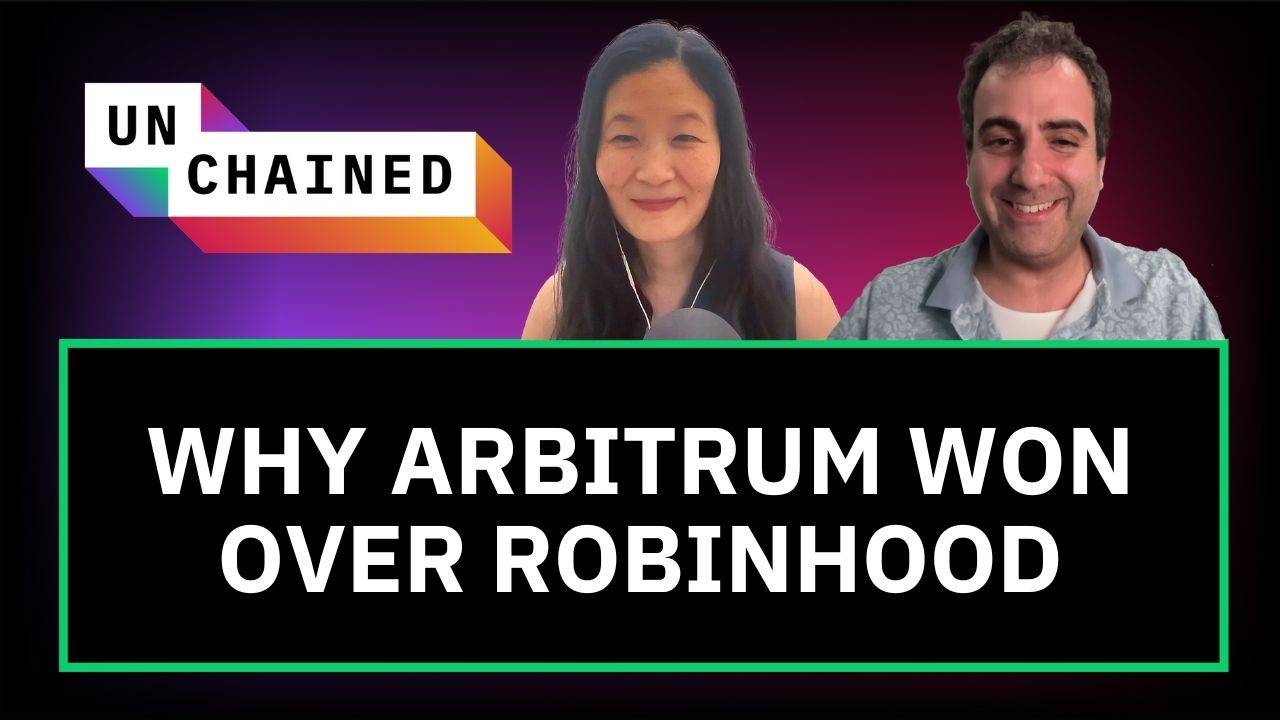
Guest: Steven Goldfeder, Founder and CEO of Offchain Labs
Host: Laura Shin
Podcast Source: Unchained
Original Title: Why the Arbitrum Stack Won in the Race to Support Robinhood Chain
Air Date: July 4, 2025
Key Takeaways
Steven Goldfeder, CEO of Offchain Labs, explains why Robinhood chose Arbitrum to rebuild its core product’s crypto infrastructure, the potential of tokenizing stocks on-chain, and why we may be re-entering a “zero-to-one” phase in the crypto space.
Offchain Labs co-founder Steven Goldfeder shared on the Unchained podcast why Robinhood chose to rebuild its platform using the Arbitrum tech stack—highlighting how this reflects the evolution of crypto technology and how such moves could ultimately bridge Web2 and Web3.
Highlights from the Discussion
-
For Robinhood, launching its own blockchain offers several compelling advantages, with MEV capture being key. Both MEV and fee capture are unique benefits that come from operating your own chain.
-
Whether tokenized stock issuance happens on Arbitrum One or on Robinhood’s own chain, this is truly the "ultimate prize" we’ve been waiting for—not just about launching another asset on-chain, but deeply integrating blockchain technology with existing Web2 infrastructure.
-
Tokenizing stocks and introducing them into blockchain markets is genuinely innovative. We need to deeply understand how traditional finance and blockchain systems can interact. It's challenging, but not something we should shy away from.
-
Crypto will be at the heart of the next financial revolution. We can't stay stuck in old models—blockchain and cryptocurrencies will become the future financial infrastructure, and eventually everyone will adapt and move in this direction.
-
The technical aspect of liquidity fragmentation only accounts for 10%; the real challenge is 90% user experience (UX) and wallet support. No matter how sophisticated the protocols are, if wallets don’t simplify user interactions and create a unified environment, these innovations won’t gain traction.
-
Blockchain will integrate into our financial system as a core component. I believe over time this will become increasingly evident—blockchain will play a crucial role.
-
As blockchain technology becomes mainstream and widely accepted, institutions will realize that building on it not only improves service for users but also reduces costs and increases profitability—a win-win scenario.
-
It’s important to give users sovereign choice—meaning they can always transfer their assets to their own wallets or choose alternative custody options.
-
If you think the future of crypto looks exactly like what we saw last week, then maybe L2s seem unnecessary. But in reality, the industry needs much greater capacity. The L2 roadmap is the only path capable of meeting future demands.
-
Through the L2 development roadmap, we can transition from a single L1 platform to a more decentralized and efficient L2 ecosystem. While this isn’t easy, once interoperability challenges are solved, long-term sustainability becomes achievable.
Why Robinhood Chose Arbitrum—and How Much Control They Really Have
Laura:
Welcome to Unchained, July 4, 2025. Today’s guest is Steven Goldfeder, co-founder and CEO of Offchain Labs. Steven, welcome to the show.
One of the big recent stories is Robinhood announcing perpetual contracts, tokenized stocks, and its own blockchain. This shows that not only are crypto-native players pushing adoption, but others are beginning to recognize blockchain’s potential. Robinhood initially launched on Arbitrum One while using the Arbitrum tech stack to build its own chain—an important milestone for Arbitrum. There were rumors they considered Solana at first, but ultimately went with Arbitrum. Steven, can you share the main reasons behind Robinhood’s decision?
Steven:
Robinhood’s choice came down to two key factors. First, the maturity and security of the Arbitrum tech stack. Our technology has been running stably in production for years and can support enterprises at Robinhood’s scale.
Second, flexibility. Robinhood started by launching tokenized stocks and ETFs on Arbitrum One, while announcing plans to migrate to their own Arbitrum-based chain—Robinhood Chain. Arbitrum is the only ecosystem that offers both a trusted neutral chain (like Arbitrum One) and a top-tier blockchain tech stack. This combination allows Robinhood to launch quickly and easily scale to their own chain as demand grows, without major architectural changes.
Laura:
One appeal of the Arbitrum tech stack is that it enables high customization for businesses. Can you elaborate on the customization options provided by Arbitrum Orbit?
Steven:
Absolutely. Customization falls into two categories: basic and advanced. Basic customization includes options we directly support, such as custom gas tokens. Arbitrum One uses Ethereum as its default gas token, but users can choose stablecoins or their own tokens instead. Similarly, data availability layers can be swapped—for example, Celestia.
Arbitrum One uses Ethereum for data availability—the most secure option—but we also support Celestia and many emerging DA solutions.
These are two examples of out-of-the-box customization. Then there are deeper customizations, like block times. Arbitrum One runs at 250ms, but some chains (like Ray) operate at 100ms—the underlying tech is stable enough to support this. These are just parameters you can set.
Then there’s what I call “deeper customization,” where you modify backend components yourself—ways that might not be officially supported, but are still possible.
For instance, chains like Phoenix are building privacy directly into the Arbitrum stack using fully homomorphic encryption. Others like Plume and Kaito are adding institutional KYC controls at the chain level, creating environments where all participants are compliance-checked upon entry. These are just a few examples—all built on Arbitrum’s core technology.
Some communities even enforce royalty payments—if you transfer certain assets on-chain, fees are automatically collected. Many variations exist, all leveraging Arbitrum’s foundational tech.
How Arbitrum Stylus Enhances User Experience for Robinhood and Other Platforms
Laura:
Among Arbitrum’s technological advantages, one standout product is Arbitrum Stylus. Can you explain its features and how it solves problems developers face when using Arbitrum?
Steven:
Arbitrum Stylus, launched in September last year, is a unique innovation in the blockchain space—with no equivalent in other ecosystems today. Its main feature is enabling developers on Arbitrum One to use traditional programming languages like Rust and C++, beyond just Solidity. This is highly practical, especially for high-performance computing tasks like verifying new signature schemes or zero-knowledge proofs. Rust and C++ are typically far more efficient than Solidity, so developers can bring existing code directly on-chain for smart contracts.
Additionally, Stylus delivers dramatic performance gains for complex computations like AI inference. Our benchmarks show up to 10x faster computation at significantly lower cost.
Another major advantage is flexibility. Traditionally, developers must choose early between EVM chains and Rust-based chains—a decision that locks in development paths. On Arbitrum and any Stylus-enabled chain, developers can use both EVM and other languages simultaneously, choosing the best tool for each task. Contracts written in different languages can seamlessly interact, and developers don’t even need to know which language a contract was written in. For example, an app can be mostly Solidity, with performance-critical parts rewritten in Rust.
This seamless integration is crucial. When bridging Web2 and Web3, many Web2 developers prefer languages like Rust, C, or C++. We want a single environment that attracts both Solidity-loving EVM developers and experienced Web2 engineers who can now directly apply their skills to blockchain applications.
Laura:
I imagine companies like Robinhood, with large legacy codebases, would find this extremely valuable for simplifying integration with blockchain tech. Is that part of Stylus’ appeal?
Steven:
I can’t speak to Robinhood’s specific implementation, but I do know they’re very interested in Stylus and see it as a significant breakthrough. Beyond that, Stylus empowers other developers to build on Robinhood’s chain. If Robinhood positions its chain as a leading platform for real-world assets (RWAs), traditional brokerages—many with decades of legacy code—may consider migrating. Stylus makes that transition smoother and opens up broader ecosystem possibilities.
Why Liquidity Fragmentation Remains a Major Unsolved Challenge
Laura:
Do you think Arbitrum Stylus can help solve liquidity fragmentation—a long-standing issue in DeFi? As users interact across chains via bridges and interoperability protocols, could Stylus play a role here?
Steven:
Liquidity fragmentation is indeed a major issue, but it’s in a different domain. We must focus on solving it—Option Labs is actively working on this, aiming to optimize UX by connecting not only all Arbitrum chains but all blockchains, especially EVM ones. This will make cross-chain interactions easier for users and enable shared experiences for developers.
Stylus is a powerful toolkit for building anything on-chain, but I’m not sure it directly addresses liquidity fragmentation. The only indirect benefit is that it allows on-chain verification of zero-knowledge proofs (ZKPs). If bridge solutions require ZKPs—which they often do—this capability could be helpful.
Why MEV Capture Is So Attractive to Robinhood
Laura:
I think another critical factor for Robinhood is control over MEV.
Steven:
Comparing two options—operating on a public blockchain versus launching your own chain—Robinhood had strong reasons to go with the latter, and MEV capture is one of them.
MEV refers to extra profits generated from transaction ordering on-chain, typically captured by miners or validators. If Robinhood operated on a public chain, their MEV would go to others. By owning their own chain, they retain full control over MEV capture. This is significant. For example, they could use our recently launched Time Boost on Arbitrum One to optimize MEV, or adopt solutions developed by Dashboard. Specific choices depend on their strategy—I can’t share details today—but only on their own chain can they achieve this unique level of control.
Another key reason is fee capture. On a public blockchain, Robinhood pays fees for every user transaction, which flow to others. On their own chain, those fees stay within their system and become revenue. Not only do they reduce costs, but increased trading volume directly boosts income. This dual benefit—MEV and fee capture—is a unique advantage of launching your own blockchain.
Why Tokenized Stocks Could Be Arbitrum’s “Ultimate Prize”
Laura:
In Robinhood’s recent announcements, particularly the launch of Robinhood Chain, why is tokenized stock issuance so exciting for your team?
Steven:
This ties closely to Robinhood Chain. We take a neutral stance on the relationship between Arbitrum and Robinhood Chain, but within the broader Arbitrum ecosystem, tokenized stock issuance is what excites us most. Whether on Arbitrum One or Robinhood’s own chain, this is truly the “ultimate prize” we’ve been waiting for. Let me share why.
Back in 2013, when I first encountered smart contracts, I wasn’t excited by niche verticals like NFTs (though they’re interesting). What amazed me was the potential to rebuild and transform existing systems. Over the past decade, that vision faded—crypto became seen as a separate world rather than a tool to reshape finance.
Robinhood brings us back to crypto’s original promise. They’re not just launching a new crypto product—they’re fundamentally rebuilding their core business. As Robinhood CEO Vlad said, they’re “rebuilding” their core product. At the event, they showed the app experience in the U.S. vs. Europe—identical. Users wouldn’t notice the difference. In the U.S., trades go through traditional brokers; in Europe, they settle on Arbitrum. That seamless shift is groundbreaking.
This isn’t just about “launching another asset on-chain”—it’s about deeply integrating blockchain with existing Web2 infrastructure. Every Robinhood user, whether they know it or not, interacts with blockchain and crypto. The potential here is immense.
What It Means to Be Part of the Arbitrum Ecosystem
Laura:
I suspect Robinhood’s decision was influenced by Arbitrum’s strong Total Value Locked (TVL)—slightly ahead of Base. This leads me to ask: what concrete benefits does Robinhood gain from launching on Arbitrum One before moving to their own chain? How does being part of the Arbitrum ecosystem help?
Steven:
Liquidity is key. Robinhood is a powerful market maker—I believe they’ll have no trouble bootstrapping liquidity on their own chain. But for a product like theirs, deep liquidity networks are essential. Arbitrum One provides exactly that environment.
Looking ahead, even if assets are issued on Robinhood Chain, they’ll still impact the broader Arbitrum ecosystem. Arbitrum already has a mature and robust DeFi landscape. Now, traditional assets like stocks and ETFs can join native crypto assets, integrating into existing protocols. With tokenized stocks, users can collateralize or borrow against them—transforming the ecosystem’s functionality and potential.
This change benefits not just Arbitrum but the wider Ethereum ecosystem. Issuing these assets on-chain vastly expands blockchain’s utility. I believe this innovation will drive Arbitrum One’s growth in both short and long term.
How Stock Tokenization Could Change Investing—and Potential Risks
Laura:
You may have seen Rob Hadick’s tweet—or maybe not, since you’re busy. He suggested combining stocks with DeFi could have profound implications, especially as tokenized assets are used in novel ways. He also warned of risks, like tokenized stock prices diverging from their underlying assets.
Traditional stock markets aren’t open 24/7. What are your thoughts? What should people watch out for?
Steven:
I haven’t seen his exact points, so I’ll respond generally—if my answer doesn’t align perfectly, it’s because I missed the tweet.
First, as you noted, traditional markets trade 5 days a week, not 24/7. Still, they have after-hours trading, though efficiency can improve. Deep liquidity and arbitrage opportunities are key to keeping prices aligned across markets.
Tokenizing stocks and bringing them to blockchain markets is genuinely innovative. We need to understand how traditional finance and blockchain dynamics connect. It’s challenging, but we shouldn’t retreat because of it.
In fact, 24/7 trading offers real benefits. For example, redeeming from a traditional money market fund takes 5 days, while on-chain stablecoins allow instant redemption—critical for large holders avoiding lost interest during settlement.
Overall, stock tokenization will offer investors and everyday users more convenient, efficient investing. Price divergence may occur short-term, but that’s expected during a zero-to-one breakthrough. As tech advances and markets mature, these issues will resolve.
Looking forward, more assets will be issued directly on-chain. As Robinhood CEO Vlad said on CNBC last week, crypto is central to the next financial revolution. From paper records to computers to crypto—each shift brings friction. But we can’t stay in the past. Blockchain and crypto will be the future financial infrastructure, and I believe everyone will eventually adapt and move this way.
How the Arbitrum DAO Benefits from This Partnership
Laura:
I have a question—such partnerships often involve financial incentives. Can you discuss whether there are any financial terms with Robinhood? Or share any related info?
Steven:
Due to policy restrictions, I can’t disclose specifics. But I can say this partnership is highly beneficial for both sides. It helps Robinhood expand its offerings and brings significant value to the Arbitrum DAO. The DAO gains not only from community growth through integrations but also economic returns from every project launched.
Liquidity Fragmentation Is Easier to Solve Than Most Think
Laura:
Let’s return to liquidity fragmentation. As these worlds converge, this issue may intensify. Do you have any promising solutions? Where should we focus? Overall, how do you see this being resolved?
Steven:
This is something I’ve thought deeply about—and my view might be controversial. Many see liquidity fragmentation as a technical problem solvable by engineering teams building complex protocols. But I believe the technical part is only 10%. The real 90% is user experience (UX) and wallet support. No matter how advanced the protocol, if wallets don’t simplify interactions and create a unified feel, these innovations won’t work.
Of course, we can improve protocol design. There are already decent protocols mitigating fragmentation—imperfect, but progress. But the real gap is UX. Today’s blockchain experience is like internet without browsers—users input complex addresses and perform tedious steps, unfriendly to average users.
We’re building “browser-like” tools to simplify blockchain interaction. Imagine YouTube asking, “Do you want to watch via AWS or ECP?”—it’s meaningless. Users care about app experience, not backend tech. So redesigning frontends is key—and achievable, yet no one’s fully done it.
We’re rolling out initial solutions soon—more details in the coming weeks. By integrating existing tools and tech, I believe we can solve most of the liquidity fragmentation challenge.
Where the Fusion of Crypto and Traditional Finance Is Headed
Laura:
I imagine you’re having some fascinating conversations—though you probably can’t share much. But can you talk about trends you’re seeing, or where the industry might head in the near term? We’re seeing many companies entering similar spaces from different angles, with different strengths. Also, a long-held belief—that a “financial internet” is emerging—is becoming real. I recall someone on Bankless mentioning views you often express. We’re witnessing this slowly—perhaps over ten years or more.
Based on your observations, what might happen soon? Are there interesting ways these two worlds are merging that ordinary users haven’t noticed yet?
Steven:
Yes, I do say this often. I think we misuse terminology. No one says “I work in centralized finance”—finance is just finance. Blockchain isn’t a niche tech for a few. It’s a tool to reconstruct the entire financial system, and eventually, it will integrate into finance as a core part. Over time, this will become undeniable—blockchain will play a vital role.
Entering this space is hard—everyone waits for someone to break the ice. Now, smart people and big institutions say: “I thought this impossible, but if they can do it, so can we.” It’s both motivating and observational. Meanwhile, they study existing token standards, exploring collaboration or reuse, and building open standards. These are key industry dialogues today. I’d say nearly every major financial institution now has a team researching blockchain integration. Five years ago, you had to convince them it was worth discussing—now it’s the opposite.
With shifting regulations and bold moves by forward-thinking firms like Robinhood, others now have reference points. As the saying goes, “No one ever got fired for choosing IBM.” As blockchain becomes mainstream, institutions will see that building on it improves user service, reduces costs, and boosts profits—a win-win. And as pioneers act, others follow with greater confidence.
Companies like BlackRock, Franklin Templeton, and WisdomTree are already building products on Arbitrum. For everyday users, going back to my earlier point, the most exciting thing is not needing to deal with technical complexity. People once thought using blockchain on Robinhood meant downloading wallets, backing up seed phrases, connecting RPCs. But now, blockchain serves both tech-savvy and regular users seamlessly.
I believe giving users sovereign choice is crucial—letting them transfer assets to their own wallets anytime or choose other custodians. That’s a core strength of blockchain. But I also don’t think the next billion users will onboard the way we do today—with complex steps. We need better UX to make that happen.
Defending Ethereum and Responding to L2 Critics
Laura:
Over the past year and a half, some have claimed L2s like Arbitrum are “parasites” on Ethereum—draining value like fees from the mainnet. While not universally accepted, the idea reflects concerns. Also, the “ultrasound money” theory hasn’t fully delivered, reshaping the landscape.
I wonder—during the recent event where AJ, Vitalik, and Johann appeared together, it seemed the Ethereum Foundation’s attitude toward L2s is shifting. What does this moment mean for the Ethereum community? What’s the relationship between Ethereum and L2s? And what about Vitalik’s view on DeFi?
Steven:
I believe the core values of the Ethereum community remain intact. In fact, I was one of the first to publicly share details—I can tell you Vitalik strongly supports current developments. His active participation speaks volumes. While I can’t speak for him, based on our conversations, he’s very excited and sees this as a major victory for Ethereum.
To those questioning the L1-L2 relationship—especially those asking, “Do we really need L2s? Why not put everything on L1?”—I think their perspective is too narrow. If you think crypto’s future looks like last week, maybe L2s seem unnecessary. But the industry needs massive scalability. Institutions are entering blockchain at scale, expanding to 32 countries, building core apps on this tech. We need scalable solutions—and the L2 roadmap is the only path that meets future demand.
For example, if you build a new lane on a single-lane highway, someone might say, “Why so many lanes? Traffic isn’t bad.” But a new city is forming—it’ll fill up. We can’t keep building lanes yearly—we need long-term planning. Through the L2 roadmap, we shift from a single L1 to a more decentralized, efficient L2 ecosystem. It’s not easy, but once interoperability is solved, long-term sustainability follows.
The Ethereum community has crossed this threshold. Some issues remain, but we’ve built the foundation for future growth. Robinhood recently chose Ethereum as the core for its blockchain tech, using Arbitrum for crypto trading. This isn’t just my opinion—Robinhood explicitly stated they chose Ethereum for its best-suited ecosystem, and Arbitrum as the optimal tech to achieve their goals.
Join TechFlow official community to stay tuned
Telegram:https://t.me/TechFlowDaily
X (Twitter):https://x.com/TechFlowPost
X (Twitter) EN:https://x.com/BlockFlow_News
 深潮TechFlow