Understanding io.net: Connecting Global GPU Resources and Reshaping the Future of Machine Learning
TechFlow Selected TechFlow Selected
Understanding io.net: Connecting Global GPU Resources and Reshaping the Future of Machine Learning
io.net aims to leverage distributed GPU resources to address computational challenges in the fields of AI and machine learning.
 Navigating Web3 tides with focused insights
Author: Chain Tea House
1. Project Overview
io.net is a decentralized GPU system built on Solana, Render, Ray, and Filecoin, designed to leverage distributed GPU resources to address computational challenges in AI and machine learning.
By aggregating underutilized computing resources—such as independent data centers, cryptocurrency miners, and excess GPUs from blockchain projects like Filecoin and Render—io.net addresses the shortage of computing power, enabling engineers to access massive computational capacity through an easily accessible, customizable, and cost-effective system.
Moreover, io.net introduces a decentralized physical infrastructure network (DePIN), integrating resources from diverse providers to deliver scalable, cost-efficient, and easy-to-implement computing power.
The io cloud currently boasts over 95,000 GPUs and more than 1,000 CPUs, supporting rapid deployment, hardware selection, geographic flexibility, and transparent payment processes.
2. Core Mechanisms
2.1 Decentralized Resource Aggregation
Decentralized resource aggregation is one of io.net's core features, allowing the platform to harness geographically dispersed GPU resources worldwide to support AI and machine learning workloads. This strategy aims to optimize resource utilization, reduce costs, and enhance accessibility.
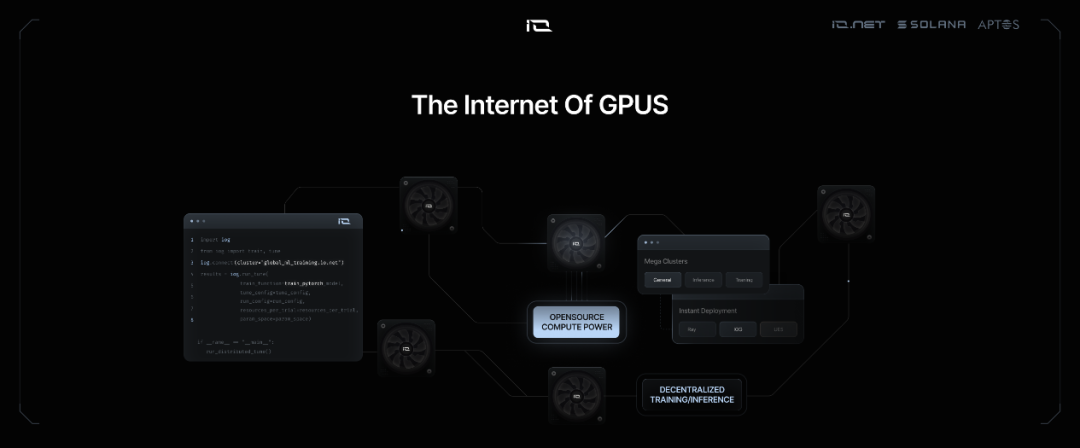
Detailed breakdown:
2.1.1 Advantages
-
Cost Efficiency: By leveraging underused GPU resources in the market, io.net delivers computing power at significantly lower costs than traditional cloud services. This is particularly beneficial for data-intensive AI applications that typically require substantial computing resources, which can be prohibitively expensive using conventional methods.
-
Scalability and Flexibility: The decentralized model allows io.net to expand its resource pool seamlessly without relying on a single vendor or data center. This provides users with the flexibility to select resources best suited to their specific task requirements.
2.1.2 How It Works
-
Diverse Resource Sources: io.net aggregates GPU resources from multiple sources, including independent data centers, individual crypto miners, and spare capacity from other blockchain projects such as Filecoin and Render.
-
Technical Implementation: The platform leverages blockchain technology to track and manage these resources, ensuring transparency and fairness in allocation. Blockchain also enables automated payments and incentive distribution to users contributing extra computing power.
2.1.3 Key Steps
-
Resource Discovery and Registration: Resource providers (e.g., GPU owners) register their devices on the io.net platform. The platform verifies performance and reliability to ensure compliance with specific standards and requirements.
-
Resource Pooling: Verified resources are added to a global resource pool available for user leasing. Resource management and distribution are handled automatically via smart contracts, ensuring transparency and efficiency.
-
Dynamic Resource Allocation: When users initiate computing tasks, the platform dynamically allocates resources based on task needs (e.g., compute power, memory, bandwidth). Allocation considers cost-efficiency and geographical proximity to optimize execution speed and cost.
2.2 Two-Token Economic System
io.net’s dual-token economic system is a core feature of its blockchain network, designed to incentivize participants and ensure operational efficiency and sustainability. The system consists of two tokens: $IO and $IOSD, each serving distinct roles. Below is a detailed overview of this economic structure.
2.2.1 $IO Token
$IO is the primary utility token of the io.net platform, used for various network transactions and operations. Its main functions include:
-
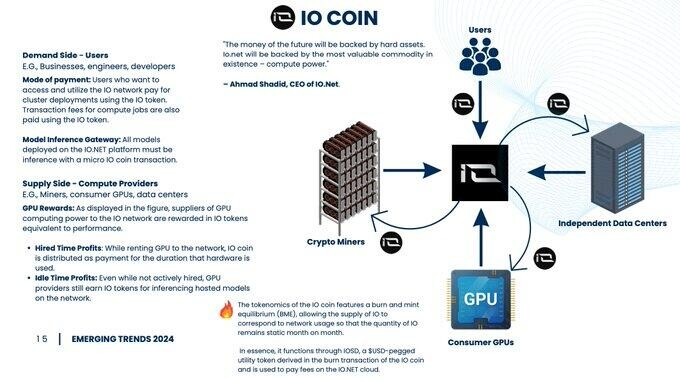
Payments and Fees: Users pay for computing resources—such as GPU usage—with $IO. Additionally, $IO covers service and transaction fees across the network.
-
Resource Incentives: $IO tokens are distributed as rewards to users who contribute GPU computing power or help maintain the network, encouraging sustained participation.
-
Governance: Holders of $IO tokens can participate in governance decisions, including voting rights that influence the platform’s future direction and policy adjustments.
2.2.2 $IOSD Token
$IOSD is a USD-pegged stablecoin designed to provide a stable store of value and medium of exchange on the io.net platform. Key functions include:
-
Value Stability: $IOSD maintains a fixed 1:1 peg to the US dollar, offering users a payment method insulated from crypto market volatility.
-
Transaction Simplicity: Users can pay platform fees—including computing resource costs—with $IOSD, ensuring price stability and predictability.
-
Fee Coverage: Certain network operations or transaction fees can be settled in $IOSD, streamlining the payment process.
2.2.3 How the Dual-Token System Works
The dual-token system supports network operations and growth through the following mechanisms:
-
Provider Incentives: Resource providers (e.g., GPU owners) receive $IO tokens for contributing their devices to the network. These tokens can be used to purchase additional computing resources or traded on the open market.
-
Fee Payments: Users can pay for computing resources using either $IO or $IOSD. Choosing $IOSD mitigates risks associated with cryptocurrency price fluctuations.
-
Economic Incentives: The circulation and use of $IO and $IOSD stimulate economic activity, increasing liquidity and engagement across the network.
-
Governance Participation: $IO serves as a governance token, enabling holders to propose and vote on key platform decisions.
2.3 Dynamic Resource Allocation and Scheduling
Dynamic resource allocation and scheduling is a core function of io.net, focused on efficiently managing and optimizing computing resources to meet diverse user demands. This intelligent, automated system ensures tasks run on optimal resources while maximizing utilization and performance.
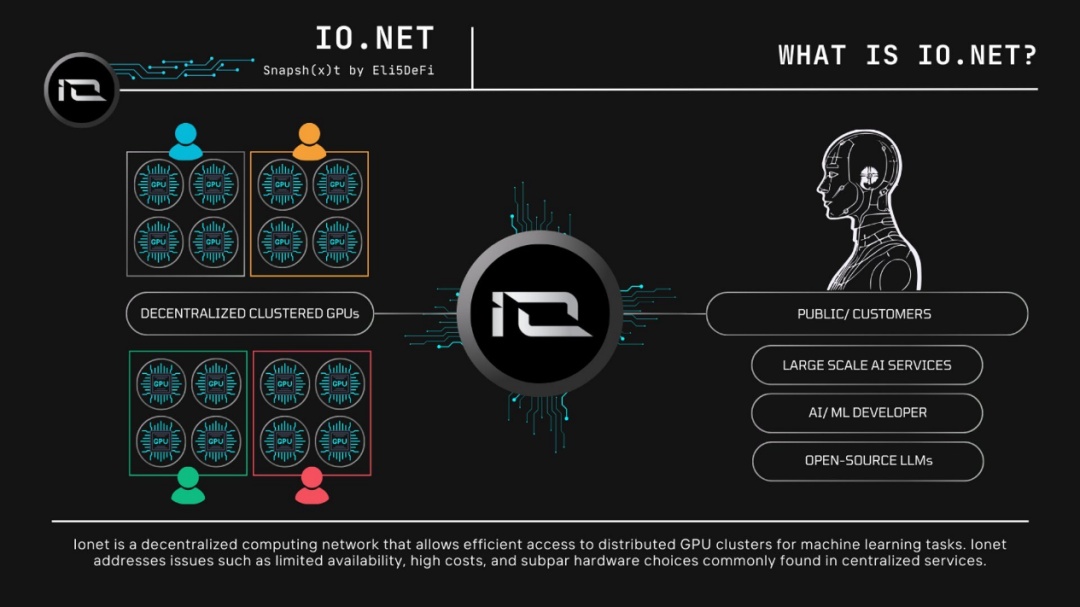
Detailed aspects of this mechanism:
2.3.1 Dynamic Resource Allocation Mechanism
1. Resource Identification and Classification:
-
When resource providers connect their GPUs or other computing assets to io.net, the system first identifies and classifies them by evaluating performance metrics such as processing speed, memory capacity, and network bandwidth.
-
These resources are then tagged and cataloged for dynamic allocation based on task-specific requirements.
2. Demand Matching:
-
Users submitting computing tasks specify their needs—such as required compute power, memory size, and budget limits.
-
The platform’s scheduler analyzes these requirements and selects matching resources from the pool.
3. Intelligent Scheduling Algorithms:
-
Advanced algorithms automatically match the most suitable resources to submitted tasks, considering performance, cost-efficiency, geographical location (to minimize latency), and user preferences.
-
The scheduler continuously monitors real-time resource status—including availability and load—to dynamically adjust allocations.
2.3.2 Scheduling and Execution
1. Task Queuing and Priority Management:
-
All tasks are queued based on priority and submission time. The system processes the queue according to predefined or dynamically adjusted priority rules.
-
High-priority or urgent tasks receive faster responses, while long-running or cost-sensitive tasks may execute during off-peak hours.
2. Fault Tolerance and Load Balancing:
-
The dynamic allocation system includes fault-tolerance mechanisms, ensuring tasks can seamlessly migrate to healthy nodes if failures occur.
-
Load balancing distributes workloads evenly across resources, preventing overloads and optimizing overall network performance.
3. Monitoring and Adjustment:
-
The system continuously monitors task execution and resource health, analyzing key performance indicators such as progress and resource consumption.
-
Based on this data, the system may automatically reassign resources to improve efficiency and utilization.
2.3.3 User Interaction and Feedback
-
Transparent User Interface: io.net offers an intuitive interface where users can submit tasks, monitor status, and adjust requirements or priorities.
-
Feedback Mechanism: Users can provide feedback on task outcomes, enabling the system to refine future resource allocation strategies to better meet demand.
3. System Architecture
3.1 IO Cloud
IO Cloud simplifies the deployment and management of decentralized GPU clusters, offering ML engineers and developers scalable, flexible GPU access without major hardware investments. It delivers a cloud-like experience enhanced by the benefits of decentralization.
Highlights:
-
Scalability and Cost-Efficiency: Designed as the most cost-effective GPU cloud, reducing AI/ML project costs by up to 90%.
-
Integration with IO SDK: Seamless integration enhances AI project performance, creating a unified high-performance environment.
-
Global Coverage: Distributed GPU resources optimize ML services and inference, similar to a CDN.
-
RAY Framework Support: Enables scalable Python application development using the RAY distributed computing framework.
-
Exclusive Features: Offers private access to OpenAI ChatGPT plugins for easier training cluster deployment.
-
Crypto Mining Innovation: Aims to revolutionize crypto mining by supporting the AI and ML ecosystem.
3.2 IO Worker
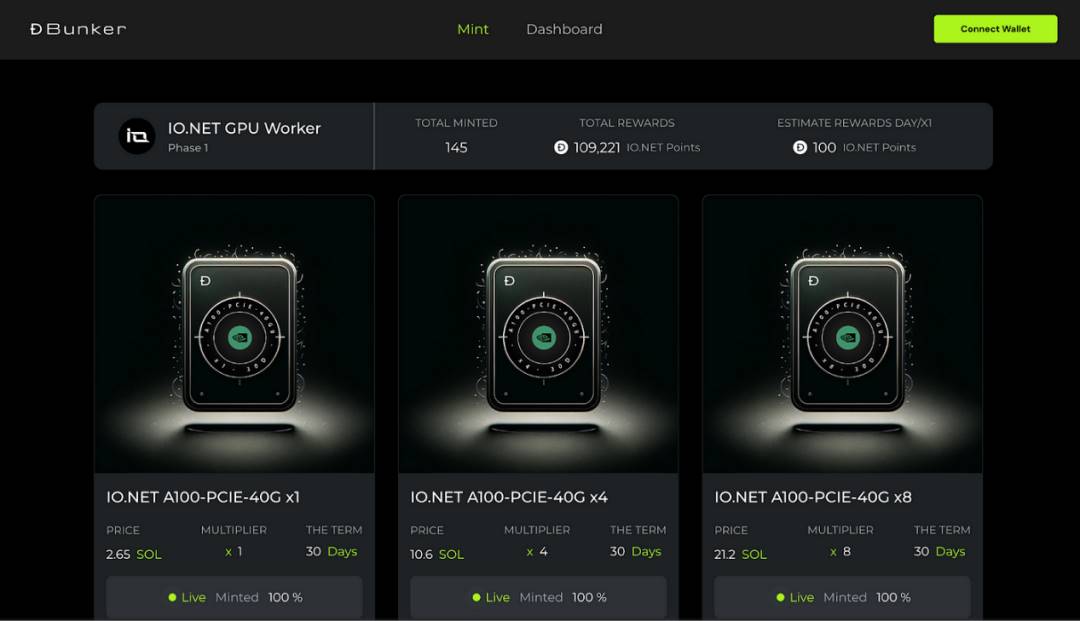
IO Worker streamlines and optimizes supply-side operations for WebApp users, covering account management, real-time activity monitoring, temperature and power tracking, installation support, wallet management, security, and profitability analysis.
Highlights:
-
Worker Dashboard: Real-time monitoring dashboard for connected devices, with options to delete or rename devices.
-
Device Details Page: Comprehensive device analytics, including traffic, connection status, and work history.
-
Earnings & Rewards Page: Tracks earnings and work history; transaction details are accessible via SOLSCAN.
-
Add New Device Page: Simplifies device onboarding with quick and easy integration.
3.3 IO Explorer
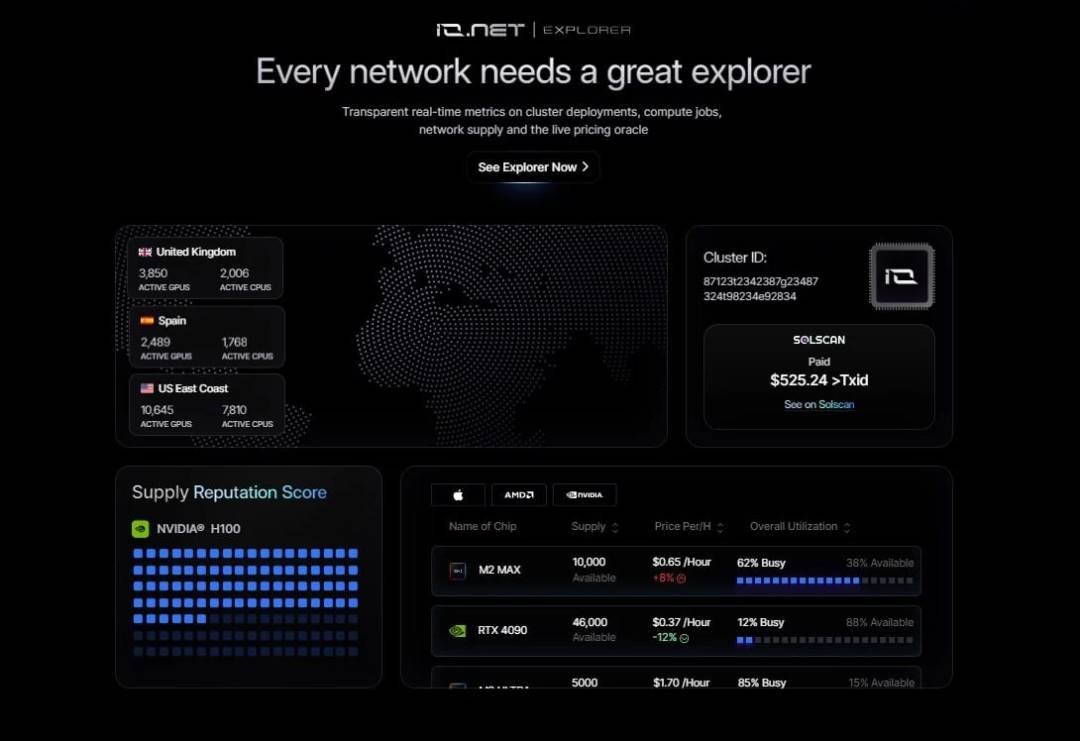
IO Explorer is a comprehensive platform providing deep insights into io.net network operations, similar to how blockchain explorers offer transparency into blockchain transactions. Its goal is to enable users to monitor, analyze, and understand the GPU cloud in detail, ensuring full visibility into network activities, statistics, and transactions while preserving privacy for sensitive information.
Benefits:
-
Homepage: Provides insights into supply, verified suppliers, number of active hardware units, and real-time market pricing.
-
Cluster Page: Displays public information about deployed clusters, along with real-time metrics and booking details.
-
Device Page: Shows public details of devices connected to the network, offering real-time data and transaction tracking.
-
Real-Time Cluster Monitoring: Delivers immediate insights into cluster status, health, and performance, keeping users informed.
3.4 IO-SDK
IO-SDK is the foundational technology of Io.net, derived from a fork of Ray. It enables parallel task execution across different languages and integrates with major machine learning (ML) frameworks, making IO.NET flexible and efficient for diverse computing needs. Combined with a well-defined technical stack, it ensures the IO.NET Portal meets current demands and adapts to future changes.
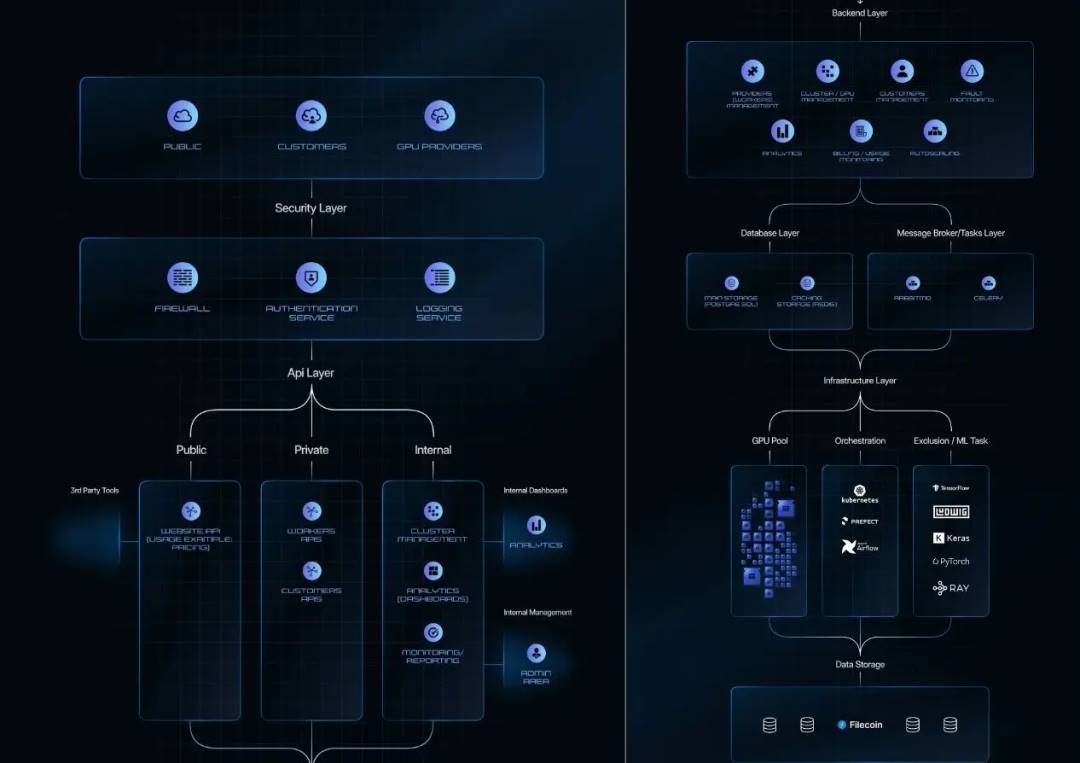
Multi-Layer Architecture
-
User Interface: The visual front-end for users, including the public website, customer portal, and GPU provider zone. Designed to be intuitive and user-friendly.
-
Security Layer: Ensures system integrity and security, covering network protection, user authentication, and activity logging.
-
API Layer: Acts as a communication hub between the website, providers, and internal management, facilitating data exchange and operations.
-
Backend Layer: The core of the system, handling cluster/GPU management, customer interactions, and auto-scaling.
-
Database Layer: Stores and manages data, with primary storage for structured data and cache for temporary data.
-
Task Layer: Manages asynchronous communications and tasks, ensuring efficient execution and data flow.
-
Infrastructure Layer: Contains the GPU pool, orchestration tools, and execution/ML tasks, equipped with robust monitoring solutions.
3.5 IO Tunnels
-
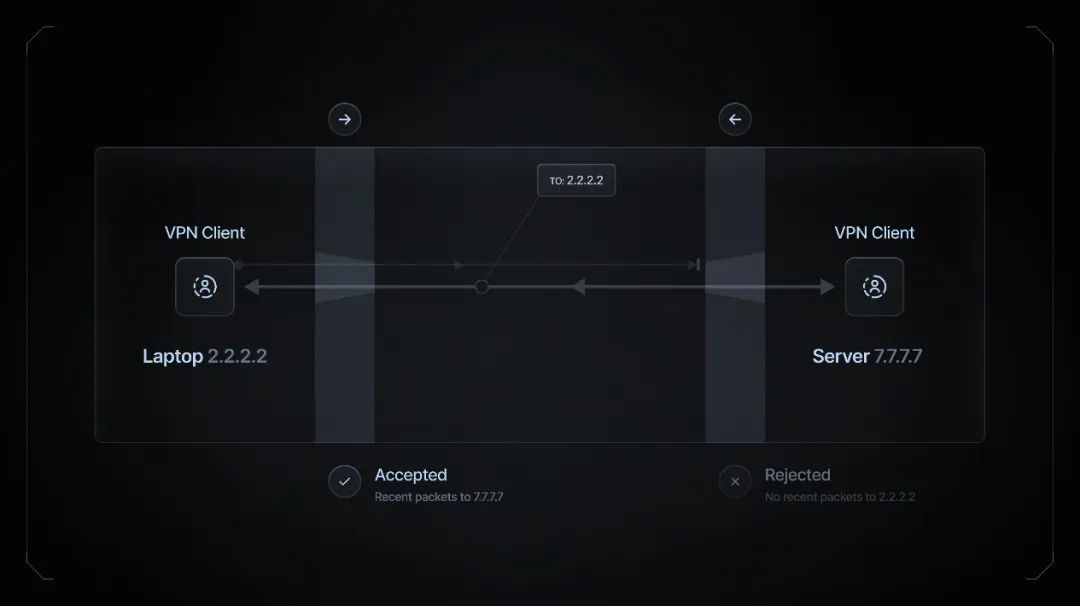
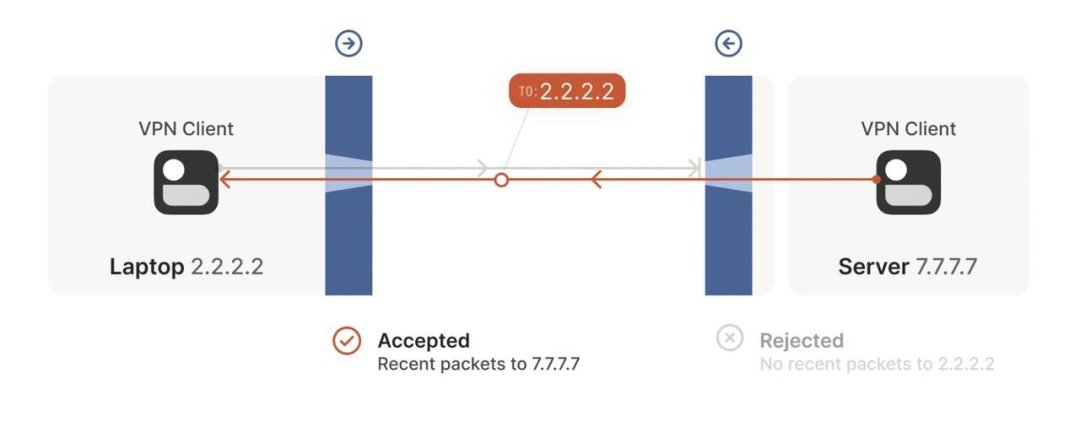
Uses reverse tunneling technology to create secure client-to-server connections, allowing engineers to bypass firewalls and NATs for remote access without complex configurations.
-
Workflow: IO Worker connects to a middle server (io.net server). The io.net server then listens for connections from both the IO Worker and the engineer’s machine, enabling data exchange via reverse tunnels.
Application in io.net
-
Engineers connect to IO Workers via the io.net server, simplifying remote access and management without networking hurdles.
-
Advantages:
-
Ease of Access: Direct access to IO Workers eliminates network barriers.
-
Security: Ensures protected communication and data privacy.
-
Scalability and Flexibility: Efficiently manage multiple IO Workers across environments.
3.6 IO Network
-
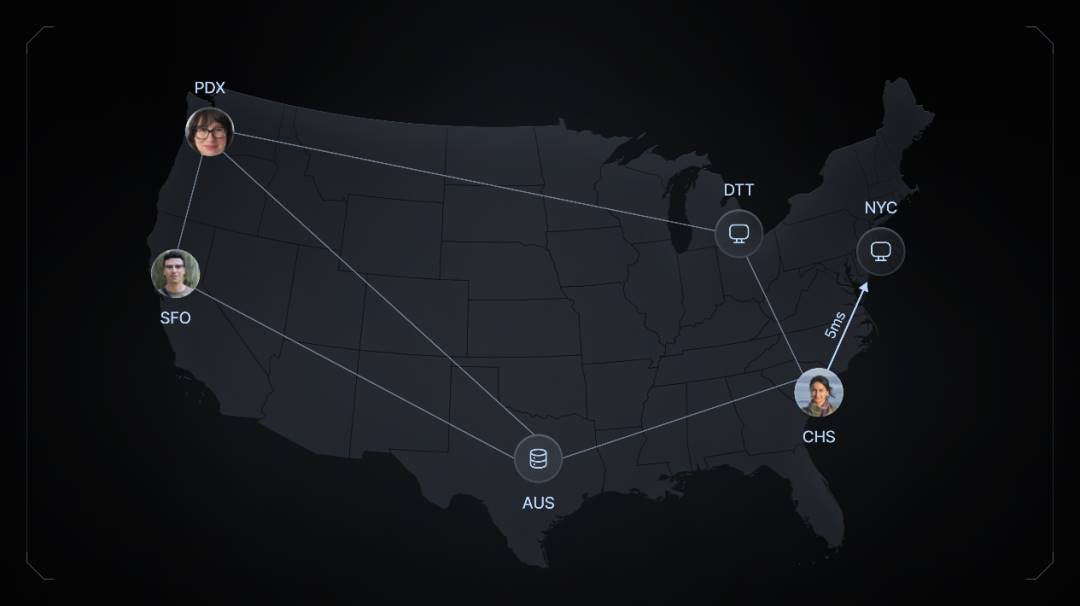
IO Network employs a mesh VPN architecture to enable ultra-low-latency communication between antMiner nodes.
Mesh VPN Network:
-
Decentralized Connectivity: Unlike traditional star models, the mesh VPN directly links nodes, enhancing redundancy, fault tolerance, and load distribution.
-
Advantages: Resilient to node failures, highly scalable, low latency, and optimized traffic distribution.
Benefits for io.net:
-
Direct connections reduce latency, improving application performance.
-
No single point of failure; the network remains operational even if individual nodes fail.
-
Enhanced user privacy by making data tracking and analysis more difficult.
-
Adding new nodes does not impact performance.
-
More efficient resource sharing and processing among nodes.
4. $IO Token
4.1 Basic Framework of $IO Token
1. Fixed Supply:
-
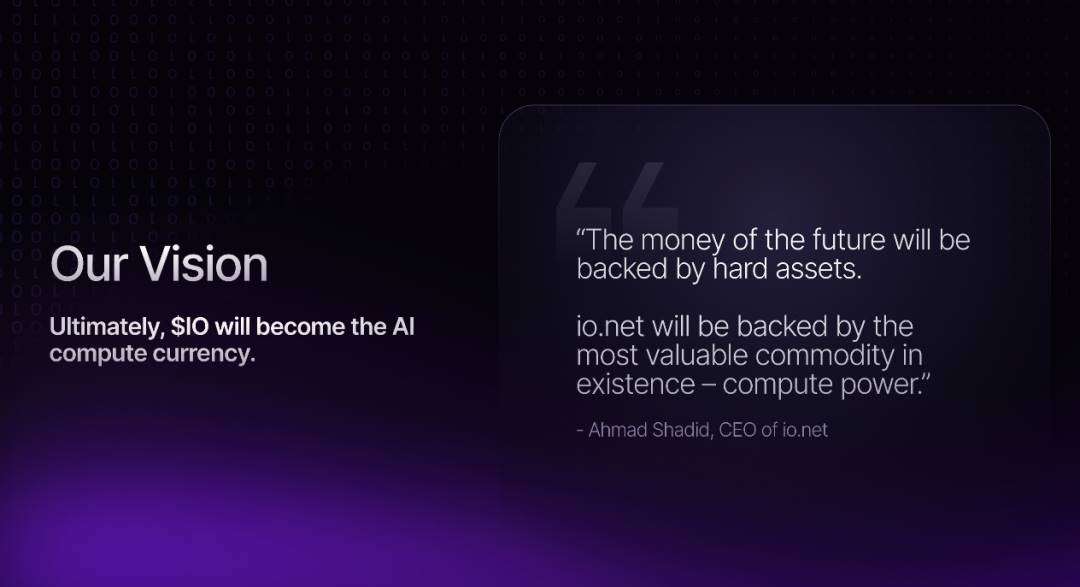
The maximum supply of $IO tokens is capped at 800 million. This fixed supply aims to stabilize token value and prevent inflation.
2. Distribution and Incentives:
-
Initially, 300 million $IO tokens will be distributed. The remaining 500 million will be gradually awarded to suppliers and their stakeholders over a 20-year period.
-
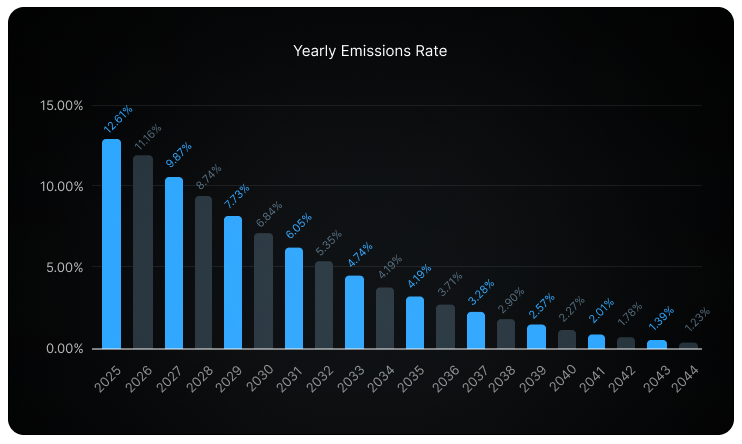
Rewards are released hourly, following a declining model (starting at 8% in year one, decreasing by 1.02% monthly, roughly 12% annually), until the total cap of 800 million is reached.
3. Burn Mechanism:
-
$IO implements a programmed token burn system: revenue generated from the IOG network is used to buy back and burn $IO tokens. The burn rate adjusts based on $IO’s price, creating deflationary pressure.
4.2 Fees and Revenue
Usage Fees:
-
io.net charges users and suppliers various fees, including reservation and payment fees when booking computing capacity. These fees support network financial health and $IO market circulation.
Payment Fees:
-
A 2% fee applies for payments made in USDC; no fee is charged for payments made in $IO.
Supplier Fees:
-
Similar to users, suppliers incur fees upon receiving payments, including reservation and payment fees.
4.3 Ecosystem
-
GPU Renters (also known as users), such as machine learning engineers seeking to purchase GPU computing power on the IOG network. These engineers can use $IO to deploy GPU clusters, cloud gaming instances, and build Unreal Engine 5 (and similar) pixel streaming applications. Users also include individual consumers running serverless model inference on BC8.ai and hundreds of future applications and models hosted by io.net.
-
GPU Owners (also known as suppliers), such as independent data centers, crypto mining farms, and professional miners looking to monetize underutilized GPU computing power on the IOG network.
-
$IO Token Holders (also known as the community) who participate in providing cryptographic-economic security and incentives to coordinate mutual benefits and penalties, promoting network growth and adoption.
4.4 Detailed Allocation
-
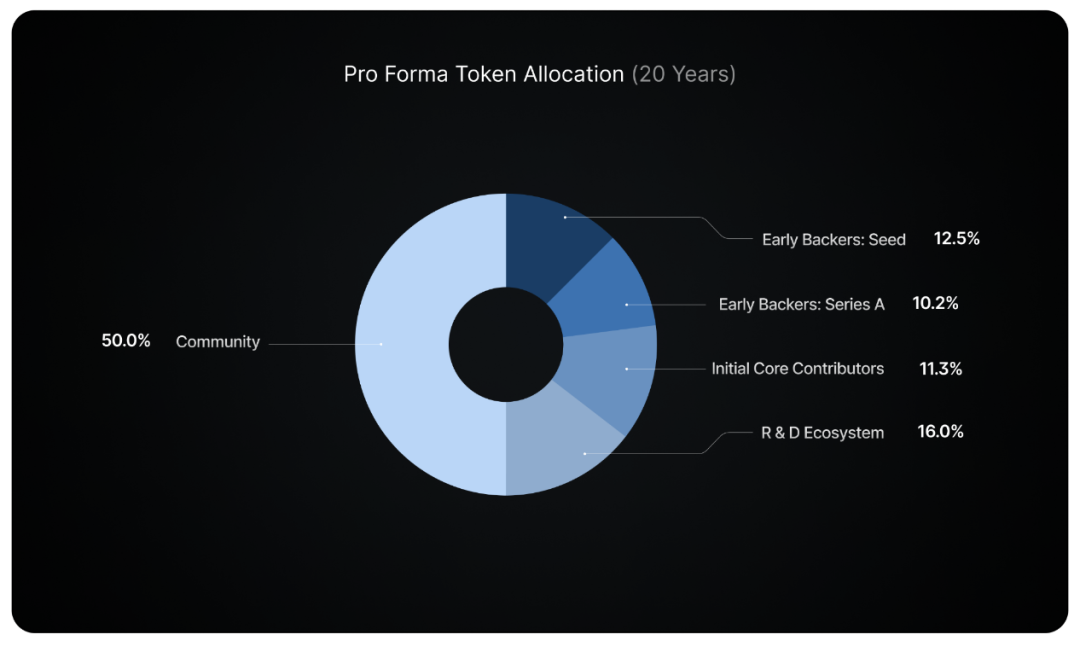
Community: 50% of total allocation, primarily used to reward community members and incentivize platform engagement and growth.
-
R&D Ecosystem: 16%, allocated to support platform R&D and ecosystem development, including partners and third-party developers.
-
Initial Core Contributors: 11.3%, rewarding team members who made critical early contributions to the platform.
-
Early Backers: Seed Round: 12.5%, allocated to early seed investors in recognition of their initial trust and funding.
-
Early Backers: Series A: 10.2%, allocated to Series A investors for their financial and strategic support during the project’s earlier stages.
4.5 Halving Mechanism
-
2024–2025: 6 million $IO tokens released annually.
-
2026–2027: Annual release halves to 3 million $IO tokens.
-
2028–2029: Release halves again to 1.5 million $IO tokens per year.
5. Team / Partnerships / Funding
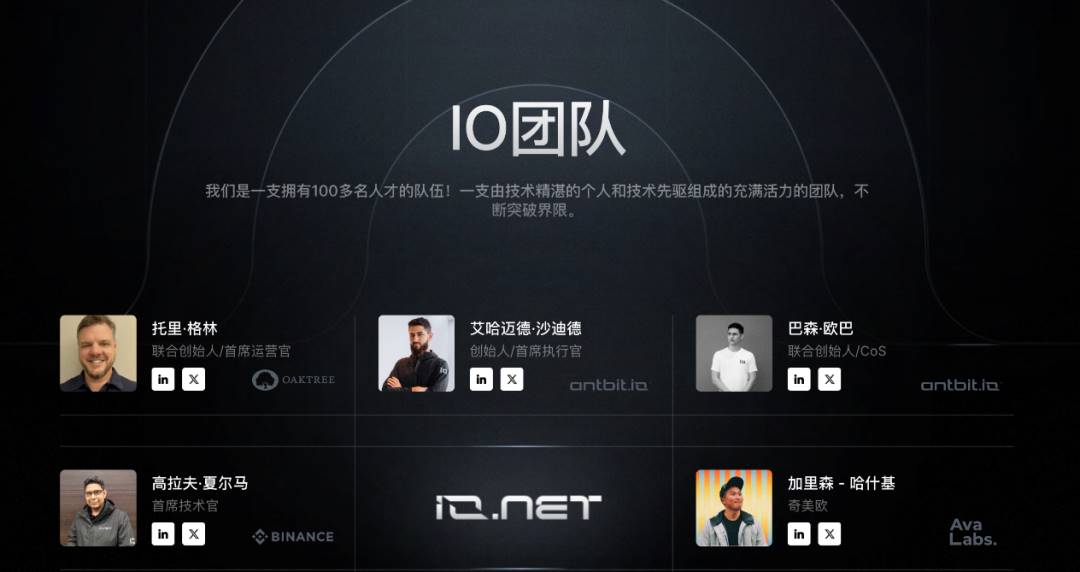
io.net has a leadership team with diverse skills and extensive experience in technology, contributing significantly to the company’s success.
Tory Green is COO of io.net, previously COO at Hum Capital and Director of Corporate Development & Strategy at Fox Mobile Group.
Ahmad Shadid is Founder and CEO of io.net, formerly a Quantitative Systems Engineer at WhalesTrader.
Garrison Yang is Chief Strategy Officer and CMO of io.net, previously VP of Growth & Strategy at Ava Labs. He holds a degree in Environmental Health Engineering from UC Santa Barbara.
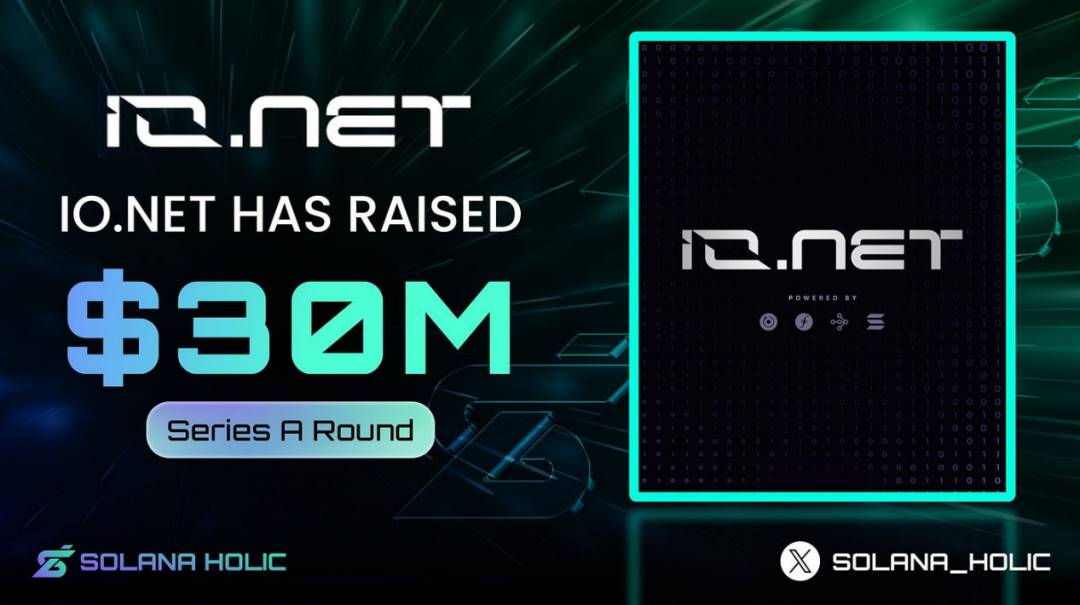
In March this year, io.net raised $30 million in a Series A round led by Hack VC, with participation from Multicoin Capital, 6th Man Ventures, M13, Delphi Digital, Solana Labs, Aptos Labs, Foresight Ventures, Longhash, SevenX, ArkStream, Animoca Brands, Continue Capital, MH Ventures, OKX, and industry leaders including Solana founder Anatoly Yakovenko, Aptos founders Mo Shaikh and Avery Ching, Animoca Brands’ Yat Siu, and Jin Kang of Perlone Capital.
6. Project Evaluation
6.1 Market Analysis
io.net is a decentralized computing network built on the Solana blockchain, focusing on delivering powerful computing capabilities by integrating underutilized GPU resources. The project operates primarily within the following sectors:
1. Decentralized Computing
io.net builds a decentralized physical infrastructure network (DePIN), utilizing GPU resources from diverse sources such as independent data centers and crypto miners. This decentralized approach aims to optimize resource utilization, reduce costs, and improve accessibility and flexibility.
2. Cloud Computing
Although io.net uses a decentralized model, it offers services comparable to traditional cloud computing—such as GPU cluster management and scalable ML workloads. It aims to deliver a cloud-like experience but leverages decentralization for greater efficiency and lower costs.
3. Blockchain Application
As a blockchain-based project, io.net leverages blockchain properties such as security and transparency to manage resources and transactions within the network.
Projects similar to io.net in functionality and goals include:
-
Golem: A decentralized computing network allowing users to rent or lease unused computing power, aiming to create a global supercomputer.
-
Render: Uses a decentralized network to deliver graphics rendering services, enabling content creators to access more GPU power and accelerate rendering via blockchain.
-
iExec RLC: Creates a decentralized marketplace for renting computing resources, supporting various applications—including data-intensive and ML workloads—via blockchain.
6.2 Project Advantages
-
Scalability: io.net is designed as a highly scalable platform, meeting bandwidth demands and enabling teams to expand workloads across the GPU network without significant reconfiguration.
-
Batch Inference and Model Serving: The platform supports parallelized inference on data batches, allowing ML teams to deploy workflows across distributed GPU networks.
-
Parallel Training: To overcome memory constraints and sequential workflows, io.net leverages distributed computing libraries to parallelize training across multiple devices.
-
Parallel Hyperparameter Tuning: Exploits the inherent parallelism in hyperparameter tuning experiments, optimizing scheduling and search patterns.
-
Reinforcement Learning (RL): Supports highly distributed RL workloads using open-source RL libraries and offers simple APIs.
-
Instant Accessibility: Unlike traditional cloud services requiring lengthy setup, io.net Cloud provides immediate GPU access, enabling users to launch projects within seconds.
-
Cost Efficiency: Designed as an affordable platform suitable for various user types. Currently, it offers approximately 90% cost savings compared to competing services, significantly reducing expenses for ML projects.
-
High Security and Reliability: The platform promises top-tier security, reliability, and technical support, ensuring a safe and stable environment for ML tasks.
-
Ease of Implementation: io.net Cloud removes the complexity of building and managing infrastructure, enabling any developer or organization to seamlessly develop and scale AI applications.
6.3 Project Challenges
1. Technical Complexity and User Adoption
-
Challenge: While decentralized computing offers clear cost and efficiency benefits, its technical complexity may present a steep learning curve for non-technical users. Understanding how to operate a distributed network and effectively utilize decentralized resources could be daunting.
-
Impact: This could limit widespread adoption, especially among users unfamiliar with blockchain and distributed computing.
2. Cybersecurity and Data Privacy
-
Challenge: Despite blockchain’s enhanced security and transparency, the openness of decentralized networks may expose them to cyberattacks and data breaches.
-
Impact: io.net must continuously strengthen its security measures to protect user data and task integrity—critical for maintaining trust and reputation.
3. Performance and Reliability
-
Challenge: Although io.net strives to deliver efficient computing via decentralized resources, coordinating across varying geographic locations and hardware qualities may introduce performance and reliability issues.
-
Impact: Any performance degradation due to hardware mismatch or network latency could affect customer satisfaction and overall platform effectiveness.
4. Scalability at Scale
-
Challenge: While io.net is designed for high scalability, effectively managing and scaling a globally distributed resource pool in practice remains a significant technical challenge.
-
Impact: Continuous innovation and operational improvements are needed to maintain network stability and responsiveness amid rapidly growing user and compute demands.
5. Competition and Market Acceptance
-
Challenge: io.net faces competition in the blockchain and decentralized computing space. Platforms like Golem, Render, and iExec offer similar services, and the fast-evolving market landscape could quickly shift competitive dynamics.
-
Impact: To stay competitive, io.net must continuously innovate and enhance the uniqueness and value of its offerings to attract and retain users.
7. Conclusion
In summary, io.net sets a new benchmark in modern cloud computing through its innovative decentralized computing network and blockchain-based architecture. By aggregating underutilized GPU resources globally, io.net delivers unprecedented computing power, flexibility, and cost efficiency for AI and machine learning applications. The platform not only accelerates and reduces the cost of large-scale ML deployments but also provides robust security and scalable solutions for diverse users.
Despite challenges related to technical complexity, cybersecurity, performance stability, and market competition, if io.net can overcome these hurdles and cultivate a vibrant ecosystem, it has the potential to fundamentally reshape how we access and utilize computing power in the Web3 era. However, as with any emerging technology, its long-term success will depend on continuous development, adoption, and its ability to navigate the evolving landscape of blockchain-based infrastructure.
Join TechFlow official community to stay tuned
Telegram:https://t.me/TechFlowDaily
X (Twitter):https://x.com/TechFlowPost
X (Twitter) EN:https://x.com/BlockFlow_News