Deep Dive into Fantasy Top: Merging TCGs with Degen Culture, Beneficiaries of the Upcoming Blast Token TGE
TechFlow Selected TechFlow Selected
Deep Dive into Fantasy Top: Merging TCGs with Degen Culture, Beneficiaries of the Upcoming Blast Token TGE
This week, nearly $1.25 million in FT is expected to be distributed among Heroes.
 Navigating Web3 tides with focused insights
Author: Francesco
Translation: TechFlow

Introduction
As social media and blockchain technology continue to converge, a new game called Fantasy Top (FT) has emerged, seamlessly blending Twitter's social interactions with collectible card gameplay. This article will detail FT’s game mechanics and operations, explaining how players can build their decks in this virtual world through trading and upgrading cards, and earn rewards by participating in tournaments. Additionally, it will explore how FT leverages real-time dynamics of influencers on Twitter to offer players unique strategic advantages.
Main Content
If you're passionate about pack openings in FIFA's Ultimate Team and also deeply involved in cryptocurrency, this game is tailor-made for you. It’s time to leverage your skills in opening packs and trading—now applied directly within the realm of Twitter.
A new game, Fantasy Top (FT), seamlessly combines the social nature of Twitter with a trading card game, allowing users to buy card packs, open them, trade cards, and assemble their own custom deck.
FT adopts the concept pioneered by Friend Tech—aligning incentives between KOLs (Key Opinion Leaders), crypto celebrities, and retail participants—and further links gameplay performance directly to the real-world activity of your cards’ underlying figures.
How does it work? In what follows, I’ll walk you through FT step-by-step, explain its mechanics, and dive into its unique and exciting features.
Introduction to Fantasy Top
FT is a card game built on Blast. Think of it as a “social trading card game” that blends collecting, card trading, and strategic planning:
-
Trade or upgrade cards
-
Strategize based on the social activity of your favorite CT influencers
The second point is particularly interesting because certain influencers perform better at different times. For example, as we approach the Blast TGE, Pacman’s card value surged due to expectations of increased activity and engagement.
Cards come in four rarities, each providing different multipliers:
-
Uncommon: Hero score x1
-
Rare: Hero score x1.5
-
Epic: Hero score x2
-
Legendary: Hero score x2.5
Players can build their own deck using characters they like, either by purchasing card packs or buying individual cards on the marketplace. All marketplace transactions incur a 3% fee. Then, they can enter FT tournaments and earn rewards.
-
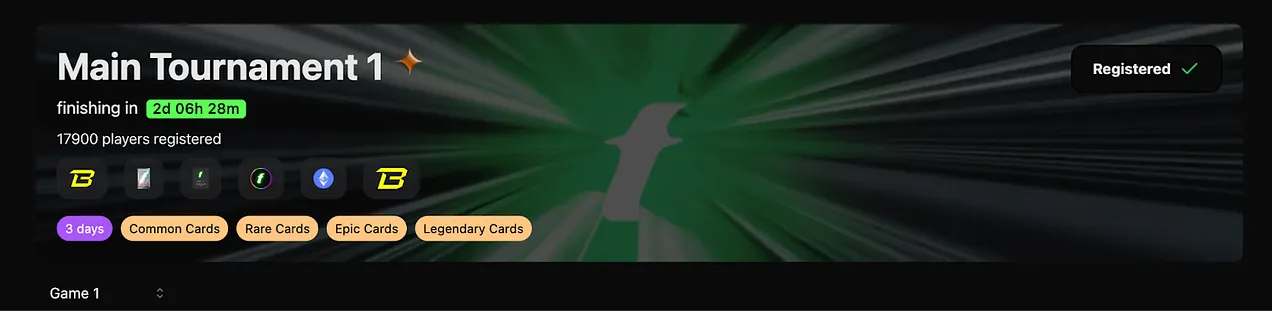
It’s already wild—over 17,000 people have registered for Main Tournament 1.
How the Game Works
Users join by logging in with their Twitter account. Upon registration, a new on-chain Blast wallet is created, which users can export at any time.
Since the FT testnet has been running for several months, early users received free or discounted card packs. Travis (from the FT team) has repeatedly emphasized their strategy of rewarding early adopters disproportionately.
Testnet participants could play early, test features, and receive bonus FAN points and card packs upon launch.
After logging in, if users want to play, they must acquire some cards, via:
-
Buying card packs
-
Purchasing cards on the marketplace
Once they’ve collected enough cards, users can select their team of 5 heroes, build their deck, and register for tournaments. A user’s ranking and position in the tournament are determined by their team’s total score, which is based on the Twitter activity of their chosen heroes.
In fact, the main tournament is the best way to earn rewards and improve your deck. Rewards are distributed in ETH, Blast Gold, FAN points, and free card packs. Users are divided into five different leagues; ranking highly in your current division allows promotion to a higher league (conversely, poor performance may result in relegation).

On Strategy
If you’re familiar with such card games, there are two primary strategies:
-
Buying card packs
-
Trading cards
Buying card packs is often not cost-effective, as the cards inside typically don’t match the price paid. Card pack prices are determined by an auction mechanism:
-
Price target set at 0.1 ETH
-
Daily release schedule targets
Thus, card pack prices are dynamic, driven by supply and demand. If packs sell out quickly, prices rise; otherwise, they fall. You might consider waiting for lower demand to get a better deal—but since launch, card pack prices have consistently risen.

If you’ve played FIFA Ultimate Team, you know pack openings rarely provide good value—this is reflected in top players’ behavior, who prefer trading and only open packs when received as tournament rewards.
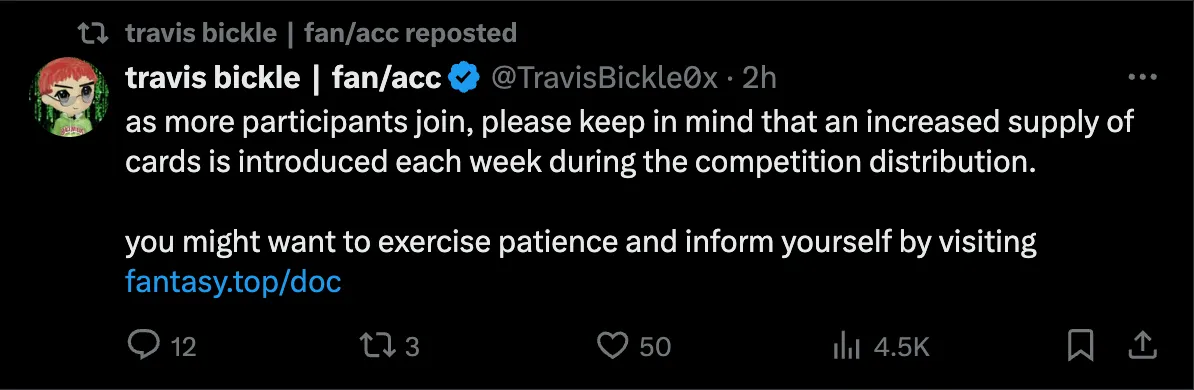
However, traders must be aware that the weekly minted supply of cards increases as more participants join.

Users can click on each card to learn more about card inflation—the higher the number, the more cards have been minted.
Additionally, we can examine their statistics, earnings, and “core circle”—the people they interact with most frequently.

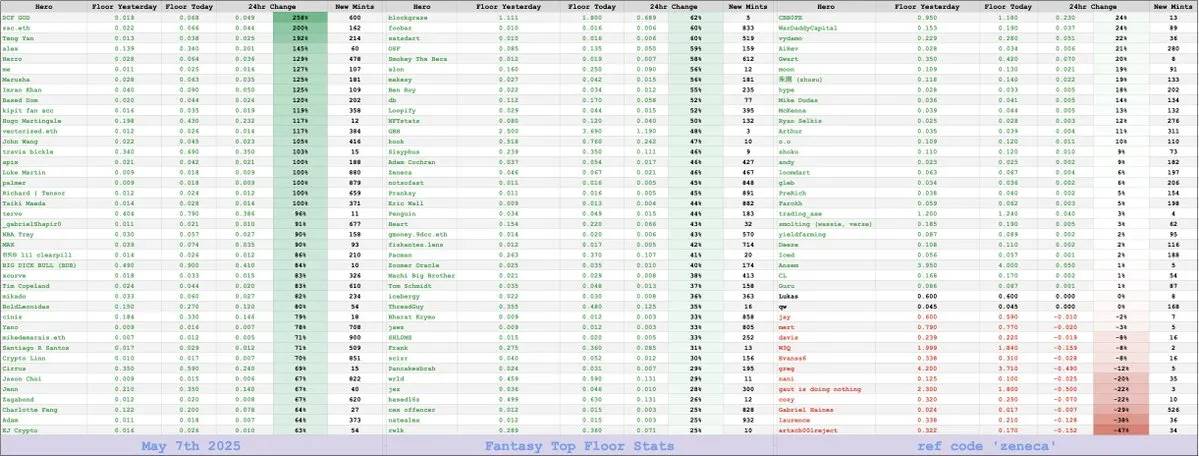
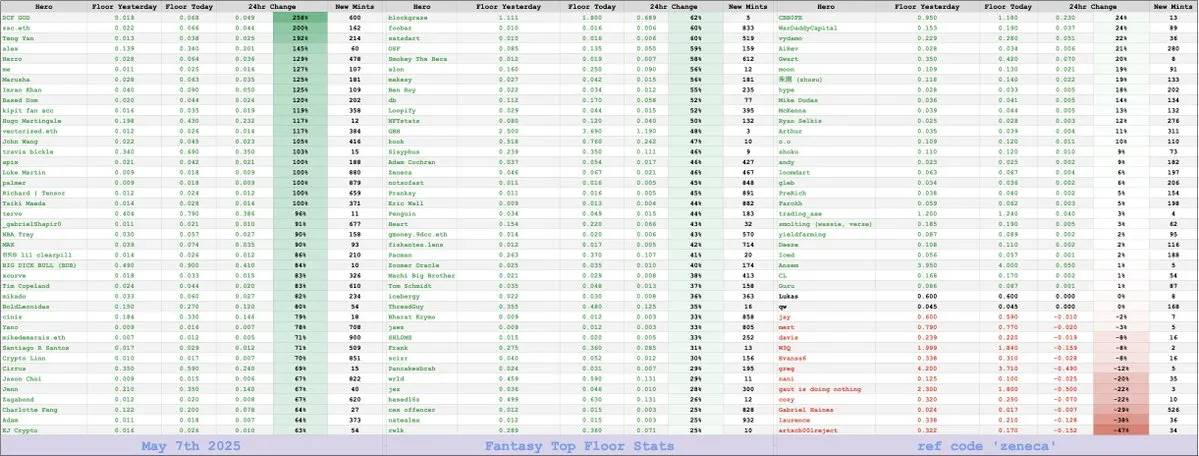
Still, hero prices are skyrocketing:
How Is Hero Score Calculated?
Hero scores are calculated based on multiple parameters of their social engagement. Since these metrics are vulnerable to farming and bot manipulation, FT is implementing several mechanisms to mitigate abuse:
-
Anti-bot systems to better identify bot-driven interactions
-
Differentiating replies from original tweets
-
Reducing hero score volatility to make the game fairer for all
Heroes participating in FT receive revenue shares from:
-
1.5% fee from trading volume of their cards
-
10% of card pack sales, evenly distributed among heroes
-
Sales of their own cards
Fascinating visualization comparing hero followers against rankings and fan scores:
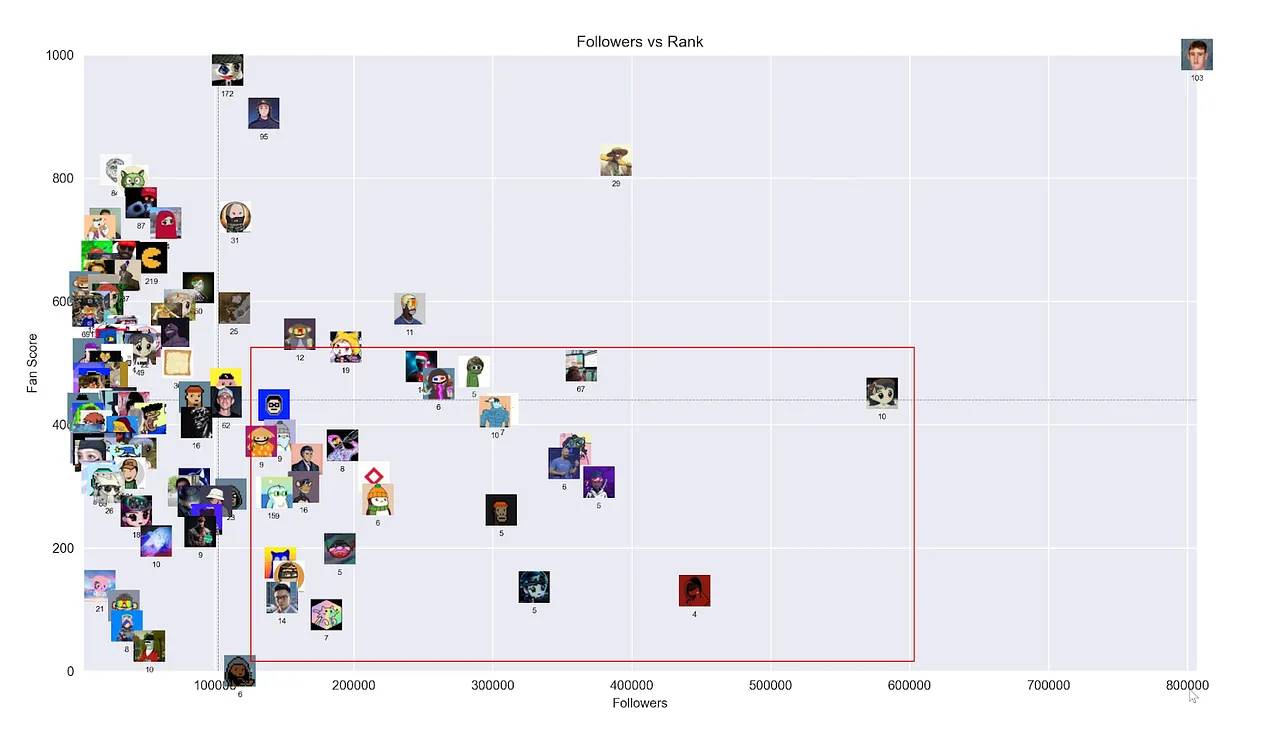
This week, FT is expected to distribute over $1.25 million among heroes, averaging 7,500 FAN points and 2,400 Blast Gold per hero. The community is already speculating on what FAN points will be used for—we’ll learn more soon.
Referrals add extra gamification: referring a friend earns you 11% of their FAN points, plus 3% of anyone they refer.
How to Level Up Cards?
Cards can be upgraded, increasing their point value accordingly. Users must purchase and burn five identical hero cards to level up a card.
Card Level 1:

Card Level 1.5:
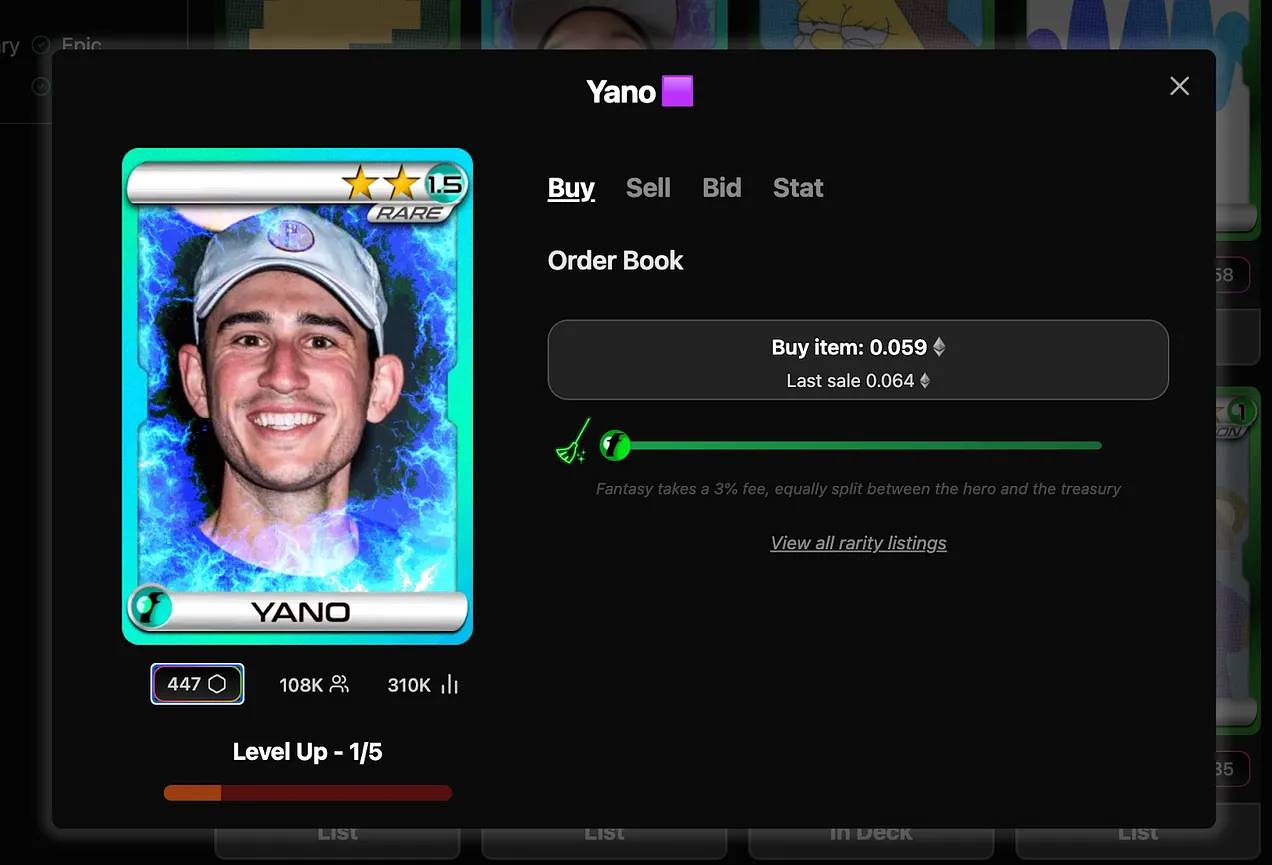
And so on.
Leveling up cards is fundamental to achieving higher scores in your team. To do this, users must buy and burn five identical hero cards.
Upgraded cards yield higher scores: if we look at top-scoring teams, they all feature leveled-up heroes.
Leveling up your heroes may also trigger ranking changes, potentially elevating your hero one or two tiers higher than expected.
This opens new strategies: given each card has its own supply, is it more convenient to buy and level them up? Or should we just buy base cards, anticipating rising demand for base cards as more users level up, thus reacting to supply shocks?
Given the surge in demand for card upgrades during the initial days, FT saw a massive spike in card purchases at launch.
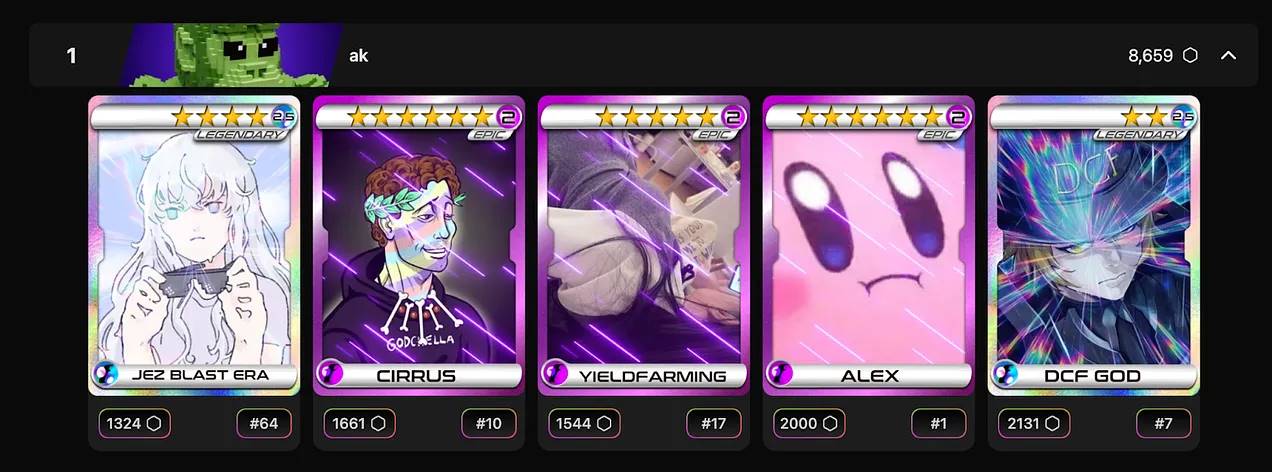
Here’s the team of the current leader in the main tournament—all heroes are upgraded.
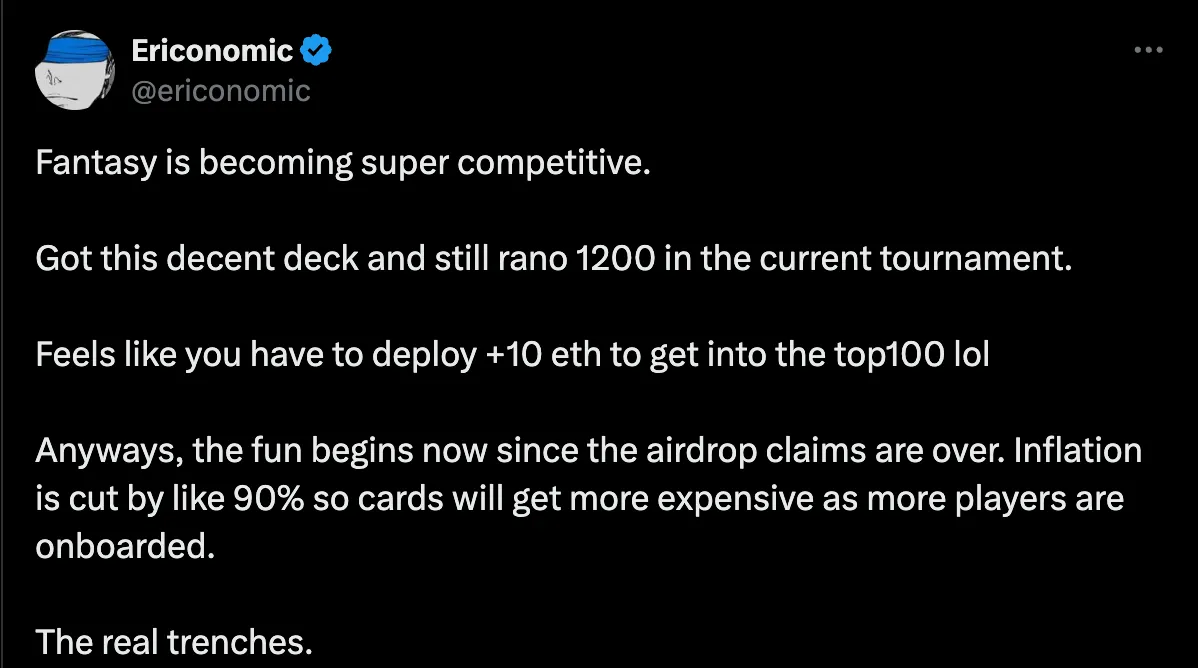
Competition to climb the leaderboard is intensifying.
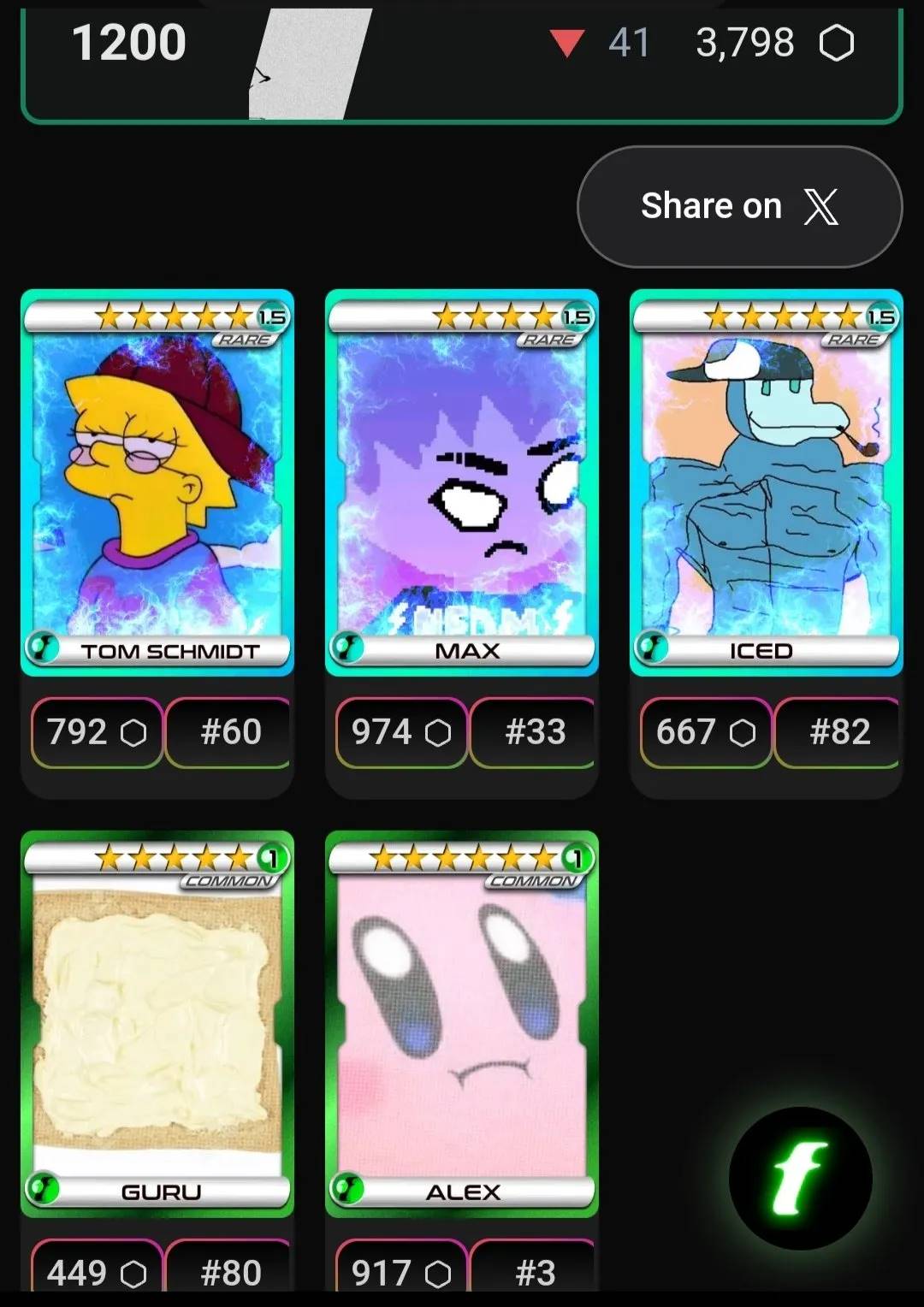
Eric has a pretty solid deck.
Looking Ahead
FT is already influencing hero behavior. If you see someone posting nonsense, they’re probably just promoting their card!

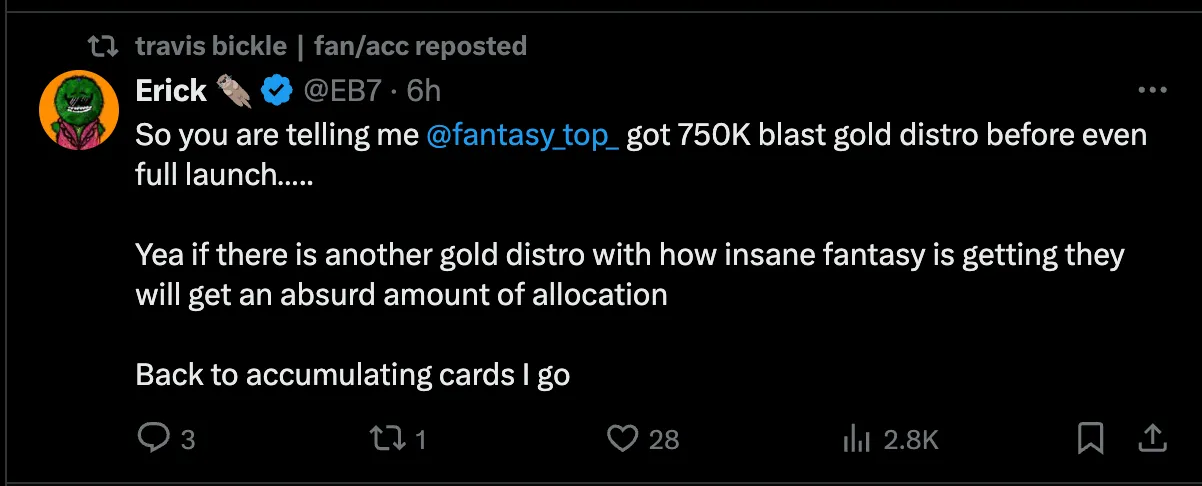
FT is also one of the Blast apps receiving the most Gold coins, having already distributed over 750,000 Gold coins among users even before full launch. This ensures tournament rewards will be substantial.
80% of FT Devs' airdrop will be returned to FAN holders.
Compared to other SocialFi platforms, especially Friend Tech, what makes FT interesting is that it has no friction—it directly integrates with existing Twitter accounts, eliminating the need to migrate to a new social network.
This creates highly attractive incentives for both players and participating heroes. Imagine getting paid just to go crazy on Twitter.
In its first week,FT has already accumulated:
-
Over 7,000 ETH in trading volume
-
33k users
-
3,400 ETH in treasury
-
236 ETH in market fees

It’s also interesting to observe user distribution. Most are traders, and there was a recent spike in minter numbers (possibly due to claim deadlines), preceded by a sharp drop.

How can we use this information? Initially, card inflation was quite high due to airdrops: many users received discounted or even free card packs and opened them aggressively.
This behavior ended yesterday along with the airdrop claims, reflected in a drop of over 90% in card pack purchases.

How’s Your Gameplay Going?
More charts:
https://flipsidecrypto.xyz/hildobby/fantasy.top-QHNB0u
Finally, I’d like to highlight some potential “issues” with FT.
Like any other crypto SocialFi app, it heavily relies on influencers. However, compared to other platforms, it aligns incentives much more cohesively, mitigating this dependency.
Secondly, it requires a Twitter account to log in. A friend of mine recently had his account suspended without cause, so he couldn't access FT or claim his rewards.
Nonetheless, FT demonstrated incredible PMF (Product-Market Fit) in its first week—even during testnet phase. Can it sustain this initial momentum?
I believe the team will gradually roll out more features, including but not limited to new heroes and gameplay dynamics.
FT is currently the most widely used app on Blast, and things could get even more exciting as the Blast TGE approaches (expected by end of May).
Join TechFlow official community to stay tuned
Telegram:https://t.me/TechFlowDaily
X (Twitter):https://x.com/TechFlowPost
X (Twitter) EN:https://x.com/BlockFlow_News
 @francescoweb3