Binance and OKX Backed: What Are the Highlights of the Omnichain AI Game Cellula?
TechFlow Selected TechFlow Selected
Binance and OKX Backed: What Are the Highlights of the Omnichain AI Game Cellula?
Cellula recreates an elegant version of Conway's Game of Life.
 Navigating Web3 tides with focused insights
Author: 1912212.eth, Foresight News
The crypto bull market has arrived, and Web3 gaming is once again capturing the attention of top-tier institutions. Whether it's fully on-chain games, AI-powered games, or gaming-focused public chains, each has sparked significant waves. As financialization has become standard for blockchain games, how can a blockchain game be made both novel and engaging? This remains a key challenge for many development teams.
Among Binance Labs' sixth incubation cohort, a fully on-chain AI game called Cellula offers a distinctive answer. Leveraging blockchain and AI technologies, it reimagines the elegant Conway's Game of Life.
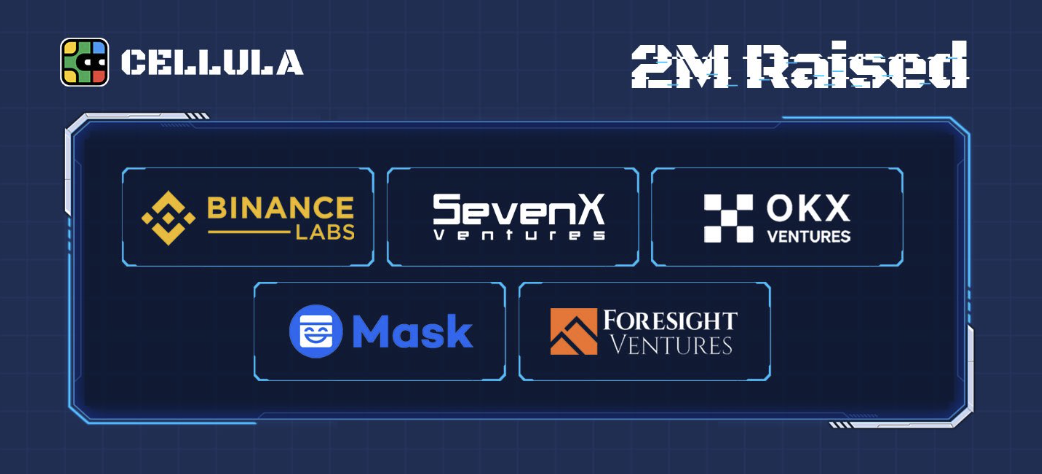
Note: In addition to funding from Binance Labs, Cellula announced a $2 million Pre-Seed round in April, co-led by SevenX Ventures and OKX Ventures, with participation from Mask Network, Foresight Ventures, and others.
What is Cellula?
Cellula is a fully on-chain AI gaming ecosystem that cleverly integrates game theory, offering composability and sustainability. Its unique virtual Proof-of-Work (vPOW) asset distribution mechanism innovatively provides an incentive layer for games within the ecosystem.
A project’s name often reflects its core identity. "Cellula" directly translates to "cell" in Chinese. Its recently refreshed logo features cell and puzzle elements, symbolizing the origin of life—hinting precisely at the game’s mechanics.
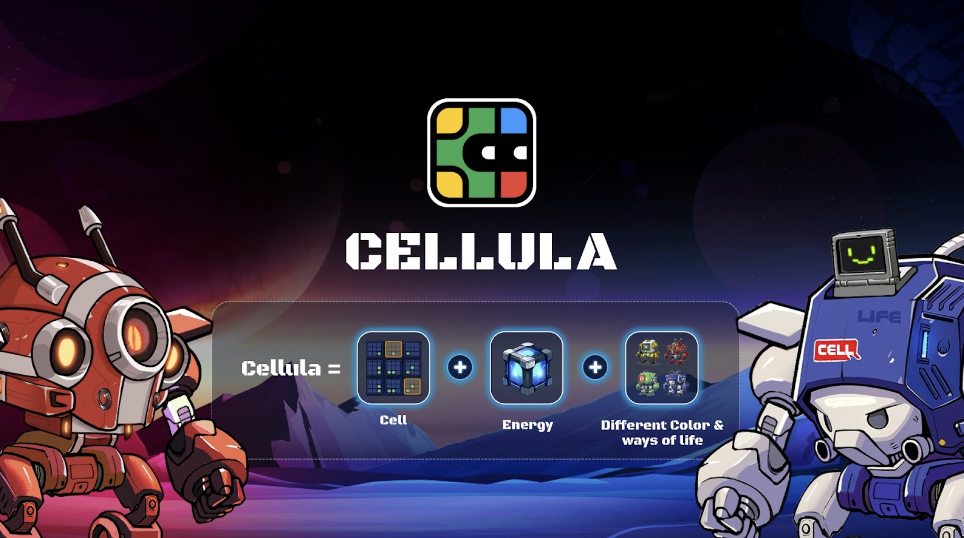
Cellula is an autonomous world based on Conway's Game of Life, where users can create digital lifeforms called BitLife using digital cells named Bitcell on a "workbench." Each BitLife is unique and can continuously evolve on-chain.
Gamifying mining through nurturing mechanics, avoiding death spirals with VRGDA issuance
Unlike many traditional games where characters require constant player input to level up, Cellula’s digital lives generate value autonomously, and gameplay is simple.
From the moment of synthesis, these digital lives begin growing. Their vitality is determined by the number of active cells. The workbench enables creation of all lifeforms, and every stage of digital evolution is traceable.
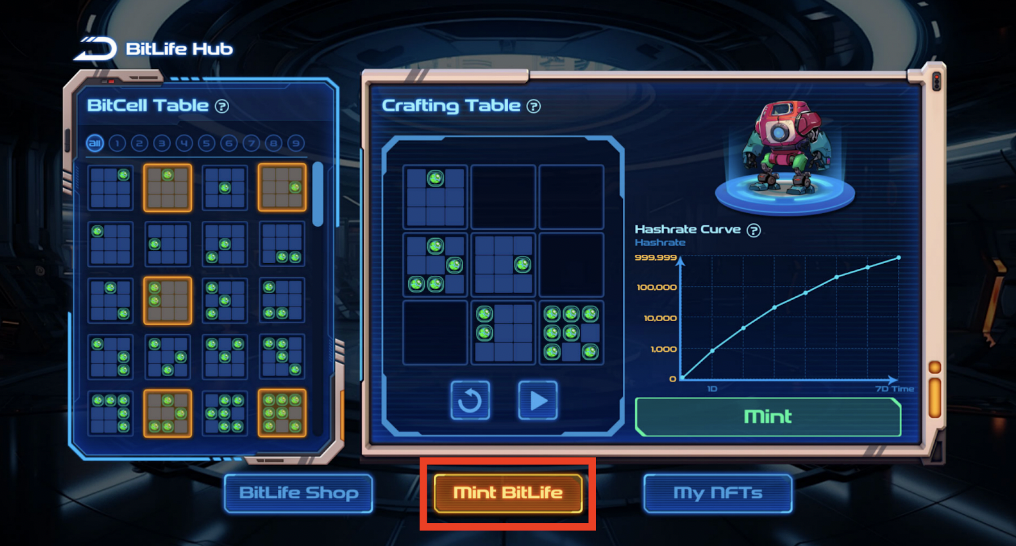
Each BitLife is formed by combining 2 to 9 Bitcell cells on the workbench. With 511 possible Bitcell configurations, arranging them in a 3x3 grid yields nearly infinite combinations. Each configuration follows a computational power curve defined by Conway's Game of Life rules. Maximizing mining efficiency becomes a test of players’ strategic combination skills—superior designs typically yield higher profits.
Inspired by Bitcoin mining, each BitLife has a unique computational curve, enabling it to earn rewards through mining. Through programmable incentives, BitLife aims to autonomously execute tasks across multiple chains, evolving into on-chain AI agents.
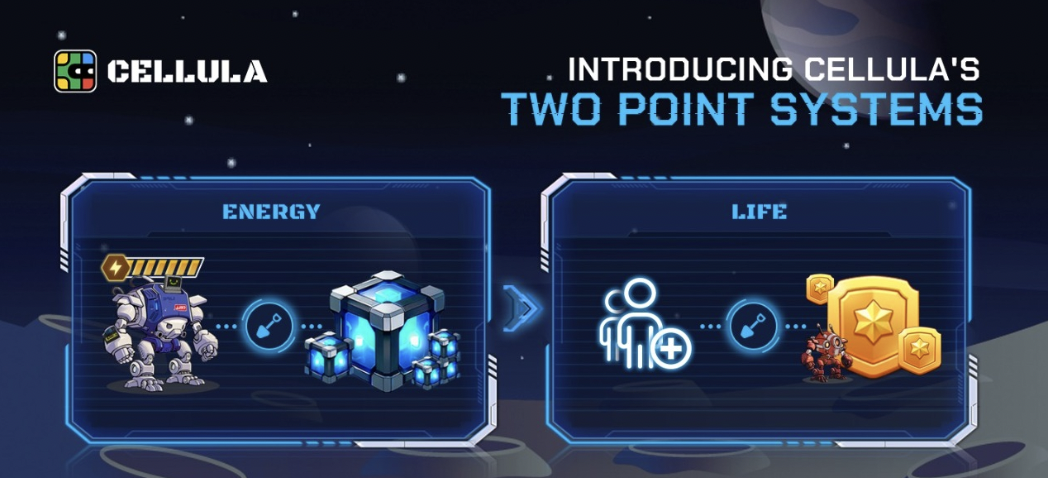
Cellula introduces a charging mechanism: after creating a BitLife, players must "feed" it (charge it). Once charged, energy bubbles appear on a spaceship interface, which players can click to collect. Accumulated energy points will be redeemable for future Cellula token airdrops.
In addition to energy points, Cellula features a social points reward system. The social token is called Life, earned by inviting friends to mine or completing daily tasks, which are updated regularly and accessible within the game each day.
Players effectively dual-mine within Cellula (Energy + Life), suggesting strong earning potential.
Notably, one common criticism of Web3 games is their Ponzi-like economies that often collapse into death spirals. Cellula counters this with a carefully designed VRGDA (Variable Rate Gradual Dutch Auction) issuance model.
It uses a progressive Dutch auction: if demand for BitLife exceeds expectations, minting fees rise; if demand is low, fees decrease; if demand matches projections, prices remain stable. This elegantly balances supply and demand for in-game assets.
As a highly innovative fully on-chain game, Cellula allows users to participate in various roles: miner, market maker, BitLife issuer, NFT (BitCell) renter, or casual player. Different roles engage in dynamic, repeated strategic interactions—just like the Bitcoin ecosystem—generating order from chaos and enabling a truly infinite game that transcends cycles.
Cellula mainnet launches April 15, distributing 1.1 million tokens via airdrop
Cellula launched its mainnet on April 15, unveiling a new visual design and enhanced features. An airdrop campaign is now live on BNB Chain, offering a total of 1.1 million CELL tokens to eligible users.
During the Binance Airdrop Alliance event period (April 15–28), users will earn double energy points.
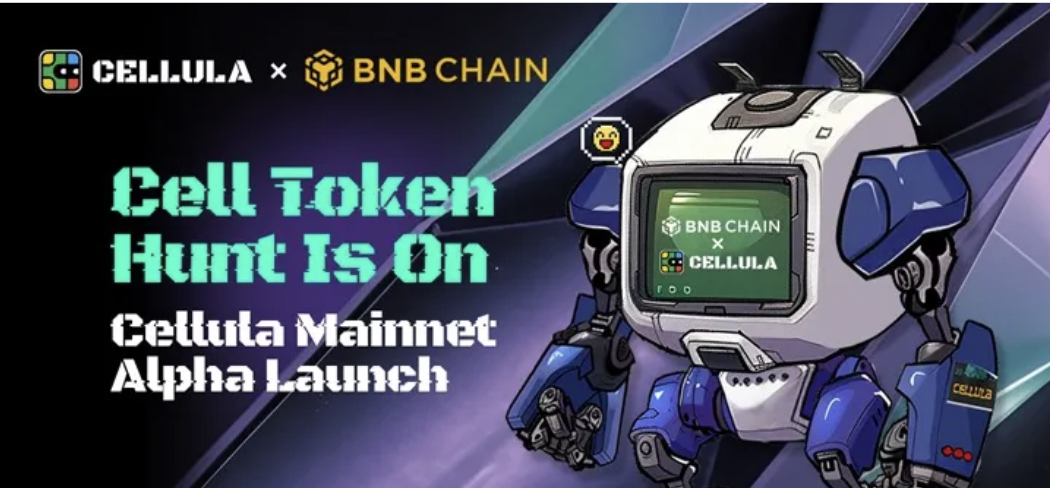
To participate in this BNB Chain event, visit the link below:
https://medium.com/@cellulalifegame/9feaa4c1cbbb
Summary
With another bull cycle underway and renewed excitement around gaming, Cellula stands out with its sophisticated game-theoretic design and innovative virtual PoW mining mechanics. These core strengths position it well to attract not only Web3 users but also mainstream Web2 audiences. As a fully on-chain AI game, the integration of AI opens even greater possibilities once the mainnet fully launches.
Join TechFlow official community to stay tuned
Telegram:https://t.me/TechFlowDaily
X (Twitter):https://x.com/TechFlowPost
X (Twitter) EN:https://x.com/BlockFlow_News
 Foresight News



![In-depth Analysis of Trade[XYZ]: How Were 92 Markets and 98% HIP-3 Trading Volume Established?](https://upload.techflowpost.com/upload/images/20260716/20260716061117965147.jpeg?x-oss-process=image/resize,p_50/quality,q_80)