A Brief Analysis of the Atomicals Protocol: The Ongoing Revolution of BTC Asset Protocols
TechFlow Selected TechFlow Selected
A Brief Analysis of the Atomicals Protocol: The Ongoing Revolution of BTC Asset Protocols
This article will objectively analyze the history, current status, and future development of the Atomicals protocol.
 Navigating Web3 tides with focused insights
Text: Howe
Editing: Faust, Geek web3
Introduction: On March 9, 2024, BRC-20—the experimental asset protocol—celebrated its first anniversary. In just one year, we have witnessed the birth of the Ordinals protocol, the launch of the BRC-20 standard, followed by the "Summer of Inscriptions" and a continuous explosion of emerging protocols, bringing vibrant energy to what was once a barren BTC ecosystem.
From a technical standpoint, current asset issuance schemes in the BTC ecosystem can be divided into two main schools: UTXO-bound and non-UTXO-bound types. The key difference lies in whether inscription asset data is directly linked to UTXOs on the Bitcoin blockchain. Under this classification, BRC-20 belongs to the non-UTXO-bound category, while ARC-20 under the Atomicals protocol pioneered the UTXO-bound approach.
This article will objectively analyze the history, current state, and future development of the Atomicals protocol from two major perspectives: the novel concepts and technologies introduced by Atomicals, and the overall direction of the Atomicals ecosystem. Through this piece, readers will gain a clearer understanding of why we refer to the Atomicals protocol as a "revolutionary force standing apart within the BTC ecosystem."
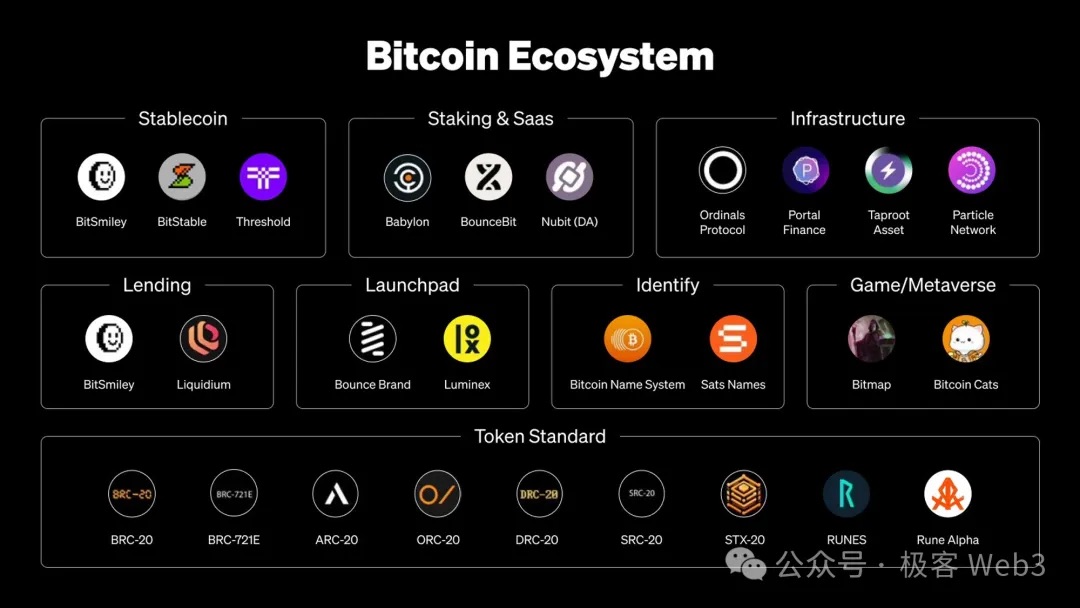
Image source: https://twitter.com/okxweb3/status/1765967704282816873
Main Text: The origin of the Atomicals protocol is quite dramatic. Its founder, Arthur, initially intended to build a DID project atop the newly launched Ordinals protocol. However, during development, he discovered many limitations in Ordinals that hindered the implementation of certain features he envisioned.
Thus, on May 29, 2023, Arthur published his first tweet outlining the concept of Atomicals. After several months of development, the Atomicals protocol officially went live on September 17, 2023.
Since then, the Atomicals protocol has evolved to include four core concepts: Dmint, Bitwork, ARC-20, and RNS, with AVM and splitting mechanisms planned for the future. In the following sections, we will delve into the principles behind these key innovations to help you better understand where Atomicals stands out technologically.
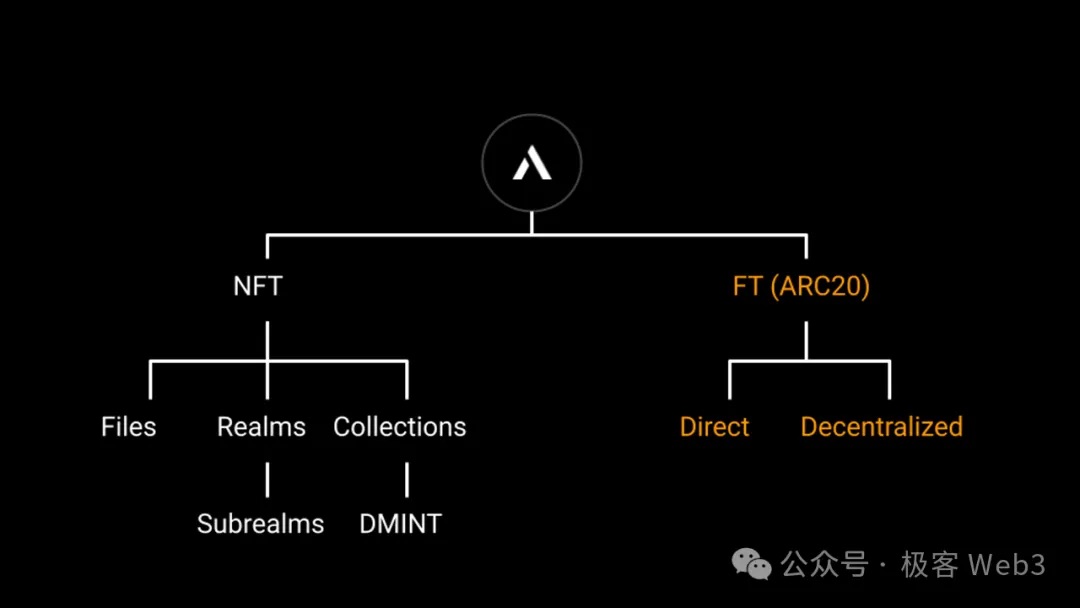
Image source: https://twitter.com/atomicalsxyz/status/1761738325176553535
Bitwork: Non-Exclusive Proof-of-Work
The Atomicals protocol incorporates Proof-of-Work (PoW) into the token minting process—a mechanism known as Bitwork. Similar in principle to Bitcoin mining, Bitwork serves to limit supply and prevent Sybil attacks.
Let’s first review how Bitcoin mining works: Miners continuously feed different input values into a given algorithm locally, attempting to produce an output that meets the requirements set by the Bitcoin protocol. When a miner gets lucky and finds a valid result, the corresponding input and output become their “proof,” recorded in a block as a ticket to claim mining rewards. Once this new block is accepted by the majority of nodes in the network, the miner receives BTC rewards.
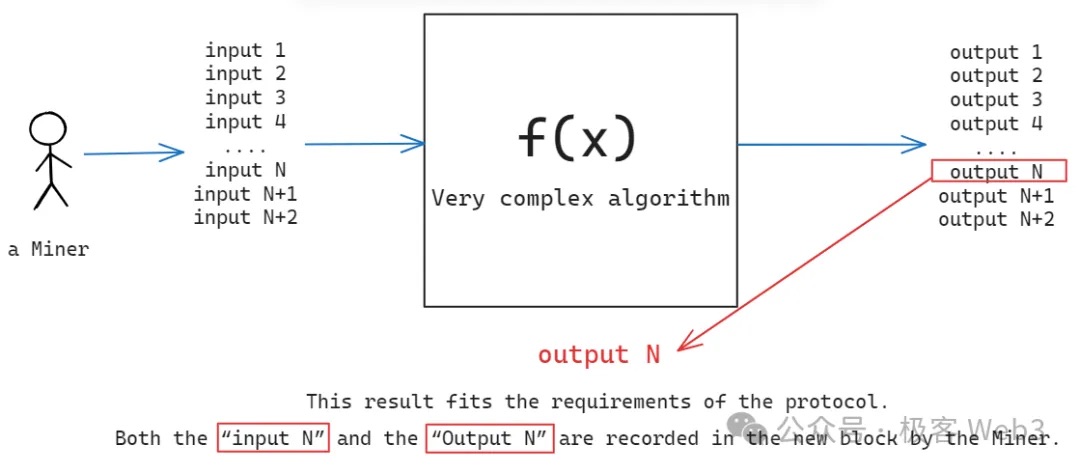
(Simplified diagram of Bitcoin mining)
In the Atomicals protocol, users must go through a similar process to obtain parameters that satisfy predefined constraints before they are eligible to mint tokens. Like Bitcoin, Atomicals also dynamically adjusts mining difficulty. For example, the protocol may define conditions such as:
Miners seeking rewards must find a set of parameters such that when fed into the specified algorithm, the output satisfies certain criteria—for instance, the first four digits are all 6, and the fifth digit exceeds 10 (in hexadecimal). These initial conditions are relatively lenient. However, Atomicals can periodically tighten these rules—such as requiring the first five digits to be 6—thereby increasing mining difficulty.
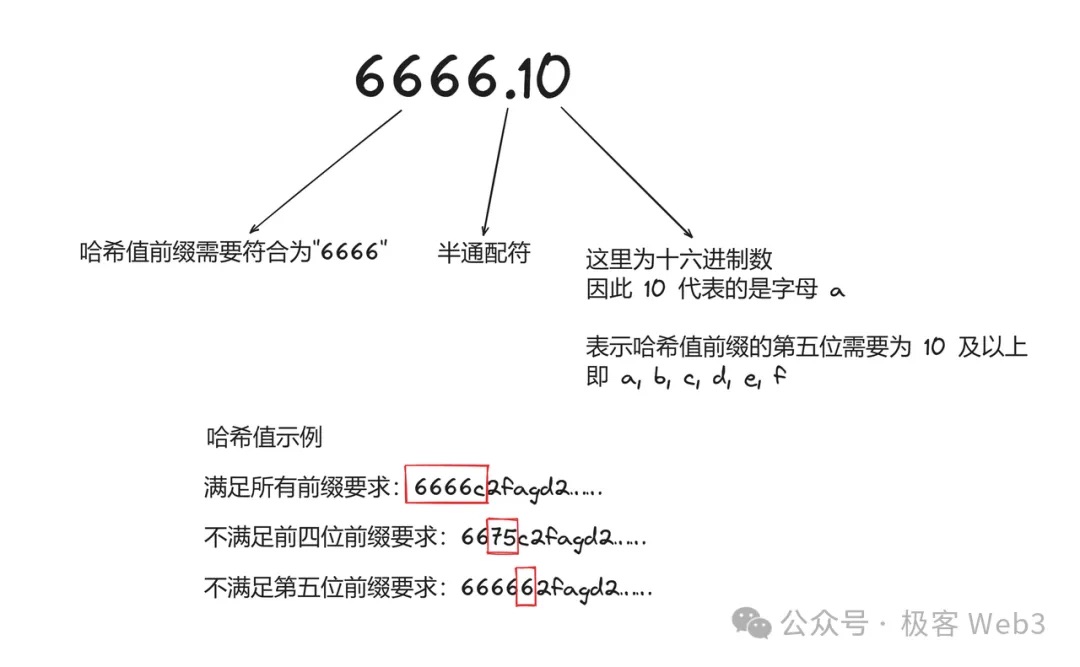
(Example of Bitwork conditions)
There is a fundamental difference between Bitwork and Bitcoin mining: Bitcoin mining is exclusive; Bitwork mining is non-exclusive. For example, after blocks 99 and 100 appear in the Bitcoin network, various mining pools compete for the right to create block 101. Ultimately, only one pool's version of block 101 will be recognized by the network, while others are rendered invalid—this exclusivity defines Bitcoin mining.
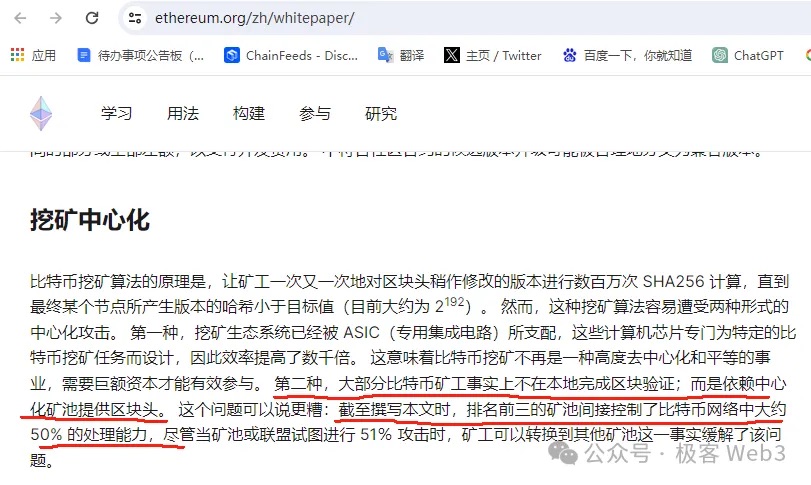
Clearly, this harsh competitive environment makes survival difficult for individual miners. Many small-scale miners end up contributing their hardware to large mining pools, which act as centralized entities pooling massive computing power to compete against other pools. This inevitably leads to high centralization of hash rate across the Bitcoin network—a concern even explicitly mentioned in the Ethereum whitepaper.
In stark contrast, ARC-20 mining under the Bitwork protocol is non-exclusive. That means there isn’t strict competition among miners. As long as the total minted amount hasn't reached the predefined cap, any valid minting submission via Bitwork will eventually be accepted and recorded in the protocol's history.
Consider this scenario: An ARC-20 asset begins issuing under the Bitwork protocol, allowing users to mine/mint tokens. Some users submit low gas fees, but due to high participation, gas prices spike suddenly. Their earlier low-fee mint requests get stuck and cannot be confirmed immediately. However, as long as the total supply hasn’t been exhausted, once gas prices drop, those pending mint requests will still be processed and trigger successful token creation.
In short: Bitwork only checks remaining mintable supply, not the order of minting requests. In contrast, late-submitted blocks in Bitcoin mining are almost always discarded by faster competitors.
Undoubtedly, Atomicals lowers the barrier to entry for miners/token minter participants. Traditional PoW blockchains suffer from extreme mining difficulty, leading to block production monopolized by a few large pools. Individual miners have almost no chance of success. Bitwork significantly weakens the dominance of centralized mining pools, enabling greater participation from solo miners and ensuring fairer asset distribution.
Considering that PoW itself is already a fairer asset distribution method compared to PoS or IDO models, the Atomicals protocol further enhances fairness in distribution—combining real resource investment with random luck (mining is essentially a game of chance). This further promotes the concept of "Fair Launch."
ARC-20: More Like Colored Coins Than Inscriptions
In fact, there is widespread misunderstanding about ARC-20 within the Atomicals protocol, with many assuming it is another inscription protocol. In reality, ARC-20 is closer to colored coins. It uses the smallest divisible unit of Bitcoin, the satoshi (sat), as the basic "atom." Each UTXO corresponds to a number of sats, representing the quantity of associated ARC-20 assets—1 sat = 1 Token.
Let’s take an example using an ARC-20 token called "TEST" to illustrate how it works.
First, the issuer of TEST must select a specific Bitcoin block to serve as the "genesis block" for TEST. Initialization information—including token symbol, total supply, etc.—is recorded in the script of a Bitcoin UTXO transaction within this genesis block. This process effectively "colors" existing Bitcoin sats inside the UTXO, binding them to the ARC-20 asset. The number of sats in this UTXO equals the amount of ARC-20 tokens created.
The TEST token issuer can leverage Taproot locking scripts to set conditions specifying who can withdraw some of these colored sats. Since these sats are color-tagged, taking a portion from the locked UTXO equates to receiving an equivalent amount of TEST tokens.
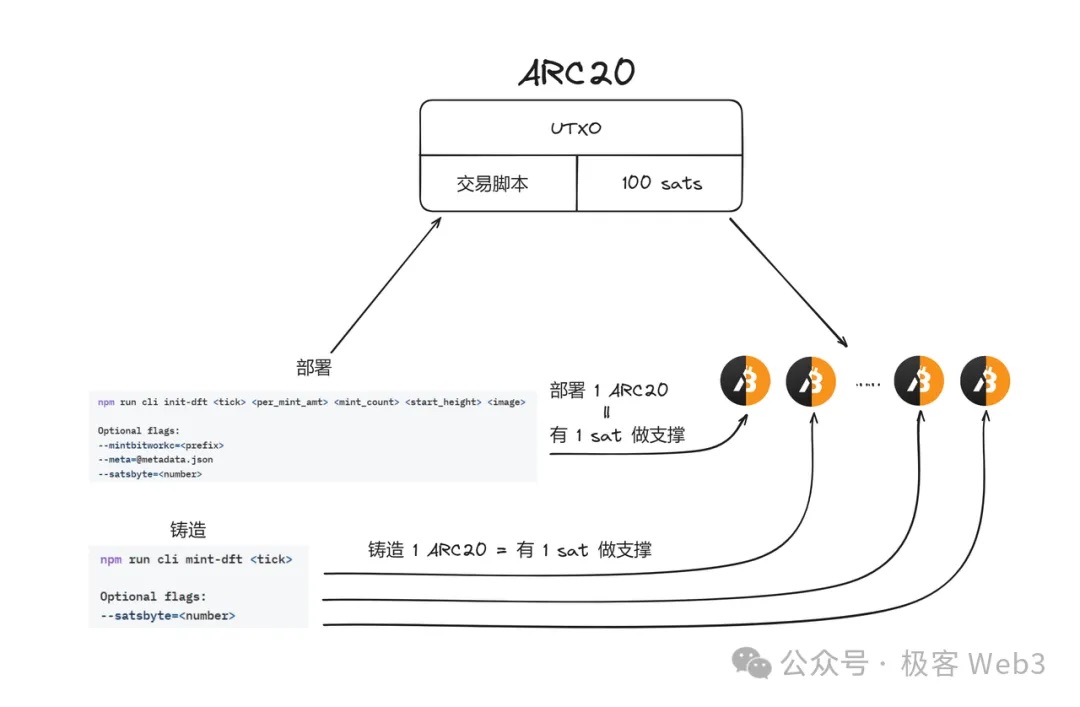
Once users successfully obtain TEST tokens, they can transfer these ARC-20 tokens directly to others. This process is nearly identical to normal Bitcoin transactions—simply splitting the UTXO and sending one or more parts to someone else. The number of sats in each split UTXO determines how many ARC-20 tokens are transferred.
Due to this feature, transferring ARC-20 tokens does not require inscribing a Transfer instruction like BRC-20 does, saving transaction costs and reducing unnecessary data bloat on the Bitcoin network.
To summarize, ARC-20 involves three primary operations: deployment, minting, and transfer:
-
During ARC-20 deployment, the issuer sets parameters such as token name, total supply, difficulty settings, genesis block, and configures the corresponding Taproot locking script.
-
When minting ARC-20 tokens, users write Claim data (required minting information) into the locking script of the designated UTXO, then withdraw the corresponding ARC-20 assets (colored sats).
-
Subsequent transfers require no additional data written to the BTC chain—users simply transfer the UTXO. Recipients can verify its association with the ARC-20 asset by tracing the Bitcoin UTXO’s history.
Similar to the RGB protocol’s “one-time seal” model, ARC-20 transaction security is fully guaranteed by the Bitcoin mainnet. Anyone verifying historical records or calculating current ARC-20 balances doesn’t need to fetch extra data from off-chain storage—they only need to examine Bitcoin UTXOs related to ARC-20 coloring. This is the biggest difference from BRC-20, which heavily relies on off-chain indexers and storage layers.
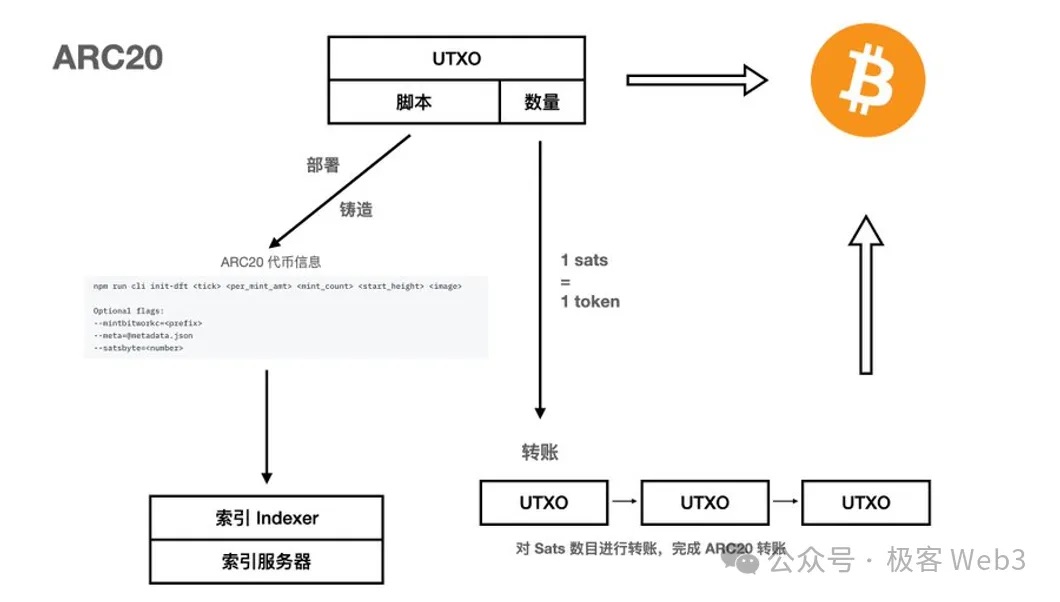
Source: https://twitter.com/blockpunk2077/status/1725513817982136617
For ARC-20, we only need a lightweight indexer (or wallet client) to identify which ARC-20 minting and transfer events have occurred on the Bitcoin chain.
Of course, the 1-sat-per-token design comes with notable drawbacks. Due to Bitcoin’s anti-"dust attack" rule, each transaction must transfer at least 546 sats. This means every time you send colored sats, you must move at least 546 at once—an unacceptable threshold for most users. Additionally, since each ARC-20 token binds to exactly one sat, the minimum divisibility of ARC-20 balances is 1, making finer subdivisions impossible.
Moreover, many people remain confused about the differences between ARC-20 and BRC-20 indexers. Let’s clarify:
-
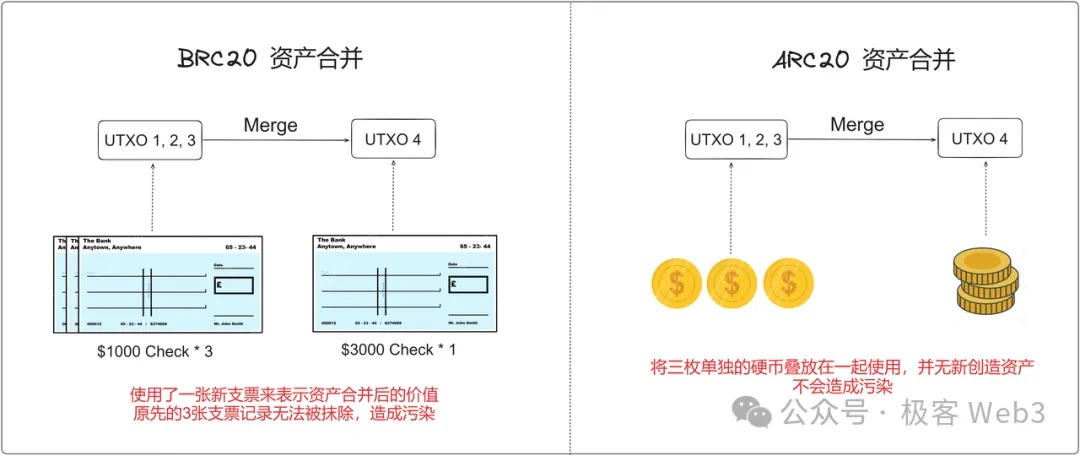
ARC-20 indexers are simpler and lighter than BRC-20 indexers. Think of BRC-20 as a paper check—you can write any amount on it, which is why BRC-20 requires three separate indexing transactions to ensure accuracy and security. In contrast, ARC-20 is like passing physical coins—transferring pre-existing units. Calculating ARC-20 balances is much easier than BRC-20, so ARC-20 indexers perform far less work.
-
ARC-20 transaction indexing is more convenient than BRC-20 when merging assets. We can simplify: Merging BRC-20 assets is like replacing three $1,000 checks with a single $3,000 check. But the original three checks still exist on-chain and can’t be erased, causing data pollution—this explains why withdrawals from exchanges often carry unexpected inscriptions.
-
Merging ARC-20 assets involves bundling multiple coins into one transaction. Unlike BRC-20, ARC-20 indexing doesn’t pollute sat data because its operational workflow is fundamentally different.
Dmint: A New Way to Issue NFTs
Within the Atomicals protocol, NFT collections are referred to as "containers," issued via a decentralized mechanism called "Dmint." The Dmint-based NFT issuance process consists of four steps: NFT data preparation, container configuration, NFT project verification, and NFT minting.
For NFT projects, the focus lies in pre-launch preparations—aggregating all NFT data and configuring Dmint metadata. Projects following Dmint compile all NFT data into a Merkle Tree. The Merkle root is published on-chain, while full NFT metadata remains stored off-chain.
After selecting an NFT to mint, the user obtains its off-chain metadata and presents a Merkle Proof to demonstrate that their data indeed belongs to the originally constructed Merkle Tree—i.e., part of the officially declared NFT dataset.
During NFT minting, the Atomicals protocol offers advanced options for founding teams—such as setting payment rules or allowing limited-edition NFTs. Such special mints not only require passing Bitwork checks but also involve paying tokens to designated addresses.
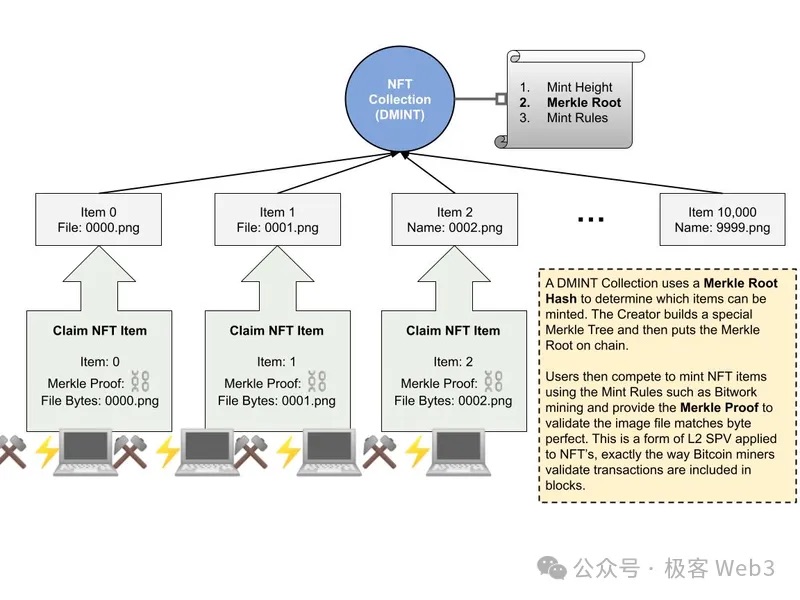
Source: https://docs.atomicals.xyz/collection-containers/dmint-guide
With integration of Bitwork, Dmint introduces a decentralized NFT minting mechanism on Bitcoin. Now, all participants must engage in lottery-style minting through mining-like processes, rendering automated bot attacks via flooding transactions ineffective.
Thanks to the combination of Bitwork and Dmint, both fungible and non-fungible tokens now have fertile ground for Fair Launches within the Bitcoin ecosystem.
Through Dmint, the Atomicals protocol strengthens NFT security and uniqueness, offering flexible management tools. Project teams gain full control over their NFT collections on the Bitcoin blockchain. This not only opens customization options for creators to meet diverse creative needs but also provides convenient on-chain solutions for minting, transferring, and updating digital assets—greatly enhancing flexibility for both static and dynamic digital items.
Furthermore, the Bitwork mining mechanism introduced by Dmint ensures equal, one-time minting opportunities for everyone, fundamentally eliminating possibilities for script-based automated minting and gas-price-driven competition.
RNS: Infinite Domain Expansion
Earlier in this article, we mentioned that Arthur initially wanted to build a DID project on the Ordinals ecosystem—this project became RNS (Realm Name System), also known as "Realm."
Realm names start with a plus sign (+) and contain at least one letter character, e.g., +alice and +agent007, both valid DID identifiers. Compared to traditional domains or ENS, Realm retains decentralization while offering higher scalability and flexibility.
Current domain services or DID systems face significant limitations—they mostly map domains to single entities (websites/wallet addresses), without deeper extensibility. For example, Alice owns alice.com, which can only represent different sites or personal info via prefixes like blog.alice.com. There’s no way to extend further downward—such as alice.com.blog.text—which could support richer use cases.
Let’s compare alice.com/blog/text with alice.com.blog.text. alice.com/blog/text1 and alice.com/blog/text2 simply point to page 1/page 2 of Alice’s blog diary;
Meanwhile, alice.com.blog.text1 and alice.com.blog.text2 allow dual interpretations:
1. Opening two different notebooks in two separate rooms
2. Flipping to two different pages in Alice’s blog diary
We see that the traditional "/" structure inherently limits expansion space, whereas the sub-realm model used by Realm imposes no such restrictions.
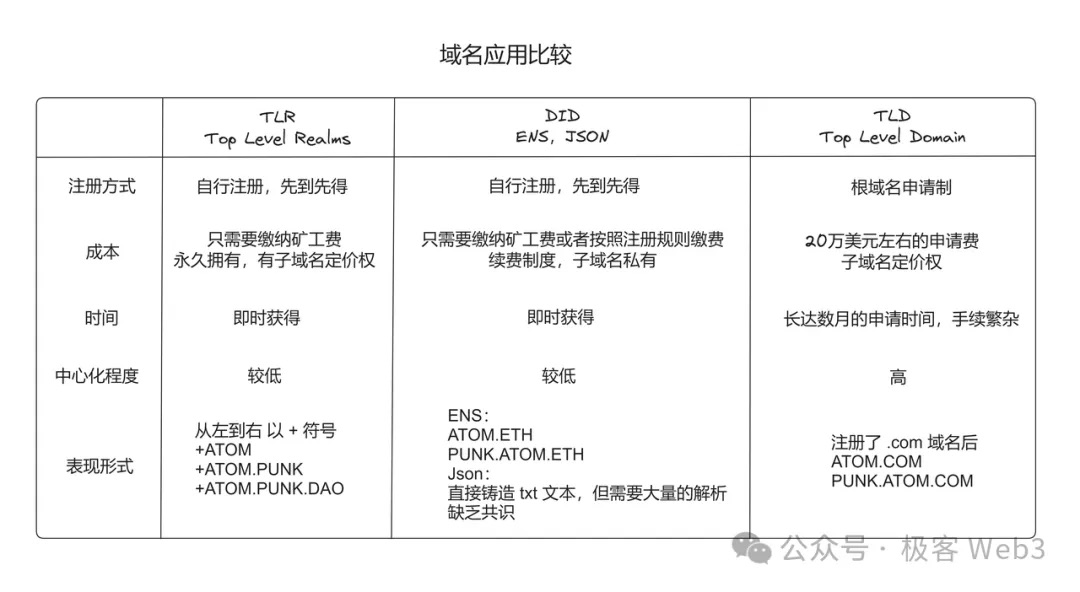
The Realm domain protocol allows any user to issue subdomains (SubRealms) under any Realm, managing the domain ecosystem hierarchically and enabling tokenization. Key rules include:
-
Any Realm or SubRealm can publish a SubRealm
-
All SubRealms inherit common properties and can themselves issue further SubRealms
-
Everyone is the registrar of their own Realm—no centralized authority exists
Theoretically, SubRealm extensions are unlimited, giving the Realm naming system immense potential. For example, top-level Realms could function like online forums, first-level SubRealms as posts, second-level SubRealms as replies—and so on. Thus, the Realm system could spark a revolution in domain applications, empowering unprecedented scalability.
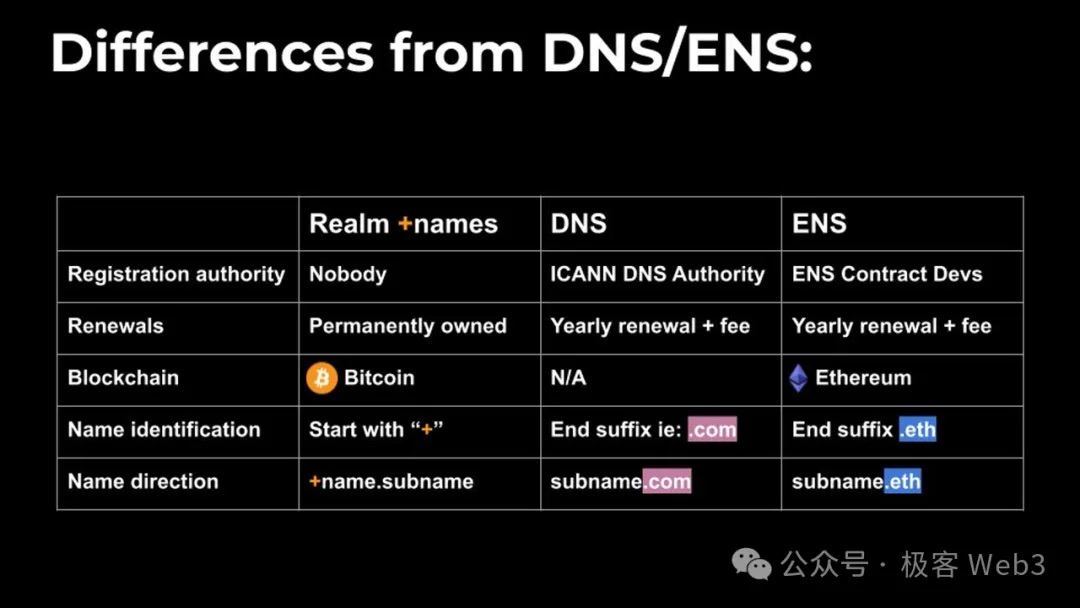
Source: https://twitter.com/atomicalsxyz/status/1761744365448274371
AVM: A Potential Dark Horse
Since its inception, the ambition of the Atomicals protocol has extended beyond mere asset issuance. After about six months of growth, the number of Atomicals-compliant assets continues to rise, raising new questions—how to provide richer use cases for these assets, enhance liquidity, and expand functionality.
As is well known, Bitcoin does not support Turing-complete programming languages, making complex DApp development extremely difficult. Inspired by BitVM and concerns about Atomicals' evolution, Arthur proposed the idea of AVM. Although specific details remain undisclosed, market expectations are high.
According to Arthur, AVM aims to enable complex logic execution on the Bitcoin network—for example, solving issues like the indivisibility of ARC-20's "1-token-per-sat" model. Moreover, existing Bitcoin scaling solutions all come with various shortcomings. We hope AVM will inject fresh vitality into the BTC ecosystem.
Arthur indicated that optimistically, the first beta version of AVM could be released before the Bitcoin halving. We will provide detailed analysis upon its release.
Summary of the Atomicals Protocol Ecosystem: Opportunities on the Horizon
Whether inscription protocols like BRC-20 or the Atomicals ecosystem, both have entered cooling-off periods after waves of excitement. However, we observe that asset issuance on BTC differs greatly from that on Ethereum—these ecosystems largely reflect the contrast between decentralization and centralization.
Existing BTC-based assets have popularized the concept of "Fair Launch." Through mechanisms like Bitwork, Dmint, no pre-mine, and no allocations, the Atomicals protocol increases user trust in projects and reduces direct manipulation by issuers. In a sense, this reflects the ongoing tension between centralization and decentralization.
Centralized projects tend to develop faster early on, respond quickly, and can succeed easily if managed well. Decentralized projects, pursuing greater fairness and distribution, rely more on organic community action in development and marketing—facing greater resistance initially. But once they overcome early hurdles, they can rapidly surpass centralized counterparts.
The same applies to the Atomicals ecosystem. The image below shows currently launched and upcoming Atomicals ecosystem projects. Even though the broader BTC asset market is currently quiet, Atomicals remains in its early stages. Many projects continue actively integrating into the Atomicals ecosystem, reflecting strong community confidence.
This confidence stems partly from the "Fair Launch" wave ignited by Ordinals and BRC-20, and partly from the inspiring vision of this wild, decentralized experiment.
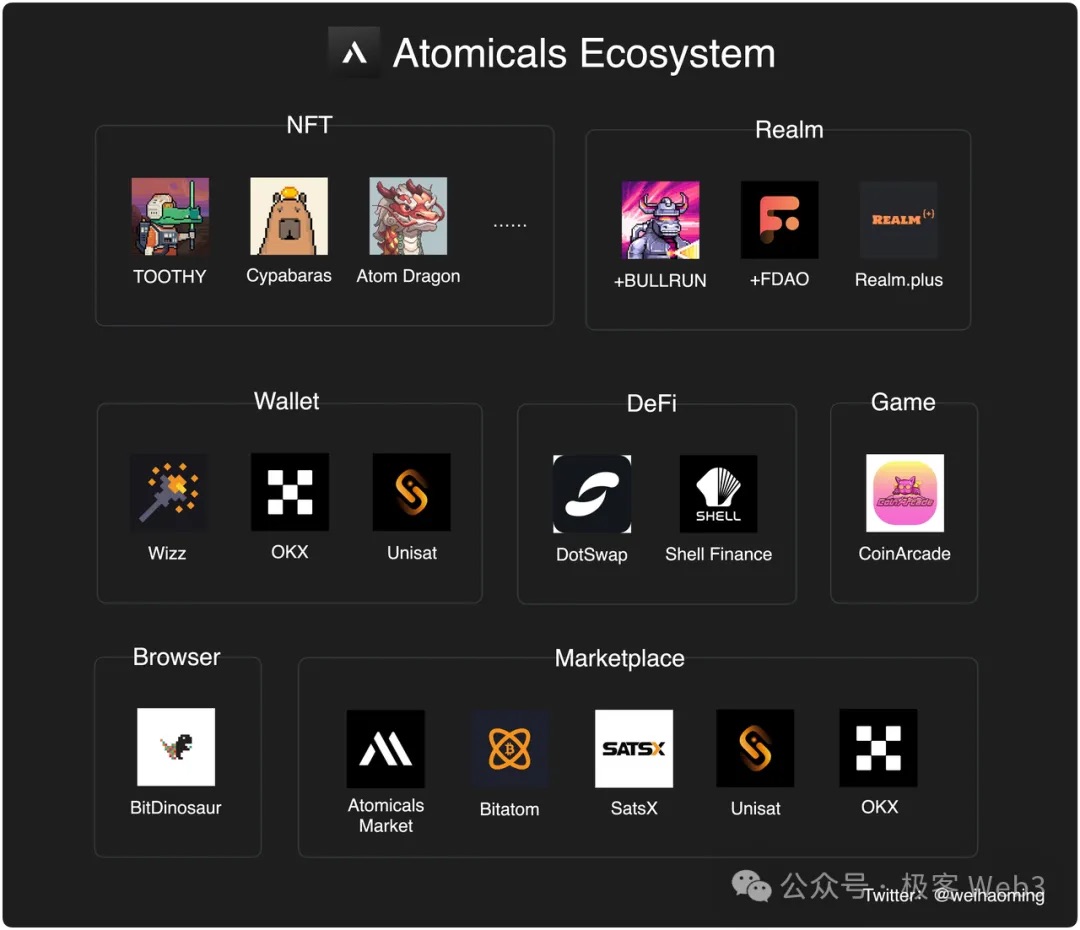
We believe that with the future release of AVM, the Atomicals protocol will achieve programmability on Bitcoin Layer 1, enabling a new generation of AVM-based applications and writing a new chapter for the entire Bitcoin ecosystem.
Join TechFlow official community to stay tuned
Telegram:https://t.me/TechFlowDaily
X (Twitter):https://x.com/TechFlowPost
X (Twitter) EN:https://x.com/BlockFlow_News
 @godrealmx