ATOM and Little Crocodile NFTs Soaring—A Complete Guide to the Atomicals Ecosystem
TechFlow Selected TechFlow Selected
ATOM and Little Crocodile NFTs Soaring—A Complete Guide to the Atomicals Ecosystem
What "astrophysical" assets on Atomicals, the "technically pure" community within the Bitcoin ecosystem, are worth positioning for?
 Navigating Web3 tides with focused insights
By Jaleel, Luccy, BlockBeats
While exploring the vast and enigmatic digital realm of Bitcoin, Ordinals and Atomicals are shaping and sustaining new developments in this ecosystem in fundamentally different ways.
Atomicals primarily focuses on creating and managing complex token systems on the Bitcoin network, while Ordinals specializes in minting and trading unique NFTs and data directly on the Bitcoin blockchain. Each plays a distinct role within the Bitcoin ecosystem.
With the release of Atomicals Indexer version 1.3.6, ARC20 tokens can now be traded in smaller units through splitting. The UniSat team announced that it will begin supporting ARC20 starting today, open ARC20 asset trading on December 28, and provide full services for ARC20 assets by December 30.
This marks not only a new chapter in the Bitcoin digital landscape but also signals that major exchanges like OKX and Binance may soon join the movement and begin supporting ARC20 assets.
The Atomicals Protocol is a simple and flexible protocol designed to enable the creation, transfer, and updating of digital objects on UTxO-based blockchains such as Bitcoin. An Atomical integrates the creation, transmission, and updating of digital objects—it is essentially a chain of digital ownership defined by a set of simple rules. The core philosophy of Atomicals is: No transaction history, not your digital object.
To help more users quickly get started with Atomicals, BlockBeats has compiled a list of common assets and tools in the Atomicals ecosystem.
Toolkit
1. Wizz Wallet (formerly ATOM Wallet);
3. Official domain name lookup;
5. Atomical Market marketplace;
6. Wizz Cash wallet dashboard and asset transfer tool;
7. mempool Bitcoin blockchain block explorer;
8. Comparison of Atomicals vs. Ordinals data;
ARC20
BRC20 token inscriptions are largely themed around zoo animals, whereas Atomicals tokens lean into their namesake—exploring the mysteries of the universe and astrophysics.
Currently, Atomicals' GitHub repository ranks sixth on GitHub's monthly trending list. Entering the Atomicals community chat, one immediately encounters a strong technical culture centered around deploying Bitcoin full nodes, setting up environments, and sharing code, populated by many scientists. If Ordinals is likened to BAYC, then Atomicals is closer in spirit to Punk.
Atom
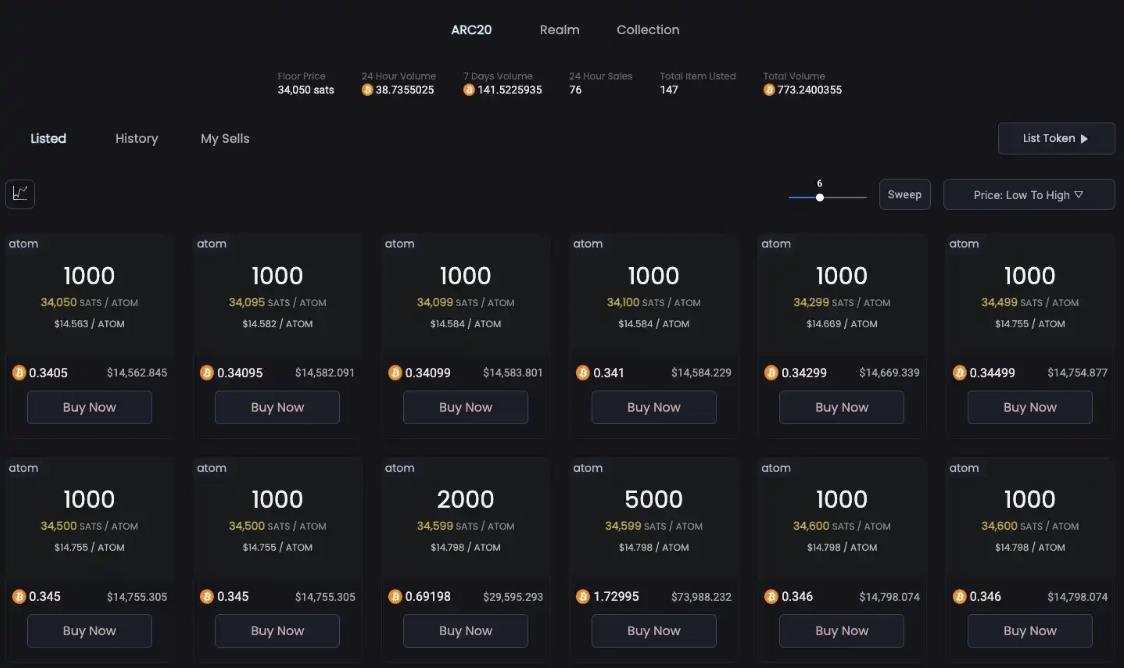
Unlike the token Atom issued by the Cosmos project, $Atom—the first token in the Atomicals ecosystem—has a total supply of 21,000 sheets, each containing 1,000 coins. To date, Atom has become a rare 10,000x coin within the Bitcoin ecosystem. Most of Atomicals' liquidity and trading volume still centers around ATOM.
According to Atomical Market data, at the time of writing, Atom is priced at $14.50, with a market cap exceeding $280 million and 24-hour trading volume surpassing $1.71 million.
AVM Virtual Machine
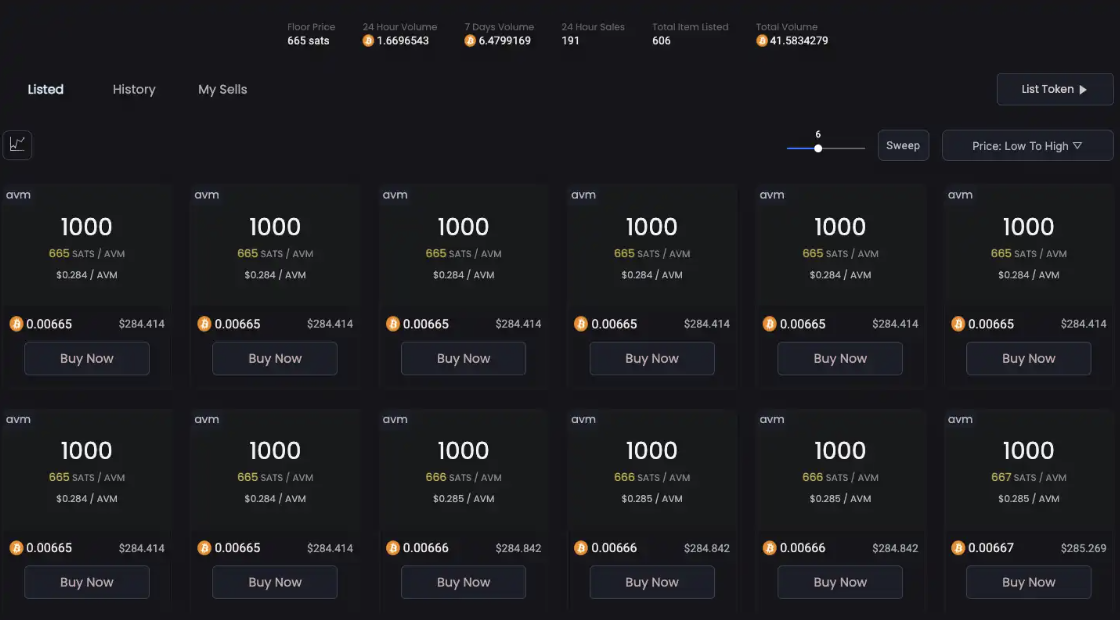
AVM has a total supply of 21 million tokens and held the second position for a long time before newer tokens like Electron emerged, though its market cap has since been overtaken. According to Atomical Market data, at the time of writing, AVM trades at $0.284, with a market cap over $5.7 million and 24-hour trading volume exceeding $710,000.
Electron
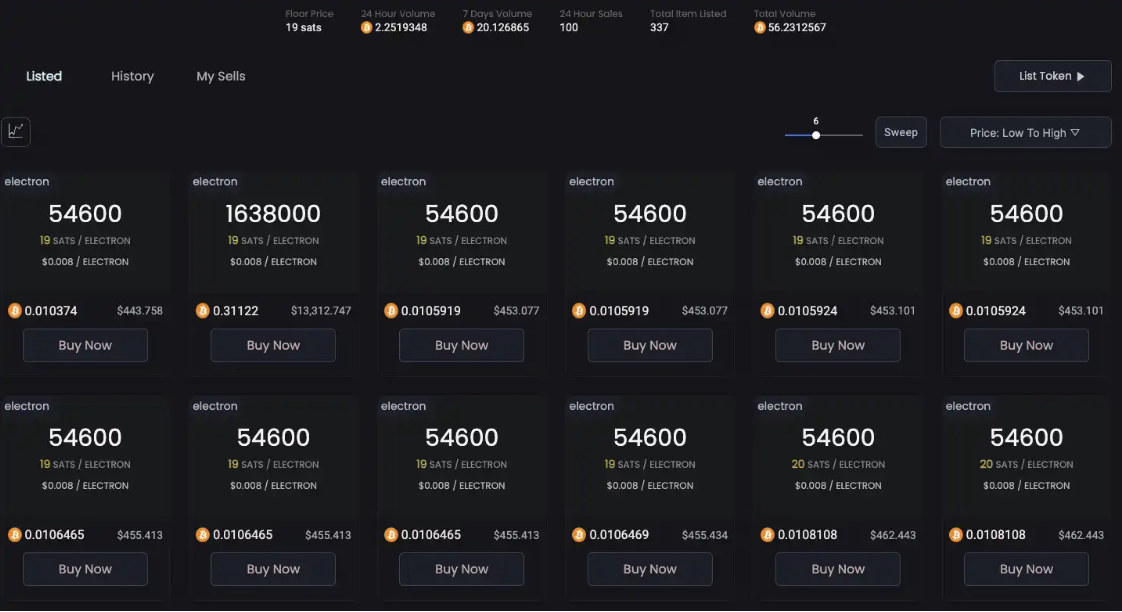
Electron, an ARC20 token created on November 19 with mining difficulty 7, has a total supply of 18,400 sheets, each containing 54,600 tokens. According to official tweets, Electron mining takes about half a month. According to Atomical Market data, at the time of writing, Electron is priced at $0.008, with a market cap over $7.6 million and 24-hour trading volume exceeding $110,000.
Neutron
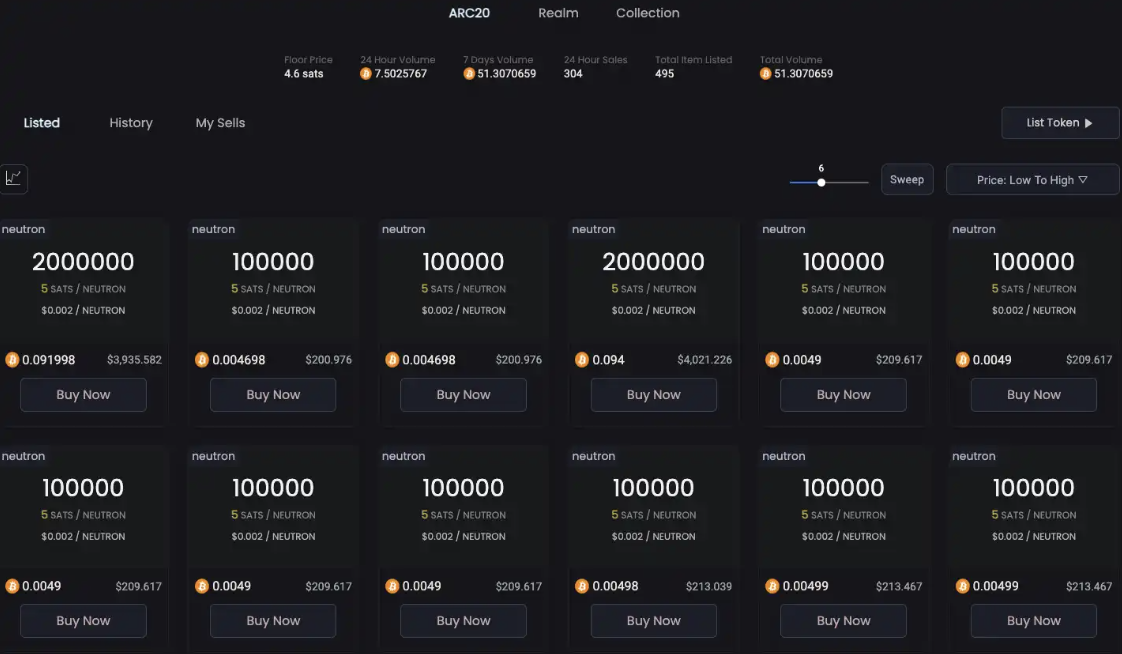
Neutron has a mining difficulty of 8, a total supply of 21,000 sheets, and 100,000 tokens per sheet. According to Atomical Market data, at the time of writing, Neutron is priced at $0.002, with a market cap over $3.9 million and 24-hour trading volume exceeding $300,000.
Neutron’s key feature is "Empowered Bitcoin"—building upon Bitcoin's foundational technology while introducing enhanced features and capabilities. This concept integrates advanced protocols and innovative mechanisms to create a more versatile and efficient form of cryptocurrency. The Neutron Protocol team uses the nSequence field to add randomness, improving ARC20 mining speed by 10x through optimized code.
Moreover, Empowered Bitcoin emphasizes inclusivity and fairness in mining. It adopts an improved Proof-of-Work (PoW) algorithm that ensures transaction security and integrity while making mining accessible to a broader group of participants, reducing dominance by large-scale mining operations. This approach democratizes mining, enabling fairer distribution of rewards and opportunities across the community.
QUARK
QUARK has a mining difficulty of 6 and is currently being minted.
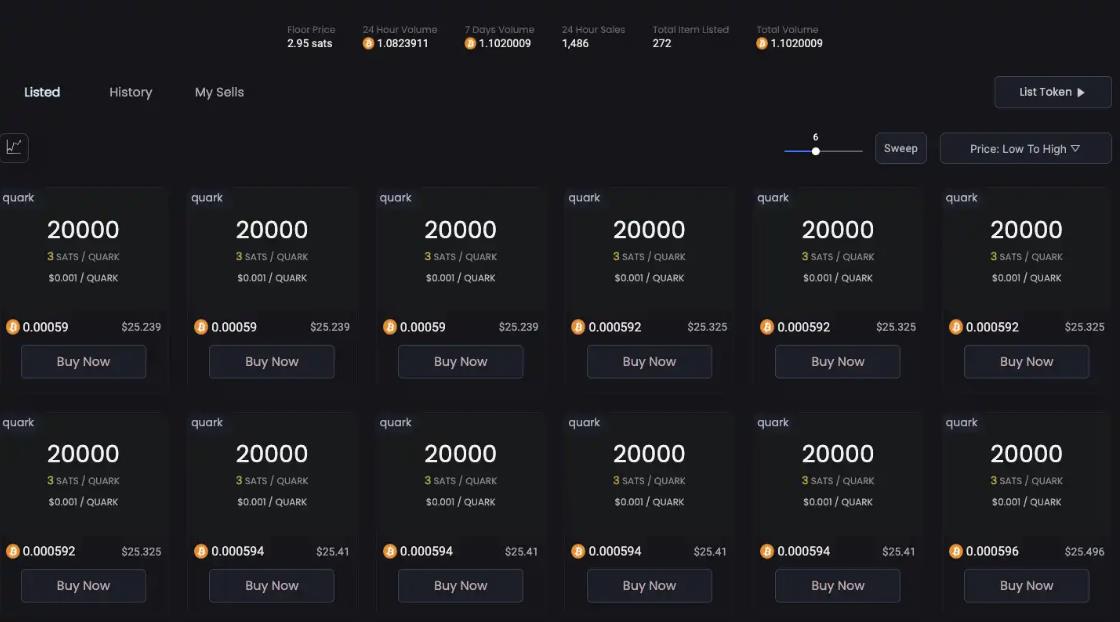
Total supply is 500,000 sheets, each with 20,000 tokens. Currently, the cost to mint one sheet is around 25 USDT. According to Atomical Market data, at the time of writing, QUARK is priced at $0.001, with a market cap over $340,000 and 24-hour trading volume exceeding $43,000.
Similar to SATS—where sats are the smallest unit of Bitcoin—quarks are fundamental particles of matter, giving QUARK a meme-like quality. From a participation standpoint, QUARK’s large total supply of 500,000 sheets requires a long time to fully mine, allowing broad community involvement and consensus-building. Additionally, QUARK’s mining difficulty is lower than Electron and Neutron, and recent multi-threading optimizations allow more users to experience mining firsthand.
Furthermore, QUARK boasts high initial market value, numerous holder addresses, and strong foundational consensus, leading some community members to believe QUARK could become a breakout meme coin within the Atomicals ecosystem.
Quantum
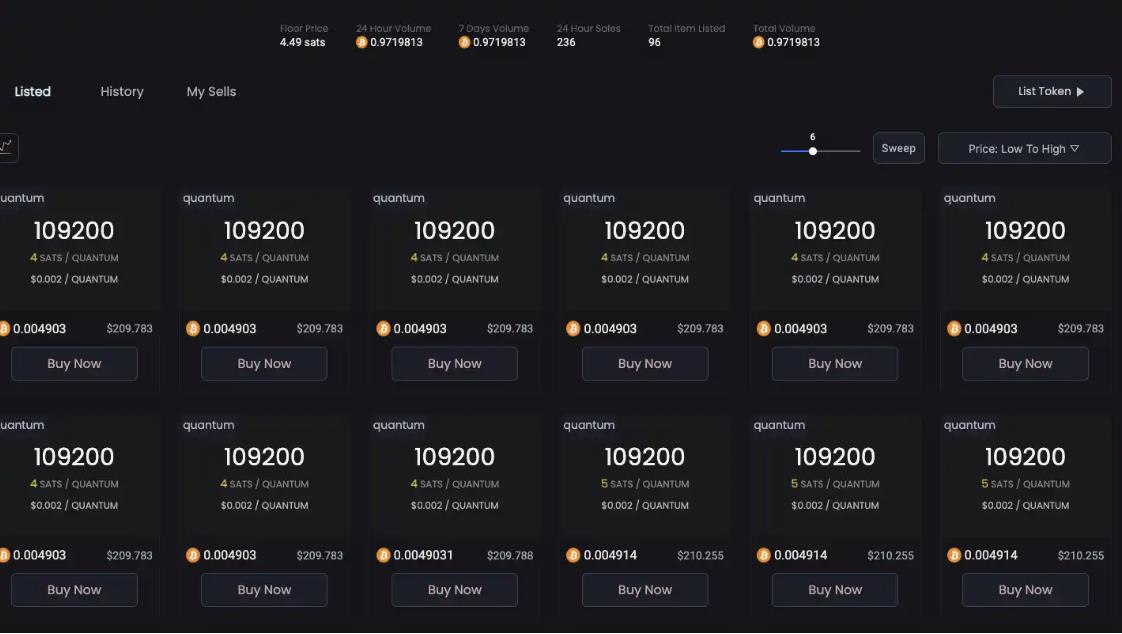
Quantum has a mining difficulty of 9 and a total supply of 229.32 million tokens. According to Atomical Market data, at the time of writing, Quantum is priced at $0.001, with a market cap over $110,000 and 24-hour trading volume exceeding $37,000.
Currently, Quantum is open for Dmint on Atomic, where numbers 0000–9000 are free, and 9001–9999 require following detailed instructions and paying 1,000 satoshis. However, given Quantum’s extremely high mining difficulty, the secondary market may be a better option.
Realm
Official Twitter: @realmname
Currently, there is a token named "$realm" in Atomicals, but this is not the true Realm.
So what exactly is a "Realm Name"? Simply put, it’s a unique label or address on the internet. While traditional domains like ".com" or ".org" use suffixes, in the world of Realm, users register prefixes and have the power to set prices for all suffixes.
Imagine owning a Realm such as "+abc". In the Atomicals world, this isn’t just a name—it’s a gateway to infinite possibilities. You can use it to build communities, organizations, or groups within the Bitcoin ecosystem, applicable in gaming, social networking, land ownership, badges, and more.
More specifically, a Realm can serve as a payment address (like a personalized payment username), a foundation for building communities, identity verification, social profiles, privilege tagging, or asset distribution. It’s a fusion of identity and digital assets without the limitations of traditional domains, prefixed with a plus sign, e.g., "+username".
By owning a Realm, you gain pricing rights over all sub-realms and can act as a "registry", charging others for sub-realm registration fees. This is a completely new concept that overturns our understanding of traditional domains and could even serve as an alternative to the entire DNS system.
In short, a Realm is not just a domain—it’s a door and a key to the digital world, connecting communities, organizations, and groups, bringing unprecedented expansion and applications to the Bitcoin ecosystem.
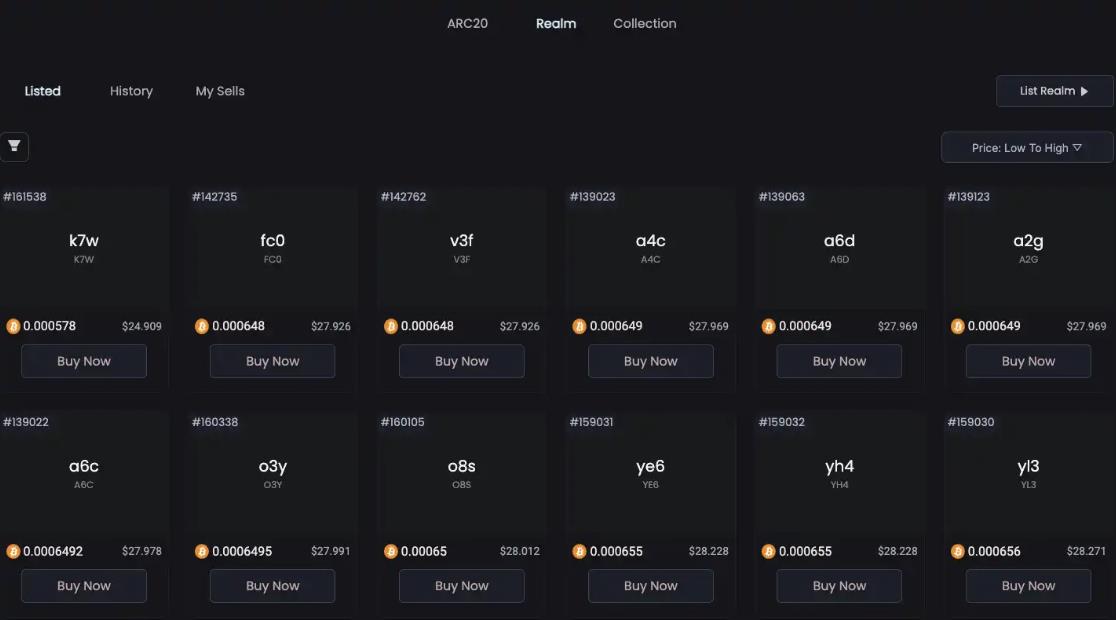
Currently, pure-letter Realms have the strongest consensus, followed by numeric ones—especially two-digit and three-digit combinations, which are considered most valuable. Mixed alphanumeric Realms are referred to as "3杂" ("3-mix") by the community. According to Atomical Market data, at the time of writing, the floor price for "3-mix" is around 25 USDT, 3-letter Realms are valued around 200 USDT, and "2-mix" Realms are priced around 2,000 USDT.
NFT
Atomicals uses a method called Dmint to mint NFTs. This approach draws heavily from Bitcoin’s Proof-of-Work (PoW) mining model, incorporating a mechanism known as Bitwork. This update sparked significant attention in the Bitcoin community, prompting many to download and install related tools, making the Atomicals GitHub repository a trending topic and ranking highly on GitHub’s overall charts.
So, what exactly is Dmint, and why is it receiving so much attention?
Simply put, Atomicals not only enables token issuance similar to BRC20 but also allows the creation of NFTs with all data stored directly on the Bitcoin (BTC) blockchain—and it does so differently from Ordinals.
The Dmint method is considered fairer and more decentralized. When an NFT creator wants to issue a collection, they assign sequential numbers to each image (e.g., 0000 to 9999). The Atomicals protocol then calculates the hash of each image file and generates a separate JSON file for each.
Next, the protocol uses these image hashes to compute a Merkle tree proof, which can verify any NFT in the series.
The deployer then includes this proof along with the NFT’s name, description, logo, mining difficulty, and other metadata in a transaction broadcast to the Bitcoin network, completing the series registration.
Thus, during registration, only the proof—not the actual images—is sent on-chain. Even when deploying 10 million NFTs at once, the sats cost remains minimal.
Afterward, the project reveals the individual NFT images and JSON files. Users select their preferred NFTs and send Bitcoin transactions to record the image data and JSON files on the blockchain, completing the minting (or claiming) process for individual NFTs.
These NFT image hashes can be cross-verified with the Merkle tree proof in the registration transaction, completing the entire issuance and minting process.
On November 31, three projects—Crocodile (atomtoothy), Capybara (AtomCapybaras), and Scientists (SCIENTISTS)—were the first to launch Dmint NFTs. However, due to Scientists’ lower supply and higher cost, and Capybara’s weaker consensus compared to Crocodile, the latter gained stronger traction.
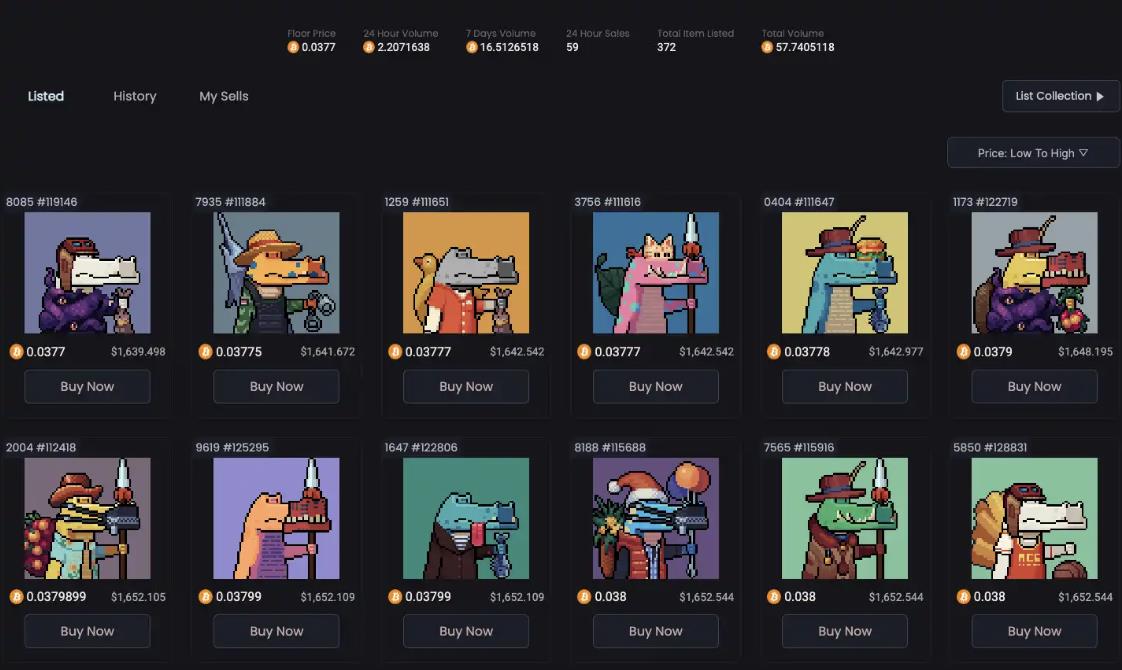
Nearly a month later, TOOTHY (Little Crocodile) has emerged as the undisputed leading NFT in the Atomicals ecosystem.
TOOTHY (Little Crocodile)
TOOTHY has a total supply of 10,000 and once peaked at 2,000 USDT, earning the nickname "financial crocodile." According to Atomical Market data, at the time of writing, TOOTHY is priced at $1,580, with 24-hour trading volume exceeding $97,000.
SCIENTISTS
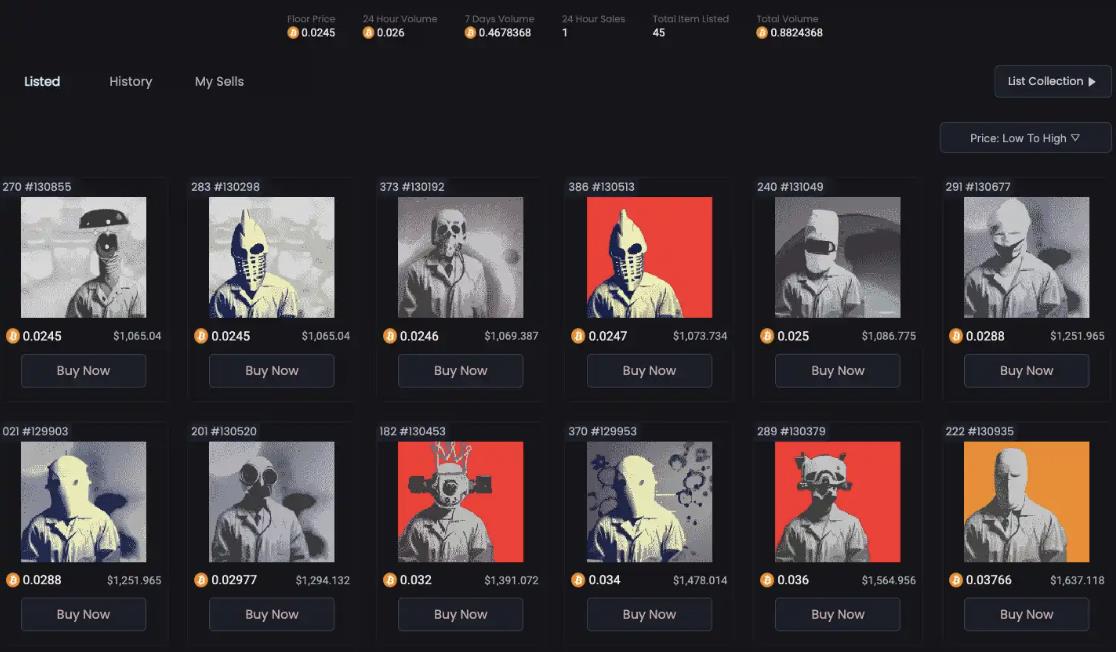
SCIENTISTS has a total supply of 400. According to Atomical Market data, at the time of writing, SCIENTISTS is priced at $1,046, with 24-hour trading volume exceeding $1,100.
FISHFACEMAN
FISHFACEMAN launched Dmint on December 23, with a total supply of 10,000. The gas cost to mint was approximately 50 USDT. After listing on Atomical Market, it surged to a high of 300 USDT and is currently the second-largest project in the ecosystem.
According to Atomical Market data, at the time of writing, FISHFACEMAN is priced at $221, with 24-hour trading volume exceeding $100,000.
Join TechFlow official community to stay tuned
Telegram:https://t.me/TechFlowDaily
X (Twitter):https://x.com/TechFlowPost
X (Twitter) EN:https://x.com/BlockFlow_News
 BlockBeats