The logic behind the explosive popularity of the Web3 gaming + public blockchain product combination
TechFlow Selected TechFlow Selected
The logic behind the explosive popularity of the Web3 gaming + public blockchain product combination
The continuous evolution of blockchain technology is giving rise to a new era of gaming, where the seamless integration of Web3 games and gaming public chain ecosystems has become a focal point of widespread attention. This report will delve into the close relationship between Web3 games and gaming public chain ecosystems, analyzing their remarkable performance in the current bull market, the logic behind their explosion, and their profound impact on the gaming public chain ecosystem.
 Navigating Web3 tides with focused insights
Authors: Brian & Fei, W Labs
1. The Remarkable Surge of Web3 Gaming Chains
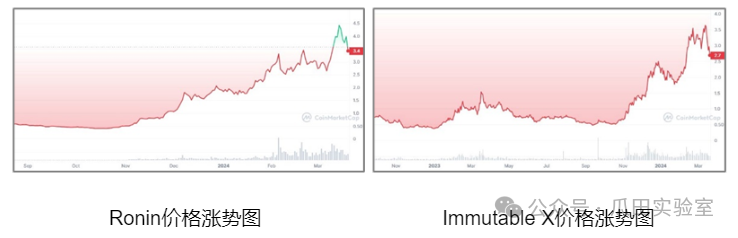
At the beginning of this bull market cycle, various trends have emerged one after another. But within the Web3 gaming sector, which category of tokens has seen the most astonishing gains? Based on data collected from major exchanges such as Binance and OKX, we find that RON—Ronin Chain—has delivered the highest returns, surging over 11x from its recent low in October 2023. IMX—ImmutableX—also performed impressively, rising nearly 8x from its September 2023 low to its peak. Other leading Web3 gaming projects like Bigtime, YGG, and Gala saw increases of around 6–7x during the same period. In comparison with other general-purpose blockchains, only Solana stands out with a similar ~11x growth; others such as Avalanche (~7x), Polygon (~2.5x), and Optimism (~4.5x) lag behind. Why have gaming-focused blockchains performed so strongly in this bull run? And why are these game-native chains attracting significant capital inflows?
2. The Flywheel of Web3 Gaming + Blockchain
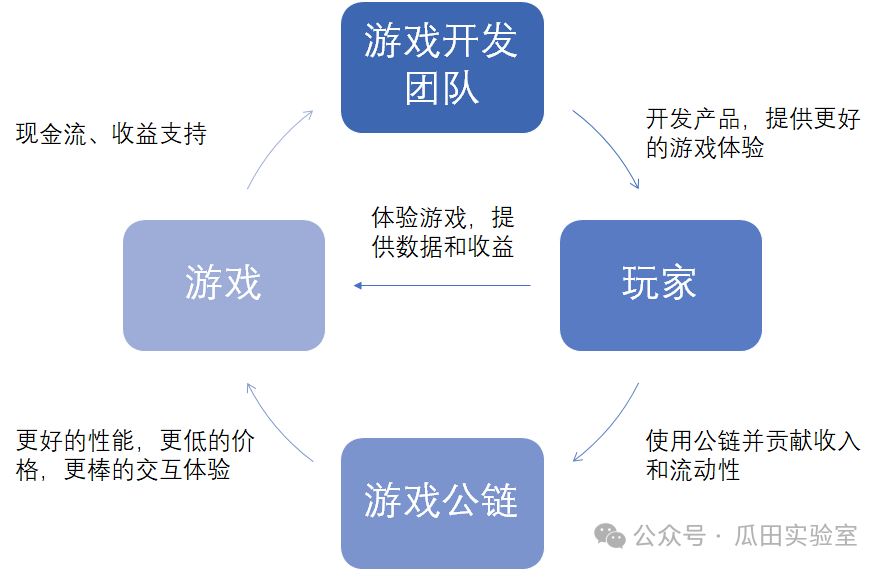
Why are blockchain platforms with native gaming support experiencing explosive growth? At their core lies the flywheel model illustrated above, consisting primarily of four components: game development teams, players, the blockchain itself, and the games.
-
Game developers strive to deliver superior gaming products for Web3 players, enhancing user experience and creating greater value. Many users increase their engagement due to improved gameplay quality.
-
Players conduct transactions via the blockchain, generating revenue and liquidity for the chain while contributing data and earnings back to the ecosystem, thus injecting new vitality into the game economy. Increased in-game rewards boost player enthusiasm for participating in Web3 gaming.
-
As the player base scales up, it helps the blockchain distribute costs more efficiently, enabling performance upgrades. This allows gaming chains to offer better infrastructure support through enhanced performance, lower costs, and improved interaction experiences.
-
Finally, games generate operational revenue that supports game development teams with stronger cash flow, enabling them to build more high-quality titles.
If this flywheel can be driven by strong product offerings and a capable blockchain platform supported by skilled development and operations teams, it can spin positively and accelerate during a bull market, becoming one of the brightest stars in the crypto space.
3. What Makes a Game and Blockchain Combination Explode?
While many game teams are building their own dedicated chains and numerous blockchain teams are targeting the Web3 gaming space, not all combinations succeed. Our research shows that for a game-chain pairing to achieve standout performance, several key conditions must be met:
-
The blockchain platform must host a highly popular, long-lasting, high-traffic flagship product;
-
The gaming blockchain needs to evolve into an ecosystem platform following the success of a major title;
-
Ongoing integration of new major titles is required to sustain ecosystem activity.
To illustrate, we analyze three notable game + blockchain combinations: Axie + Ronin, Gods Unchained + ImmutableX, and an emerging trio—Mines of Dalarnia + Chromia + DAR Open Network.
4. Axie and Ronin
In the previous bull market, Axie Infinity became the most prominent star in Web3 gaming thanks to its pioneering position on Ronin. It was not only the cornerstone of the Ronin ecosystem but also the pinnacle achievement of the entire Web3 gaming industry. As discussed in our earlier in-depth study “TechFlow’s GameFi Chain Research Series Part I – Ethereum's Development and Upgrade Roadmap,” we highlighted Axie as a standout project within Ethereum’s ecosystem during the last bull run. Today, Axie’s meteoric rise was precisely a response to Ethereum’s performance bottlenecks and persistent congestion. To overcome these limitations, the Axie team decided to build their own blockchain—giving birth to Ronin.
First, let’s introduce the Axie game. Axie is an Ethereum-based collect-and-battle game where players earn tokens by collecting, breeding, and trading virtual creatures called Axies. From the original Axie Classic launched in 2019 to the upgraded version Axie Origins released in 2022, the game has evolved through 21 seasons. Axie Origins introduced a new adventure and economic system, including the on-chain upgrade mechanism AXP (Axie Experience Points), allowing players to level up by earning points within Origins. Additionally, the team launched mini-games like Homeland and Raylight, further enriching the diversity of the Axie ecosystem.
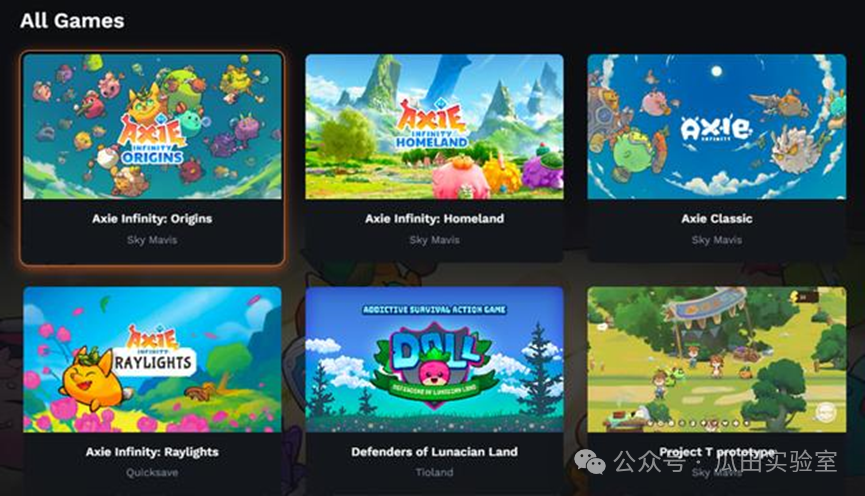
Axie’s rise began in the last bull market when surging demand rapidly boosted its popularity, significantly enhancing gameplay appeal and player engagement, triggering a new wave of "Play-to-Earn" (P2E) Web3 gaming. It even gave rise to numerous gaming guilds and gold-farming studios. At its peak, Axie generated over $300 million in monthly revenue, surpassing *Honor of Kings* to become the world’s highest-earning game at the time.
Ronin Network is an Ethereum sidechain utilizing a hybrid consensus mechanism combining Delegated Proof-of-Stake (DPoS) and Proof-of-Authority (PoA). It maintains compatibility with Ethereum’s ecosystem resources, enabling seamless asset transfers between chains, while achieving higher throughput and performance through independent block generation and consensus algorithms—all while maintaining low latency and minimal transaction fees.
Designed to solve Ethereum’s chronic congestion and high gas fees, Ronin Network serves as a scalable extension of Ethereum. With its standalone architecture, it delivers high throughput, low latency, and negligible transaction costs. Ronin provided crucial expansion and support for the Axie ecosystem—resolving Ethereum’s scalability issues while attracting more high-quality game projects. As titles like Apeiron and Pixels joined the ecosystem, Ronin gradually transformed from a single-game-centric platform dominated by Axie into a diversified, multi-game matrix. Particularly since 2024, Ronin has set record after record in active wallet counts, fueling a sharp surge in the price of its native RON token. From another perspective, Axie Infinity’s millions of players laid a solid user foundation for Ronin. Leveraging Axie’s massive traffic, other games on the Ronin ecosystem gained strong initial traction. Combined with the team’s robust development and operational capabilities, the game + blockchain flywheel accelerated dramatically.
5. Gods Unchained and ImmutableX
As one of the main competitors among established gaming chains, ImmutableX (IMX) stands out as Ronin’s most formidable challenger. Following the “success-first, scale-later” strategy, ImmutableX first achieved breakout success with its flagship game Gods Unchained before shifting focus toward expanding its blockchain ecosystem. It has attracted numerous well-known projects and offers comprehensive on-chain support for developers, aiming to become the leading Layer 2 chain in the gaming sector.
Gods Unchained is a Hearthstone-style card game where players build decks of 30 cards to battle opponents, level up, and win rewards. The core gameplay revolves around collecting, trading, and battling with cards categorized into three types: Minions, Spells, and Weapons. Minions have attack and health values and fight on the battlefield according to commands; Spells are one-time-use abilities that do not remain on the field; Weapons are equipped to characters, possessing attack power and durability—the character can attack using the weapon, consuming one durability point per strike. Developed under the leadership of the former game director of Magic: The Gathering Arena, the game emphasizes competitive play, requiring players to strategically construct decks capable of countering diverse tactics.
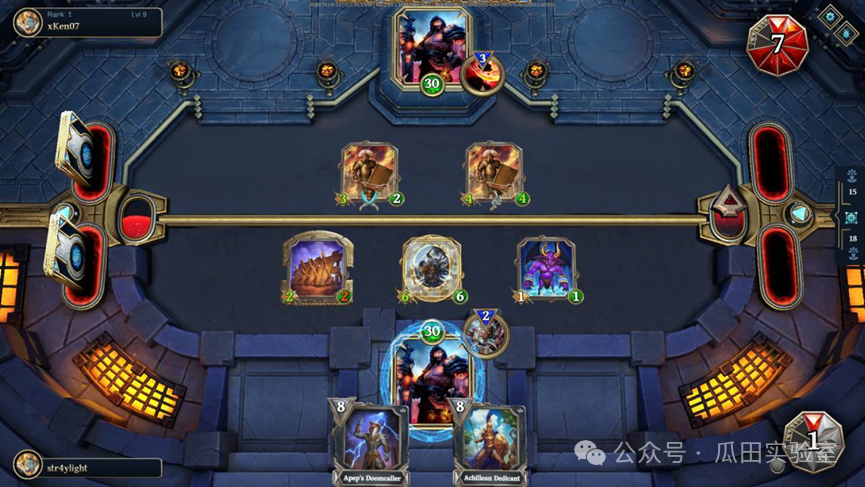
Initially deployed on Ethereum, the game used NFTs to ensure card ownership security, marking a deep integration between Web3 gaming and digital collectibles—and ushering in the era of “everything is Fi.” However, due to Ethereum’s network constraints, the game frequently suffered from transaction delays and high fees during peak usage.
Immutable X is a Layer 2 scaling solution built by the Gods Unchained team on Ethereum, leveraging Validium, StarkWare, and zkEVM technologies to dramatically improve Ethereum’s scalability and reduce minting and trading costs. It supports up to 9,000 transactions per second with near-zero gas fees. Focused exclusively on GameFi, Immutable X enhances mainstream gamer adoption through optimized wallet UX, provides simple APIs and SDKs for developers to launch games faster, and features a global orderbook that distributes NFTs across every marketplace on the blockchain network.
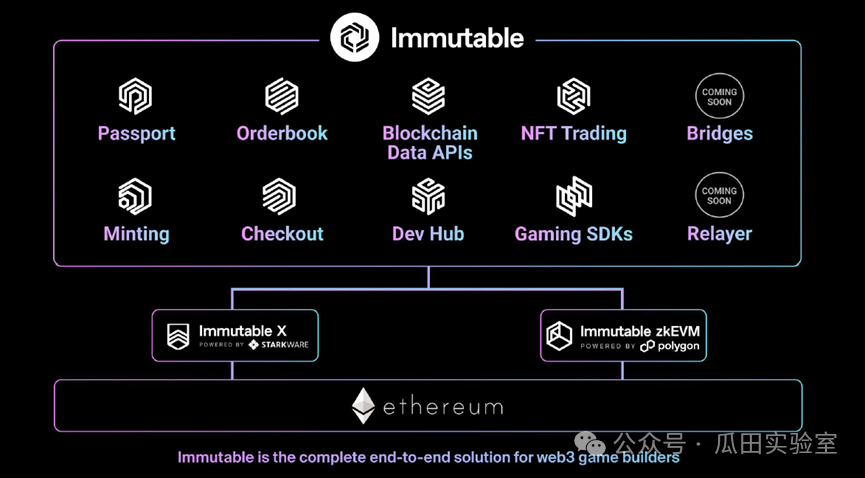
According to Immutable X’s official website, its ecosystem now hosts over 150 games, with daily transaction volume and user numbers growing rapidly. Beyond Gods Unchained, the platform has drawn star projects such as Guild of Guardians, Metalcore, Illuvium, and Space Nation, significantly accelerating overall ecosystem development.
The flourishing of the Immutable X ecosystem represents a successful market validation and strategic pivot. By leveraging strong technical expertise, entering the gaming space via Validium and StarkWare, establishing legitimacy through zkEVM, and partnering with mainstream platforms like GameStop to onboard flagship titles, it has enriched its ecosystem, increased user engagement, and completely broken free from dependence on a single game. ImmutableX is rapidly emerging as critical infrastructure in the Web3 gaming landscape.
6. Mines of Dalarnia + Chromia + DAR Open Network
While researching existing Web3 gaming + blockchain combinations, we discovered a European-originating product stack: the mining game Mines of Dalarnia, the blockchain Chromia, and the metaverse gateway DAR Open Network. We had played the game early on and found it well-crafted with excellent combat mechanics—but were unaware that the team was building a much larger ecosystem behind the scenes.
Mines of Dalarnia
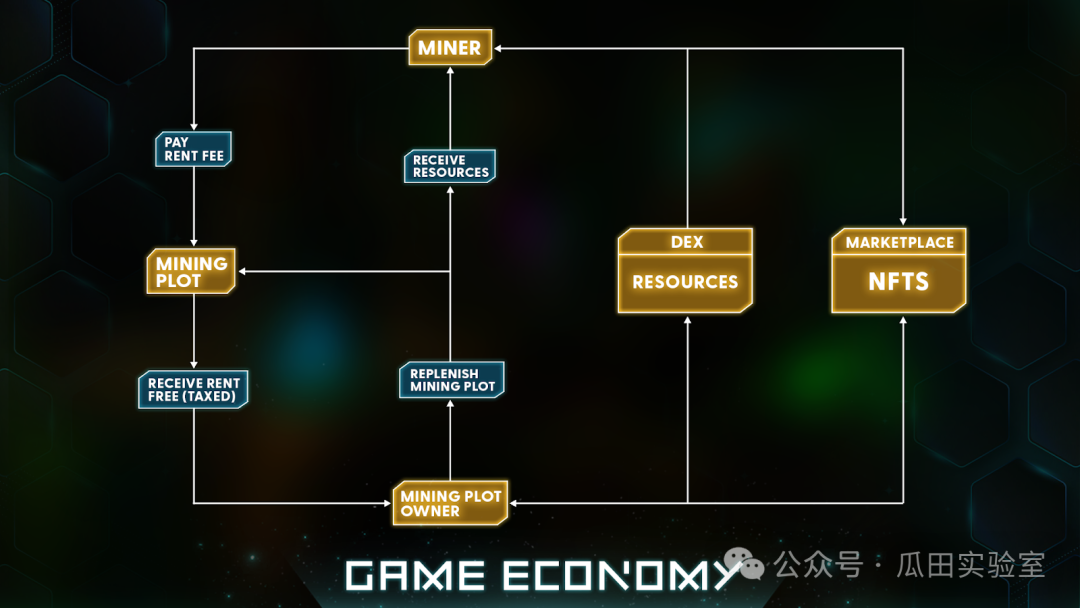
Mines of Dalarnia, also known as *The Mines of Dalarnia*, is a space-mining adventure game where players extract rare resources (minerals and gems) to craft new items and equipment, enabling access to more dangerous territories. The goal for Dalarnia miners is to grow stronger, more efficient, accumulate wealth, face challenges and monsters in deeper zones, and prove themselves through exceptional performance. In the future, players will join shared multiplayer spaces and participate in exciting competitive events. Most land plots (LAND) used for mining are owned by players. Each LAND plot is unique, with varying resource distributions, and as the game evolves, additional attributes of each plot will be gradually revealed. LAND owners must actively use terrain-modification capsules to maintain their mining plots and keep them attractive to miners. Below is the revised economic model loop:
-
Single-player Mode:
Multiple missions—including mining, salvage, and MOD robot tasks—offer various rewards. The game runs in seasonal cycles, each with its own prize pool. At the end of each season, players receive rewards based on the proportion of moon fragments they collected compared to the total collected by all players.
-
Multiplayer Mode:
Space Jump – A multiplayer mode set in space, playable with up to five others in a large satellite lounge. Designed as a brief, fun break, it lets players relax together. Miners engage in a risky game outside the satellite: jumping between hovering jet platforms with limited fuel. One by one, platforms fall into the void below, and miners must leap from platform to platform to stay afloat.
-
New Card Game: Dalarnia of Legends
An upcoming collectible card game, a vital addition to the Dalarnia ecosystem, using DAR as the universal token—offering more opportunities not to be missed.
Its token DAR was listed on Binance at the end of 2021, and the game gained notable exposure during the early bear market, sparking market FOMO. Users rushed to buy DAR tokens to mine and farm, but due to bot exploitation, DAR emissions became unbalanced, leading to a price drop and subsequent player attrition. Despite this, the team remained committed throughout the bear market, continuing development and operations.
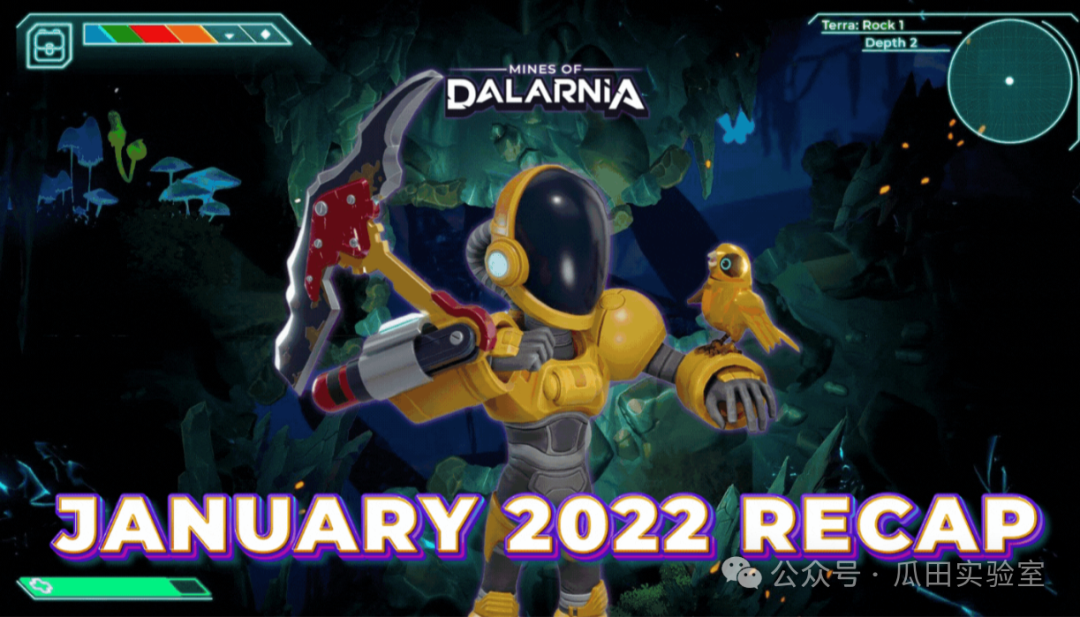
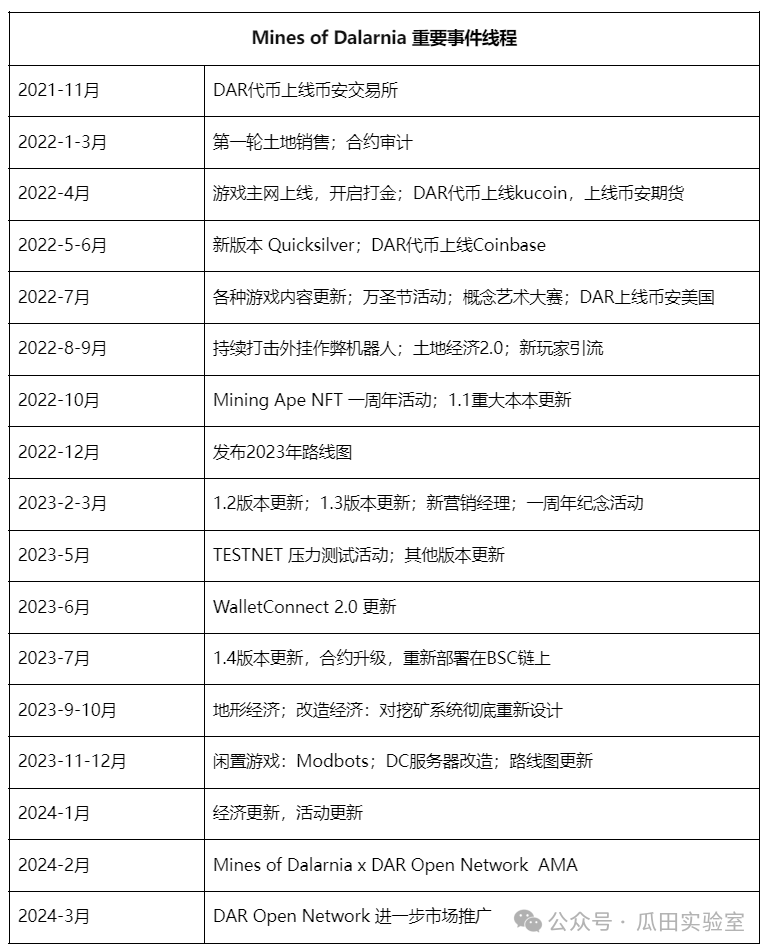
During the subsequent bear market, the team not only continuously improved and optimized the *Mines of Dalarnia* game but also completely redesigned its economic system and deeply explored the broader Web3 gaming ecosystem, expanding beyond gaming. They recognized that the potential of a Web3 gaming ecosystem far exceeds that of any single game—for example, the introduction of NFTs and smart contracts enables cross-game asset interoperability, and the concept of players and developers co-creating the gaming world is increasingly practical.
While advancing *Mines of Dalarnia*, the team began developing internal tools and modular components for use by other Web3-interested game developers. These tools are integrated into the DAR Open Network gaming ecosystem. In the future, the team plans to deliver a fully open, technology-driven system to the community and market, collectively building an open gaming network. This isn’t just a disruption of current gaming models—it’s a bold statement of belief in the future of Web3 gaming!
Chromia
Chromia is a relational blockchain platform that enables easy development of decentralized applications in real-world scenarios, serving as an independent Layer 1. It can also function as an Ethereum Layer 2, offering cheaper and faster development cycles along with lower and quicker transactions. This is how Hedget built its financial options market, enabling DeFi to integrate faster with Ethereum. The official website already showcases several Web3 games built on Chromia: *My Neighbor Alice*, *Mines of Dalarnia*, *Krystopia: Nova’s Journey*, and *Chain of Alliance*. Among them, *My Neighbor Alice* is the Alice project already listed on Binance, and *Mines of Dalarnia* is the flagship Web3 game mentioned earlier, whose token is also listed on Binance—indicating strong resource and execution capabilities. This is a crucial signal worth noting.
It seems their ambitions don’t stop here.
DAR Open Network
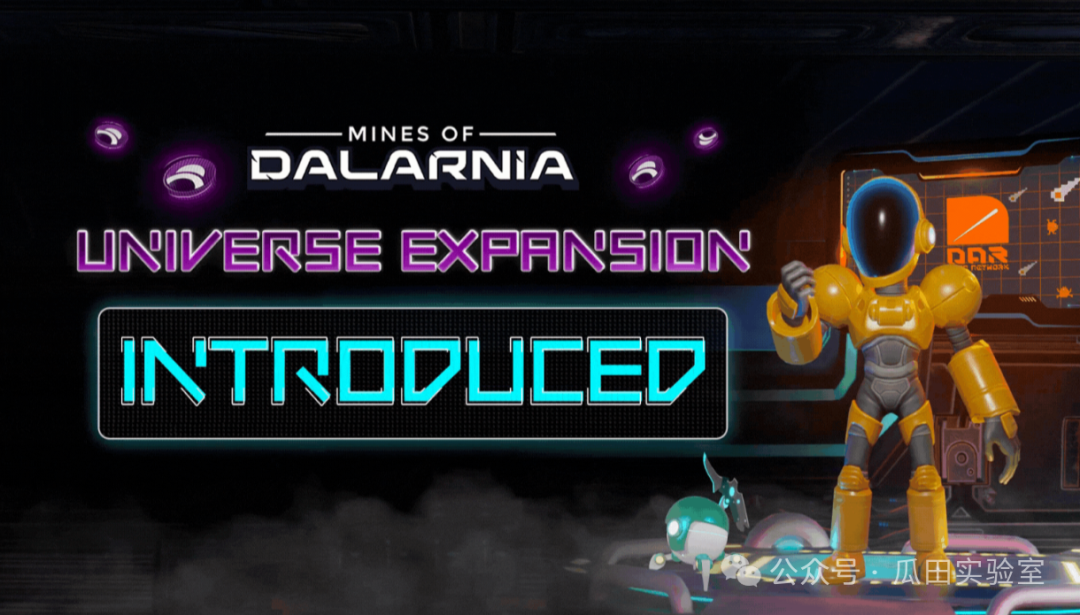
The DAR Open Network aims to create a universe that transcends the concept of games. Social interactions, asset exchange, and community governance form the structure of this new Web3 gaming reality. Imagine a world where games are seamlessly interconnected. Players are not just participants—they are creators shaping their own experiences.
-
Game Launchpad
This is the heart of innovation—where not only new games are launched but also incubated. Our next project, "Legends of Dalarnia," is a collectible card game (CCG) blending AI-generated art, strategic gameplay, and fast-paced PvP sessions. Legends of Dalarnia aims to make a lasting impact on the virtual card game space, offering a glimpse into the future of gaming.
-
Multiverse
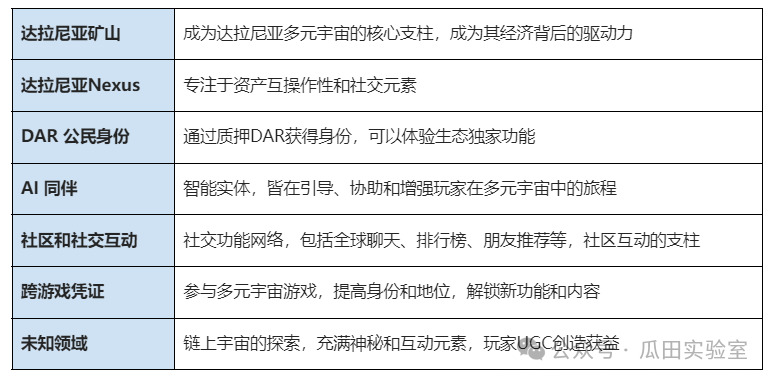
The DAR Multiverse is a collection of games connected through a central experience called Dalarnia Nexus—a living, breathing, ever-expanding universe. Here, blockchain technology creates a world where all DAR games coexist, increasing asset value and utility. Key features:
-
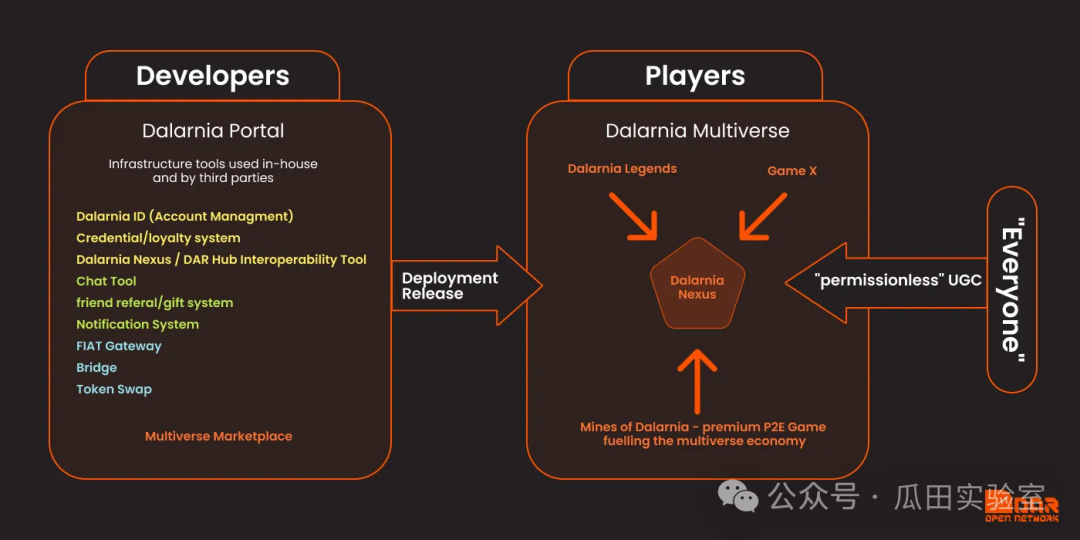
Dalarnia Portal
This is where game development takes a leap forward. The portal caters to game creators, providing tools not only for building games but also for crafting immersive experiences. It includes innovative features such as social login, player incentive systems, NFT markets, cross-chain asset bridges, and a ZK toolkit for on-chain gaming.
-
Community and Ecosystem Evolution
“We believe in a world where players are not just consumers, but active participants in shaping the gaming world.” This shift toward community-driven development permeates every aspect of the DAR Open Network.
1) Community Governance: The DAR Open Network will empower players with decision-making rights, allowing them to shape the platform’s future.
2) Collaborative Development: By enabling user-generated content (UGC), we open the door for players to contribute directly to game development, blurring the line between creators and users.
3) Multi-chain Support: The DAR Open Network launches within the BNB Chain ecosystem but will support multiple L1 blockchains, offering gamers a seamless Web3 gaming experience.
Finally, we noticed an even grander vision: consider the market cap of *Mines of Dalarnia*. Currently, Binance lists the circulating market cap of the DAR token at $100 million. According to the economic model outlined for the DAR Open Network, no new tokens will be issued—the ecosystem will continue using DAR as its native token. Therefore, the future value expectation for DAR is enormous. This represents a powerful utility upgrade for the DAR token, rewarding early adopters and demonstrating the team’s confidence and unwavering commitment to Web3 ecosystem building.
Conclusion
The golden combination of Web3 gaming and dedicated blockchains—exemplified by pairings like Axie and Ronin, or Gods Unchained and ImmutableX—has already been validated by the market. Meanwhile, Mines of Dalarnia + Chromia + DAR Open Network is playing an even bigger game, forming a triangular ecosystem that supports the three pillars of Web3 gaming: content, infrastructure, and community. These ecosystems go beyond mere games—they represent entirely new integrated systems combining innovative Web3 gameplay, advanced blockchain technology, and precise foresight into the industry’s future. Such models require massive investment, including hiring top-tier blockchain engineers, making forward-looking market judgments, and executing complex operational strategies—far beyond what small teams or lightly funded startups can afford. Therefore, choosing this path is not just a project decision; it’s a testament to the team’s conviction and vision—to build a comprehensive Web3 gaming solution and ecosystem under a capital-intensive, high-investment model.
We firmly believe that within this Bitcoin bull cycle, combinations of Web3 games with blockchains or platforms will open vast new frontiers and unlock tremendous valuation potential. Only under such expansive narratives can projects rightfully claim spots among the top 20 in the crypto rankings, becoming true leaders driving the evolution of the industry.
Join TechFlow official community to stay tuned
Telegram:https://t.me/TechFlowDaily
X (Twitter):https://x.com/TechFlowPost
X (Twitter) EN:https://x.com/BlockFlow_News
 瓜田实验室W Labs
![In-depth Analysis of Trade[XYZ]: How Were 92 Markets and 98% HIP-3 Trading Volume Established?](https://upload.techflowpost.com/upload/images/20260716/20260716061117965147.jpeg?x-oss-process=image/resize,p_50/quality,q_80)