








Deep Dive into BasedAI: A Large Language Model Network Prioritizing Privacy and Efficiency, the Next Bittensor in the AI Race?
TechFlow Selected TechFlow Selected
Deep Dive into BasedAI: A Large Language Model Network Prioritizing Privacy and Efficiency, the Next Bittensor in the AI Race?
BasedAI, an AI project integrating large language models, ZK, homomorphic encryption, and meme coins.
 Navigating Web3 tides with focused insights
Author: TechFlow
The AI sector remains red-hot.
Numerous projects are attempting to "AI-ify" themselves, adopting new slogans like “helping AI perform better,” hoping to ride the AI wave higher.
However, most legacy projects have already undergone value discovery in previous cycles, while newer projects like Bittensor are no longer truly “new.” We still need to identify projects whose value has yet to be realized and which possess narrative potential.
Within crypto projects aiming to “help AI perform better,” enhancing privacy has consistently been an attractive direction:
First, because protecting privacy naturally resonates with the egalitarian ideals of decentralization; second, achieving privacy protection inevitably involves advanced technologies such as zk and homomorphic encryption.
With a philosophically sound narrative backed by sophisticated technology, an AI project is likely to succeed.
But what if such a serious project also incorporated the playful mechanics of a Meme coin? Wouldn’t that be even more interesting?
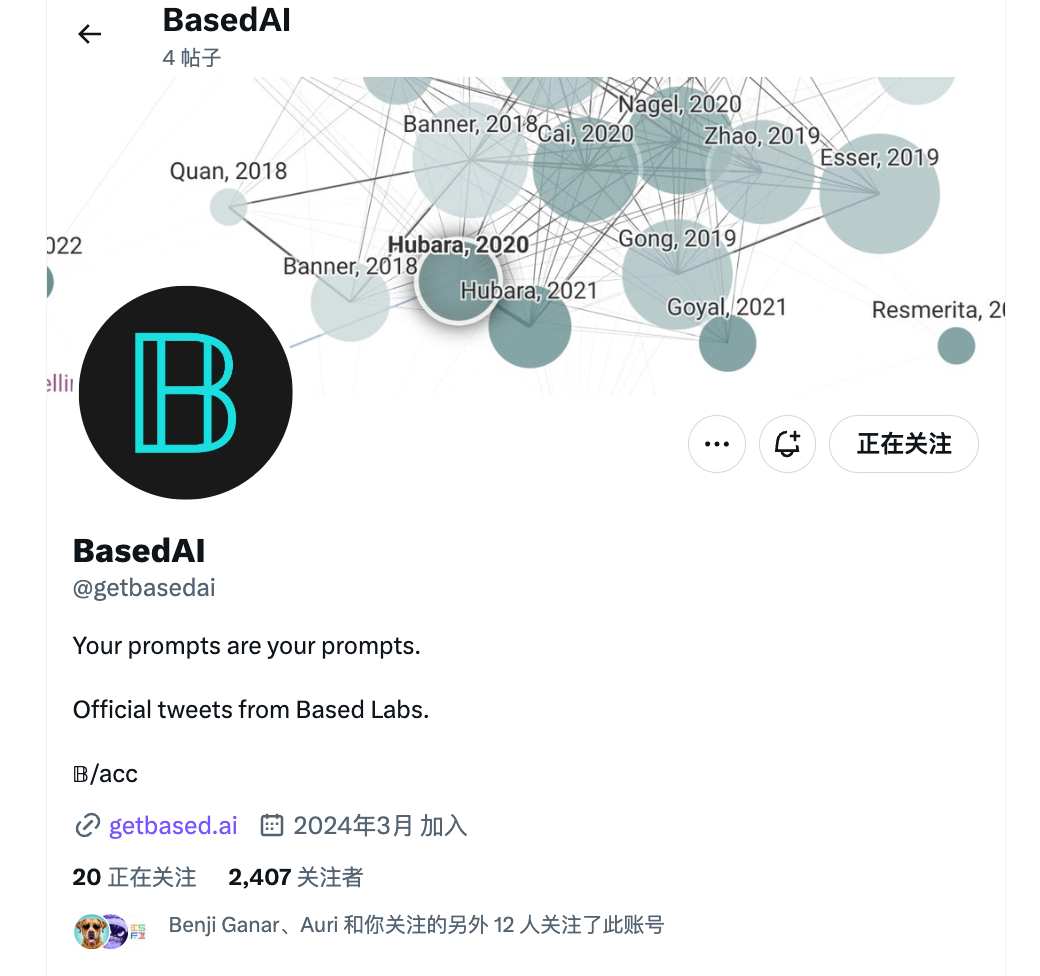
At the beginning of March, a project named BasedAI quietly registered its Twitter account, having posted only two substantive tweets besides retweets. Its website also appears extremely minimal—except for a highly technical, whitepaper-style research paper.
Yet some overseas KOLs have already begun analyzing it, claiming this project could be the next Bittensor.

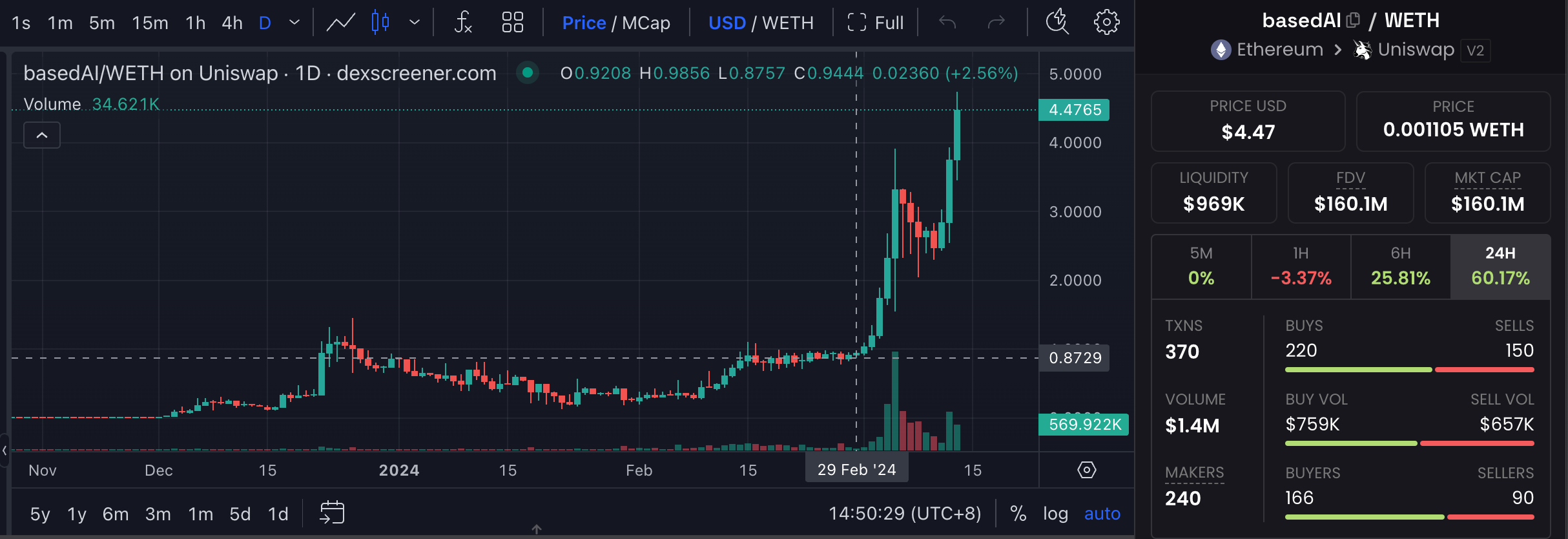
Meanwhile, its namesake token $basedAI has surged since late February, increasing by a staggering 40x.
After carefully reading the project’s research whitepaper, we found that BasedAI is an AI project integrating large language models, ZK, homomorphic encryption, and Meme coin elements.
While acknowledging the strength of its narrative, we are even more impressed by its ingenious economic design, which naturally links computational resource allocation with Meme coin usage.
Given that the project is still in its very early stages, this article will analyze whether BasedAI has the potential to become the next Bittensor.
When Serious Science Meets Memes
What exactly is BasedAI trying to do?
Before answering that, let's first look at who is behind BasedAI.
Public information indicates that BasedAI is jointly developed by an organization called Based Labs and the founding team of Pepecoin, aiming to solve privacy issues when using large language models in today’s AI field.
Little public data exists about Based Labs—their website is mysterious, featuring only a stream of hacker-matrix-style technical keywords (visit here). However, Sean Wellington, a researcher within the organization, is the publicly listed author of BasedAI’s research whitepaper:

Google Scholar shows that Sean graduated from UC Berkeley and has published multiple papers on clearing systems and distributed data since 2006. He specializes in AI and distributed network research—an accomplished expert in the technical domain.

On the other hand, pepecoin isn't the currently trending PEPE meme coin—it refers to an original meme launched back in 2016, which once had its own L1 mainnet and has now migrated to Ethereum.
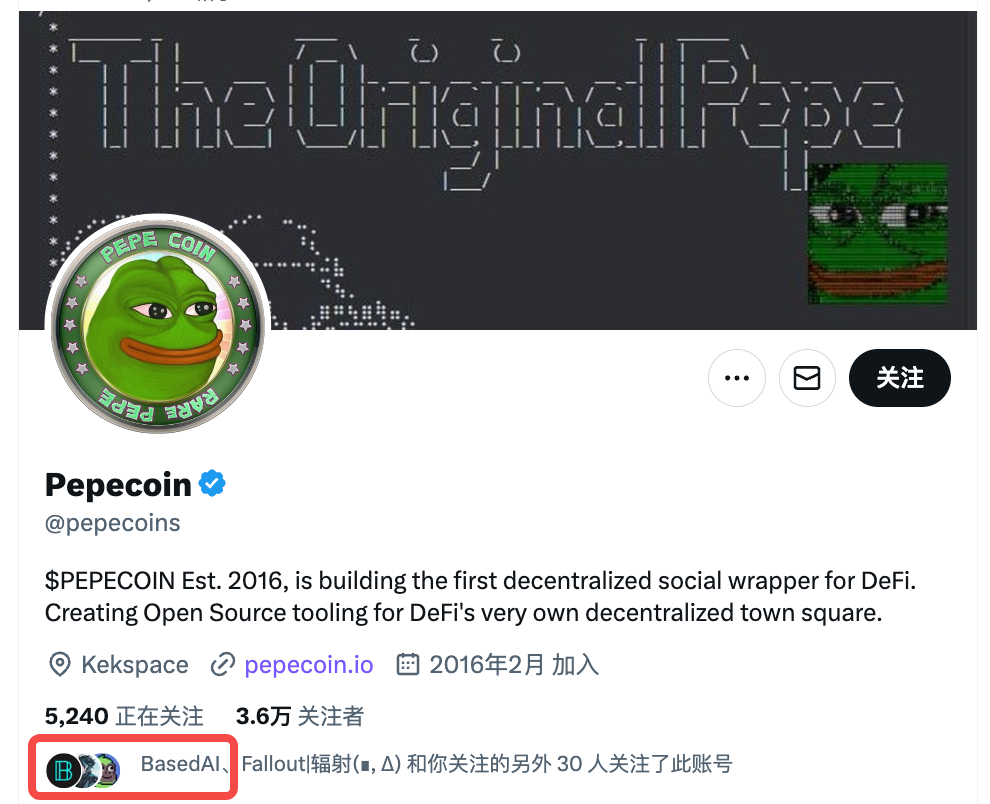
You could call it an OG Meme with L1 development experience.
But how do these two seemingly unrelated groups—a serious AI research expert and a Meme team—ignite synergy within BasedAI?
ZK and FHE: Balancing AI Computational Efficiency and Privacy
Setting aside the Meme aspect, BasedAI’s Twitter bio directly highlights the project’s narrative value:
"Your prompts are your prompts." (Your prompts belong solely to you)
This emphasizes the importance of privacy and data sovereignty: when you use AI large language models like GPT, every prompt and piece of information you input is received by the server on the other end—essentially exposing your data privacy to OpenAI or other model providers.
While this may seem harmless, it still raises privacy concerns—you must unconditionally trust that the AI provider won’t misuse your conversation history.
Beyond the complex math and technical designs in BasedAI’s whitepaper, you can simply understand BasedAI’s goal as:
Encrypting all content during your dialogue with a large language model, enabling computation without revealing plaintext, and ultimately returning results that only you can decrypt.
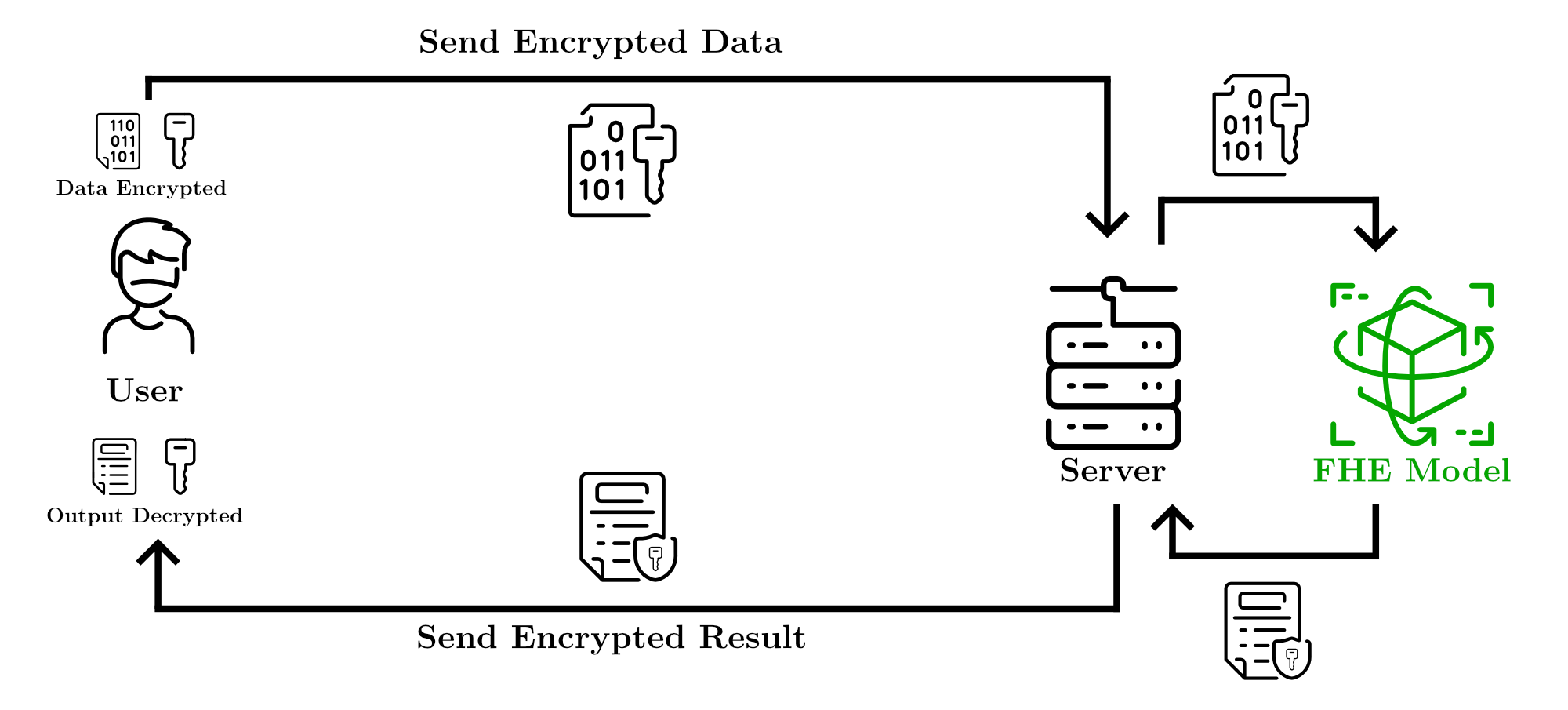
You might guess that achieving this would require privacy technologies like ZK (zero-knowledge proofs) and FHE (fully homomorphic encryption).
-
ZK allows you to prove the truth of a statement without revealing the underlying data;
-
FHE enables computation on encrypted data without decryption.
Combining both allows your prompts to be submitted to the AI model in encrypted form, with responses returned—all while intermediaries remain unaware of either your question or the answer.
That sounds great—but there’s a key issue: FHE requires substantial computational resources and time, resulting in low efficiency.
Meanwhile, LLMs like GPT require fast response times for user-facing applications. How does BasedAI resolve the conflict between computational efficiency and privacy protection?
BasedAI specifically highlights its proposed "Cerberus Squeezing" technique in the paper, supported by complex mathematical proofs:
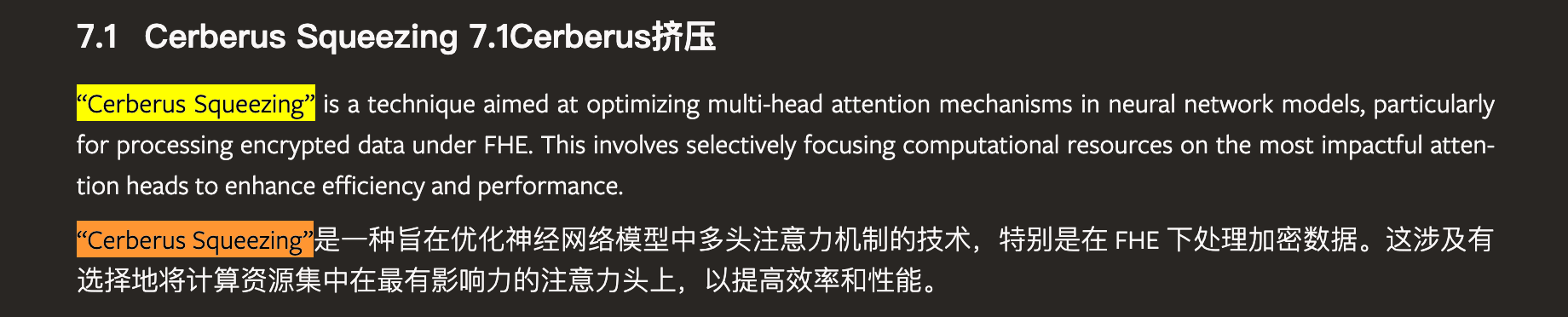
We cannot professionally assess the mathematical validity of this technique, but its purpose can be simplified as:
Optimizing the efficiency of FHE (fully homomorphic encryption) in processing encrypted data by selectively focusing computational resources where they matter most, enabling faster results.
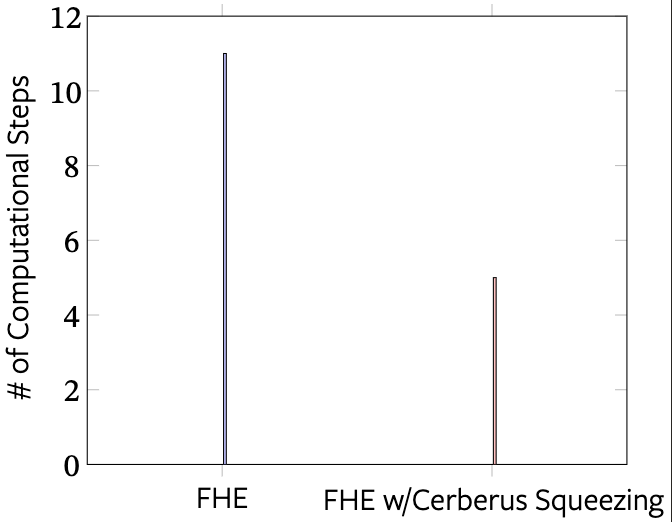
The paper also provides empirical data demonstrating the efficiency gains from this optimization:
With Cerberus Squeezing, the number of computational steps required for fully homomorphic encryption can be nearly halved.
With this, we can simulate a typical user flow when using BasedAI:
-
A user inputs a prompt requesting sentiment analysis of someone’s chat logs, while wanting to protect the privacy of those logs.
-
The data is submitted via the BasedAI platform in encrypted form, specifying the desired AI model (e.g., sentiment analysis model).
-
Miners within the BasedAI network receive the task and use their computing resources to execute the specified AI model on the encrypted data.
-
Network nodes complete the computation without decrypting the data and return the encrypted result to the user.
-
The user receives the encrypted output and uses their private key to decrypt it, obtaining the desired analytical result.
"Brains," Miners, and Validators
Beyond the technology, what specific roles exist within the BasedAI network to execute tasks and meet user demands?
First, we introduce its self-created concept of the "Brain."

A “Brain” from Based Labs
Typical AI-crypto projects usually involve several core components:
-
Miners: Responsible for executing computations, consuming computing resources
-
Validators: Verify the correctness of miners’ work and ensure transaction and computation validity across the network
-
Blockchain: Records computation and validation results on a ledger, incentivizing different roles through native tokens.
BasedAI layers its unique “Brain” concept atop these three elements:
"You must have a Brain to house the computational resources of miners and validators, enabling them to run different AI models and complete tasks."
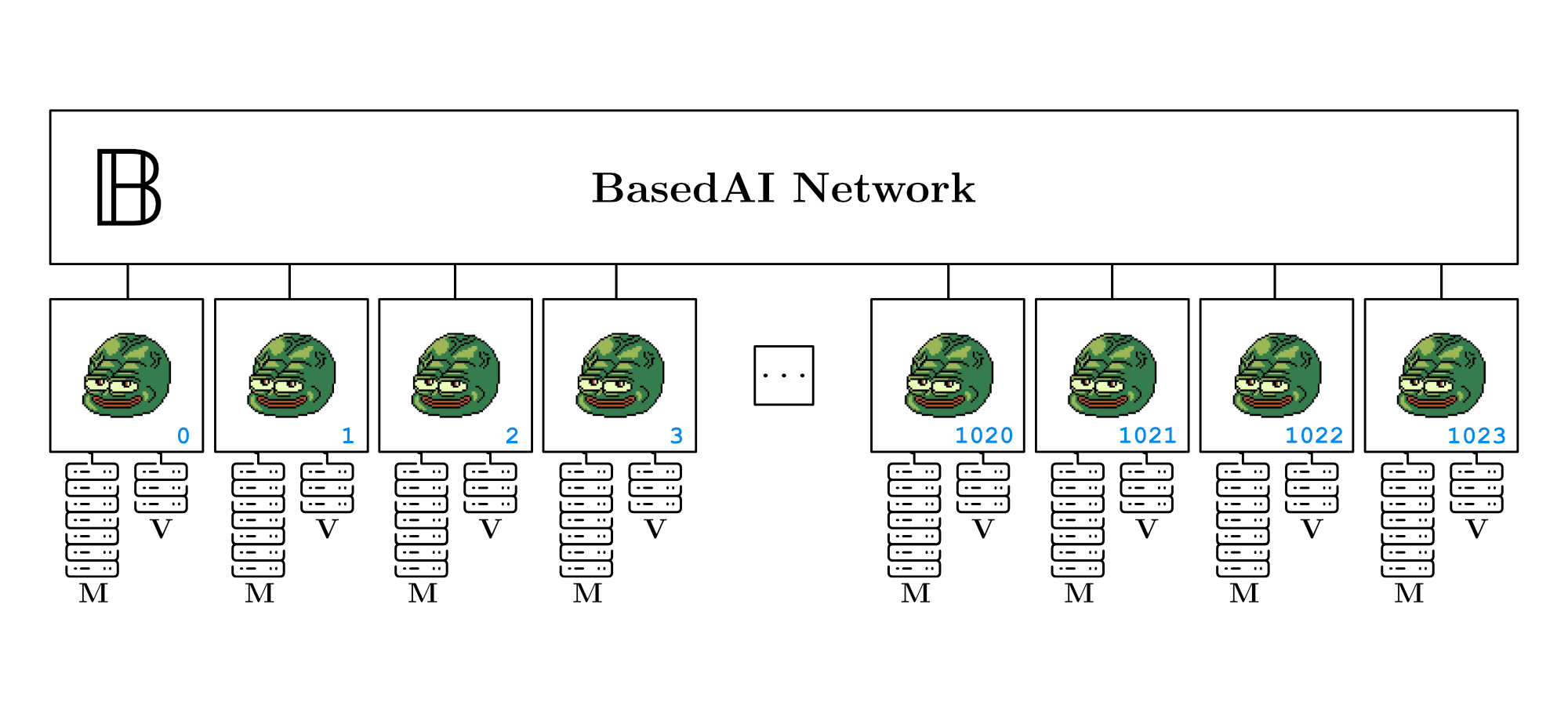
In essence, these "Brains" act as distributed containers for specific computational tasks, running modified large language models (LLMs). Each "Brain" can choose its associated miners and validators.
If this still feels abstract, think of owning a Brain as holding a "cloud service license":
If you want to assemble a group of miners and validators to perform encrypted LLM computations, you must hold a license stating:
-
Your operational address (ID number)
-
Your scope of operations (e.g., sentiment analysis, text-to-image, medical assistant, etc.)
-
Your available computing capacity and capabilities
-
Specific members you’ve recruited
-
The rewards you earn from operating this service

According to BasedAI’s paper, each "Brain" can support up to 256 validators and 1,792 miners, with only 1,024 Brains allowed system-wide—adding inherent scarcity.
To join a Brain, miners and validators must do the following:
-
Miners: Connect to the platform, allocate GPU resources (better suited for computation), optionally stake $BASED tokens, and begin working
-
Validators: Connect to the platform, allocate CPU resources (better suited for verification), optionally stake $BASED tokens, and begin validating
The more $BASED staked, the higher the operational efficiency of miners and validators on the Brain, and the greater their $BASED rewards.
Clearly, a Brain represents authority and organizational structure, opening room for token and incentive design (detailed later).
But doesn’t this Brain design feel familiar?
Different Brains resemble subnets in Bittensor, performing distinct tasks using different AI models;

In the previous cycle’s popular Polkadot, different Brains resemble different “slots” running parachains to perform various tasks.
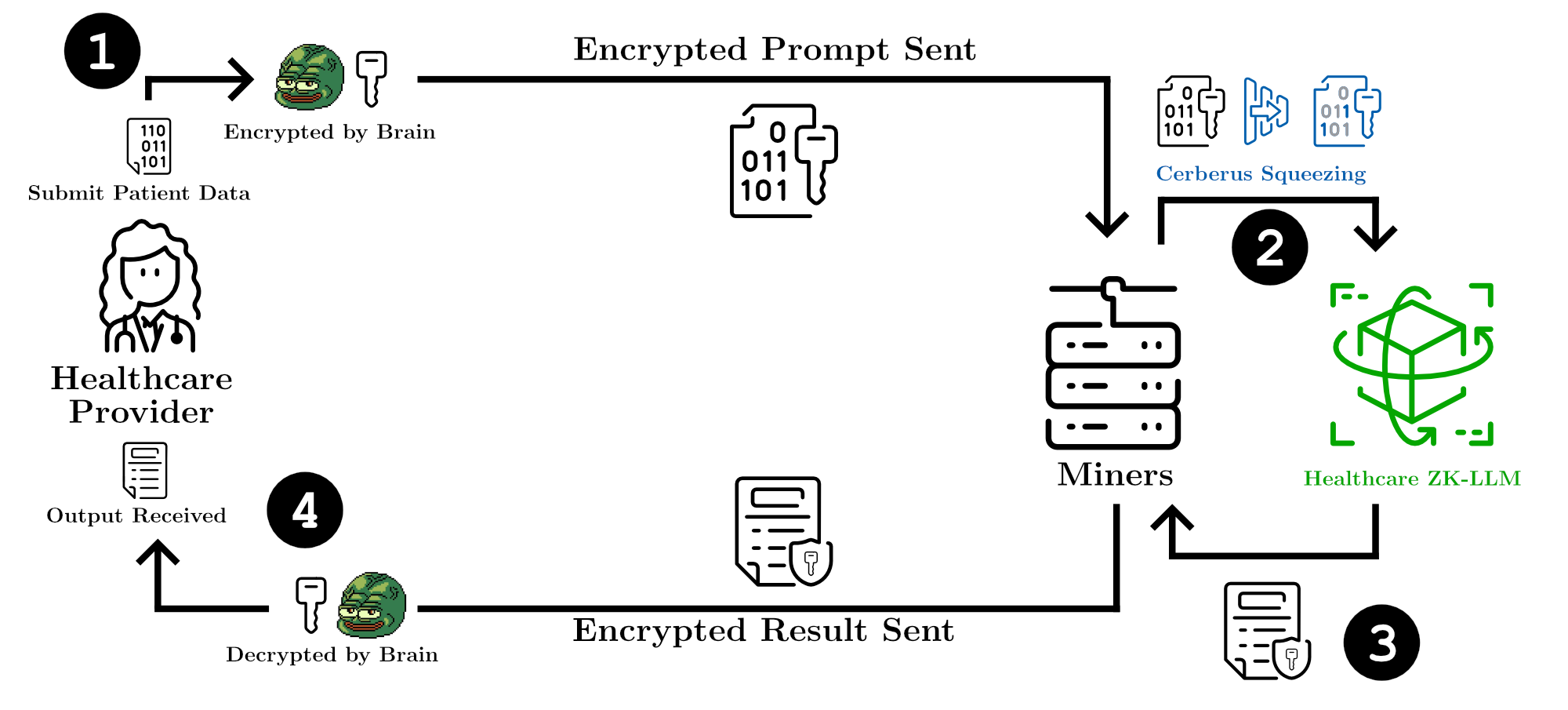
BasedAI’s official site provides an illustration of a “Medical Brain” executing a task:
-
Patient medical records are encrypted and submitted to the Medical Brain, generating prompts to request diagnostic advice;
-
Appropriate LLMs in the BasedAI network, aided by ZK and FHE, generate responses without decrypting sensitive patient data—this step utilizes computational resources from miners and validators;
-
Healthcare providers receive encrypted outputs from the BasedAI network. Only the submitting user can decrypt the result to obtain treatment recommendations, ensuring data remains protected throughout.
Creative “Brain” Rights Sales Boost Pepecoin
So, how does one acquire a Brain—the “operational license” for AI model encrypted computation?
BasedAI collaborates with Pepecoin to creatively monetize Brain access, giving utility value to the otherwise purely memetic Pepecoin token.
With only 1,024 Brains available, the team naturally leverages NFT minting—each sold Brain generates a corresponding ERC-721 token, essentially functioning as a license.
To mint a Brain NFT, users must perform one of two actions tied to Pepecoin: burning or staking Pepecoin.
-
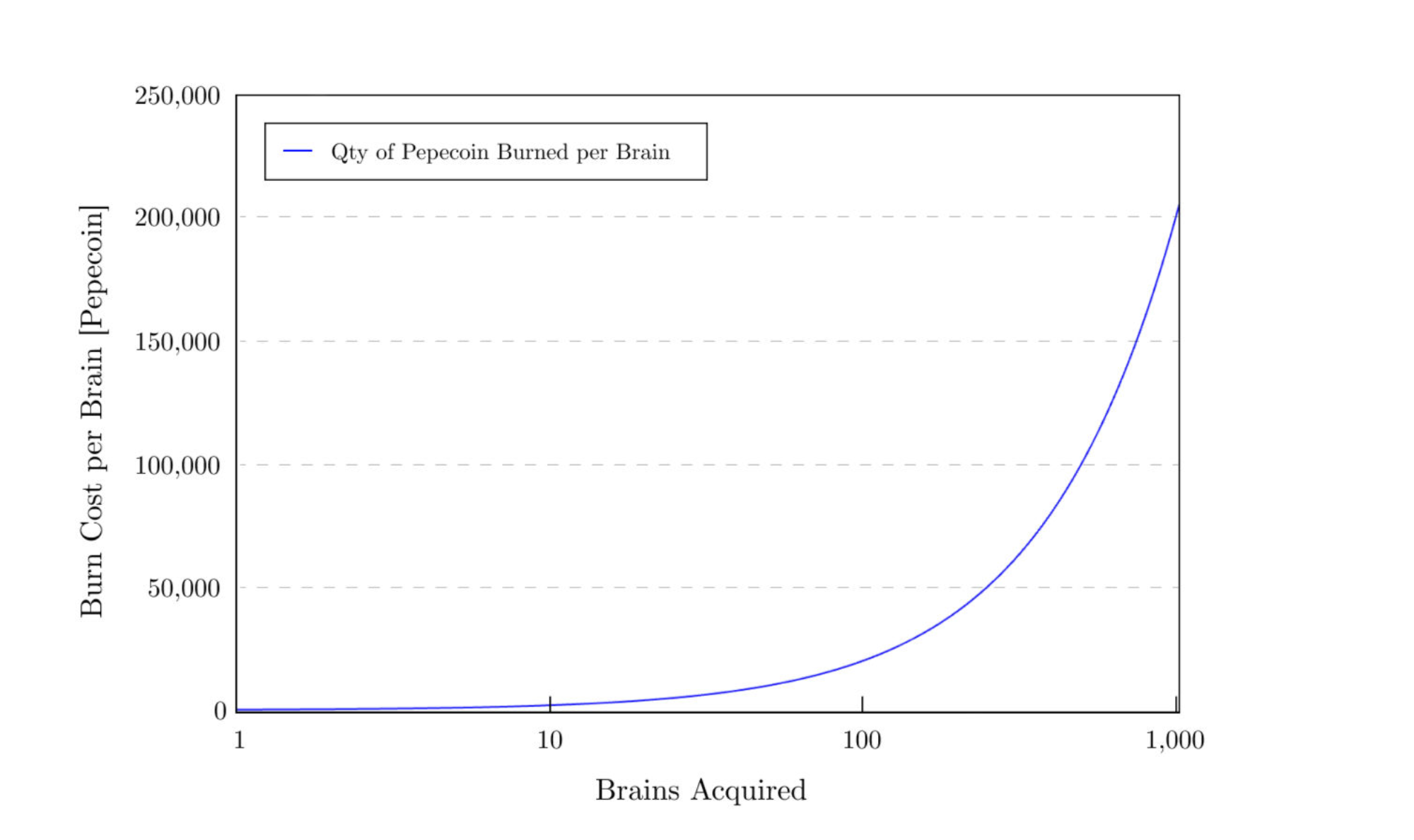
For burning: The first Brain requires users to spend 1,000 Pepecoin to mint;
-
Each subsequent Brain mint increases the cost by 200 Pepecoin;
-
Brains obtained via burning are transferable and tradable;
-
If all Brains were acquired through burning, a total of 107,563,530 Pepecoin would be permanently destroyed (CMC data shows a current circulating supply of 133M; full burn would reduce supply by nearly 80%).
Regarding staking:
-
Users must stake 100,000 Pepecoin for 90 days;
-
The Brain’s ERC-721 NFT is issued immediately upon staking;
-
Brains obtained via staking are non-transferable but gradually earn rewards in $BASED, the project’s native token;
-
Staking can be unlocked after 90 days.
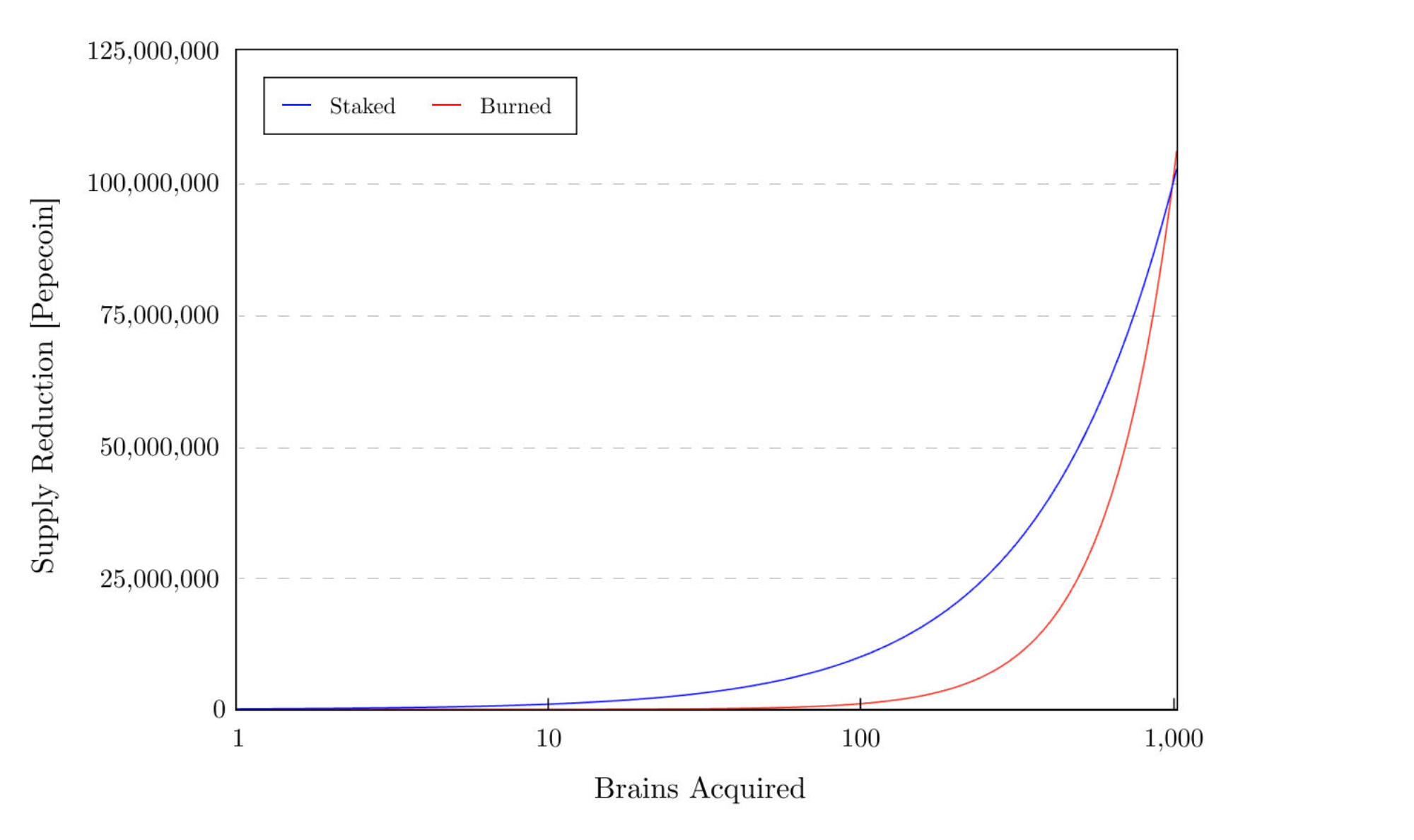
Regardless of method, as more Brains are created, an equivalent amount of Pepecoin is either burned or locked, depending on participation ratios between the two methods.
Clearly, this is less about allocating AI resources and more about redistributing crypto assets.
Due to the scarcity of Brains and their associated token rewards, demand for Pepecoin during Brain creation will significantly increase. Whether through staking or burning, both mechanisms reduce Pepecoin’s circulating supply—providing theoretical upside for its secondary market price.
Additionally, as long as the number of active Brains issued via the ERC-721 contract remains below 1,024, the BasedAI Portal will continue issuing new Brains.
Once all 1,024 Brains are issued, no new Brains can be created.
An Ethereum address may hold multiple Brain NFTs. The BasedAI portal allows users to manage rewards earned from all Brains linked to their connected ETH wallet. Active Brain owners are projected to earn between $30,000 and $80,000 annually per Brain (per official whitepaper data).
Given these economic incentives and the strong AI-privacy narrative, the anticipated popularity of Brains upon launch is predictable.
Conclusion
In crypto projects, technology itself is not the end goal—its role is to direct attention, thereby guiding asset allocation and capital flows.
From BasedAI’s Brain design, it’s evident the project has mastered the art of “driving asset distribution”: Under a compelling privacy narrative, it consolidates AI-computational resources into a scarce permission layer, directing capital inflows into this permission mechanism and boosting consumption of another Meme token.
Computational resources are properly allocated and rewarded, the project’s “Brain” assets gain scarcity and visibility, and the Meme coin sees reduced circulation...
From an asset creation perspective, BasedAI’s design is remarkably sophisticated and elegant.
But if we must address the unspoken, avoided, deliberately overlooked questions:
How many people will actually use this privacy-preserving large language model? How many major AI companies would willingly adopt such a privacy-first technology that works against their own interests?
The answers are likely still pessimistic.
Still, narratives catch the wind, and speculation thrives.
Sometimes what we need isn’t questioning whether a path truly exists—but rather sailing with the wind.
References:
X: https://twitter.com/getbasedai
Website: https://www.getbased.ai/
Pepecoin: https://twitter.com/pepecoins
Join TechFlow official community to stay tuned
Telegram:https://t.me/TechFlowDaily
X (Twitter):https://x.com/TechFlowPost
X (Twitter) EN:https://x.com/BlockFlow_News
 深潮TechFlow


