Can Yuga's games become a lifeline for APE?
TechFlow Selected TechFlow Selected
Can Yuga's games become a lifeline for APE?
Yuga Labs' high standards are reflected in the game's quality, showing potential for future improvements and success.
 Navigating Web3 tides with focused insights
Written by: @EdisonHuu, @CryptoScott_ETH
Key Takeaways:
-
Yuga Labs launched a game called HV-MTL Forge, combining pet breeding and social competition elements, aiming to boost user engagement in the NFT gaming market.
-
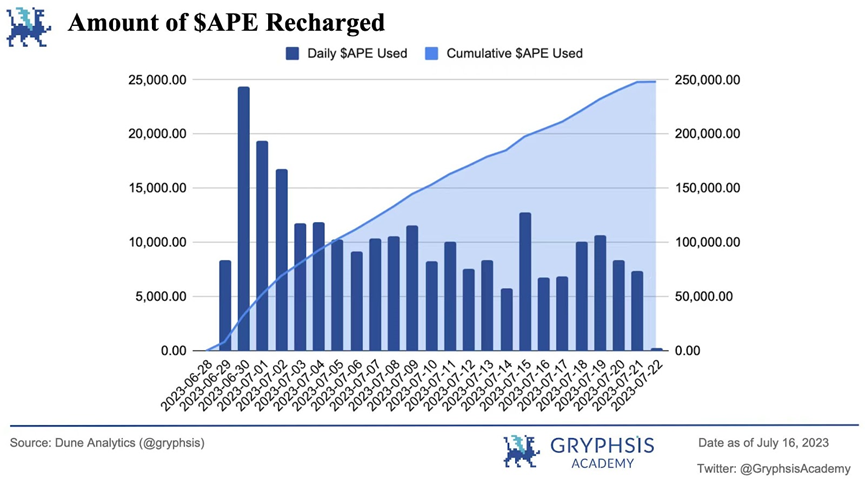
Player enthusiasm declined during the first season of the game, along with reduced APE consumption. Approximately 241,765 APE tokens were consumed in this season, equivalent to $520,000.
-
The second season introduced new elements and adjusted reward mechanisms. However, these changes did not significantly increase APE deposits.
-
If APE deposit volumes remain consistent with Season 1, total deposited APE across six seasons is projected to reach about 1,440,000. This represents only approximately 0.27% of the total circulating supply and would not significantly impact overall circulation, especially if deposited tokens are eventually sold.
-
Despite the continuous decline in APE token price, making it currently an unattractive investment, Yuga Labs' high standards are reflected in the game's quality, indicating potential for future improvements and success.
Introduction
HV-MTL Forge is a creative, social, and competitive crafting game introduced by Yuga Labs, positioned between pet-raising and casual world-building genres. Designed specifically for holders of HV-MTL NFTs, this Web3 company specializing in NFTs incorporates HV-MTL Forge into its product lineup to further expand its influence in the NFT gaming market.
Pet-raising games and socially competitive games have always been popular among players. With the launch of HV-MTL Forge, Yuga Labs may aim to attract more users through creative interactions, social engagement, and competitive elements among NFT holders. This strategy could help strengthen Yuga Labs' position in the NFT gaming market and enhance community participation.
The primary enjoyment and objective of the game involve creating a forge and keeping your HV happy and efficient (HV being the "pet" you raise within the game). You need to build and decorate your forge to win community votes, maximizing votes for both your HV and forge. The more forge votes you receive, the greater your rewards.
The game consists of six seasons, each lasting three weeks. The first season has concluded, and the second season has begun. Currently, there isn't much content; based on Yuga’s metaverse strategic planning, better deliverables are expected in upcoming seasons. Below, we will break down the game mechanics and analyze the operational performance of the first season, followed by a gameplay guide.
HV—MTL Game Season 1 Performance and Season 2 Updates
To track the game, we created a dashboard evaluating its performance from multiple dimensions including NFT minting, ownership, trading, and APE deposit volume. Using data from this dashboard, we will analyze Season 1's operations, followed by a summary of Season 2 updates.
NFT-Related Metrics
Minting Status
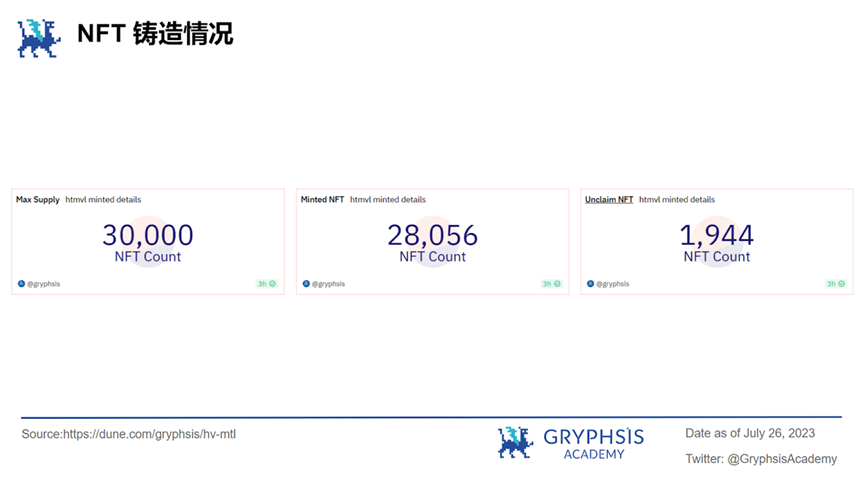
Regarding HV-MTL NFT minting: total supply is 30,000, with 28,056 already minted, leaving 1,955 yet to be minted.
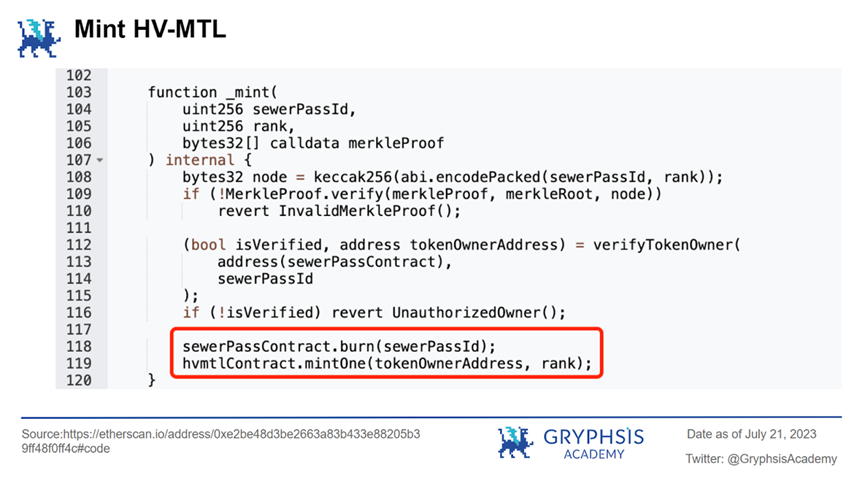
HV-MTL serves as the access pass (Pass Card) to enter this game. Minting occurs by burning a SewerPass and minting HV-MTL NFTs according to rankings from Dookey Dash. Dookey Dash was a casual game previously released by Yuga before HV-MTL and remains an important component of Yuga’s gaming ecosystem.
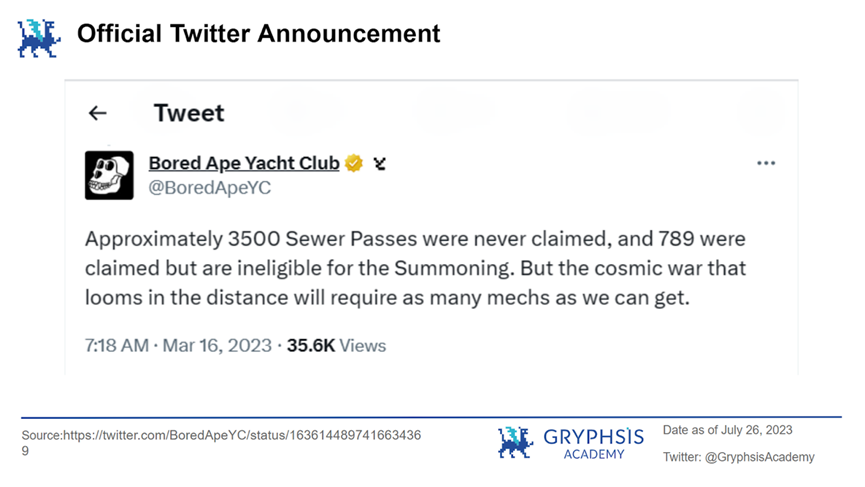
SewerPasses with a Rank can mint HV at any time. According to the official Bored Ape Twitter announcement, 789 SewerPasses have Rank=0 and cannot mint HV.
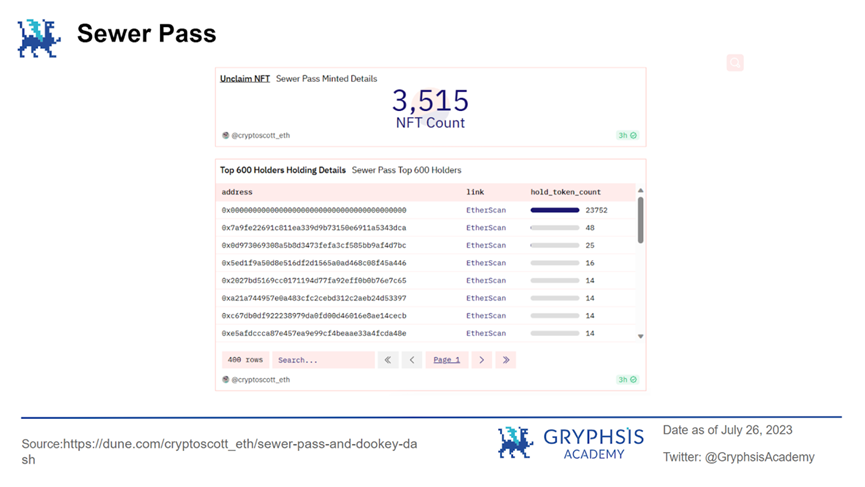
We can now calculate: 23,752 (burned Sewer Passes) + 3,515 (unminted Sewer Passes) + 789 (Rank=0) = 28,056, which matches exactly the number of HVs already minted.
NFT Ownership Distribution
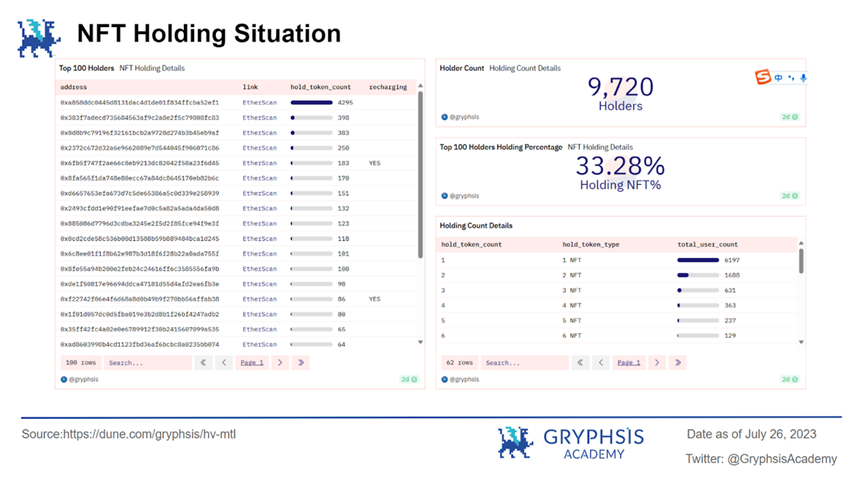
From the table, total holding addresses amount to 9,752, with 6,222 addresses holding only one NFT. The address holding the most NFTs is Yuga’s multisig wallet, possessing 4,295 NFTs (originating from unminted and Rank=0 Sewer Passes).
Excluding Yuga, the maximum single address holds 383 NFTs. The top 100 holders collectively own 33.28% of all NFTs—indicating moderate concentration. Among these 100, only 12 have made deposits.
NFT Trading Data
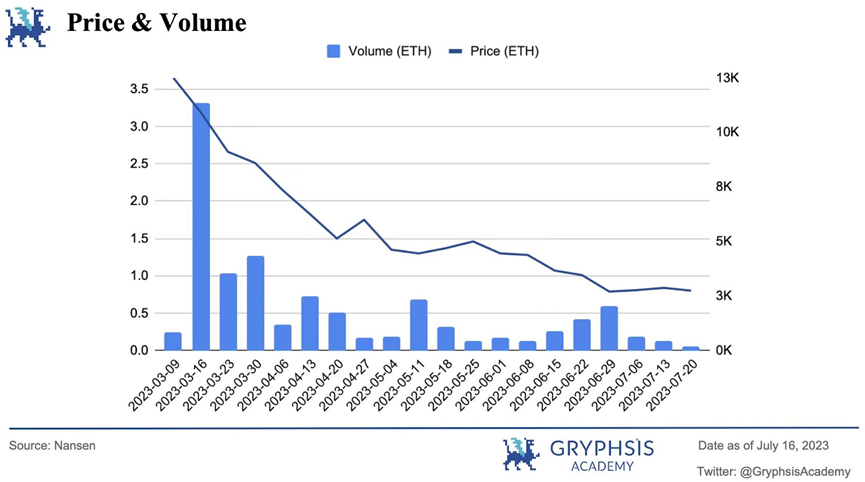
Overall, the floor price shows a gradual downward trend. Trading volume spikes during major announcements or the first few days after launch but remains pessimistic otherwise.
APE Consumption in Game
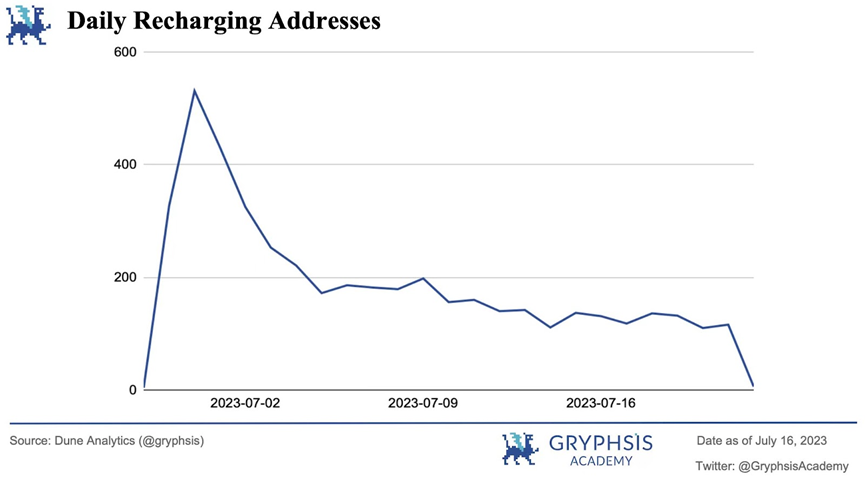
In the initial days after launch, daily depositing addresses and total daily deposit amounts surged, then steadily declined. The number of depositing addresses peaked on Day 3 at 531 addresses, while the daily deposit amount peaked on Day 2 at 24,436 APE.
We observe that player enthusiasm reached its peak at launch but subsequently waned. This suggests that current Season 1 mechanics and gameplay lack sufficient appeal, or many players struggle to adapt to Yuga’s ultra-long-term progression model.

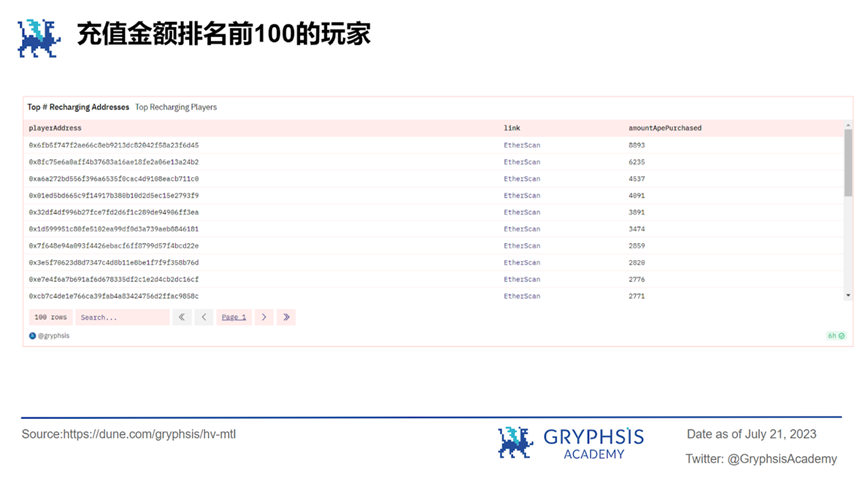
Among the top 100 depositors, the first placed deposited 8,893 APE (~$20,000), the second 6,235 APE, and the third 4,537 APE. The table indicates significant spending by top players, demonstrating strong monetization potential.
Season 2 Major Updates
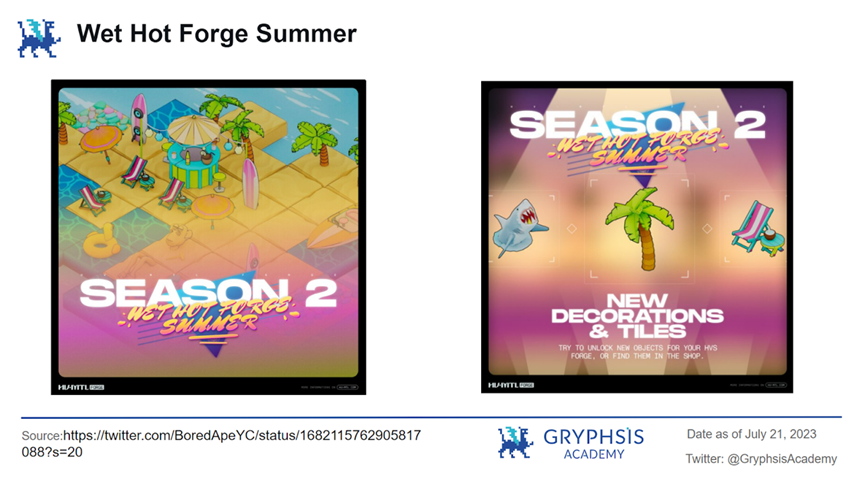
1. Season 2's theme is titled "Wet Hot Forge Summer", introducing new tiles and decorations, allowing players to transform their forges into summer beach scenes. Below is the promotional image for Season 2.
2. Adjustments made to AMP tier allocations based on ranking. Refer to the chart above for specific rank-to-AMP relationships. Legendary remains capped at 133 slots; all other tiers have been modified to favor late entrants.
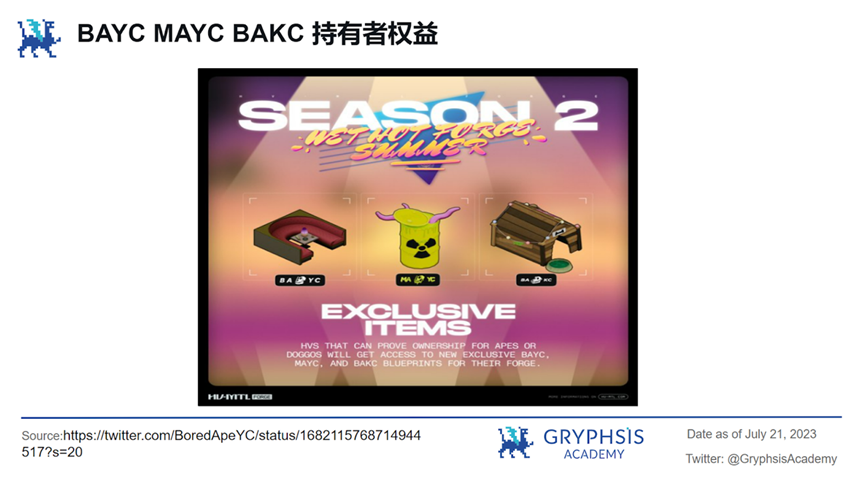
3. Added benefits for BAYC, MAYC, and BAKC holders—eligible users can claim corresponding decorative items for free in the latter part of Season 2.
4. Core gameplay and voting mechanics remain unchanged.

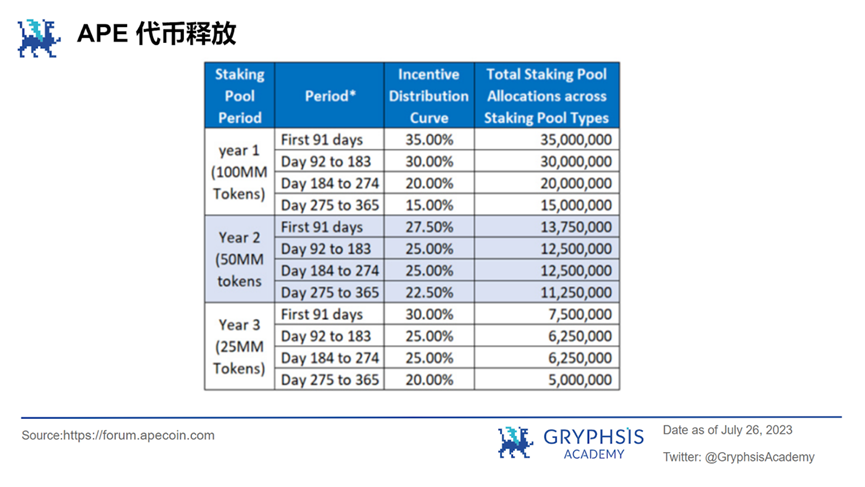
From an investment perspective, the APE token has a total supply of 1,000,000,000, with 368,593,750 currently in circulation. The largest source of inflation comes from staking rewards, releasing 100,000,000 APE (10% of total supply) within the first year, meaning APE still faces substantial inflationary pressure.
For Yuga’s previous game, Dookey Dash, the chart below shows that deposited APE funds were ultimately transferred by Yuga into Coinbase, suggesting possible dumping onto the secondary market.
Although the HV-MTL game’s APE collection wallet hasn’t shown outbound transactions yet, we can infer that deposited APE tokens will likely be dumped into the secondary market by the team eventually.
As seen earlier, Season 2 updates are minimal—essentially just a thematic refresh—with no noticeable boost to APE deposits. Assuming each season maintains Season 1’s deposit level (~240,000 APE), total player deposits over six seasons would amount to approximately 1,440,000 APE.
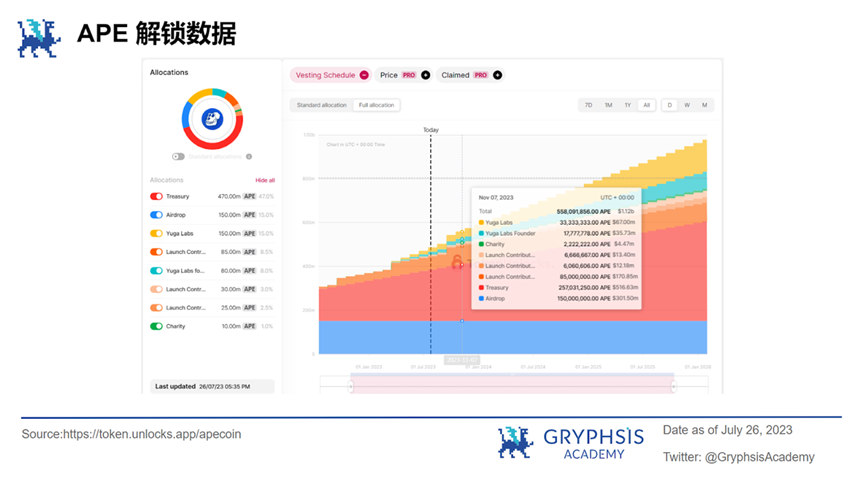
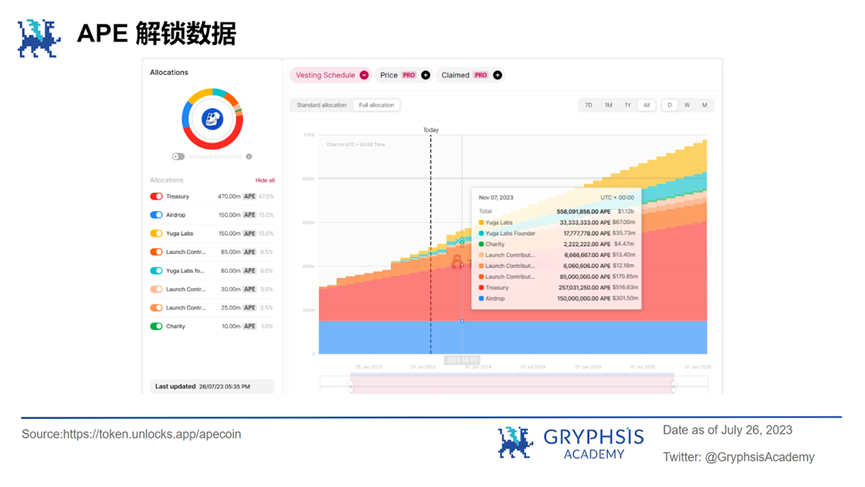
Spanning six seasons equates to roughly four months, concluding fully by early November 2023. According to Token Unlock data, APE’s circulating supply would be around 560 million at that time. Deposited APE would thus represent only ~0.27% of total circulation—negligible impact, especially considering these tokens may later be sold off.
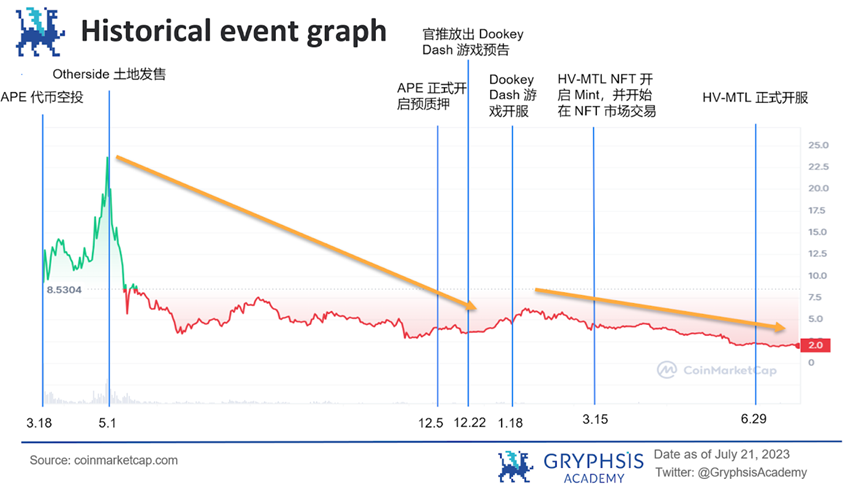
Since the Otherside land sale, APE’s token price has continuously declined. Market expectations were that Yuga’s game releases would absorb selling pressure from staking. As seen in APE’s historical event timeline, aside from a brief speculative surge following the Dookey Dash teaser release, APE’s price continued falling throughout the actual gameplay period. Neither the pre-launch phase nor full launch of HV-MTL fulfilled market expectations of absorbing staking-induced sell-offs.
While the game demonstrates decent quality, its impact on driving APE demand is negligible. There is no mechanism for APE token burn, and deposited tokens are highly likely to eventually become market sell-side pressure. Therefore, we believe APE remains a poor investment at present and awaits stronger utility integration from Yuga.
Summary and Outlook
The outcome of HV-MTL Season 1 was not optimistic, primarily due to external market dynamics, particularly the current NFT environment. Limited application of $APE within the game may also have contributed to difficulties attracting and retaining players.
From floor price and trading data on our Dune dashboard, incentives offered to early participants were insufficient to drive mass adoption. Enhancing $APE’s utility within the game could help boost its value, increase market visibility, and generate greater excitement.
Despite challenges, the game's high quality—evident in materials and fine details—reflects Yuga Labs’ high standards.
Looking ahead, we hope Yuga Labs expands $APE’s in-game applications and refines game mechanics to attract more users. Given Yuga’s strong operational capabilities and room for improvement, HV-MTL remains a promising project. We will continue closely monitoring the progress of this compelling game.
Appendix
Game Mechanics Breakdown
Let’s begin breaking down the game mechanics, analyzing purpose, resources, and gameplay.
Game Objective
The main goal is to earn AMPs and unlock your HV’s next evolution. AMPs are rewards earned by caring for your HV and receiving votes. Every participating player receives one AMP per season. At least 3 AMPs are required to unlock your HV’s next evolution.
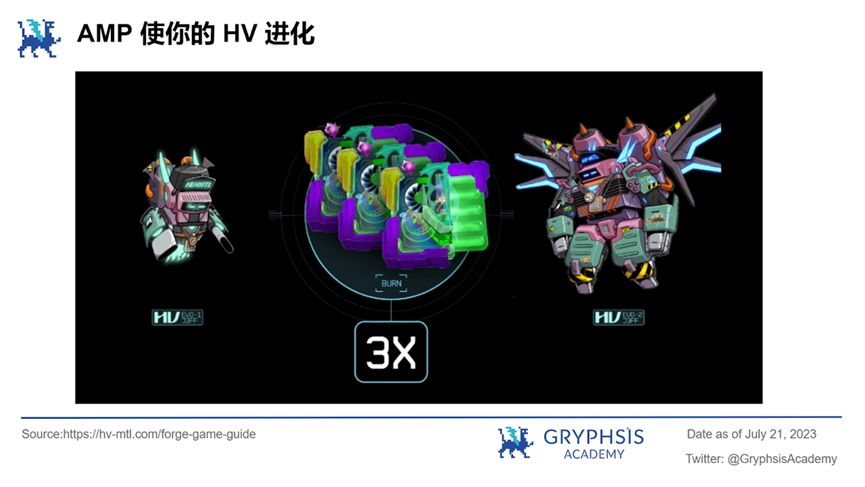
(Left: Your initial HV; evolves using three AMPs)
AMPs come in five rarity tiers: Common, Uncommon, Rare, Epic, and Legendary. Your tier depends on your final leaderboard ranking, determined by votes received on daily leaderboards. Below are the AMP tiers obtainable via ranking in Season 1 versus Seasons 2–6.
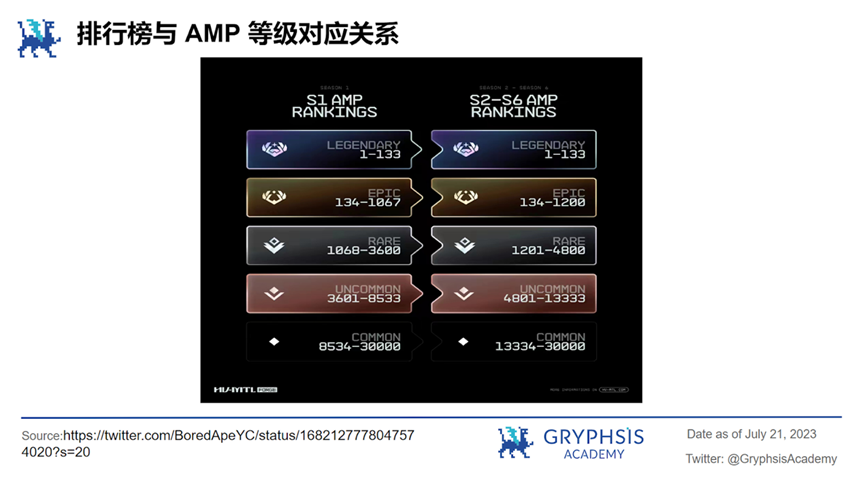
(Note: AMPs are initially attached to your HV’s save data off-chain, not in your wallet. When you evolve your HV, AMPs go on-chain and are burned.)
In short: Daily votes determine daily rankings, which contribute points toward your seasonal leaderboard standing.
Game Resources
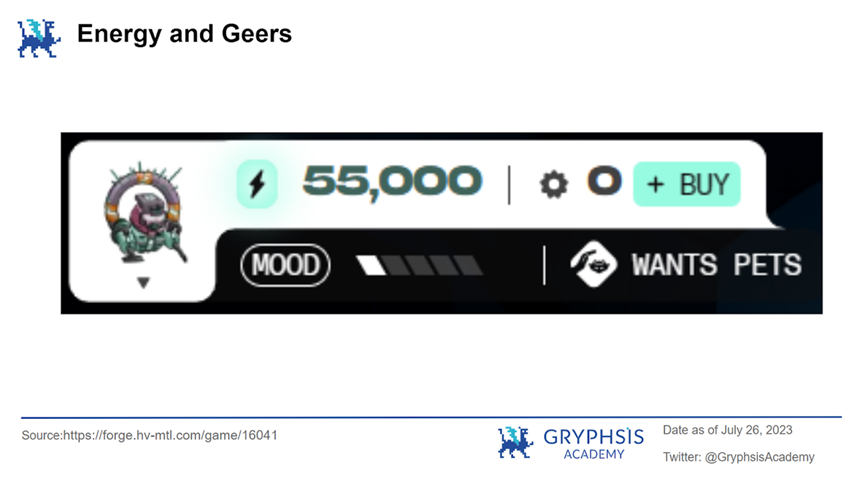
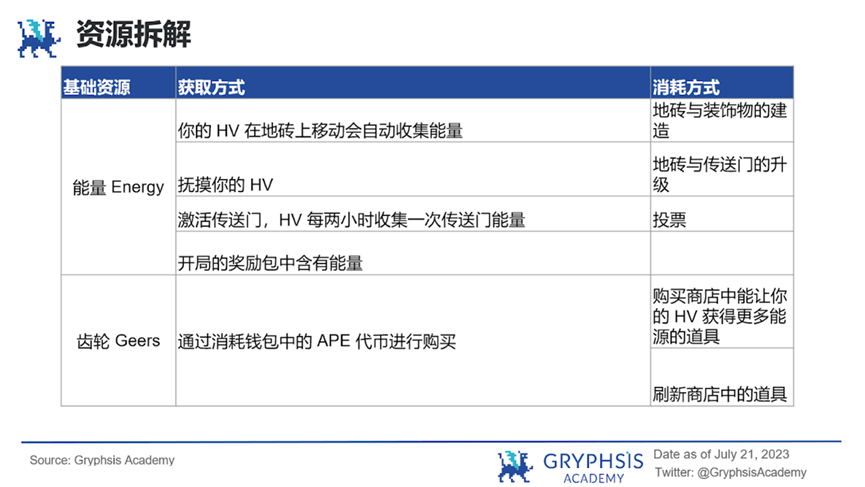
Core in-game resources are Energy and Gears. See image: energy indicator top-left, gears top-right.
Gameplay
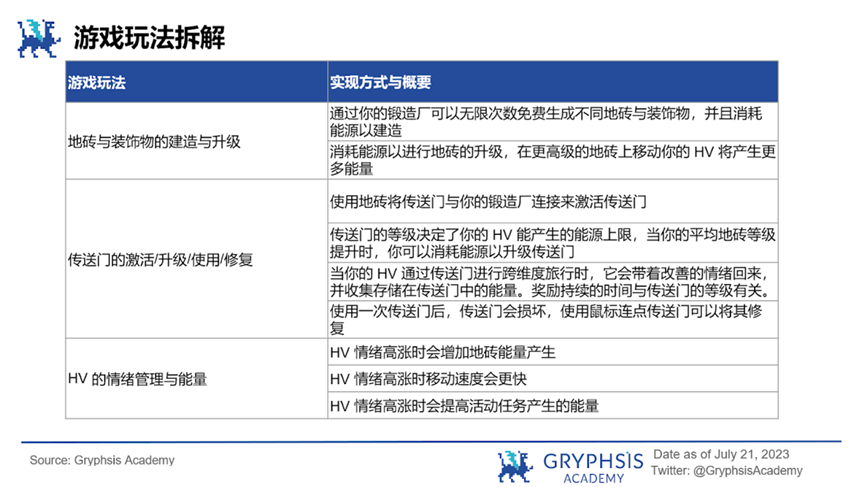
Gameplay includes tile and decoration construction/upgrades, portal activation/upgrade/use/repair, and HV mood and energy management.
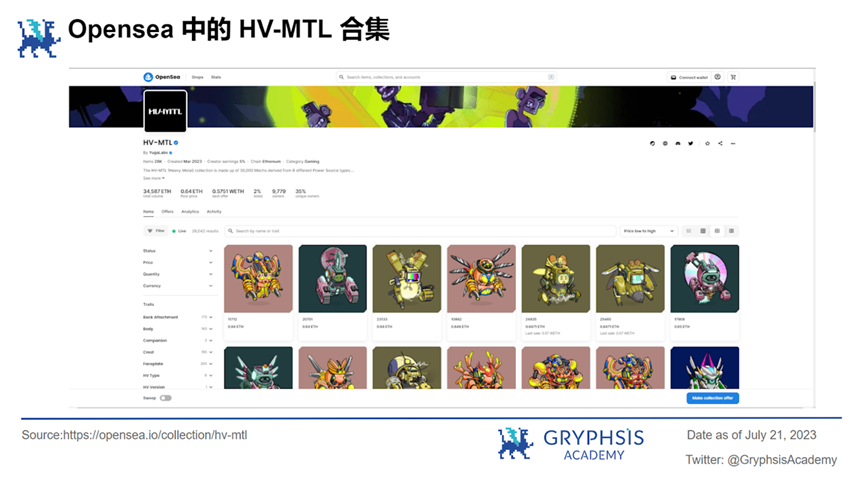
1. Purchase an HV-MTL NFT on the NFT marketplace. The HV-MTL NFT collection consists of HVs from 30 different professions. Your HV grants access to play this game and participate in future Forge-related games. Upon entering the game, your forge’s base appearance depends on your HV’s rarity/profession.
Additionally, the game starts with a special starter pack—each HV profession has unique starting bonuses offering early advantages. Therefore, choosing your HV NFT wisely at the beginning matters—you must decide which starter pack suits your needs and what base forge aesthetic you prefer.
Of course, prices for different rarity/profession HVs vary on the secondary market—the rarer the HV, the richer the starter pack and higher the price. Choose according to your needs.
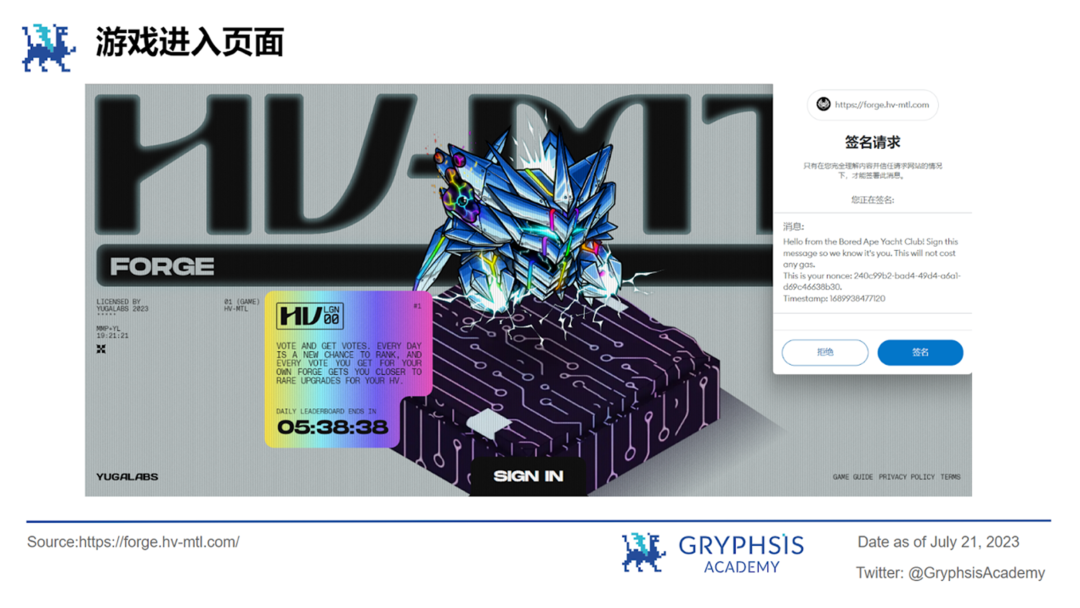
2. After purchasing the NFT, visit https://hv-mtl.com, connect your NFT-holding wallet, sign in, and start playing.
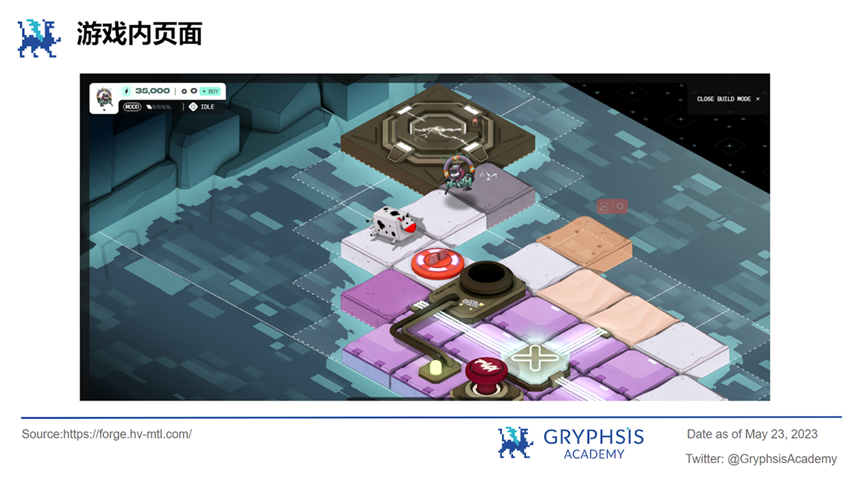
3. Upon entering, you’ll see your forge space (each HV profession has a unique forge layout—example shown is the author’s) and a forge station marked with an “X.” The forge station generates tiles and decorations.
Click the red button labeled “PUSH,” and the forge station produces a random tile or decoration. Each forging is free. If unsatisfied, click “PUSH” again for another item.
Tiles can be placed anywhere in your forge space. Your first task is to use tiles to connect your forge station to your portal (the dark green object above) and activate it.
4. Each forging is free—meaning it doesn’t consume energy—but placing forged tiles or decorations requires energy.
Each HV receives an initial energy allowance via the starter pack. Use this to place initial tiles and connect to the portal. Once the portal is connected, your forge’s basic structure is complete. Now you can begin decorating and optimizing your forge to earn community votes.
This outlines the fundamental gameplay flow. Next, we detail the core mechanics.
Guide
1. Energy Acquisition Mechanism: Placing tiles and decorations consumes energy, which is also required for the core voting mechanic. Refer to breakdown section for detailed energy gain/loss; here we provide a brief overview.
The most common way to gain energy is through your HV generating it on placed tiles—similar to idle/clicker games, you earn energy even when offline.
2. Maximum energy generation depends on your portal level. Your average tile level determines how high your portal can upgrade. If you have 10 tiles, all must be upgraded above level 2 for your portal to reach level 2.
Thus, avoid placing extra tiles beyond connecting the portal and decorating your forge aesthetically.
3. Community voting is essential to win, earn AMPs, and meet HV evolution requirements. Voting costs energy; maximizing votes is the ultimate goal.
The key to earning more votes lies in your forge’s visual appeal and your activity within the game community. Share your forge link on social media and actively engage with the community, while enhancing your forge’s aesthetics to gain peer recognition and accumulate more votes.
Regarding voting, note the following:
-
You can only vote after opening your first portal.
-
Each vote increases energy cost—decide carefully.
-
Each HV can vote once per day, and only HV owners may vote.
-
You receive small rewards when voting.
-
Different HV rarities yield different vote counts—higher rarity means more votes.
Gameplay Summary
Voting is central to this game. Let’s emphasize community voting. In this game, your community involvement and activity matter most for vote count, followed by forge aesthetics.
To earn more votes, players currently engage heavily in vote-swapping. As mentioned earlier, having a rarer HV with more available votes becomes crucial.
Besides swapping, you can create fun content related to the game to attract attention and gain votes. We’ll also review several community highlights from Season 1. While actively engaging, ensure your forge remains visually appealing—otherwise, you risk being voted down, since presentation forms the foundation of voting.
However, returning to the energy system: both voting and tile upgrades consume increasingly more energy as the game progresses.
For casual play, simply monitor your max energy cap (i.e., portal level). While idle, your HV moves across tiles generating energy. If chasing leaderboard ranks, consider depositing to accelerate all energy-generation methods outlined above.
The voting mechanism gives players a voice, enabling interaction, discussion, and strategy sharing via social media and communities. Through collective voting, social bonds strengthen, forming an active gaming community where every player feels impactful.
Thus, the voting mechanism is not merely a decision-making tool but a powerful driver of social interaction and player engagement.
Season 1 Community Highlights Recap
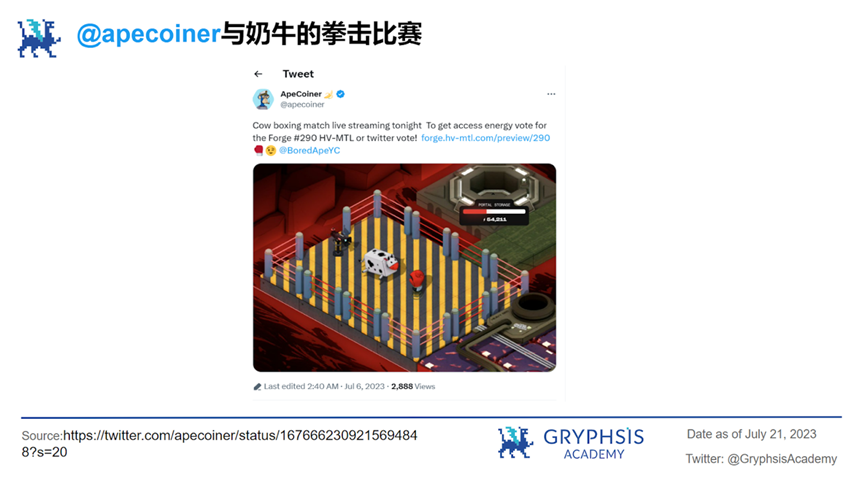
1. @apecoiner’s boxing match with a cow
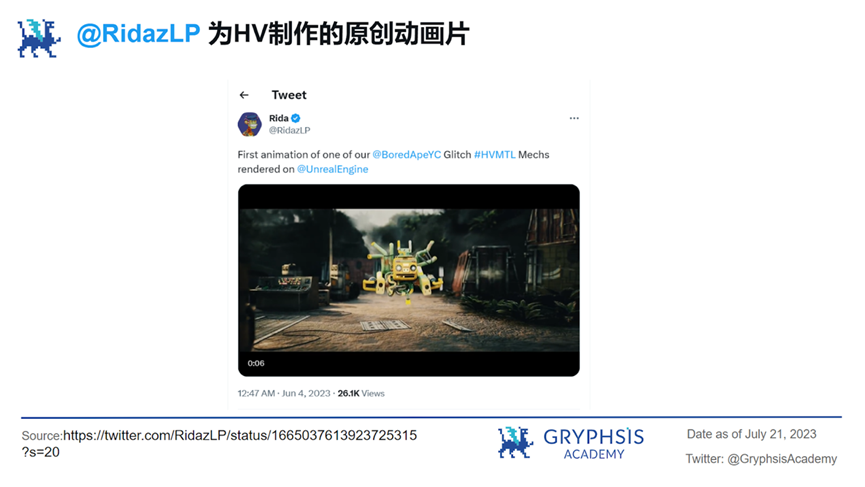
2. @RidazLP’s original animated series for HV

Join TechFlow official community to stay tuned
Telegram:https://t.me/TechFlowDaily
X (Twitter):https://x.com/TechFlowPost
X (Twitter) EN:https://x.com/BlockFlow_News
 @gryphsisacademy