Unlocking EVM Potential: Artela's EVM++ Revolution with Parallel Processing and Scalability
TechFlow Selected TechFlow Selected
Unlocking EVM Potential: Artela's EVM++ Revolution with Parallel Processing and Scalability
EVM++ aims to expand the boundaries of the EVM to adapt to the new crypto world.
 Navigating Web3 tides with focused insights
Public blockchain Artela has announced the next phase of its development: EVM++, enhancing network performance through parallel EVM execution and enabling mass adoption of decentralized applications via advanced elastic block space configurations.
Previously, Artela achieved a significant milestone in ecosystem development by completing the construction of EVM+ features and launching its public testnet. Through the EVM+WASM paradigm, developers can build on-chain extensions using Aspect programming, resulting in breakthrough use cases in AI+Crypto, omnichain gaming, and DeFi security, establishing numerous ecosystem partnerships in these areas.
EVM++ embodies Artela’s ultimate vision: unlocking both extensibility and scalability for EVM blockchains to adapt to the emerging crypto landscape, where transformative technologies such as AI, DePIN, and DeFi Security are rapidly integrating into crypto applications.
Overview of the Official Announcement
Original link: EVM++: Advancing towards Boundless Blockchain Scalability and Extensibility
Today, we announce the launch of EVM++, our next-generation upgrade to the EVM execution layer. By combining EVM with WASM, EVM++ enables native extensibility while supporting parallel execution—unlocking both blockchain extensibility and scalability.
EVM++ aims to break through the boundaries of traditional EVM blockchains, adapting to a new era of crypto where Web2 product excellence and innovation are converging with blockchain. Technologies like AI, DePIN, and DeFi Security are accelerating their integration into crypto applications. EVM++ allows existing EVM assets, protocols, and infrastructure to seamlessly integrate with these innovations, supporting mass-adoption applications and accelerating the convergence of crypto with the mainstream world at the application level.
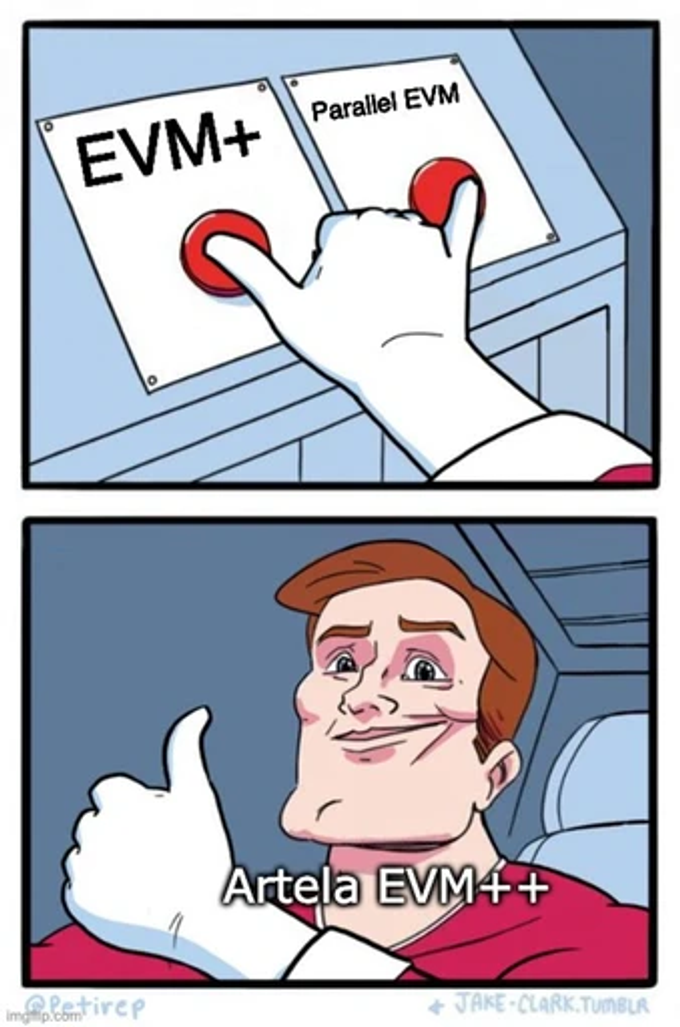
EVM+ in Artela Network
Over the past year, Artela has built a highly extensible EVM+ network. Based on Aspect Programming, we introduced a WASM virtual machine alongside the EVM-compatible network, enabling dynamic deployment and execution of on-chain extension programs. Applications can leverage EVM+ to develop high-performance protocols, build modular apps, and customize底层 features tailored to specific application needs.
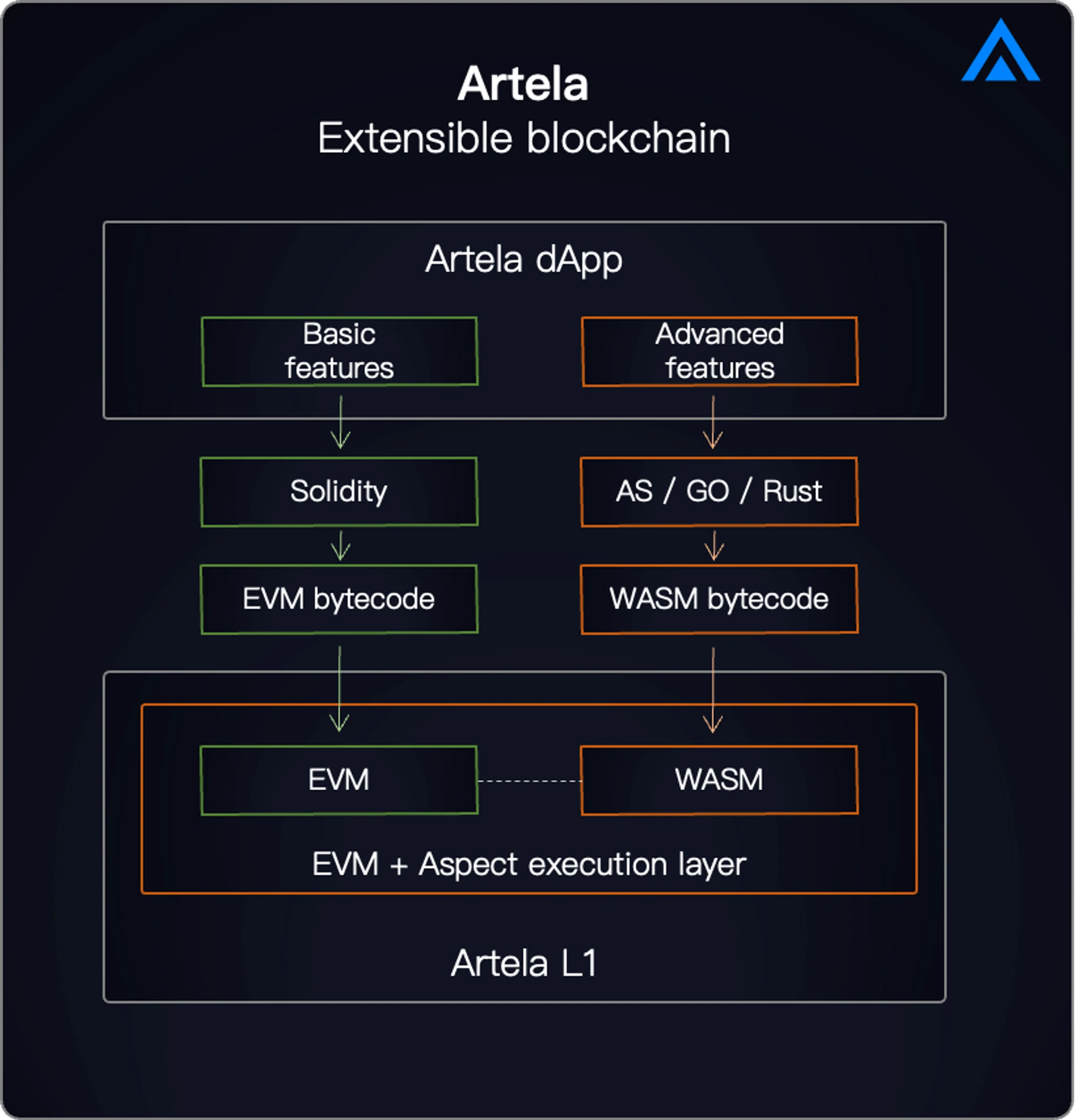
During DevNet and Public Testnet phases, we deeply explored the potential of the EVM+ network with innovative developers, leading to many imaginative use cases:
-
WASM serving as an on-chain co-processor, enabling breakthrough execution of AI-agent algorithms and other high-performance modules directly on-chain, while maintaining interoperability with EVM
-
AI agents integrated into omnichain games, enabling truly programmable NPCs within on-chain autonomous worlds
-
Opt-in security risk modules that execute in real-time during runtime, allowing DeFi protocols to detect and block suspicious transactions instantly
A network capable of unlocking omnichain applications, AI integration, and secure DeFi—all while preserving compatibility and interoperability with the EVM ecosystem—is now within reach.
From EVM+ to EVM++
Artela's vision is to build a boundlessly scalable network. EVM+ is not the final goal—it is just the beginning. The next step is EVM++: a parallel EVM+ network designed to fully unleash the potential of scalable blockchains.
EVM+ unlocks extensibility for EVM, opening its boundaries to a new crypto era where Web2 product capabilities and innovation are merging with blockchain, and technologies such as AI, DePIN, and Fintech are being rapidly integrated into crypto applications. EVM+ ensures seamless integration between existing EVM assets, protocols, infrastructure, and these new innovations, avoiding fragmentation seen in non-EVM ecosystems.
EVM++ unlocks scalability for EVM, empowering this highly innovative network to support mass-adoption applications and accelerate the convergence of crypto with mainstream adoption at the application layer.
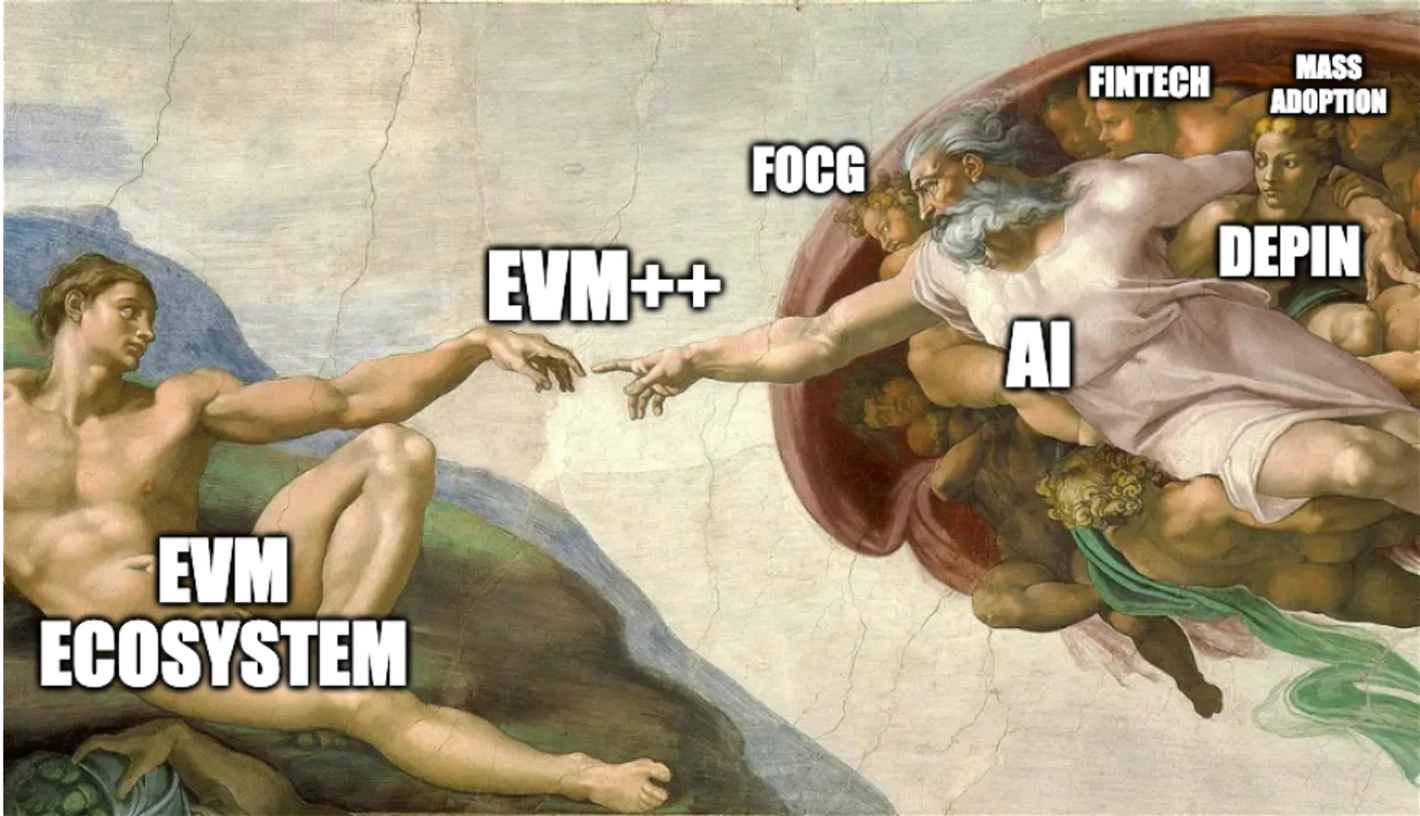
A fully omnichain, intelligent, secure, and massively scalable EVM network—we’re accelerating its arrival.
EVM++: A Parallel and Elastic EVM Network
Artela’s parallel EVM++ will be implemented in two stages.
The first stage involves achieving parallel transaction execution under the EVM+ framework. Artela does not merely implement basic parallel EVM execution; it solves the more complex challenge of parallel execution within the EVM+ environment. Aspects—extension programs running in the WASM virtual machine—are invoked throughout the transaction lifecycle, requiring careful coordination during parallel processing.
In the second stage, Artela will fully leverage parallelism and combine it with elastic computing to realize elastic block space—a dynamic, flexible network that allows dApps to maximize the benefits of parallel execution.
Overview of Parallel EVM
Artela’s horizontal scaling architecture is centered around parallel execution. Building on this foundation, elastic computing ensures node computational capacity can scale dynamically, ultimately enabling elastic block space.
-
Parallel Execution: The Artela network groups transactions based on dependency conflict analysis to enable parallel execution.
-
Elastic Computing: Validator nodes support horizontal scaling. The network automatically adjusts the number of computing nodes based on current load or subscription demand. This scaling process is coordinated by an elasticity protocol, ensuring sufficient computational resources within the consensus network.
-
Elastic Block Space: Leveraging elastic computing, Artela expands beyond shared public block space. Large dApps with dedicated capacity needs can request private elastic block space within the network.
Elastic Block Space
Elastic block space refers to dynamically expanded block space that provides high-throughput dApps with protocol-guaranteed, isolated block space. By default, the public block space has limited capacity. When a dApp requests dedicated block space, additional space is added to blocks, exclusively accommodating transactions related to that dApp’s smart contracts. As block space expands, validators must add elastic execution nodes to match the increased processing demand. Elastic block space serves as a blockchain scaling mechanism, enabling infinite scalability without sacrificing interoperability. Other scalable networks—such as sharded blockchains, appchains, and Layer 2 solutions—can also offer isolated block space, but they often suffer from siloed environments with no direct interoperability. In contrast, elastic block space allows dApps with dedicated space to interact synchronously via atomic transactions within the same block, eliminating the need for asynchronous cross-chain communication. When dApps on the Artela network require higher scalability, they can subscribe to elastic block space to handle growing throughput demands. Elastic block space and native extensibility together provide Artela’s dApps with unprecedented levels of scalability and customization.
Hello, EVM++
The Artela ecosystem is advancing rapidly and is poised for a major leap forward as we transition into the EVM++ era. We will continue unveiling key developments, so join us on Twitter and Discord for more updates!
Join TechFlow official community to stay tuned
Telegram:https://t.me/TechFlowDaily
X (Twitter):https://x.com/TechFlowPost
X (Twitter) EN:https://x.com/BlockFlow_News
 @Artela_Network