Interpreting Fluence: The Rise of the Coprocessor Concept Makes Decentralized Computing More Trustworthy
TechFlow Selected TechFlow Selected
Interpreting Fluence: The Rise of the Coprocessor Concept Makes Decentralized Computing More Trustworthy
The Fluence platform provides developers with a unique verifiable computing environment through its decentralized server architecture.
 Navigating Web3 tides with focused insights
Author: TechFlow
AI x Crypto has become a widely recognized hotspot in the industry this year.
Hoffman, founder of Bankless, recently pointed out in a blog post that the foundation of the AI x cryptocurrency narrative begins with "decentralized computing."

Most AI and DePIN crypto projects revolve around the same fundamental idea—harnessing idle computing resources scattered worldwide to support AI computations.
From centralized data centers to cloud services, and from cloud services to decentralized computing, each technological evolution fuels another wave of token price increases.
What new stories can cryptocurrency and AI tell next?
If you dig deeper, you’ll find that while decentralized computing claims to democratize AI by making computational resources cheaper and more accessible, it often overlooks a critical question:
How do you know the results computed by different nodes are correct? Who verifies them?
Although most crypto projects implement decentralized computing differently, they typically don’t provide proof of result correctness. Within this gap, the concept of the coprocessor has quietly emerged:
Treat all distributed nodes in decentralized computing as one processor working together on computation tasks; at the same time, we also need a coprocessor dedicated to ensuring and verifying the correctness of these computations.

Think of it like two teams—one doing the work, the other inspecting the output. Only then can the work be truly trustworthy.
So, which projects in today’s market are embracing the coprocessor narrative? And where are the potential opportunities for participation?
Fluence: Verifiable Decentralized Computing
Fluence is a blockchain economics-driven decentralized serverless platform and computing marketplace.
With Fluence, developers can build applications and deploy them onto a network of compute providers—ranging from professional data centers to personal home computers.
Providers compete on price and performance, continually proving they are delivering computing resources to earn rewards and payments.
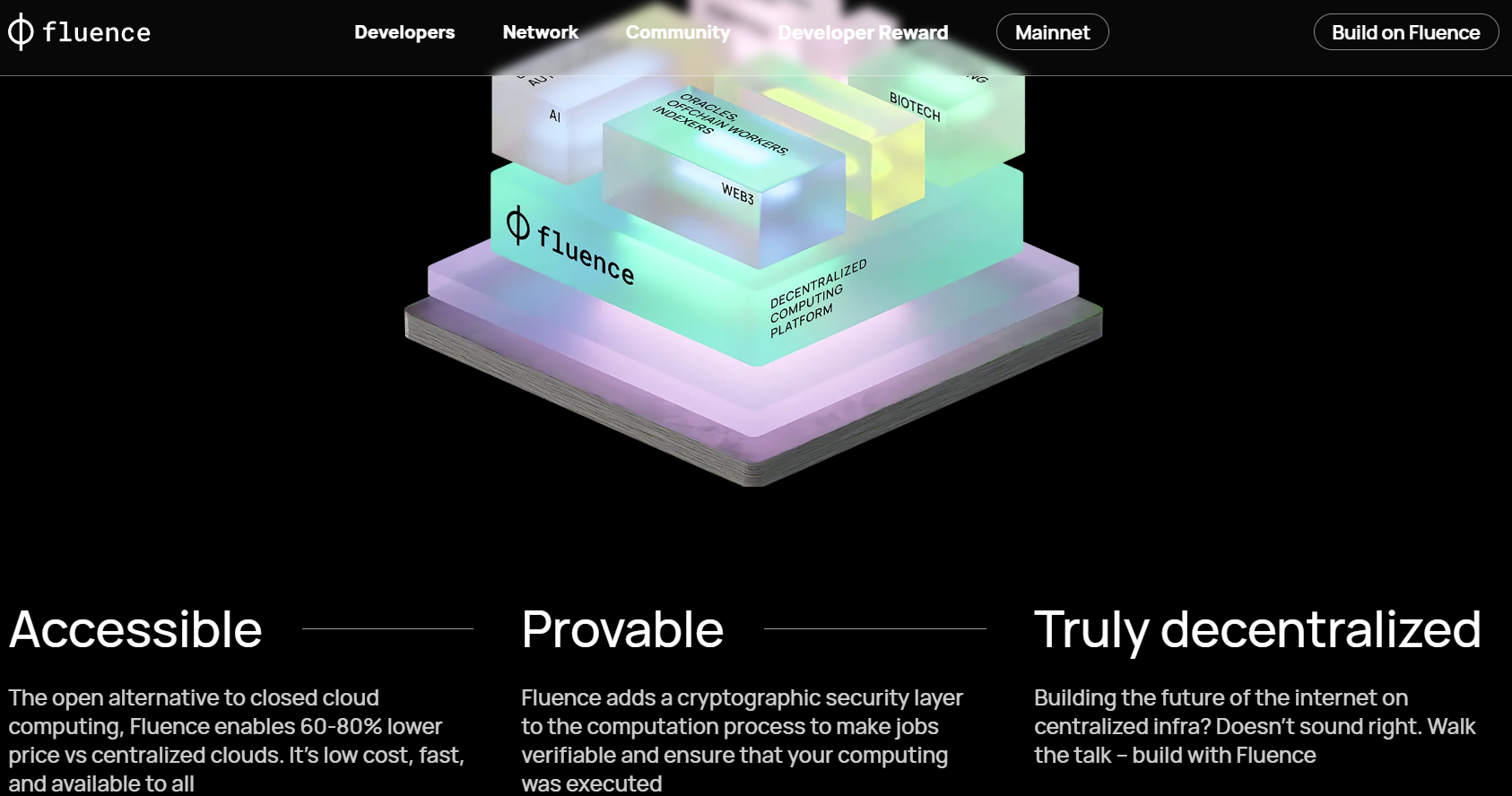
This business model resembles many other crypto-AI projects—providing a decentralized computing resource network that distributes tasks across nodes, competing with traditional cloud services via distributed architecture.
Every component in the cloud tech stack has a corresponding replacement within Fluence.
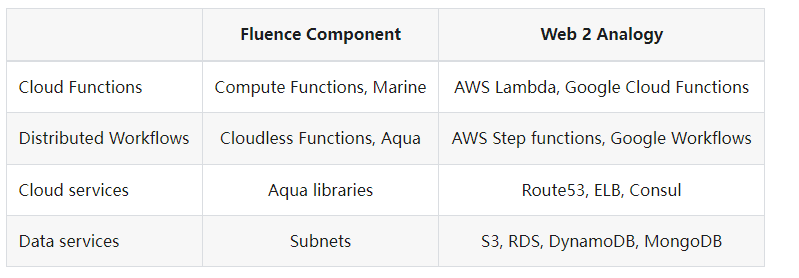
But unlike most cloud or decentralized computing projects, Fluence allows developers to verify whether their applications are running as intended and whether computations are correctly executed—by checking cryptographic proofs published on-chain by providers.
Through its decentralized server architecture, Fluence offers developers a unique verifiable computing environment. In this system, compute providers must not only complete assigned tasks but also generate cryptographic proofs confirming the accuracy of their computations.
Each node submits such proofs to demonstrate the capability and quality of work completed.
The key advantage here is adding an essential layer to decentralized computing—trustworthiness. Developers can confirm their apps execute as expected, with every computation step verified and proven.
This is precisely what we mean by the earlier-mentioned “coprocessor” concept—the coprocessor may not be the primary computation node, but rather an auxiliary node or service responsible for ensuring and validating computational correctness across the entire decentralized network.
If we abstract decentralized computing power as a unified processor handling calculations, the coprocessor on the other side handles verification.
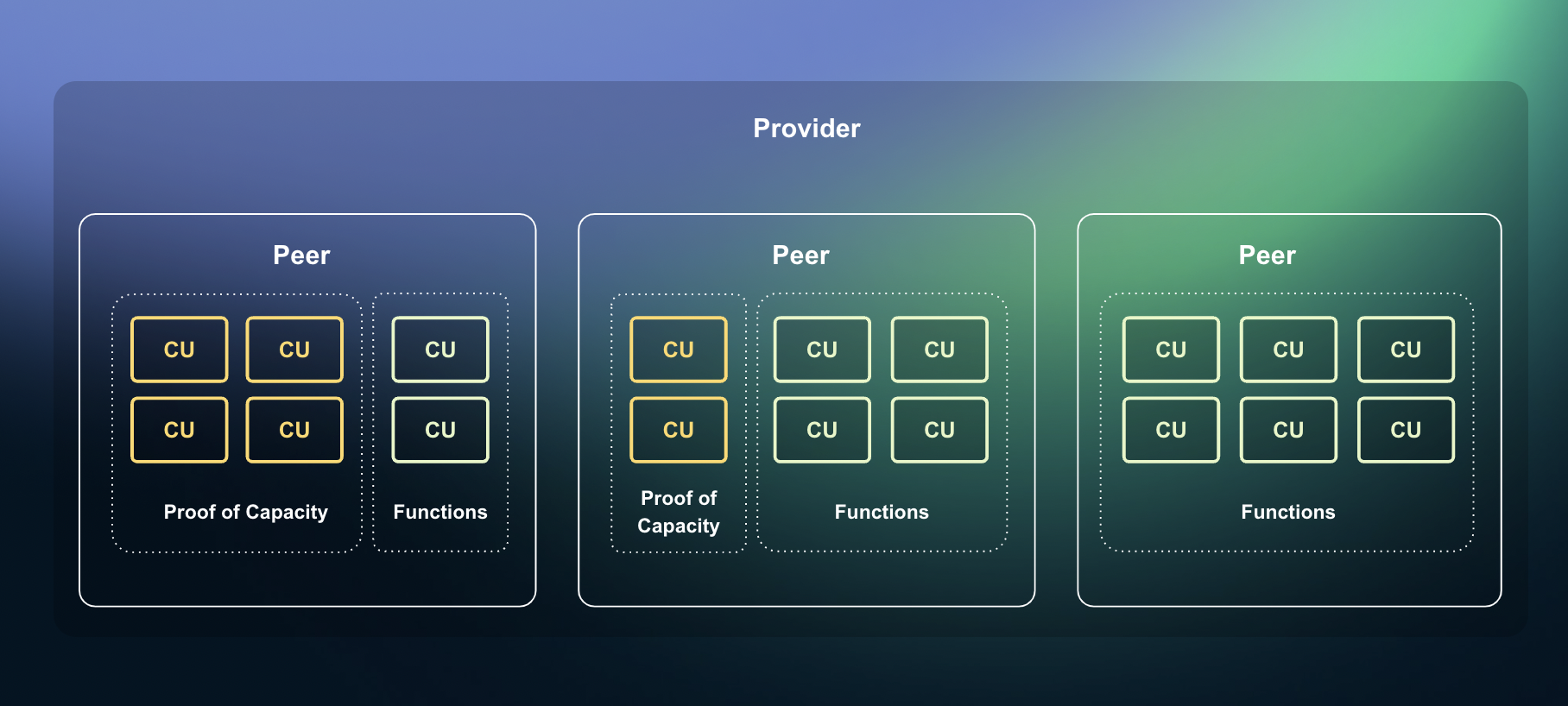
Technically, Fluence achieves this through two core components: Aqua and Marine.
Aqua handles script distribution and execution across servers, ensuring every step in the decentralized network is auditable and verifiable. Each time an Aqua script runs, participating nodes sign off on it.
Meanwhile, Marine enables multi-module execution within nodes, generating cryptographic proofs for each computed function. These proofs are later validated by other nodes in the network and recorded on-chain as evidence of processing.
For more technical details, refer to the official documentation. Here, we offer only a simplified overview.
So, what advantages does using a coprocessor-based approach bring compared to other centralized or decentralized computing solutions?

-
Decentralized Verifiability: Developers can use cryptographic proofs from the Fluence network to ensure their computing tasks are correctly executed.
-
Dynamic Provider Selection: Developers can freely switch between any connected resource providers without being locked into a single cloud vendor.
-
Cost Efficiency: By reducing reliance on specific providers, Fluence helps lower overall prices, offering more economical computing resources.
-
Web3-Native Management: Supports infrastructure cost management and payments via decentralized organizations like DAOs, enhancing community involvement.
-
Adaptability to Diverse Workloads: Handles complex computing needs such as backend APIs and data processing—tasks unsuitable for direct on-chain execution can still run efficiently on Fluence.
Token Imminent TGE, OTC Valuation Rising
Fluence is powered by its native token $FLT, used by compute providers as collateral and incentive mechanism. Providers earn FLT tokens and payments for serving applications.

On March 7, Fluence's official Twitter announced the tokenomics: total supply of 1,000,000,000 FLT, initial circulating supply of 50,000,000 (5%), with approximately 45% of total supply unlocking over the first 24 months post-TGE.
Token address: 0x236501327e701692a281934230AF0b6BE8Df3353

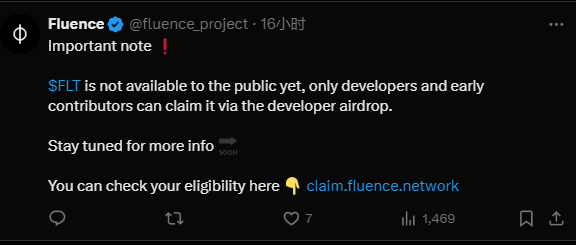
The team clarified that there is currently no public TGE for FLT—only early contributors will receive airdrop rewards. The exact launch date remains to be announced via official social media channels in the coming weeks.
However, according to analysis shared by Twitter user @atterX_, the pre-trading price of FLT in private markets is currently around $16.30, with daily trading volume nearing $400,000. Based on this valuation and the stated tokenomics, FLT’s market cap is estimated at ~$800 million, with a fully diluted valuation (FDV) reaching $16 billion.
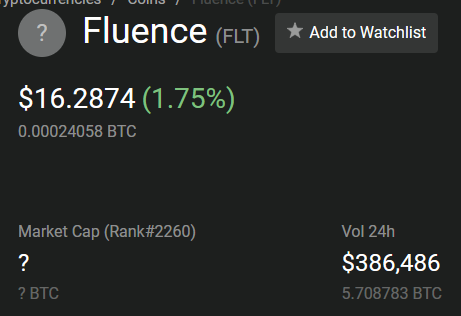
Notably, back in February 2022, Multicoin Capital led a $9 million funding round for the project. At that time, however, AI wasn't yet a hot topic, and Fluence never launched its token.

Given today’s pricing, scale, and booming AI narrative, is FLT overvalued or undervalued?
There are other projects in the market with similar coprocessor concepts, notably Marlin Protocol and Phala Network.
Their current market caps stand at $235 million and $104 million respectively. However, since both issued tokens as early as 2021, their FDVs are now nearly identical to their circulating market caps.
Interestingly, launching during a strong bull cycle allowed both projects to reach all-time highs about 10x higher than current levels. Even after narrative shifts, these established projects maintain circulating market caps of $100–200 million.
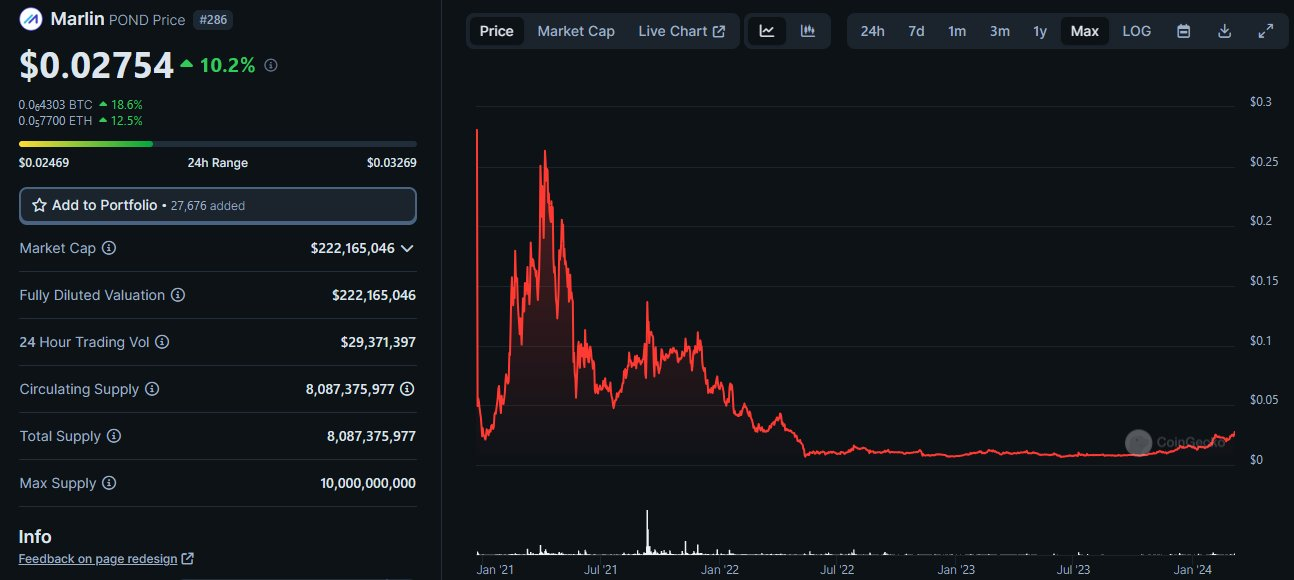
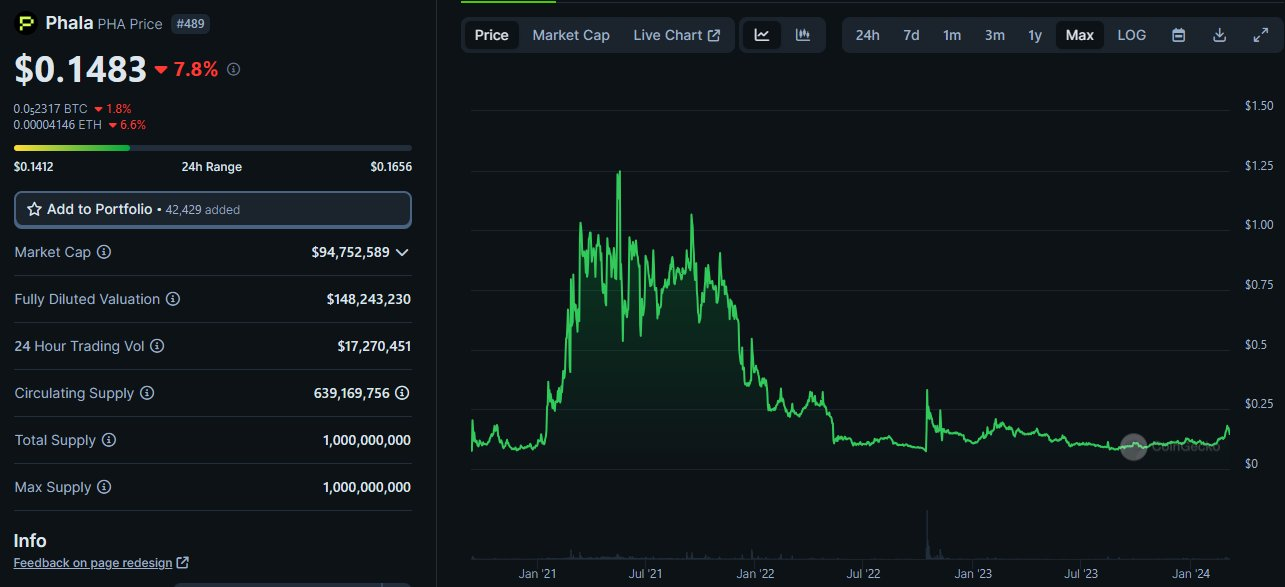
Therefore, considering the current bull market and the surging popularity of the AI narrative, Fluence’s estimated $800 million circulating market cap doesn’t appear overvalued when compared to peak valuations of similar projects—it may even have room to grow.
One thing is certain: the AI story in crypto will continue unfolding.
When the overarching theme remains consistent, projects that explore niche aspects and hit points others miss will naturally seize opportunities during upward cycles.
How Fluence performs going forward will be worth watching closely.
Join TechFlow official community to stay tuned
Telegram:https://t.me/TechFlowDaily
X (Twitter):https://x.com/TechFlowPost
X (Twitter) EN:https://x.com/BlockFlow_News
 深潮TechFlow





![In-depth Analysis of Trade[XYZ]: How Were 92 Markets and 98% HIP-3 Trading Volume Established?](https://upload.techflowpost.com/upload/images/20260716/20260716061117965147.jpeg?x-oss-process=image/resize,p_50/quality,q_80)