








MIIX Capital: U.S. Cryptocurrency Market Research Report
TechFlow Selected TechFlow Selected
MIIX Capital: U.S. Cryptocurrency Market Research Report
The United States remains the global center of cryptocurrency.
 Navigating Web3 tides with focused insights
Author: MIIX Capital
Introduction
The United States leads or ranks near the forefront of technological advancement and innovation in many economic sectors, particularly in artificial intelligence. In the field of cryptocurrency, the U.S. is a global epicenter. Prominent applications and institutions such as Ethereum, UniSwap, Binance, Coinbase, DCG, and a16z—household names in the industry—either originated in the U.S. or have their headquarters there, maintaining extremely close ties with the country.
American culture emphasizes individualism and encourages self-reliance, asserting that rewards should be based on personal ability rather than wealth or social status. The U.S. free-market capitalism promotes profit-driven motives and high risk tolerance, providing startups with abundant opportunities, funding, and support. This has cultivated an ecosystem primarily driven by the private sector with minimal public intervention—a natural greenhouse for the growth of the crypto market.
1. Macroeconomic Indicators and Current Status
The United States has a highly developed mixed economy. Measured by nominal GDP, it is the world's largest economy; measured by purchasing power parity (PPP), it ranks second after China. As of 2022, the U.S. ranked seventh globally in nominal per capita GDP and eighth when adjusted for PPP.
1.1 Geography and Population Size
The United States of America, commonly known as the U.S., is a country primarily located in North America. It is the third-largest country in the world by land area and total area, comprising 50 states, one federal district, five territories, and several uninhabited island possessions. It is the world’s oldest existing federation and, according to the World Economic Forum, also the longest-standing democracy.
The U.S. is situated in central North America, with territory also including Alaska in the northwest of the continent and the Hawaiian Islands in the central Pacific Ocean. It borders Canada to the north, the Gulf of Mexico to the south, the Pacific Ocean to the west, and the Atlantic Ocean to the east. Its total land area spans approximately 9.37 million square kilometers. The contiguous U.S. stretches about 4,500 km from east to west and 2,700 km from north to south, with a coastline measuring 22,700 km. By both land and total area, the U.S. ranks third globally, behind only Russia and Canada.
As of February 2023, the U.S. population was approximately 333 million. According to the 2020 U.S. Census, non-Hispanic whites made up 57.8%, Hispanics 18.7%, African Americans 12.4%, Asians 6%, Native Americans and Alaska Natives 1.1%, and Native Hawaiians or other Pacific Islanders 0.2% (with some overlap among categories). Religiously, about 46.5% identify as Christian, 20.8% as Catholic, 1.9% as Jewish, 0.9% as Muslim, 0.7% as Buddhist, 0.5% as Orthodox Christian, 1.2% as belonging to other religions, and 22.8% report no religious affiliation (with some individuals counted in multiple categories).
1.2 Economic Structure and Scale
The U.S. economy is highly advanced, characterized by large-scale production, leading-edge technology, a complete industrial structure, and advanced agriculture and manufacturing. The country leads the world in road and air transport technologies and volumes, ranks second in foreign trade, and has a highly developed financial sector. For decades, its economy has remained the largest in the world. With a per capita GDP exceeding $60,000, it leads all countries with populations over 50 million, making it the most important economy globally and playing a pivotal role in human economic life.
Wealth in the U.S. is highly concentrated: the wealthiest 10% of adults hold 72% of the nation’s household wealth, while the bottom 50% hold just 2%. Income inequality remains at historic highs—the top fifth of earners receive more than half of all income—making the U.S. one of the most unequal OECD member nations in terms of income distribution.
The U.S. leads or ranks near the forefront in many economic fields, especially in artificial intelligence, computing, pharmaceuticals, healthcare, aerospace, and military equipment. The economy is powered by abundant natural resources, advanced infrastructure, and high productivity. The U.S.’s largest trading partners are the European Union, Mexico, Canada, China, Japan, South Korea, the UK, Vietnam, India, and Taiwan. The U.S. is the world’s largest importer and the second-largest exporter after China. It is by far the largest exporter of services globally.
1.3 The World’s Largest Economy
The U.S. possesses a diversified, highly developed, and privately dominated economy. Since around 1890, it has been the world’s largest national economy by GDP, characterized by high productivity, technological innovation, and competitiveness.
According to World Bank data, the U.S. GDP reached $25.4397 trillion in 2022, accounting for 10.91% of the global economy.
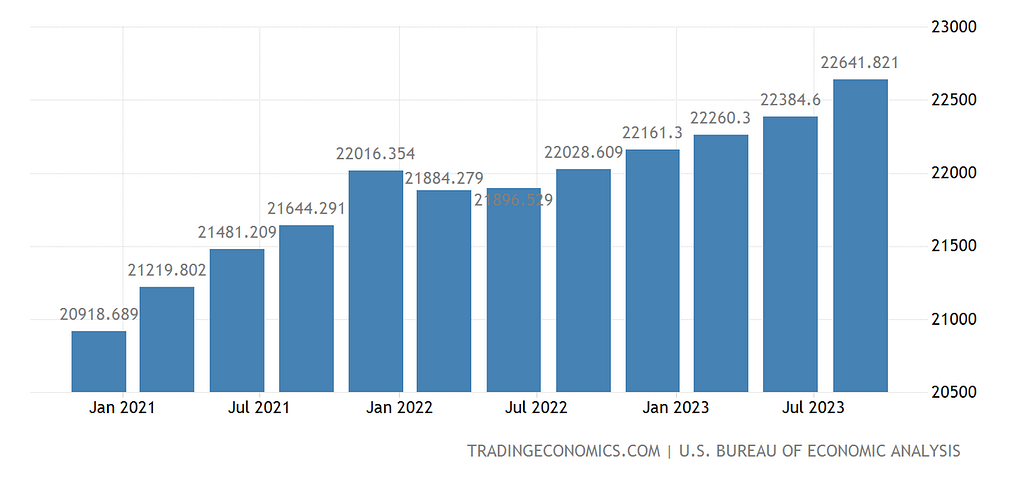
Data shows that U.S. gross national product increased from $22.3846 trillion in Q2 2023 to $22.6418 trillion in Q3 2023, reaching a record high.
1.4 Highest Per Capita GDP Globally
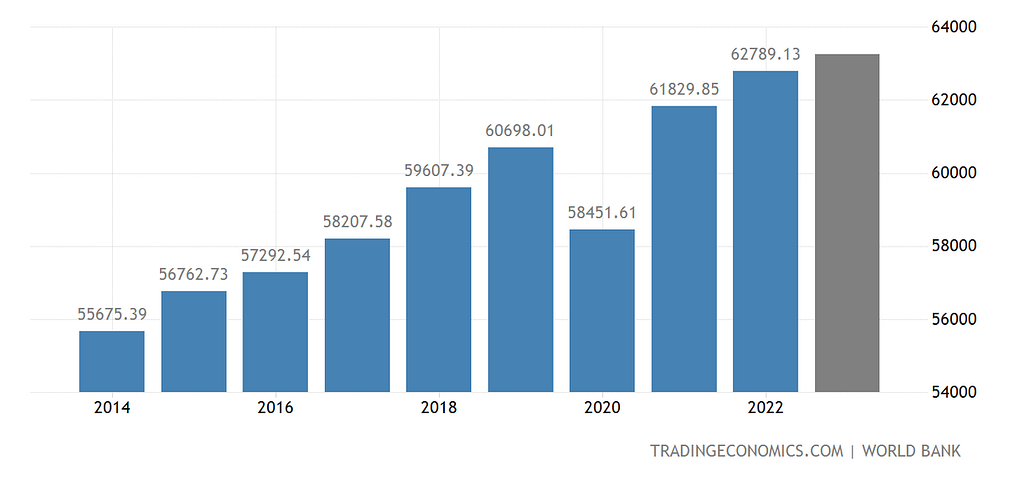
The latest recorded U.S. per capita GDP was $62,789.13 in 2022, equivalent to 497% of the global average, ranking first worldwide. Canada and Germany follow, with the U.S. ranking ninth by PPP-adjusted per capita GDP.
1.5 Inflation Slightly Above Expectations
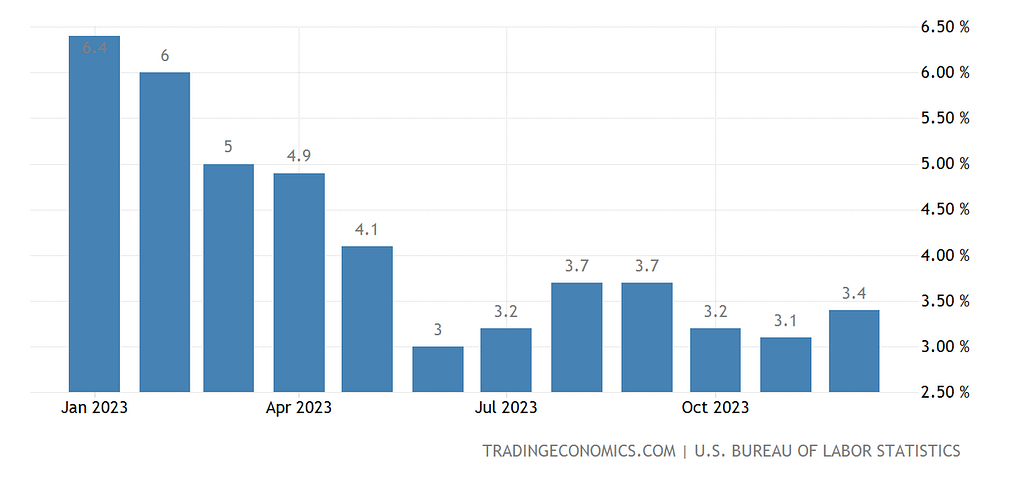
Due to a slower decline in energy prices, the U.S. annual inflation rate rose to 3.4% in December 2023, up from a five-month low of 3.1% in November, exceeding the market forecast of 3.2%. The core inflation rate fell to 3.9%, down from 4% previously but still above the expected 3.8%. Consumer prices rose 0.3% month-on-month, the highest increase in three months and above the predicted 0.2%.
1.6 Consumer Confidence Index Continues to Rise
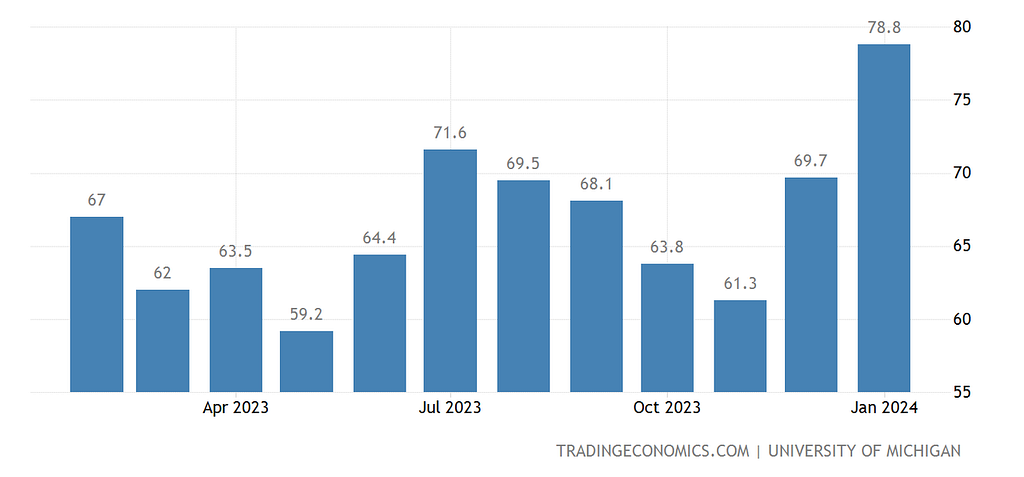
Preliminary estimates indicate that the University of Michigan’s U.S. consumer confidence index surged to 78.8 in January 2024, the highest level since July 2021. Meanwhile, the index measuring consumer expectations jumped from 67.4 to 75.9, and the index assessing current economic conditions rose from 73.3 to 83.3. Combined for January and December, consumer confidence climbed 29%, the largest two-month increase since the end of the 1991 recession.
1.7 The U.S. Legal Tender
The U.S. dollar is the most widely used currency in international transactions, supported by the country’s dominant economy, military strength, petrodollar system, and financial infrastructure. Since WWII, the dollar has served as the world’s primary reserve currency. Some countries use it as their official currency, while others treat it as a de facto currency. Today, the dollar accounts for 58% of global foreign exchange reserves. The euro, the second most-used currency, holds only 21%.
2. User Characteristics of the U.S. Crypto Market
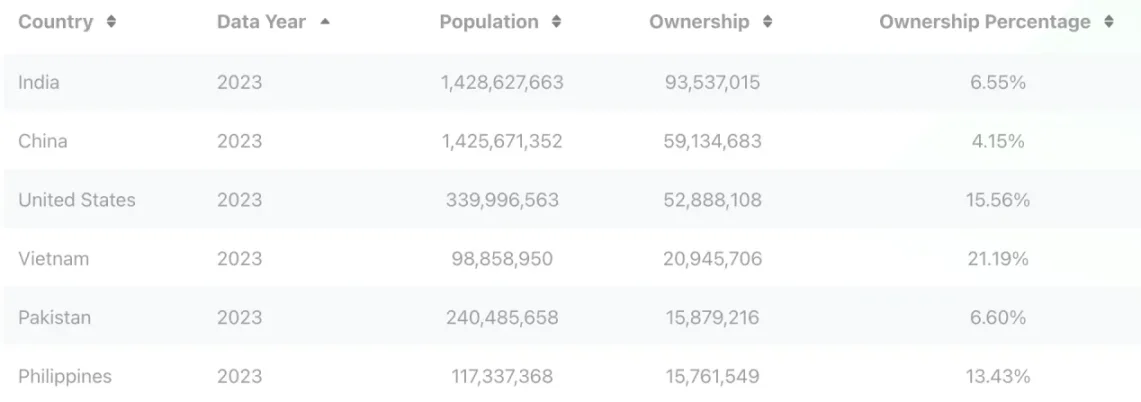
According to TripleA, the U.S. has over 52 million cryptocurrency users, ranking among the highest in adoption rate, representing 15.56% of the total population. Data on U.S. user characteristics is limited, primarily based on TripleA’s 2022 report on cryptocurrency adoption and trends in the U.S.
2.1 Higher Proportion Among Wealthy Individuals
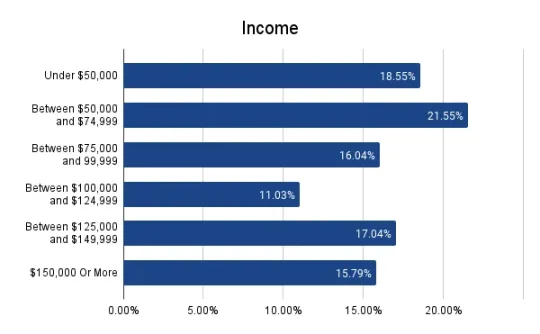
By income bracket, 44% of U.S. cryptocurrency owners earn $100,000 or more annually, indicating that crypto ownership is concentrated among wealthier Americans.
2.2 Over 80% of Users Are Under Age 45
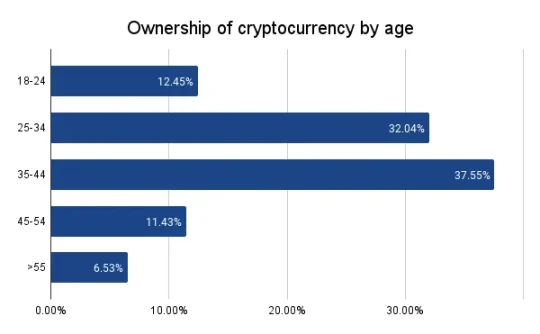
Most U.S. crypto holders are aged 18–44 (82%), with only 7% aged 55 or older. This indicates that cryptocurrencies are primarily owned by younger Americans.
2.3 66% of Users Are Highly Educated
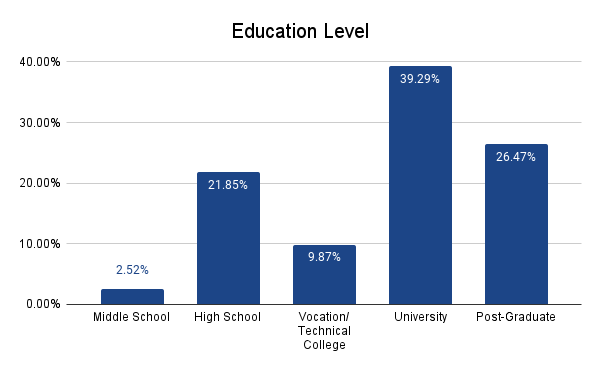
The majority of U.S. cryptocurrency holders are highly educated, with 66% holding a bachelor’s degree or higher.
2.4 BTC and ETH Are Preferred Holdings
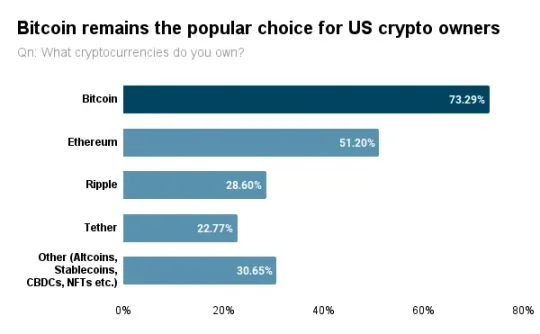
Bitcoin remains a popular choice among U.S. crypto owners, with over 73% of surveyed owners holding Bitcoin. Ethereum follows closely due to its broad range of use cases, followed by Ripple (XRP), Tether (USDT), and other cryptocurrencies.
2.5 Cryptocurrencies Viewed as Safe Assets
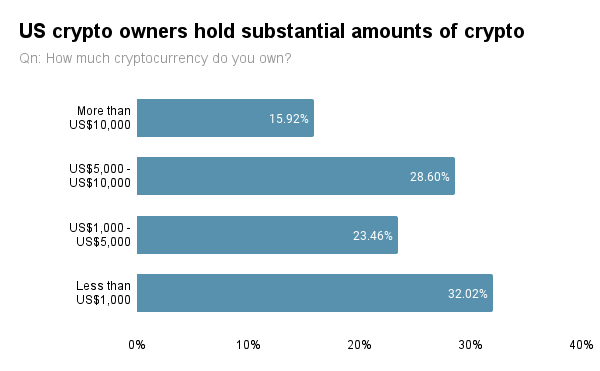
Cryptocurrencies are increasingly seen as safe assets and alternatives to fiat currencies, with over 15% of crypto owners holding more than $10,000 in crypto assets.
2.6 Demand for Widespread Education
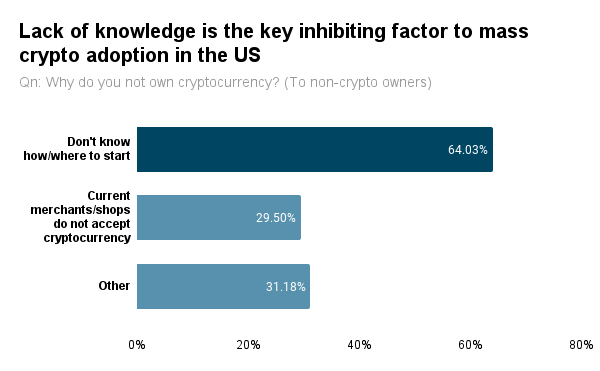
Most non-crypto respondents (64%) cited lack of knowledge, suggesting significant potential for increased crypto adoption through proper education and awareness campaigns.
3. Regional Characteristics of the U.S. Crypto Market
3.1 Top 20 States Hold 76% Market Share
Coinbase, the largest centralized exchange in the U.S., listed the top 20 states with the highest percentage of crypto owners, which together account for 76% of the market share.
3.2 California Leads in Popularity
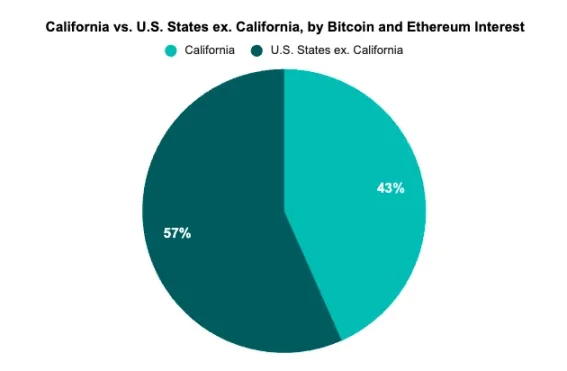
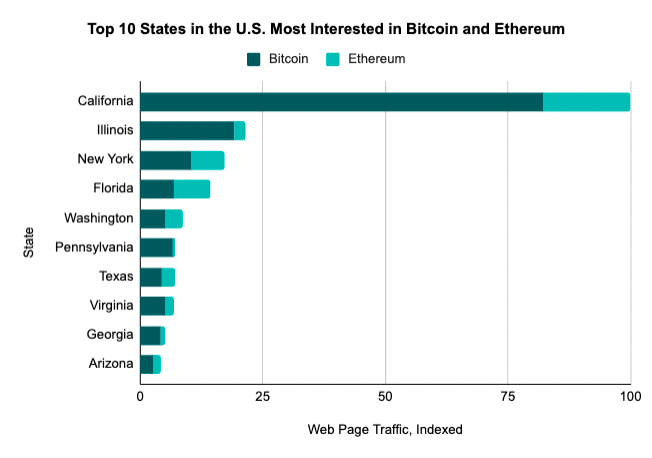
California surpasses all other states, accounting for 43% of total traffic to CoinGecko’s Bitcoin and Ethereum pages in the U.S., indicating the highest interest in these cryptocurrencies. Other top states include Illinois, New York, Florida, Washington, Pennsylvania, Texas, Virginia, Georgia, and Arizona.
3.3 New Jersey Has 65% ETH Market Share
While Bitcoin dominates market share in most of the top 10 states, Ethereum holds a 65.0% market share in New Jersey, followed by Wisconsin at 57.1%. Colorado and Florida show Ethereum search interest shares of 51.7% and 51.5%, respectively.
4. U.S. Users’ CEX Preferences
Prominent U.S. exchanges such as Coinbase, Gemini, and Kraken enable users to buy and sell Bitcoin using U.S. dollars and various fiat currencies. These platforms typically adhere to strict compliance standards to meet U.S. regulatory requirements.
4.1 Coinbase: Most Trusted CEX
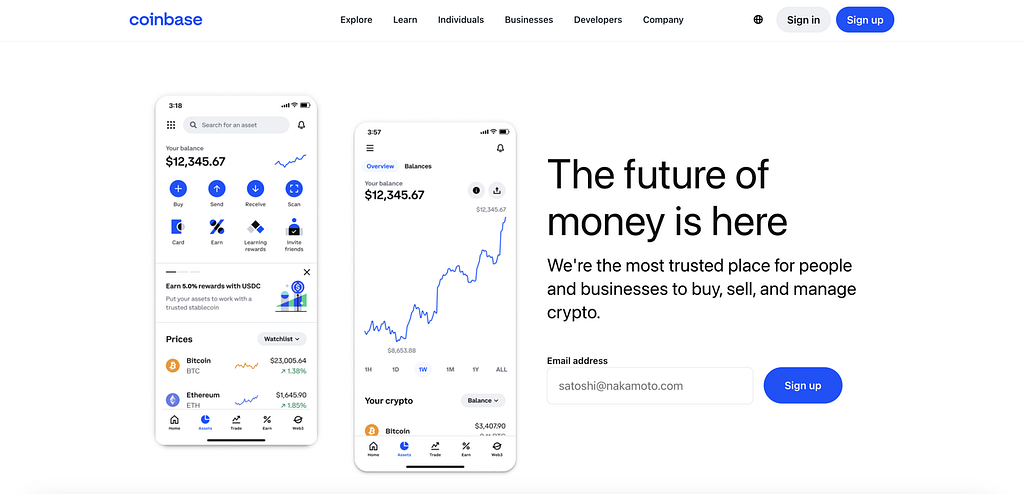
Founded in 2012 by Brian Armstrong and Fred Ehrsam, Coinbase is a secure online platform dedicated to acquiring, selling, transferring, and storing cryptocurrencies. While its fees are not the most competitive—ranging from 0.05% to 0.60% for market takers and 0% to 0.40% for limit takers—these costs are offset by the platform’s high level of security.
4.2 Gemini: Secure and Regulated CEX
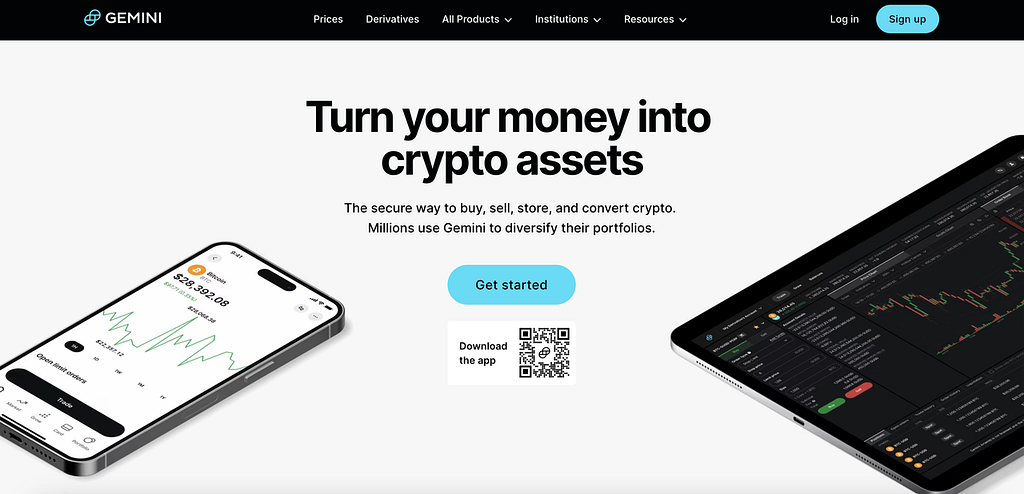
Gemini is a cryptocurrency trading and custody platform founded by Cameron and Tyler Winklevoss, known for their early involvement with Facebook. Launched in 2015, the exchange focuses on providing a secure and regulated environment for buying, selling, and storing various cryptocurrencies, including Bitcoin and Ethereum. Maker fees range from 0.00% to 0.25%, while taker fees range from 0.03% to 0.35%, decreasing with higher trading volume. Gemini is widely recognized for its commitment to regulatory compliance and security in the crypto industry.
4.3 Kraken: Widely Recognized as a Top CEX
Kraken is a cryptocurrency trading platform founded by Jesse Powell. Launched in 2011, it has become one of the largest and longest-running crypto exchanges globally. Known for its advanced trading features, high liquidity, and strong emphasis on security, Kraken has earned a solid reputation. Founder and CEO Jesse Powell played a key role in establishing Kraken as a reputable and enduring exchange. Trading fees for traders with monthly volumes below $50,000 range between 0.16% and 0.26%.
4.4 Uphold: Best CEX for Beginners
Uphold firmly holds its position as the second-largest cryptocurrency exchange in the U.S., offering trading and staking services for over 260 digital assets. Under the supervision of FinCEN, the platform complies with strict regulations, providing U.S. users with a compliant trading environment. Key features include user-friendly portfolio tracking and the opportunity for investors to earn up to 21% annual interest on selected cryptocurrencies.
Uphold’s reputation in the U.S. market is enhanced by its strong commitment to transparency and security. Notably, it is one of the few exchanges that provide audited proof of reserves, assuring users of fund safety and confirming that all assets are fully backed 1:1. This focus on clarity and reliability makes Uphold a trusted choice in the U.S. cryptocurrency landscape.
4.5 eToro: CEX for Multiple Asset Classes
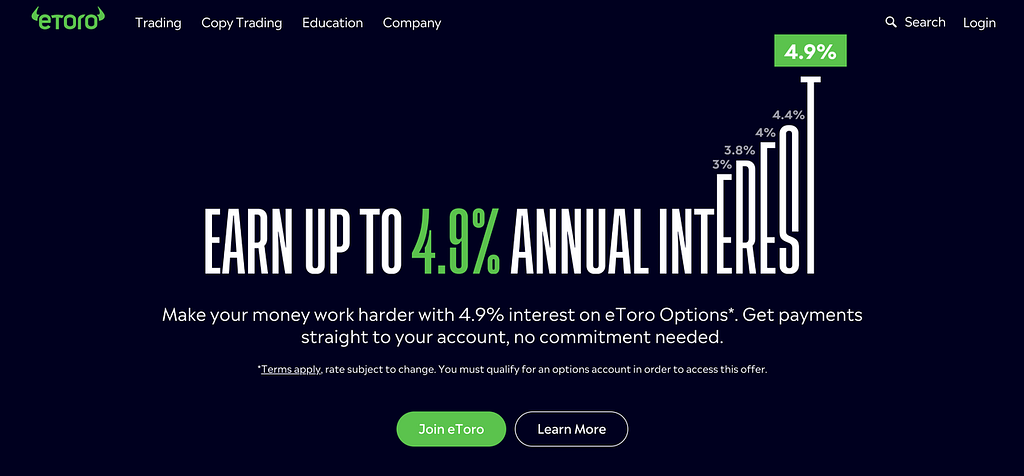
eToro ranks as the fourth-largest multi-asset broker in the U.S., offering a robust platform for diversified financial investments. With a vast portfolio of over 4,500 assets—including cryptocurrencies like Bitcoin and Ethereum, as well as traditional options such as stocks, commodities, and ETFs—it caters to investors seeking portfolio diversification within a single, secure, and strictly regulated environment.
Regulatory compliance is foundational to eToro’s operations in the U.S. The platform also allows investment in crypto-related stocks such as MicroStrategy and Coinbase, positioning itself as a comprehensive hub for enthusiasts of crypto and blockchain. Its focus on regulatory compliance ensures U.S. traders a secure and reliable experience.
5. Industry Practitioner Data in the U.S.
5.1 Crypto Practitioners Are Relatively Concentrated
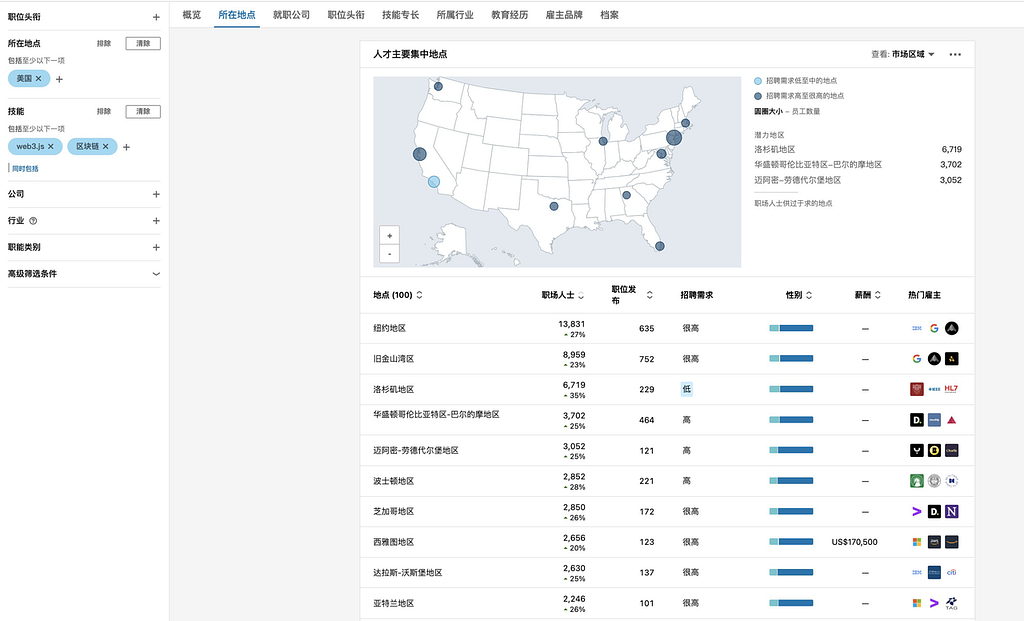
LinkedIn data shows approximately 83,000 crypto professionals in the U.S., primarily concentrated in New York, San Francisco, and Los Angeles. Overall employment in the sector is trending upward, with Los Angeles showing the highest growth rate at 35%.
5.2 Technicians Make Up the Largest Group
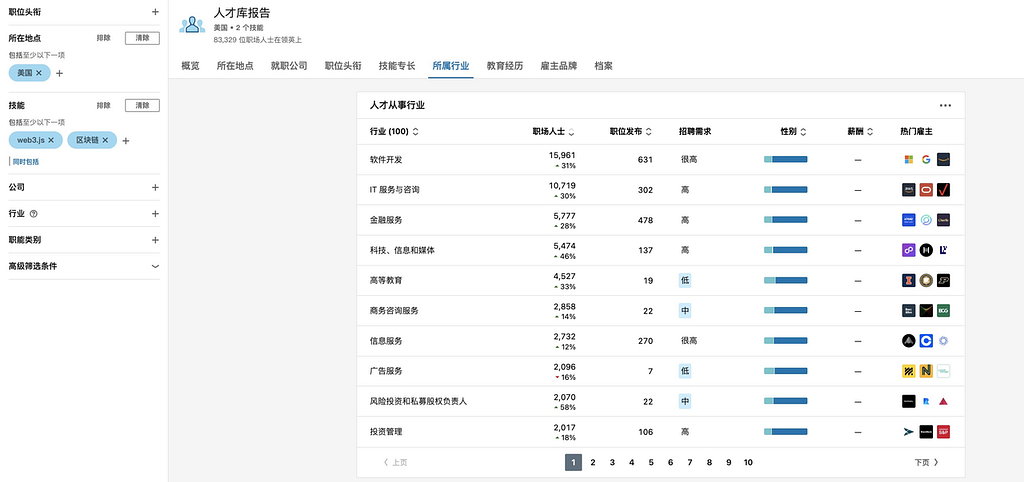
Among U.S. practitioners, nearly 50% work in software development and IT services, while about 12% are in financial services. This suggests the U.S. crypto industry is primarily technology- and product-driven, though financial services remain a strong business segment.
6. U.S. Web3 Projects
6.1 Ethereum: Largest Application Ecosystem
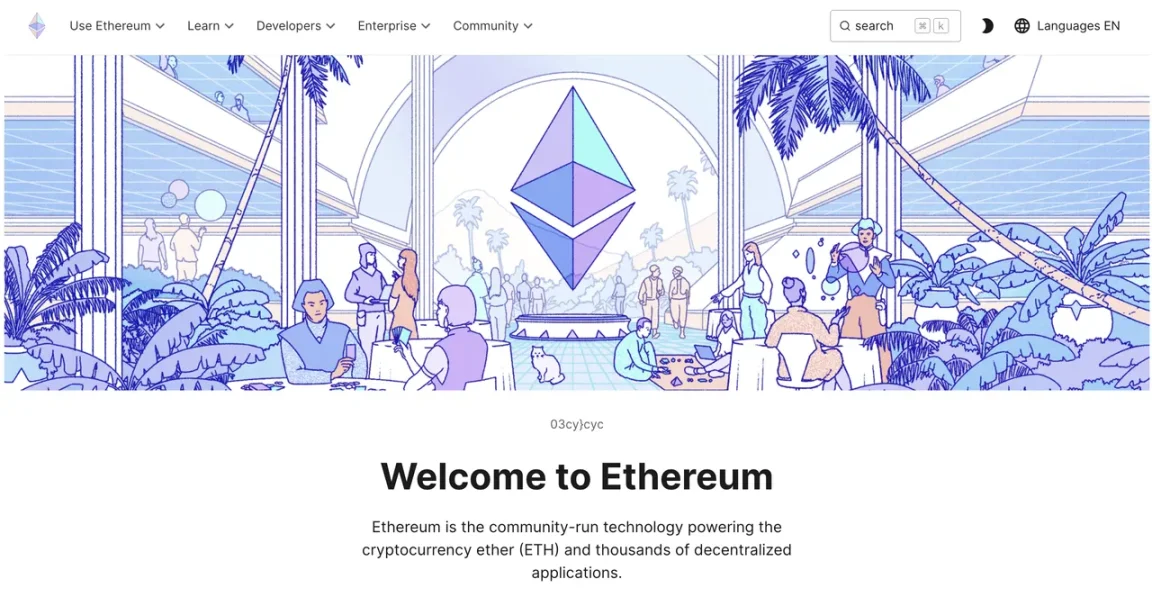
Ethereum was initiated by Vitalik Buterin in 2013, with co-founders Gavin Wood, Charles Hoskinson, Anthony Di Iorio, and Joseph Lubin. Funded through a crowdfunding campaign, it officially launched on July 30, 2015.
Ethereum is a decentralized blockchain platform that establishes a peer-to-peer network for securely executing and verifying application code (smart contracts). Smart contracts allow participants to transact without a trusted central authority.
Ethereum is known for its native cryptocurrency, Ether (ETH), operating on a blockchain-based platform. The underlying blockchain technology ensures the secure creation and maintenance of a public digital ledger. While similar to Bitcoin, Ethereum differs significantly in long-term vision and technical limitations. In September 2022, Ethereum transitioned from a proof-of-work to a proof-of-stake consensus mechanism. Ethereum has laid the foundation for numerous emerging blockchain-based technological advancements.
6.2 Uniswap: World’s Largest DEX
Uniswap is a decentralized finance (DeFi) protocol running on Ethereum and other blockchains, and the largest decentralized exchange (DEX). It enables users to swap different cryptocurrencies without intermediaries.
On Uniswap, anyone can create liquidity pools or add tokens to existing ones, providing liquidity for token swaps. Users earn trading fees as rewards for supplying funds to these pools. This lowers barriers to entry and fuels growth in the DeFi ecosystem.
Uniswap also has its own native token, UNI, used for governance and incentivizing protocol participants. UNI holders can vote on the protocol’s future direction, such as upgrades and fee adjustments.
6.3 Polygon: A Scalability Platform Enhancing Ethereum

Founded in 2017 as Matic Network, Polygon is the brainchild of experienced Ethereum developers Jaynti Kanani, Sandeep Nailwal, Anurag Arjun, and Mihailo Bjelic. Polygon is a suite of protocols designed to address Ethereum’s scalability challenges.
Polygon operates as independent blockchains (sidechains) running parallel to the main Ethereum chain. These sidechains process transactions and smart contracts before relaying final results back to the main chain. This approach significantly reduces congestion on the Ethereum network by offloading processing tasks, improving overall efficiency and speed.
Its goal is to create a multi-chain ecosystem compatible with Ethereum, enabling developers to easily build scalable and efficient decentralized applications (DApps). Polygon offers various tools and services to support this ecosystem, including development frameworks, APIs, and SDKs.
6.4 Filecoin: A Decentralized Storage Network
Filecoin is a decentralized storage network designed to let users store, retrieve, and exchange data. Built on blockchain technology, it makes data storage more transparent and reliable. On the Filecoin network, users pay Filecoin tokens to store data, while storage providers (miners) earn tokens as rewards. Filecoin can be viewed as a financial layer atop IPFS (InterPlanetary File System), providing economic incentives to attract more storage resources to the network.
IPFS is a distributed system for storing and sharing files, aiming to create a faster, more open, and secure internet. IPFS allows users to store files across multiple nodes instead of a centralized server, making data more durable and censorship-resistant. Both IPFS and Filecoin were created and launched by Juan Benet and his lab team.
6.5 Tezos: A Self-Correcting Blockchain Platform
Tezos began in 2014 when co-founders Arthur Breitman and Kathleen Breitman, along with a core development team, launched the project. Headquartered in Switzerland, Tezos raised $232 million in its ICO within just two weeks, accepting donations in Bitcoin and Ether.
Tezos is a decentralized blockchain platform designed to provide a more secure, upgradeable, and sustainable framework for building decentralized applications and smart contracts. It stands out in the crypto space primarily due to its self-amending blockchain architecture, where stakeholders manage upgrades to the core protocol—including the amendment process itself.
6.6 The Sandbox
The Sandbox is a sequel to the 2D world-building mobile game originally released in 2012. It is a blockchain-based virtual world allowing users to create, own, and monetize their in-game experiences and assets. It aims to build a player-driven platform where users not only participate in game creation but also earn real economic returns from their creations. Leveraging blockchain technology, the platform ensures transparent and secure asset ownership, offering users an innovative and interactive virtual environment.
The Sandbox integrates decentralized non-fungible tokens (NFTs) and its native cryptocurrency SAND into its economy. Players use the Voxel Editor to create and edit assets such as characters, items, and plots of land (called LAND). These assets can become NFTs tradable within the game or on crypto marketplaces. LAND represents virtual real estate where players can build games, experiences, and social spaces.
7. U.S. Crypto Venture Capital
7.1 Digital Currency Group
Digital Currency Group (DCG), founded in 2015 and led by Barry Silbert, is a consortium of venture capital organizations backed by major entities such as Mastercard, Bain Capital, Transamerica Ventures, CME Ventures, FirstMark Capital, and New York Life. DCG has played a crucial role in promoting cryptocurrency adoption, emphasizing education and advocacy. Its subsidiary Grayscale has influenced mainstream investor access to digital assets through innovative products like the Bitcoin Investment Trust and other crypto-focused investment vehicles.
Digital Currency Group frequently collaborates with co-investors such as Coinbase Ventures, Pantera Capital, Blockchain Capital, CoinFund, and Andreessen Horowitz (a16z).
Notable investments include: Coinbase, Kraken, Ledger, Etherscan, The Graph, Hubble, Nomics, eToro, and Flare Network.
7.2 Andreessen Horowitz (a16z)
Andreessen Horowitz, founded in 2009 by Marc Andreessen and Ben Horowitz, manages $35 billion and operates across diverse tech sectors including healthcare, consumer goods, cryptocurrency, enterprise, fintech, and gaming. Known for its stage-agnostic investment approach, the firm deeply respects entrepreneurs and leverages extensive hands-on experience in company building. The team comprises former founders, CEOs, and CTOs with expertise across various technical domains.
Andreessen Horowitz (a16z) frequently partners with co-investors such as Coinbase Ventures, Polychain Capital, Union Square Ventures, SV Angel, and Paradigm.
Notable investments include: Compound, dYdX, Uniswap, Forta, and Arweave.
7.3 Binance Labs
Binance Labs, established in 2018, aims to nurture and support promising blockchain projects capable of redefining the future. Its portfolio spans exchanges, blockchain infrastructure, decentralized finance (DeFi) platforms, and non-fungible tokens (NFTs), playing a key role in expanding various sectors within the crypto space.
Binance Labs frequently collaborates with co-investors such as Animoca Brands, HashKey Capital, Coinbase Ventures, Hashed Fund, and NGC Ventures.
Notable investments include: Symbiosis Finance, Polygon, The Sandbox, Melos Studio, Axie Infinity, and STEPN.
7.4 Coinbase Ventures
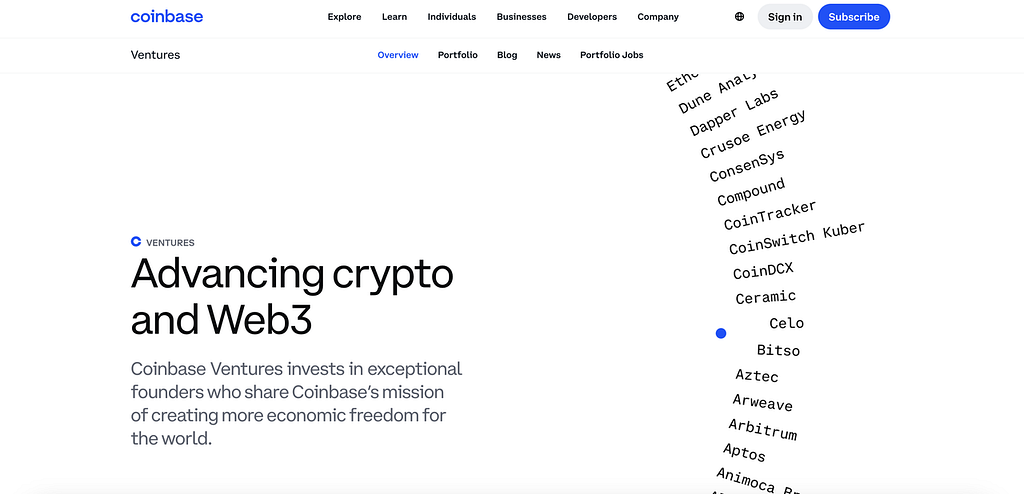
Coinbase Ventures, founded in 2018, is the venture capital arm of Coinbase, the globally renowned exchange. Leveraging deep expertise and an extensive network, it supports and invests in early-stage companies at the forefront of blockchain technology and digital currency innovation.
Coinbase Ventures frequently partners with co-investors such as Pantera Capital, Polychain Capital, Andreessen Horowitz (a16z), and Dragonfly Capital.
Notable investments include: Compound, Polygon, Rocket Pool, Arweave, Diagonal Finance, Yoz Labs, Credora, and Mysten Labs.
7.5 Sequoia Capital
Sequoia Capital, a leading venture capital firm since its founding in 1972, has consistently identified and backed groundbreaking companies. Its landmark investments in tech giants like Apple, Google, WhatsApp, and Airbnb have expanded its focus into the crypto world. Recognizing blockchain’s transformative potential as early as the 2010s, Sequoia has positioned itself to play a pivotal role in the evolving crypto landscape across industries.
Sequoia Capital frequently collaborates with (crypto-focused) co-investors such as Andreessen Horowitz (a16z), Coinbase Ventures, Paradigm, Multicoin Capital, and Pantera Capital.
Notable investments (in crypto): Block, Filecoin, Magic Eden, and Handshake.
7.6 Paradigm
Paradigm is a prominent crypto venture capital firm playing a vital role in driving innovation and transformation in the dynamic crypto space. Founded in 2018 by seasoned crypto veterans including Fred Ehrsam (co-founder of Coinbase), Matt Huang, and Charles Noyes, it brings together a powerful team.
Paradigm frequently partners with co-investors such as Coinbase Ventures, Andreessen Horowitz (a16z), Sequoia Capital, Three Arrows Capital, and Variant.
Notable investments include: Uniswap, Cosmos, Yield, dYdX, and Tezos.
8. U.S. Cryptocurrency Regulatory Framework
Cryptocurrencies have been a major focus for both U.S. federal and state governments, though the regulatory environment remains unclear and continues to evolve. Different federal agencies apply varying approaches based on their assessment of crypto characteristics. Legislators may issue opinions, and states can establish their own rules. Many federal agencies and policymakers praise blockchain and crypto as vital components of America’s future infrastructure, acknowledging the need for U.S. leadership in blockchain and crypto development.
8.1 Overview of the U.S. Regulatory Framework
In the U.S., crypto regulation involves a combination of federal oversight and state laws. Federal agencies such as the Securities and Exchange Commission (SEC), Commodity Futures Trading Commission (CFTC), Federal Trade Commission (FTC), Internal Revenue Service (IRS), Office of the Comptroller of the Currency (OCC), and Financial Crimes Enforcement Network (FinCEN) play significant roles in overseeing different aspects of digital assets.
At the state level, approaches vary widely. Some states (like Wyoming and Utah) have passed laws promoting blockchain technology for economic growth, including recognizing decentralized autonomous organizations (DAOs) and creating specialized financial institutions for digital assets. Others have tightened regulations, requiring money transmitter licenses and strict adherence to securities laws, evidenced by enforcement actions against key blockchain players.
Additionally, the U.S. has introduced legislation such as the Responsible Financial Innovation Act and the Lummis-Gillibrand Stablecoin Bill to provide clarity and integrate digital assets into existing financial frameworks.
The U.S. regulatory environment continues to evolve, with ongoing discussions about the need for clearer guidelines and rules. Legal challenges and disputes persist, particularly regarding the classification of specific tokens and the regulatory treatment of decentralized finance (DeFi) platforms.
8.2 Key Regulatory Frameworks Explained
Securities and Exchange Commission (SEC)
The SEC plays a significant role in regulating digital assets deemed securities. Initial coin offerings (ICOs) and certain token sales fall under SEC scrutiny. Compliance with securities laws is critical for projects involving token sales.
Commodity Futures Trading Commission (CFTC)
The CFTC regulates commodities and commodity futures, including Bitcoin and other cryptocurrencies. Bitcoin is classified as a commodity, and the CFTC oversees crypto derivatives.
Financial Crimes Enforcement Network (FinCEN)
FinCEN, part of the U.S. Department of the Treasury, focuses on combating money laundering and financial crimes. Crypto exchanges and certain wallet providers are subject to anti-money laundering (AML) regulations.
Internal Revenue Service (IRS)
The IRS treats cryptocurrencies as property for tax purposes. Crypto transactions are subject to capital gains tax reporting, and individuals must report crypto-related income.
State-Level Regulation
States adopt varied approaches to crypto regulation. Some have introduced specific laws, licenses, or regulatory frameworks for crypto businesses, while others apply more general oversight.
Bank Secrecy Act (BSA) Compliance
Crypto exchanges and certain wallet providers must comply with the Bank Secrecy Act, including implementing AML and Know Your Customer (KYC) procedures.
8.3 How Cryptocurrencies Are Taxed
The IRS classifies cryptocurrencies as property for taxation. As detailed in IRS Notice 2014–21, gains from crypto transactions are taxable.
Taxpayers must report gains or losses from selling or exchanging crypto on their tax returns. Tax rates depend on holding period: gains on crypto held over one year are subject to capital gains tax, while gains on crypto held less than one year are taxed as ordinary income.
The IRS requires detailed records of all crypto transactions for accurate tax reporting, including transaction dates, amounts, and the fair market value of crypto at the time of each transaction. (The 2017 tax reform eliminated the option to treat exchanges of one crypto for another as like-kind exchanges, meaning such transactions are now taxable events.)
Starting January 2024, under the Infrastructure Investment and Jobs Act, digital asset brokers must report transactions exceeding $10,000 to the IRS. This reflects increasing regulatory scrutiny of crypto transactions and underscores the importance of tax compliance in the U.S. crypto market.
9. Conclusion
The U.S. free-market economy provides an ideal environment for new tech startups, driven by profit motives and high risk tolerance. The U.S. boasts the world’s largest economy, home to tech giants like Google, Apple, and Microsoft, and Wall Street—the global financial center. The U.S. dollar, serving as the world’s primary reserve currency, grants the U.S. government immense international influence.
The growing adoption of blockchain technology across industries is fueling market expansion, leading to increased investment in blockchain-related projects and startups, thereby accelerating the growth of the U.S. crypto market. According to the latest report by Grand View Research, Inc., the U.S. cryptocurrency market size is projected to grow at a compound annual growth rate of 12.0% from 2023 to 2030, reaching $2.9 billion by 2030.
Crypto ownership in the U.S. is widespread but varies by state due to differing dynamics, regulations, and wealth levels. Seventy percent of states have defined crypto assets within their regulatory frameworks. However, ambiguity persists—especially from the SEC—regarding whether digital assets are classified as securities or commodities.
With the approval of spot Bitcoin ETFs (the SEC announced on January 10, 2024, the expedited approval of spot Bitcoin ETFs, authorizing 11 ETFs to begin trading on January 11, 2024), and the impending launch of spot Ethereum ETFs, crypto adoption in the U.S. is being further accelerated. These developments will broaden access to BTC- and ETH-led crypto markets for retail investors and drive rapid growth and prosperity in the broader crypto ecosystem.
Join TechFlow official community to stay tuned
Telegram:https://t.me/TechFlowDaily
X (Twitter):https://x.com/TechFlowPost
X (Twitter) EN:https://x.com/BlockFlow_News
 @MIIXCapital_CN











