Ronin's Rise: From Axie Appchain to the New Web3 Gaming Hub
TechFlow Selected TechFlow Selected
Ronin's Rise: From Axie Appchain to the New Web3 Gaming Hub
This article will delve into the development history of the Ronin chain.
 Navigating Web3 tides with focused insights
Author: William M. Peaster
Translation: TechFlow
In this article, we will focus on Ronin, the blockchain currently dominating the crypto gaming space. We'll explore Ronin's evolution—how it not only revived itself through games like Axie Infinity but also brought renewed energy to the entire crypto gaming industry. We’ll also examine Ronin’s technological innovations, user growth, and its future potential as a central hub for crypto gaming.
The Current State of Ronin
What is Ronin?
Ronin is an Ethereum Virtual Machine-compatible Layer 1 launched in 2021 by Sky Mavis, serving as the primary chain for its growing suite of Axie Infinity games.
Today, Ronin is undoubtedly the most vibrant gaming chain in the crypto economy, with hundreds of thousands of daily active users and high transaction volumes.
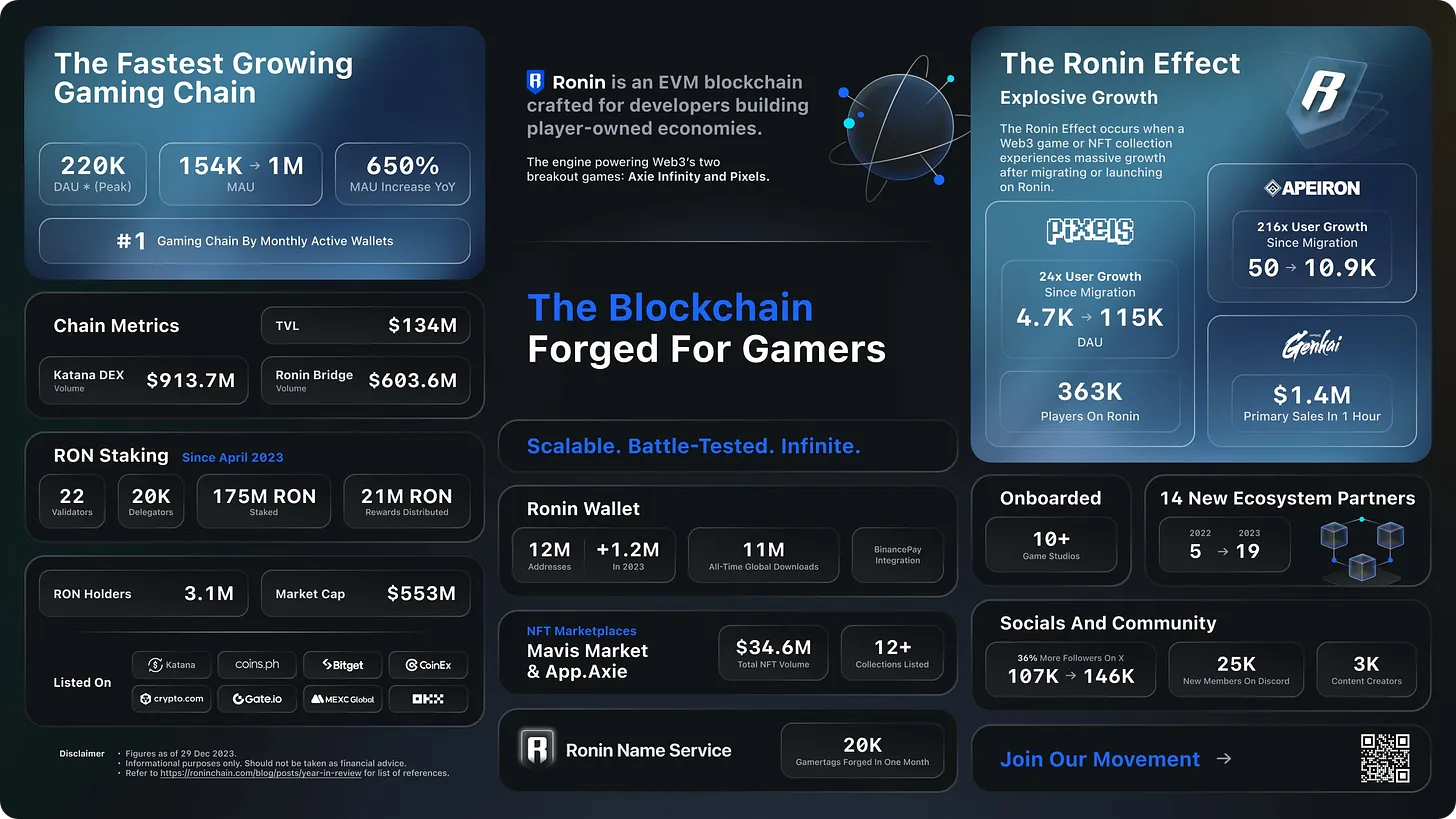
After the Lazarus Group attacked the Ronin Bridge in March 2022, some believed Ronin was finished. However, since then, Ronin has made impressive strides, driven largely by advancements in the Axie Infinity gameplay experience and its increasing role as a destination for non-Axie games.
Progress in Axie
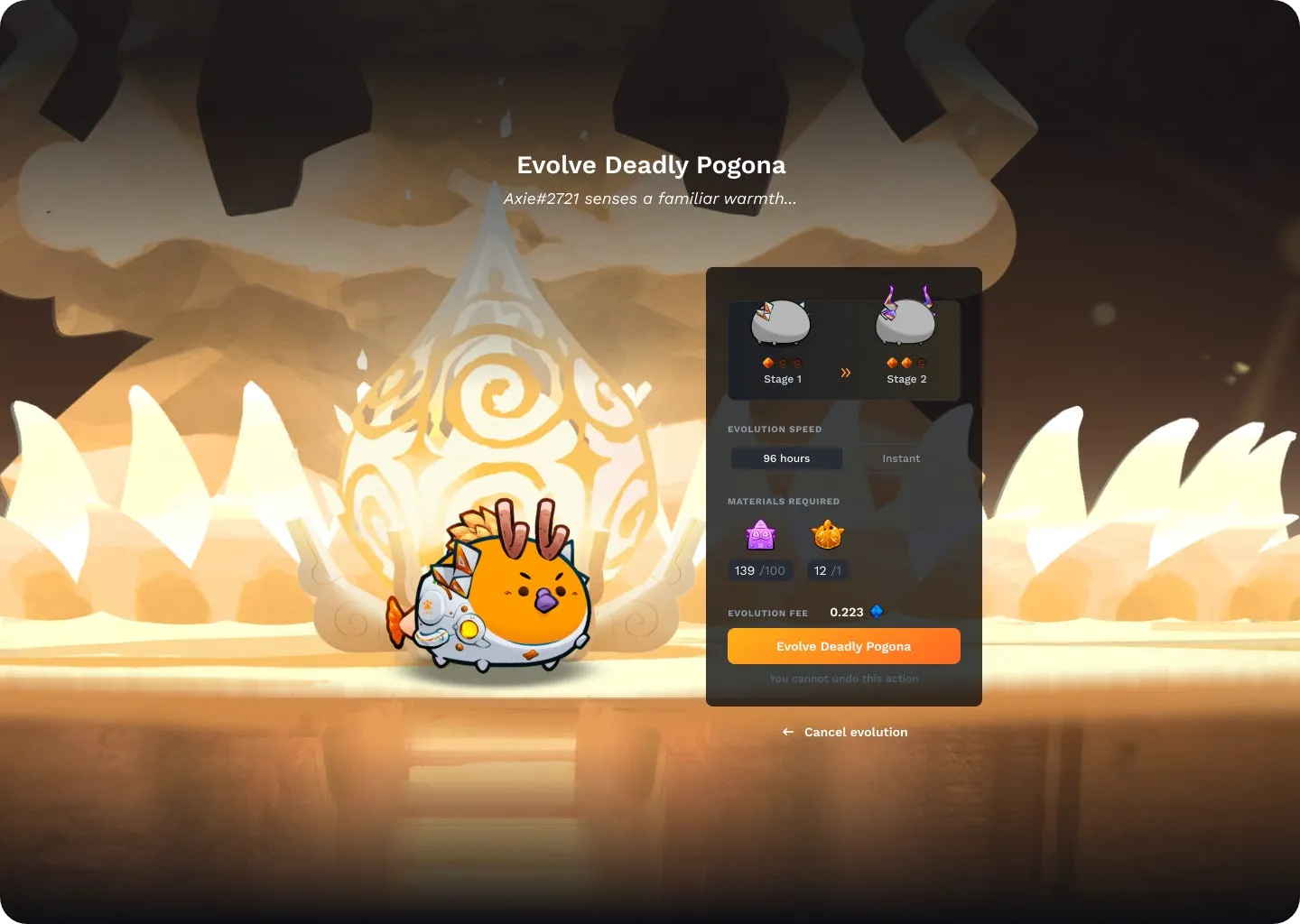
In April 2022, Sky Mavis released Axie Infinity: Origins, a major overhaul introducing new mechanics such as free starter Axies and equippable trinkets.
Since then, Sky Mavis has rolled out Axie Core, the Axie Progression System (AXP), Axie Part upgrades, and many other incremental improvements.
More recently, alternative Axie-based games have entered the ecosystem, including Defenders of Lunacian Land, Homeland, Project T, and Raylights.
Collectively, these developments have deepened and expanded the possibilities around Axie gameplay, offering players a more engaging experience than ever before.
Ronin Becomes a New Gaming Hub
Another key factor behind Ronin’s revival is its emergence as a preferred platform for non-Axie games.
This has created a mutually beneficial flywheel effect: non-Axie games benefit from Ronin’s infrastructure and large, highly engaged player base (the so-called “Ronin Effect”), while Ronin gains more activity and users, becoming an even more attractive hub for crypto gaming.
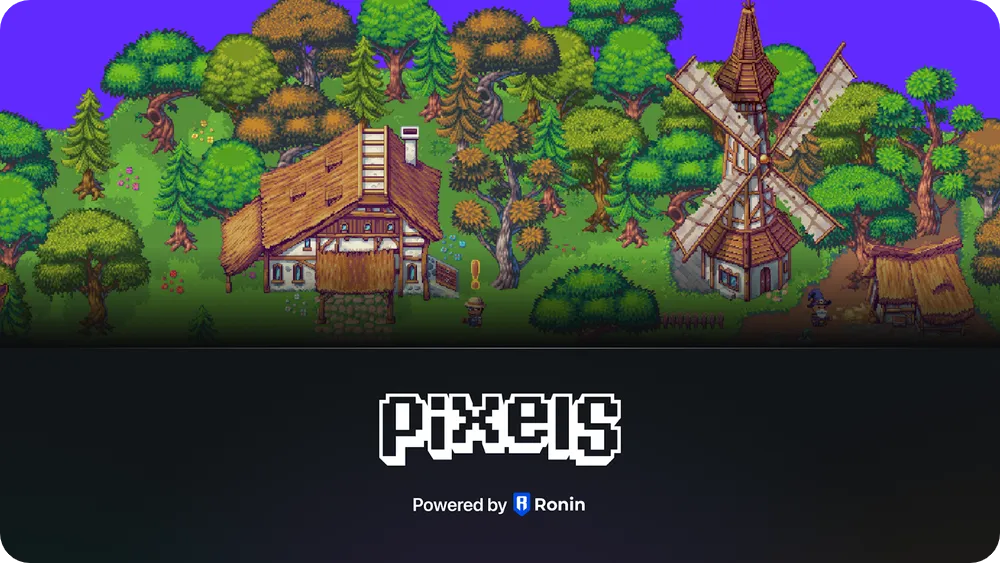
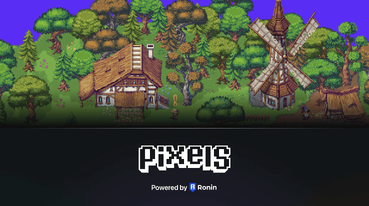
The most compelling example is undoubtedly Pixels. This social farming simulation game migrated from Polygon to Ronin in October 2023, and amid growing anticipation for the planned $PIXEL airdrop, its daily active users have occasionally surged beyond 100,000.
But other games are also making significant progress on Ronin, including recent titles like Apeiron and Zoids Wild Arena. As non-Axie games grow stronger, the diversity of gameplay makes Ronin increasingly appealing to a broader range of gamers.
By the Numbers
These developments fueled Ronin’s resurgence in 2023, bringing its daily active users above the combined totals of Arbitrum, Optimism, and Base. Over the past year, Ronin has grown rapidly:
-
TVL increased by 262% (from $40 million to $145 million)
-
$RON rose by 469% (from $0.32 to $1.82)
-
Daily trading volume grew by 1,370% (from $68,000 to $1 million)
-
Monthly active users increased by 1,450% (from 145,000 to 2.25 million)
The Future of Ronin
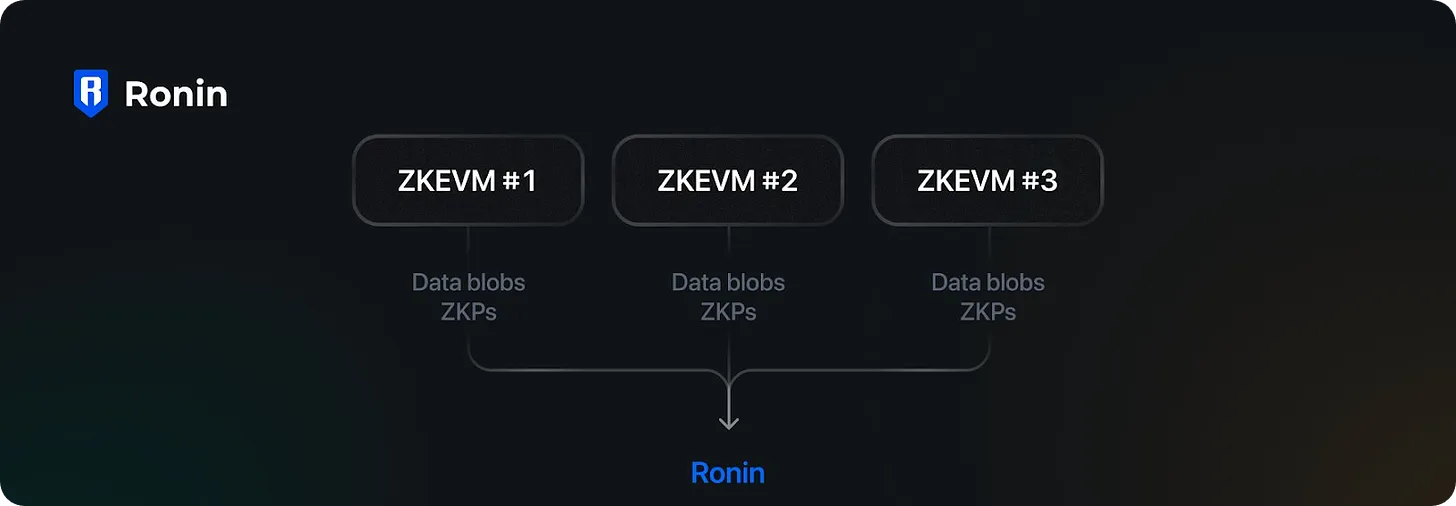
With continued evolution in the Axie Infinity ecosystem and rising interest in non-Axie games, Ronin appears well-positioned for sustained growth in gaming for the foreseeable future.
Now, the key question facing the chain is how it will evolve technically to meet growing demand.
To that end, Ronin Research Director Phuc Thai noted in the article "Solving the Blockchain Trilemma on Ronin" that engineers are currently exploring both monolithic and modular scaling solutions, including parallelized transactions and zkEVM-style zk-rollups.
In short, the Sky Mavis team is already thinking ahead about scalability and taking steps to build the future of Ronin.
Getting Started with Ronin
If you're interested in diving deeper into the current Ronin ecosystem, here are helpful resources:
-
Ronin Wallet: The main wallet for managing Ronin assets
-
Ronin Bridge: Ronin’s native bridge
-
Ronin Block Explorer: A service for analyzing Ronin data
-
Ronin Ecosystem: A database of games and apps on Ronin
-
Ronin Name Service: Domain name service on Ronin
-
Ronin Docs: Official documentation for Ronin
-
Ronin Staking: Dashboard for delegating and staking RON
-
Katana DEX: The most popular decentralized exchange on Ronin
-
Mavis Market: The first general-purpose NFT marketplace on Ronin
-
Mavis Store: A store for in-game Ronin assets
Conclusion
With an expanding variety of games, Ronin stands strong. In my view, Axie Infinity: Origins is a breakout hit—it has users, it has data. It’s doubling down on decentralization and security, having added more validators after transitioning to Delegated Proof-of-Stake (DPoS) last year. Meanwhile, Sky Mavis’s ongoing scaling research underscores its long-term potential.
Thus, Ronin’s comeback is not just an inspiring story—it sets a precedent for how L1s and L2s can specialize and dominate within crypto gaming.
That said, Ronin appears poised to evolve over time into a more comprehensive ecosystem beyond just gaming. Indeed, we’re already seeing signs of this, including the recent CyberKongz Genkai mint (PFPs), the launch of the Ronin Name Service (decentralized IDs), and the arrival of Impossible Finance (GameFi).
Overall, keep a close eye on Ronin in 2024. The chain is riding strong momentum—and shows no signs of slowing down!
Join TechFlow official community to stay tuned
Telegram:https://t.me/TechFlowDaily
X (Twitter):https://x.com/TechFlowPost
X (Twitter) EN:https://x.com/BlockFlow_News
 @MetaversalXP



![In-depth Analysis of Trade[XYZ]: How Were 92 Markets and 98% HIP-3 Trading Volume Established?](https://upload.techflowpost.com/upload/images/20260716/20260716061117965147.jpeg?x-oss-process=image/resize,p_50/quality,q_80)