600 Days After $600 Million Theft, Ronin Makes a Comeback
TechFlow Selected TechFlow Selected
600 Days After $600 Million Theft, Ronin Makes a Comeback
Two years have passed, and Axie Infinity is still alive—and so is Ronin.
 Navigating Web3 tides with focused insights
Author: Joyce, BlockBeats
Editor: Jack, BlockBeats
The long-awaited "bull market return" signal has been echoing through the crypto community for over two months. The blockchain gaming sector is once again capturing investors’ attention. IMX, the token of Immutable X—a gaming chain hosting over a hundred games—has surged nearly 300% in just two months. Meanwhile, Ronin, with a market cap less than one-fifth of Immutable’s, has achieved an even more impressive 340% rise during the same period.
When it comes to Ronin, most people still remember Axie Infinity—the flagship GameFi title that ignited the last bull run. Two years on, both Axie Infinity and Ronin are still alive.
Ronin’s Resurgence
From 2020 to 2021, you could hardly overstate the success of Axie Infinity. With monthly revenues reaching $300 million and daily transaction volumes surpassing even Honor of Kings at times, it gave birth to large gaming guilds like YGG. Axie Infinity’s triumph attracted countless gamers and developers into the Web3 gaming space, shaping today’s GameFi landscape.
But like many hyped projects in crypto, Axie Infinity couldn’t escape the industry’s boom-and-bust cycle. After peaking at 28 million daily active users in November 2021, the game’s bloated asset economy made entry prohibitively expensive for new players. Without fresh blood, internal demand mechanisms and inflation models collapsed. By year-end, as the broader crypto market turned bearish, Axie Infinity spiraled into a “death spiral,” losing nearly 70% of its value—from $10 billion down to $3 billion.
Yet according to data from Nansen, in November alone, Ronin saw over 460,000 active addresses—a 368% month-on-month increase—and led all Ethereum sidechains in growth. Having survived one full market cycle, Ronin remains standing.
$600 Million Heist
For Sky Mavis, the team behind Axie Infinity, this collapse was especially painful—because just months earlier, they had launched their ambitious new venture: the Ronin network.
Ronin is an Ethereum sidechain originally built specifically for the Axie Infinity community. Between 2020 and 2021, surging player numbers exposed limitations of Ethereum’s slow settlement speeds and high gas fees. Sky Mavis urgently needed a reliable, fast, and low-cost network to support Axie’s continued growth. When Loom Network decided to stop building custom Layer 2 solutions for consumer-facing apps, Sky Mavis took matters into its own hands and developed Ronin independently.
With its own application-specific chain, Sky Mavis could tailor the network’s features directly to the needs of the game and its community. Axie no longer had to compete with DeFi protocols for blockspace or pay exorbitant gas fees. Beyond faster speeds and lower costs, Ronin also introduced a native DEX and wallet, allowing players to trade within the ecosystem without leaving. Launched in February 2021, Ronin hit over 1 million daily active addresses by November of that year.
One of the most appealing new features was staking economics tied to the Ronin network. A dedicated AXS staking pool allowed users to earn rewards by locking up AXS tokens. Within six months of launch, more than 20 million AXS were staked—nearly 30% of the circulating supply.
Despite these achievements proving Sky Mavis right about games needing dedicated chains, by late 2021, Ronin couldn't reverse Axie Infinity’s decline amid the broader crypto bear market. Things worsened dramatically with a major hack early the following year.
In March 2022, Ronin’s cross-chain bridge was compromised, resulting in the theft of 173,600 ETH and 25.5 million USDC—worth approximately $600 million at the time. In the days following the attack, the community watched helplessly as hackers moved and cashed out the stolen assets, while the team appeared powerless to respond.
Two weeks later, Sky Mavis announced a $150 million funding round led by Binance, with participation from Animoca Brands and a16z. The plan was to use these funds, along with existing reserves, to fully reimburse affected users. However, reports later revealed that Sky Mavis only managed to raise $11 million from the round. Binance reportedly pulled out shortly after leading the investment, stating publicly that Sky Mavis had demonstrated stable revenue recovery since April and no longer required external capital to cover losses.
“$600 million stolen”—this became the final memory of Ronin and Sky Mavis before fading from public view.
Closing the Barn Door
Binance’s withdrawal was seen as a sign of lost confidence. Sky Mavis’ valuation dropped from $3 billion to $1.9 billion. Under the shadow of serious security concerns, RON’s price fell further, and network TVL halved within a month. In chasing speed and cost efficiency, Sky Mavis had ultimately fallen victim to crypto’s “impossible triangle.”
But Ronin didn’t die. To regain community trust, Sky Mavis began strengthening the network’s security immediately after the breach.
In April 2022, Ronin added five new validator nodes: Nansen, Delphi Digital, Stable Node, Animoca Brands, and Dialectic. Animoca Brands had backed Axie Infinity early and remained a steadfast supporter of Ronin.
Just two days after the hack, news emerged that Animoca and Sky Mavis were already discussing compensation plans. Animoca also participated in the $150 million financing round led by Binance and issued a public statement in support: “We firmly believe that the kingdom of Axie Infinity will not only endure but thrive.”
In July 2022, Ronin added four more validators—all early supporters of Axie Infinity. Among them was Web3 gaming guild YGG, whose DAO owns over 26,000 Axies and 235 plots of Axie Land. YGG founder Gabby Dizon met Sky Mavis co-founder Jihoz back in 2018. He founded YGG in 2020, and by March 2022, among its 27,000 scholars across Southeast Asia, India, and Latin America, 20,000 were playing Axie Infinity.
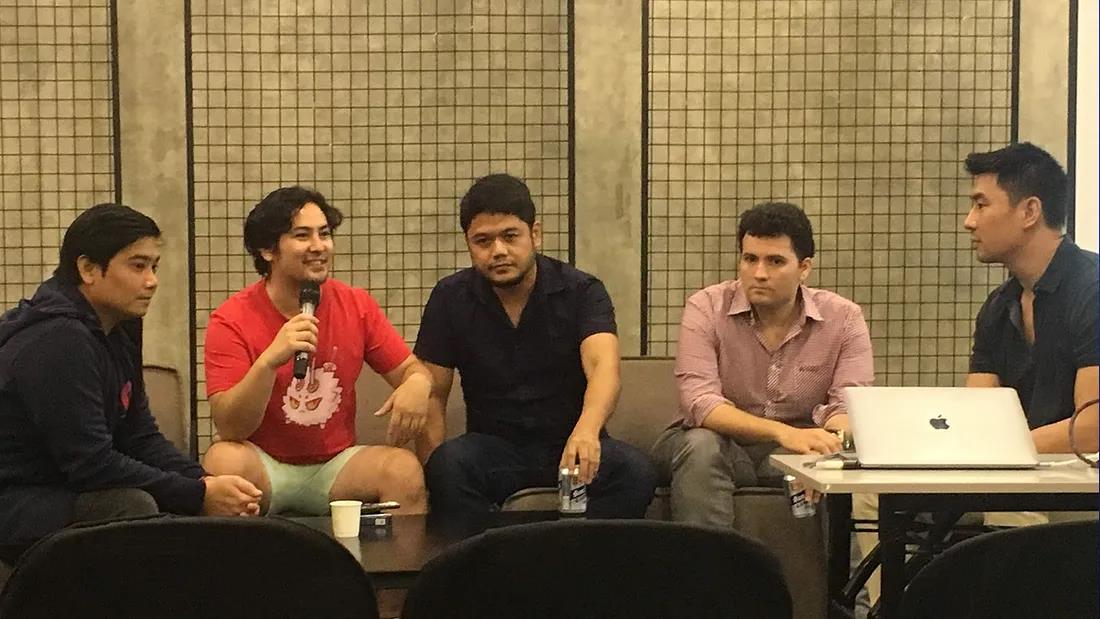
Second from left: Sky Mavis co-founder Jihoz; third from left: YGG co-founder Gabby Dizon
Six months after the hack, at the end of September 2022, Ronin announced Google Cloud as its 18th validator node. Google Cloud brings deep technical expertise in blockchain infrastructure and validator operations, having served as Sky Mavis’ strategic cloud provider since 2020. As Ruma Balasubramanian, a Google executive, put it: “Sky Mavis exemplifies how cloud technology can enable innovation and value creation on blockchains for individuals.”
In March 2023, an upgrade to DPoS (Delegated Proof-of-Stake) marked a milestone in Ronin’s enhanced security framework. Transitioning from PoA (Proof-of-Authority), RON holders can now delegate their stake to selected validators who verify transactions, produce blocks, and earn rewards. Delegators share in those rewards. According to Ronin, anyone holding 250,000 RON can become a validator and generate blocks. Currently, Ronin operates with 22 validator nodes.
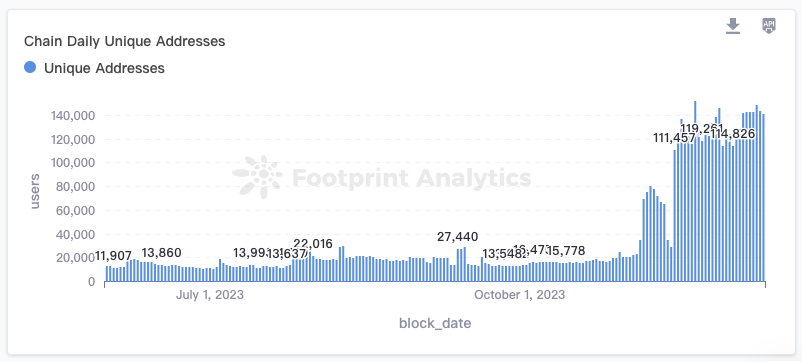
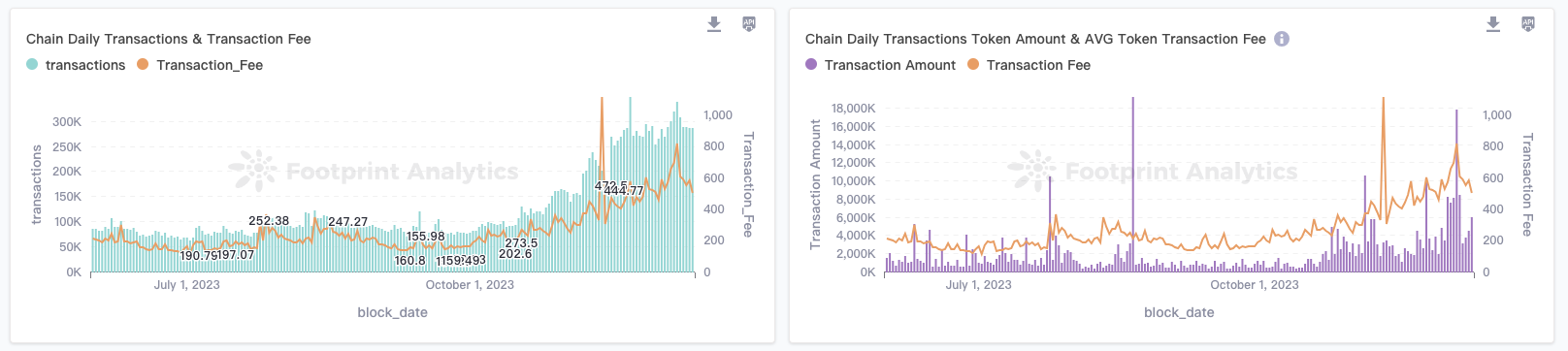
Many may have first noticed Ronin again when its founder Jihoz announced in November this year that Pixels—a blockchain game on Ronin—had surpassed 100,000 daily active addresses. Since then, Ronin’s transaction volume has quadrupled over the past three months, with daily active addresses growing from under 20,000 in early October to nearly 150,000 today.
More Than Just Fans
In March this year, Ronin onboarded a wave of game studios including Directive Games and Tribes Studio. Why join Ronin? For Web3 game developers, the answer is simple. Game development is hard—it demands significant time, capital, trial, and error. In the Web3 gaming world, Sky Mavis has become a role model and spiritual leader for many teams. Their passion, persistence, professionalism, and deep understanding of gaming remain key factors attracting top-tier Web3 game developers to Ronin.
From Axie to Ronin
Sky Mavis founders Aleksander Larsen and Nguyễn Thành Trung met in the community of OG blockchain game CryptoKitties. At the time, Larsen was a forum moderator, and Trung admired his contributions, inviting him to co-create what would become Axies—an initial NFT series.
The Axies NFT collection presold in 2018 and attracted early fans—one of whom was Jihoz Zirlin. Jihoz had already known Larsen from the CryptoKitties community. So Larsen suggested Trung hire Jihoz: “This guy is super enthusiastic—he talks to everyone. Perfect for community management.” Two months later, Jihoz joined Sky Mavis.
In October 2018, Sky Mavis launched the first version of Axie Infinity. Rapid user growth and wealth effects masked deep underlying risks. Reflecting on that period in an interview, Larsen said: “We didn’t expect it to grow so big, so fast. We realized we could easily lose control of the narrative.”
After the hype faded, Sky Mavis was left with hundreds of millions in revenue and an unfinished story. The future of Ronin came into focus: what started as an experiment for Axie Infinity evolved into a vision—“Since we’re building our own chain, why not use it to serve the entire Web3 gaming ecosystem?”
In late 2021, Sky Mavis began developing Origins, a new version of Axie Infinity offering starter packs with three free non-NFT Axies, shifting the game’s focus from “Play to Earn” to “Play and Own.” Thanks to strong community backing from the Classic era, Origins sustained Axie’s relevance over the past year.
On September 6, 2023, Yield Guild Games concluded the first Axie Infinity Superquests event on Ronin. Originally targeting 2,000 participants, it drew 4,322 entrants. Additionally, 1,023 participants earned in-game rewards and soulbound achievements on Ronin. All signs indicate that Axie Infinity’s player base remains active. Transaction volume rose 144% over the past month to nearly $90 million, and UAW grew by 92.3%.
In September 2022—a bleak month for TVL and token price—Ronin hosted AxieCon in Barcelona: a meticulously planned, three-day event drawing over 2,000 attendees. It was a bold attempt to send positive signals outward. Attendees heard diverse talks covering multiple topics, delivered by members of Sky Mavis and the wider community.
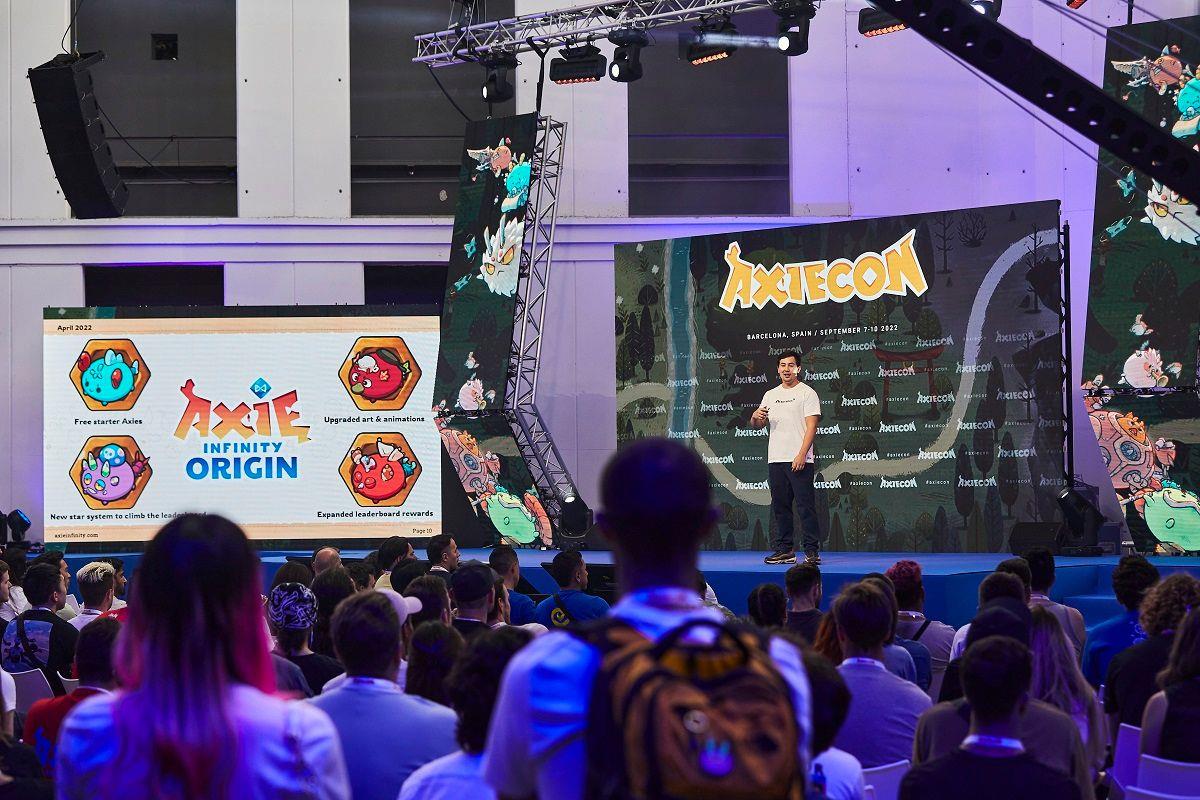
From Ronin’s founders and Axie Infinity developers to gaming guilds like YGG and Sura Gaming, and investors like a16z, stakeholders gathered to discuss Sky Mavis’ mission, vision, and Ronin’s product roadmap. Sky Mavis described AxieCon as “an opportunity to meet allies—past, present, and future—within our community.”
As Jihoz explained, Ronin is actively building battle-tested scaling solutions and exploring various zero-knowledge technologies to boost transaction throughput and minimize interaction costs for developers and players alike. Beyond tech, Sky Mavis co-founder Aleksander shared criteria for ideal game studios: experienced founding teams, mobile-first products, no pre-launch token issuance, and a growth mindset.
A Mutual Ecosystem
In March this year, Sky Mavis officially “launched” Ronin to the outside world at GDC (Game Developers Conference) in Los Angeles, unveiling Ronin’s signature proposition: “We hope other game studios can leverage everything we’ve built for Axie Infinity.” Deep game insight and operational expertise form Ronin’s competitive edge over other Web3 gaming platforms.
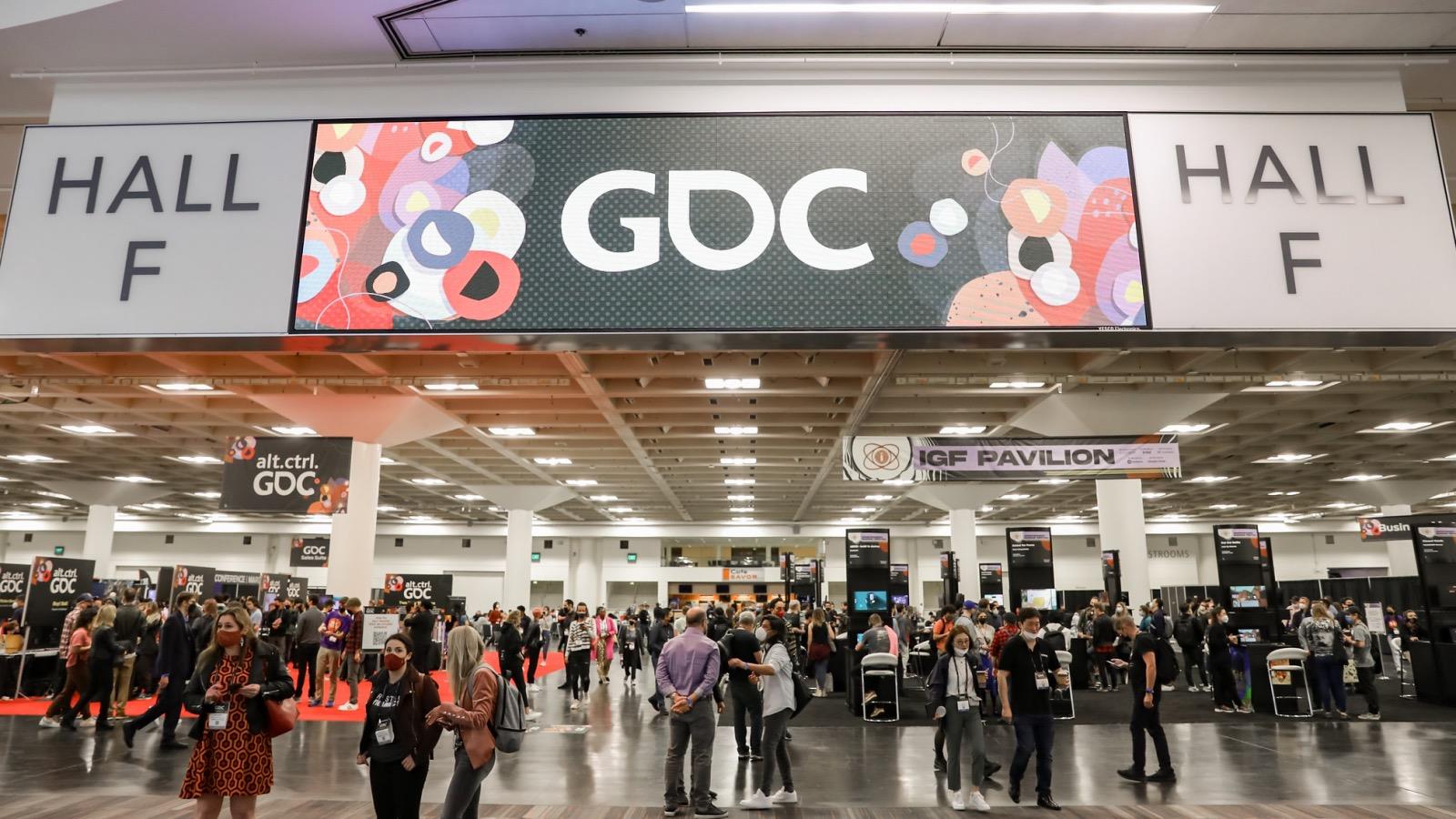
GDC 2023 in Los Angeles
Game studios are buying in. During 2022, Ronin spoke with over 200 game studios. As Kathleen Osgood noted in an interview: “Our strategy isn’t about getting more people onto Ronin, but finding the right partners to build a new paradigm for Web3 games.” Ultimately, Ronin selected six.
Tribes Studio, focused on immersive social MMOs, first connected with Ronin in July 2022 when CEO Glenn McGuire reached out to Kathleen Osgood, Sky Mavis’ business director.
Founded by a former executive from King and Scopely, Tribes plans to launch a community-driven platform before releasing its MMO, leveraging collective input to shape development—a philosophy closely aligned with Ronin’s emphasis on community. Over the next few months, Tribes evaluated several potential partners. After assessing technical stacks, community culture, and collaboration models, Tribes chose Ronin at GDC. Immediately after partnering, Tribes received comprehensive support from Ronin—from technical guidance to marketing strategy.
South Korean studio Anipang’s Bali Games previously developed and operated well-known IPs such as Disney Pop and Snoopy Puzzle, achieving over $1.8 billion in revenue and 130 million downloads. In partnering with Ronin, Bali Games values Axie Infinity’s IP strength and aims to bring the franchise to the Korean market—a perfect match for Ronin, which has established itself in Southeast Asia and seeks geographic expansion. Ronin has customized a market strategy for Bali Games: “So they won’t repeat our mistakes.”
Directive Games was among the first five studios to join Ronin. They’re launching a shooter game called The Machines Arena. Kent Byers, Chief Product Officer, expressed deep respect for the Sky Mavis team in an interview.
To other developers, Axie Infinity’s explosive rise was unexpected. It brought massive new users into Web3 and thrust Sky Mavis into the spotlight. Then came setbacks and skepticism. But under pressure, Sky Mavis never gave up—they kept building. This unwavering passion and dedication continue to inspire other game teams.
Moreover, Ronin’s continuous evolution owes much to its loyal community. While Axie Infinity’s crash is undeniable, it did cultivate a devoted following—gamers tolerant enough to believe in and support the team. This resilient relationship attracts developers too. “Being consistently loved by players” is every game’s ultimate goal.
Beyond sincerity, Ronin offers real professionalism. Developing a game from concept to release typically takes years. Compared to general-purpose legacy blockchains, collaborating with a gaming-focused chain like Ronin feels more direct and transparent. As Kent Byers said, Directive Games had ongoing conversations with Ronin long before formal partnership. Initially, Ronin raised many tough questions about their game. “As dialogue increased, we found common ground. Eventually, we earned their approval.”
“Ronin feels like a great home for us—we want to be part of it.” In March 2023, Directive Games and Ronin sealed their partnership at GDC in Los Angeles.
The Ronin Effect
With the arrival of its first wave of game studios, Ronin has matured beyond being just the “Axie Infinity chain” into a broader infrastructure layer for blockchain gaming. Now, it’s beginning to reap the rewards. Footprint data shows Ronin nearing 150,000 daily active addresses—a tenfold increase over two months—and breaking 300,000 daily transactions, a new annual high.
Pixels of Success
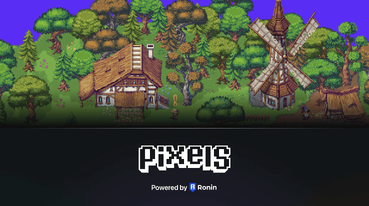
At the end of October, Pixels—a metaverse blockchain game formerly on Polygon—officially migrated to Ronin. Prior to migration, Pixels already boasted over 1.5 million monthly transactions and more than 5,000 daily active users, making it Polygon’s most popular Web3 game.
Pixels founder Luke Barwikowski tweeted: “Migrating to Ronin Network isn’t just about user acquisition. Sky Mavis is the only team in Web3 that has truly navigated and solved many of the economic and scalability pitfalls faced by Web3 games. That guidance is priceless.”
The impact was immediate: one month after moving to Ronin, Pixels’ daily active users fluctuated around 100,000—20 times higher than on Polygon. According to OpenSea, the floor price of Pixels Farm Land NFTs surged 600% over two months.
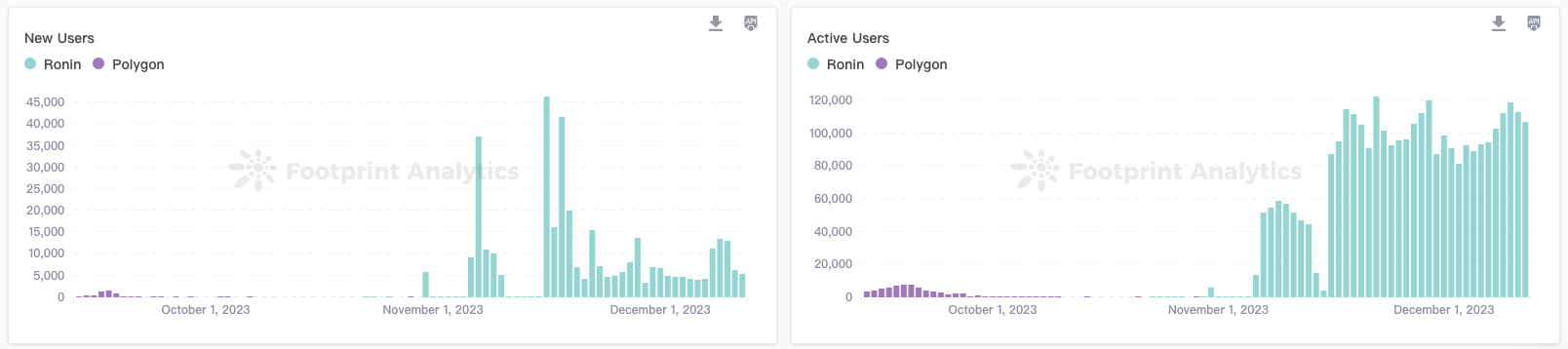
Left: New players joining Pixels; Right: Daily active players of Pixels
Purple: Polygon; Green: Ronin
From wallet payments to token trading, the improved player experience clearly reflects the effectiveness of Ronin’s upgraded infrastructure.
First, wallets: Players can use the Ronin Wallet as a Chrome extension, purchasing in-game tokens directly with fiat currency. The mobile version of Ronin Wallet was launched back in 2021. On December 2 this year, integration with Binance Pay enabled users to deposit directly via Binance on the mobile app—no need to scan QR codes or copy wallet addresses.
Recognizing gamers’ need for liquidity, Ronin launched Katana, its DEX platform, in 2021. At Axie Infinity’s peak, Katana’s TVL exceeded $1 billion. This year, a new staking incentive program launched in January drove RON’s price up over 300% in one month, pushing Ronin’s TVL from $40 million to $77 million. Both SLP and AXS, Axie’s in-game tokens, nearly doubled in value.
Additionally, in May, Ronin launched its first NFT marketplace: Mavis Market. Cyberkongz Genkai, an NFT collection by OWL—the founder of YGG—became the first minting project on Mavis Market. All 3,000 NFTs, priced at 0.25 ETH each, sold out in under an hour. During minting, Ronin processed 1,500 successful transactions in three minutes, and daily active addresses nearly doubled within three days.
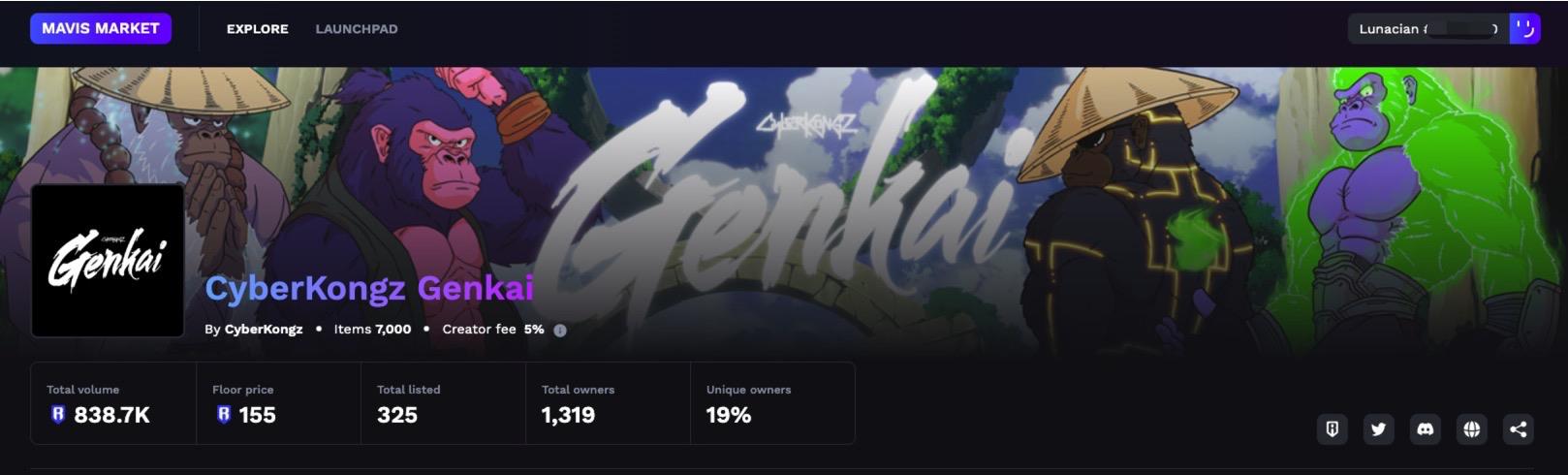
Ronin shared this success in a newsletter, declaring: “Ronin is the best place to launch game-centric NFT collections.” The successful Genkai mint signifies Ronin opening its doors beyond Axie Infinity to broader Web3-native communities.
After going live on Ronin, Pixels opened minting for Pixels Pets NFTs, simultaneously listed on Mavis Market. The RON/BERRY trading pair is now available on Katana. As of December 12, BERRY has over 100,000 holders.
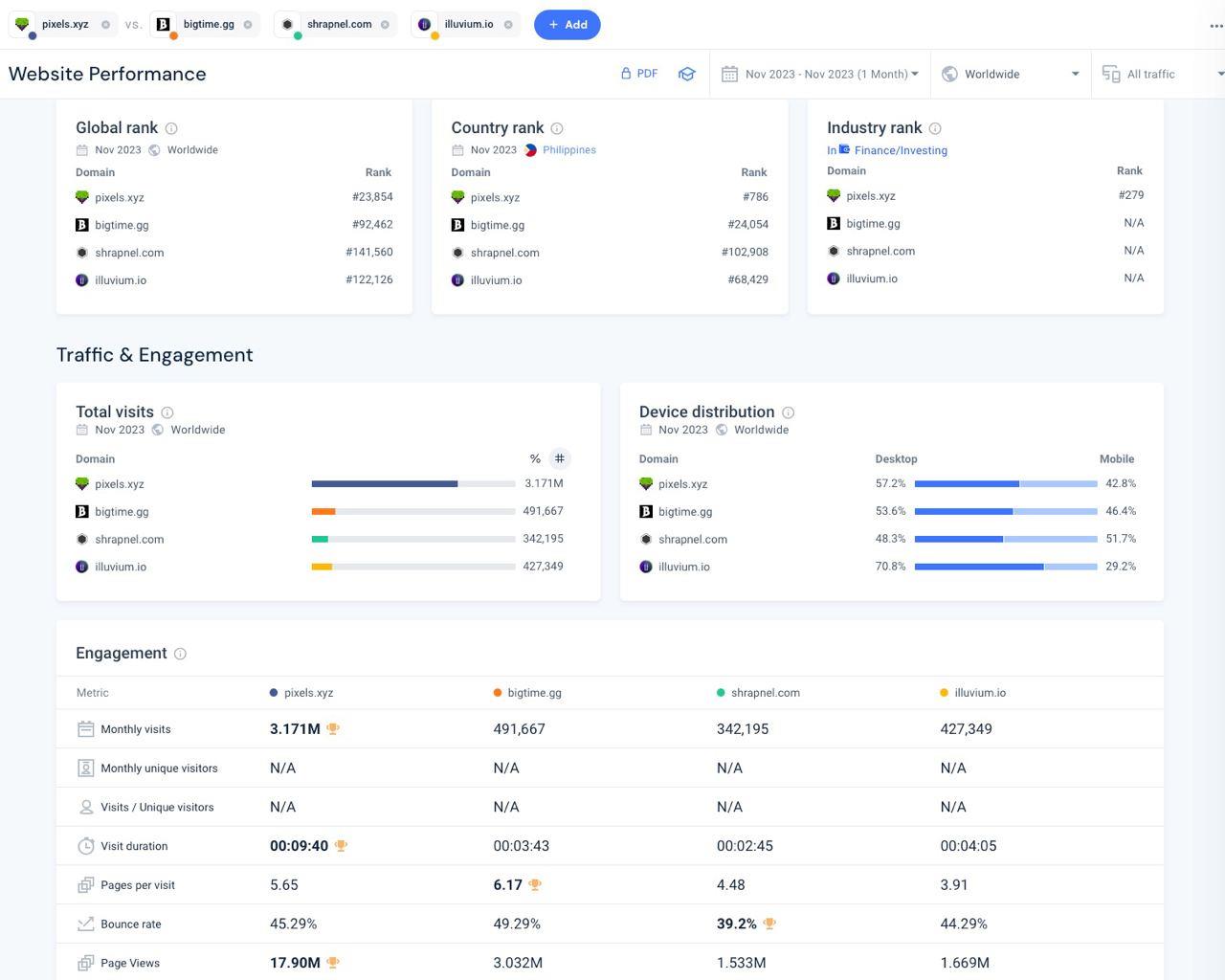
Data shows that in November, Pixels led all blockchain games in traffic growth, recording over 3 million visits—far exceeding contemporaries like Big Time and Shrapnel, which each saw fewer than 500,000. Of Pixels’ players, 51% come from Indonesia and the Philippines—the core stronghold of both Ronin and Axie Infinity.
Amplification Matrix
Kathleen Osgood, Sky Mavis’ Head of Business Development, mentioned in an interview that Ronin possesses vast community capital. When promoting ecosystem games to wider Web3 audiences, the team employs a strategic approach—leveraging this community power to attract users. “Sky Mavis has over 2,500 creators passionate about sharing Ronin’s community culture. Today, Ronin offers a full suite: a community, a growth stack, and all necessary tools and platforms.”
Drawing on over three years of Axie Infinity community management, Ronin has refined a systematic game promotion playbook. Axie Infinity maintains a dedicated column for game updates—publishing six articles in November alone. Whenever new features or seasons launch, YouTubers in the Axie community promptly release guides and analyses, enabling players to stay informed directly through community channels. This open flow helps retain veteran players and reduce churn.
Twitter buzzes with activity too. Individual players post gameplay highlights, fan art, and personal content—like recent community-wide check-ins featuring Axie Infinity’s newly released Axie model. Beyond solo contributors, guilds and KOLs regularly host season events and livestreams, keeping engagement high. The official Axie Infinity account actively participates as well. A telling detail: founder Jihoz follows thousands of passionate players—even those with under 1,000 followers.
After Pixels surpassed 100,000 DAU, founder Luke said in an interview: “We didn’t make major changes after migrating to Ronin, so the initial surge in new users is almost entirely attributable to Ronin.”
The community strength built during Axie Infinity’s heyday gives Ronin a massive player base. At the time of writing, Axie Infinity’s Discord server has 610,000 members, with nearly 40,000 online—compared to around 30,000 online in Big Time’s Discord, despite Big Time’s recent popularity spike. Given the differing levels of community attention, it’s clear Axie Infinity has cultivated lasting loyalty.
Thanks to Ronin’s consistent nurturing, many players naturally transition into content creators contributing to the ecosystem. On social media, numerous Axie Infinity community members have formed a promotional matrix for Pixels.
YouTuber Elijah MT8 has been posting Axie Infinity videos since January 2021. Over two years, he’s published over 200 videos focused solely on Axie, amassing more than 130,000 subscribers. His bio identifies him as an “Axie Infinity Top 10 player.” Since November, his content has expanded to include Pixels—covering beginner guides, advanced strategies, and the recent guild system update. Creators like Elijah MT8 are abundant across YouTube and Twitter, many of whom have recently begun promoting Pixels.
Tribally, a Web3 gaming social platform founded in 2021, operates Axie.tech—the official community partner site for Axie Infinity. On October 23 this year, Tribally announced a partnership with Pixels. Shortly after, Axie.tech launched a “Pixels party” on Twitter—an in-game gathering for Axie community members. It was the first time a non-Axie game appeared in Axie.tech’s feed.
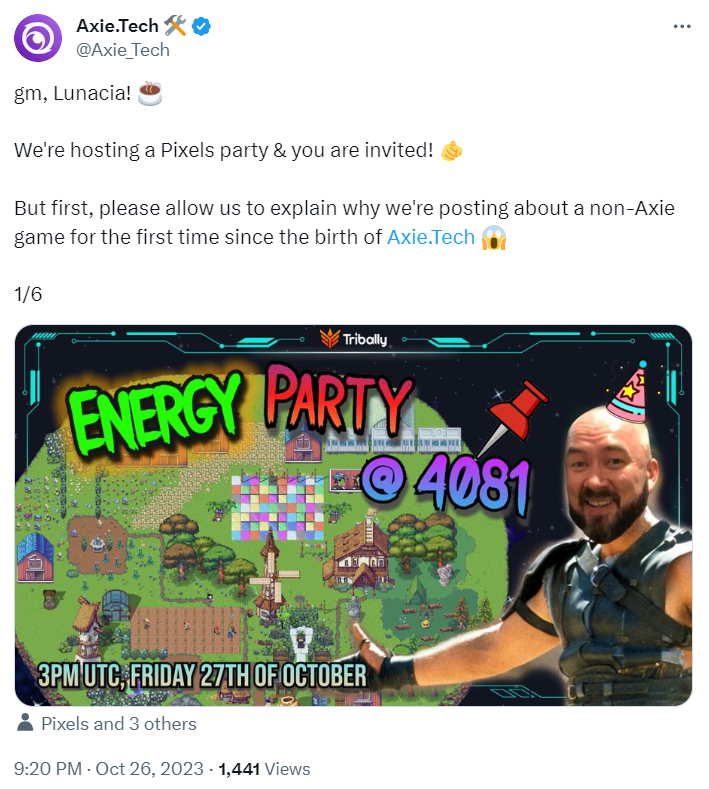
These actions happened within a week of Pixels’ official move to Ronin. On November 26, the Axie community hosted a “Pixels x Axie Art Challenge,” where players created fusion artworks for prizes.
Using Axie’s community resources to boost Pixels has become a shared effort—from players to game teams. Jihoz, co-founder of Ronin and head of growth, is also a co-founder of Axie Infinity. He has repeatedly highlighted Pixels on Twitter, sharing growth metrics and even saying, “Pixels feels like Axie Infinity.” In response, Pixels paid homage: players discovered an NPC named “Jihoz” on the game map. The easter egg was warmly received: “Simple idea—but cool.”
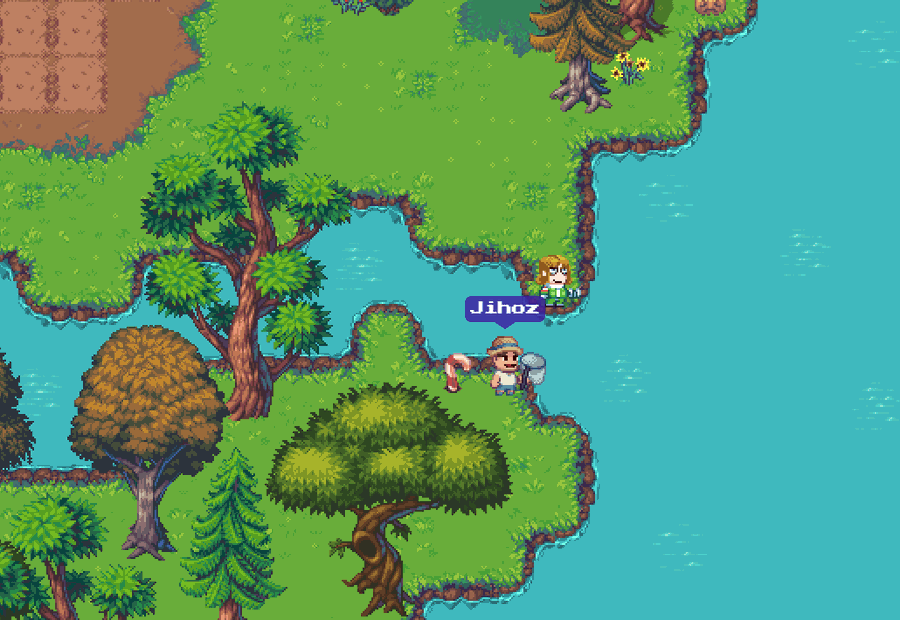
Ronin views its synergy with Pixels as a showcase to the community. They call this momentum the “Ronin Effect.” Four years of building and operating Axie remain the foundation of confidence in Ronin’s Web3 gaming ecosystem. “We know how to connect games with their first superfans. We did it with Axie—and again with Pixels.xyz.”
After a month of rapid growth, Pixels’ founder offered a new vision: “Axie proved Web3 games can reach 1 million DAU—the real challenge is hitting 10 million DAU. That’s a different scale, requiring penetration into untapped audiences.” Whether Ronin can achieve such breakthroughs remains to be seen. But one thing is certain: more games are being drawn into the Ronin ecosystem.
On November 8, Zoids Wild Arena—a PC-based TCG originally launched on Polygon—migrated to Ronin. Its developer, South Korean studio ACT Games, plans to move all its games to Ronin next year. Axie Infinity’s official Twitter account retweeted the announcement.
On December 5, Sky Mavis announced a partnership with Singapore-based Foonie Magus. Their card-battling blockchain game Apeiron will migrate to Ronin, and its NFT collection will debut on Mavis Market. Foonie Magus CEO Frank Cheng cited Ronin’s “game-centric vision and steadfast support for selected projects,” adding: “Sky Mavis deeply understands the needs of on-chain game developers.”
One week after announcing Apeiron’s migration to Ronin, its UAW showed clear improvement.
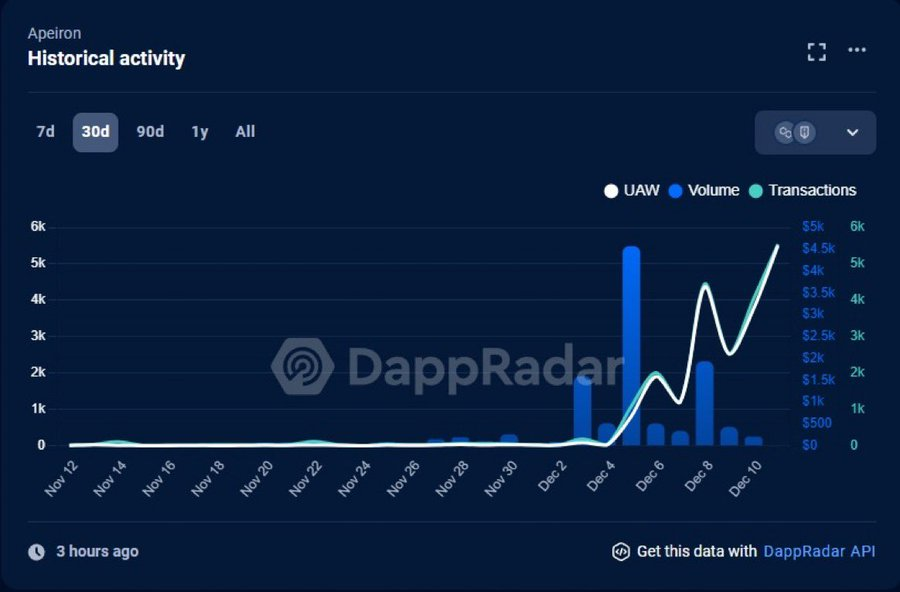
Moreover, there are rumors that The Sandbox—the popular sandbox blockchain game with a market cap higher than Axie Infinity—may soon migrate to Ronin. Community members noticed that a wallet address associated with Seb.ron deployed SAND tokens on the Ronin testnet and conducted multiple transfers. The Sandbox hasn’t directly commented, though CEO Sebastian Borget tweeted on the 12th about a viral statue model from Axie Infinity, captioning: “Say hello to the limited edition Axie Infinity mystery statue—the newest addition to The Sandbox Paris office collection.”
New Cycle, New Vision
On December 6, DeFi protocol Impossible Finance announced it will deploy its Launchpad on Ronin, enabling game studios on Ronin to launch their own ERC-20 tokens. Liquidity for RON and AXS is likely to become tightly coupled with future game tokens on Ronin. Additionally, Ronin’s recent integration with Binance Pay aims to deepen liquidity for AXS and SLP.
For Ronin, relying solely on Axie’s legacy isn’t enough to sustain a compelling Web3 gaming ecosystem. From infrastructure development and community events to deploying a Launchpad, Ronin is striving to become a full-stack Web3 gaming chain. Yet it faces seasoned, better-resourced competitors. Immutable X—the first NFT+gaming-focused L2 on Ethereum—boasts robust infrastructure, with over 200 Web3 games slated to launch on it in 2024. Treasure DAO on Arbitrum and gaming-dedicated chain Oasys are also enhancing their developer ecosystems, attracting notable studios.
Admittedly, Ronin’s recent performance gains owe much to the overall revival of the blockchain gaming sector. How much momentum comes from Ronin itself remains unclear. For now, Ronin’s appeal lies largely in its narrative: it birthed the original GameFi flagship, reimbursed all users after a $600 million hack, and survived into a second bull cycle.
Investors care most about the appreciation potential Ronin brings to its ecosystem assets. Currently, Ronin’s TVL is four times that of Immutable X, and its on-chain transaction volume far exceeds it—yet its market cap stands at just one-fifth of Immutable X’s. Short-term, Ronin’s momentum appears sustainable. But how far this story can carry it in fierce competition remains uncertain. Will the next Axie Infinity or Pixels emerge on Ronin?
Join TechFlow official community to stay tuned
Telegram:https://t.me/TechFlowDaily
X (Twitter):https://x.com/TechFlowPost
X (Twitter) EN:https://x.com/BlockFlow_News
 BlockBeats



![In-depth Analysis of Trade[XYZ]: How Were 92 Markets and 98% HIP-3 Trading Volume Established?](https://upload.techflowpost.com/upload/images/20260716/20260716061117965147.jpeg?x-oss-process=image/resize,p_50/quality,q_80)