Will ETFs enhance Bitcoin's liquidity?
TechFlow Selected TechFlow Selected
Will ETFs enhance Bitcoin's liquidity?
Large-scale ETF redemptions could exert selling pressure on the underlying markets.
 Navigating Web3 tides with focused insights
Authors: Dessislava Aubert, Clara Medalie
Translation: Block unicorn
Since the collapse of FTX, we have been closely monitoring liquidity in the cryptocurrency market. To be blunt: both trading volume and order book depth across all assets and exchanges have generally declined, and even the recent market rebound has failed to restore depth or volume to pre-FTX levels.
However, with hopes of spot exchange-traded fund (ETF) approval possibly arriving in January, there is potential for liquidity to truly recover soon (albeit with some downside risks). This could happen in two ways:
1. Liquidity transfer through trading
2. Liquidity transfer through market makers (MM)
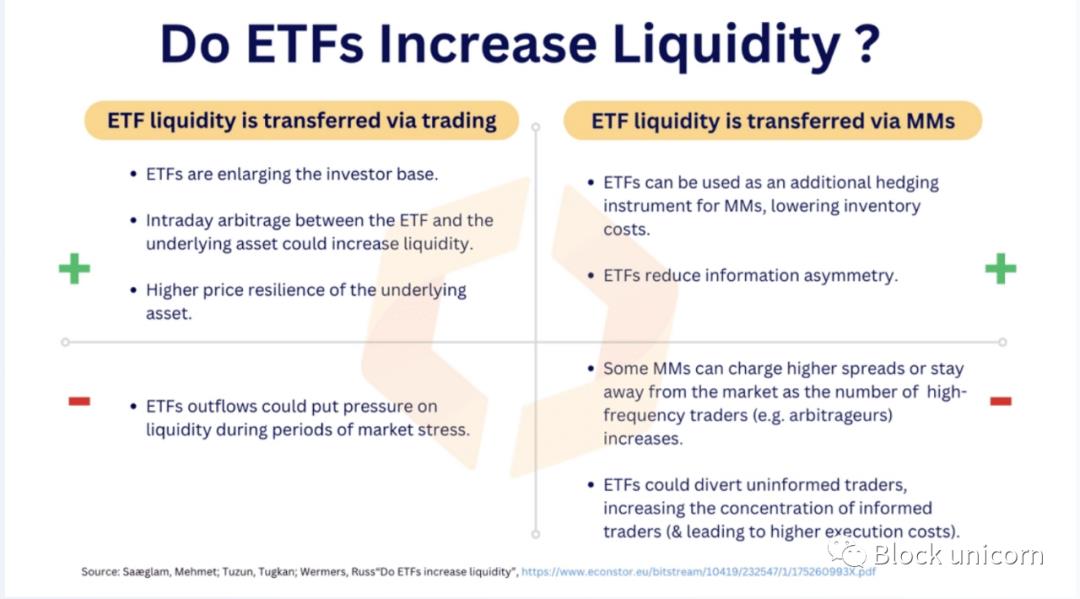
On the side arguing "ETFs will boost liquidity," there are compelling arguments that ETFs will expand the number of crypto traders, leading to higher trading volumes and more efficient markets. Market makers will also benefit from ETFs as a hedging tool and may broaden their operations.
On the other hand, concerns exist that "ETFs could harm liquidity," particularly around the risk that large-scale ETF redemptions might exert downward pressure on the underlying market. For market makers, increased participation by informed traders could lead them to charge wider spreads. Let’s examine the current state of Bitcoin liquidity to better understand these impacts.
Bitcoin Order Book
The collapse of FTX led to a sharp decline in Bitcoin market depth—not only because the sudden disappearance of FTX itself removed substantial liquidity, but also because market makers closed positions across many exchanges due to significant losses and difficult market conditions. The 1% market depth, which measures the total buy and sell quantities within 1% of the price across all exchanges and trading pairs, has dropped from approximately $58 billion to just about $23 billion.
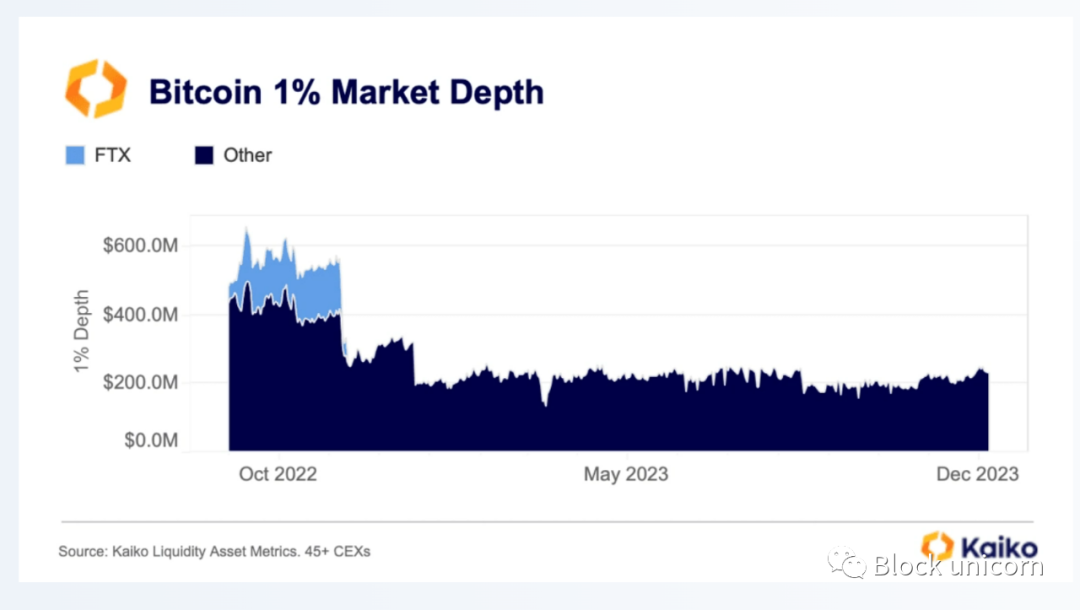
The recent market rally has had minimal impact on liquidity; any slight increase observed is primarily due to price effects.
Why does market depth matter in the context of ETFs? ETF issuers will need to buy and sell the underlying assets. While it remains unclear where they will conduct these trades—on spot exchanges, over-the-counter, or directly from miners—it's likely that at some point, liquidity on centralized spot exchanges will increase, especially if multiple ETFs receive approval simultaneously.
Liquidity is also crucial from an arbitrage perspective. ETF prices will need to track the underlying asset, achieved by buying or selling when premiums or discounts emerge. In illiquid markets, arbitrage becomes more complex due to frequent price misalignments, making liquidity vital for market efficiency.
Cryptocurrency exchanges available in the U.S. could play a key role in spot ETFs, currently accounting for about 45% of global Bitcoin market depth.
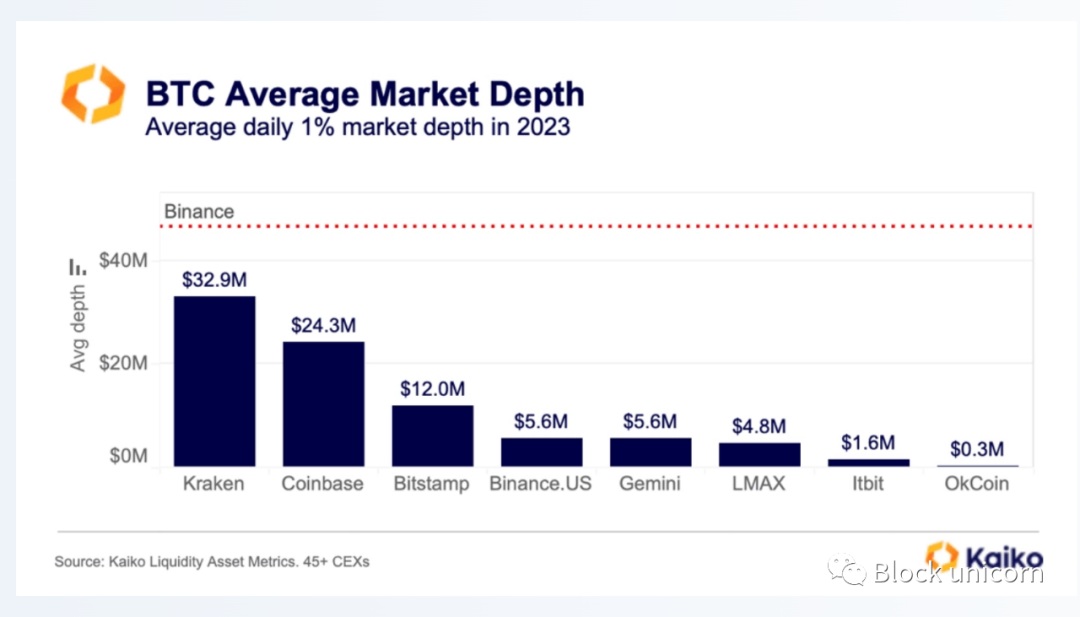
In 2023, Kraken had the deepest average Bitcoin order book at $32.9 million, followed by Coinbase at $24.3 million. For context, Binance’s average daily market depth is shown in red.
ETF approval could also affect trading costs as more informed investors enter the Bitcoin market. Over the past year, trader costs, measured by bid-ask spreads, have mostly improved, likely due to lower price volatility.
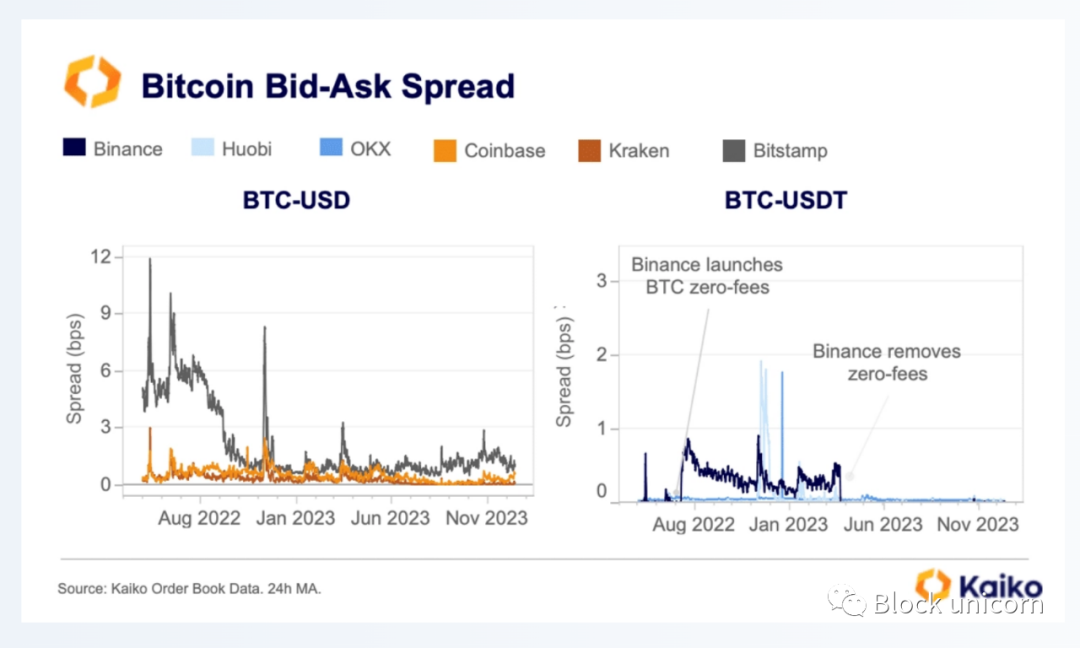
To summarize, Bitcoin market depth has remained relatively stable over time (indicating no change in liquidity), while spreads have generally narrowed (lowering trading costs). However, ETF approval could shift this dynamic.
Bitcoin Trading Volume
Compared to market depth, FTX’s impact on trading volume was much smaller, representing less than 7% of global volume. Since November last year, trading volume has experienced considerable fluctuations. During the first quarter of 2023, volume remained high, then plummeted after the March banking crisis, reaching multi-year lows in the summer.
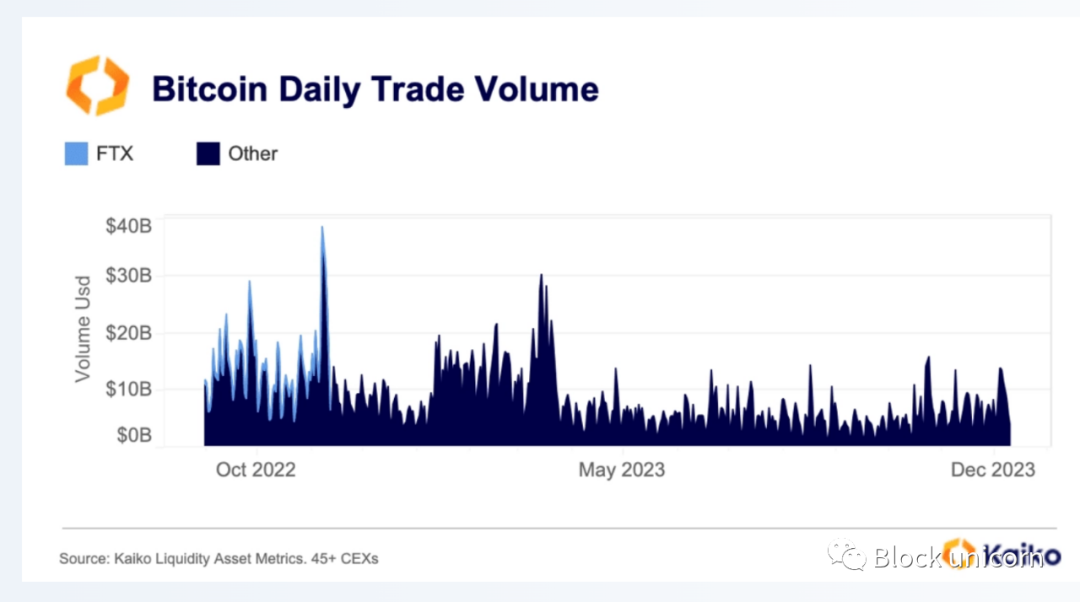
We’ve seen a modest recovery in recent months, particularly during the latest market rally, but overall volume remains far below pre-FTX levels.
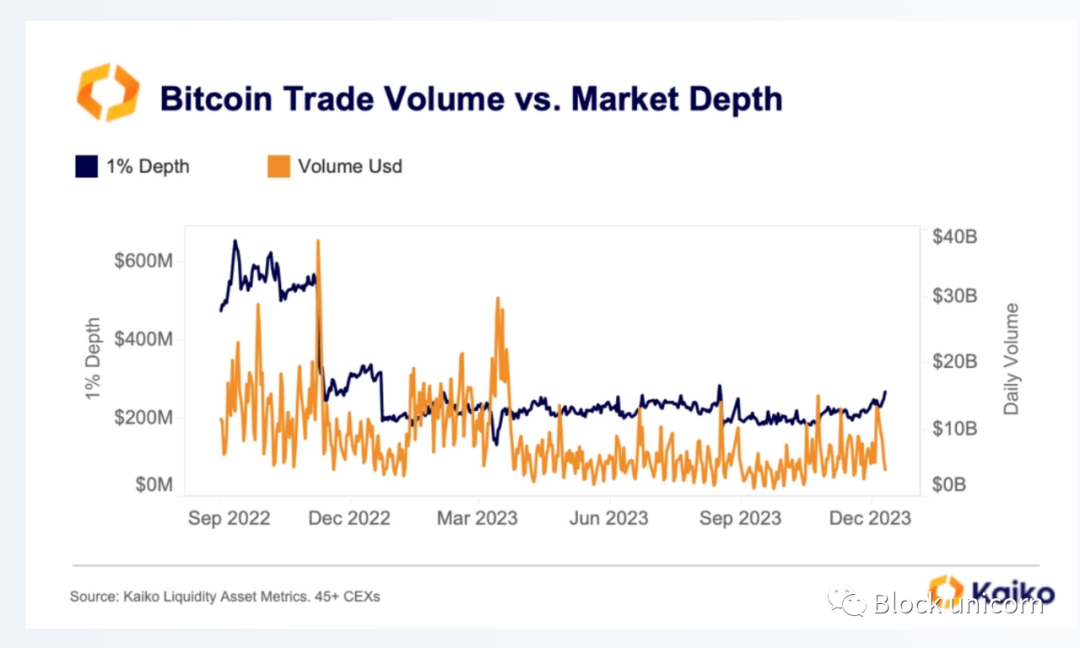
Thus, comparing volume to market depth, we observe that since November 2022, depth has declined more sharply but fluctuated less throughout the year than volume. This suggests that market-making activity levels have remained steady, with no significant new participants (or exits).
Bitcoin Dominance
Bitcoin remains by far the most liquid crypto asset and has demonstrated the strongest resilience amid challenging market conditions. ETFs are likely to further strengthen its dominance.
Looking at trading volume distribution over the past year, Bitcoin’s volume averaged roughly three times that of Ethereum and over ten times that of the top 10 altcoins. Notably, this gap widened further during Binance’s spring campaign offering zero-fee Bitcoin trading.
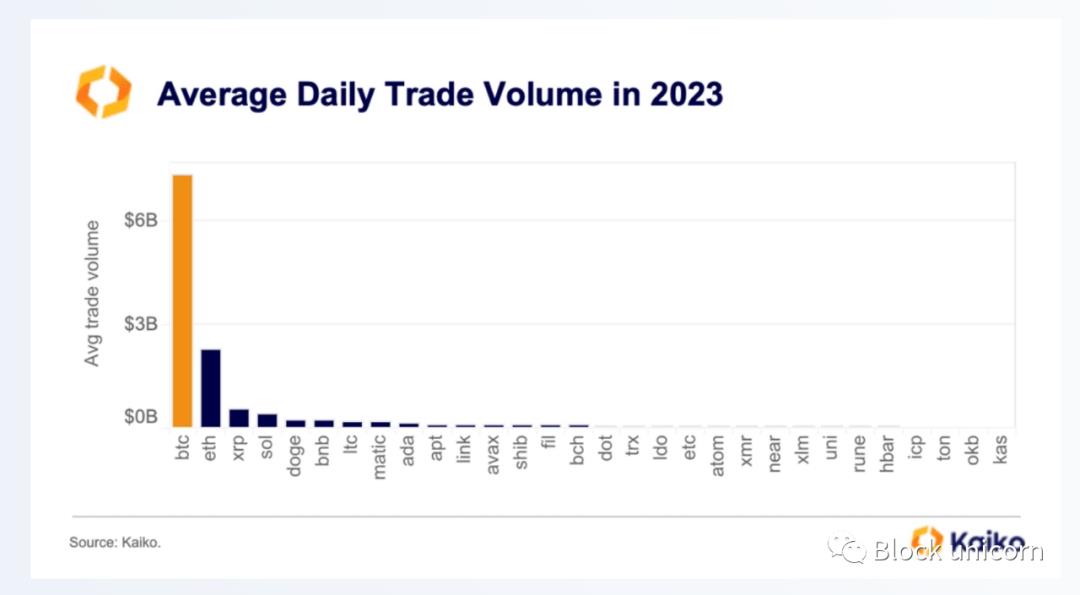
Bitcoin’s average daily market depth is somewhat closer to Ethereum’s, although still significantly larger than most altcoins.
Conclusion
Bitcoin remains the most liquid crypto asset to date. However, since the FTX collapse, both key measures of liquidity have sharply declined, with only a mild recovery in recent months. As such, ETF approval currently stands as the biggest catalyst in the crypto market, promising significant upside potential with limited downside risk. Despite certain liquidity risks, ETFs are expected to improve overall market conditions if investor demand rises substantially.
Join TechFlow official community to stay tuned
Telegram:https://t.me/TechFlowDaily
X (Twitter):https://x.com/TechFlowPost
X (Twitter) EN:https://x.com/BlockFlow_News
 @KaikoData