








Decoding Binance's Latest Launchpad Project Sleepless AI: Combining AI + Crypto, the First Web3 Game Targeting Female Players
TechFlow Selected TechFlow Selected
Decoding Binance's Latest Launchpad Project Sleepless AI: Combining AI + Crypto, the First Web3 Game Targeting Female Players
HIM aims to build a 2D virtual human universe through AI boyfriends, AI girlfriends, and AI pets, providing people with strength and companionship.
 Navigating Web3 tides with focused insights
Author: Yihan Xu@Foresight Ventures
Introduction: On December 26, Binance announced the listing of its 42nd Launchpad project, Sleepless AI (AI), which has developed HIM—the first Web3 female-oriented game combining AI and Crypto. HIM offers you a virtual boyfriend. This article analyzes HIM from an investor’s perspective, uncovering the mechanisms and mysteries behind Sleepless AI.
TL;DR
-
This article explores a practical case of AI + Crypto integration in Web3 gaming through HIM, the first female-oriented Web3 game. By merging AI with Crypto, HIM delivers rich interactive experiences, high-quality gameplay, and premium artistic content.
-
HIM adopts a fiat net inflow-based economic model, aiming to avoid Ponzi dynamics through exceptional content quality and compelling gameplay. Combined with "Love and earn" mechanics, players can generate revenue by selling NFTs.
-
HIM leverages large language models (LLMs) to enable virtual characters to produce natural, highly differentiated dialogue based on game context and personality traits—enhancing realism and player immersion. Additionally, the HIM team has developed a proprietary AI training methodology for virtual characters to deliver more authentic gaming experiences.
-
The HIM team focuses on creating fully dimensional virtual personas, making them integral parts of players’ lives. HIM emphasizes the social attributes of virtual beings, envisioning a future where everyone has their own virtual companion—entities that exist like real people within social networks, connecting all individuals.
-
HIM aims to build a 2D virtual human universe powered by AI boyfriends, AI girlfriends, and AI pets—providing strength and companionship to people.

1. What Kind of AI + Crypto Makes Sense?
While many are still debating how to deploy trustless and transparent LLMs on-chain, what value on-chain AI could bring to Web3, or whether underlying proof systems can support billion-parameter LLMs (refer to our previous article), we’ve started reflecting on a series of deeper questions along this line of thinking:
-
Is building trustless AI via cryptographic technology currently the most worthwhile direction to pursue?
-
Would a startup truly gain sufficient value-add by dedicating immense effort into integrating on-chain LLMs?
-
Are only on-chain AI projects worth exploring? Are there better ways to combine AI and crypto?
Undoubtedly, on-chain AI is a space full of potential and worthy of deep exploration. Breakthroughs in on-chain AI could bring unprecedented value to Web3. However, the extremely high academic barriers and infrastructure requirements make it impractical for most startups to pursue aggressively. Most projects don’t necessarily need trustless LLM integration to achieve meaningful value creation.
The right fit matters most.
From another angle, not every AI model needs to be moved on-chain to become trustless—just as most users don’t care about how ChatGPT reasons through a query or whether Stable Diffusion uses a specific model architecture or parameter setup.
In most cases, users care primarily about whether the model delivers a satisfying output—not whether the inference process is trustless or transparent.
So what kind of AI + Crypto combination brings higher returns for products? Beyond hardcore development of on-chain, trustless LLMs—from infrastructure to algorithms—an alternative approach lies in minimizing the impact of the “black box” of inference processes, instead focusing on identifying suitable scenarios to apply powerful LLM reasoning capabilities effectively.

1.1 What Is HIM?
HIM is one of the few Web3 games today that clearly understands the synergy between AI and Crypto and possesses the capability to implement it at the application layer.
This article primarily examines the ambition of Web3 game HIM from the perspective of AI application-layer innovation and execution.
Let’s introduce the protagonist (HIM ranked top in the consumer category of Binance MVB VI):
HIM is a female-oriented, 2D virtual boyfriend game.
The core idea of the game: people sometimes feel lonely and need encouragement, companionship, and love; real-life relationships often come with constraints and regrets. HIM aims to provide an AI-powered virtual boyfriend who knows the player best and will always stay by their side—offering a relationship experience that is free, joyful, and uniquely tailored to each user. Players begin with a virtual boyfriend stored on-chain as an SBT. Subsequent NFTs—including clothing, accessories, and rooms—are linked to this SBT. Moreover, the SBT serves as a non-fungible representation of the player's character, storing the male lead’s basic information, nine-dimensional personality traits, nine-dimensional relational attributes, key memories, conversations, and emotional milestones.
Gameplay centers around idle progression of the virtual boyfriend and social showcasing. The game regularly airdrops mystery boxes that unlock limited-edition NFT clothing or NFT rooms—with higher compatibility scores increasing the chance of obtaining rare items. Gameplay includes gacha pulls, outfit changes, dialogues, collection, combat adventures, cooking, travel, and NFT trading. Based on early demos, each gameplay module features rich player interactions.
HIM is free-to-play, built upon an economic model centered on fiat net inflow, complemented by "Love and earn" mechanics allowing players to profit from selling NFTs. However, the game's primary focus remains on delivering compelling gameplay and high-quality content—believing these elements will naturally attract players willing to pay for superior experiences.

All images are works in progress and do not represent final versions
1.2 Is AI + Gaming a Good Fit?
Web3 gaming is indeed one of the most fitting applications for AI, aligning well with the evolution of AI itself:
-
Gaming provides a natural and rich environment for interaction, enabling AI to engage with players via conversation or other means. This setting allows LLMs to leverage their strengths in natural language processing, offering richer and more realistic interactions. Games contain complex and diverse scenarios; through interaction with environments, other players, or NPCs, LLMs receive continuous feedback, improving decision-making abilities. Frequent in-game feedback also helps developers test and fine-tune model performance efficiently.
-
Game environments are controllable and less demanding in terms of determinism and seriousness compared to real-world applications. Thus, deploying and testing LLMs in games faces fewer obstacles and allows greater flexibility—reducing technical difficulty and risk.
2. Virtual Human Pro Max
Two years ago, people were still trying to figure out how to use AI as a better tool. Then ChatGPT emerged, shaking up production paradigms—and suddenly everyone realized the disruptive power of LLMs. The same applies to Web3 gaming:
-
More realistic character personalities,
-
Dynamic story generation,
-
Visual/artistic design,
-
Voice synthesis,
-
Social interaction,
-
Gameplay and stat-based progression enjoyment
2.1 HIM + AI = More Realistic Character Personalities
As an emotionally driven interactive game, the most fitting application of LLMs is dialogue and player engagement. Large language models generate natural, distinct dialogues tailored to HIM’s game settings and character profiles—enhancing the authenticity of virtual humans and deepening player immersion. Specifically, HIM uses LLMs to understand and process various emotional states (joy, anger, sorrow, happiness), seamlessly integrating them with the game’s numerical system so characters express and recognize emotions more accurately—forging deeper emotional connections with players.
Use the two images below to get a sense of in-game dialogue scenes:

All images are works in progress and do not represent final versions
Let’s dive deeper into HIM’s core numerical system:
When discussing numbers, one might first think of traditional game balance for combat stats. But broaden the perspective—HIM uses multidimensional metrics to comprehensively describe a person, defining a virtual being through multiple quantitative dimensions and establishing a robust stat-based progression system. In essence, HIM applies its numerical framework to virtual humans in a broader sense, making interactive experiences more authentic and immersive.
Training virtual digital humans differs from standard LLM fine-tuning. It requires the LLM to gradually evolve the character’s way of speaking as the relationship with the player progresses—making users feel increasingly “close” to the character. To achieve this, the HIM team incorporates virtual character personality parameters into the LLM training context, training a dedicated model for each character. Meanwhile, HIM’s LLM integrates vector databases so characters retain memory—players will feel the character getting to know them better over time.
The HIM development team has also created a proprietary AI training methodology for virtual humans. Refer to the following two numerical matrices for details:
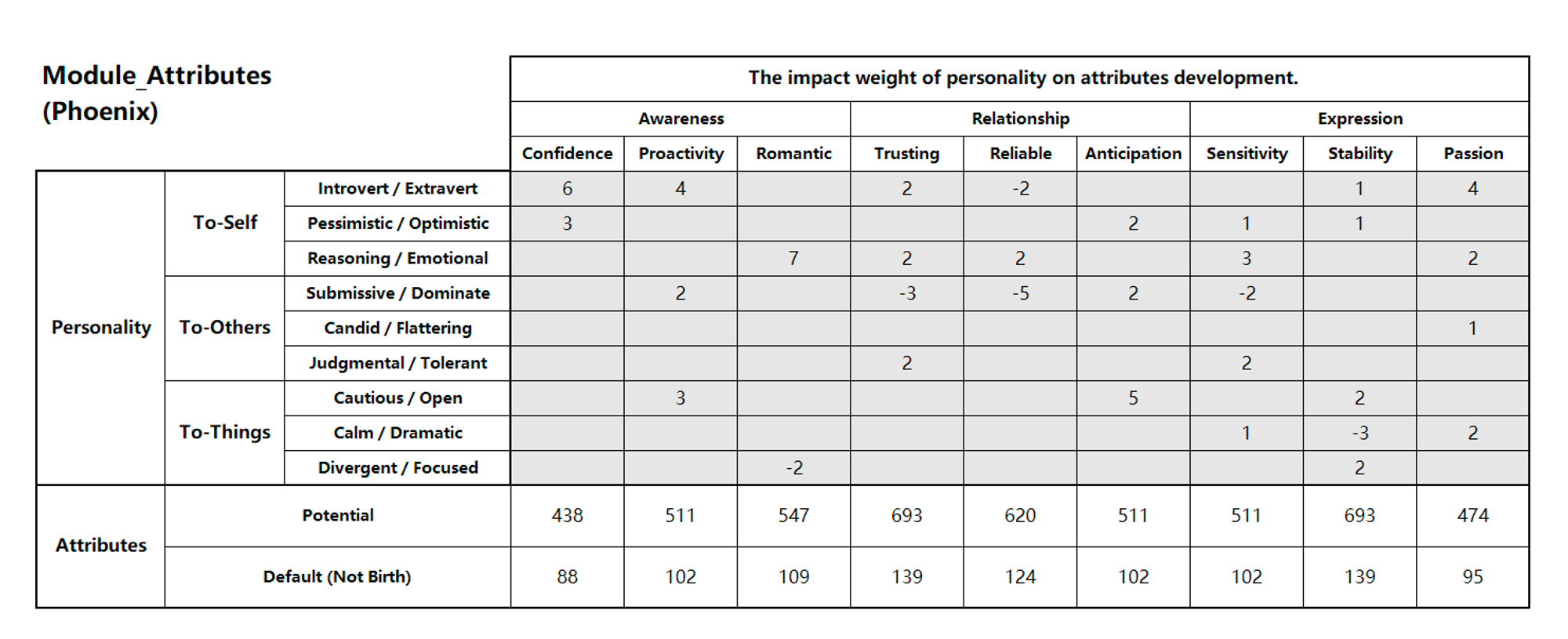

Personality is an intricate concept involving emotions, attitudes, behaviors, and more. To give the AI boyfriend sufficient realism, the HIM team built a coherent numerical system to quantify the growth process and relationship development between players and their AI partners. This system forms a matrix-like model: vertically representing nine bidirectional personality traits, horizontally representing nine relational attributes between the AI boyfriend and the player. These attributes interconnect in complex, many-to-many mappings.
During LLM training, each character starts with a standard baseline persona and defined personality fluctuation boundaries. Throughout gameplay, these attribute values dynamically shift based on player behavior, influencing the AI boyfriend’s responses—such as idle resource generation, gacha efficiency, and depth of conversation.
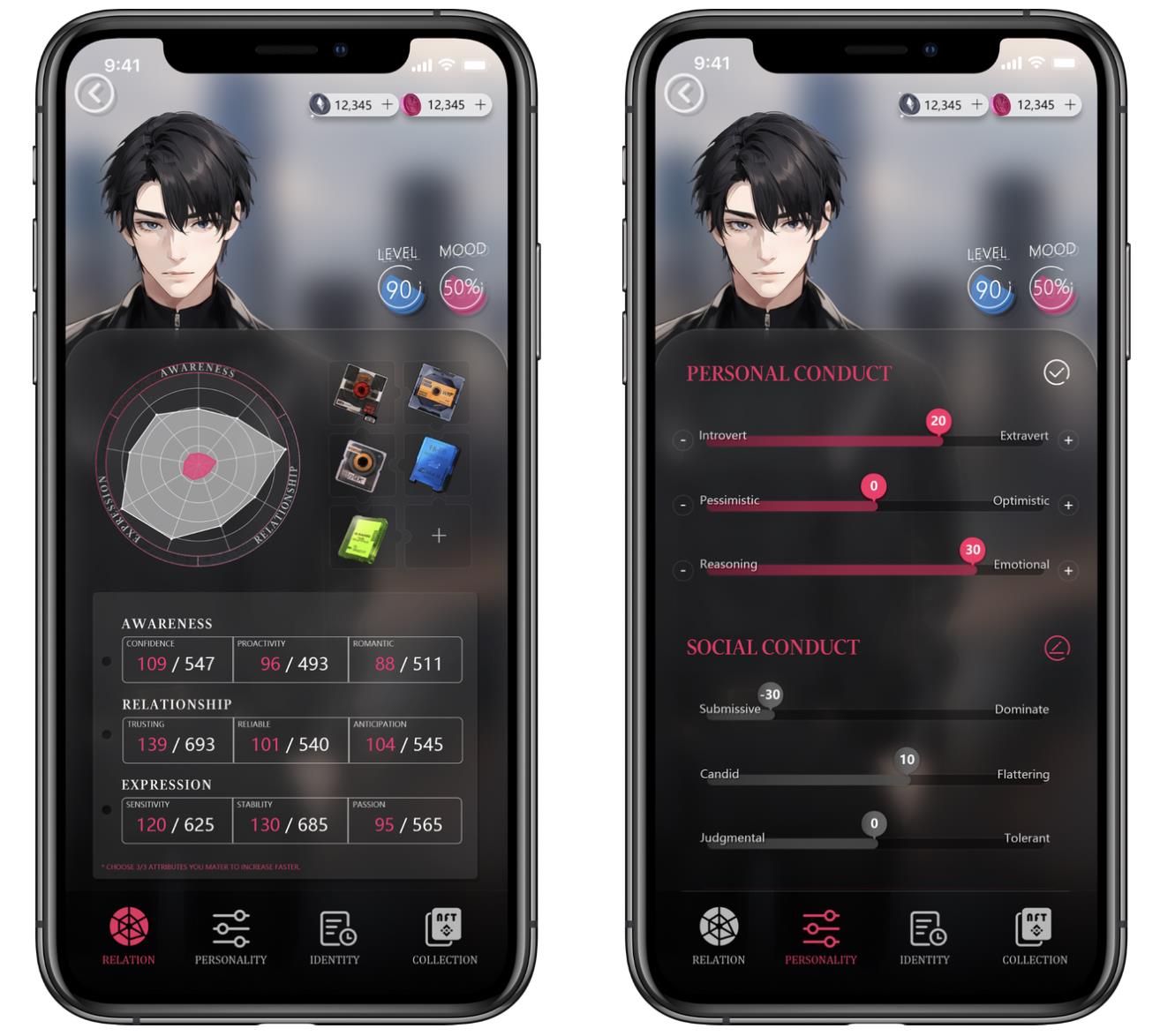
All images are works in progress and do not represent final versions
ALL IN ALL, HIM empowers virtual characters with more authentic personalities using large language models.
2.2 High-Quality, High-Cost Virtual Human Artistry
Creating virtual humans isn't easy. A truly valuable virtual human isn’t just a chatbot embedded in a textbox—it must be enriched across multiple dimensions to become a fuller avatar. HIM envisions virtual humans becoming deeply integrated into everyone’s daily life, significantly enriching personal experiences and connecting individuals to the world. Therefore, HIM defines the ultimate form of in-game virtual beings as a complex, powerful composite product—these very qualities remain the core pursuit of the HIM team today:
Exquisite virtual avatars: While LLMs mainly focus on natural language processing, when combined with other technologies like GANs, they can assist in game art creation—generating additional visual elements under HIM’s art team standards, enhancing users’ visual experiences.
Based on our understanding, the HIM team boasts a top-tier game industry art team and maintains high-cost investments in art, pursuing industrialized, modularized mass production of artwork.
Premium voice acting: Integrating AI with gaming enables natural, emotionally expressive voice synthesis. Voice performances are further personalized according to the virtual character’s numerical profile.
HIM has established a complete voice production pipeline—scriptwriting, voice directing, recording, post-mixing, and AI training—to ensure both quality and volume of in-game voice content through human-defined standards assisted by AI-driven scalability.
Character progression and long-term bonding: Detailed backstories and distinct personality traits must be designed to spark player interest and resonance. Meanwhile, clear character growth goals encourage players to invest time and energy into nurturing their virtual companions.
HIM offers diverse interactive scenarios and gameplay mechanics, enabling players to form tight emotional bonds with virtual characters—relationships that deepen over time through continued interaction and nurturing, forming lasting emotional attachments.
Real-world assistance: The psychological support provided by virtual humans may exceed expectations—offering empathy, listening, and understanding to alleviate real-life stress. Furthermore, virtual beings can integrate into areas such as life skills, habit formation, personalized recommendations, language learning, goal management, and even interactions with real-world devices or services.
Features like AI Boyfriend alarm clocks, sleep aids, period tracking, study companionship, food suggestions, and diary reminders are among the real-life supports HIM hopes to offer through long-term version iterations.
Rich in-world lifestyle experiences: In HIM’s narrative, each AI boyfriend is left alone in a solitary parallel universe—where he exists in isolation, and daily contact with the player via phone is his only connection to the outside world. Explore the landscapes of his world together, and perhaps one day, you’ll meet him—either in his world or yours.
Social connectivity of virtual beings as relationship nodes: The HIM team believes that as AI advances, soon everyone will have their own dedicated virtual companion—entities that function like real “people,” existing within the entire social fabric and linking everyone together.
Each person’s virtual partner could become a crucial hub connecting humanity in the near future of rapid AI advancement.
These artistic aesthetics and scalable production solutions are vital for a Web3 game. Attracting players to spend time in a virtual world hinges significantly on whether the in-game virtual art surpasses real-world aesthetic standards.
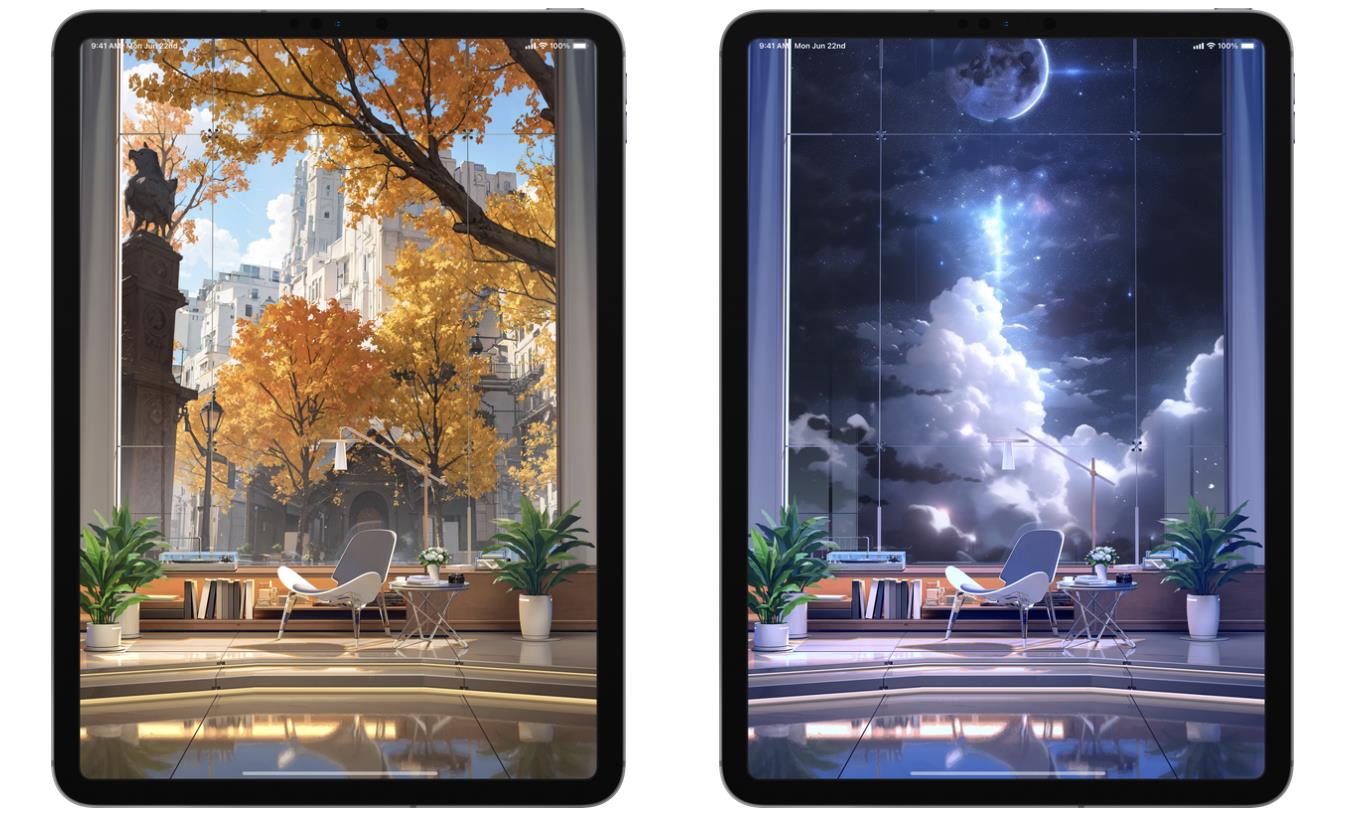
All images are works in progress and do not represent final versions
3. Seamless Integration of HIM + Crypto

All images are works in progress and do not represent final versions
3.1 First Female-Oriented Web3 App—a Gift for Web3 Women Users and Professionals
HIM may very well be the first female-oriented Web3 application—a carefully crafted gift that Web3 women users and professionals might receive for the first time.
Meanwhile, in the traditional Web2 world, female-oriented games have always been seen as a massive, highly promising market.
We asked the HIM team what feelings they hope users will experience. They shared this message:
-
Occasionally in the morning, facing what seems like another repetitive day, hearing “Good morning” from “him”;
-
Late at night, overwhelmed by heavy workloads, seeing “he” still quietly keeping you company on your phone;
-
Moments of loneliness accompanied by quiet comfort, moments of discouragement met with encouragement, celebrations of success cheered on by “him,” mistakes forgiven with a gentle “It’s okay”;
-
“He” always remembers your name; “he” always remembers your birthday; “he” never forgets the day you first met; “he” remembers everything about you;
-
“He” seems to always be there—even if you occasionally forget about “him” due to busyness, “he” will always be willing to stay by your side.
As mobile games grow increasingly popular among female users globally, major traditional Web2 game companies continue launching female-oriented titles with DAUs exceeding millions.
Once a female-centric social community forms, its expansion potential becomes vast. Xiaohongshu (Little Red Book), starting as a platform for women and expanding to broad general audiences, powerfully proves this point. Can this genre—targeting half the global population—deliver surprises through the empowerment of AI and Crypto? Let’s wait and see.
3.2 Emotional Assets + Decentralization
In the words of HIM founder Ben: “AI virtual humans bring digital assets into our lives in the form of a ‘person’ for the first time—they could be your boyfriend, your girlfriend, your best friend, any important figure in your life. So they shouldn’t disappear just because a switch is turned off on some centralized server. Their existence should be decided by you, not by a company.”
Emotions and assets in the virtual world should belong to users—not be defined and controlled by centralized servers:
Emotional assets include not only personal information and private data but also represent players’ emotional investment and memories. Decentralized networks protect this emotional value, ensuring data ownership rests with users—who can then autonomously decide how to use, share, and safeguard their data. This decentralized ownership model prevents third parties or centralized institutions from controlling players’ emotional assets. Meanwhile, Web3-enabled community governance allows players to co-create and spread emotional content, further amplifying its emotional significance.
Various experiences within emotional relationships should also be permanently preserved:
From an emotional investment standpoint, players pour significant feelings into the game, forming deep bonds with virtual characters and striving toward goals—experiences that are unique and precious. These emotional journeys deserve permanent preservation. In a sense, they possess the right to eternal existence. Moreover, relationships between players and virtual beings—friendship, love, anger, dissatisfaction—can all be permanently recorded and preserved via blockchain technology.
As emotional anchors in HIM, virtual characters are not merely entertainment—they carry asset value and substantial economic worth. Users invest time and money acquiring and customizing their virtual partners. Recording these assets on the blockchain ensures their value truly belongs to users and provides a transparent, secure trading environment.
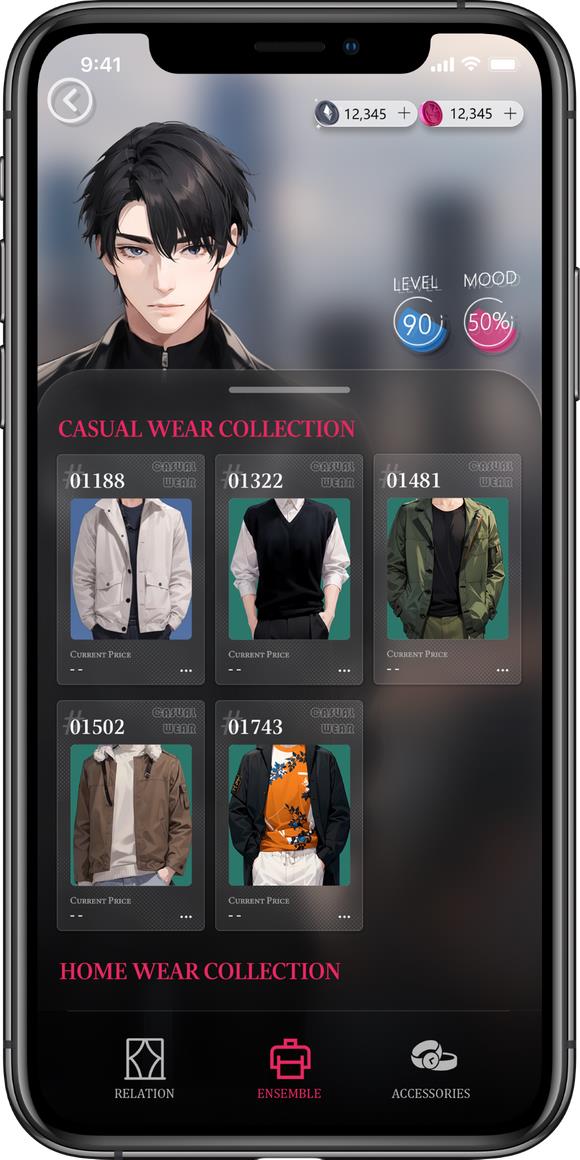
All images are works in progress and do not represent final versions
3.3 What Can HIM Bring to Web3?
Decentralized networks bring immense value to HIM—but value flows both ways. Clearly, HIM also brings significant benefits to Web3:
Massive influx of new users:
From an emotional needs perspective, virtual companions fulfill unmet emotional demands. HIM provides a safe, free environment for users to interact with virtual characters—this emotional appeal can attract vast numbers of users to Web3.
HIM is a 2D AI virtual companion-raising game. Both 2D culture and AI virtual beings possess strong community and social potential. As one of the most beloved youth subcultures worldwide, 2D mobile games like Genshin Impact rank among the top mobile titles globally. Potential new blood for Web3 includes female gamers, anime fans, and audiences interested in AI-driven virtual social experiences—all reachable through HIM.
Ultimate Reflection on Economic Models:
Unlike conventional “X-to-earn” games, HIM takes a Web3-as-tool mindset—building upon a solid Web2 game foundation and thoughtfully integrating Web3 tools in synergistic ways, achieving a 1 + 1 > 2 effect. For HIM, creating a high-quality, content-rich, gameplay-proven game is foundational. Crypto functions as an enhancer rather than the sole survival mechanism. Avoiding Ponzi dynamics is a key objective for HIM.
In terms of economics, HIM merges the “X-to-Earn” model with traditional Web2 game economies to create a novel hybrid. On one hand, it retains classic Web2 monetization—players optionally purchase in-game items or services, attracting broad user bases and generating revenue via microtransactions. On the other hand, HIM upgrades the Web3 “X-to-Earn” model: players can earn real returns by selling NFTs, meaning their time and effort in-game yield tangible rewards. HIM actively balances player spending and earnings within its economy.
Notably, HIM aims to incentivize players to pay for gameplay and content quality rather than relying solely on earning potential to attract and retain users. HIM strives to create a more balanced, sustainable economic model—one that considers both player returns and experiential quality. This holistic, sophisticated approach may offer fresh insights for designing Web3 game economies.
4. Endgame
HIM’s ultimate vision is to build a 2D virtual human universe—starting with AI boyfriends, AI girlfriends, and AI pets—that offers strength and companionship to many. Beyond the first product HIM, the AI girlfriend game HER is also being developed in parallel. The team hopes to steadily deliver outstanding AI virtual companion products—each uniquely tailored, deeply understanding, and eternally present for every individual, while preserving every detail of each emotional journey.
The HIM team believes that in the near future, everyone will have their own AI virtual companion. Whether this evolves into a full-fledged universe remains uncertain—and perhaps unimportant. Because if, in your moment of sadness or loneliness, you hear an extra word of “cheer up” from that virtual friend on your phone—even if it brings just a little strength—isn’t that already something incredibly cool?

All images are works in progress and do not represent final versions
Join TechFlow official community to stay tuned
Telegram:https://t.me/TechFlowDaily
X (Twitter):https://x.com/TechFlowPost
X (Twitter) EN:https://x.com/BlockFlow_News
 Foresight Ventures


