








TrendX Research Institute: Uncovering DePIN Investment Opportunities in One Article
TechFlow Selected TechFlow Selected
TrendX Research Institute: Uncovering DePIN Investment Opportunities in One Article
This article will introduce potential investment opportunities in the DePIN sector across four categories: sensors, servers, wireless networks, and computing resources.
 Navigating Web3 tides with focused insights
By: TrendX
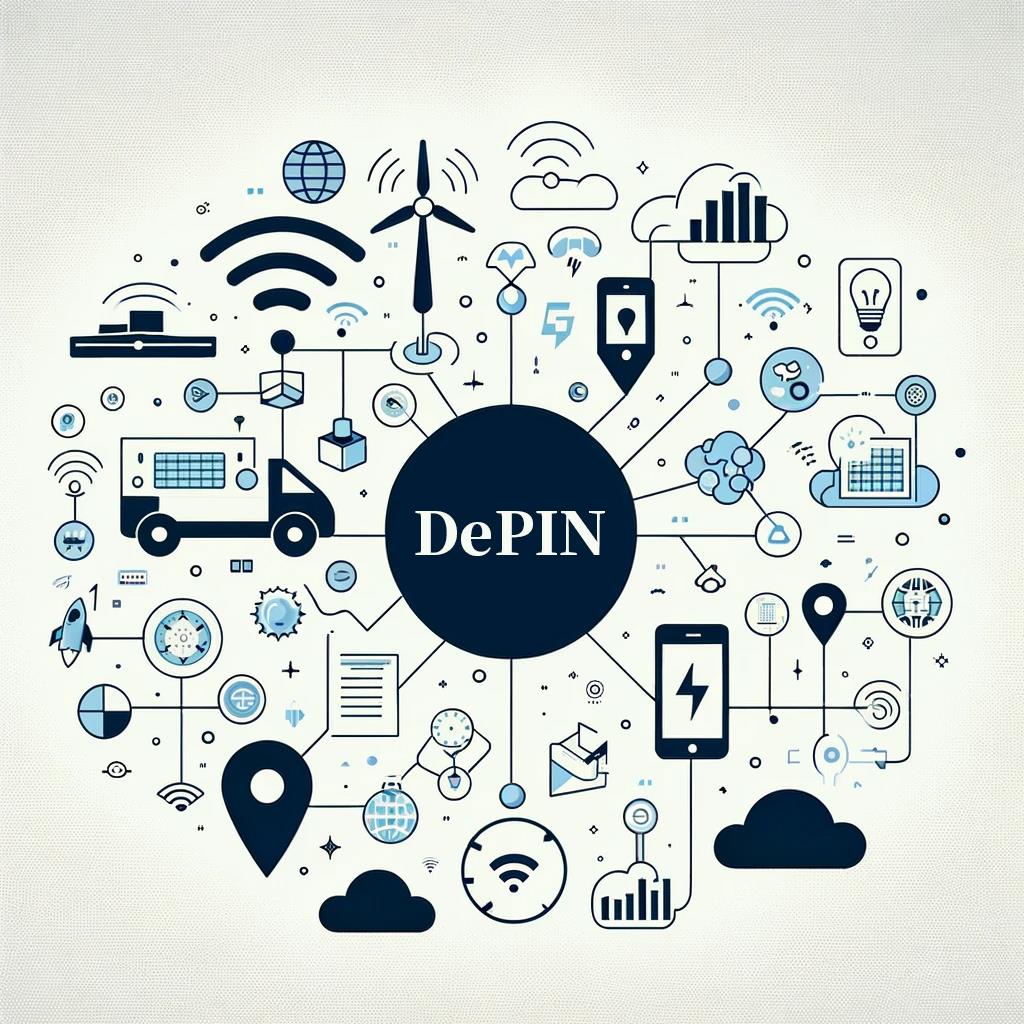
DePIN, or Decentralized Physical Infrastructure Networks, incentivizes users through token rewards to participate in physical resource networks (PRN) or digital resource networks (DRN), aiming to optimize resource utilization and deliver value to both network users and participants.
The opportunity in this sector lies in effectively leveraging idle resources to overcome the inefficiencies and bottlenecks of centralized service providers. The long-term sustainability of such projects depends on their ability to build strong competitive advantages—such as node resource capacity, network density, and a robust economic model—that create durable moats against replacement by other networks. This article explores potential investment opportunities in the DePIN space across four categories: sensors, servers, wireless networks, and computing resources.
Hivemapper
Hivemapper is a global decentralized mapping network aiming to solve industry-wide issues such as monopolistic pricing, uneven coverage, and lack of compensation for user-generated data. On April 5, 2022, Hivemapper raised $18 million in a Series A funding round led by Multicoin Capital, Craft Ventures, and Solana Ventures.
Contributors install Hivemapper dashcams to capture high-quality street images and earn HONEY tokens as rewards. They can also participate in the Map AI Trainer game to enhance Hivemapper’s machine learning models and receive additional token incentives. Consumers can redeem tokens to access map data, enabling all ecosystem participants to benefit from network growth.
The HONEY token is issued on the Solana blockchain with a maximum supply of 10 billion. The initial token distribution is as follows:
-
40% allocated to contributors who help build the Hivemapper network. The exact number of tokens minted each week is determined by global mapping progress.
-
20% reserved for investors to provide initial capital for launching the network.
-
20% allocated to Hivemapper Inc. for developing and operating the required technology and operating systems.
-
15% allocated to Hivemapper Inc. for R&D and operational support.
-
5% donated to the Hivemapper Foundation to promote ongoing governance and long-term success.
Hivemapper employs a detailed reward mechanism called "Global Map Progress" to fairly compensate contributors worldwide, which continues to evolve based on community feedback. As updated in September 2023, regional weighting now affects both the calculation of global map progress units and the rewards earned by regions over time. Rewards are distributed based on three dimensions: coverage, activity, and resilience—ensuring broad map coverage, rapid updates, and reduced reliance on any single contributor.
On the consumer side, users purchase Map Credits. As usage increases, more HONEY tokens are burned and then reminted directly to data-contributing users—effectively enabling a seamless transfer of value between consumers and contributors.
Notably, Hivemapper uses a three-layer verification system to authenticate the location of collected images: the first is GNSS (Global Navigation Satellite System), commonly known as GPS; the second leverages Helium's Long Range Wide Area Network (LoRaWAN); and the third involves image quality validation.
As of November 2023, Hivemapper has delivered over 8,000 dashcams, mapping roads in more than 90 countries. Contributors have collectively mapped over 80 million kilometers of roads, including over 5.7 million unique kilometers—covering more than 9% of the world's total road length. On average, Hivemapper contributors now map over 800 kilometers per week.
Helium Mobile
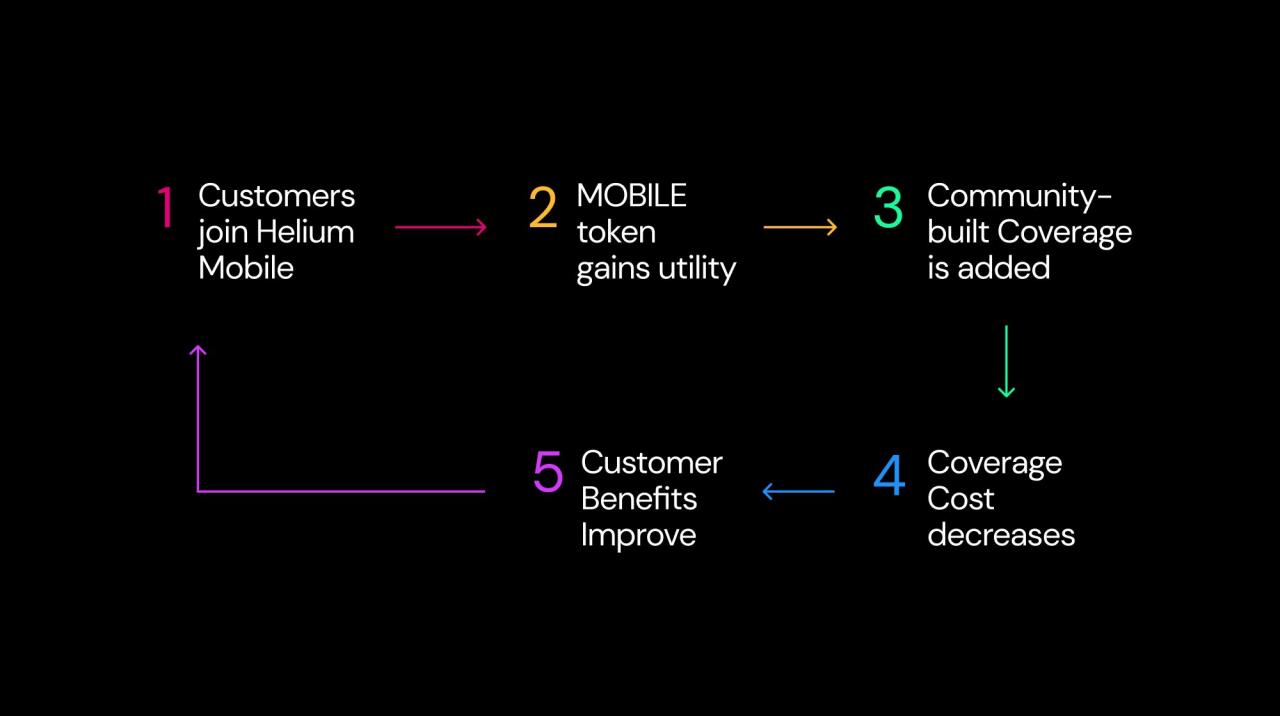
Helium Mobile is a decentralized 5G network that empowers customers—not telecom operators—to become network owners and operators. Users earn rewards simply by using their smartphones on the Helium 5G network, giving them ownership over both their mobile plans and the infrastructure supporting them. This creates a flywheel effect: increased user data drives greater incentive to deploy additional Helium 5G coverage. As coverage expands, network costs decrease, encouraging even more usage—leading to a self-reinforcing cycle of network growth, lower costs, and rising data credit consumption.
To lower entry barriers and accelerate 5G coverage, Helium Mobile offers portable hotspots that use Wi-Fi technology to extend coverage specifically for smartphone users (excluding laptops or tablets). These hotspots are significantly cheaper and easier to set up than CBRS radio and gateway bundles. However, due to the shorter range of Wi-Fi compared to traditional cellular equipment, a high density of Helium Mobile hotspots is required to ensure sufficient data transmission over the network—making participation accessible to a broader audience. Community members can also opt for professional-grade CBRS equipment, either setting it up themselves or with professional installation support.
On December 5, 2023, Helium Mobile launched an unrestricted $20/month mobile plan across the United States, offering unlimited data, calls, and texts. Notably, Solana Mobile Saga users in the U.S. receive 30 days of free subscription to Helium Mobile, allowing seamless connectivity to the nationwide 5G network. Additionally, Solana Mobile Saga users can earn token rewards from various projects within the Solana ecosystem, further fueling positive network effects.
The MOBILE token follows a similar issuance schedule as HNT, with a maximum supply capped at 230 billion (230B). At launch, 50 billion MOBILE tokens were allocated to the Helium Foundation for management. The emission rate halves every two years, aligned with the HNT halving cycle. Users can also convert MOBILE tokens into HNT via the Helium Wallet app.
DIMO
DIMO is a decentralized physical infrastructure platform that enables car owners to collect, use, and monetize vehicle data. Developers and data consumers can build applications and services on top of this data, lowering the cost of delivering better mobility products while returning data ownership to users and stakeholders. By connecting drivers with developers and manufacturers, DIMO disrupts traditional business models—creating value first for enterprises and then for end-users. Previously, only a few companies with privileged access could develop such applications and services.
In 2022, DIMO launched its hardware device, vehicle telematics integration, and $DIMO token. Its current focus is on increasing vehicle supply by measuring contributions through $DIMO token distributions, while also enhancing developer tools to make device data more accessible—enabling richer user experiences on the DIMO platform. Recent updates include integrating an embedded wallet into the DIMO Mobile app and improving the volume and quality of available car data.
With growing decentralization of data storage, more trip data being recorded on-chain, and accelerated SDK adoption, a vibrant new application ecosystem is emerging around DIMO. As support expands to new vehicle types—such as scooters, aircraft, and heavy machinery—and more enterprise clients come onboard, the protocol matures alongside formal partnerships with automakers.
DIMO’s value derives from three key factors: coverage, data quality, and market demand. The $DIMO token serves multiple functions: facilitating transactions, enabling governance voting, and supporting staking and incentive mechanisms. As usage grows, $DIMO tokens are burned, redistributing rewards back to users.
DIMO’s official website showcases a rich ecosystem—including car rentals, mobile apps, and hardware solutions. Below is the latest data on connected vehicles and trip records.

Peaq
Peaq is a Web3 network providing decentralized infrastructure and tools for builders and users of machine-focused dApps. It offers everything needed to build applications on blockchains for vehicles, robots, devices, and other machines. Peaq empowers entrepreneurs and developers to create decentralized applications for connected machines, while enabling users to manage and profit from these smart devices.
Peaq allows owners of connected devices to directly benefit from the economic value generated by their assets, forming a unique wealth model intrinsic to Peaq. Its decentralized operating platform eliminates intermediaries, enabling direct interaction between users and devices. Device owners retain a larger share of revenue since they no longer need to pay high fees to centralized platforms. This allows participants to capture more profits from IoT devices, encouraging broader participation in the shared economy. As more devices generate income, profits are distributed among token holders, stimulating transactions and driving ecosystem growth.
According to Peaq’s official website, its token is expected to launch in 2024—worth monitoring ahead of time.
Silencio Network
Silencio is a community-driven platform built on the peaq network, focused on tackling the growing issue of urban noise pollution. The project incentivizes users to contribute hyperlocal (neighborhood-level) noise pollution data in exchange for Noise Coins. Through an innovative tokenomic model, Silencio encourages active participation in combating noise pollution while rewarding contributors economically.
By harnessing the power of smartphones, Silencio transforms how noise pollution is monitored—eliminating the need for expensive fixed environmental sensors. Smartphones equipped with microphones can measure decibel levels and generate ultra-local noise pollution maps. The platform also features an app store where users can spend Noise Coins on goods and services, or donate them to meaningful causes such as tree planting and rainforest conservation.
The project has announced an upcoming airdrop, with allocations based on the amount of sound data submitted or the number of referrals—each minute of uploaded data earns one token, and referrers receive 3% of all Noise Coins earned by those they refer. Geographic coverage size will also influence rewards.
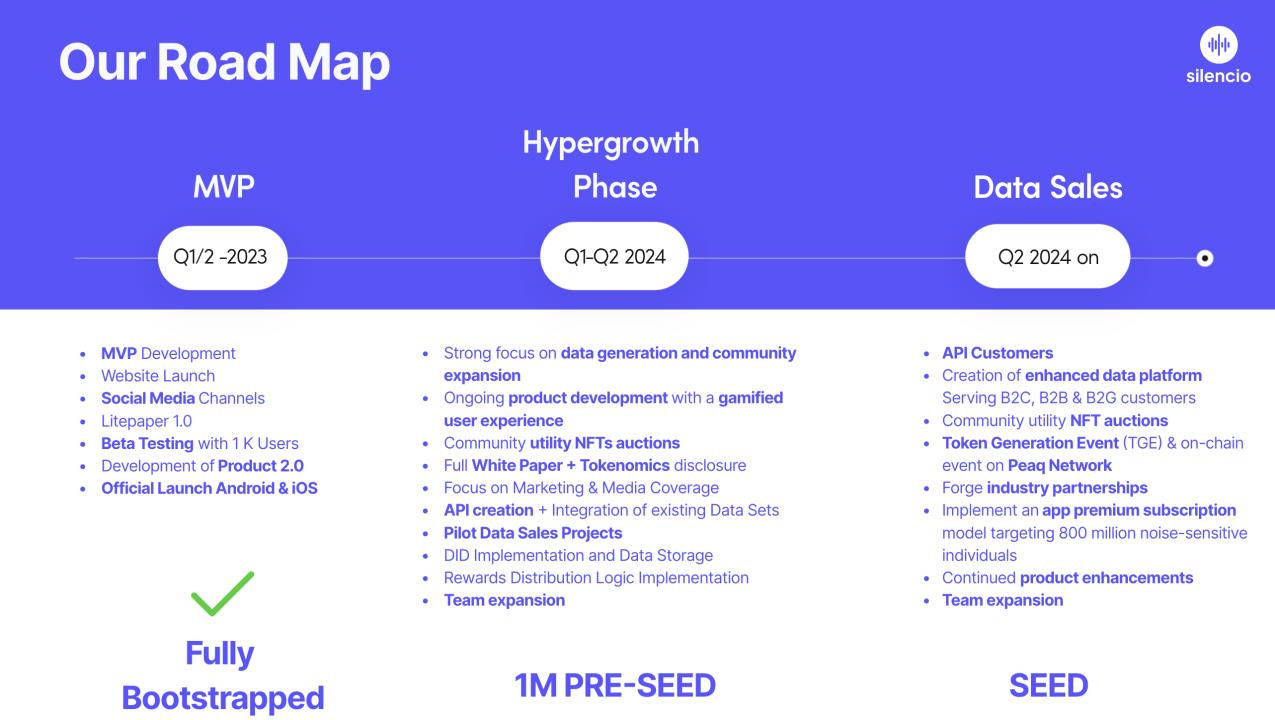
According to the roadmap, beta testing has been completed, with new product features and NFT auctions planned next. The token is scheduled for launch in Q2 2024.
Onocoy
Onocoy leverages Web3 technology to build the world’s densest GNSS reference station network, achieving large-scale, high-density deployment through a community-driven approach. It aims to address the high cost of infrastructure, which often leads service providers to focus only on high-income areas and profitable markets, as well as redundant infrastructure leading to unnecessarily high service costs due to duplication.
GNSS has a wide and expanding range of applications—from surface-level positioning and navigation to tracking aircraft and spacecraft. Onocoy integrates reference station deployments to achieve global coverage and high network density, distributing capital and operational expenses across a large community. This improves infrastructure utilization and capital efficiency, while users benefit from lower data costs.
Built on Solana, the Onocoy architecture rewards miners and validators with ONO tokens for providing verified data and core services to the system. Enterprises, developers, and end-users consume these data services by exchanging tokens. Currently in test phase, the network uses BONO as a testnet token, with a well-designed token economy.
The ONO token has a fixed maximum supply of 810 million, distributed as follows:
-
30% allocated to a rewards pool for miners and other contributors.
-
20% managed by the Onocoy Association / DAO governed by ONO token holders.
-
20% allocated to investors across two funding rounds (10% + 10%) to finance system development.
-
15% allocated to the founding team that initiated the Onocoy system.
-
15% paid to Services AG for salaries, consultant fees, and third-party/subcontractor costs related to building and operating the technical and operational systems.
Grass
Grass is the flagship product of Wynd Network, a company focused on open web data. Recently, Wynd announced a $3.5 million seed round led by Polychain Capital and Tribe Capital, with participation from Bitscale, Big Brain, Advisors Anonymous, Typhon V, and Mozaik. Grass enables users to earn passive income by selling unused internet bandwidth—addressing the current web paradigm dominated by exploitative intermediaries. Since personal IP addresses access personalized web content, this data is highly valuable—for example, to airlines and other industries. Often, users unknowingly or passively “lend” their bandwidth. Grass offers a decentralized alternative, using token incentives to empower users to own and monetize their bandwidth rather than letting centralized proxy networks extract value. Companies and AI labs can utilize this network for legitimate data collection.
The project’s Twitter account has 15,000 followers, indicating moderate visibility. The beta version launched in June 2023 and already supports Android devices. As of November 29, 2023, it had 103,000 downloads and 1.45 million unique IP addresses. Future token holders will receive a share of protocol revenue and gain governance rights.
Space and Time
Space and Time is a verifiable compute layer that scales zero-knowledge proofs over decentralized data warehouses, enabling trustless data processing for smart contracts, LLMs, and enterprises. It bridges indexed on-chain blockchain data with off-chain datasets, using Proof of SQL to ensure tamper-proof computation at scale and to cryptographically prove that query results haven’t been manipulated.
Proof of SQL is a novel ZK-proof developed by Space and Time that enables data warehouses to generate SNARK cryptographic proofs for SQL query execution—proving that computations were performed accurately and that both queries and data are verifiably untampered.

Developers can use the platform to connect indexed on-chain data with off-chain datasets, transform data using SQL, execute low-latency cached queries and large-scale analytics, shape data into custom business schemas, publish queries as APIs, and build dashboards—all while using zero-knowledge technology to send tamper-proof query results to smart contracts or directly onto the blockchain in a trustless manner.
Space and Time currently indexes Ethereum, Polygon, Sui, Sei, and Avalanche, with ongoing expansion to more chains. It has already integrated with Chainlink.
The project’s Twitter account has 31,000 followers, drawing attention as a convergence point between the DePIN and ZK sectors. While there is no detailed token launch plan yet, it remains worth long-term monitoring.
Natix Network
Natix Network turns existing cameras into "super sensors" to collect real-time data. Using Natix’s proprietary AI and edge computing technologies, it ensures privacy protection while creating dynamic real-world maps for low-cost data collection and consumption—tracking metrics like crowd size, available parking spots, and pothole locations.
Aiming to combine decentralized economic incentives with intrinsic motivation, Natix seeks to break long-standing data monopolies, solve data silos, reduce user costs, and ensure fair compensation for user-generated data—entering the geospatial data market with a disruptive model.
The NATIX network uses two token types to align participant incentives: iLand NFTs and the fungible NTXT token. The Natix Dynamic Map divides Earth into tiles, each represented by a unique smart Land NFT, known as an “iLand NFT,” which generates passive income for its holder. Any data generated by NATIX network cameras is tied to one of these tiles. Once monetized, the tile owner earns royalties from every transaction on that tile. Additionally, iLand NFTs grant governance rights within the network. These NFTs will be airdropped, sold, and traded on the marketplace. Minting fees and NFT trading royalties will fund network development and early participant incentives. NTXT (ERC-20) is the native utility token of the NATIX network, used for purchasing data and iLand NFTs, staking for yield or fee discounts, and participating in governance.
Natix allows users to earn NTXT without buying extra hardware—simply using their smartphone camera to join the network. Users can earn tokens while driving or cycling by capturing events (like potholes, trash, or parking availability) with their phone camera. Enterprise data consumers can subscribe to and use real-time data captured via the NATIX camera network.
The total supply of NTXT is capped at 1 billion, to be gradually released over 48 months.
Natix has designed a suite of incentives to encourage participation, including rewards for users who provide liquidity for the NTXT/USDC pair on AMMs. Data providers and validators must also stake tokens to ensure honest behavior.
The project’s Twitter account has 35,000 followers. Currently in early stages, it is opening whitelist applications and inviting users to join testnet activities.
Join TechFlow official community to stay tuned
Telegram:https://t.me/TechFlowDaily
X (Twitter):https://x.com/TechFlowPost
X (Twitter) EN:https://x.com/BlockFlow_News
 @TrendX_official






