








Understanding DIMO: Targeting a Trillion-Dollar Market, Using DePIN to Reshape the Automotive Data Monetization Ecosystem
TechFlow Selected TechFlow Selected
Understanding DIMO: Targeting a Trillion-Dollar Market, Using DePIN to Reshape the Automotive Data Monetization Ecosystem
As the DePin sector continues to evolve and its user base grows, Dimo has the potential to become a crucial bridge connecting vehicles, data, and people.
 Navigating Web3 tides with focused insights
Text: Xu, TechFlow
Edited by: 0xxx
Recently, as $Honey and $Mobile surged in value, DePIN has once again become a highly watched sector. The term "DePIN" was coined by Messari at the end of 2022—short for "decentralized physical infrastructure networks"—referring to systems that pool distributed physical hardware resources through token incentives.
In 2023, the DePIN sector performed strongly. According to CoinMarketCap, the total market capitalization of the DePIN sector has reached nearly $19.4 billion, with notable gains across its tokens. Beyond Solana-based projects like $Honey and $Mobile, what other DePIN projects are worth watching?
This article introduces Dimo, a DePIN application focused on vehicle data management and utilization, allowing users to earn money by connecting hardware devices to their cars and sharing data.
Project Overview
Dimo is an automotive IoT platform built on Polygon that enables drivers to collect and share vehicle data, including metrics such as mileage, speed, location tracking, tire pressure, battery/engine health, and more.
By analyzing this data, the Dimo platform can predict when maintenance is needed and alert users accordingly. This allows drivers not only to gain deeper insights into their vehicles but also to contribute data to Dimo’s ecosystem in exchange for DIMO tokens—creating a "Drive-to-Earn" model.
You might ask: based on past experiences of being rug-pulled, many “X-to-earn” projects often turn out to be Ponzi schemes—flashy at first, but short-lived and ultimately leaving behind chaos. Where does DIMO’s positive externalities come from? This may be the defining feature of next-generation DePIN projects: they connect real-world needs, creating genuine revenue streams through tangible utility. DIMO targets a massive market. According to the National Automobile Dealers Association, total sales of new light vehicles in the U.S. exceeded $1.18 trillion in 2021. The used car market is over three times larger, while the auto insurance market is valued at approximately $317 billion. As automobiles transition into the electric and intelligent era—from mechanical products to tech products—vehicle data has become a treasure trove.
Currently, around 250 million connected cars globally generate vast amounts of data, most of which remains controlled by traditional automakers. Original Equipment Manufacturers (OEMs) frequently sell vehicle-generated data—such as battery health information—while companies like Amazon, Apple, and Google are aggressively embedding their software into vehicles to capture user data.
This has given rise to third-party automotive data startups such as Otonomo and Wejo. Otonomo collects vehicle data, standardizes it, and sells it to automakers. It went public in 2021 via a SPAC merger.
In short, monetizing vehicle data already has a proven business model. McKinsey analysts predict that global profits from automotive data monetization could reach $450–700 billion by 2030.
What DIMO aims to do is empower users to own their vehicle data—the true "owners of their cars"—and benefit financially from the data they generate.
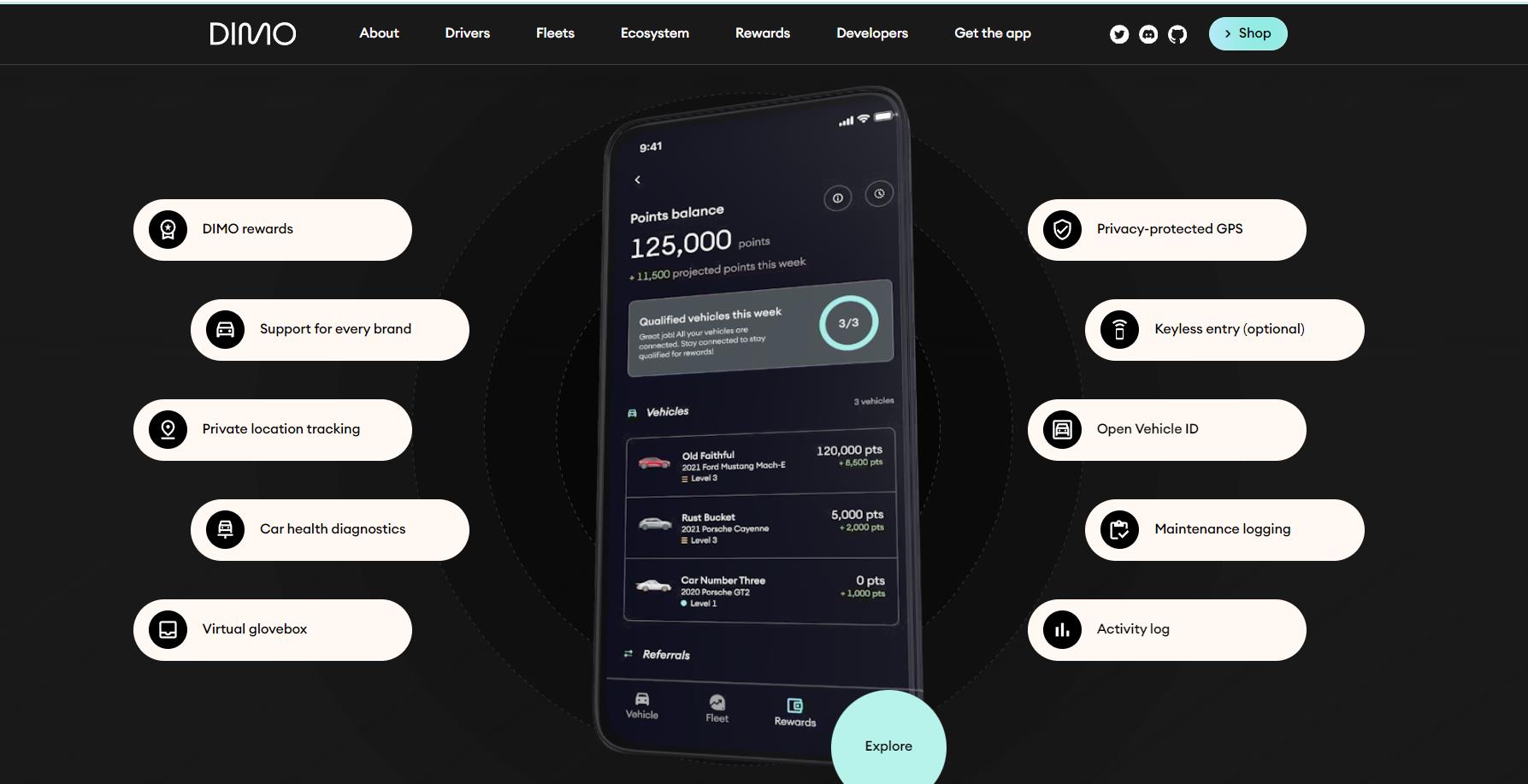
At first glance, DIMO shares similarities with Hivemapper, both falling under the Drive-to-Earn category. However, DIMO connects directly to the car and driver, monetizing driving behavior based on effective usage duration and device connectivity. In contrast, Hivemapper is a blockchain-based mapping network that incentivizes users to drive and collect wide-ranging map data.
Official Website: https://dimo.zone/app?
Official Twitter: https://twitter.com/DIMO_Network
How the Project Works
1. Connect Dimo AutoPi to Your Vehicle
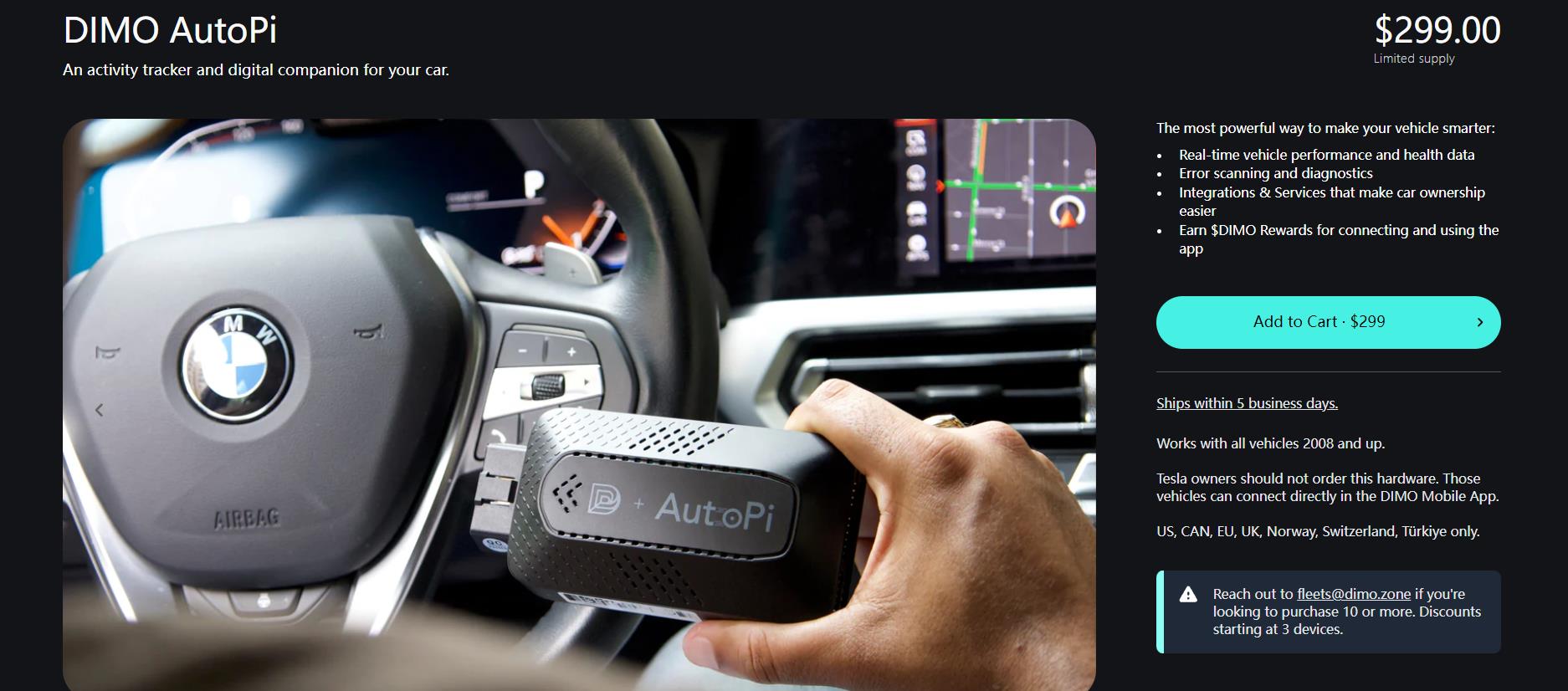
Tesla owners can simply download the Dimo app from the App Store to connect to the network. For owners of other brands, a hardware device called AutoPi (currently priced at $299) must be plugged into the car to establish a connection. The device is compatible with all vehicles manufactured from 2008 onward.
Once connected, the AutoPi device monitors real-time vehicle performance and health data, such as tire pressure and mileage.
2. Earn DIMO Token Rewards
Users can earn DIMO tokens in two ways:
-
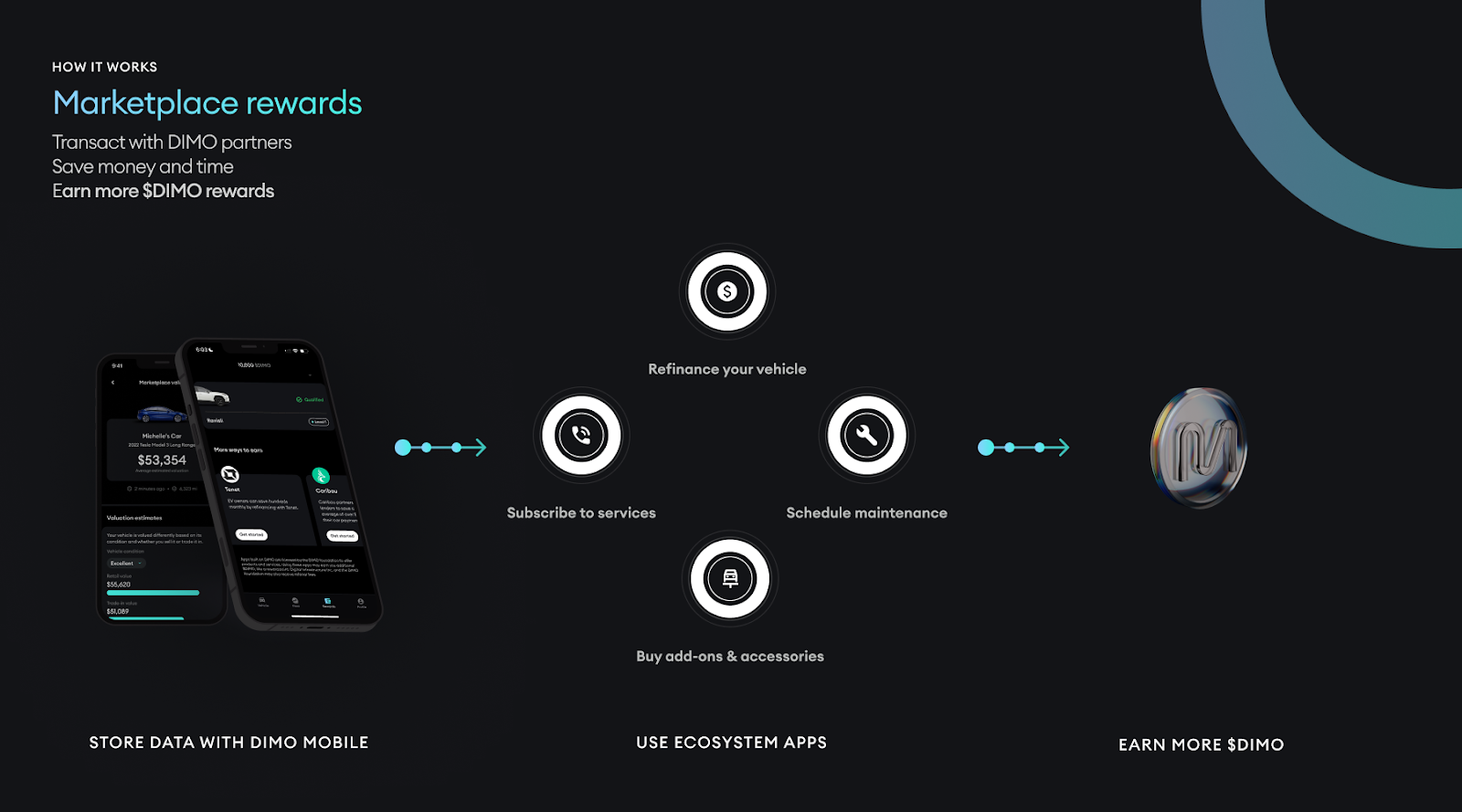
Baseline Emission Rewards: These are awarded based on the duration and method of user (driver) connectivity. This mechanism aims to build the network by incentivizing users to connect their vehicles and transmit data, rewarding long-term supporters and encouraging sustained participation.
-
Marketplace Emission Rewards: Users receive additional DIMO tokens when transacting with authorized DIMO applications. The amount and terms of rewards are determined by the app developers, provided the reward is paid in DIMO.
Team and Funding
Team Members
-
Andy Chatham, Co-founder of Dimo and CEO of Digital Infrastructure

-
Alex Rawitz, Co-founder of DIMO and COO & Co-founder of Digital Infrastructure

-
Rob Solomon, Co-founder of DIMO, formerly CFO at ConsenSys Mesh

Funding
Dimo raised $9 million on February 17, 2022. The round and valuation were undisclosed. Investors included over ten institutions and individuals such as CoinFund, Variant Fund, and Slow Ventures.
Tokenomics ($DIMO)
$DIMO Overview
$DIMO is the native token of the Dimo network, distributed to users and contributors. Users earn $DIMO by linking their vehicles to the Dimo network. The $DIMO token serves four primary functions:
-
Transaction Utility: Token holders can use $DIMO to buy and sell vehicle data or purchase the Dimo AutoPi connectivity device
-
Governance Rights: $DIMO holders can vote on protocol operations, including software upgrades, protocol standards, fee structures, and reward distribution mechanisms
-
Incentive Mechanism: $DIMO is used to incentivize ecosystem participants. Stakeholders—including vehicle owners, data providers, and app developers—must stake or spend $DIMO to engage with the ecosystem
-
Community Membership: Token holders gain access to exclusive app features and event privileges
Token Distribution
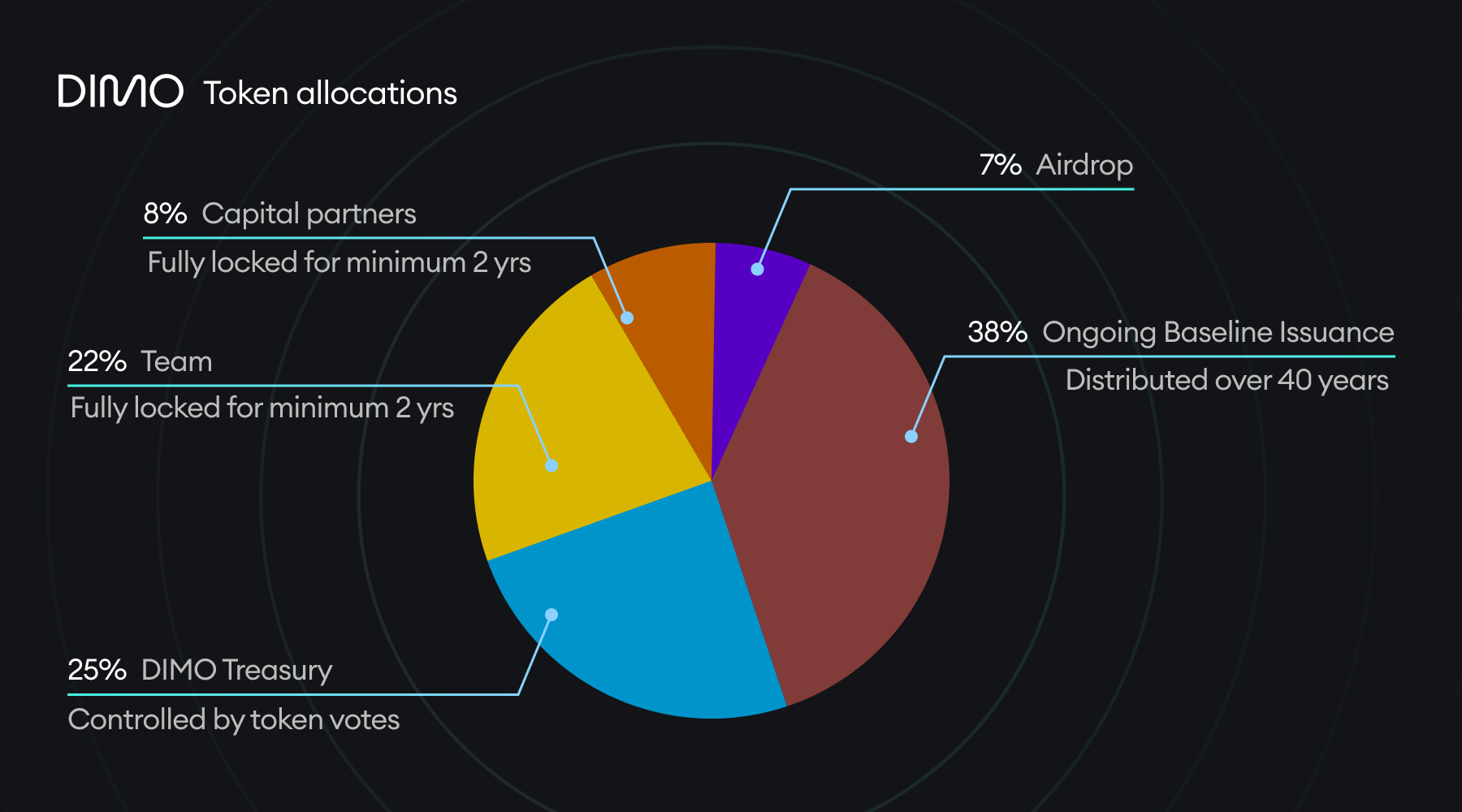
Total supply is 1 billion tokens, allocated as follows:
-
Baseline emissions: 38% (380 million $DIMO), to be distributed over 40 years. In the first year, 1,105,000 $DIMO are issued weekly, decreasing by 15% annually;
-
Dimo Treasury: 22%, allocated to teams and individuals contributing to the network via bounties or grants;
-
Team: 22%, subject to a two-year lock-up followed by linear monthly unlocking over three years until fully released;
-
Investors: 8%, subject to a two-year lock-up followed by linear monthly unlocking over three years;
-
Airdrop: 7%
Current Status of Dimo
Web2 Partnerships
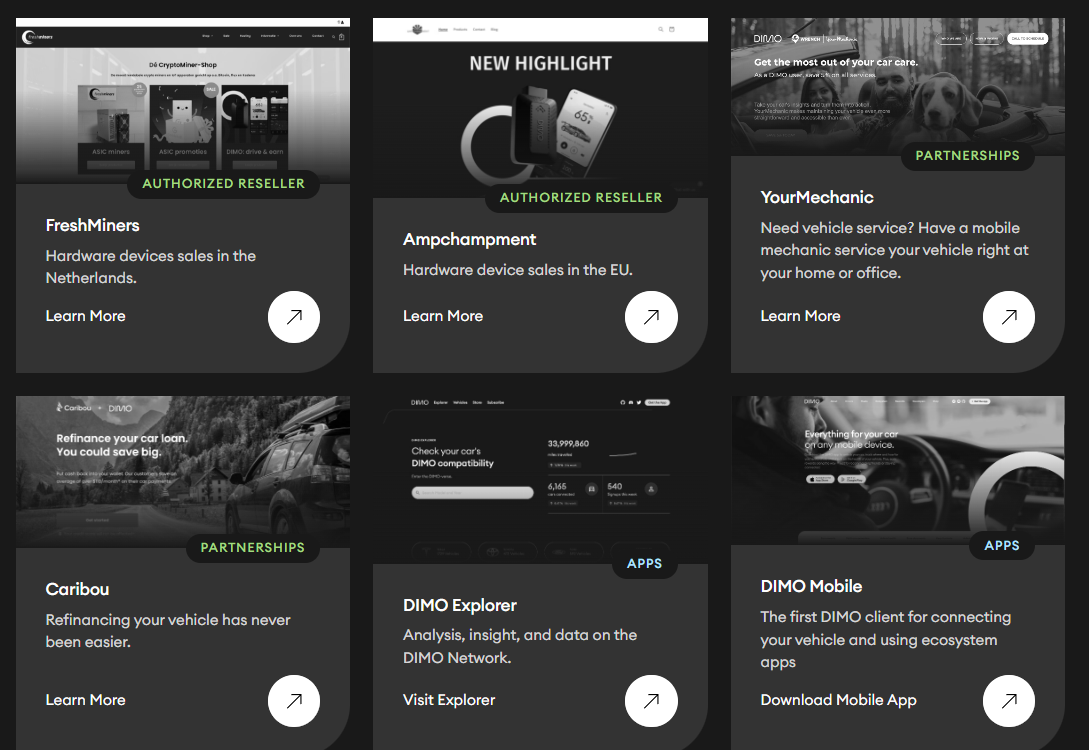
As of this writing, Dimo has established partnerships with nine Web2 companies, including dealers and ecosystem partners.
These merchants—such as gas stations, repair shops, and auto parts stores—are part of the Dimo network, allowing users to pay for services using DIMO tokens.
Web3 Partnerships
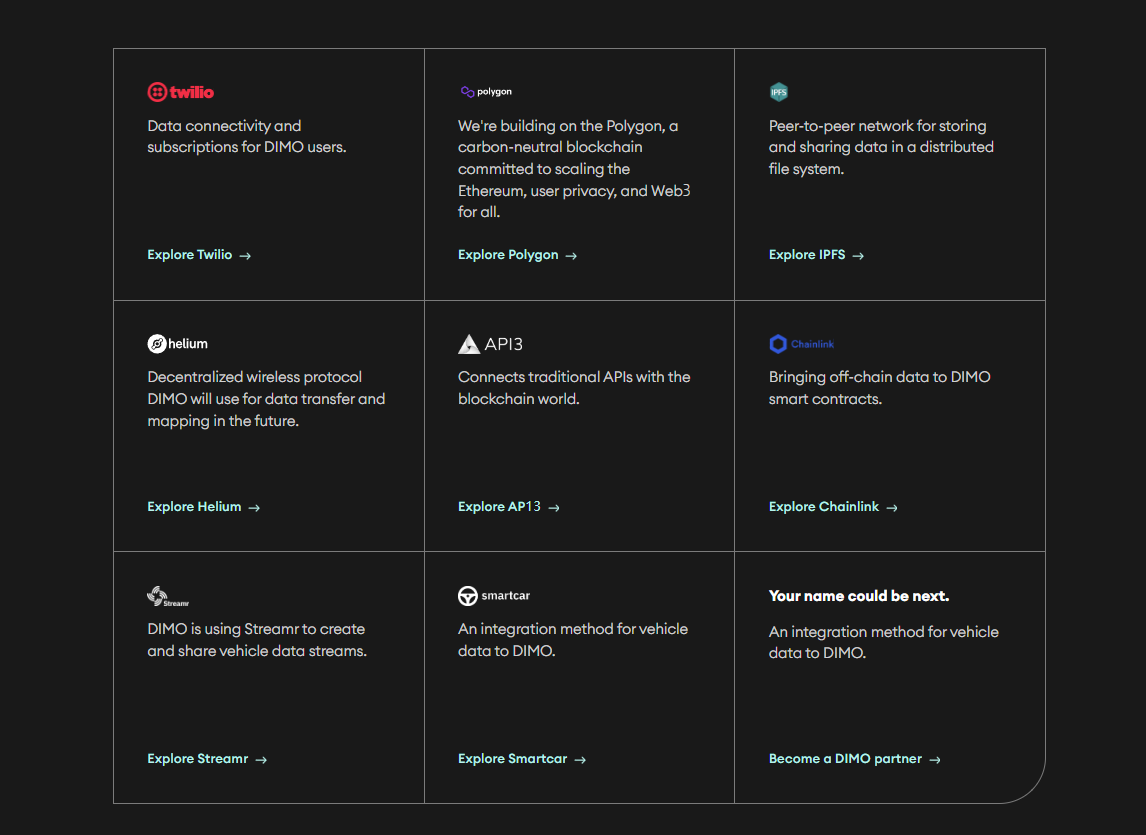
Dimo has partnered with eight Web3 projects so far, including Polygon and Chainlink.
Latest Updates
On December 13, 2022, Dimo launched its mainnet. As of December 13, 2023—its one-year anniversary—the project has achieved impressive milestones:
-
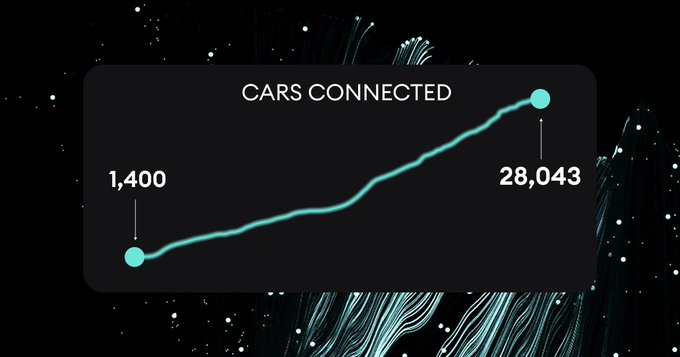
Nearly 28,000 vehicles have been connected to the Dimo network (up from 1,400 at mainnet launch), with users collectively logging over 153 million kilometers driven.
-
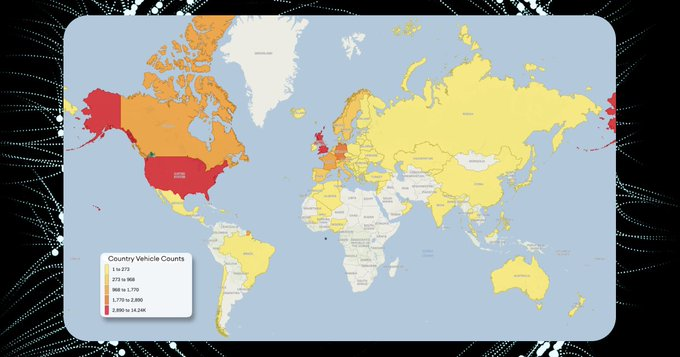
Dimo users are spread across more than 81 countries, with the majority located in the United States and the United Kingdom.
-
Over 57 million $DIMO tokens have been distributed to users, worth approximately $13 million.
-
The value of vehicles connected to the Dimo network varies widely—from as low as $2,300 to as high as $410,000. Aggregating the estimated value of all connected vehicles exceeds $750 million!
-
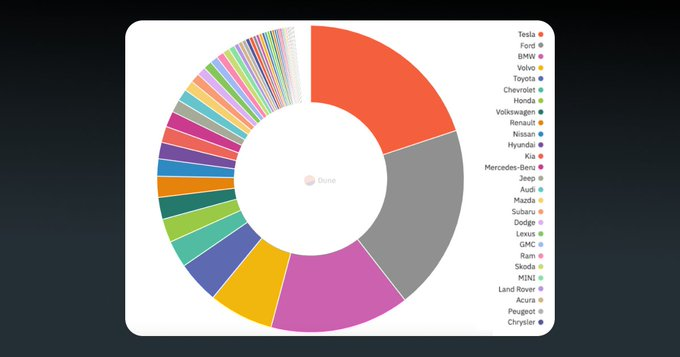
A total of 71 car brands are now connected to Dimo, with Tesla, Ford, and BMW leading the list.
Conclusion
It's often said that Web3 is striving for "mass adoption." While some place their hopes in gaming or social apps, DePIN projects like DIMO are charting a different course—bridging the crypto world with reality through physical hardware.
At the intersection of Web3 and automobiles, Dimo empowers drivers with control over their vehicle data—enhancing personal privacy and data security while opening new pathways for data sharing and utilization.
As the DePIN sector continues to evolve and expand its user base, Dimo has the potential to become a vital bridge connecting vehicles, data, and people. This innovation not only advances technology but, more importantly, shifts societal value—enabling individuals to benefit directly from their own data and truly democratizing data ownership.
Join TechFlow official community to stay tuned
Telegram:https://t.me/TechFlowDaily
X (Twitter):https://x.com/TechFlowPost
X (Twitter) EN:https://x.com/BlockFlow_News
 深潮TechFlow


