A Deep Dive into the Emerging Prospects of Functional Platforms in the Ordinals Ecosystem
TechFlow Selected TechFlow Selected
A Deep Dive into the Emerging Prospects of Functional Platforms in the Ordinals Ecosystem
Bitcoin's ecosystem, including needs such as lending and aggregation, has also become increasingly urgent.
 Navigating Web3 tides with focused insights
Author: veDAO
As BTC continues to rise, its ecosystem is becoming increasingly vibrant. In a previous article, veDAO reviewed DeFi projects within the BTC ecosystem in "BTC Ecosystem Flourishes: Exploring New DeFi Opportunities | veDAO Research." This time, we continue our focus on the BTC ecosystem, turning attention specifically to various functional markets built around Ordinals.
NxHub
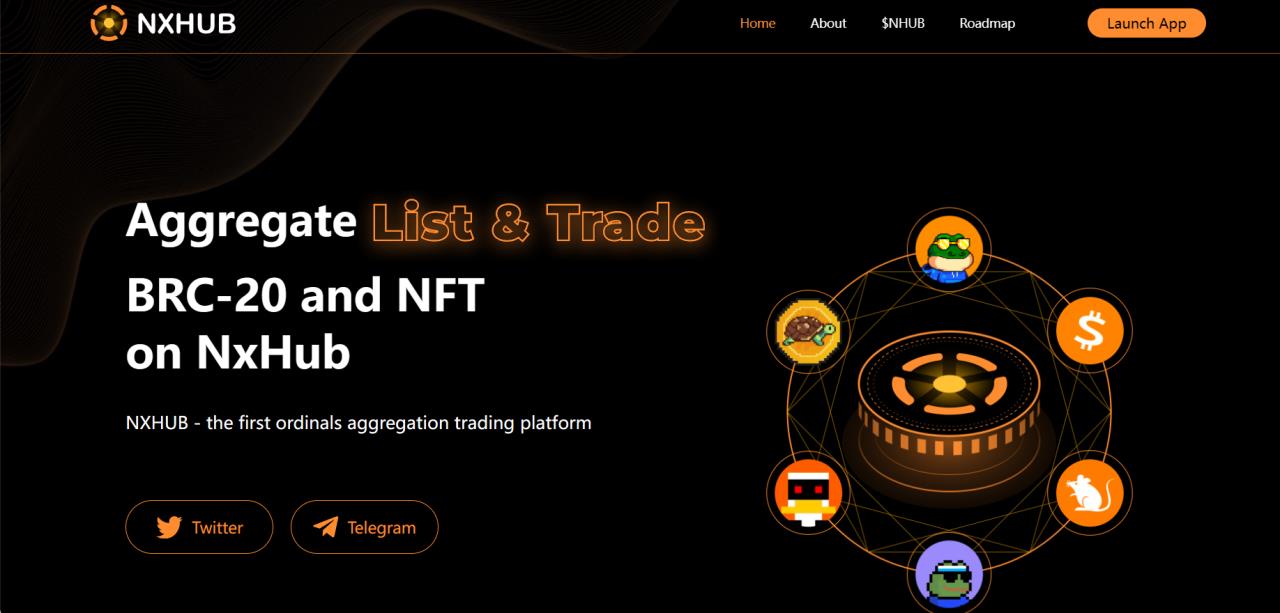
With the community's growing enthusiasm for BRC-20 assets, there has been a gap in infrastructure and tools that meet the immediate trading needs of the Ordinals ecosystem. NxHub, which conducted an IDO last month on TurtSat, was created to fill this void.
NxHub is an aggregation marketplace based on Ordinals. It captures listing order data from platforms such as UniSat, OKX, MagicEden, and OrdinalsWallet, aggregating and displaying them in one place. Users can select listings across multiple platforms, and NxHub sends requests accordingly to the respective marketplaces, streamlining the ordering process. This enables real-time price updates, cancellations, and other functions across platforms. NxHub aims to consolidate more Ordinals asset information so traders no longer need to manually compare prices across different platforms. By accessing NxHub, traders can quickly obtain information about the hottest assets in the market and review data on price fluctuations, trading volume, supply, and more to support their investment decisions.
Beyond NFT trading, NxHub offers advanced features such as bulk listing and floor-sweeping (purchasing multiple lowest-priced NFTs at once). Traders can send commands like placing or canceling orders directly to specific markets based on their choices. By simplifying batch operations, NxHub streamlines the entire trading workflow. Additionally, NxHub allows traders to add multiple BRC-20 tokens to a shopping cart. The platform intelligently processes purchases according to user preferences and requirements, using technology to bundle multiple UTXOs into a single block. The implementation flowchart is shown below:
With the recent explosion of BRC-20 assets—including inscriptions from various public chains such as eths, bnbs, pols, and sols—and rising prices of early-minted inscription tokens, demand for an Ordinals trading aggregator has become critical. Undoubtedly, NxHub brings further prosperity to the BTC ecosystem and, thanks to its first-mover advantage, is poised to become the go-to platform for BTC inscription traders.
Liquidium
NFTs have played a pivotal role in driving Ethereum’s ecosystem growth, and similarly, the surge in Ordinals this year holds significant implications for the BTC ecosystem. Like NFTs, lending for Ordinals is a crucial component of the BTC ecosystem—after all, NFT lending unlocks liquidity, fueling broader ecosystem development. Liquidium is the first lending protocol dedicated to Ordinals within the BTC ecosystem.
Liquidium is a peer-to-peer lending protocol designed specifically to operate on the BTC blockchain. This innovative solution allows users to borrow and lend native BTC by using native Ordinals as collateral, eliminating the need for intermediaries or custodians. Transactions are secured via partially signed Bitcoin transactions (PSBT) and discrete log contracts (DLC). Users can utilize borrowed BTC to purchase additional Ordinals or other BTC ecosystem assets without mapping inscriptions to another chain or switching wallets, blockchains, or platforms. Currently, Liquidium is compatible only with the Xverse wallet.
Liquidium’s mechanism is transparent and straightforward: First, borrowers apply for loans by setting loan terms and locking their Ordinals inscriptions as collateral. Lenders then review these requests and provide BTC to qualified borrowers, initiating the loan. If a borrower fails to repay on time, the loan defaults, and the Ordinals inscription is transferred to the lender. To ensure fairness and security, Liquidium uses oracles to verify loan outcomes by monitoring on-chain activity, minimizing trust assumptions and ensuring transaction transparency.
Liquidium vs. Blend
When discussing NFT lending, it’s impossible not to mention Blend, Blur’s lending protocol launched in May. The primary difference between Blend and Liquidium is that Liquidium focuses specifically on Ordinals lending, although several nuanced differences also exist.
Blend supports both peer-to-peer and peer-to-pool lending models, while Liquidium currently offers only peer-to-peer lending.
Blend primarily serves three user groups: 1) NFT collectors seeking ETH liquidity without selling their NFTs; 2) bargain-hunting traders aiming to acquire blue-chip NFTs at low costs; and 3) airdrop farmers who can earn rewards not just through listing or bidding but also by lending out NFTs. For Liquidium, Ordinals holders correspond to the first group—NFT collectors. However, Liquidium currently lacks functionality for purchasing or aggregating Ordinals (a feature offered by NxHub mentioned earlier), and it has not yet announced any airdrop plans.
With Liquidium, Ordinals owners can access liquidity without relinquishing ownership of their assets—a significant step forward in NFT lending tailored specifically to Ordinals holders. By offering a P2P lending platform where Ordinals serve as collateral on the BTC mainnet, Liquidium expands BTC DeFi and enriches the overall BTC ecosystem. This protocol may reshape the lending landscape and unlock new opportunities within the world of Ordinals.
Chamcha
Chamcha is a platform built on an Ordinals asset liquidity protocol, focused on providing a secure and convenient environment for buying, selling, earning, and custodying NFT assets. It combines blockchain technology and smart contracts to integrate traditional financial use cases with the potential of circular and streaming NFT assets.
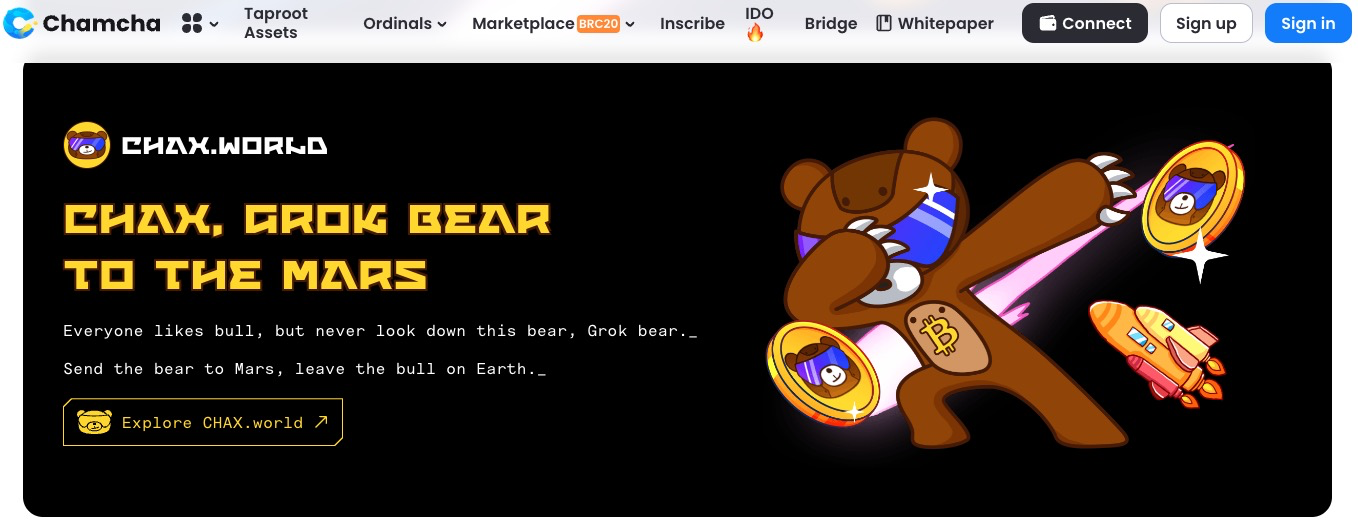
Chamcha also adopts a BRC-20 cross-chain protocol and has launched CHAX (the Chamcha token) to support a new cross-chain bridge. This new bridge aims to alleviate congestion issues caused by high user withdrawal demand due to large price discrepancies between MEXC and on-chain markets, which previously overwhelmed older bridges. To date, over 20 million CHAX tokens have been bridged to the Ethereum network. CHAX has a total supply of 2,100,000,000 and a current market cap of $15.7M. The CHAX token plays a key role in platform governance, incentivizing liquidity providers, distributing staking rewards, and facilitating various activities and transactions within the Chamcha ecosystem.
TurtSat
TurtSat is a launchpad platform based on Ordinals, similar to Gitcoin within the Ordinals ecosystem. By establishing a basic PSBT donation protocol, it supports open-source developers and community participation in building the Ordinals ecosystem while enabling contributors to earn rewards. TurtSat is committed to fostering a positive, community-driven Ordinals ecosystem and collaborates with influential organizations to advance the development of the Ordinals protocol and the broader Bitcoin ecosystem.
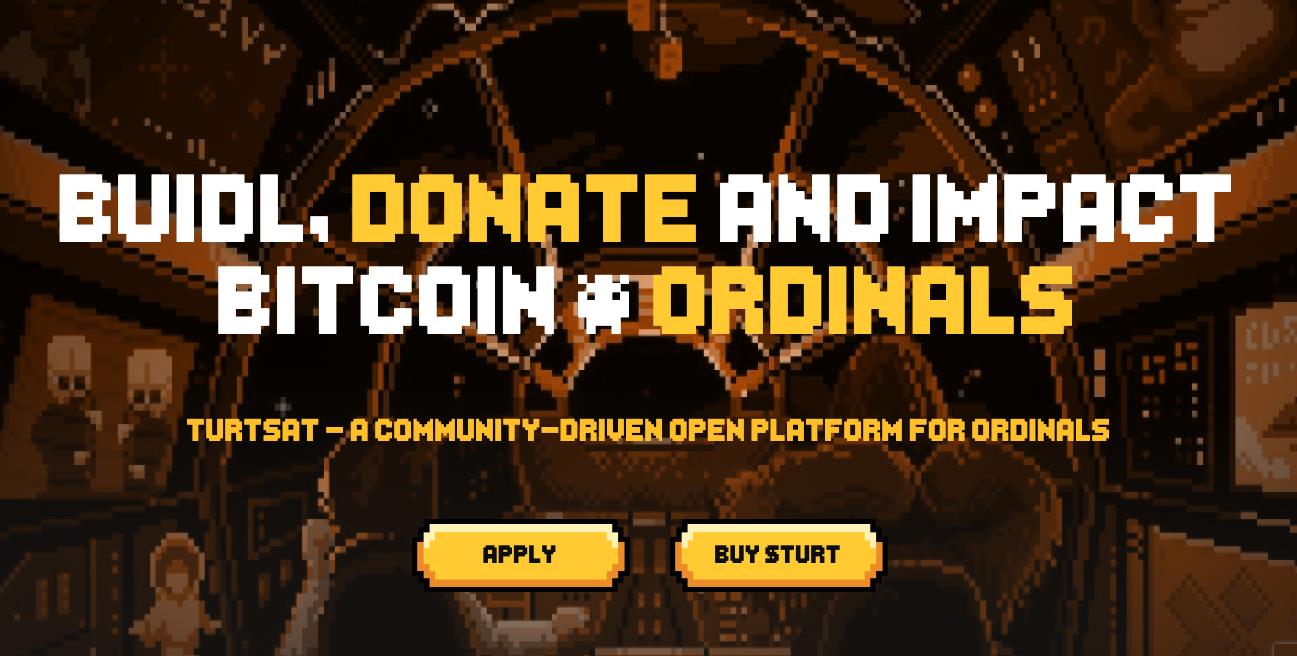
TurtSat supports both BRC-20 and ERC-20 dual markets, allowing BRC-20 users to trade via Unisat and OKX. Since launch, TurtSat has successfully deployed four BRC-20 projects: CHAX (an asset protocol), MUBI (a cross-chain bridge), NHUB (an Ordinals aggregation platform), and DOVA (an Ordinals lending platform). These projects are early builders of BRC-20 infrastructure and have seen strong post-launch performance.
Conclusion
Recently, the BTC ecosystem has gained strong momentum, with leading token ORDI climbing steadily and new inscriptions emerging constantly—drawing attention even to inscriptions on other public chains. Under these conditions, demands for services like lending and aggregation within the BTC ecosystem have become increasingly urgent. A proposed extension protocol based on Ordinals theory—BRC-100—has also become a hot topic in the community. Designed specifically for enabling decentralized applications on Bitcoin Layer 1, if BRC-100 sees widespread adoption, the BTC ecosystem could enter a new phase of explosive growth, further energizing functional markets across the ecosystem.
Bitcoin remains the largest cryptocurrency by market capitalization. The emergence of Ordinals has opened a new chapter in the evolution of the Bitcoin network and blockchain technology. The Ordinals protocol introduces previously unrealized functionalities to BTC, and as underlying technologies continue to mature, we can expect future innovations to make inscriptions more efficient, secure, and versatile.
Join TechFlow official community to stay tuned
Telegram:https://t.me/TechFlowDaily
X (Twitter):https://x.com/TechFlowPost
X (Twitter) EN:https://x.com/BlockFlow_News
 @TrendX_official