The Dilemma of friend.tech and the Rise of Imitators: Who Will Lead the New Wave of SocialFi?
TechFlow Selected TechFlow Selected
The Dilemma of friend.tech and the Rise of Imitators: Who Will Lead the New Wave of SocialFi?
Alongside the surge in popularity of friend.tech, various copycat platforms have emerged one after another. This article systematically organizes these clones and conducts an analysis of several relatively well-known ones.
 Navigating Web3 tides with focused insights
Author: veDAO Research Institute
Following the surge in popularity of Friend.tech, numerous clone projects have emerged. The veDAO Research Institute has conducted a comprehensive review and analyzed several of the more notable clones.
Friend.Tech has arguably become the hottest project in the crypto space recently, amassing over 25,633 ETH in trading volume within just two weeks of launch. It later secured seed funding from Paradigm, and its total value locked (TVL) has grown exponentially. However, on October 4, Friend.Tech experienced a net outflow of 2,100 ETH—the largest single-day withdrawal since launch—causing TVL to drop by 7.8% in one day.
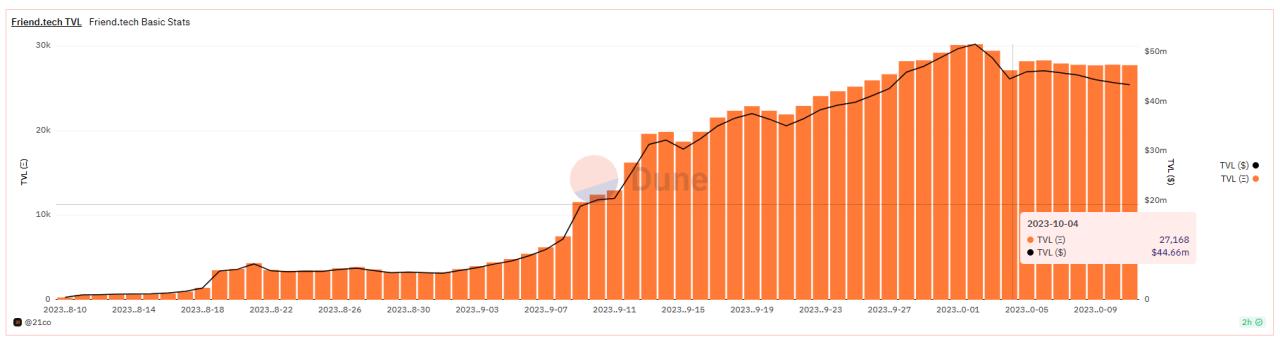
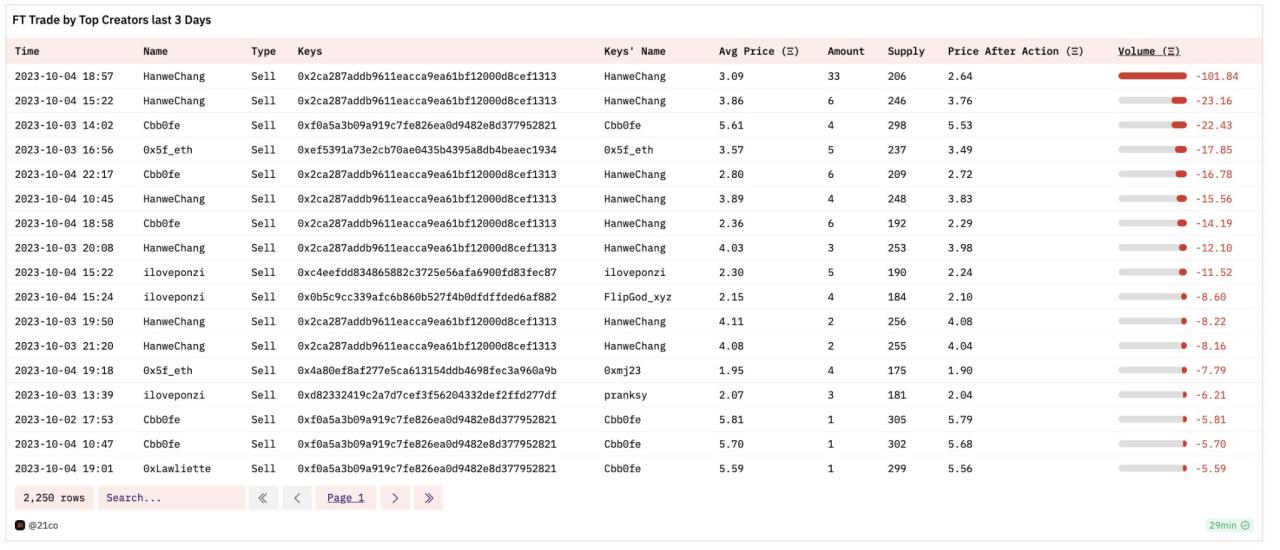
Analyst Tom Wan noted that the TVL decline was primarily due to whale Hanwei Chang selling 43 of his own Keys, earning a total profit of 140 ETH. This caused the price of his Key to plummet from 3.89 ETH each to 2.64 ETH. The resulting sell pressure enabled Chang to repurchase 15 of his own Keys at a lower price. Nevertheless, Friend.Tech’s reserve remains around 10,510 ETH (approximately $17 million), suggesting that the whale merely took profits but has not fully withdrawn funds and could re-enter at any time. As of October 11, TVL had not yet recovered to pre-October 4 levels.
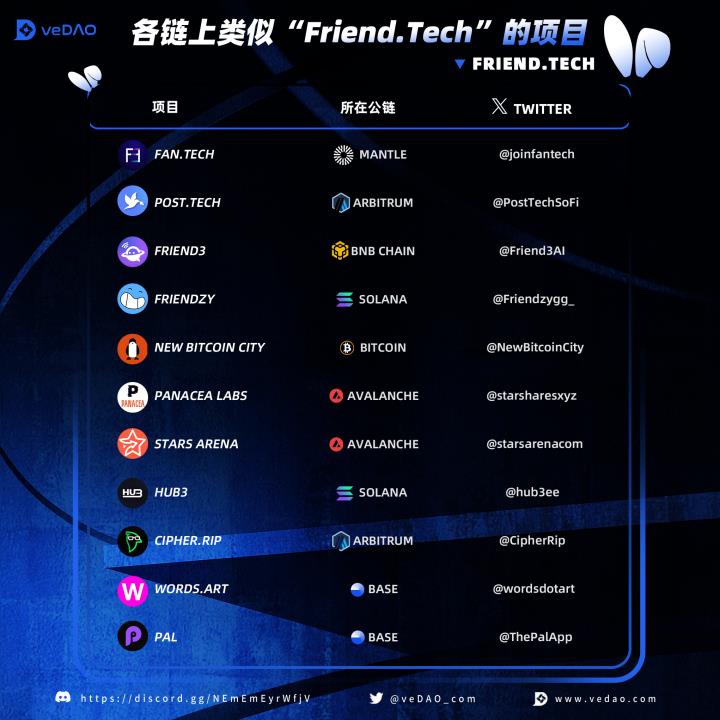
On another front, Friend.Tech's success has inspired many similar clone projects across various blockchains, including Stars Arena launched on Avalanche (the "Snowchain"), and HUB3 and Friendzy on Solana. This report by veDAO Research Institute will outline the current status and development trajectory of Friend.Tech while introducing and analyzing these related clone projects.
Friend.Tech
For background and introduction to Friend.Tech, please refer to the previous article by veDAO Research Institute.
Recent Developments at Friend.Tech
Recently, Friend.Tech has been hit by a series of SIM-swapping attacks. These incidents have shaken user confidence and drawn attention from the broader cryptocurrency community. On September 30, a user named "froggie.eth" reported on X (formerly Twitter) that their Friend.Tech account was compromised via a SIM-swap attack, resulting in the loss of over 20 ETH. Subsequently, on October 3, user Daren Broxmeyer disclosed that he too suffered a SIM-swap attack, losing 22 ETH. By October 5, four different Friend.Tech users had collectively lost 234 ETH.
Cryptocurrency investment firm Manifold stated that Friend.Tech poses potential risks: if approximately one-third of Friend.Tech accounts are linked to phone numbers, roughly $20 million worth of assets could be threatened by targeted attacks on users across the network. Manifold further emphasized that theoretically, the entire Friend.Tech platform is at risk due to its security configuration, making it critical to prioritize resolving these vulnerabilities.
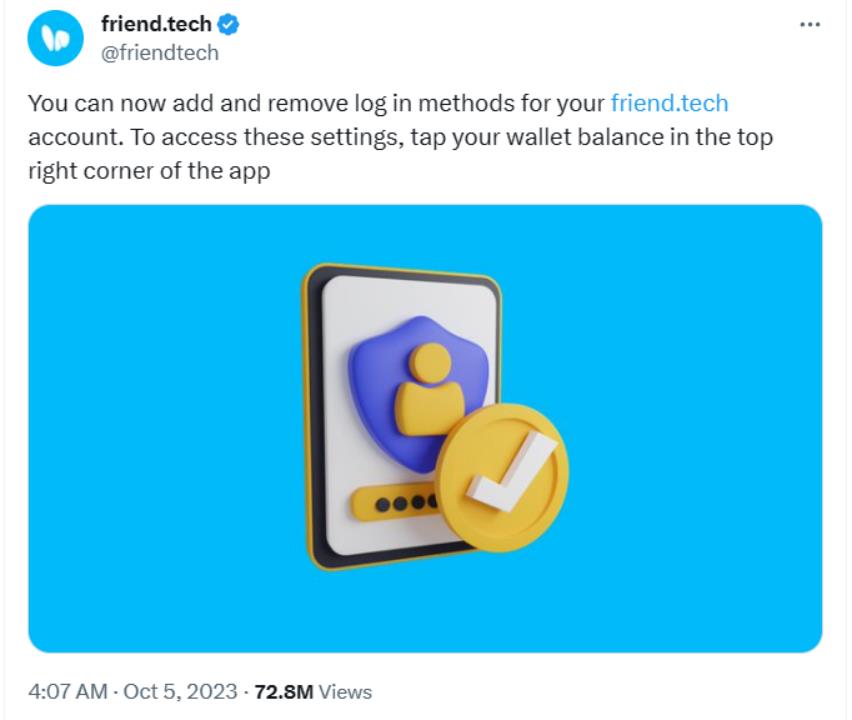
In response to these attacks, Friend.Tech introduced a new feature on October 5 allowing users to change their login methods. The team also clarified issues regarding the inactive two-factor authentication (2FA) function provided by Privy.
Prospects for Friend.Tech
Due to the recent SIM-swap attacks and the high-profile sell-off mentioned earlier, Friend.Tech's popularity has sharply declined, prompting widespread speculation about whether it is a “pump-and-dump” scam. Some users have pointed out that the developers were previously involved in controversial projects such as Tweet DAO and Kosetto. In both cases, the teams heavily promoted themselves on social media with promises of exciting developments before abruptly disappearing.
Another major concern among investors is that Friend.Tech lacks an official roadmap or white paper. To date, the project has released no documentation outlining its progress or goals. The only information available is that the project is currently in beta phase, with plans to transition to wide release after six months. The team has not indicated whether any new features are under development.
Nonetheless, Friend.Tech remains a standout SocialFi project. Its innovative fusion of social interaction and crypto has generated immense buzz and discussion, achieved exceptionally high TVL and profitability, and undoubtedly holds significant implications for the SocialFi sector. Friend.Tech effectively enables monetization of existing social media brands, filling a crucial gap in today’s DeFi landscape.
However, there is still ample room for improvement. First, the high transaction fees and prevalence of bots mean that, aside from top-tier KOLs, most profits go to project insiders and sophisticated traders—this is a key reason why average retail users hesitate to engage deeply. Second, the platform suffers from limited functionality. The UI has consistently drawn user complaints since launch, and current social interactions are restricted to text and image exchanges within Rooms. Room owners must rely on external platforms or tools to implement creative ideas, as even basic features like raffles or voting are absent within Rooms. If SocialFi focuses solely on financial incentives without delivering a compelling product experience, it risks failure once the economic model collapses.
Clones
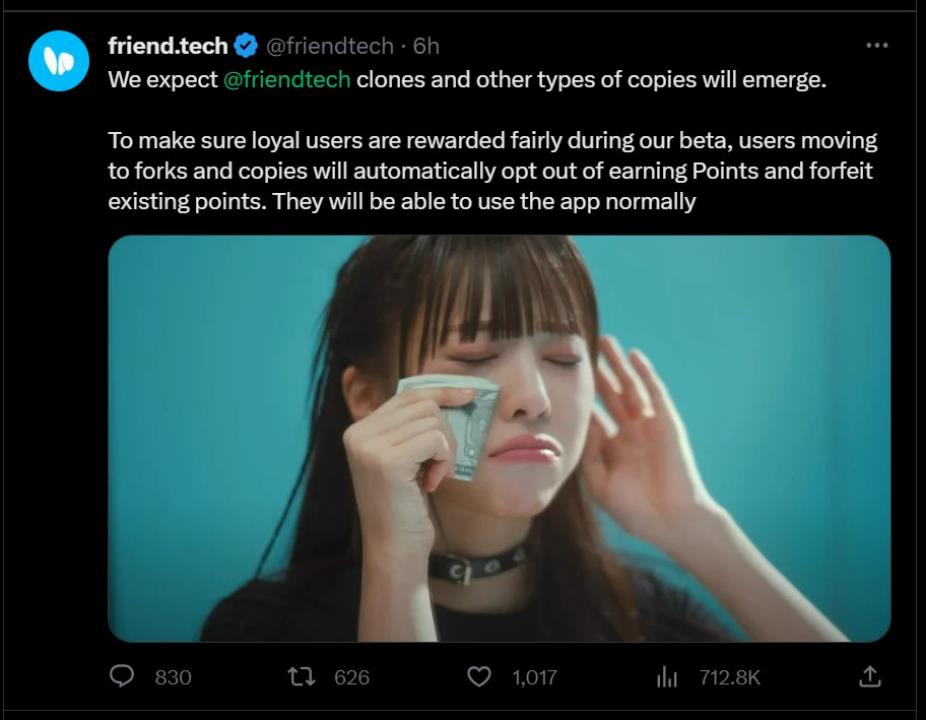
On August 29, Friend.Tech posted a tweet stating: "To ensure loyal users receive fair rewards during our test period, users who switch to forks or clones will automatically stop earning points and forfeit their existing points. They will still be able to use the app normally." This statement clearly implied that users could use clone platforms, but doing so would disqualify them from earning or retaining points on Friend.Tech. Five hours later, however, Racer, one of Friend.Tech’s founders, issued an apology, admitting that the earlier statement restricting users from using cloned or山寨 versions stemmed from fear and zero-sum thinking.
This episode illustrates that clones hold substantial value in the social space—even market leaders feel threatened by their proliferation. Those familiar with the early boom of Web2 will resonate deeply, having witnessed how platforms like Facebook and Twitter ultimately dominated the social arena. Let’s now examine some promising Friend.Tech clones:
Stars Arena

Stars Arena is a Friend.Tech clone built on the Avalanche blockchain. It renames “Keys” as “Tickets.” Unlike Friend.Tech, which requires an invite code, Stars Arena only requires users to link their Twitter account to begin trading Tickets. Purchasing someone’s Ticket grants access to their private chat room. This private room differs slightly from Friend.Tech: in Friend.Tech, other members cannot see messages unless the room owner replies, whereas in Stars Arena, all messages between the host and members are visible.
Beyond this, Stars Arena introduces a public feed where users can post Twitter-like updates and receive retweets, likes, and tips. Additionally, it adjusts the revenue-sharing mechanism: 7% of transaction fees go to creators, 2% to the platform, and 1% to referrers.
Data from Dune shows that since October 2, Stars Arena has seen a clear increase in daily TVL, peaking at around $1.45 million on October 6. Currently, both the Avalanche Foundation and its founder Emin Gün Sirer are participating, along with several major Friend.tech whales.

However, on October 6, Stars Arena suffered a critical security breach, resulting in nearly $3 million in losses for Avalanche. On October 9, Stars Arena announced it had successfully secured the necessary funds to cover the $3 million loss. The team also confirmed that smart contracts would only be reactivated after a full security audit. At the time of writing, Stars Arena remains under maintenance.
Fan.Tech
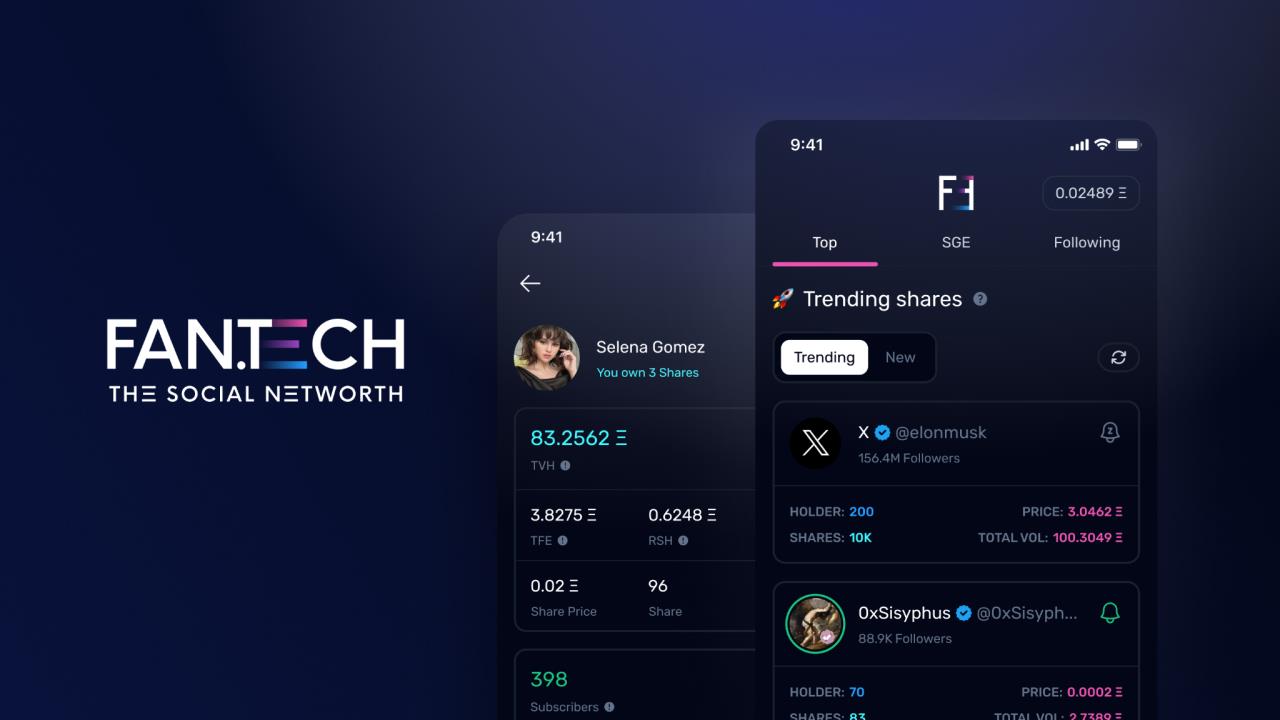
Fan.Tech is another SocialFi project centered on tokenizing social value, where “Keys” are referred to as “Shares.” Unlike Friend.Tech, Fan.Tech offers a smoother UI/UX experience, featuring public/private posts, visibility into X accounts you follow, analytics pages, and dark mode support—making it significantly more mature than Friend.Tech. Moreover, Fan.Tech provides a roadmap and white paper.
Key features include Share Generation Events (SGE), which introduce bidding mechanisms for new accounts to deter bots, and a referral system enabling users to earn 1% of transaction fees from invited users’ Share trades, plus a portion of Shares.
CipherRIP
Formerly known as cipher.fan, CipherRIP launched on Arbitrum. Users can buy and sell Cores, equivalent to Friend.Tech’s Keys. By using CipherRIP, users earn points toward an airdrop of CIPHER tokens scheduled for October 15. The airdrop totals 100 million CIPHER, representing 10% of the total token supply. To publish content on the platform, users must either hold 5 Cores or have Core holdings valued above 0.01 ETH. Notably, the project’s launch announcement was retweeted by the official Arbitrum account.
After being retweeted by Arbitrum’s official X account, CipherRIP attracted 14,468 new users on October 10—about 75.6% of its current user base. According to DefiLlama, CipherRIP captured approximately $215,000 in fees that same day. Current TVL exceeds 320 ETH, setting new records continuously.
HUB3

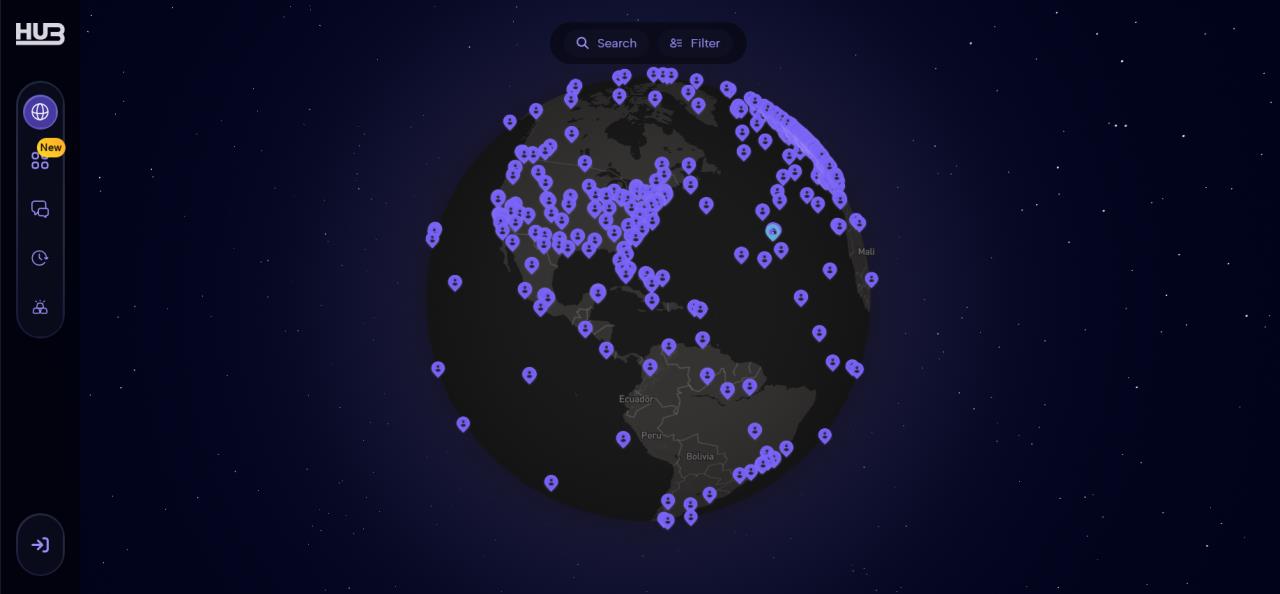
HUB3 is a social project built on the Solana blockchain, with rules largely mirroring Friend.Tech. A key difference is that HUB3 features a world map interface. When users register, their location appears on the map, enabling interactive exploration through clickable geographic points.
Conclusion
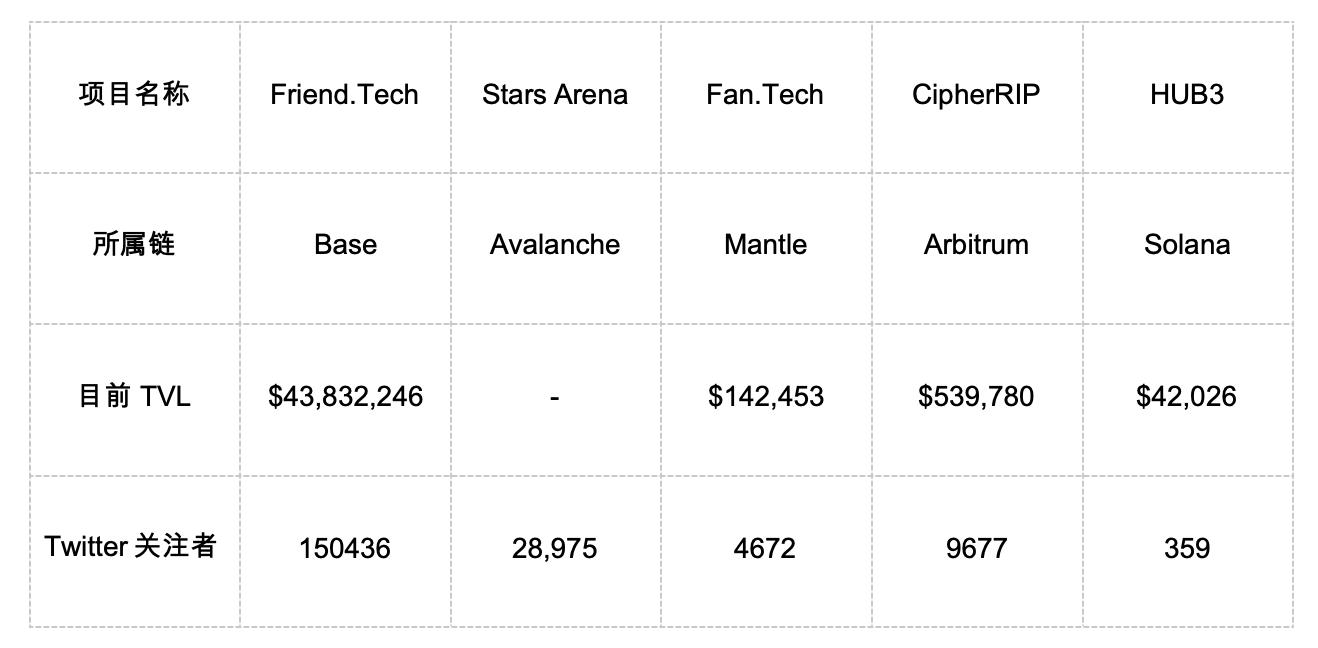
As illustrated in the chart above, Friend.Tech continues to dominate the SocialFi sector. Yet, high-quality clones are rapidly emerging, introducing optimizations and innovations in chain selection, economic models, and feature design. Collectively, these participants may drive the maturation and prosperity of the sector, continuously improving product quality and enhancing user experience.
At its core, SocialFi remains P2E (People-to-Earn). Compared to other P2E models, users gain not only token rewards but also traffic and influence. More fundamentally, it addresses the long-standing issue of platforms freely exploiting KOLs' influence, enabling creators to reclaim the value generated by their own reach.
We have good reason to believe that this ongoing wave of momentum will propel the SocialFi sector into a new stage of rapid growth, transforming our social interactions in novel ways, reshaping relationships, and becoming a new engine of expansion in the crypto world.
Join TechFlow official community to stay tuned
Telegram:https://t.me/TechFlowDaily
X (Twitter):https://x.com/TechFlowPost
X (Twitter) EN:https://x.com/BlockFlow_News
 @TrendX_official