The Rise of TempleDAO: From Forked Project to Independent Innovation, Building the Yield Aggregation Product Origami
TechFlow Selected TechFlow Selected
The Rise of TempleDAO: From Forked Project to Independent Innovation, Building the Yield Aggregation Product Origami
TempleDAO aims to become a liquidity layer for protocols built on top of TempleDAO, similar to Frax.
 Navigating Web3 tides with focused insights
Written by: Samuel McCulloch
Compiled by: TechFlow
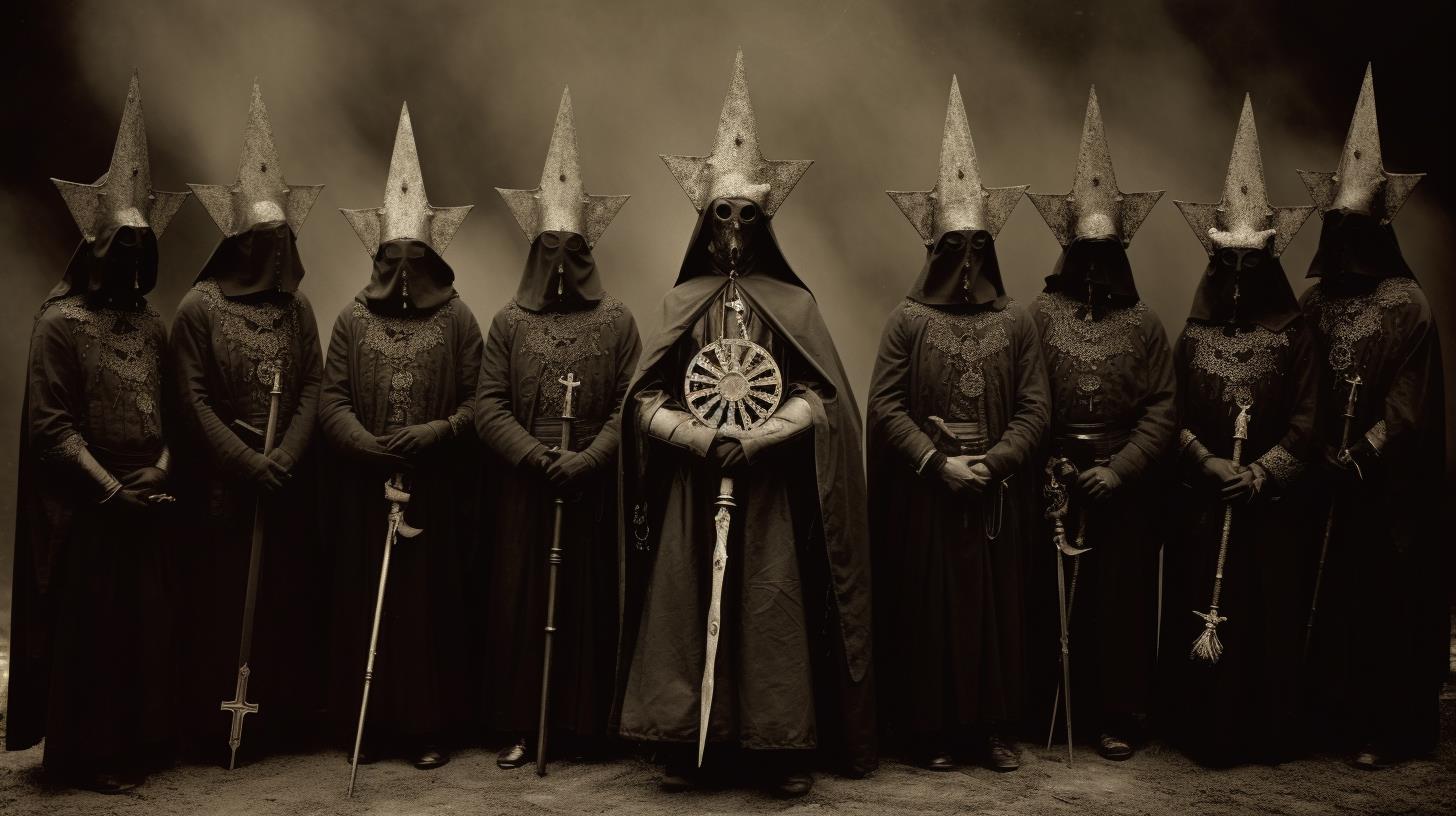
Launched two years ago, TempleDAO has seen remarkable growth. Miri and Lux, the two leaders of TempleDAO, joined this episode of the podcast to discuss Temple's rise over the years and the evolution of TempleDAO.
Miri has been part of the crypto space since 2016, having run a company for six years prior to joining TempleDAO. He met Lux through another DAO, and together they embarked on a larger mission.
Lux began as a community contributor in the Olympus Discord and eventually became the master of TempleDAO’s mysterious cave. It was precisely this on-chain church-like atmosphere that attracted him and helped propel Temple to new heights. From striving within the Discord server to creating captivating memes and videos, his journey is filled with dedication. Lux’s work in finance and product management highlights that in the world of crypto, what matters goes beyond token issuance—it's also about the culture built around it.
The Evolution of TempleDAO
Originally a fork of Olympus, TempleDAO has continuously adapted flexibly to the shifting tides of the crypto landscape. As Lux mentioned, TempleDAO’s philosophy has evolved from “stake & chill” to purely “chill.” Users simply buy TEMPLE, and the protocol works its magic—eliminating the need for additional staking steps.
Recently, they launched RAMOS—Randomized Automated Market Operations—inspired by FRAX’s AMO mechanism. The core purpose of RAMOS is to stabilize the trading range of the TEMPLE token and ensure its price aligns with TempleDAO’s growing treasury, represented by the Treasury Price Index (TPI).
RAMOS serves as a dynamic price stabilization mechanism for the TEMPLE token, activating when its spot price deviates from the Treasury Price Index (TPI).
For example, if the spot price drops more than 1% below TPI, a potential rebalancing may randomly occur. However, if the price falls more than 3% below TPI, a forced rebalancing will be triggered. Conversely, if the spot price rises more than 3% above TPI, RAMOS can add TEMPLE to liquidity pools or withdraw stablecoins to strengthen the treasury.
RAMOS executes these AMOs on its Balancer 50/50 TEMPLE/BB-A-USD LP.
Although RAMOS’s primary goal is to align TEMPLE’s price with TPI, TPI is not an absolute benchmark.
RAMOS also features robust anti-manipulation mechanisms, setting it apart from typical market protocols.
First, it uses randomized timing for rebalancing, making prediction and manipulation difficult. This unpredictability means rebalancing events might happen 2–3 times per day, but not continuously.
Second, RAMOS dynamically determines the amount of Balancer Pool Tokens (BPT) used in each rebalancing, withdrawing between 50%–100% based on price impact to realign TEMPLE’s price with TPI.
Finally, to encourage genuine price discovery, downward rebalancing is intentionally designed to be relatively mild, allowing TEMPLE to occasionally trade above TPI.
Origami: Temple’s New Product
TempleDAO’s Origami offers automated compounding yield products based on underlying strategies, maximizing returns without sacrificing liquidity. The first available strategies are GLP and GMX on Arbitrum and Avalanche.
Origami was created to support emerging yield tokens and leverage opportunities. It adopts a money market model, simplifying typically complex leveraged market strategies into a seamless staking experience.
How Does Origami Work?
Users deposit tokens such as GMX or GLP into a vault and receive an Origami vault share token (“ovToken”). As staking rewards are captured and sold, the vault’s reserves increase, raising the “reservePerShare” ratio—the relationship between the vault’s reserves and circulating ovTokens.
Essentially, ovToken is a re-pricing token. Due to compounding effects, the vault’s reserves grow faster than the number of ovTokens in circulation. Therefore, when users redeem their ovTokens, they receive more underlying tokens than initially deposited.
In Origami’s initial phase, known as the “First Fold,” only GMX and GLP tokens are accepted. When wrapped into Origami tokens (“oToken”), they represent the reserve backing each ovToken. Users simply deposit GMX to receive ovGMX.
Here’s an example using a GMX vault:
-
A user deposits 1 GMX, creating 1 oGMX. This GMX is then sent to gmx.io to earn yield, while User A receives 0.90 ovGMX.
-
Origami earns yield on the GMX token.
-
At redemption, the user returns 0.90 ovGMX and receives 1.17 GMX—a 17% increase compared to the initial deposit.
Origami charges a 5% fee on harvested rewards.

Conclusion
From its beginnings two years ago to its current standing, TempleDAO exemplifies the power of community-driven growth, resilience, and continuous evolution. As mentioned in the interview, TempleDAO aims to become a foundational liquidity layer for protocols built upon it—akin to Frax. Under the leadership of Miri and Lux, and backed by a dedicated community of “Templars,” TempleDAO holds immense potential to contribute significantly to the DeFi landscape. The future holds great promise for TempleDAO.
Join TechFlow official community to stay tuned
Telegram:https://t.me/TechFlowDaily
X (Twitter):https://x.com/TechFlowPost
X (Twitter) EN:https://x.com/BlockFlow_News
 @FlywheelDeFi



![In-depth Analysis of Trade[XYZ]: How Were 92 Markets and 98% HIP-3 Trading Volume Established?](https://upload.techflowpost.com/upload/images/20260716/20260716061117965147.jpeg?x-oss-process=image/resize,p_50/quality,q_80)