








Understanding AlloyX: A Liquid Staking Protocol for RWA
TechFlow Selected TechFlow Selected
Understanding AlloyX: A Liquid Staking Protocol for RWA
DeFi protocol AlloyX aggregates tokenized credit, bringing liquidity, composability, and efficiency to the real-world asset ecosystem.
 Navigating Web3 tides with focused insights
Credit protocols in real-world assets (RWA) present an immediate opportunity for AlloyX. RWAs are tangible assets that exist in the physical world and are brought on-chain through tokenization—such as loans, accounts receivable, invoices, and real estate. Since 2020, tokenized RWA credit has grown steadily as a crypto asset class, with deposit sizes exceeding $1 billion at its peak in mid-2022. However, as only one type of asset appears to dominate within RWA, this asset class is not only fragmented but also highly diverse across various parameters investors must consider.
The underlying tangible assets (i.e., borrowers) in asset pools of credit protocols represent numerous regions, industries, business types, and maturity cycles. For example, the Goldfinch Senior Pool represents on-chain loans from African, Latin American, and Southeast Asian countries, covering fintech debt, consumer loans, and small and medium enterprise (SME) loans. When investors allocate funds into a credit protocol, in addition to considering the broad risk categories within the asset pool, they must also account for DeFi and blockchain-related risks such as blockchain downtime, smart contract vulnerabilities, governance risks, and protocol-level risks.
Furthermore, due to the long-term nature of their asset holdings, RWAs often struggle with liquidity demands for withdrawals. Loans within credit protocols have maturities spanning several years, meaning capital invested in RWAs faces long lock-up periods. During these periods, users cannot withdraw their USDC or use it as collateral. If a credit protocol still wishes to support withdrawals, it may set aside a portion of total locked value to handle redemptions—but this significantly reduces the performance return of the asset pool due to idle cash.
Origins
Early on, the AlloyX project team experienced firsthand the challenges faced when working with credit protocols and borrowers—even when real-world enterprises have sound financial and operational health, liquidity providers still encounter significant difficulties when lending real-world assets on-chain. As operators and investors, they identified inefficiencies and recognized an opportunity to create a platform that abstracts away complexity, enabling anyone to easily invest in real-world assets and earn returns.
Product
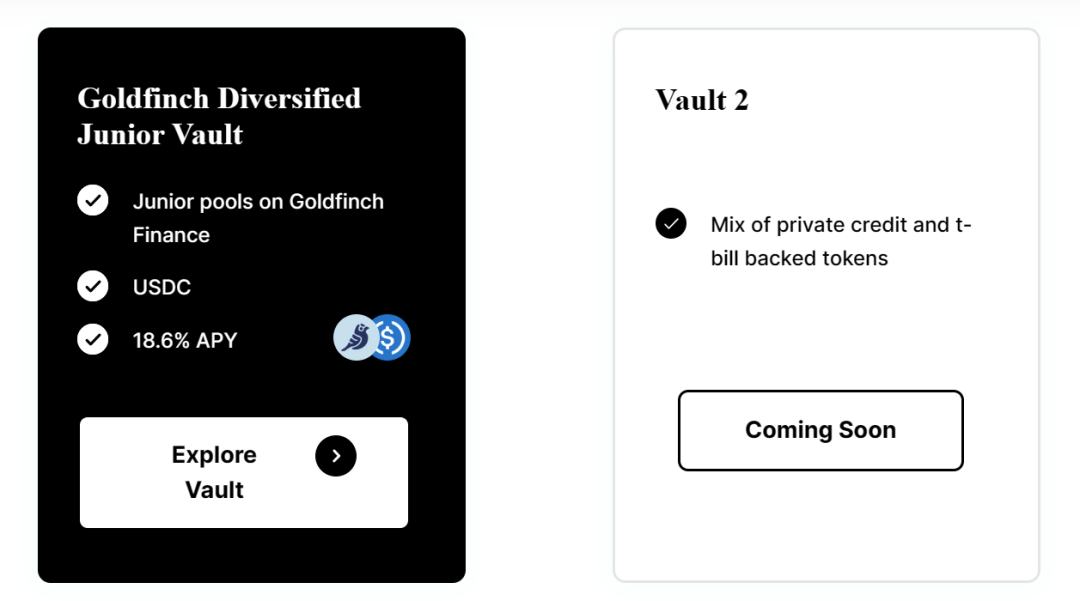
Users select a "themed vault" and deposit USDC into it, after which they receive vault tokens. When users wish to withdraw, they simply exchange their vault tokens back into USDC.
How RWA Vaults Work
AlloyX’s vaults combine over-collateralized tokenized credit from Credix Finance (digital tokens backed by real-world assets such as loans or debt instruments) with smart contracts for tokenized U.S. Treasury bills, offering DeFi investors access to liquidity in real-world assets. Vaults on AlloyX follow a simple yet powerful principle: Lenders provide funds to the vault in the form of USDC, and the vault aggregates deposited tokens, allocating and operating them according to preset vault parameters. By depositing USDC, users receive vault tokens based on a floating exchange rate and begin earning yield. What sets AlloyX apart is its automated allocation across multiple credit protocols, where USDC is deployed according to each vault’s allocation rules.
To accommodate investor preferences, users can also create their own vaults upon approval from the AlloyX DAO. These customized vaults can invest in whitelisted assets from partner credit protocols. Once funds are deposited into a vault, the allocated capital is routed to partners.
Repayments from underlying borrowers flow back through credit protocols into the vaults on the AlloyX platform. Depending on their liquidity needs, investors can redeem their share of repayments either as vault tokens or convert them into USDC.
Every entity investing or redeeming on the AlloyX platform must complete Know Your Customer (KYC) verification with compliance partner Parallel Markets, saving time and resources otherwise spent on multiple KYC processes across individual protocols.
AlloyX simultaneously creates a seamless and efficient ecosystem that allows users to customize strategies in the tokenized credit market, earn yields on capital, and benefit from automatic reinvestment of repayments.
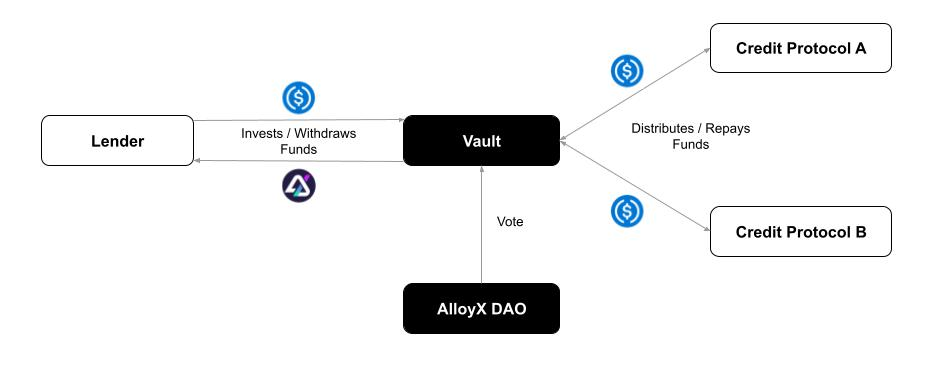
- Borrowing: Users can lend their capital to a vault to earn yield. Deposit USDC and receive vault tokens at a floating rate. Repayments are automatically reinvested or converted into USDC to meet redemption needs.
- Management: Users can choose to create their own vault containing target assets and trading desks sourced from partner credit protocols.
Overcoming Challenges in Tokenized Credit
AlloyX was developed by a team with deep expertise in fintech lending, credit underwriting, investment, and blockchain technology. The core founding team personally experienced the limitations of tokenized credit investments while investing in RWAs.
Unlike some crypto loans, most credit protocols require investors to lock up their funds for fixed terms, meaning they cannot use the funds as collateral or access them before maturity. As RWA lending grows, lenders will demand easier access to liquidity and the ability to diversify their investment positions. So far, crypto investors have lacked options to easily implement custom strategies in RWA. Investing across different credit protocols requires going through multiple KYC onboarding processes, consuming significant time, effort, and resources. All of these issues represent barriers to RWA growth.
To date, the total amount of active RWA loans has reached $530 million and continues to grow even during the cryptocurrency bear market. Analysts from Coinbase and Coinmetrics both expect tokenization of RWA to continue growing significantly—a trend driven by increasing institutional adoption and demand for transparent, compelling use cases in crypto.
Advantages of AlloyX
-
Flexibility and Composability: Users gain control by tailoring investment strategies to their own liquidity needs, target returns, and risk tolerance. Easily blend real-world correlated assets including U.S. Treasuries to maximize investment potential.
-
Enhanced Liquidity: Users can withdraw partial funds before loan maturity when needed, gaining rights to liquidity.
-
Diversification: Build diversified investment strategies using pooled funds from various credit and U.S. Treasury protocols. By spreading investments across multiple pools and assets, users can potentially reduce risk and maximize returns.
-
Simplified Onboarding: Save time, energy, and money through a streamlined onboarding process. Complete just one KYC to access multiple credit protocols, eliminating repetitive procedures.
-
Automated Reinvestment and Reduced Cash Drag: AlloyX simplifies the investment process by automatically reinvesting funds in each payment cycle. This keeps user capital continuously working for returns, minimizes idle cash, and maximizes yield potential.
Roadmap
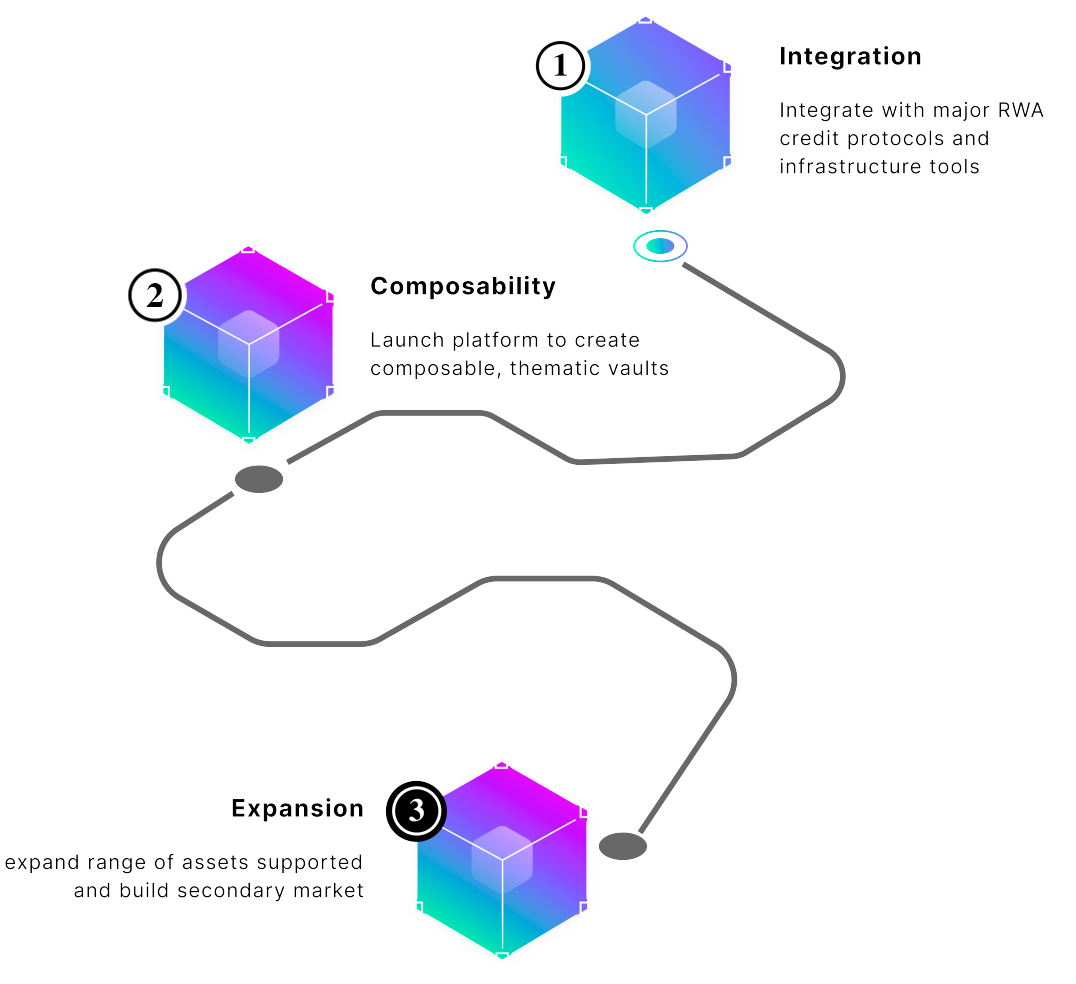
Through seed funding, the team has already integrated with nine credit protocols. Vaults combining Credix Finance and U.S. Treasuries will launch in early Q3 2023 and will be available to non-U.S. users. The product roadmap will continue focusing on integration with other DeFi protocols and building out the DAO structure. Since inception, AlloyX has achieved a Total Value Locked (TVL) of $5 million and delivered average yields above 18%.
Summary
At the end of June, AlloyX announced a $2 million pre-seed round led by Hack VC, with participation from Circle Ventures, Digital Money Group, Stratos, Lecca Ventures, MH Ventures, very Early Ventures, Archblock, dao5, and Credix Finance.
AlloyX aims to build diversified credit portfolios on the blockchain backed by real-world businesses. AlloyX enables protocols, DAOs, and institutional investors to easily construct diversified RWA investment strategies, providing borrowers with a flexible and efficient platform to manage all RWA investments according to their personal yield, risk, and liquidity preferences. AlloyX believes that by leveraging crypto and blockchain technology, it can make a more efficient, transparent, accessible, and fair contribution to the RWA DeFi ecosystem.
Join TechFlow official community to stay tuned
Telegram:https://t.me/TechFlowDaily
X (Twitter):https://x.com/TechFlowPost
X (Twitter) EN:https://x.com/BlockFlow_News
 Go2Mars Capital






