Collapse or Revival? A Look at the Current State of LUNA 2.0 and the Terra Ecosystem
TechFlow Selected TechFlow Selected
Collapse or Revival? A Look at the Current State of LUNA 2.0 and the Terra Ecosystem
M6 Labs has reviewed the current state of Luna 2.0, the Terra ecosystem, partnerships, and technical progress, presenting their current status to us.
 Navigating Web3 tides with focused insights
Written by: Kadeem Clarke
Translated by: TechFlow
Introduction
The collapse of Luna and UST last year, Do Kwon's legal issues, and the decline of the Terra ecosystem remain fresh in memory.
However, after these negative events, not everything has completely died out. Rebuilding and speculation have become intertwined, leading to renewed activity around LUNA Classic or LUNA 2.0.
What is the current state of the Terra ecosystem? Is it still worth paying attention to?
With these questions in mind, M6 Labs has reviewed the current status of LUNA 2.0, the Terra ecosystem, partnerships, and technological developments, presenting a clear picture of their present situation.
The previous UST crash led to a blockchain split—also known as a hard fork—creating a new blockchain and token that now operates independently.
LUNA or LUNA 2.0 refers to the new LUNA token generated from the fork, while the original LUNA token is now known as LUNA Classic or LUNC. Over 65% of holders supported the revival plan following the launch of the new platform.
Terra is a blockchain project created by Terraform Labs, serving as the foundation for numerous stablecoins and decentralized applications. Terra USD, or Terra $UST, uses an algorithmic mechanism to maintain its peg to the US dollar.
Terra UST is an algorithmic stablecoin designed to reduce the volatility inherent in cryptocurrencies like Bitcoin. The previous version of the Terra protocol expanded to allow developers to create Terra DeFi projects based on stablecoins.
Terra and LUNA are the two cryptocurrencies used within this project. Terra is a stablecoin standard linked to fiat currencies and other assets. For example, TerraUSD (UST) is pegged to the US dollar, while TerraKRW (KRT) is pegged to the South Korean won.
The network’s staking and governance asset is the native token LUNA. Users stake LUNA to gain governance rights, become validators, and earn rewards. Users can also use LUNA to mint Terra’s UST tokens or other tokens pegged to their native currency.
However, it should be noted that although these stablecoins are linked to fiat currencies, they are not backed by them. Instead, the LUNA token functions as part of an algorithmic stablecoin system.
An algorithmic stablecoin is a digital asset whose value is maintained through a set of rules rather than being tied to physical assets. This approach allows Terra users to invest in price-stable tokens without holding the underlying physical form.
Luna 2.0
Luna 2.0 is the latest version of Terra (LUNA), aiming to introduce a fork and airdrop for the Terra blockchain. The primary goal of this new initiative within the Terra ecosystem is to restore trust in the stablecoin.
History
Terra Luna launched in April 2019 on the Cosmos blockchain. Initially priced at $0.19, its value fluctuated between $0.19 and $0.30 during the first few months. Do Kwon, founder and CEO of its parent company Terraform Labs, had been working with co-founder Daniel Shin on developing the ecosystem since January 2018.
In 2019, Kwon discussed the origins of his blockchain on CNBC, emphasizing that digital assets increase in value only when they innovate and deliver real utility to users.
How does Terra 2.0 work?
Terra 2.0 is an update to Terra Classic.
Although Terraform Labs and Do Kwon will not be involved in Terra 2.0, the company behind Luna and Terra proposed a “strong revival plan” aimed at effectively rescuing the entire Terra Classic ecosystem by launching a new Terra chain. This was the first plan to carry the Terra 2.0 designation.
While there are strong indications that Terra 2.0 will avoid the same fate as its predecessor, cryptocurrency exchanges and tech entrepreneurs remain divided over the viability of supporting the Terra 2.0 blockchain.
Do Kwon’s original proposal focused on validating every invalid block and transaction across the blockchain network to enable the growth of the new LUNA token and Terra 2.0. This plan would be implemented via a hard fork, meaning Terra 2.0 would not be directly linked to LUNA Classic but would remain on the same blockchain.
Although Do Kwon’s proposal was considered, it required broader support. Ultimately, Terra 2.0 is not built upon the original Terra blockchain but instead runs on an entirely new blockchain—the new Terra. The original LUNA token has been replaced by LUNA Classic.
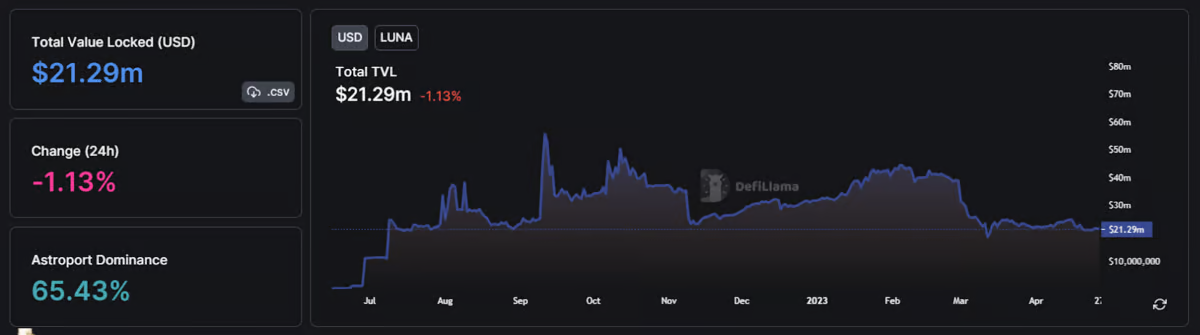
What consensus mechanism does Terra 2.0 (LUNA 2.0) use?
The Terra 2.0 cryptocurrency blockchain uses a standard proof-of-stake consensus algorithm to validate transactions. At any given time, 130 validators participate in network consensus, with voting power determined by the amount of LUNA 2.0 bonded to each node. Validators are rewarded with gas fees and a fixed annual inflation rate of 7%.
LUNA 2.0 token holders contribute to consensus by delegating their tokens to validators. Validators typically stake their own funds alongside those of their delegators. In this system, validator nodes retain a commission before distributing rewards to delegators.
What makes LUNA unique?
The following factors make LUNA an attractive crypto asset:
Fast cross-border payments:
Terra stablecoins enable seamless, low-cost cross-border transactions globally. With an average block time of six seconds, Terra facilitates rapid transactions worldwide.
Low transaction fees:
Transaction fees on the Terra blockchain are among the lowest in the cryptocurrency space.
Interoperability:
Terra operates via the Terra Bridge, a cross-chain system enabling interoperability for Terra tokens. Terra tokens can be transferred between Binance Smart Chain and Ethereum, with ongoing efforts to support Solana as well. Terra also runs CHAI payment software, allowing users to seamlessly complete payments on its blockchain.
Automated liquidity pools:
After depositing, tokens are automatically staked within the protocol, saving users time and effort in finding liquidity pools. You can easily use Terra tokens across many applications built on its protocol.
What is the difference between LUNA 2.0 and LUNA Classic?
Despite notable similarities, LUNA Classic and LUNA 2.0 are distinct. Under the new governance plan, the Terra network has split into two chains. The old chain will continue as Terra Classic with the Luna Classic token (LUNC), while the new chain featuring the LUNA token will be known as LUNA 2.0.
Rather than being fully replaced, the old LUNA will coexist with LUNA 2.0. Any Terra Luna DApps will prioritize LUNA 2.0, and the developer community will begin building DApps and adding utility to the new token. However, algorithmic stablecoins are not included.
Terra Classic will retain its community, as many investors and traders opposed Do Kwon’s recovery plan and the new chain. Terra Classic still maintains a large and dedicated fanbase. The Classic community has agreed to burn as many LUNC tokens as possible to reduce supply and increase individual token prices.
What happens to the old Terra blockchain?
Both TerraUSD and LUNA Classic are native tokens of the old Terra network. The goal of this blockchain platform was to provide a peer-to-peer electronic cash system. UST and LUNA were the two tokens available on this blockchain.
Since UST is a stablecoin, it is directly pegged to the US dollar, meaning its value is expected to stay close to $1. The LUNA token plays a crucial role in maintaining UST’s peg. A standard contract-based algorithm keeps the peg stable by burning LUNA tokens to keep UST at or near $1, which enables the creation of new tokens.
On the original Terra platform, users could exchange LUNA tokens for UST and vice versa at a guaranteed price of $1, regardless of market fluctuations. Eventually, however, TerraUSD failed to maintain its dollar peg, causing its value to plummet sharply. The exact cause of this de-pegging remains unclear.
When this occurred, the algorithm powering the platform attempted to correct the issue by issuing far more LUNA tokens than usual. Indeed, the total LUNA supply surged from over 700 million tokens around May 5, 2022, to 7 trillion just eight days later. As a result, LUNA lost 99.9% of its total value. By flooding the market with trillions of new coins, the individual coin value dropped to fractions of a cent.
The original LUNA token was renamed LUNA Classic and listed under the ticker LUNC, as it became essentially worthless. Meanwhile, the old Terra blockchain will effectively cease to exist. UST stablecoin is the only component of the Terra blockchain that will be completely removed. Even though new LUNA coins will be issued, no new stablecoin will be launched.
Terra Ecosystem
The Terra ecosystem places a strong emphasis on DeFi applications, giving rise to what is known as Terra Finance (TeFi). The sheer number of native projects built on Terra and their ability to attract significant capital at early stages demonstrate the quality of the ecosystem.
Astroport Protocol
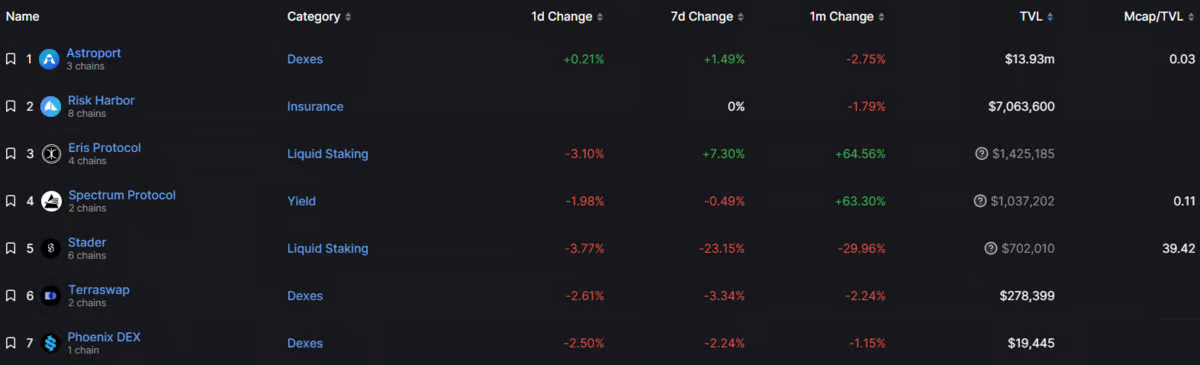
Similar to the relationship between Uniswap and Curve, Astroport aims to serve as the core DEX or automated market maker within the Terra ecosystem, facilitating the exchange of all assets on Terra. Within seven days of launch, 23,379 unique wallet addresses deposited over $1.2 billion into the protocol. Additionally, Astroport’s unique token distribution model and long-term staking design help protect the protocol from sudden outflows in the short term.
It is one of the most important dApps on LUNA, with a total value locked (TVL) of $13.93 million.
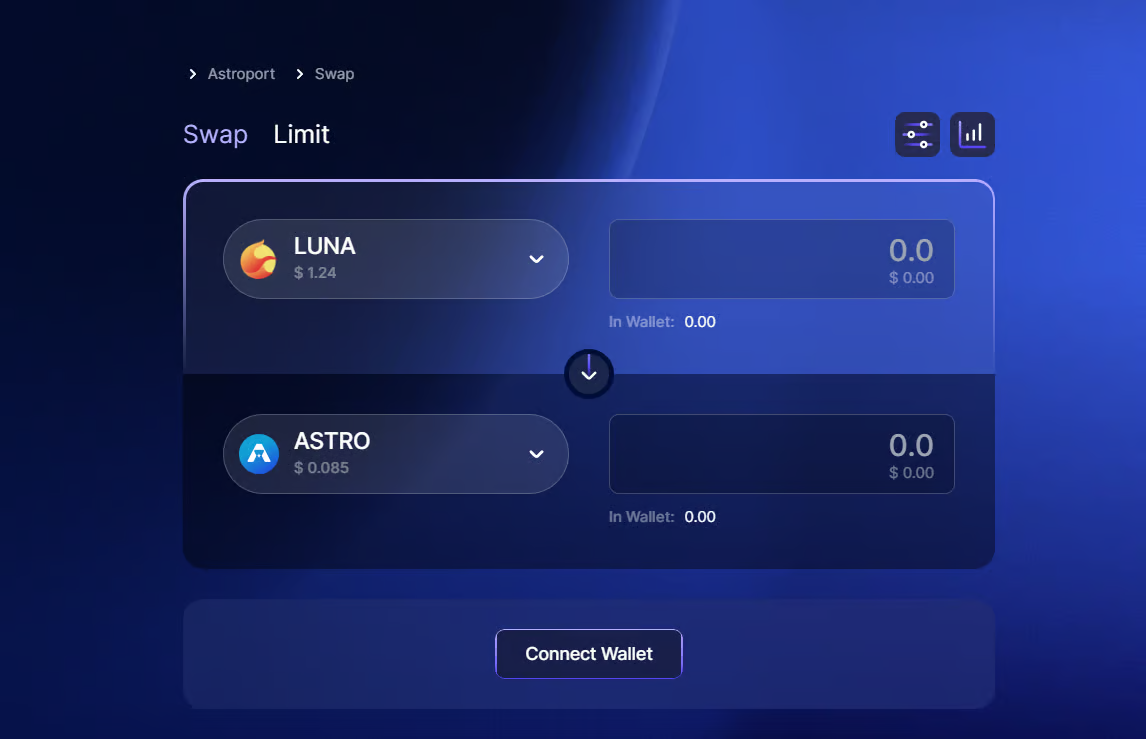
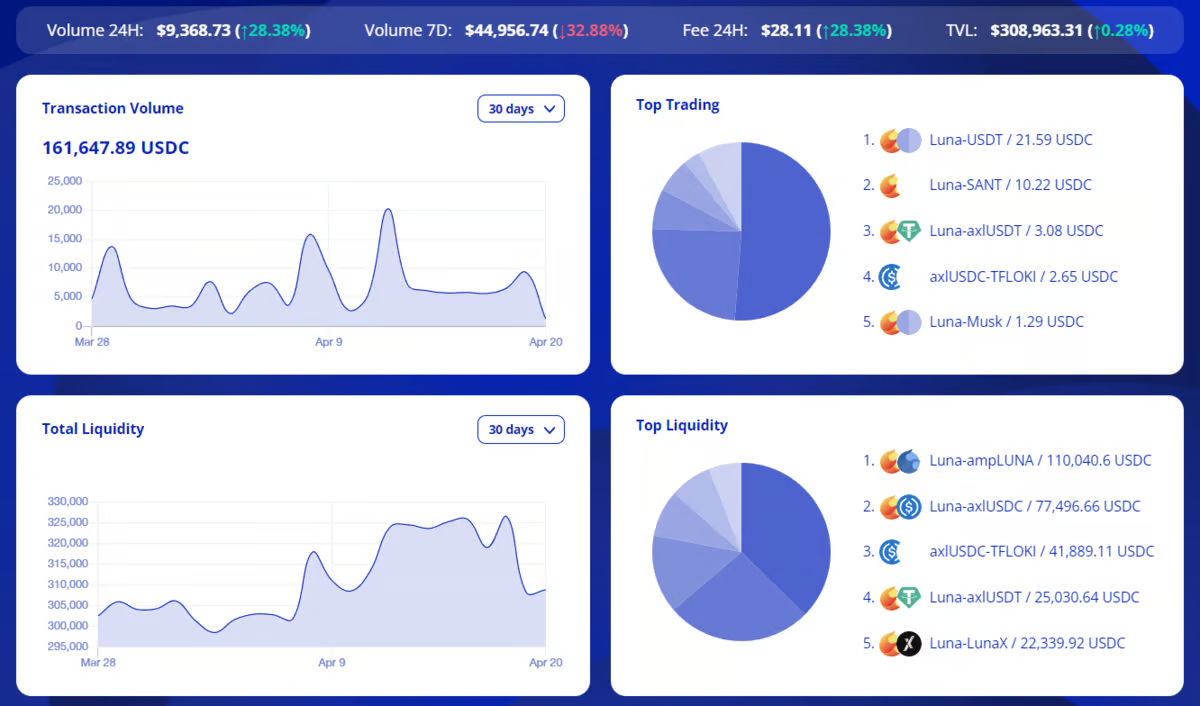
1. TerraSwap
TerraSwap was the first AMM protocol on Terra, similar to Uniswap. The main difference is that TerraSwap does not allow users to freely list tokens or create pools.
In short, TerraSwap allows users to swap tokens on the Terra blockchain and create liquidity pairs. These liquidity pairs (called pools) provide the necessary liquidity for trading blockchain tokens. Pools track the balances of two assets to ensure sufficient tokens are always available for trades. Users who provide liquidity receive LP tokens as rewards.
TerraSwap is the original TerraSwap protocol.
2. Prism Protocol
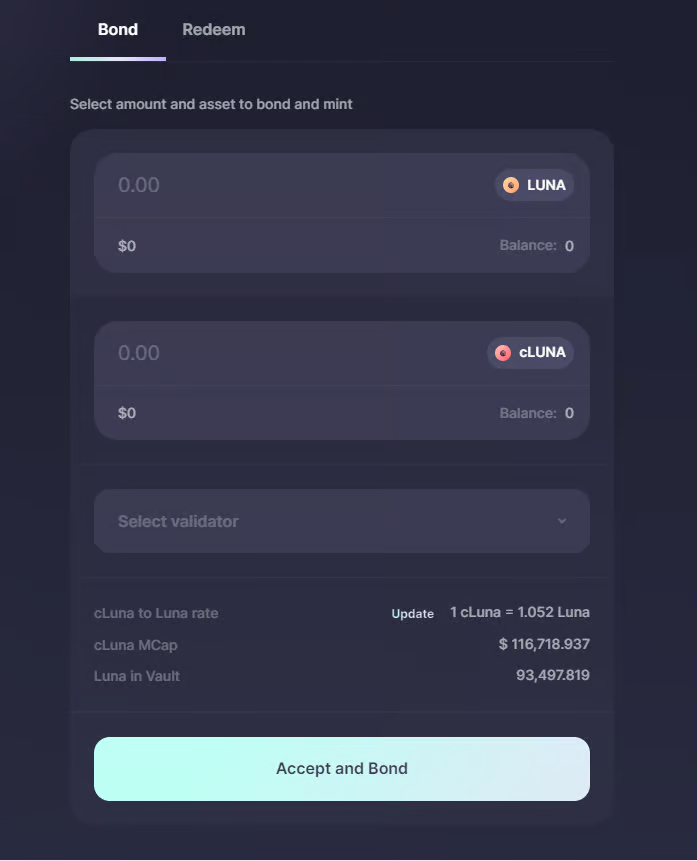
Prism Protocol is one of the most unique protocols on Terra. It allows users to split yield-generating assets into two separate components—a principal portion and a yield portion—thereby creating new asset classes. Users can maximize exposure to price or yield while avoiding liquidation risk.
Since PRISM tokens are the base asset in all liquidity pools, users must hold PRISM along with other assets to provide liquidity. Those wishing to participate in governance can stake their PRISM to obtain xPRISM and earn a share of protocol fees.
Currently, PRISM only supports splitting Terra’s native token LUNA into pLUNA and yLUNA. In the future, PRISM plans to extend this functionality to more Layer 1 tokens and high-APY mining pools, offering multiple maturity options to lock in yields. Users can also place limit orders for token swaps via Telegram and receive alerts when orders are executed.
3. Risk Harbor
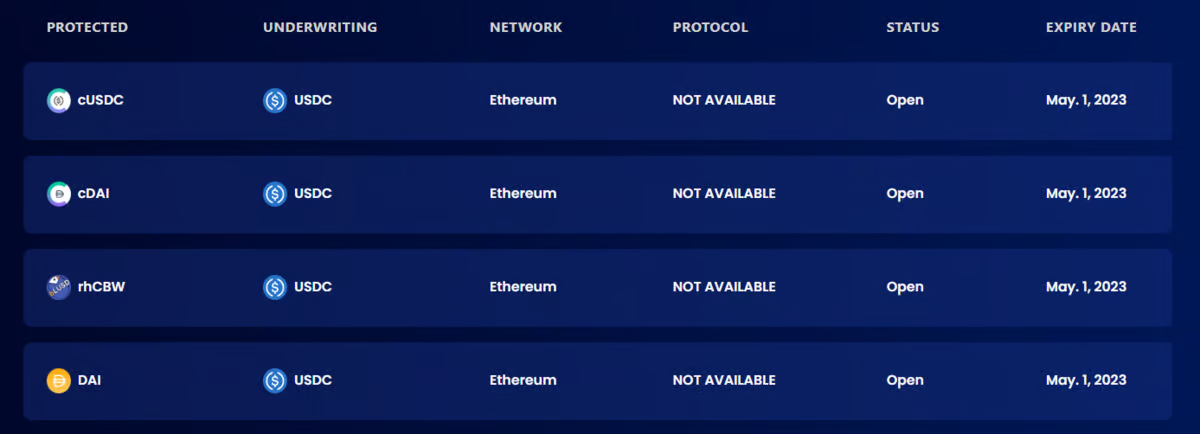
Risk Harbor is a DeFi risk management marketplace that protects liquidity providers and stakers from smart contract hacks and exploits using an automated, transparent, and fair claims process.
Risk Harbor’s core belief is that every crypto asset should be protected without relying on trusted intermediaries, enabling a truly permissionless and open financial system accessible to all.
Unlike other decentralized insurance models, Risk Harbor adopts a parametric protection methodology. Its algorithmic, transparent, and fair solution eliminates the need for oracles and third-party institutions while enabling near-instant payouts.
Individual users can purchase the parametric protection they need through Risk Harbor. Underwriters create risk pools using predefined parameters, and buyers choose which pools to invest in. Premiums are paid upfront and proportionally added to the respective underwriter’s pool.
4. Spectrum Protocol
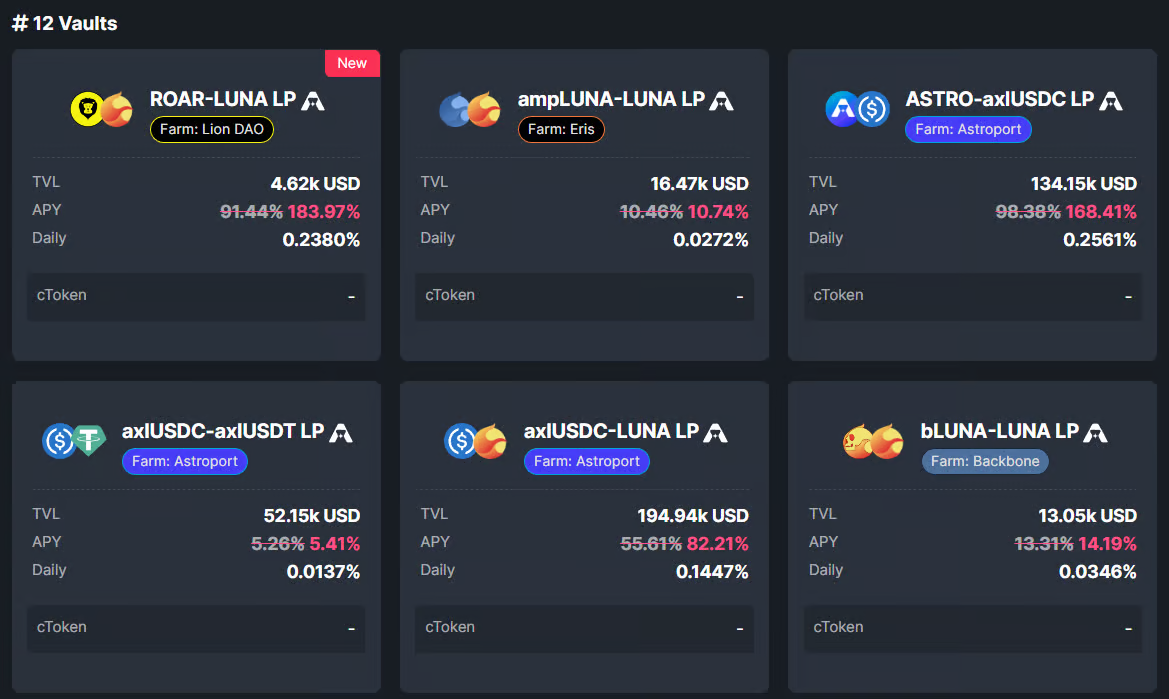
Spectrum Protocol is a decentralized yield optimization platform that enables users to earn compounded returns on their liquidity mining activities.
Using smart contracts to secure and manage various investment strategies, Spectrum Protocol automatically maximizes returns from different liquidity pools and other yield-generating products within the Terra ecosystem.
Spectrum Protocol’s main product is Vaults, where users can provide liquidity or stake their crypto tokens (SPEC, MIR, ANC, mAssets, etc.). Users can opt for an auto-compounding strategy, under which the vault increases the number of deposited tokens by reinvesting rewards back into the original LP, or choose an auto-staking strategy, where the vault automatically stakes rewards into corresponding governance rights to further boost earnings.
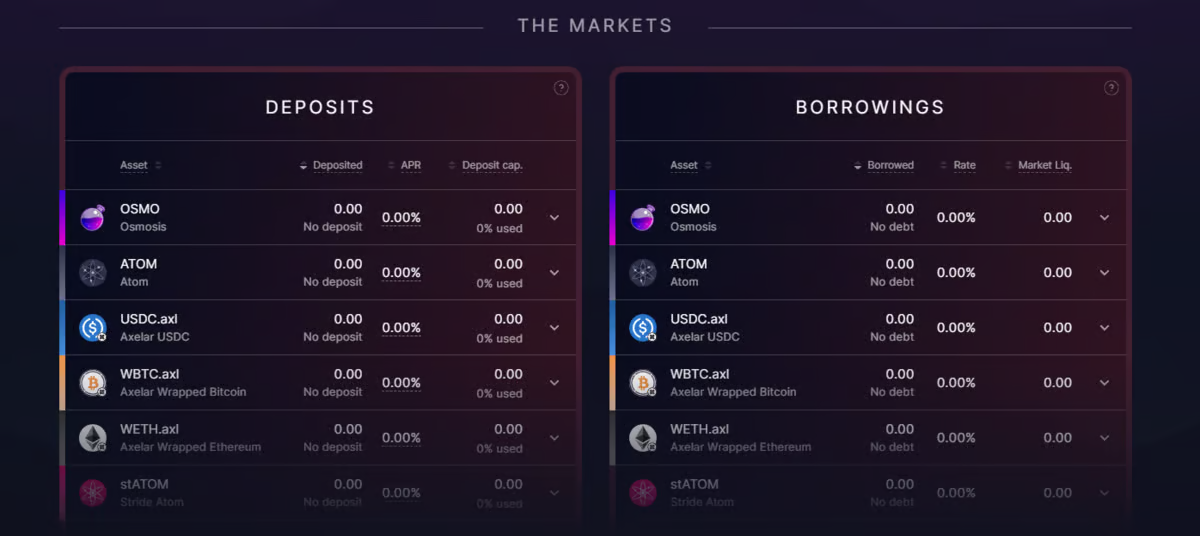
5. Mars Protocol
The collapse of Terra Luna caused the cryptocurrency market to lose $60 billion. Platforms like Mars Protocol have re-emerged, while others like Pylon Protocol have faded away.
Mars is one of the primary lending platforms on Terra Luna.
Mars Protocol’s new plan includes launching an independent Cosmos application-specific chain on January 31. This new feature will make it easier for blockchains in other Cosmos ecosystems to engage in lending and borrowing.
Partnerships
The project has had numerous past and present partners. From a purely research perspective, these partnerships hold strategic value. Allina Health, The McKnight Foundation, AmeriCorps, Omaha Public Schools, and Washington Nationals are just a few examples. The project boasts over 300,000 Twitter followers and solid social media influence.
As the total size of DeFi grows, the utility of DeFi stablecoins will increase. LUNA’s overall utilization rate is healthy, helping maintain stability.
Moreover, Terra focuses on decentralized finance and needs significantly higher user adoption to pose a real challenge to dominant blockchains.
Alliance: Harnessing the Power of Incentive Coordination
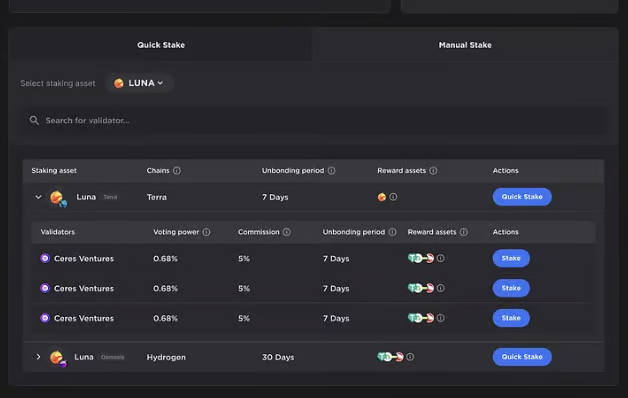
Following the overwhelming approval of Proposal 4717, the LUNAtic community has successfully integrated the Alliance module into the Terra mainnet, opening up a range of possibilities for growth and cross-chain collaboration.
Alliance represents a paradigm shift in the expansion of decentralized economies.
Notably, chains such as Migaloo and Kujira have decided to integrate it.
The ability to achieve large-scale coordination among different participants through economic incentives is an exciting development emerging from the internet’s transition from Web2 to Web3. Alliance, an open-source Cosmos SDK module, extends this concept by enabling blockchains to coordinate incentives with adjacent chains, developers, and users, thereby strengthening and expanding their ecosystems.
The core objective of Alliance is to function as an economic tool that directs the monetary policy (i.e., staking rewards) of decentralized economies toward desired goals. This is achieved by allowing users to stake multiple tokens on a single chain and receive a portion of the native staking rewards—an innovation previously unseen in Web3.
Alliance is a dynamic tool that can adapt as ecosystem needs evolve. It can convert any token into an Alliance asset and adjust its reward weight and yield through chain governance. Both users and decentralized economies can leverage Alliance to:
-
Diversify and increase staking yields—By setting yields above 0%, new and low-liquidity chains can supplement their native staking rewards with uncorrelated, less volatile, and more liquid Alliance assets. Larger, more mature chains can diversify their native staking rewards by incorporating external tokens as Alliance assets with yields above 0%. Users can diversify and increase rewards by staking on one chain, bridging their LSD to another chain, and staking again, earning a second yield denominated in that chain’s native token.
-
Attract users, liquidity, and developers—By assigning lower yields to Alliance assets, chains of any size can attract new users and liquidity from cross-chain staking and bridging. Staking creates a positive feedback loop: higher usage leads to greater liquidity, which attracts more developers to build dApps, further increasing usage and liquidity, and so on.
-
Incentivize application developers—Alliance can distribute L1 staking rewards to holders of ecosystem application tokens, allowing users of the most promising apps to earn directly from L1 fees and inflation. Communities can also use Alliance to fund the development of key ecosystem applications (e.g., DEXs, money markets, NFT markets) or novel DeFi primitives.
-
Deepen liquidity for core token pairs—Chains can boost liquidity for desired token pairs by treating LP tokens as Alliance assets and assigning them a reward weight greater than 0%.
Conclusion
Given the collapse of its UST stablecoin, the future of LUNA 2.0 cannot be fully predicted. Previously, LUNA hosted several highly popular DeFi projects, but today it is rarely mentioned.
Due to mass departures of investors, developers, and community members—many of whom suffered heavy losses during the collapse of the original Terra ecosystem in May last year—the new Terra blockchain has struggled to capture sufficient market share.
Even though the new blockchain does not include algorithmic stablecoins and thus avoids the risks associated with the old ecosystem’s unraveling, trust in the Terra project appears irreversibly damaged. Many predict that LUNA will eventually drop to zero. However, the future is often not entirely predictable based on past events. Whether Terra LUNA 2.0 succeeds will depend on how well the new chain performs and whether it can regain investor confidence.
Join TechFlow official community to stay tuned
Telegram:https://t.me/TechFlowDaily
X (Twitter):https://x.com/TechFlowPost
X (Twitter) EN:https://x.com/BlockFlow_News
 M6 Labs