








ETHDenver Attendance Summary: What Trends Did We See?
TechFlow Selected TechFlow Selected
ETHDenver Attendance Summary: What Trends Did We See?
Global Stage and Chinese Entrepreneurs
 Navigating Web3 tides with focused insights
Just returned from Denver—the past week was absolutely incredible. Here's my personal take and the emerging trends I observed at the event.
Overall, EthDenver delivered an outstanding experience—far surpassing Consensus and Token2049.
1. A Global Developer Culture
Reportedly, ETHDenver attracted 35,000 attendees and 7,500 hackers. My hotel was a 15-minute drive from downtown, yet every day I kept running into participants in the elevator. One look at each other’s badges, and we instantly connected. Among industry professionals, the ratio of project teams to VCs was about 5:1. The projects were highly international—not just from the U.S., but also significant representation from China, Canada, the UK, Singapore, and Europe. I finally met several North American and European portfolio companies from ArkStream in person. Most active Tier 1 and Tier 2 crypto funds were present, including many European capital firms that rarely show up at such events.
Unlike Consensus, ETHDenver’s strong developer culture made the entire event deeply crypto-native. Meetings with project teams typically involved sitting down immediately, opening laptops, demoing products live, and diving deep into technical details within 30 minutes. I loved this—it felt like going back to 2017 when I first entered the space.

Hackers everywhere
2. Attendee Guide
As a VC, ArkStream’s primary goal is sourcing projects. With so many events happening simultaneously, the most efficient approach remains small gatherings combined with targeted outreach.
Smaller events usually consist of brunches, seminars, or parties with 20–100 attendees. Notable ones I attended included Meet the VC Brekky, Brunch party with Fabric/SevenX, zkNight Afterparty, MIT Alumni Founders' Lunch, Cosmos on Tap, IOSG Old Friends Reunion, and the Founders Club Launch Ceremony—all yielding high-quality conversations and valuable connections.
Targeted sourcing has been our most effective method for crypto networking over the past five years. Our team spent two days before the conference researching all project teams across satellite events like ZK Day and StarkDenver, then scheduled one-on-one coffee chats in advance. Over the week, we identified over 20 promising early-stage projects, many showcasing exciting innovations.
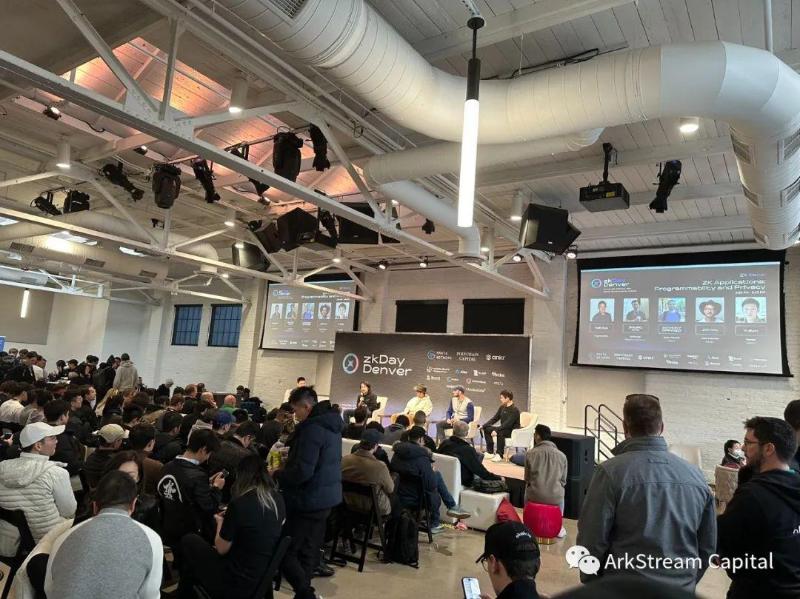
ZkDay Denver venue
3. Key Sectors and Emerging Narratives
ETHDenver featured multiple tracks covering Infra, DeFi, DAO, NFT, and Impact + Public Goods.
Zero-Knowledge (ZK)
ZK was the central theme of the conference, with rapid progress across multiple domains.
1. Infrastructure projects are increasingly adopting ZK technology for optimization—examples include Succinct Labs, which uses inter-chain consensus mechanisms instead of traditional cross-chain bridges, and Hyper Oracle, combining zkWASM with The Graph and Chainlink;
2. Both well-known zkEVM/zkVM Layer 2 networks and native ZK Layer 1 chains showcased their latest progress and ecosystem expansions—StarkNet, Scroll, Manta Network, Aleo, and others were all present;
3. On the core ZK service metric—proof generation—new algorithmic optimizations emerged, including hardware acceleration projects like Cysic and Ingonyama;
4. Several full-chain games built on StarkNet’s tech stack appeared, with Topology being particularly abstract and interesting;
5. Modular blockchain execution layer providers are building ZK-based Rollup SDKs, such as Sovereign Labs;
6. ZK-powered applications continue to expand the DID landscape—from PSE’s foundational Semaphore stack under the Ethereum Foundation, to user-facing solutions like Axiom.
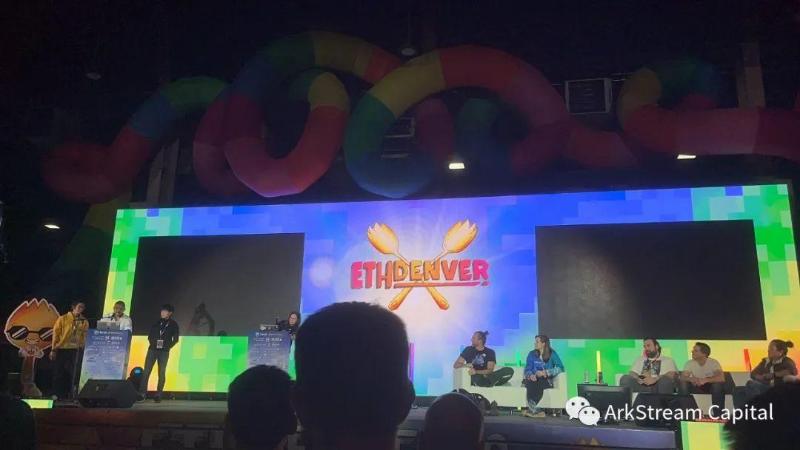
Account Abstraction (AA)
Account abstraction (AA) followed closely behind ZK as a major focus. Despite intense competition, it remains a hot frontier. Just recently, Kristof Gazso—one of the co-authors of the account abstraction proposal EIP-4337—launched Pimlico, and now the core ERC-4337 contracts compatible with Ethereum’s EVM have officially arrived. At ETHDenver, terms like Bundler, UserOperation, and EntryPoint were frequently heard. Teams are exploring gasless transactions, social recovery, and account experiences far beyond what multi-sig wallets like Safe offer. More AA infrastructure projects are beginning to shine by integrating MPC-TSS and offering SDK-first product suites.
Of course, traditional EOA wallets will inevitably adopt AA advancements. Many wallet projects at WalletCon are continuously improving fund security, on/off ramps, UX, and multi-chain support. Overall, the maturation of AA will open the door for a billion Web2 users to enter crypto—making it a definitive mega-trend in the new cycle.
Social & AI
On the narrative front, there were notable breakthroughs in social applications. After two years of social media hype, this year’s projects are more grounded in building real social products for Web3 users. Potential breakout areas include DID-based membership systems, integrated payment and messaging, and fan economies.
It was especially encouraging to meet several AI-focused startups founded by seasoned AI practitioners. Most leverage open-source algorithms from OpenAI, focusing on on-chain data + AI + smart money—enabling natural language execution of complex contract operations like flash loans, MEV resistance, and more. For crypto—a dark forest governed by algorithms—this is truly a blessing.
Looking ahead, as Layer 2 and other infrastructures mature and entry points become more accessible, opportunities in the new cycle starting in 2023 will shift toward the application layer. We expect breakthroughs first in gaming and social, with deeper integration into the real world.
4. Chinese Founders
Chinese-founded projects made up around 20% of ETHDenver, significantly outpacing India and exceeding Japan, Korea, and Southeast Asia. Overall, founder backgrounds have improved dramatically since 2020, and Chinese teams are now competitive at the application layer.
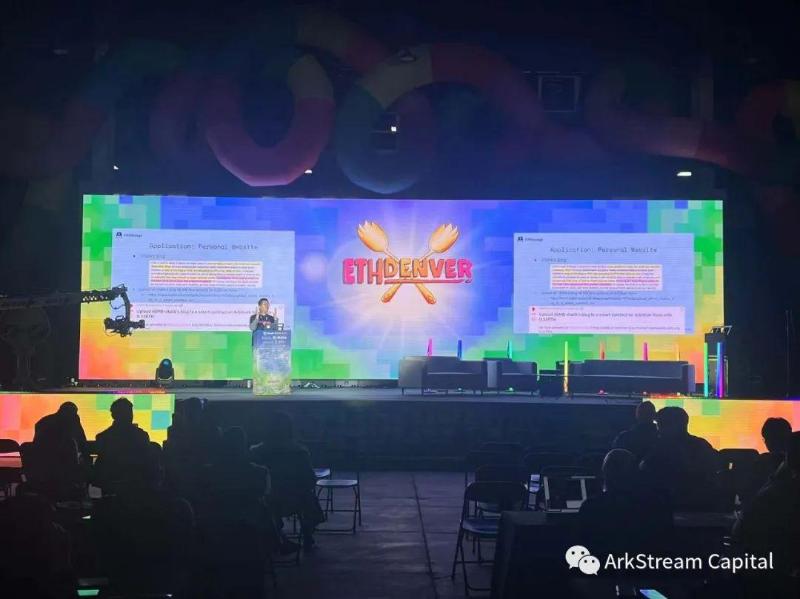
Top-tier Chinese founding teams generally fall into two categories. The first consists of experienced product builders from major Web2 tech companies or startups who are deeply immersed in crypto—this wave began emerging in late 2021, bringing strong advantages in product development and iteration.
The second group includes founders educated and working abroad for extended periods, highly fluent in English—mostly based in New York, Los Angeles, and the Bay Area. These founders excel in business development and fundraising, facing no disadvantage when raising from overseas investors.
Overall, with the rising caliber of Chinese founders and the growing wave of application-layer innovation, “Long China” has become a necessity for every industry participant.
After enduring market downturns, pandemic fatigue, and emotional strain throughout 2022, ETHDenver felt like a gathering pool—tides from around the globe converging together. Chinese founders traveled from all corners of the world, and fresh talent rose one after another. Founders seeking funding are welcome to send decks to [email protected].
ArkStream Capital is a primary market fund founded by native crypto practitioners, integrating investment, strategic advisory, and growth support to empower the next generation of Web3 unicorns. The team hails from institutions including MIT, Stanford, SUSTech, UBS, Accenture, Tencent, and Google. Portfolio companies include AAVE, Filecoin, Republic, FLOW, Pocket, Secret, Secondlive, and others.
Website: https://arkstream.capital/
Medium: https://arkstreamcapital.medium.com/
Twitter: https://twitter.com/ark_stream
Join TechFlow official community to stay tuned
Telegram:https://t.me/TechFlowDaily
X (Twitter):https://x.com/TechFlowPost
X (Twitter) EN:https://x.com/BlockFlow_News
 Arkstream Capital






