Interpreting the Five Major Proposals of Synthetix V3: What's at Stake?
TechFlow Selected TechFlow Selected
Interpreting the Five Major Proposals of Synthetix V3: What's at Stake?
The Synthetix v3 proposal has been unanimously approved by the governance committee. What does this upgrade mean for Synthetix?
 Navigating Web3 tides with focused insights
Author: Westie, Research Analyst at Blockworks Research
Compiled by: TechFlow
The Synthetix v3 proposal has passed with unanimous approval from the governance council—what does this upgrade mean for Synthetix?
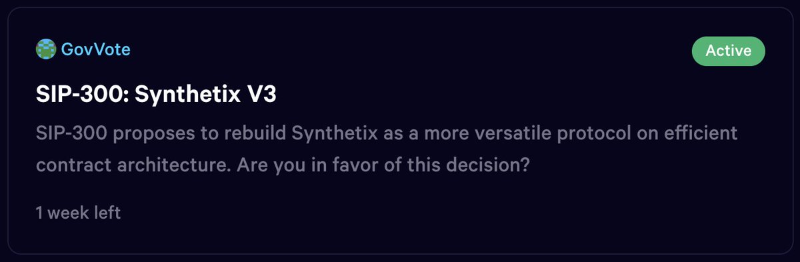
There are currently five active votes related to the Synthetix V3 upgrade:
-
SIP-300 Synthetix V3
-
SIP-302 Pools (V3)
-
SIP-303 Markets (V3)
-
SIP-304 Liquidations (V3)
-
SIP-305 Rewards (V3)
I'll walk through each of them.
-
SIP-300 Synthetix V3: In short, this SIP outlines a shift from V2x to a more modular architecture that alleviates pain points from earlier versions, such as lack of customizability and accumulated technical debt.
-
SIP-302 Pools: This SIP proposes creating distinct debt pools. Currently, Synthetix operates via a single unified debt pool that consolidates liquidity but increases risk and complexity for SNX stakers. V3 enables capital pools based on different market types, with each market having its own collateral and debt positions. As a result, stakers can choose exposure to specific markets, enabling any user to create custom synthetic assets—but at the cost of fragmented liquidity.
-
SIP-303 Markets (V3): This proposal suggests allowing different products built on Synthetix—such as spot or futures markets—to be split by pools, making the system more modular. Similar to how they function today, markets will still accept snxUSD, generate derivatives, and use their pool's liquidity to track traders’ balances.
-
SIP-304 Liquidations (V3): One key improvement is the introduction of a liquidation buffer, giving users a grace period to adjust when their C-Ratio falls below the minimum threshold. Synthetix currently uses a socialized liquidation mechanism, which will return in V3 with some enhancements. This means participants being liquidated will have their collateral and debt redistributed among other participants in their pool.
-
SIP-305 Rewards (V3): This introduces a "Reward Manager" to handle distribution of staking rewards. The system is generic and customizable, supporting other elements such as asset types used (e.g., non-ERC-20) and reward schedules.
So what does all this mean for Synthetix?
First, this leads to greater protocol modularity, enabling easier future upgrades, permissionless creation of assets and their own markets, and opportunities for better scalability of snxUSD.
Currently, if you want to create your own synthetic assets and pools, you must go through the full governance process. Enabling more permissionless creation of these markets will allow for greater creativity and experimentation without exposing all SNX stakers to associated risks.
Additionally, V3 should allow for more assets beyond SNX to be used as collateral (e.g., ETH), opening the door to greater potential liquidity and enabling customization of collateral assets based on a pool’s goals and risk parameters.
Regarding actual implementation timing, the team is currently addressing audit feedback, and due to the volume of input received, it may still take several weeks before deployment on Ethereum mainnet and Optimism is ready.
As for next steps post-vote, SIP-306 outlines the actual migration path, allowing stakers on V2X to transfer their collateral to V3 to support “legacy markets” for a smooth transition. One particularly interesting SIP I’m watching is SIP-312, which would allow pools to support markets across any blockchain.
Join TechFlow official community to stay tuned
Telegram:https://t.me/TechFlowDaily
X (Twitter):https://x.com/TechFlowPost
X (Twitter) EN:https://x.com/BlockFlow_News
 @blockworksres