








Thoughts on Web3 User Growth
TechFlow Selected TechFlow Selected
Thoughts on Web3 User Growth
User growth is the long-term goal of a product, and its essence lies in building a system composed of the product and its users, continuously iterating the product, gradually gaining market share, and achieving sustained growth in user scale and value.
 Navigating Web3 tides with focused insights
We often see many Crypto and Web3 products achieve impressive growth in a short period, only to quickly lose users and eventually spiral into failure. In traditional industries, the stock market has relatively limited and indirect impact on entrepreneurs and their products. However, in Web3, the crypto market exerts tremendous influence: during bull markets, everything rises; during bear markets, over 90% of projects are wiped out. These failed projects frequently share one key trait—under bearish conditions, the project's Token price continuously declines, causing token-based incentives to fail or even harm user interests, leading to severe user attrition.
User growth is the long-term goal of any product, with its core being the construction of a system composed of the product and its users, continuously iterating the product to gradually capture market share and achieve sustained expansion in both user scale and value. From early to late 2022, leading dApps across Collectibles, DeFi, GameFi, and Marketplaces all experienced notable drops in active addresses, while Social & Media showed rapid upward momentum. The following outlines my thoughts on Web3 user growth.
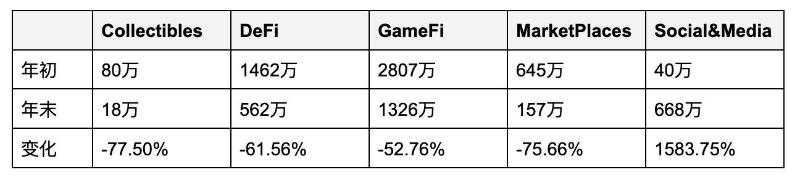
Table 1: Changes in Active Addresses of Web3 Applications in 2022
Fundamental Approach to Web3 User Growth
The bull and bear cycles of the crypto market significantly affect user growth, but founders should not be constrained by macro factors. When pursuing user growth, the first step is identifying the right "market" that fits your product—the "M" in PMF (Product-Market Fit). Rather than greedily trying to serve the entire broad market ("big M"), you should align with your product’s unique characteristics and resource advantages to define your specific target market. Then, focus deeply on this vertical until achieving top-tier market share before considering horizontal expansion. For Chinese-speaking founders, abandoning the Chinese-language community and Chinese users—their natural stronghold—is unwise, equivalent to giving up one-third of global B2B and B2C users and forfeiting their foundational user base.
At the product design and development level, the concept of Minimum Viable Product (MVP) is highly effective. It means launching a product with just enough core functionality to fulfill the most essential use case and create a minimal business loop, then iterating based on market feedback to progressively optimize and enhance the product toward an ideal solution. Developers should avoid attempting to build a fully-featured "complete" product from day one. Instead, identify the single biggest problem your product solves, simplify the user journey, and build an MVP aligned with PMF. In this process, developers must often say “no” to hundreds of good ideas.
If PMF represents the state where a product successfully matches the market, then MVP is the method to reach that state. Taking a PMF-aligned MVP to market constitutes GTM (Go-To-Market). The purpose of GTM is to acquire and retain users, typically following a "funnel model"—a process where user numbers decrease from initial acquisition at the top of the funnel to conversion and retention at the bottom.
Traditional Web2 GTM includes pricing, marketing, and sales, with metrics such as website click-through rates, average revenue per user, and sales cycle time. While the Web2 GTM framework offers mature strategies, Web3 GTM is richer in scope. “Community” is a uniquely Web3 dimension of GTM and serves as a critical traffic pool for user growth. Web3 GTM strategies often incorporate community incentives mediated by Tokens, along with Referral programs—rewarding existing users for bringing in new ones, who may also receive rewards in return.
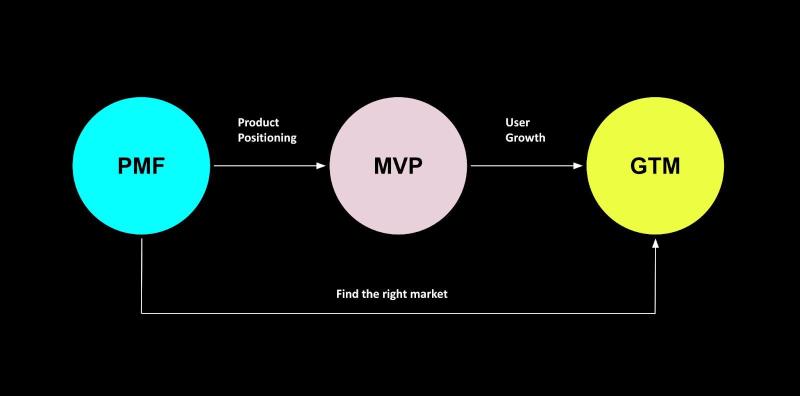
Figure 1: Fundamental Framework for User Growth
PMF (Product-Market Fit): Find the Right Market, Address Real Needs
Key questions to consider regarding Product-Market Fit (PMF):
-
Why are we building this product/feature?
-
Can the product/feature address real market needs?
-
Why build it now rather than later?
CBInsights.com once surveyed reasons behind startup failures, ranking “No Market Need” first at 42%, ahead of “Ran Out of Cash” and “Not the Right Team.” Given its importance, developers must validate market fit during product planning—not after launch. Cognitive biases often cause teams to skip essential market research upfront.
Finding PMF is an iterative cycle: continuously gather feedback, validate assumptions, refine the product to better match the market, and use insights to revisit earlier stages for improvement, increasing alignment over time.
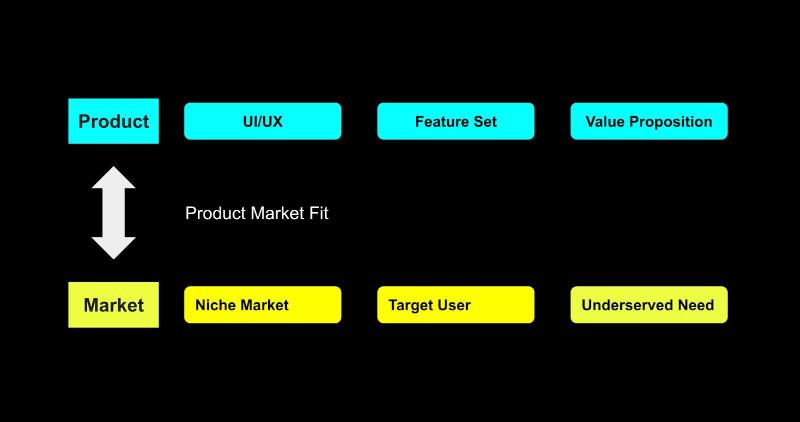
Figure 2: Product-Market Fit (PMF)
1. Identify the Right Niche Market, Define Target Users, Uncover Unmet Needs
Choosing the correct niche market and target audience ultimately determines how well the product meets user needs. By segmenting a large market, we can pinpoint our target user group, build user personas, and conduct demand analysis. Once user profiles are established, the next step is understanding their actual needs. When creating value for users, we must also identify viable market opportunities. If a market’s needs are already well-served, avoid entering it—seek untapped markets instead.
2. Develop Product Strategy, Define Value Proposition, Highlight Differentiation and Core Competitiveness
Users will inevitably compare your product with competitors, so satisfaction largely depends on your product’s standout features—these form your differentiation.
A value proposition clearly highlights these strengths, showing users how your product better satisfies their needs compared to alternatives.
-
Among the various needs your product could address, which one should you focus on?
-
What unique features delight users?
-
How does your product win in competition?
These are the three core questions of product strategy.
3. Carefully Select MVP Feature Set and Conduct User Demand Testing
Once the product strategy and value proposition are clear, begin selecting the essential features for your MVP.
It’s devastating when developers spend months building something only to discover users don’t like it—repeating this leads quickly to running out of cash.
The purpose of an MVP is to validate whether the development direction is correct and to deliver sufficient value at points users care about. After building the MVP, test it thoroughly within the target user group, ensuring feedback comes from a statistically significant number of users in the intended market. Otherwise, feedback might misguide product evolution.
Based on precise user feedback, revise assumptions and return to earlier stages to iterate the MVP until achieving high market-product alignment.
MVP (Minimum Viable Product): Rapid Iteration, Avoid Detours
Key considerations for MVP:
-
What components make up the product/feature?
-
What problems does it solve?
-
What are the future iteration plans for this feature?
-
What is the value of the product/feature?
An MVP refers to a functional, minimal version of the product built with the lowest cost and shortest timeline, designed to showcase the project’s innovation and core value. Though extremely simple, it enables rapid validation of ideas. People tend to追求 perfection, thinking missing a certain feature would be terrible—but in reality, nothing bad happens. Using a non-MVP approach risks spending excessive time on peripheral, auxiliary, or enhancement features in v1, leading to inefficient detours in future updates. Adopting an MVP mindset helps focus attention on what truly matters.
An MVP doesn't need to be perfect—it exists to be tested in the market quickly and validate feasibility. Through market feedback, teams can continuously adjust direction and evolve toward a product with real market potential and protocol-generated revenue.
In fact, an MVP doesn’t even need to be a mainnet product—it can be a well-designed testnet experience that clearly conveys user value. This avoids the trap of spending heavily on a product the market won’t adopt.
Developers should deliver the MVP to the target user group and collect feedback on their preferences, assessing whether users feel they need the product. This validates initial hypotheses about market and user targeting. If validated, rapidly increase product visibility and get seed users actively using it.
Hold frequent internal product meetings to discuss which features aren't needed at this stage. What remains after cutting them is your MVP.
Building an MVP requires the ability to simplify complexity—defining core functionality around fundamental needs, perfecting key user journey steps before adding details or auxiliary features. This simplification skill is essentially about timing—launching features at the right moment in line with business and user development rhythms. Focus not on doing more or being comprehensive, but on doing things right.
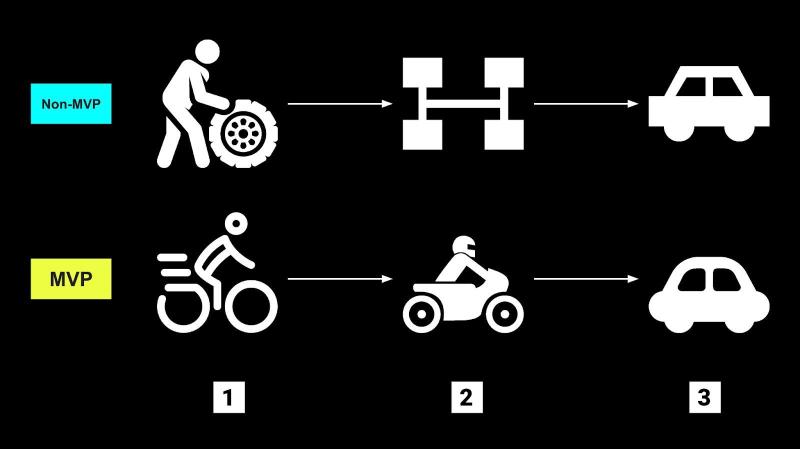
Figure 3: Comparison Between Non-MVP and MVP Approaches
GTM (Go-To-Market): Acquire and Retain, Nurture Community
Key questions for GTM:
-
How does the product interact with users?
-
Do users need help learning how to use the product?
-
How frequently do users engage with the product?
-
Where will the product launch—locally, domestically, or internationally?
-
Which partners or channels should we collaborate with?
-
What limitations exist with these channels?
In Web2, GTM typically relies on marketing to acquire users. In Web3, GTM uses marketing but places greater emphasis on cultivating a richer concept of “community.” A Web3 community includes not only users but also developers, investors, and partners—all stakeholders in the project. Every successful Web3 project usually has a strong, engaged community.
Some projects follow a “community-first” principle, others are “community-led,” and some are directly “community-owned.” Only by consistently meeting user needs and maximizing perceived utility can a project build a high-participation, high-quality community.
Traditionally, GTM meant launching a finished product via advertising, press events, or channel training. Web3 transforms the classic Web2 funnel. Token rewards offer an alternative solution to cold-start challenges. Instead of spending real money on traditional marketing to attract early users, teams use token incentives during early stages when network effects are weak. Rewarding early contributions attracts more users, who in turn hope to earn rewards through their own participation. In terms of loyalty, Web3’s early users contribute far more meaningfully to the community than traditional Web2 BD personnel.
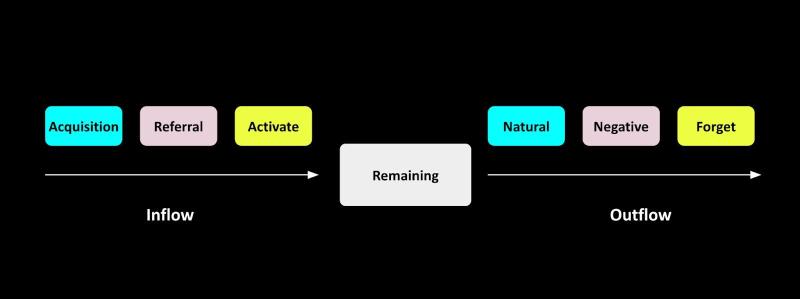
Figure 4: Factors Influencing User Inflow and Outflow
1. Acquiring New Users
Task-based airdrops are a key GTM initiative—projects distribute tokens to users who complete specific on-chain or off-chain tasks, sometimes with additional requirements such as holding certain tokens. Rewarding early users for completing interactions is a common cold-start tactic, enabling low-cost acquisition of initial seed users.
Publishing tasks on Web3 task platforms to guide user interaction creates a win-win scenario:
-
For projects: gaining traffic;
-
For users: earning on-chain activity proof, receiving airdropped tokens, and accumulating platform usage experience through task completion.
Common Web3 task platforms include:
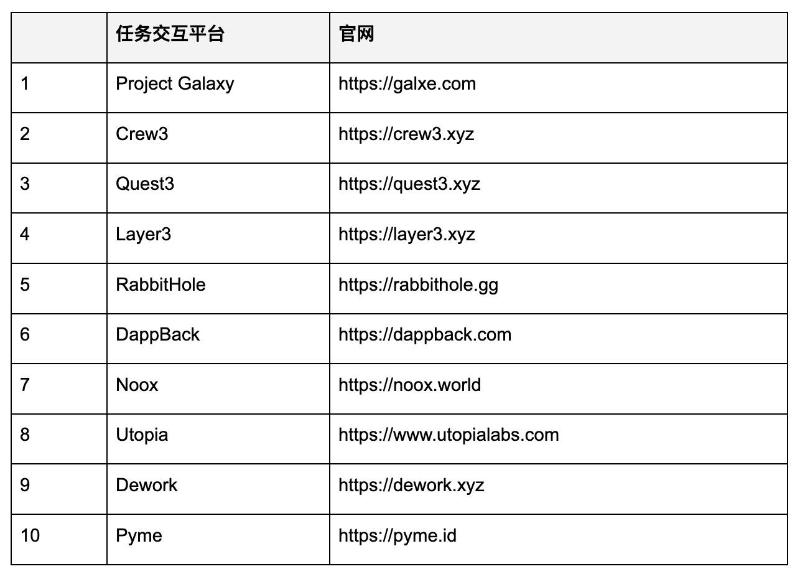
Table 2: Common Web3 Task Platforms
2. Increasing Engagement and Retention
While token incentives attract users, they alone are insufficient to build lasting stickiness. Since the 2021 bear market, a major challenge for Web3 projects has been “users come fast, leave faster.”
Low engagement and poor retention remain chronic issues. Projects must invest more effort in converting first-time users into loyal ones—continuously optimizing the product, hosting regular community events, and improving overall user experience. Hosting AMAs on Twitter Spaces, Discord, and Telegram are common ways to boost community activity and热度.
3. Referral and Self-Spreading
Referral (or self-propagation) means existing users naturally bring in new users. If users enjoy the product and have a great experience, they’ll organically share it within communities or recommend it personally to friends—the lowest-cost, widest-reaching acquisition method. To encourage sharing, projects must design proper incentive mechanisms. Rewards can include project tokens or physical merchandise like branded apparel, skateboards, snowboards, mugs, etc. Additionally, analyzing on-chain behavioral data of new and existing users helps improve conversion rates and refine operational strategies.
Referral breaks down traditional ad budgets into two parts: rewards for existing users who refer others, and incentives for new user sign-ups. That is: advertising cost = referral reward + registration bonus. This approach drastically reduces customer acquisition costs and proves more efficient than keyword bidding or paid content feeds. Though not innovative, it delivers persistent and effective conversion outcomes.
Acquisition opens the traffic gate; retention relies on product value; referral amplifies community power. These three steps collectively drive revenue—only with growing users can scalable profitability be achieved. Based on TokenTerminal’s 2022 data, we can rank dApp profitability.
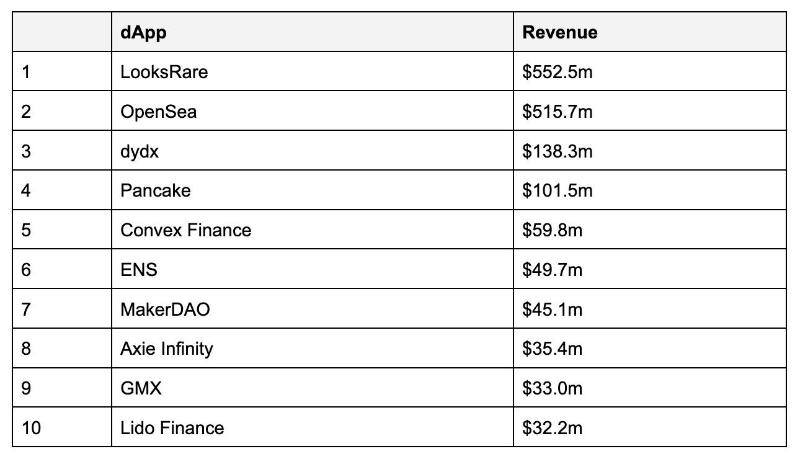
Table 3: 2022 dApp Revenue Ranking
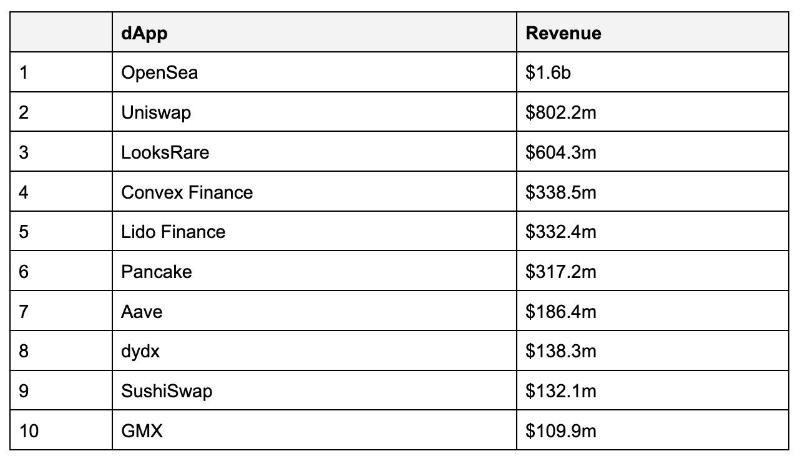
Table 4: 2022 dApp Fees Ranking
Join TechFlow official community to stay tuned
Telegram:https://t.me/TechFlowDaily
X (Twitter):https://x.com/TechFlowPost
X (Twitter) EN:https://x.com/BlockFlow_News






