IOBC Capital Year-End Review and Outlook: Infrastructure and Fat Apps Are Ready
TechFlow Selected TechFlow Selected
IOBC Capital Year-End Review and Outlook: Infrastructure and Fat Apps Are Ready
After experiencing the ups and downs of the entire industry in 2022, we remain steadfast to this day.
 Navigating Web3 tides with focused insights
As the year draws to a close, we’d like to reflect on the developments in the cryptocurrency industry. As a crypto fund, IOBC has been committed since inception to walking through narrow doors, taking the long road, and chasing faint light alongside founders. Having weathered the ups and downs of the entire industry in 2022, we remain steadfast in our mission.
The Evolution of Crypto Narratives
If we trace the development of crypto back to Bitcoin's creation in 2009, it can be broadly divided into the following phases:
2009–2014: The "Digital Gold" Narrative Driven by Resistance to Currency Devaluation
This period was dominated by narratives around “digital currency,” “digital gold,” and “store of value.” Beyond Bitcoin, many Bitcoin clones emerged, such as Litecoin.
2015–2018: The Rise of Smart Contract Platforms with the Vision of a “World Computer”
This era centered on the concepts of a “world computer,” “smart contracts,” and “public blockchains.” After Ethereum’s emergence, multiple competing layer-1 projects followed, including EOS, Tron, and Cardano.
2019–2022: A Flourishing Era of Web3 Application Innovation
As participants in the blockchain industry, most of us have likely encountered this question when introducing blockchain to outsiders: What are some concrete blockchain applications?
Bitcoin is arguably the first blockchain application. Today, we emphasize Bitcoin’s “value storage” function, often referring to it as “digital gold.” While its use for payments and circulation is rarely discussed now, it has seen real progress. The amount of BTC locked in Lightning Network channels has grown from 26 BTC in 2018 to over 5,000 BTC at peak, with approximately 12,000 nodes and around 85,000 payment channels currently active. However, compared to Wrapped BTC bridged to Ethereum and other ecosystems, the Lightning Network remains relatively small in scale.
While blockchain applications were indeed sparse in the first two cycles, the 2019–2022 cycle saw meaningful innovation at the application layer:
-
DeFi emerged as the most prominent narrative: DeFi enabled free financial flows for individuals and played a pivotal role in crypto’s evolution. Multiple unicorn-level projects emerged across various DeFi sub-sectors, including Uniswap (on-chain trading), 1inch (aggregated trading), Compound and AAVE (lending/borrowing), Synthetix (synthetic assets), DAI (stablecoin), and dYdX (perpetual contracts).
-
NFTs achieved significant mainstream breakthroughs: NFTs attracted audiences far beyond traditional crypto users, drawing in celebrities and Gen Z participants. This cross-over effect was invaluable for the broader industry. Beyond NFTs themselves, NFTFi also gained traction toward the end of the cycle, with NFT lending and leasing models emerging.
-
GameFi produced several viral hits: Axie Infinity’s explosive success popularized the Play-to-Earn model, sparking a short-lived GameFi boom. However, most games during this period leaned heavily on financial mechanics while offering underwhelming gameplay. Whether Axie Infinity’s “buy NFT to earn” or Stepn’s “buy virtual running shoes to earn,” these models remained fundamentally finance-driven.
-
Metaverse became the ultimate convergence of applications: The metaverse wave originated largely from Web2, with Meta’s aggressive push igniting investment interest. According to ITjuzi, the global metaverse sector raised 704 funding rounds totaling $86.867 billion in 2022. Key Web3 metaverse projects include The Sandbox, Decentraland, and Otherside—all achieving notable market influence. While the metaverse has yet to fully explode, it may still transform social interaction, shopping, entertainment, and daily life in profound ways in the future.
Emerging Mainstream Crypto Narratives
Today’s dominant new narratives in crypto include Layer2 scaling, modular blockchains, account abstraction at the infrastructure level; DAOs, Social, and on-chain derivatives protocols at the application layer; and Appchains/RollApps challenging the long-standing “fat protocol, thin application” thesis.
1. Infrastructure Set to Mature Within the Next Two Years
Each crisis retrospectively serves as a catalyst for technological advancement:
● The March 2020 liquidity crisis led to liquidations in on-chain lending protocols, exposing Ethereum’s network congestion and lack of decentralized oracles—spurring interest in ETH2.0, Layer2 scaling, and recognition of oracle value;
● The setbacks faced by high-profile blockchains like EOS and Solana revealed performance limitations of monolithic architectures, fueling momentum behind modular blockchain designs.
Layer2 Scaling has become the industry’s dominant narrative. Specifically, major ZK Rollup projects are scheduled to launch their mainnets in Q1 and Q2 of 2023. Primary market investment opportunities are likely already exhausted, though secondary market opportunities may emerge in Q4. Beyond leading ZK Rollups, the niche area of ZK Rollup hardware acceleration is particularly promising. Adding this missing “plank” will improve zero-knowledge proof efficiency across ZK Rollups, enabling more robust ZK-based applications.
Modular blockchains, pioneered by projects like Celestia and Fuel, initially gained traction within the Cosmos ecosystem. However, Ethereum, Near, and others are now embracing this trend as well.
On September 15th, Ethereum successfully completed The Merge, transitioning its consensus mechanism from PoW to PoS. This marks the formal conclusion of the ETH1.0 roadmap (Frontier, Homestead, Metropolis, Serenity) and the beginning of the ETH2.0 era (The Merge, The Surge, The Scourge, The Verge, The Purge, The Splurge).
Looking beneath the surface, the ETH2.0 roadmap reveals two key insights: Ethereum will adopt Rollups as its core scaling solution, and Layer2 data availability will be addressed via Danksharding. This reflects Ethereum’s de facto embrace of modularity—Ethereum L1 will serve as the consensus and settlement layer, Rollup L2s will handle execution, and Blobs will replace Calldata for part of Layer2 data availability (no dominant data availability layer focused on Ethereum has emerged yet—a potential opportunity ahead).
Additionally, account abstraction became a hot topic at Devcon in Bogotá this year. The goal is to generalize Ethereum accounts, giving developers greater flexibility and expanding what accounts can do. Layer2s will serve as testbeds for this—StarkNet and zkSync 2.0 have already implemented account abstraction features.
2. Appchains/RollApps Could Enable “Fat Applications”
Since the advent of the Web3 narrative, the industry has widely accepted the “fat protocol, thin application” theory—the idea that foundational protocols capture most of the ecosystem’s value, while applications capture relatively little. For example, despite the numerous DeFi protocols built on Ethereum, users pay gas fees that are captured not by the apps but by Ethereum itself.
This dynamic won’t change in the short term, but could face disruption long-term. If Web3 truly sees tens of millions of user traffic in the future, it’s more likely to happen first at the application layer rather than the base infrastructure. Interestingly, successful application-layer projects may eventually seek to build their own chains or Appchains after reaching unicorn status.
-
Axie Infinity developed Ronin Chain: At its peak, Axie had over 25 million players and a treasury exceeding $2 billion. After massive success, it didn’t stop there—it built RoninChain, an Ethereum sidechain dedicated to blockchain gaming.
-
dYdX is building its own Appchain: As the leader in on-chain derivatives trading, dYdX is developing its V4 version using Cosmos SDK and Tendermint to create a standalone Appchain. If this migration proves successful, it could spark a wave of top-tier apps launching their own chains.
-
Stepn took a different approach—minimizing reliance on any single chain and deploying across multiple chains. Initially launched on Solana with its sneaker NFTs, Stepn later expanded to BSC. It captured value primarily through sneaker NFT sales and used multi-chain deployment—akin to “server rolling” in traditional gaming—to attract both Solana and BSC communities. Though local crackdowns and GST’s role as a “dump-pressure-absorbing token” eventually led to price spirals and declining appeal, Stepn remains an undeniable success story at the application layer.
We expect more such cases. The Appchain/RollApp narrative aligns well with the technical needs and economic incentives of super apps.
3. Application Innovation Still Needs Breakout Hits
As Vitalik recently noted, “Today’s world is no longer that world.” Blockchain infrastructure is nearing readiness and may already suffice for current application demands. Now, greater focus should shift to exploration and innovation at the application layer. Beyond DeFi, NFTs, GameFi, and Metaverse, areas like DAOs, DID, and Social have seen growing interest in recent years, though they may require the next cycle to mature.
-
DAOs: As discussed in our previous article “DAO: A New Organizational Paradigm for Web3,” DAOs today fall into categories such as Protocol DAO, Venture DAO, Creator DAO, Guild DAO, and Charity DAO. Some Protocol DAOs rank highly by market cap, but no project has yet become a unicorn solely due to its DAO structure or features.
-
DID: Many entrepreneurs are exploring this space, but no breakout unicorn has emerged. Nevertheless, we are highly optimistic about DID’s potential in the next cycle.
-
Social: Several projects are positioning themselves here, including Social-focused infrastructure like DeSo and Crossbell, middleware such as RSS3 and Lens Protocol. DID also plays a foundational role in building Web3 social experiences.
Moreover, on-chain derivatives trading protocols built on Layer2 may see explosive growth, as improved infrastructure performance in the next cycle will better support their demanding requirements.
In short, we’re excited to see innovative, breakout application-layer projects emerge in the next cycle.
IOBC Portfolio Project Updates
LayerZero: Focused on Building Better Tools and Developer Environments
Even before Pre-Crime was publicly released, LayerZero protected Stargate in May. Now live and open to all applications, Pre-Crime allows developers to define custom security guarantees by setting their own invariants for every message.
The number of active contracts on LayerZero’s testnet has steadily grown to over 7,000. To better serve these developers, LayerZero is focusing on building best-in-class tools and development environments. LayerZero Scan is now live, enabling developers and users to bind two cross-chain transactions and view State, Status, and Timing in one interface. This enhances the developer experience and is just the first of many tools planned for the community in the coming years.
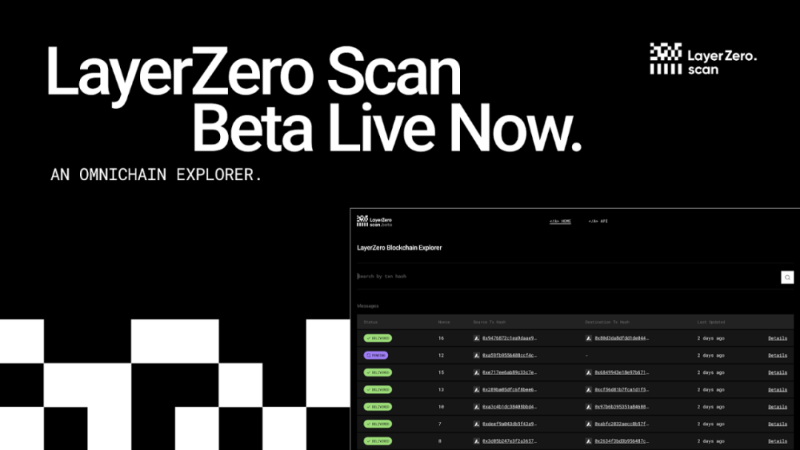
LayerZero has completed its ULNv2 upgrade. ULNv2 adds support for non-EVM chains, integrates LayerZero Scan, improves gas efficiency by over 20%, and patches security issues related to potential chain path disruptions in ULNv1. In addition to the original seven chains, five new mainnets—Aptos, Moonbeam, Harmony, Swimmer, and DFK—have been added.
Fandom: Signed MOUs with Multiple Korean Entertainment Companies, Enables Direct NFT Purchases via Korean TikTok Accounts
Mid-year, Fandom Korea Co.Ltd signed an MOU with Yooborn Company, a Korean entertainment firm representing prominent actors such as Cho Jung-seok, Kang Ki-young, Lee Won-geun, Jo Hyeok-joon, Lim Hwa-young, and Shin Hyun. They will collaborate on planning and discovering NFT content.
Fandom also signed an MOU with H&Entertainment, which manages actors including Ju Ji-hoon, Jung Ryeo-won, Yoon Park, Chun Woo-hee, Kwak Dong-yeon, and Jung Soo-jung.
Fandom aims to connect fans and creators through NFTs, fostering a sustainable creator economy. It has partnered with TikTok Korea, allowing users to directly purchase NFTs using their TikTok Korea accounts.
bloXroute: Recently Launched 5 Private Relays and Developing New Features
bloXroute recently launched five new Private Relays in Germany, California, Hong Kong, Shenzhen, and Japan. It is currently developing new features including Tx Status, Tx Bump, Tx Nonce Monitoring, EthReceipts Stream, and OnBlock Event Stream. Additional nodes have also been added to Txtrace reports.
Upcoming developments include:
-
Developing Go light Gateway to accelerate transaction feeds and submission speeds;
-
Improving BDN performance during transaction “storms”;
-
Launching a BDN Performance Dashboard to visualize transaction sources and propagation;
-
Introducing a new plan combining enterprise features with Private Relay access.
Eizperchain: Developing Mobile Version, Plans Beta Test Launch in Q2 Next Year
Eizperchain previously completed a public PC game test. Data showed most players came from the U.S., Russia, India, and Ukraine—not Indonesia. This suggests Eizperchain has global potential and has motivated the team to accelerate mobile development.
Originally targeting Indonesia and Southeast Asia, the team recognized that Indonesia’s 170 million gamers—60 million of whom are esports athletes (90% mobile)—rely more on smartphones than PCs. Thus, Eizperchain is fast-tracking its mobile version, aiming to release a pre-alpha test soon and launch beta testing between June and September 2023.
Elfin Kingdom: Mobile Pre-release Test Version Now Live
Recently, Elfin Kingdom’s mobile pre-release version went live. Over the next month, a series of promotional events will be held, including Bug Bounty programs and giveaways like The New Elfin Swidomflame Blind Box.
DuelistKing: Released Annual Recap, Over 25,000 Joined CloseAlpha
DuelistKing recently published its annual recap, highlighting progress in marketing and product development.
On the marketing front, DuelistKing partnered with 19 organizations (including gaming guilds like Good Game Guild), hosted two tournaments in August and October with over 2,000 registrants, 200+ live attendees, and 30+ partners. On the product side, it integrated the BNB chain to boost liquidity for over 500,000 NFTs in circulation, launched its Alpha version and v4 Card version, and welcomed over 25,000 participants into CloseAlpha.
Volare Finance: Launched on Avalanche Fuji Testnet and Hosted Trading Competition
Volare Finance is an options trading provider. To date, it has raised over $6 million in funding.
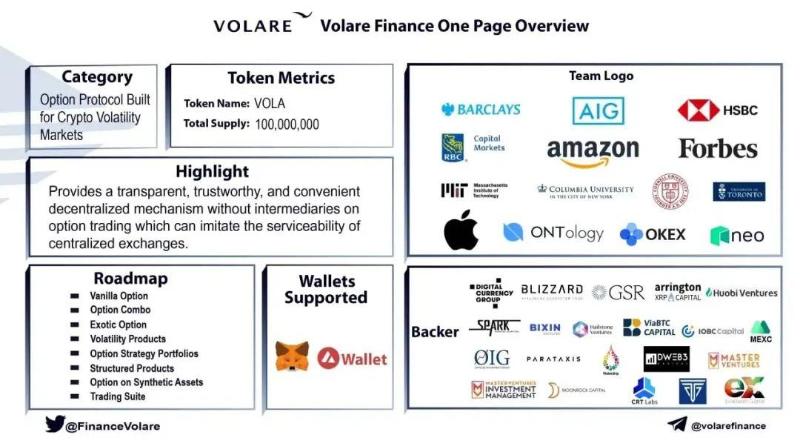
Mid-year, Volare Finance launched on the Avalanche Fuji testnet and hosted a trading competition. Additionally, it integrated Chainlink price feeds to enhance protection for options trading.
Join TechFlow official community to stay tuned
Telegram:https://t.me/TechFlowDaily
X (Twitter):https://x.com/TechFlowPost
X (Twitter) EN:https://x.com/BlockFlow_News
 @iobc_capital