From witnessing to writing, HistoryDAO decentralizes the right to record history for the first time
TechFlow Selected TechFlow Selected
From witnessing to writing, HistoryDAO decentralizes the right to record history for the first time
History is written by the victors, but only those who lived through it know the truth.
 Navigating Web3 tides with focused insights
Text by: Morty
On September 15, Ethereum successfully completed the Merge. Its final PoW block was minted into an NFT by Vanity Block—meaning the entire block contained only one transaction used to mint the Vanity Block NFT, at a cost of 30 ETH.
In this final block, Vanity Blocks inscribed a quote from American ethnobotanist Terence McKenna: "If you make the commitment, the universe conspires to help you overcome the impossible. Pursue your unfinished dreams—the cosmos will never stand in your way. This is the secret."
Vanity Block used the blockchain to document the most significant upgrade in Ethereum’s life journey. This Merge has now become a key memory within the crypto world.
Memory is one of the most important things for humanity.
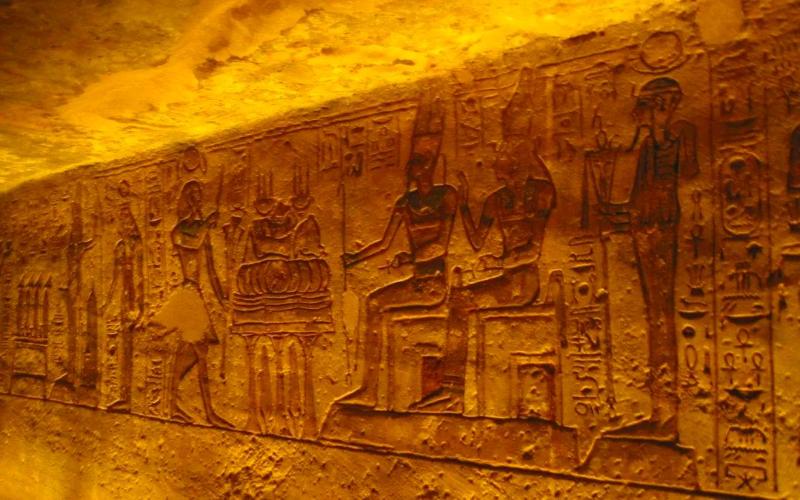
In ancient times, humans recorded memories through cave paintings and knotted ropes. As small tribes and clans formed, stories of the past were passed down orally. Later, writing became the carrier of memory and history. Official histories and narratives were then documented by court historians.
In the information age, the internet became the medium for recording history. Today, using immutable blocks to record memories has become the most popular practice in the crypto world.
This convenience comes from the information age and blockchain technology—but it also introduces a new curse upon historical documentation.
What Is the Curse of Historical Documentation?
Centralized Historical Records: From ancient times to today, the power to record history has been held by centralized entities—and remains unchallengeable. Even unofficial or民间 records mostly originated from ancient aristocrats. Even in the information age, this situation persists: powerful centralized institutions retain control over historical narratives. In the crypto world, the power to write blocks lies in the hands of miners.
Information Overload: The vast amount of data generated in the information age makes it difficult to preserve authentic history—especially for ordinary individuals with no public voice. They struggle to record their own personal histories. In the future, just as we know little about our ancestors’ lives, all that may remain for descendants could be a single photograph.
HistoryDAO aims to solve these two curses using Web3 and blockchain technology.
Using Blocks to Carry History
While in exile, Herodotus wrote Ιστορίαι (Histories) from his own perspective, documenting what he saw and heard during his travels, along with the history of the Persian Achaemenid Empire. This work became the first complete historical account preserved in Western historiography. Roman orator Cicero called him the "Father of History."
However, objective records are often influenced by the recorder’s subjectivity, ultimately compromising fairness in historical documentation.
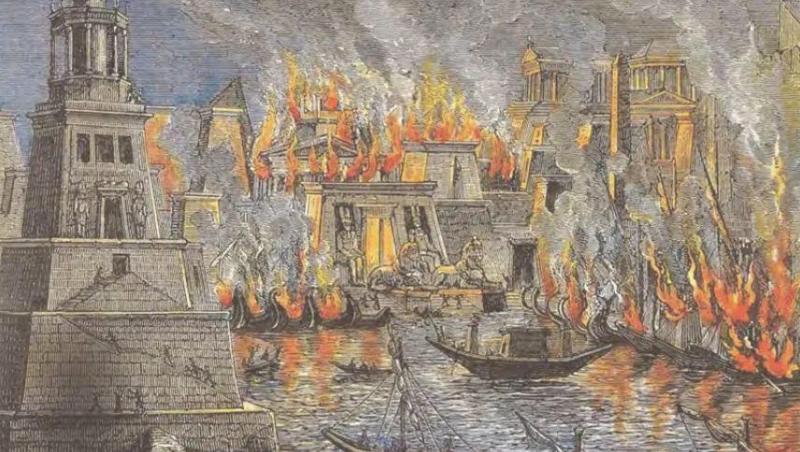
This has frequently occurred throughout human history. As the famous saying goes: "History is written by the victors, but only those who lived it know the truth." Thucydides, the ancient Greek historian known for rigorous standards in collecting sources and analyzing causality, stated: "I have not ventured to speak from hearsay or on casual impression, but only about events I either witnessed myself or learned from eyewitnesses after careful investigation."
How can firsthand witnesses record tamper-proof history with low barriers? This question has long troubled those pursuing truthful historical accounts.
Fortunately, blockchain technology now makes this possible.
Just as Bitcoin decentralized the right to mint money, HistoryDAO decentralizes the power to record history.
Thanks to blockchain technology, HistoryDAO allows users to issue, search, and trade NFTs on Ethereum and BNB Chain:
-
HistoryDAO supports various data formats for historical records, enabling multidimensional information logging;
-
HistoryDAO features a secondary NFT marketplace where users can effectively discover, evaluate, trade, and manage assets;
-
HistoryDAO is fully community-owned and governed, with its development driven entirely by community agendas;
In short, HistoryDAO is an NFT platform powered by a DAO—a decentralized autonomous organization.
While providing individuals with tools to record personal history, HistoryDAO also enables the DAO to document consensus-based collective history—where the community collectively records weekly, monthly, and annual historical figures, processes, albums, and major events.
How Does HistoryDAO Structure Its Product and Business Model?
Next, we’ll explore HistoryDAO’s functions and services from three perspectives.
Minting Historical NFTs and the Secondary Market
As mentioned earlier, HistoryDAO supports diverse forms of historical information recording. All such content is stored as NFTs in users’ blockchain wallets—transparent and immutable, with no one able to forcibly alter or transfer ownership.
With greater imagination, the data users record can include any information—daily moments, cherished memories with friends and loved ones, epic gaming highlights, and more. Perhaps, in the future, people will reconstruct contemporary life scenes by studying HistoryDAO’s historical NFTs, much like how we today study ancient life through the painting “Along the River During the Qingming Festival.”
When minting an NFT, users must pay a 0.01 ETH service fee plus gas fees. The service fee goes directly into the market liquidity reserve controlled by the DAO—the DAO treasury.
Moreover, history and memory belong collectively to all humanity. Therefore, the historical NFTs users mint can circulate and be traded on the secondary market. HistoryDAO charges a 2% commission on each transaction, which is also transferred to the DAO treasury.
Furthermore, the HistoryDAO marketplace ranks historical NFTs based on multiple factors including listing time, views, and favorites. To ensure fair exposure for every historical NFT, any changes to the ranking algorithm must be proposed and approved by the DAO community.
INO
To make historical documentation more efficient, HistoryDAO introduced the concept of “Initial NFT Offering” (INO). Any user can propose a theme for an NFT collection and collaborate with other community members to build it together.
For clarity, consider sports events as an example.
Take the NBA: during a season, we could create an NFT for each game, documenting details via images, video clips, and player statistics as the season progresses. Naturally, NFTs from exciting games would hold higher collectible value than average ones, and finals NFTs would surpass regular-season matches. Alternatively, after the season ends, we could select highlight moments from 1,000 games to mint and release as NFTs. For brands, INO campaigns offer highly cost-effective ways to re-leverage the impact of past events.
Of course, this is just one example. INO initiatives launched by HistoryDAO are highly scalable and not limited to sports alone.
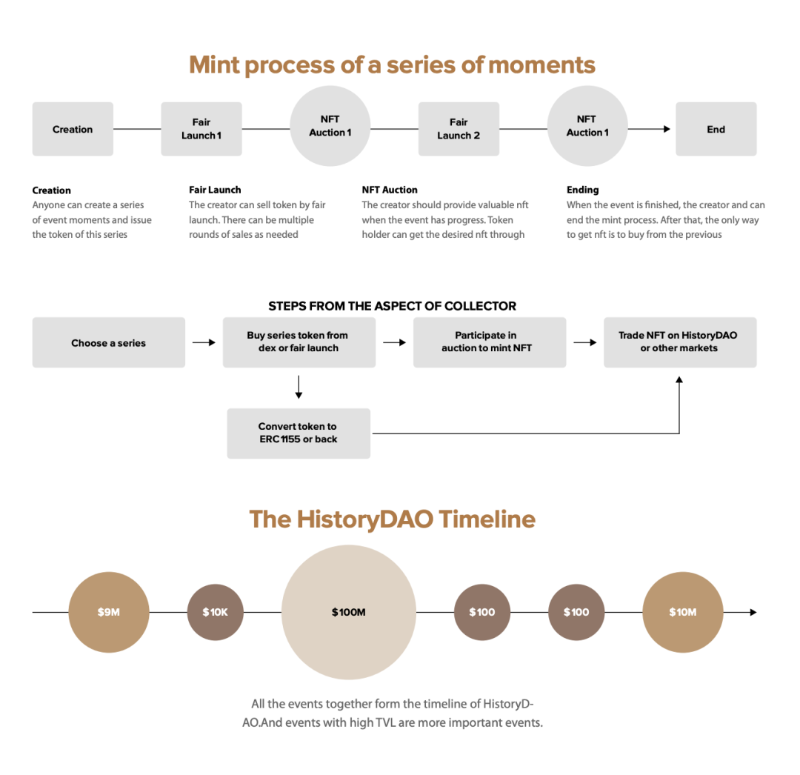
With innovative marketing strategies, brand teams can use HistoryDAO to document any event for promotional purposes—undoubtedly more engaging than traditional ad spending. After an INO campaign, brands can further empower the NFTs minted around the event with additional utilities.
DAO and Token
Unlike other NFT platforms, HistoryDAO emphasizes community interaction and collective power. At its core, HistoryDAO is a tool for recording history—not merely an NFT trading marketplace. Thus, its product design prioritizes algorithms that boost community engagement, aiming to build a robust community product akin to Reddit.
Strengthening community power helps resist regulatory pressure and censorship from powerful interest groups on historical documentation and free speech. It also increases public enthusiasm for decentralized historical records and enhances the value of HistoryDAO’s historical NFTs.
HistoryDAO’s governance is managed through its native token, $HAO. Holding $HAO is the entry requirement to join the DAO. Once inside, members can submit proposals, comment, and vote on governance matters.
Beyond governance, $HAO will be integrated across all aspects of HistoryDAO’s ecosystem. For instance, when paying with $HAO on the marketplace, the commission drops to 1.5%.
From Witnessing to Writing: How HistoryDAO Empowers Web3?
Undoubtedly, history holds special significance for both humanity as a whole and for each individual. As Tang Emperor Taizong Li Shimin said: "Use bronze as a mirror to adjust your attire; use people as a mirror to understand gains and losses; use history as a mirror to grasp rise and fall."
History is the foundation upon which we move forward.
Yet, vested interest groups—whether to conceal scandals or achieve certain goals—often manipulate historical records. Additionally, historical documentation is frequently skewed by subjective emotions, losing its original impartiality.
Now, HistoryDAO is leveraging blockchain and NFT technologies to correct these flaws in historical documentation. Just as Bitcoin decentralized the right to mint currency, HistoryDAO decentralizes the authority to record history.
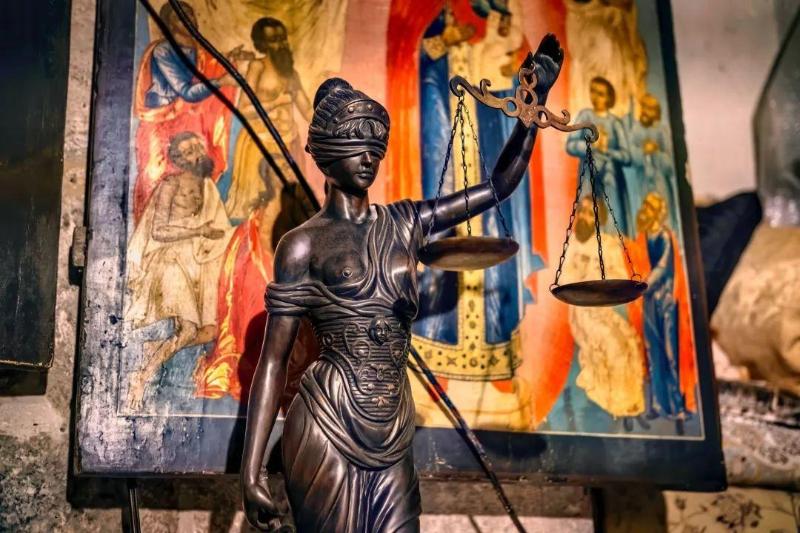
Decentralized and immutable historical records capture events from multiple perspectives, striving for fairness and authenticity.
This embodies the spirit championed by Web3—Web3 advocates personal sovereignty and individual value. History is no longer written solely by the victors; all of humanity participates equally.
NFTs tied to real-world events, once minted, increase Web3's visibility and draw more people to actively explore the Web3 world. By empowering NFT adoption through genuine historical documentation, HistoryDAO contributes to the maturity and advancement of the Web3 ecosystem.
Additionally, INO campaigns led by HistoryDAO provide strong marketing support for various brands.
Web2 brands leveraging Web3 for marketing has become a growing trend.
Tiffany’s CryptoPunks custom NFTs and Starbucks’ Odyssey program are excellent examples.
Indeed, as Web3’s influence grows, more Web2 brands will seek ways to conduct marketing and grow communities through Web3. For these unfamiliar brands, a simple and intuitive Web3 marketing solution is essential.
Here, HistoryDAO’s INO campaigns perfectly meet this need. Such demand could become one of the main drivers of HistoryDAO’s future growth.
Once it was stone, then text, now blocks
Finally, let’s return to HistoryDAO’s original mission—to enable everyone to record history with minimal barriers. Beyond product extensions, HistoryDAO’s essence lies in decentralizing the power to document history.
This is undoubtedly groundbreaking—an interpretation of Web3’s spirit. Web3 is not just about decentralized finance; it encompasses deeper layers of thought and application. Empowered by blockchain-enabled decentralized historical documentation, every person on Earth may one day boldly declare, like Caesar: "I came, I saw, I recorded!"
Join TechFlow official community to stay tuned
Telegram:https://t.me/TechFlowDaily
X (Twitter):https://x.com/TechFlowPost
X (Twitter) EN:https://x.com/BlockFlow_News