Vasil Hard Fork Upgrade Approaches: Is the Cardano Ecosystem Reaching a Singularity?
TechFlow Selected TechFlow Selected
Vasil Hard Fork Upgrade Approaches: Is the Cardano Ecosystem Reaching a Singularity?
Make the world work better for everyone.
 Navigating Web3 tides with focused insights
What's past is prologue. Since 2021, a new wave of competing blockchains—represented by Solana and Avalanche—has gradually emerged, taking distinctly different paths both in terms of foundational technical architecture innovations and practical applications for improving DApp functionality.
Cardano is one such project, guided by its mission to "make the world work better for all." This phrase, featured prominently on Cardano’s official homepage, reflects its enduring vision and ongoing efforts—to build a robust, fast, scalable, and secure system that helps people access essential financial and identity tools.
So when May this year saw the collapse of a major player in the crypto space—impacting nearly everyone—Cardano continued moving forward steadily toward its goals. Particularly with the final rollout of smart contracts and the upcoming Vasil upgrade in September, using and even building DApps on Cardano has become easier than ever before.
Here, we’ll explore the most significant developments in Cardano over recent months, as well as potential under-the-radar impacts in the coming months, diving into what could be a pivotal year for the Cardano ecosystem.
Vasil Hard Fork Upgrade
Named after the late mathematician and Cardano ambassador Vasil St. Dabov, Cardano’s Vasil hard fork has been confirmed by IOG—the core development team—for deployment on the mainnet on September 22, following successful completion of all core components, extensive testing, and confirmation of community readiness.
This Vasil upgrade brings significant improvements to Plutus, Cardano’s custom smart contract language, including:
- Increased block size to allow more on-chain transactions and script executions per block;
- Higher CPU limits for Plutus to allocate more memory to scripts, enabling them to run more efficiently;
In short, the Vasil hard fork aims to enable the Cardano blockchain to do more and do it better.
Additionally, the Vasil hard fork introduces further technical enhancements such as reference scripts and inline datums, which will help Cardano operate more efficiently and at lower cost, while also advancing decentralization. The diagram below illustrates how these improvements work:
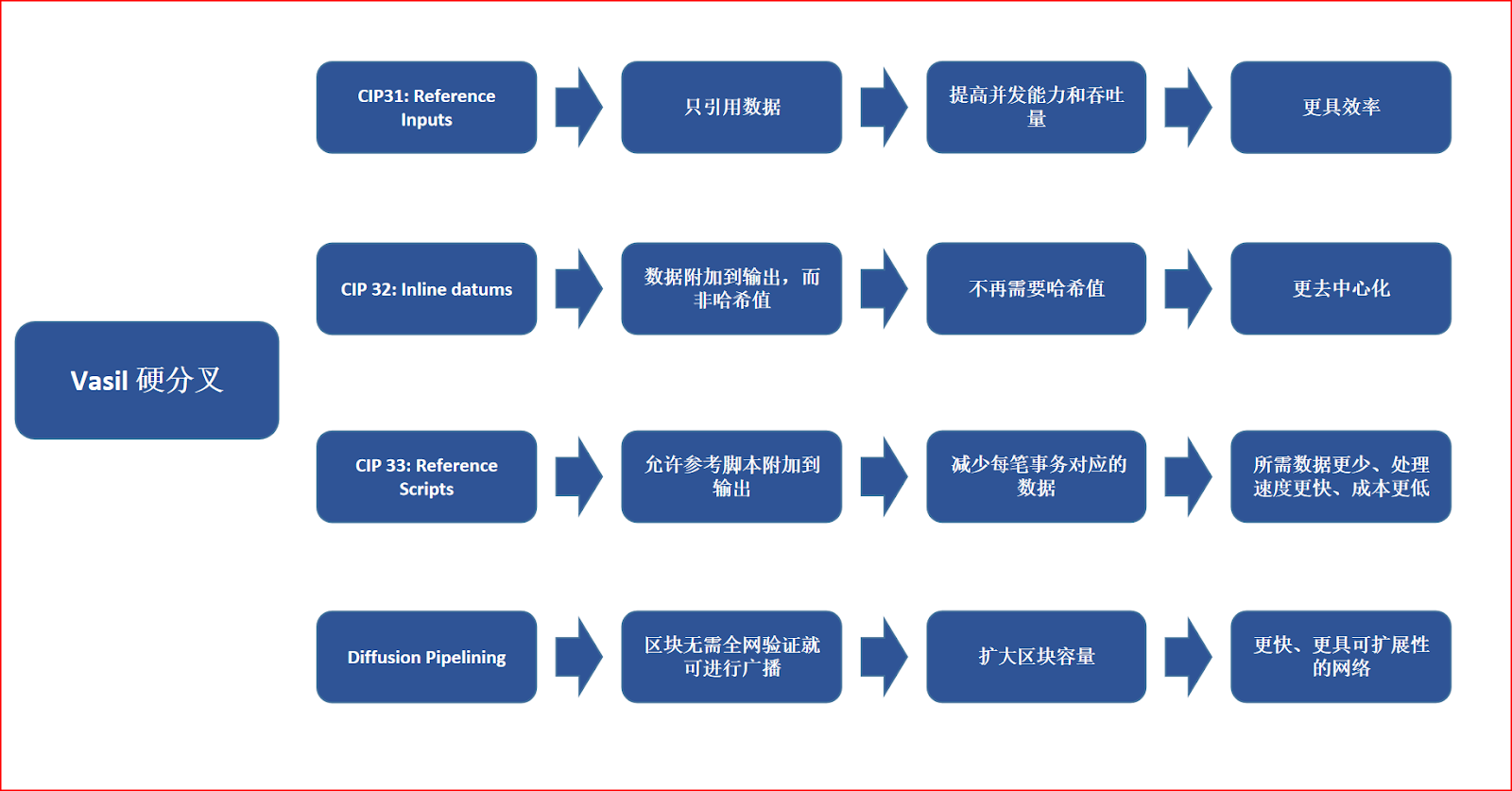
If all goes smoothly, the mainnet launch of Vasil will lay the foundation for a new wave of DApps, user growth, and ultimately an increase in Cardano’s ecosystem TVL—a major win for all participants.
New Cardano Light Wallet
Unlike the full-node Daedalus wallet—which caters to experienced crypto users by fully syncing the entire history of the Cardano blockchain—IOG’s recently launched Lace wallet offers a much friendlier and more intuitive experience for users familiar with popular wallets like MetaMask and Trust Wallet.
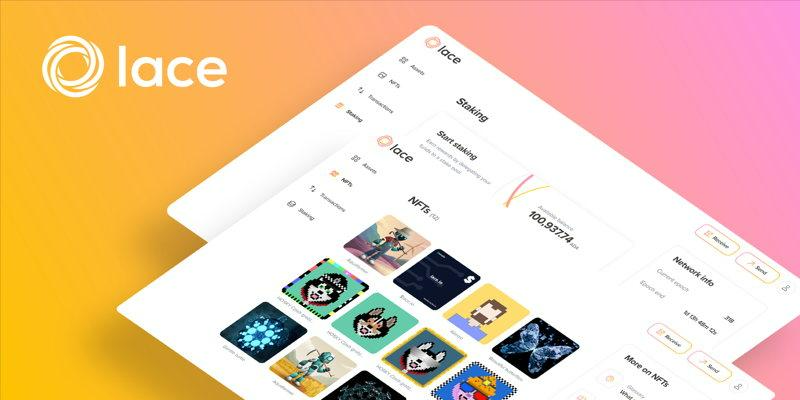
Built with usability in mind, the Lace light wallet balances security and functionality, allowing users to store funds, transact, pay, hold and view NFTs, interact with DApps, and even stake.
As we know, accessibility drives the next wave of crypto adoption, and Lace represents a major step forward—delivering a beginner-friendly user experience without sacrificing critical features or security.
New Open-Source Toolkit for Cardano Developers
Recently, Cardano released a freely accessible, decentralized application toolkit—also known as the Decentralized Application Backend (DAB)—to help developers build blockchain-based applications.
By using this DAB, developers can easily connect their DApps and wallets to Cardano without requiring a full node, enabling their DApps to read from and write to smart contracts. This allows developers to begin building their visions without heavy resource investment, while also facilitating better collaboration across Cardano’s global developer community around shared, community-owned resources.
This toolkit simplifies development with comprehensive functionality, significantly reducing learning and time costs. With such robust and low-barrier infrastructure, developers can create rich DApps at minimal cost, fostering a diverse and flourishing Cardano ecosystem.
Overall, this open-source DAB fills a crucial gap in the Cardano ecosystem. Its release paves the way for accelerated growth, encouraging more crypto developers to start building products on Cardano—and bringing more new users into its ecosystem.
Cardano at Consensus 2022
As one of the world’s largest blockchain events, Consensus 2022 brought together over 17,000 attendees from around the globe to Austin, Texas, celebrating blockchain technology and exploring its future—with many of the industry’s most prominent figures in attendance.
Cardano had several booths at the event and hosted its own community gathering, attracting over 1,200 participants and culminating in a vibrant party.
Cardano founder Charles Hoskinson spoke at multiple panels and discussions, including the session “Cardano’s Latest Developments in Africa,” where he highlighted:
Cardano’s role in Ethiopia’s education system, and plans to expand operations into Kenya, Zanzibar, Burundi, and beyond—including a lighthearted remark about Kenya potentially leveraging Cardano to provide citizens with stablecoin access.
"Every time you give someone a cryptocurrency wallet, you give them a self-sovereign identity, and you teach them the fundamental principles of this ecosystem—like Plato leading people out of the cave, they no longer see only shadows," said Charles Hoskinson.
Building Amid the Chaos
While some of the largest players in crypto—once thought too big to fail—have faltered, Cardano’s diverse global network of contributors continues to focus on what matters:
Building a protocol that won’t fail. Although this takes time, the builders behind Cardano understand that when people’s livelihoods are literally at stake, rigorously applying scientific methodology and accountability before deploying ideas on-chain is not just responsible—it’s essential.
Meanwhile, “if you want to go fast, go alone; if you want to go far, go together.” After surpassing a trillion-dollar market cap, the crypto industry has seen increasing specialization, a surge of innovative projects, and rapid iteration. Competition among layer-1 blockchains now centers increasingly on ecosystem maturity and organic innovation.
And Adaverse is dedicated precisely to this goal—helping shape the future of the Cardano ecosystem. As a global investment incubator focused exclusively on Cardano, Adaverse has already invested in and nurtured dozens of high-quality projects across multiple verticals, forming a growing Cardano ecosystem matrix.
Adaverse strategically aligns its investments with Cardano’s rapid development and upcoming major upgrades. For early-stage Cardano projects, Adaverse leverages its broad network of resources to offer a one-stop incubation service—providing integrated funding, mentorship, and support that traditional accelerators often lack.
This means that beyond capital, startups in the Cardano ecosystem can leverage Adaverse’s resources to quickly integrate into the broader Cardano ecosystem matrix, achieving synergies in liquidity and DApp product offerings.
Competition among public blockchains is always fierce. Guided by its vision to “make the world work better for all,” Cardano has made substantial progress across multiple fronts in the first half of this year. With smart contract capabilities now live and scalability set to improve further, it remains to be seen how Cardano will perform in the next phase of the blockchain race. The world is watching.
About Adaverse
- Official Homepage: adaverse.co
- Twitter: @Adaverse_Acc
- Facebook: Adaverse Accelerator
- Instagram: @adaverse_acc
- Medium: Adaverse Accelerator Adaverse Asia
- LinkedIn: @Adaverse
- Telegram: @Adaverse Founders Group
Join TechFlow official community to stay tuned
Telegram:https://t.me/TechFlowDaily
X (Twitter):https://x.com/TechFlowPost
X (Twitter) EN:https://x.com/BlockFlow_News