








MetaScan: Starting with TwitterScan to Build a Cross Web2-Web3 Ecosystem Map
TechFlow Selected TechFlow Selected
MetaScan: Starting with TwitterScan to Build a Cross Web2-Web3 Ecosystem Map
How to quickly assess the value of an NFT?
 Navigating Web3 tides with focused insights
Author: Morty, TechFlow
How can one quickly assess the value of an NFT?
Different NFT investors adopt different methodologies. Most base their judgments on transaction data from corresponding NFT collections, while others monitor social media or community sentiment regarding specific NFTs.
The key difference lies in the fact that transaction data resides on-chain—public and transparent—spurring the emergence of numerous NFT data platforms. In contrast, social media and community engagement metrics are far more complex and nuanced, making them harder to quantify precisely. The core challenge here is: “How can we define an effective social media data indicator?”
This is where TwitterScan, a data platform aggregating Twitter KOL and whale activity, comes into play.
A popular meme once circulated in crypto communities stating: "We can use TwitterScan to evaluate NFT value: If 17 KOLs/whales follow it, prices under 0.4 ETH are reasonable; at 60 followers, 1 ETH is fair; above 100, 1–3 ETH makes sense; beyond 300, 10–20 ETH becomes acceptable."
This naturally raises the question: How exactly does TwitterScan aggregate its data?
Unpacking TwitterScan
As widely known, Twitter serves as a critical platform for thought leaders across industries—including crypto. Almost every crypto protocol and founder maintains a presence on Twitter, and even Twitter’s co-founder is a well-known Bitcoin advocate.
Twitter hosts vast, chaotic yet valuable data. Thus, tools designed to extract and organize this information become exceptionally valuable.
Let’s take a comprehensive look at all TwitterScan features and understand how they support investment decisions.
TwitterScan is an NFT data platform launched by MetaScan, with the tagline “Find NFT Gems & Trending Tokens.” The site consists of three main sections: “Token,” “NFT,” and “KOL.”
The Token Section Includes Four Components:
Trending Tokens: Ranking of tokens most mentioned on Twitter;
Crypto KOL: Which tokens are being discussed by KOLs, builders, VCs, projects, and platforms—and how frequently;
New Projects: Links to new projects, their Twitter accounts, and founders’ Twitter profiles;
Trending Topics: Ranking of trending crypto-related topics on Twitter;
The NFT Section Includes Three Components:
Upcoming & Whales: Upcoming NFT collections and whale holdings distribution. TwitterScan categorizes whales into three tiers and distinguishes between ETH and Solana. Notably, TwitterScan has already made its API freely available to several NFT data platforms such as NFTGo;
Chrome Plugin: Displays NFT rarity, floor price, number of whales, and whale ownership rate—compatible with nearly all NFT marketplaces;
NFT Whale Holding Information: Upon entering any NFT collection page, users can see which whale accounts follow the project’s Twitter, which whales hold the NFTs, and how often whales mention the collection in tweets;

Users can also search for individual Twitter handles to find relevant KOLs. TwitterScan will display the tokens, projects, and topics each KOL frequently mentions, as shown below:

TwitterScan aggregates opinions, discussions, and insights from crypto KOLs across Twitter, combines them with on-chain data, and presents them in a structured format—ultimately helping retail investors make better-informed crypto investment decisions.
However, TwitterScan is just one piece of MetaScan’s broader vision.
“Meta” means transcending the current layer to examine reality from a higher perspective—a meta-level analysis of underlying patterns and principles. It represents essence, from which everything else emerges.
Building upon Twitter and on-chain data, MetaScan aims to tightly connect Web2 and Web3 by creating a comprehensive middleware ecosystem serving both Web2 and Web3 brands and users.

From Web2 to Web3: Bridging the Gap
For MetaScan, TwitterScan serves as a powerful entry point and traffic gateway. The team plans to expand TwitterScan’s applications within the NFT space, consolidating more user traffic into a centralized hub.
According to the MetaScan team, "The NFT market holds far greater potential than the FT market—it could grow to be dozens of times larger in the future." This is why MetaScan focuses heavily on the NFT sector.
Beyond aggregating Twitter KOL data, TwitterScan has launched a free NFT whitelist raffle tool. Project teams can set tasks (such as following and retweeting, holding certain NFTs, maintaining minimum wallet balances, or joining Discord) to achieve growth objectives.

Additionally, TwitterScan offers a powerful browser extension. The plugin delivers multidimensional data directly within NFT marketplace pages—including OpenSea, LooksRare, Mintverse—helping investors better evaluate NFT projects.

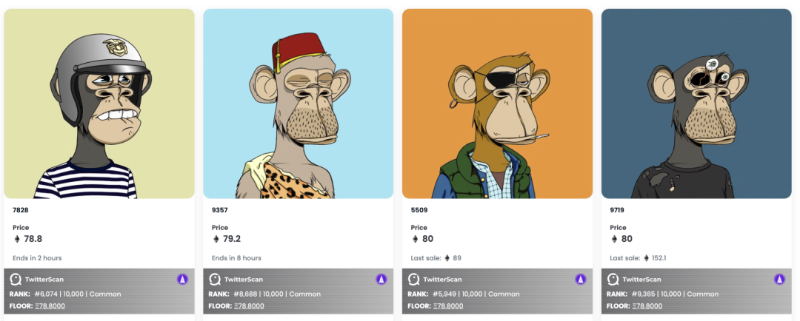
Moreover, the plugin supports user queries into KOL data, including influence score, opinion validity, relevance, and correction metrics. Users can also view interactions between KOLs.

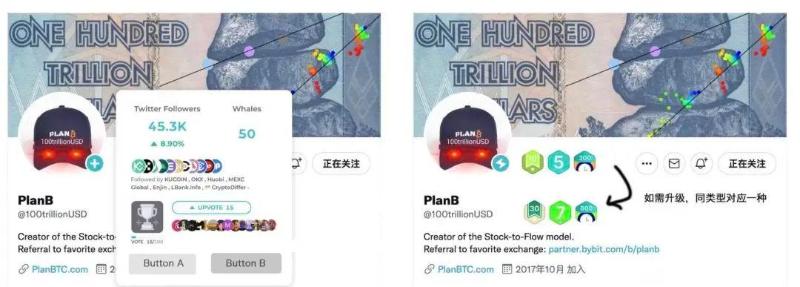
In the future, the TwitterScan plugin will offer even more features on Twitter itself, including the identity of the poster (KOL, VC, or project), associated polls and events, latest updates, related incidents, and the user's personal score on TwitterScan. Scores will appear as milestones and enable horizontal comparisons with other users.
More importantly, unlike other tools in the same category, TwitterScan inherently functions as a traffic gateway. While running giveaways for NFT projects, TwitterScan simultaneously boosts their visibility and growth—all at zero cost.
Secondly, the information displayed by TwitterScan stems from integrated Crypto Twitter data. It efficiently quantifies KOL performance metrics on social media, concretizing each KOL’s influence through numbers and facilitating communication between KOLs and project teams.
End users can easily participate in various project raffles with minimal friction. TwitterScan also compiles ongoing NFT raffles across Twitter, presenting them to users and increasing their overall chances of winning.
Looking further ahead, MetaScan plans to launch a PASS NFT, establishing an on-chain reputation system for end users, tracking KOLs and whales, and aggregating on-chain behavioral data. For community building, MetaScan will roll out additional tool-based products such as DAO tools, vote-to-earn mechanisms, and social graph utilities.
For projects and brands, MetaScan will introduce functional services focused on growth and branding. As mentioned earlier, TwitterScan enables efficient matchmaking between growth-seeking entities and KOLs. At the product level, MetaScan is developing NFT minting tools and exploring innovations in NFT royalty models.
Empowering Web2 from Web3
So far, we’ve primarily discussed MetaScan’s offerings rooted in Web2 social media data, targeting the NFT and broader crypto markets, along with their extended ecosystem.
But their ambition extends much further.
Web2 data utilization is merely a traffic on-ramp. MetaScan’s Web3 applications largely fall into three categories: investment decision-making, community growth, and brand development.
Beyond launching NFT tools and transforming NFT royalties, MetaScan aims to bring its rich experience in Web3 brand marketing and operations back into traditional Web2 business models.
To conventional Web2 consumer brands, Web3 remains a novel frontier—yet expansion into this space is increasingly necessary. First, new marketing channels amplify brand exposure and market influence. Second, Web3-native strategies help win favor among crypto-native audiences.
There are many precedents. On August 1st, Tiffany announced a derivative NFT collection based on CryptoPunks, priced at 30 ETH. Buyers received a physical counterpart: a custom pendant. Clearly, Tiffany’s campaign specifically targeted crypto millionaires.

Previously, Li-Ning purchased a Bored Ape Yacht Club (BAYC) NFT and released co-branded apparel—an effort to appeal to the crypto community and fans of BAYC owners.
MetaScan’s advantage lies in being a Web3 infrastructure service with inherent traffic advantages and deep domain expertise. Leveraging this, MetaScan can assist diverse Web2 brands in executing Web3 marketing campaigns—issuing NFTs, blockchain points, or digital credentials—to attract new customer segments and expand market reach.
MetaScan’s Vision
For everyday crypto users and investors, TwitterScan serves as a powerful analytical tool, aiding investment decisions.
As a middleware bridging Web2 and Web3, MetaScan is essentially solving real blockchain pain points—such as those addressed by TwitterScan—by building a full suite of tools. Through these tools, MetaScan can cultivate a large-scale on-chain reputation system, drive mass adoption of blockchain technology in social contexts, and lower barriers to on-chain interactions.
Zooming out further, MetaScan acts as a Web3 evangelist. By leveraging productized tools like TwitterScan to consolidate traffic, it introduces emerging Web3 technologies to Web2 users, showcasing the magic of the decentralized world.
Much like the slogan “Think Big, Start Small, Move Fast,” MetaScan harbors grand ambitions but begins with a small yet compelling product. TwitterScan’s functionality is practical and targeted, enabling rapid user acquisition and laying the foundation for long-term vision.
Now comes MetaScan’s “Move Fast” phase.
PASS NFT Launch Imminent: How Will TwitterScan Bridge Web2 and Web3 Worlds?
TwitterScan is about to launch its PASS NFT. Holders will enjoy the following benefits:
Access to premium TwitterScan product features;
Entry ticket to TwitterScan’s future identity system;
Priority access to whitelists for NFT projects launching raffles or promotions on TwitterScan, such as the highly popular Mimic Shhans NFT collection;
Early registration for TwitterScan’s ".nft" DID (decentralized identity) system;
....

The TwitterScan PASS NFT will play a pivotal role in on-chain reputation and identity systems. TwitterScan will aggregate holders’ Web3 reputational data, offering them an influence space to showcase work history, education, skills, and community engagement.
At its core, an on-chain reputation system systematically collects and records user behavior on-chain—similar to Web2 behavioral tracking, but with greater transparency and authenticity. Applications are broad: for instance, using on-chain footprints to build authentic communities around products, ensuring genuine user participation and creating higher-value ecosystems.
The on-chain reputation system will be central to MetaScan’s expansive commercial strategy, using Web3 tools to help Web2 brands build communities and identify authentic users—driving sustainable growth. This reputation system will serve as a cornerstone in MetaScan’s mission to unify Web2 and Web3. Throughout this convergence, we look forward to the many innovations MetaScan will bring.
Join TechFlow official community to stay tuned
Telegram:https://t.me/TechFlowDaily
X (Twitter):https://x.com/TechFlowPost
X (Twitter) EN:https://x.com/BlockFlow_News
 雨中狂睡Sleeping in the Rain






