








Scam? Eco-friendly? WeWork Co-Founder Launches New Carbon-Neutral Crypto Project
TechFlow Selected TechFlow Selected
Scam? Eco-friendly? WeWork Co-Founder Launches New Carbon-Neutral Crypto Project
Turning carbon credits into cryptocurrency does not solve climate change.
 Navigating Web3 tides with focused insights
Text: Zatara
Translation: Techflow intern
Turning carbon credits into cryptocurrency won't solve climate change.

Adam Neumann returns with a new cryptocurrency venture
Adam Neumann is back, and now he says he wants to tackle climate change using blockchain. You might remember him—the founder who took WeWork to WeCrashed. Guess what? He’s started a new company called Flowcarbon with his wife, aiming to tokenize carbon credits. And he just raised $70 million to do it.
We’re not environmentalists, and we didn’t know what carbon credits were, so we did some research:
Global warming is getting worse. The good news is that many smart people are building solutions to try to save us—but the problem is they often don’t get much funding. To address this, third parties created a carbon credit market where whenever a project successfully removes one ton of carbon from the atmosphere, it earns one carbon credit, which can be sold to companies. This allows polluting companies to reduce their carbon footprint and meet regulatory requirements—they must buy one carbon credit for every ton of CO₂ emitted by their factories or trucks as “offsets.”
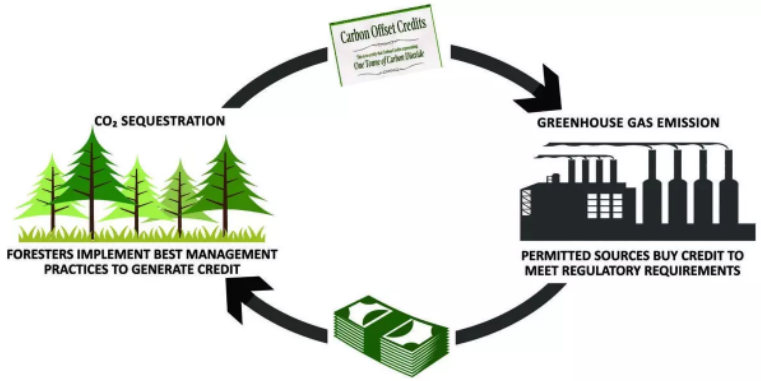
These companies can claim to be carbon neutral, while environmental projects receive funding. It’s a win-win. But the issue is these transactions are slow and mostly happen over-the-counter. That’s exactly the pain point Flowcarbon aims to solve.
Flowcarbon puts everything on the blockchain—existing projects can use their carbon credits and tokenize them as GNT tokens, making them purchasable by anyone—you, Apple, anyone.
Each GNT token is backed by one carbon credit from verified carbon removal or reduction projects. Thus, the carbon market could become more transparent, liquid, and accessible. Crypto mining has long been hated for harming the environment, so we welcome initiatives like this that aim to benefit the planet. While Flowcarbon’s business model isn’t entirely novel, it’s still a promising idea. We just aren’t fully confident in Neumann himself—that’s a trust issue.
Specifically, Neumann wants to put carbon credits on the blockchain. But making carbon credits easier to buy and sell doesn’t fix the real problems within carbon credits and offsets—they’re fundamentally broken. Trading a flawed product more easily doesn’t make it any less flawed.
Flowcarbon has strong vision and ambition, backed by $70 million from a16z’s crypto fund. On its website, Flowcarbon describes today’s carbon credit trading system as built on “opaque and fragmented market infrastructure,” with carbon credits themselves suffering from “limited liquidity, accessibility, and price transparency.” In other words, the problem lies in the carbon market, and the solution is to make trading carbon credits easier.
Incidentally, this is a classic argument in the crypto world—where the answer to everything seems to be greater commodification. But when it comes to saving the planet (like most things in life), that’s not necessarily true.
Carbon credits and carbon offsets are two sides of the same coin, often used interchangeably. Carbon offsetting, also known as carbon neutrality, refers to projects that reduce CO₂ emissions—forest conservation being a popular example—and these projects generate carbon credits. Both are traded in tons of CO₂. Flowcarbon will operate by creating a new cryptocurrency called Goddess Nature Token (GNT), representing carbon credits. Users who wish to trade carbon credits via Flowcarbon will do so by buying and selling these tokens.
The second potential issue is that unlike stocks or cryptocurrencies, carbon offsets ultimately need to be retired from the market to have any lasting, traceable impact on a company’s or individual’s carbon footprint. For instance, Google “retires” any carbon offsets it purchases—removing them from circulation—so others cannot claim credit for those climate benefits. (How effective these offsets truly are remains debatable.) Flowcarbon users may choose to retire their tokens, convert them into traditional carbon credits on the blockchain, or continue trading them. If Flowcarbon users keep their carbon credits circulating through trading, they cannot claim to have offset their own emissions.
“I think they’re trying to solve problems that aren’t really problems,” said Robert Mendelsohn, professor of forest policy and economics at Yale University. “Blockchain is good at ensuring nothing gets lost, but that’s not really the issue in today’s carbon trading markets. The real problem is that the credits themselves may not actually lead to any real carbon reduction.”
As my colleague Umair Irfan wrote in 2020, one key principle of credible carbon credits is “additionality”—ensuring that a carbon offset project actually results in reduced emissions that wouldn’t have occurred otherwise. This is trickier than it sounds: A 2020 Bloomberg investigation found that one of the world’s largest environmental nonprofits, The Nature Conservancy, sold carbon offsets based on forest lands that would likely have been protected even without additional funding. In other words, the emission reductions would have happened anyway, rendering the offsets ineffective.
This is just one example. Carbon credits and offsets frequently fall short, and in some cases, even cause further harm to forests. Companies buying large volumes of such ineffective offsets claim they’ve changed their carbon footprints—yet there’s no actual impact. “They haven’t offset anything,” Mendelsohn explains. “They just took a piece of worthless paper and claimed honor and credit. You can put that honor, that credit, on the blockchain—it’s still worthless.”
It remains unclear how Flowcarbon will genuinely make carbon offsets more useful or trustworthy. Flowcarbon spokesperson Nicole Shore stated via email that the credits backing GNT “follow standards of the global carbon market” and come from one of four major carbon registries. The company also claims the carbon credits behind its tokens are “certified,” but it does not elaborate on how certification works or whether it uses a verification system different from the current carbon credit market.
The difficulty in verifying carbon credits means new credits may take time to enter the market. As more companies grow interested in buying credits to offset emissions, this could create bottlenecks.
“The current market’s problem isn’t about how to trade more efficiently,” said Anil Madhavapeddy, Associate Professor of Computer Science and Technology at Cambridge University and Director of the Cambridge Centre for Carbon Credits. “We simply don’t have enough supply.”
Like Flowcarbon, Madhavapeddy is working on a blockchain-based solution for carbon credits. But unlike Flowcarbon, he has no interest in creating a marketplace for these credits. Instead, he focuses on verifying the authenticity of carbon offset projects worldwide using satellite imagery and remote sensing technology, recording results on the blockchain. Madhavapeddy hopes technology can accelerate the arrival of more credible carbon credits in the market.
Currently, rather than building an entirely new market for carbon credits, Madhavapeddy wants to ensure these credits are rooted in environmental projects that deliver real impact. “Because supply is so limited, you don’t need to tokenize all of this,” Madhavapeddy said. “New (carbon offset) projects take years to launch, so every market being built now is just reshuffling the same old projects.”
The crypto climate credit gold rush won’t go unnoticed by traditional market players. Verra, the world’s largest carbon offset registry, announced this week that it will no longer allow its credits to serve as the basis for crypto tokens. Verra says active crypto markets for carbon credits create too much confusion over who ultimately deserves credit for emission reductions.
Once carbon credits become more accessible and verifiably trustworthy, companies like Flowcarbon might indeed become gateways for ordinary individuals seeking to offset emissions. But let’s not forget what happened the last time Adam Neumann launched a company with a questionable business model, promising big changes. Whether Flowcarbon is different remains to be seen—but we cannot afford to treat humanity’s relationship with the natural world as another experiment in speculation.
Commodifying nature is partly why we ended up in this climate mess in the first place. Maybe it’s time to learn from our mistakes.
Join TechFlow official community to stay tuned
Telegram:https://t.me/TechFlowDaily
X (Twitter):https://x.com/TechFlowPost
X (Twitter) EN:https://x.com/BlockFlow_News






