









How to find and track crypto whale wallets?
TechFlow Selected TechFlow Selected
How to find and track crypto whale wallets?
Use a block explorer to search for and track wallets.
 Navigating Web3 tides with focused insights
Written by: Covduk
TechFlow Post authorized translation and publication
In cryptocurrency, you can profit by following the wallets of professional investors and whales, as they often have more information and capital than you do. In this article, we'll dive into how to use blockchain explorers to find and track wallets, including:
Monitoring wallets using Etherscan
Using DeBank
Tracking NFT wallets
Let’s open Etherscan—you’ll see all ERC tokens listed here. The HEX page contains a lot of useful data for research, but now let’s go directly to the token Holders section.
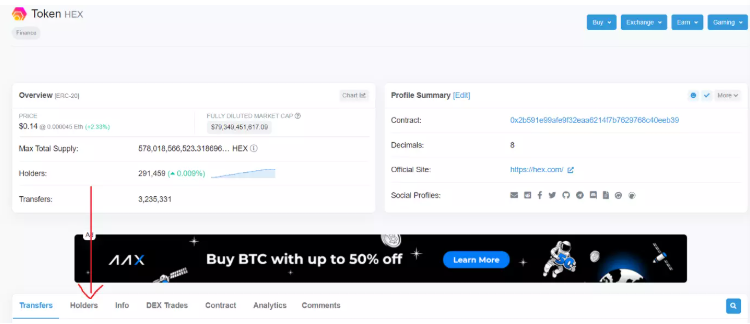
Typically, Etherscan sorts assets from largest to smallest holdings. This tells you a lot:
If most tokens are concentrated in just a few accounts, that could be a red flag—any large sell-off could cause a significant price drop.
If large amounts of tokens are held on exchanges, it may suggest holders are seeking short-term gains.
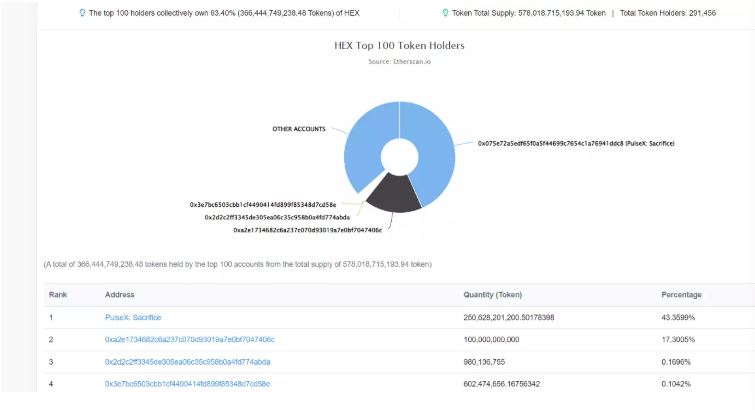
If your goal is to find wallets that took large positions early, you can filter by holding size.

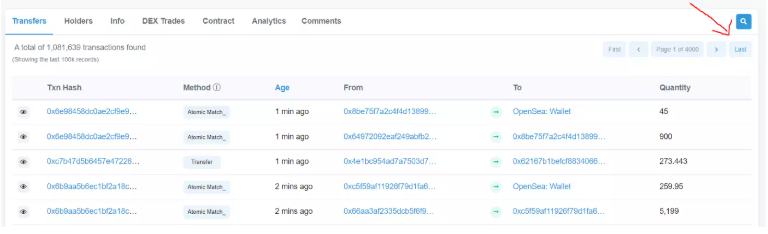
You can also do this by reviewing transaction history.
You can perform this analysis on any token. For example, here's one I found—LYNK. It was launched about 8 days ago and has risen 26% today. First, we need to get its contract address.
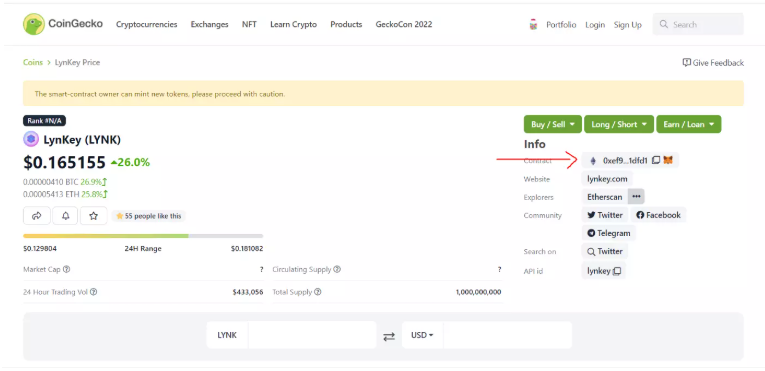
Then search for it on the relevant blockchain explorer, and you can start identifying wallets.
I start from the earliest transactions, looking for wallets that entered with large positions early. Then this transaction caught my attention: this account bought 60K LYNK tokens four days after the token launch. I want to investigate further.
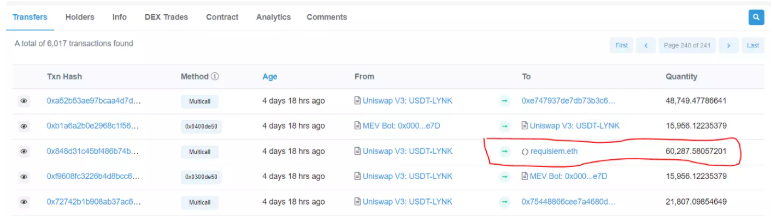
Next, copy their wallet address and paste it into the blockchain explorer to view their transaction history, account balance, and investment records.
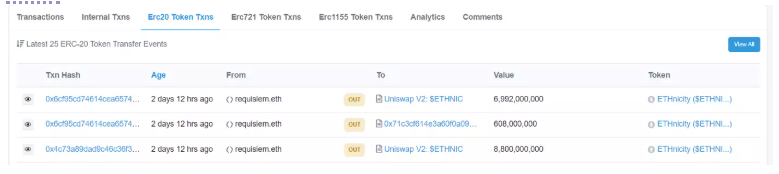
Here are their ERC20 transfer records—they appear to frequently buy large amounts of unknown tokens. I wonder if they’ve had many successful investments. That’s the hardest part to verify.
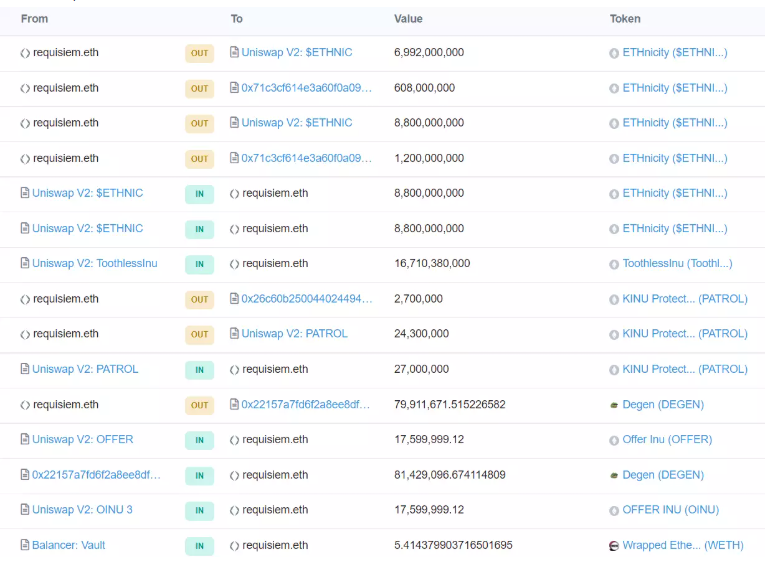
Imitating them and studying their patterns is a way to become a better investor. However, Etherscan isn't very clear when analyzing a large number of tokens they've invested in. For more structured analysis, DeBank is recommended.
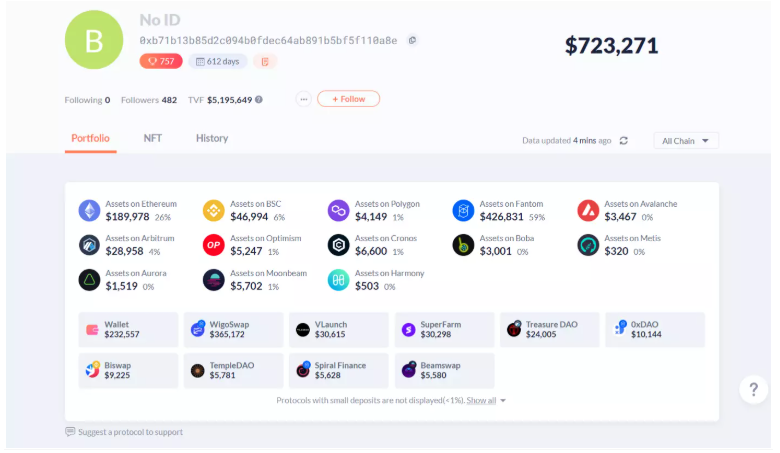
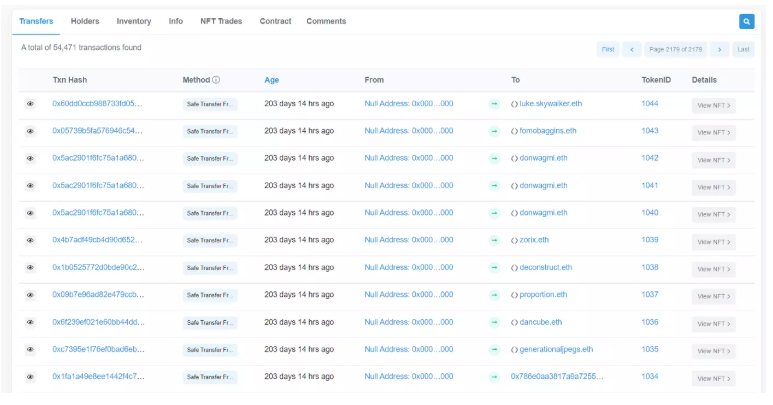
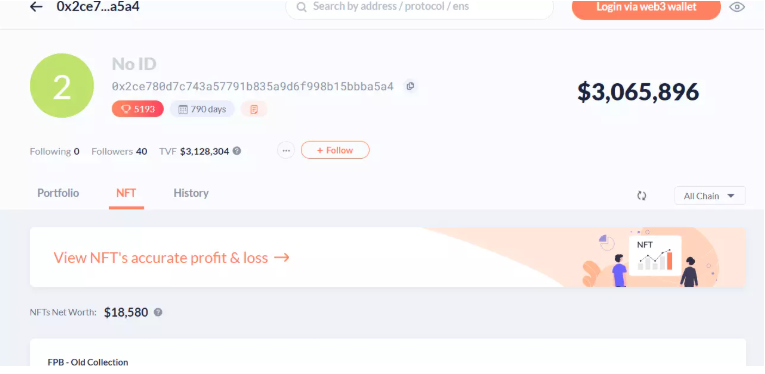
Once you've identified an account to follow, you can track them on DeBank and periodically check their transactions on blockchain explorers. Of course, this method also applies to NFTs—you can view your target’s NFTs and portfolios on Etherscan and DeBank.
Join TechFlow official community to stay tuned
Telegram:https://t.me/TechFlowDaily
X (Twitter):https://x.com/TechFlowPost
X (Twitter) EN:https://x.com/BlockFlow_News






