








In the oracle landscape, why is Pyth Network so different?
TechFlow Selected TechFlow Selected
In the oracle landscape, why is Pyth Network so different?
Pyth provides a vast amount of effective data for building the DeFi world.
 Navigating Web3 tides with focused insights
Author: Pyth Intern
Translation: TechFlow intern
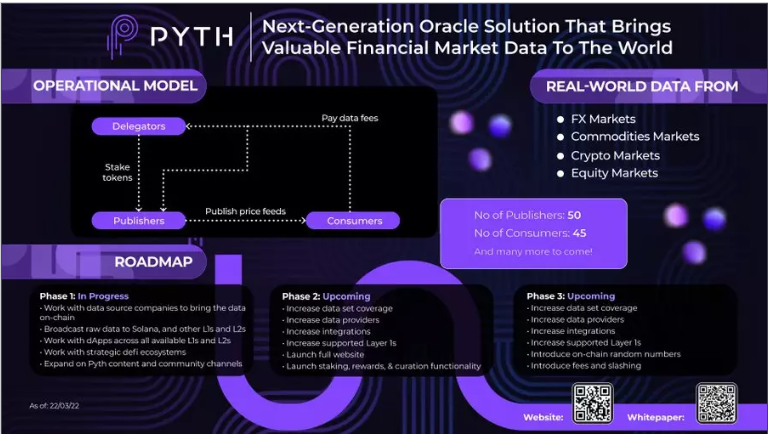
Why do we say that Pyth provides a large amount of effective data for the construction of the DeFi world? What exactly is PythNetwork? Below, let's learn about Pyth through a short article.
We all believe that in the future, DeFi will grow to a multi-trillion-dollar scale, serving institutions and individuals worldwide. Before reaching that scale, DeFi must be able to do everything TradFi can—and do it better. Therefore, DeFi needs high-fidelity, low-latency data that can be directly used on any blockchain.
In traditional markets, the best market data is often accessible only to certain centralized institutions or individuals. Due to strict control over this pricing information, the most timely, accurate, and valuable information remains in the hands of a few.
This is precisely where DeFi needs to improve—where it must outperform TradFi. However, traditional oracles cannot provide DeFi with timely, reliable, institutional-grade data.
Thus, PythNetwork fills this data gap by bringing such data on-chain for use by the DeFi world. From day one, we've been clear about our mission: solving the latency sensitivity issue of continuous oracle data. We believe that markets managed by many users are fair and transparent.
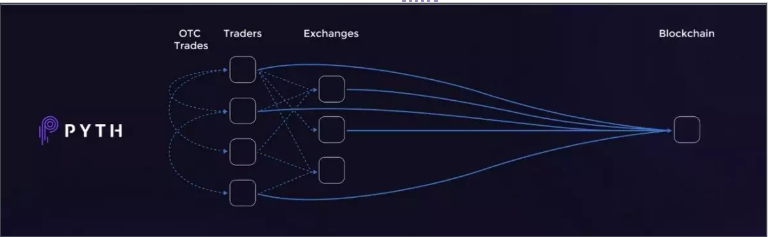
PythNetwork incentivizes market participants—including exchanges and financial service providers—to share part of the market data they collect from their operations. This includes data from stock, foreign exchange, cryptocurrency, and commodity markets, with plans to expand into more asset classes in the future.
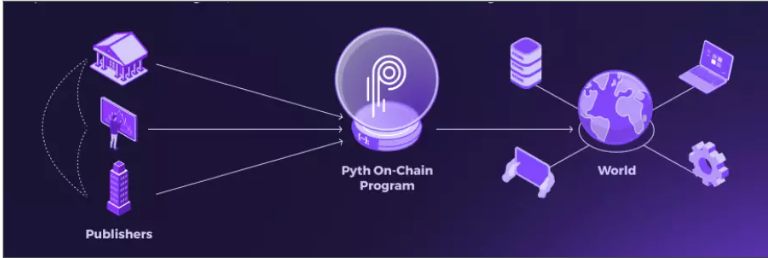
Pyth’s data providers include exchanges, financial service providers, and DeFi users such as Jump, GTS, Alameda, Jane Street, HRT, LMAX, Virtu, Wintermute, Genesis, FTX, CTC, Amberdata, Two Sigma, Serum, Raydium, and others. Pyth’s on-chain program then aggregates all this data into a single, secure data source for both on-chain and off-chain use, with the entire process being transparent and verifiable.
PythNetwork is fundamentally composed of three types of participants: producers, consumers, and delegates. These participants interact via Pyth’s network mechanisms, with the Pyth token playing a central role throughout. The vision behind these participants and incentive structures is to build a fully decentralized, self-sustaining data market where data owners, developers, and community members all benefit.
are creators of specific data feeds who send price quotes to Pyth and earn a portion of data fees in return. Producer suppliers must stake Pyth tokens to upload their data. If the data provided is timely, accurate, and valuable, they receive priority rewards from the protocol; otherwise, they face penalties.
Consumers refer to end-user applications that read this pricing information and use it for operations. Currently, anyone can use Pyth’s data for free.
Finally, there are delegates—anyone can become one. Delegates stake Pyth tokens to producers they support, enhancing the overall security of the producer network. In return, delegates share in the data fee earnings alongside the producers. However, if inaccurate price data is submitted, both the delegates and the faulty producer will be penalized.
Pyth also features a token-based voting governance system to fine-tune advanced network parameters, such as which tokens can be used for data fees, which products are listed on Pyth, and how data incentives are distributed among producers and delegates.
What else makes PythNetwork different? Most current oracles are Reporter Networks that typically pull free data from public online sources or simply purchase data and publish it from API endpoints onto the blockchain for use.
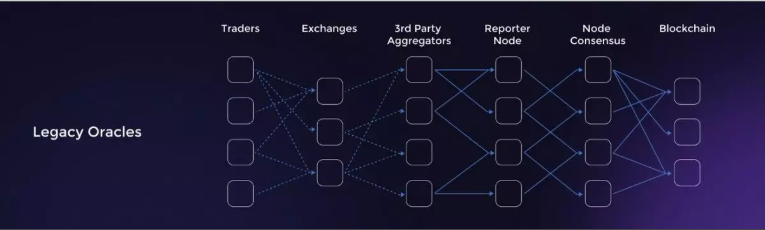
In a Reporter Network, intermediary aggregators charge service fees; the acquired data may have usage restrictions; and data sources may not even know their data is being used to secure billions of dollars worth of smart contracts.
In contrast, PythNetwork incentivizes market participants to directly share their proprietary data onto the blockchain. In this network, all data providers own and directly publish their own data.
Website:https://pyth.network/
Twitter:
Telegram:https://t.me/pythchinese
Join TechFlow official community to stay tuned
Telegram:https://t.me/TechFlowDaily
X (Twitter):https://x.com/TechFlowPost
X (Twitter) EN:https://x.com/BlockFlow_News






