









How to properly research a crypto project?
TechFlow Selected TechFlow Selected
How to properly research a crypto project?
Researching a project and developing one's own conviction is a key step in the on-chain investor journey.
 Navigating Web3 tides with focused insights
Written by: Onchain Wizard
Translated by: TechFlow Intern
Developing your own conviction through researching a project is a crucial step in the on-chain investor journey. Once you (1) can identify projects, (2) research them effectively, (3) understand the level of hype and implied expectations, and (4) grasp the macro backdrop, you're already ahead of those who just hunt for ideas on Twitter.
I won’t go into how to research major assets like BTC or ETH here. Your first step is understanding what your project actually does. Visit its website, Twitter, Discord to assess (1) whether it looks like a scam, (2) whether anyone you follow on Twitter is talking about it, and (3) whether it's VC-backed or anonymous. Use tools like CoinMarketCap, Messari Research, Nansen to get an overview and key KPIs. After reading, you should be able to summarize in a few sentences what the project does and how it makes money (for example, GMX can be described as a decentralized leveraged PERP exchange).
At this point, determine whether the project operates at the protocol layer (e.g., AAVE, MKR, DPX, GMX, SPELL) or the Layer/chain level (e.g., ETH, NEAR, AVAX, FTM). The research process differs between the two, so let’s start with chains—note that chains are often considered “lower risk” (though still high-risk), typically involve more VCs, and usually have much higher market valuations. Therefore, their upside potential may be limited compared to early-stage protocol investments (unless you’re getting in extremely early).
Researching a Chain
Each chain can be seen as its own "crypto nation." Their attributes and trade-offs differ—some sacrifice certain security aspects to reduce transaction costs. I'm certainly not an expert, nor do you need to be! While people debate the merits of each crypto chain, as an investor, focus simply on actual usage. Activity can be measured via transaction volume, Total Value Locked (TVL—a proxy for how much capital is actively deployed on-chain), and user count. Observe whether people actually enjoy using it. Rather than arguing over who will be the next "Ethereum killer," I prefer focusing on what people genuinely use. Currently, institutional and whale-level DeFi activity primarily resides on ETH/Arbitrum, while gaming protocols tend to operate on Avalanche.
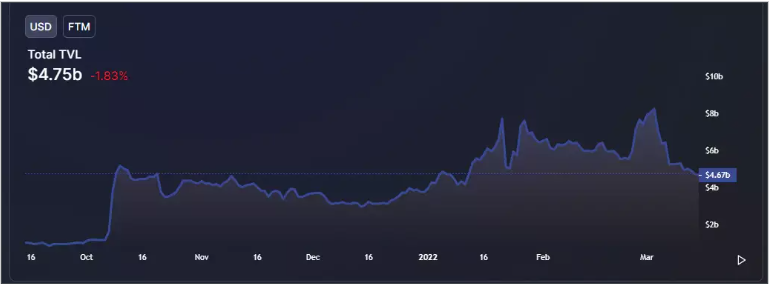
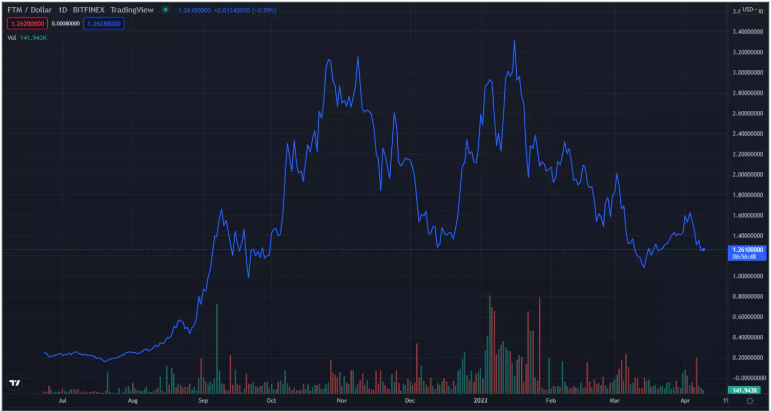
To me, non-major chains are generally suitable for short-to-medium term trades rather than long-term holds. Why? Over 100 different Layer 1 chains compete for TVL and users, most experiencing "hype cycles" driven by incentives or grants aimed at bootstrapping on-chain activity (e.g., real high APY farming), attracting mercenary capital. But once incentives dry up, capital flees. A recent example is FTM, whose TVL surged during the Andre/ve(3,3) incentive frenzy, along with its token price. However, after the hype faded, TVL collapsed. Below are Defi Llama’s TVL chart and FTM’s token performance:
Token rises → TVL rises → Token rises again, then reverses.
If you want to profit from these "chains," you’re essentially trading ahead of the hype cycle. So how do I research and spot the next upcoming cycle?
A recent example is NEAR. All readers of my "Whale Watching 101" saw smart money movements into NEAR earlier this year. To research NEAR, visit its website, learn more on Messari, and search Twitter for authentic or non-spammy posts. More importantly, bridge assets yourself and try the user experience firsthand. At a high level, it’s just another Proof-of-Stake L1 claiming to change the world (I realize this is oversimplified, but revolutionary claims rarely matter in practice). The network launched in April 2020 (information available on Messari).
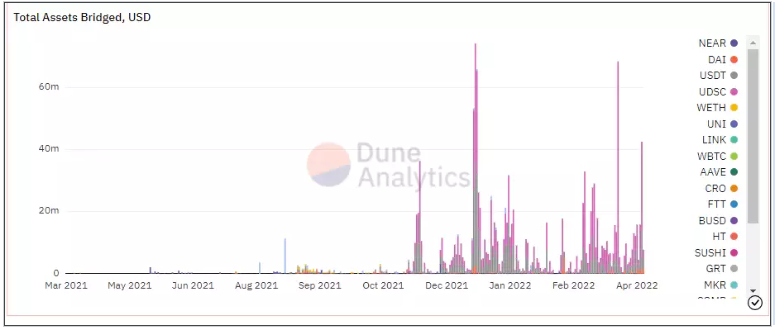
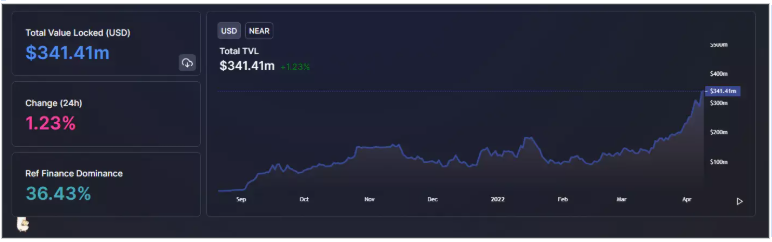
Dune Analytics shows that total assets bridged via NEAR’s Rainbow Bridge lacked traction until late 2021 (when smart money started buying), recently reaching nearly $1.5 billion.
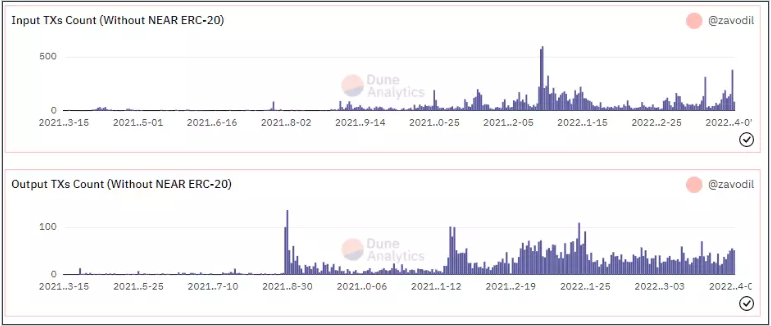
You’ll notice transaction counts continue to grow strongly (again, per Dune Analytics).
What triggered this, and when should you take interest? As mentioned in the chain overview, L1 hype cycles are often initiated by incentives or grant programs. In this case, NEAR offered $800 million in grants in October 2021 to capture DeFi market share.
You can see some smart money traded ahead of the announcement, but activity slowed soon after, only picking up again in early 2022. Then, it raised $150 million from top crypto funds including 3AC, Mechanism, Dragonfly, A16z, Jump, Alameda, etc.
I don't focus on public chains, and valuing chains themselves is difficult. But these L1 "hype cycles" follow a similar pattern. Take a low-usage chain, add incentives to attract mercenary capital, see major funds invest and prices rise, then 6–12 months later, the hype fades and shifts to another chain (this might differ for NEAR, but illustrates the general flow). How do you know when the hype is fading or the token might underperform? Watch these four indicators:
1. Smart money/whale movements (they exit when the show ends);
2. TVL growth/decline (TVL drops as incentives deplete);
3. Transaction/user count (same applies—imbalance between inflows and outflows suggests profit-taking time may be near);
4. Supply distribution;
Currently, TVL is still growing explosively. At this stage, going long the token may still make sense (if you're a full-time degen, study underlying protocols on NEAR—they’ll move far more than NEAR itself, but beware scams/fraud).
Supply distribution/dilution is another critical factor. Remember: token prices reflect supply and demand dynamics within circulating markets. Poor supply-side structures lead to long-term downward pressure. This applies equally to chains and protocols.
What makes a supply structure “poor,” Wizard? Focus on two things:
Is there a gap between market cap and fully diluted valuation (FDV)?
What does the vesting schedule look like for vested tokens?
Case Study: The SRM Situation
According to CoinMarketCap, SRM (a decentralized exchange on Solana) has a $350 million market cap versus a $27 billion FDV. In other words, FDV is 77x the current market cap. Simply put, massive amounts of tokens are locked and waiting to dump on you! When will they sell? Check Messari’s “supply schedule” tab.
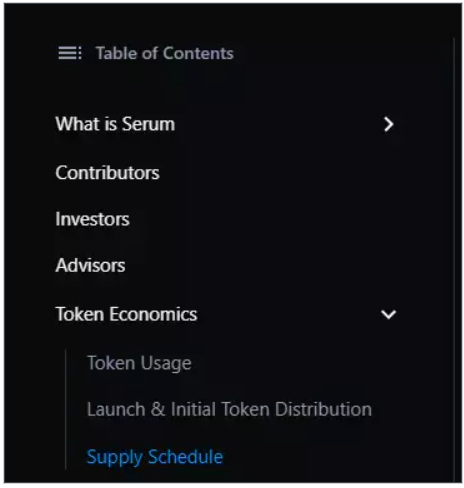
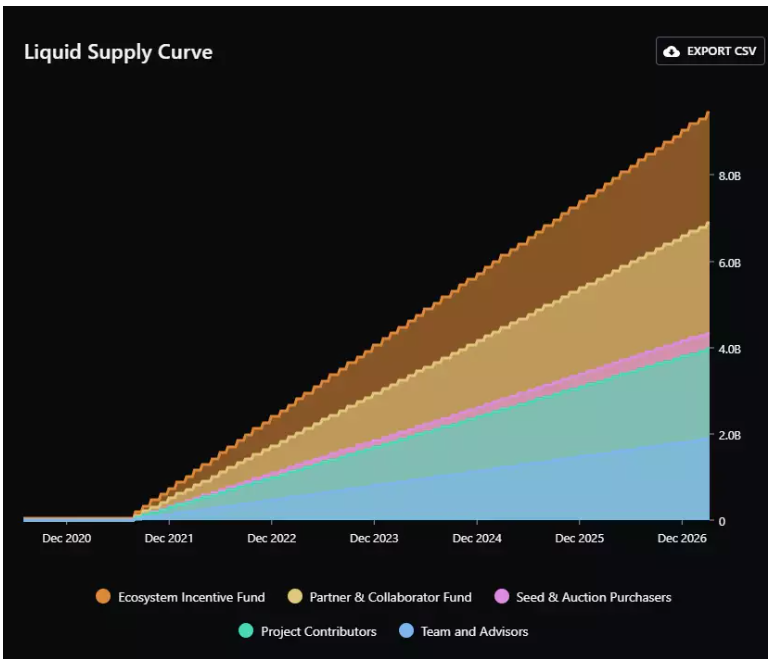
Looking at SRM’s unlock schedule, circulating supply will increase 2.4x over the next 12 months—roughly 9% monthly.
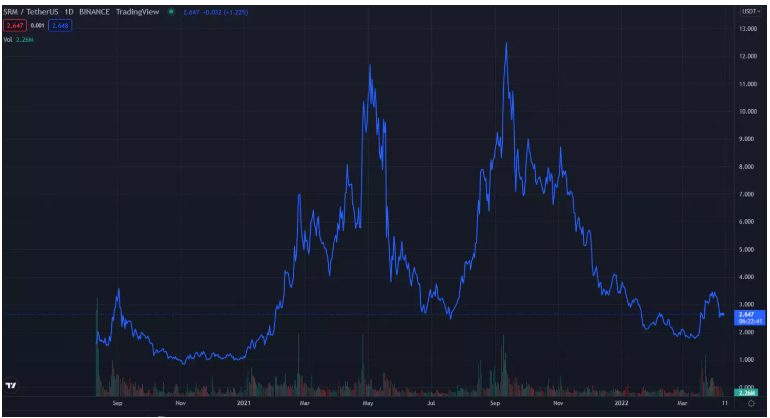
Given the mismatch between market cap (today’s dollar demand for tokens) and FDV, this supply structure implies enormous selling pressure. Since SRM’s unlock phase began in September 2021, its token supply has already increased sixfold! Since unlocks started, SRM has been nothing but a textbook case of decline.
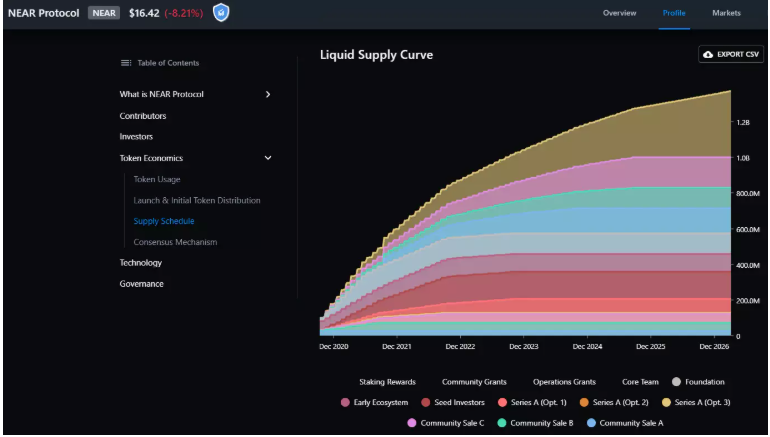
Back to NEAR. To become a more sophisticated investor in both chains and on-chain protocols, pay attention to unlock schedules—they significantly impact token prices. NEAR’s structure is far better: $11B market cap vs. $16B FDV, with only ~36% increase in circulating supply over the next 12 months.
I hope this provides useful mental models for conducting chain-level research. Personally, I don’t focus on public chains—chain analysis isn’t my strength. I prefer concentrating on protocols for investment ideas (higher upside, higher risk).
Researching a Protocol
This is more my domain. Again, my whale-watching insights and Twitter presence help fill your "idea funnel" (top of research pipeline). With thousands—or tens of thousands—of projects to analyze, how do you know which ones are worth anything?
Start again by visiting websites, forums, using products (if live), reading genuine Twitter threads, checking Messari, etc. Your goal is to clearly explain: (1) what the project aims to do, (2) whether there’s real demand or a solvable market need, (3) what implied expectations exist, and (4) how it compares competitively in terms of usage, valuation, and hype.
I’ll reiterate: the goal is building your own conviction, not outsourcing it to others. If you lack confidence in an investment, when it drops 50% (which it almost surely will), you won’t have the conviction to hold or buy more at lower prices. I also prefer focusing on projects I’m interested in, currently using, or planning to use—this keeps me engaged, and often leads me toward DeFi tokens.
Start with what the project does—understand its functionality, roadmap, why people would use it, and the size of its target market. For instance, I’m a big fan of Dopex because options offer superior hedging and speculation (vs. perps), and I believe whales and retail alike will adopt them over time (huge perp volumes = large TAM). Instead of getting liquidated on a 30x leveraged ETH long, I’d rather buy ETH call options (or use Atlantics when available) to gain leveraged upside without liquidation risk.
Never analyze a project in isolation. Part of due diligence is mapping the competitive landscape (your token vs. peers), covering not just current TVL/usage, but also product differentiation, investor/advisor involvement, roadmap divergence, and community strength. Projects with cult-like communities, low but growing TVL, and consistent innovation beat those with high TVL but stagnation and limited innovation.
Most losers fail by comparing only market caps against the current leader. They love doing this, but all protocols are hard to value—you must recognize that token prices are driven far more by hype and narratives than fundamentals. That said, improving fundamentals do fuel future hype and storytelling.
To hit home runs, I usually seek low initial valuations (typically $50M–$150M market cap), where I believe something special is being built that could reach $1B–$2B. I avoid copycat projects—if something can be easily forked, its moat is extremely thin. “Building something special” breaks down into: (1) entirely new concepts (e.g., Dopex’s IRO+Atlantics, JPEG’s NFT loans, SPELL’s yield-token lending at launch, BTRFLY’s Hidden Hand), or (2) superior UX or disintermediation (e.g., GMX).
Alright, I’ve found a small-cap project doing something unique—what next?
Join the discussion forum and ask questions—even if they seem dumb. How the community and team respond tells you a lot. If they’re defensive or dismissive, it’s a red flag, likely indicating product issues (or non-launch). If there’s a live product, use it! Provide feedback if you encounter problems.
For protocol-level projects, I usually write a one-page summary covering: what it does, which whales are investing/advising, whether whales, retail, or both will use it, current valuation, my estimate of its potential, projected usage/TVL evolution, and upcoming catalysts.
Use Nansen or DeBank to identify whales involved. Also check websites for advisors, and observe overlaps in Discord across various projects.
Valuation is extremely difficult. Meme tokens with no utility can hit $1B–$40B market caps, while foundational DeFi pieces like Curve/Convex sit at $3B–$8B FDV. My best personal returns came from buying around $100M and selling between $800M–$2B, so that’s my preferred framework. Clearly, other approaches exist—but if you want 10–20x in 4–6 months, low market cap projects may suit you (though they can easily go to zero).
If the product is live and historical usage data exists—you can often find this on Dune Analytics or build your own dashboard. Take GMX, for example—their stats page gives you everything you need to understand growth over time.
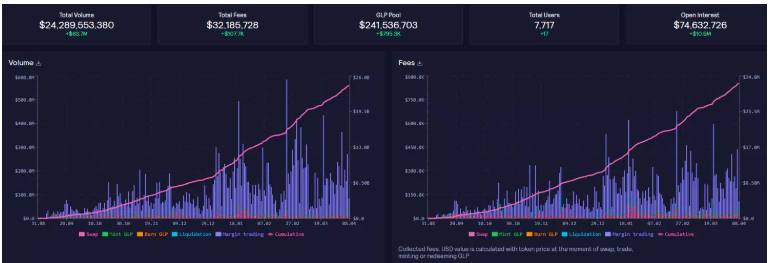
For DeFi projects, dig into how they generate revenue (fee structure, recurring nature) and whether value flows back to token holders (in GMX’s case, 70% goes to GLP stakers, the rest to GMX holders).
If the product hasn’t launched yet, identify upcoming catalysts, as tokens often experience an “alpha pop” around release dates. Gather info by lurking in project chats and identifying team members prone to leaking alpha. Sometimes, check GitHub to see if they’re building something novel. Then it comes down to (1) position sizing and (2) dollar-cost averaging / entry timing—topics for another post, but high-level: buy weeks or even a month before major product launches, or DCA in at your desired price or during explosive growth phases if the product is live.
For protocols, perform the same supply distribution analysis I did with SRM—focus especially on team token vesting schedules. Long vesting periods signal long-term commitment, while short, aggressive unlocks suggest cash grabs and short-term price pumping motives (you can still profit, but expect abandonment long-term).
This article is already too long for email subscribers, so I’ll publish a second part with deeper protocol research insights. But I hope this gives you a solid starting point. Key takeaways to remember:
1. Look for unique, hard-to-replicate projects;
2. Backed by strong teams and advisors;
3. Low initial market cap, minimal CT shilling;
4. Healthy token supply structure;
5. Clear upcoming catalysts or partnerships discovered through community engagement;
6. Build your own conviction, don’t outsource it to CT shills;
7. And possibly most importantly, limit the number of projects you actually invest in. There’s endless innovation possible, but your time and capital are finite. Only pull the trigger on projects with potential to capture significant TVL/usage or onboard new users to the space.
Join TechFlow official community to stay tuned
Telegram:https://t.me/TechFlowDaily
X (Twitter):https://x.com/TechFlowPost
X (Twitter) EN:https://x.com/BlockFlow_News






