








Web3: User-Controlled Internet, a Decentralized Network Model
TechFlow Selected TechFlow Selected
Web3: User-Controlled Internet, a Decentralized Network Model
We are currently witnessing a generational shift from the internet to crypto—from online to on-chain.
 Navigating Web3 tides with focused insights
Article author: arcane
Translation: Block unicorn
For some, Web3 is the metaverse. For others, it's confusing and abstract, entangled in complex cryptography that can feel overwhelming to newcomers. This article is the first in a series about Web3 that will explain what Web3 is—and why you should care.
We are currently witnessing a generational shift from the internet to crypto—from online to on-chain. As investment themes and use cases evolve, there is growing resonance around how crypto can transform traditional asset classes. There is no one-size-fits-all model. Instead, we see several revolutions emerging alongside Bitcoin’s monetary revolution.
Web3 is user-controlled Internet—a decentralized network model in which participants:
1. Can interact without intermediaries.
2. Have full control over core aspects of their digital identity, including their underlying cryptographic keys.
3. Control how their credentials and personal data are shared or used.
The internet democratized information sharing, but like any complex socio-technical system, it tends to concentrate power. Dominated by cloud infrastructures controlled by tech monopolies such as Amazon, Google, Microsoft, and Facebook, companies that own the network have unilateral power over who gets access, what features are supported, and how user data is protected.
Until now, we’ve accepted the platform-owned model because it was the only viable option. Most users cannot store their own data, user accounts, or social relationships. In return, tech giants demand access to our data. Suddenly, a handful of large corporations hold all data about everyone and everything happening on the web. This raises trust issues: Can I trust the people and institutions storing and managing my data to prevent any form of abuse—whether internal or external, intentional or accidental?
The great promise of Web3 can be summed up in one concept: user control. The decentralized successor to today’s internet is being built. After decades of trading trust for convenience, people are finally seeing a future where they can reclaim control over their data from corporations and institutions. At the heart of this utopian vision lies the use of tokens to coordinate global digital communities. Freed from the rule of tech conglomerates, blockchains promise to return power to the people.
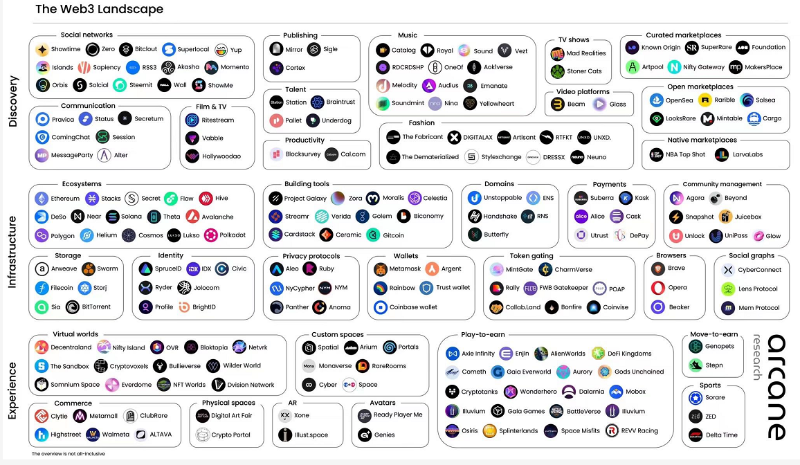
Web3 Landscape
The overview below highlights only a small fraction of what Web3 offers, ranging from professional platforms to collaborative music platforms, decentralized credentials, and reimagined versions of social media. I will dive deeper into each area in subsequent articles.
Current Context: The Rise of Digital Asset Communities
Over the past 20 months, Web3 has seen two consecutive waves of adoption, resulting in the consolidation of token-holder communities. The 2020 DeFi Summer revolved around governance tokens and the idea of managing decentralized protocols through decentralized autonomous organizations (DAOs). In plain terms, a DAO is an entity that replaces centralized leadership with a community organized around a set of rules enforced on a blockchain. This requires participants to purchase tokens in exchange for voting rights, aligning incentives so they act in the community’s best interest.
Lending protocol Compound started this trend in June 2020, incentivizing early lenders and borrowers by distributing participation rewards in the form of COMP tokens. When the program launched in 2020, the total value locked in Compound surged from approximately $100 million to around $600 million. Liquidity mining quickly became a widespread method for DeFi protocols to bootstrap adoption by incentivizing usage. Token holders shared a common goal—increasing protocol usage—and cooperated to determine the necessary actions to achieve it.
The second wave of Web3 adoption came from the NFT boom in 2021. Notable NFT projects like CryptoPunks and CryptoKitties have existed since 2017 (the average price of a CryptoPunk was $20 in 2018, rising to $209,000 by August 2021), but the current NFT wave stems from a market ecosystem that enabled a new generation to join the ranks of crypto enthusiasts. Newer major NFT projects like Pudgy Penguins and Bored Ape Yacht Club found staying power by becoming native digital brands with loyal followings.
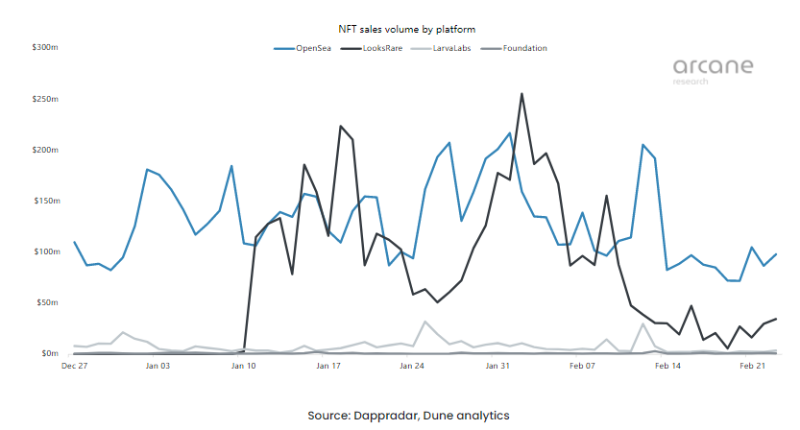
These two waves illustrate how digital assets organize communities. Shared ownership through tokens strengthens connections among holders, and obtaining tokens opens doors to new communities. From the first Bitcoin holders to the most recent NFT buyers, token holders have formed bonds.
However, ownership was also the initial promise of the ICO era, a narrative so powerful that it fueled some of the largest crowdfunding campaigns in history. Although markets have partially addressed this in newer iterations of incentive design—with more consistent vesting periods and targeted airdrops—it still doesn’t fully solve the problem of many overfunded and poorly incentivized projects.
The Appeal of Web3
Web3 protocols can empower communities in ways Web2 companies cannot. Communities often struggle to scale because the rules they rely on may be difficult to define—and even harder to enforce. Protocols can strengthen and accelerate community growth by codifying and enforcing rules for properly managing shared resources. More specifically, protocols can align community goals, define boundaries, and create transparency.
In the presence of shared network effects, incentives also shift. Shared data makes building upon existing products easier than ever before, enabling entrepreneurs to create better products faster. For users, switching costs between applications drop significantly because their data moves with them. This means that creating genuinely useful applications becomes more economically valuable than building massive proprietary user bases solely for network effects.
But Web3 is not just about technology. It’s a cultural movement. Many of these applications can be built atop existing technologies with little visible impact on end users. What makes the Web3 movement so compelling is the beliefs, ideals, memes, and emotions embodied on top of it. Community and shared values lie at the core of every human society and movement. This is also why large-scale movements led by technical primitives spread so rapidly through our culture.
While not everything will migrate to Web3 technology stacks, consumer expectations for products and services will increasingly demand that they behave more like principles found in Web3. In the second part of this series, I will explore what this means in practice and clarify emerging Web3 use cases.
Join TechFlow official community to stay tuned
Telegram:https://t.me/TechFlowDaily
X (Twitter):https://x.com/TechFlowPost
X (Twitter) EN:https://x.com/BlockFlow_News






