Coin Bureau: A Comprehensive Analysis of Near Protocol, Where Is It Headed in the Future?
TechFlow Selected TechFlow Selected
Coin Bureau: A Comprehensive Analysis of Near Protocol, Where Is It Headed in the Future?
Nowadays, as interest in the crypto market rises, promising cryptocurrency projects can easily be overlooked when they're no longer in the spotlight—Near Protocol is one such example.
 Navigating Web3 tides with focused insights
Note: This is a text version by TechFlow of Coin Bureau's video from YouTube, making it easier and faster for readers to digest. We encourage our audience to approach the content with rationality.
Near Protocol will become one of the most competitive smart contract platforms in 2022.
As excitement around the crypto market rises, promising projects can easily be overlooked when they fall out of the spotlight. Near Protocol is one such example—few paid attention when news emerged about its potential involvement with Cardano. That’s why today I’m giving you a brief recap of Near Protocol, highlighting its most exciting updates and explaining why the NEAR token may be poised for a strong comeback.
Understanding Near Protocol
If you’re unfamiliar with Near Protocol, here’s a quick overview. Near Protocol was founded in 2017 by Alexander Skidanov and Ilya Polosukhin.
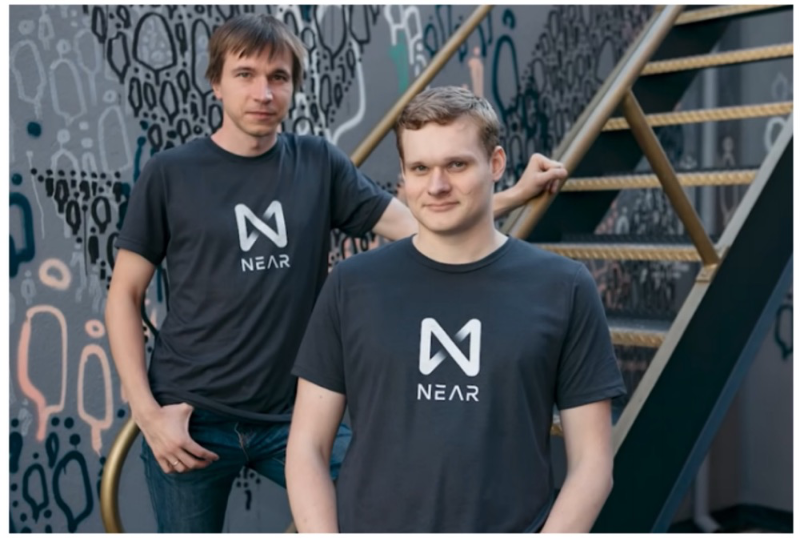
Near Protocol was established by RealInc., a for-profit software company based in San Francisco, California, while development is coordinated by the NeXFrand Foundation, a non-profit organization based in Switzerland.
Between 2017 and 2020, Near Protocol raised approximately $50 million through various token sales. Fun fact: its public sale was so popular that it crashed the CoinList website, forcing a delay.
Near Protocol is known for its whiteboard series on YouTube—a set of video interviews featuring some of the best developers in crypto, who thoroughly explain how their respective projects work. Now let’s dive into what developers have built with Near Protocol.
Near Protocol launched its mainnet in April 2020. The project remains technically under active development. Under the hood, Near uses a high-performance sharded proof-of-stake blockchain capable of handling up to 100,000 transactions per second.
Currently, however, NEAR Protocol operates with only one shard, processing between 800 and 1,000 transactions per second. Only recently has it begun rolling out its Nightshade sharding mechanism (more on this later).
The single shard of NEAR Protocol currently consists of about 60 validators. While technically not among the lowest, the barrier to becoming a validator is extremely high—one slot among the top 100 validators requires roughly $30 million worth of NEAR tokens.
Fortunately, staking is delegatable and can be done easily via user-friendly web wallets, with no minimum delegation requirement.
Validators and delegators receive rewards of approximately 11% annually for staking over a day. Misbehaving validators face partial slashing of their stake, and the slashed NEAR tokens are redistributed to other honest validators.
In addition to using NEAR tokens to pay transaction fees, all transaction fees on NEAR Protocol are burned. However, in cases involving smart contracts, a portion of the fee is paid to the creator of the smart contract.
NEAR Protocol has its own native virtual machine for running smart contracts, as well as an Ethereum Virtual Machine (EVM) provided by Aurora, another crypto project.
According to Defillama, NEAR Protocol hosts only two DeFi protocols with a total value locked (TVL) of around $100 million.
Oddly enough, NEAR Protocol actually has dozens of active DeFi dApps and over 200 projects built on its blockchain.
While NEAR Protocol’s EVM via Aurora has an additional $130 million TVL across four DeFi protocols, this still doesn’t fully account for the actual TVL reflected in NEAR’s DeFi ecosystem.
I know I’ve made NEAR Protocol sound simple, but it’s actually one of the most complex crypto projects—so complex that hundreds of pages of documentation are needed to explain everything properly.
Near Protocol Update Part 1
It’s been about a year since my last coverage of NEAR Protocol, and not much was reported during that time. Here are some major developments since then.
Last November, TUSD stablecoin announced it would launch first on the NEAR Protocol blockchain.
In January, Dragonfly Capital joined NEAR Protocol’s Validator Advisory Board. For context, Dragonfly Capital is one of the largest venture capital firms in crypto.
In February, the NEAR Foundation announced plans to fund $250 million worth of projects on the NEAR Protocol chain over the next four years.
The NEAR Foundation even handed control of its Medium page over to the NEAR Protocol community, resulting in a surge of related articles.
In March, NEAR Protocol launched NEAR Academy, a website where users can learn about crypto and earn digital completion certificates minted as NFTs on the NEAR Protocol blockchain.
NEAR Protocol also completed the Rainbow Bridge, enabling seamless transfers of ERC-20 tokens between Ethereum and NEAR, connecting both blockchains and linking them to Aurora’s EVM layer.
In April, NEAR Protocol announced its first operational DeFi protocol, which clearly depended on the completion of the Rainbow Bridge.
In May, Aurora finalized integration with NEAR Protocol, making “Ethereum Layer-2 experience on the NEAR blockchain” a reality.
In June, NEAR Protocol launched a hip-hop-themed NFT collection and marketplace called “hip-hop heads,” which achieved hundreds of thousands in trading volume upon debut.
The NEAR Protocol team also published a roadmap update on the NEAR Protocol governance forum (more details later).
In July, Grayscale revealed it was considering creating additional cryptocurrency trusts—and NEAR Protocol was on the list. Unfortunately, Grayscale hasn’t launched a NEAR Protocol Trust yet, but given that it recently launched a Solana trust (which was also previously under consideration), we might see a NEAR trust soon.
Near Protocol Update Part 2
In August, NEAR Protocol announced the Metabuidl Metaverse Hackathon—note, this was before the metaverse became overly hyped.
In September, winners of the NEAR Protocol Metaverse Hackathon were announced. If you're bullish on the metaverse, check out the blog post linked below.
Also in August, NEAR Protocol announced a partnership with Filecoin, enabling developers to store smart contract data in a decentralized manner. They even offered a $300,000 grant fund for developers.
In September, NEAR Protocol integrated with Opera Browser, allowing users to store NEAR tokens in Opera’s browser wallet and transfer tokens between Ethereum and NEAR blockchains.
In October, Aurora announced a $12 million funding round including prominent crypto VCs like Pantera Capital and Electric Capital.
NEAR Protocol also announced an $800 million ecosystem development fund, $350 million of which comes from Proximity Labs, a research and development firm.
The blog post about this massive fund concluded with a section titled “The sleeping giant awakes”—a perfect prelude to the bull run that followed.
In November, NEAR Protocol completed Phase 1 of its Simple Nightshade rollout. This split the network into four shards, shared among around 60 validators, increasing NEAR’s transaction throughput by four times.
NEAR Protocol also announced a partnership with Cardano to build a cross-chain bridge. If you’ve seen my video on top Cardano projects, you’ll recall our goal was to become the MakerDAO of Cardano, enabling issuance of a stablecoin called DUSD, backed by either staked or unstaked ADA.
Ryan Matovu, founder and CEO of Ardana, told Coin Telegraph they chose to partner with NEAR Protocol because “They are a top ecosystem with solid technology.” This implies someone is building a scalable, EUTXO-compatible dApp on Cardano.
Earlier this month, Aurora partnered with ConsenSys, one of Ethereum’s largest companies, to make multiple Ethereum tools—including MetaMask, Ethereum’s most popular browser wallet extension—compatible with the NEAR blockchain via Aurora.
NEAR Protocol also collaborated with musician Deadmau5 to launch an exclusive NFT series on Mint, an NFT marketplace built on the NEAR blockchain.
To celebrate the collaboration, a bus branded with NEAR Protocol toured Miami, where Mayor Francis Suarez welcomed Deadmau5 and NEAR Protocol to the city.
Recently, following an Amazon Web Services outage, NEAR Protocol published a blog post emphasizing the importance of decentralized storage for resilient blockchain infrastructure, specifically naming Arweave as a decentralized storage solution dApp developers should consider.
NEAR Price Analysis
In terms of price, the NEAR token has performed well over the past year, rising about tenfold since my last report on NEAR Protocol in October last year.
Unfortunately, this return pales in comparison to other cryptocurrencies over the same period. In my view, this is mainly due to two factors: the NEAR token vesting schedule and actions taken by the NEAR Foundation.
As shown, the NEAR token vesting schedule is quite aggressive, especially in the first two years. Looking back reveals that NEAR’s circulating supply has nearly quadrupled since last October.
Given that early investors in NEAR Protocol saw their initial investments grow 20 to 200 times, it’s reasonable to assume many began selling as soon as their tokens unlocked.
Illia Polosukhin, co-founder of NEAR Protocol, confirmed in a March interview that unvested NEAR tokens can be staked simultaneously. This means early investors were earning additional NEAR rewards while waiting for their allocations to unlock, increasing future sell pressure.
Meanwhile, the NEAR Foundation appears to have sold hundreds of millions in tokens to fund its large-scale ecosystem initiatives and support dozens of community DAOs. This wouldn't be an issue if demand from users and developers matched or exceeded supply—but currently, it does not.
Although NEAR Wallet metrics show over 1.7 million unique wallet addresses, data from DappRadar indicates that dApps on the NEAR blockchain attract only a few thousand monthly active users.
Meanwhile, Aurora’s blockchain explorer shows only around 45,000 wallet addresses on NEAR’s EVM layer. Aurora likely represents the more active side of NEAR’s dApp ecosystem.
On the positive side, transaction metrics on the NEAR blockchain are moving in the right direction. Since the Rainbow Bridge went live in March, daily transactions have increased 30-fold, and total gas consumption has risen nearly 20-fold—with no signs of slowing down.
These strong fundamentals are clearly reflected in NEAR’s recent price action. Given NEAR Protocol’s mid-tier market cap, it’s possible—though unlikely—that NEAR could rise another 325x before the bull market ends.
Near Protocol Product Roadmap
As mentioned earlier, the NEAR Protocol team released a product roadmap update on the NEAR Protocol governance forum in June.
The roadmap focuses primarily on technical milestones aimed at increasing speed and reducing costs, with the team aiming to achieve all outlined milestones by October next year.
Within this timeline, NEAR Protocol aims to increase its validator count from 60 to 100, and hopes to have hundreds of validators by early next year.
This will be achieved by lowering the stake required to become a validator. However, a recent blog post noted that while the current threshold of 3.5 million NEAR is very high, they want to avoid setting the new number too low.
NEAR Protocol also has a product roadmap for rolling out its Nightshade sharding mechanism, consisting of four phases. Phase 0—the Simple Nightshade—launched last month, as previously discussed.
In Phase 1 of Nightshade, NEAR Protocol will introduce Chunk-Only Producers—validators that validate only a single shard. Implementation is expected by year-end. According to NEAR’s promotional video from November, these Chunk-Only Producer nodes won’t require as much staked NEAR as current validators, nor do they need advanced hardware to run a chunk node.
In Phase 2, NEAR Protocol will optimize hardware requirements for block producers “without compromising performance or security.” This is expected in Q3 2022.
In Phase 3, NEAR Protocol will introduce dynamic resharding, enabling the blockchain to automatically merge small shards or split large ones as needed. In theory, this grants NEAR infinite scalability.
Nightshade is projected to be completed by the end of next year. According to the governance forum plan, NEAR Protocol will have at least eight shards by then, one of which will be dedicated to running Aurora’s EVM.
Beyond the official milestones in NEAR Protocol’s published roadmap, there are several prior and upcoming goals on the governance forum worth noting.
First is a proposal from NEAR co-founder Illia Polosukhin in April for an off-chain computing framework to improve scalability. As far as I know, this framework has not yet been implemented. If it had, there would be clear evidence—but I can’t find a specific implementation date.
Second is the November announcement of NEAR Protocol’s Token Factory, which allows token creation on the NEAR blockchain without coding—users only need a NEAR wallet.
Third is a call for input regarding quarterly transparency reports planned by the NEAR Foundation. Surprisingly, the proposal and others like it received only a few hundred views and minimal responses.
Concerns About Near Protocol
This brings me to my concerns about NEAR Protocol, starting with participation.
Despite robust development, timely announcements, ample funding, and a significant following, NEAR Protocol seems to lack broad user engagement.

I suspect this is partly because NEAR tokens are not currently listed on any U.S. exchanges, possibly due to insufficient decentralization for the SEC to classify it as a non-security.
This is problematic because NEAR Protocol is headquartered in the U.S., where thousands of individuals and institutions likely want access to NEAR tokens.
From interviews and speeches by NEAR founders, I gather that most of their users are based overseas—an unavoidable outcome.
Rather than challenging regulators like some other crypto projects (e.g., Stacks/STX), NEAR Protocol has embraced foreign jurisdictions. As a result, it has successfully attracted many users from Asia and Russia—Illia even lived in Beijing for a period.
Thus, the apparent lack of user activity may stem from language barriers, different access points, and distinct social media platforms used by NEAR’s international user base. The bigger concern, however, ties into competition—dozens of crypto projects have stronger overseas traction.
Honestly, I believe NEAR Protocol may have the most advanced technology of any crypto project, and its blockchain-building team could be the most talented on Earth. This isn’t hyperbole—these people are exceptionally smart.
The problem is NEAR Protocol is losing ground to similarly positioned projects like Ethereum, and especially Solana. I can’t help but notice that NEAR smart contracts are written in Rust—just like Solana’s. This means both projects are competing for the same small pool of Rust-savvy developers interested in crypto. For these developers, Solana is the obvious choice, especially since SOL is available in the U.S. and Solana enjoys close ties with Circle (issuer of USDC) and FTX exchange.
In my view, NEAR Protocol faces a tough battle against well-funded competitors. The good news is NEAR is well-prepared to respond, and the number of individuals and institutions joining the ecosystem continues to grow.
TechFlow is a deep-content platform focused on alternative asset investment. Follow our official account for more insights, and add WeChat TechFlow01 to join the TechFlow community.

Join TechFlow official community to stay tuned
Telegram:https://t.me/TechFlowDaily
X (Twitter):https://x.com/TechFlowPost
X (Twitter) EN:https://x.com/BlockFlow_News
 @coinbureau