








When the Metaverse Meets VR: A Review of VR-Concept Projects in the Crypto World
TechFlow Selected TechFlow Selected
When the Metaverse Meets VR: A Review of VR-Concept Projects in the Crypto World
Setting aside debates over definitions, perhaps we should acknowledge VR's role in the crypto world: blockchain can serve as the backbone of virtual worlds—currency, assets, identity, and even governance tools—but it may also need an immersive experiential gateway.
 Navigating Web3 tides with focused insights
Metaverse, in a narrow sense, is defined as "a traversable, visually immersive, and synchronized multi-user heterogeneous virtual world."
To many people, VR is an indispensable component of the metaverse. Without it, the experience would merely resemble a broadly conceptualized gaming world or online social network. True metaverse experiences require immersive entry into virtual worlds.
Setting aside debates over definitions, perhaps we should recognize VR's role in the crypto world. Blockchain can serve as the backbone of virtual worlds—supporting currency, assets, identity, and even governance tools—but it may also need an immersive gateway for users.
TechFlow presents five blockchain projects related to VR concepts, some of which have surged over 100x since listing on exchanges in the second half of this year. This article is for informational and research purposes only and does not constitute investment advice.
Project Name: Blocktopia
Official Website: https://www.bloktopia.com/
Project Overview:
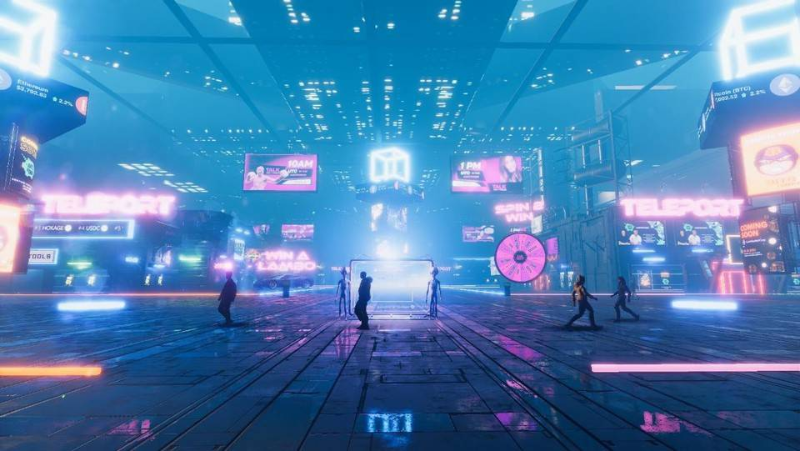
Bloktopia is a virtual reality metaverse project built and supported on the Polygon blockchain. The project uses one of the world’s most advanced 3D creation engines to construct a 21-story skyscraper within a virtual environment. Its visual design greatly enhances user experience, allowing users to engage in immersive activities across different floors—such as communication, real estate trading, and earning advertising revenue. The number “21” was chosen symbolically to commemorate the 21 million BTC cap.
Team Members:
ROSS TAVAKOLI: CEO & Co-Founder
Ross is a crypto OG who has been involved in the industry since 2015, with experience rooted in retail investing. Bloktopia is his vision—he leads the development and assembly of an expert team to build Bloktopia as a home for cryptocurrency enthusiasts.
PADDY CARROLL: Chief Marketing Officer & Co-Founder
Paddy is an experienced marketer who has worked with some of the UK’s largest brands, including BT Group and Sky. He will lead Bloktopia’s marketing strategy while driving significant advertising revenue opportunities through a new market-leading platform offering reach, frequency, and exclusive audience targeting.
Tokenomics:
BLOK is Bloktopia’s native utility token. BLOK is required to purchase or lease all real estate within Bloktopia.
Users can acquire items from the Bloktopia marketplace via non-functional mechanisms. This marketplace will showcase personalized real estate and customizable avatars.
BLOK grants holders various privileges within Bloktopia, such as attending exclusive events, participating in presales, and receiving equity shares.
Bloktopia will operate under a decentralized governance model. Holders of Reblok NFTs will become part of a governance council. All proposals will be voted on via DAO, with decisions made by majority vote among NFT holders.
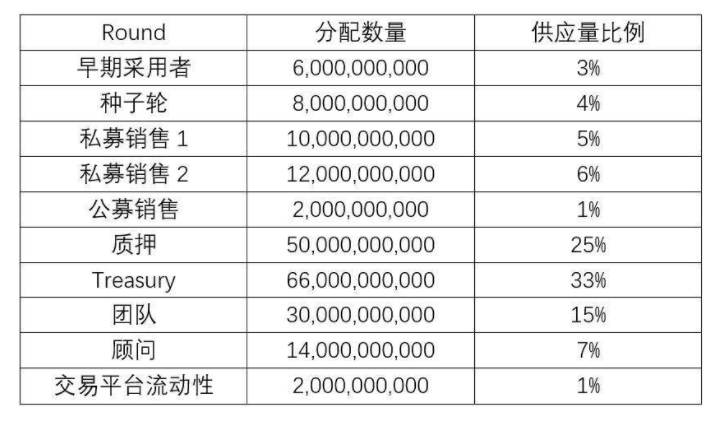
Token Distribution:
Exchanges Where Token Is Listed:
Centralized Exchanges: KuCoin, Gate.io
Decentralized Exchange: Quickswap
Investors:
Led by gaming and blockchain developer Animoca Brands, with participation from Anti Fund, Polygon, Bitboy, Wendy-O, X21, GenBlock, AU21, Avalanche, Shima Capital, TKX Capital, KuCoin Labs, DuckDAO, Dreamboat Capital, and Magnus Capital.
Project Name: CEEK
Official Website: https://www.ceek.io/
Project Overview:
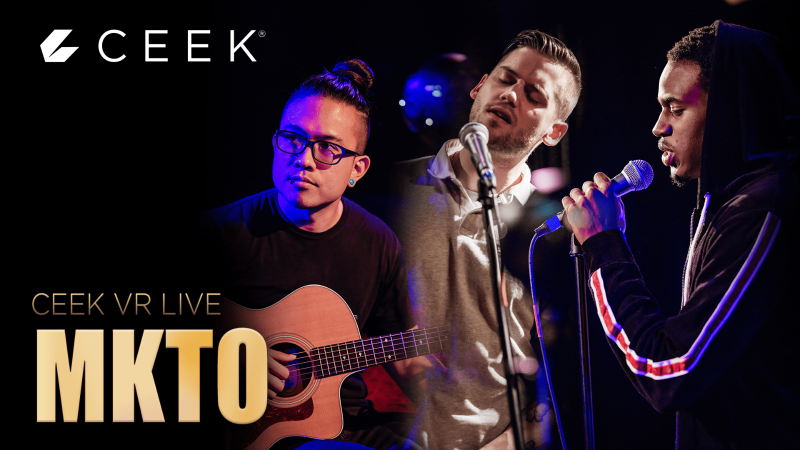
CEEK is a company primarily focused on developing AR/VR wearable devices. Artists use CEEK’s blockchain-powered platform to share content such as individual albums or songs. Through a wide network of VR/AR studios established by CEEK, creators can produce brand content favored by audiences.
The CEEK platform leverages blockchain-based middleware that enables smart contracts on CEEK to connect with external assets through external data sources, creating an efficient payment framework linking virtual and real-world transactions. Users can use smart contracts to purchase "on-chain" resources such as audiovisual content shared by artists or immersive VR experiences.
The CEEK token operates on an Ethereum-based smart contract, enabling flexible usage within the platform for rewards, voting, competitions, virtual goods, and other transactions.
Team Information:
Mary Spio: CEO & CTO
Digital media pioneer Mary Spio holds over ten technology patents. She previously held technical leadership roles at Boeing and Intelsat. Her company has collaborated with Microsoft Xbox 360, Tribune News, and over 200 radio stations. Spio serves on the boards of Oculus VR for Good, Amazon Launchpad, the Department of Defense Congressionally Directed Medical Research Programs (CDMRP), and the U.S. State Department Speaker Program.
Tokenomics:
To fully participate in the CEEK ecosystem, end-users must hold CEEK SMART VR tokens (CEEK)—an ERC-20/BEP-20 asset available on multiple centralized and decentralized exchanges.
CEEK tokens are used for various purposes within the CEEK ecosystem, such as purchasing tickets to virtual events, buying digital goods, and securing VIP interactions with favorite artists.
CEEK can be used to vote in community-managed activities like contests and polls, giving holders a voice in content creation and event planning. Unlike traditional in-game purchases that lose value, CEEK digital assets can be used across virtual worlds and even transferred—enabling a full-scale micro-economy of virtual items.
Tokens also serve as a primary reward mechanism, where users earn CEEK by completing tasks such as creating high-quality content, using CEEK’s VR creation tools to build custom VR venues, and participating in community votes.
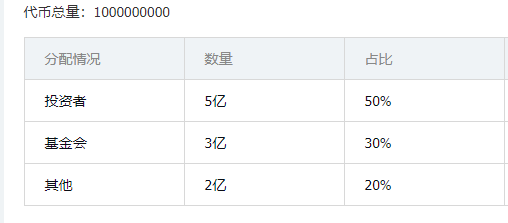
Token Distribution:
Exchanges Where Token Is Listed:
Centralized Exchanges: MXC, Hotbit
Decentralized Exchanges: PancakeSwap, ApeSwap
Project Name: Netvrk
Official Website: https://www.netvrk.co/
Project Overview:
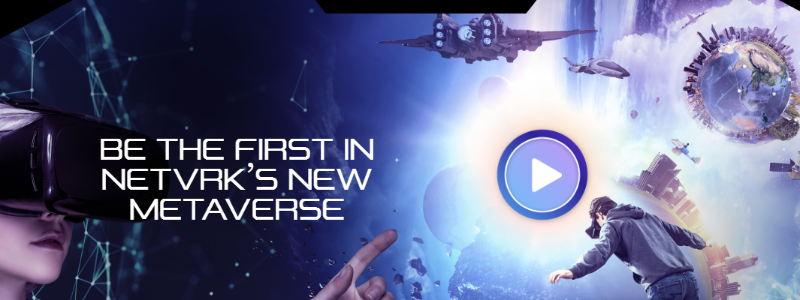
NetVRk is a social virtual world platform equipped with powerful creation tools and infrastructure that enable users to easily create, share, experience, and monetize their content. Focused on gaming, education, and virtual workplaces, it is built around ownership of virtual land and digital assets.
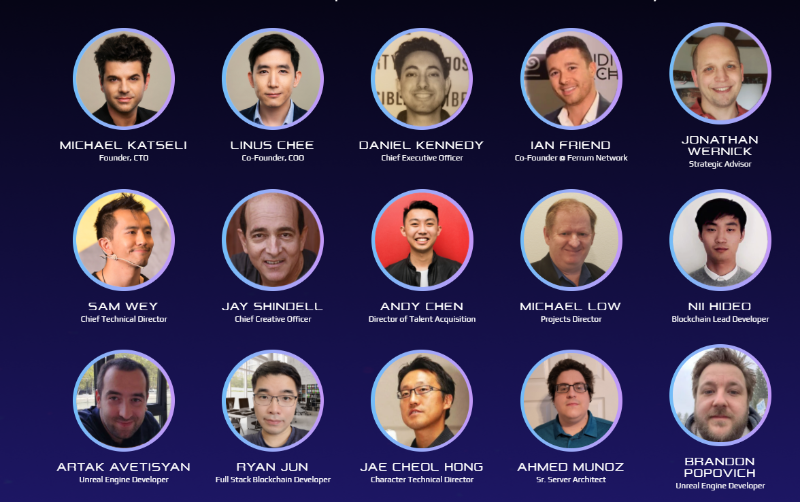
Team Information:
Tokenomics:
NETVRK tokens can be used to purchase assets within the virtual world, including buildings, vehicles, homes, and many others available on the NETVRK marketplace.
Just like in the physical world, land is a valuable commodity in Netvrk’s virtual universe. Tokens can be used to buy prime real estate locations such as beachfront views or spots in city centers.
NTVRK tokens can be used to purchase advertising spaces, which can generate passive income and be resold to third parties for substantial profits.
Tokens can also be used to mint non-fungible tokens (NFTs), providing another way to earn additional income.
Another method of earning passive income with NTVRK tokens is staking, where shareholders receive a fixed percentage of profits based on the amount of tokens staked within the network.
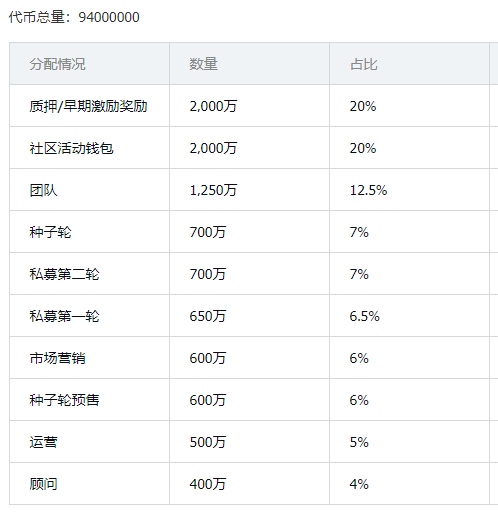
Token Distribution:
Exchanges Where Token Is Listed:
Centralized Exchanges: KuCoin, Hotbit
Decentralized Exchange: Uniswap
Investors:
Momentum6, Exnetwork Capital, Skyvision Partners, Bondly, Blocksync Venture, Dutch Crypto Investors, SMO Capital, GTA Ventures, Banter Capital
Project Name: Somnium Space
Official Website: https://somniumspace.com/
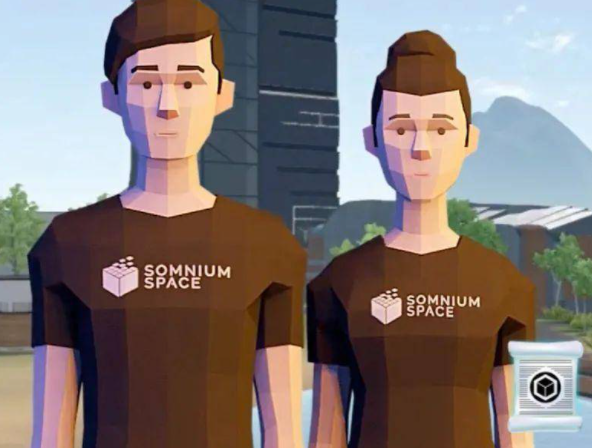
Project Overview:
Somnium Space is an open, social, and persistent virtual reality world built on Ethereum. Using blockchain technology, users can buy land, construct facilities, import items, sell assets, and generate profits—all within a fully player-driven environment.
Everything in Somnium Space is shaped entirely by its users. Designed explicitly for VR, it supports body tracking and haptic suits to deliver the most immersive experience among blockchain-based virtual worlds—the closest thing to Web3 meeting *Ready Player One*.
Somnium Space is primarily a VR experience. The 2D mode is mainly for exploration—a place to discover the unknown, do the impossible, meet people thousands of miles away, work, and play in a fully interconnected and seamless world. Accessible from any device—whether in 2D/VR mode on desktop or mobile VR mode—it offers the same continuous world wherever you go.
Tokenomics:
The project’s economy rests on three pillars: tokenization of virtual land, tokenization of digital assets and skills, and a decentralized marketplace.
Somnium Space uses the ERC-20 standard to issue its in-app utility token, Somnium CUBES (CUBE).
Players use CUBE to purchase in-game art, event tickets, and other access rights. Creators, in turn, can sell games, artworks, tickets, and more they’ve created in Somnium Space and earn CUBE in return.
Users can own various digital assets—including land—as NFTs within the platform.
CUBE and NFTs in Somnium Space can be traded on Polygon’s Layer2 chain to reduce gas fees. NFTs can also be traded on platforms like OpenSea.
Listed Exchanges:
Centralized Exchange: GEMINI
Decentralized Exchange: Uniswap
Project Name: Highstreet
Official Website: https://www.highstreet.market/
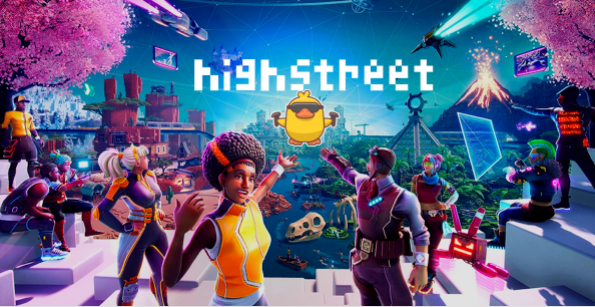
Project Overview:
Highstreet is a commercial metaverse platform created by LumiereVR, a computer vision-based VR retail company. It aims to provide brands with a Shopify-like gaming experience, enabling them to establish a presence in MMORP-style worlds. By directly integrating with existing e-commerce systems, players can purchase physical products to use in-game or choose to redeem real-world versions of items bought in Highstreet.
Highstreet World consists of several explorable islands featuring residential areas and various phygital products—digital assets linked to real-world counterparts—which can be sold as non-fungible tokens. At the heart of this ecosystem lies the Highstreet Market, located in the central district of High Street City. This marketplace allows redemption of limited-edition physical products, each tied to a real-world equivalent.
Within the system, Highstreet Market’s StreetSmart utilizes a specific bonding curve mechanism powered by a smart contract treasury to ensure liquidity at all times. By tokenizing each product as an ERC-20 token, Highstreet Market eliminates logistical overhead for fungible asset traders, ensuring genuine products always come directly from merchants, with only authentic collectors needing to manage physical delivery. With support from companies like HTC, Highstreet enables users and friends to digitally purchase real products together while shopping and earning simultaneously.
Listed Exchanges:
Centralized Exchanges: LBank, Bitget
Decentralized Exchanges: Uniswap and PancakeSwap
Investors:
In August, Highstreet secured a $5 million funding round led by Mechanism Capital, NGC Ventures, Palm Drive Capital, Cherubic Ventures, Jump Trading, GBV, Panony, and Shima Capital. In October, Highstreet received a second strategic seed investment led by Binance Labs and Animoca Brands.
Join TechFlow official community to stay tuned
Telegram:https://t.me/TechFlowDaily
X (Twitter):https://x.com/TechFlowPost
X (Twitter) EN:https://x.com/BlockFlow_News






