








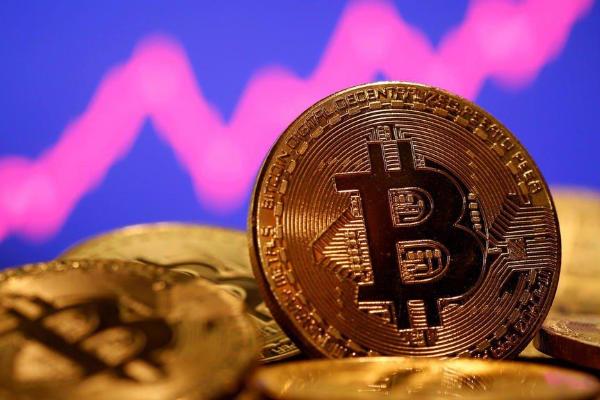
Crypto's New "Dumb Money": From Euphoria to Silence, Faith Shattered and Reforged
TechFlow Selected TechFlow Selected
Crypto's New "Dumb Money": From Euphoria to Silence, Faith Shattered and Reforged
They entered this fresh, restless, yet opportunity-filled world of cryptocurrency as complete beginners during the most fervent market sentiment, becoming what people call "new crypto韭菜."
 Navigating Web3 tides with focused insights
For most people, "Bitcoin" is no longer an unfamiliar term.
They may have long heard myths about getting rich from Bitcoin, but back then, cryptocurrencies seemed like an abstract and impractical frontier concept confined to the digital world—far less tangible than cash in wallets or balances in bank accounts.
However, this perception quietly shifted in the first half of 2021. Led by Elon Musk, the self-proclaimed "CEO of Dogecoin," low-cost animal-themed coins such as Dogecoin (DOGE) and Shiba Inu (SHIB) surged dramatically, gaining hundreds or even thousands of percent in value. They quickly secured a place in the market, repeatedly trending on Weibo, spawning countless wealth legends, breaking into mainstream awareness, and offering many newcomers a low-cost entry point.
As a result, many began noticing frequent cryptocurrency-related content in their social media feeds—perhaps an official account article, a screenshot from an exchange, or comments lamenting price swings. Regardless of whether these individuals had investment experience, worked in crypto, or actually profited from trading, one message came through clearly via their posts: an increasing number of ordinary people were joining the crypto trading rush.
Among them were seasoned stock market investors who had struggled for years without success; college students not yet in the workforce, eager to earn their first fortune; urban white-collar workers gasping under the weight of 996 workloads; and small-town youth who dropped out early to search desperately for financial breakthroughs...
Driven by the same goal and sharing a similar belief, they entered this fresh, volatile, yet opportunity-filled space as complete beginners during the most fervent moments of crypto market sentiment, becoming what everyone calls the "new retail investors" or "fresh meat" of the crypto world.
Entry
Li Ran is a post-00s generation individual raised in a remote fifth-tier county town. At age 17, he dropped out of school and took a local job in advertising material production, doing basic tasks like printing, photo editing, and ad design.
From age 17 to 21, at a time when youth should be full of energy and ambition, Li Ran felt trapped in a dead-end town. Earning just 2,000 yuan per month doing monotonous, unfulfilling work, his only entertainment was liking videos on Douyin that showcased others’ glamorous lives.
Then, in April this year, Li Ran偶然 learned about Dogecoin through a social website. When he saw stories of people turning 20,000 yuan into 200,000 or 300,000 yuan through crypto trading, he was captivated by these explosive wealth tales.
Why can't I be the one to turn a small stake into big gains and get rich quickly?
On April 21, with 15,000 yuan painstakingly saved, Li Ran officially joined the crypto trading wave.
Within just two weeks, he watched his 15,000 yuan grow to 42,000 yuan. Without celebrating, he immediately sold all his Dogecoin and went all-in on the trending Shiba Inu (SHIB) token in online communities. That amount skyrocketed to 170,000 yuan in less than a week. The sudden influx of wealth left Li Ran feeling like he was dreaming.
When you're riding the wind, even a dog can fly—especially when that wind is blown by Elon Musk, the so-called "world's richest man."
During that period, many inexperienced individuals like Li Ran—lacking fundamental financial knowledge—rushed into the market, driven by viral stories of crypto surges dominating mainstream financial media and Weibo headlines.
In fact, over the past two years, public enthusiasm for crypto trading has steadily increased, drawing more and more participants globally.
South Korea is widely recognized as the country with the most fervent crypto speculation, giving rise to a unique term—"kimchi premium"—referring to the price difference of cryptocurrencies between Korean exchanges and those elsewhere.
In South Korea’s hyper-competitive and oppressive society, success for young people is narrowly defined: either land a government job as a civil servant, or become a cog in one of the massive conglomerates controlling daily life. Both paths, however, require attending a top-tier university—a task incredibly difficult to achieve.
Thus, for many young Koreans, cryptocurrencies represent their only chance for a dramatic turnaround—a high-stakes gamble for class mobility.
A young professional in South Korea once complained to the *Asia Daily*: "No matter how hard I work at my company, my salary barely increases. It's impossible now to save up enough to buy a house like our parents did. I don’t know when I’ll be laid off or if the company will suddenly collapse. Times have changed—if I don’t invest now, I might remain a slave to the corporate grind for life."
Crypto trading has thus become an ideal path for ordinary, average-educated youth to accumulate initial wealth quickly, break free from workplace rat races, and relieve housing pressure.
Especially when you see peers who dropped out before finishing high school now financially free thanks to mining income, flaunting their “success”; when you hear coworkers less competent than you or classmates with worse grades strike gold through leveraged bets, turning four-digit investments into five-digit wins—jealousy and anxiety quietly take root, making the decision to enter feel inevitable.
As Lao Duan, a Bitcoin investor since 2011, put it:
For most people, presenting facts and logic is useless—they won’t listen. The real driving force behind action is something every person possesses: envy. They think: Why can you get rich overnight while I can’t? No way—I want to get rich too. So they pull all their savings from the bank and buy Bitcoin without asking the price.
Cryptocurrency sells the dream of instant wealth.
Crash
The cryptocurrency market operates 24/7, constantly updating prices. As legions of new retail investors flood in, drawn by tales of riches, the principle of "profits and losses share the same source" applies—the invisible scythe hangs above, ready to swing at any moment.
On May 13, Elon Musk announced Tesla would suspend Bitcoin payments. Bitcoin’s price plummeted shortly afterward, dropping to $29,000 per coin by May 19—down sharply from its all-time high of $64,000 in mid-April. It was, metaphorically, back to square one overnight.
Following Bitcoin’s lead, previously hot cryptocurrencies like Ethereum, Dogecoin, and Shiba Inu also crashed, with many seeing their values halved. The market was instantly filled with despair.
Once the beautiful wealth bubble bursts, the market reveals its harsh and indifferent nature.
According to data from crypto trading platform Bybt, on May 19—the "Black Wednesday"—880,000 people were liquidated in the crash, with total losses reaching $9.3 billion. The largest single liquidation amounted to $67 million.
On social media, retail crypto investors voiced widespread anguish. Many had been attracted by meme coins like Dogecoin in April and May, only to face waterfall-like declines immediately after entering.
“I cut my stock losses after losing 20% over six months, hoping to recover in crypto—but here, I lost 40% in just one day,” one investor lamented on social media.
To observers outside the crypto world, the so-called "crypto market crash" was cause for celebration.
On social platforms, many cheered: “Seeing you lose money makes me happier than earning honestly.”
Some said, “You gambled and got rich before—now you’re losing, what’s there to pity?” Others declared, “Gamblers deserve it.” Gamers added: “Graphics card prices should finally come down.”
Financial markets should ideally be arenas where professionals compete. But for trend-following investors like Li Ran who lack understanding, outsiders’ mockery and ridicule may mask a rollercoaster ride of wealth illusion—or even tragic personal and family consequences.
In this downturn, Li Ran watched his hard-earned 170,000 yuan shrink to just 35,000 yuan within days. Emotionally shattered, he doubled down by opening futures contracts, attempting to quickly recoup his losses.
He quit his job to monitor the charts around the clock, staying up late each night. Yet the margin call notification still arrived as expected. A sharp drop on May 23 finally snapped him out of his get-rich fantasy.
In less than a month, his 15,000 yuan—saved over years—grew to 170,000 yuan, then dwindled to just 1,100 yuan. Like a dream, Li Ran was back at zero—once again, penniless.
Li Ran is merely a microcosm of new retail crypto investors. In interviews with TechFlow, multiple investors shared that they entered during peak market frenzy, initially feeling optimistic, believing crypto was like picking up free money—only to be shocked by the May 19 crash.
“I’d never seen such extreme volatility—prices dropping 50% in a single day, feeling like the end of the world,” said Wang Dong, who panicked and sold low. The next day, the market rebounded strongly, leaving him deeply regretful.
Buying high, selling low—this is the common trajectory of countless new retail investors.
“Now I finally understand: the essence of crypto trading is wealth redistribution—from retail investors to whales, from short-term traders to long-term holders, from new ‘fresh meat’ to old-timers, from the timid to the bold,” Wang Dong reflected.
Regulation
On May 23, the Dalian Municipal People's Government Press Office held a press conference regarding the May 22 incident involving a hit-and-run car crash. One statement read: “The suspect Liu Mou, unable to accept investment failure and having lost hope in life, developed a desire to retaliate against society.”
Before the specific cause was clarified, many people’s immediate reaction upon reading this was: Could Liu have suffered a margin call in crypto trading, accumulated insurmountable debt, and snapped psychologically, leading to violence?
Later reports confirmed the suspect had become despondent due to a failed barbershop investment, but the widespread assumption of a crypto-related motive highlights how the May 19 and May 21 crashes had already created latent social risks.
Indeed, prior to the crash, Chinese regulatory authorities issued multiple warnings and tightened oversight—a key factor believed to have triggered the price plunge:
- On May 19, the National Internet Finance Association and two other organizations jointly released a notice warning of virtual currency trading risks, emphasizing that such activities are illegal financial operations;
- On May 21, the State Council’s Financial Stability and Development Committee further demanded “cracking down on Bitcoin mining and trading activities” and “firmly preventing individual risks from spreading to society.”
Zhang Xiaoyan, vice dean of Tsinghua University’s PBC School of Finance, stated: Regulatory policies on cryptocurrencies like Bitcoin aim to protect small and medium investors, safeguarding retail investors’ hard-earned savings.
“Cryptocurrency trading lacks effective regulation, making prices susceptible to manipulation and prone to wild swings. China has a vast number of retail investors, who generally lack financial knowledge and deep understanding of cryptocurrencies.”
During the recent period of “extreme greed” in market sentiment, traders often opened positions with five times or higher leverage. Not uncommon were speculators, unaware of market dynamics, placing fifty-fold or greater leveraged bets fueled by dreams of overnight riches—one wrong move away from heaven or hell.
Due to the extreme volatility of cryptocurrencies, in countries like the U.S., compliant investment pathways usually impose qualified investor thresholds, requiring sufficient risk tolerance and professional knowledge.
When inexperienced, risk-intolerant newcomers dive into futures contracts, it’s like a naked infant stumbling into a battlefield—taking a few wobbly steps before falling and bursting into tears.
Law enforcement officials reported a noticeable increase in people calling police due to crypto margin calls.
According to the *Economic Reference News*, an industry expert strongly criticized the situation: “Given that most trading platforms are registered overseas, taking swift and strong measures against leveraged trading now helps control risks promptly and, more importantly, pulls some reckless investors back from the brink of disaster.”
Newcomers
Like sand sifted by waves, amid rapidly shifting bull and bear cycles, some individuals drawn by wealth effects begin developing genuine interest in blockchain technology, DeFi, NFTs, and eventually transition into the industry itself.
To these new industry entrants, blockchain does not equal speculative trading. As an emerging industry still in its infancy, blockchain requires a long period of experimental development, along with healthy, regulated market governance.
From a career perspective, this field allows young people not only to escape the intensifying rat race of traditional industries but also to become pioneers of revolutionary change, achieving greater success and realizing personal value faster.
“In my previous industry, achieving a certain level of financial status required ten or even twenty years of diligent work, capped at a predictable ceiling. But in blockchain, everything is different—I see no ceiling, nor do I need decades of seniority to break through class barriers.”
A recent graduate chose to enter the industry during this turbulent bull-bear transition. In her view, the emotional hype around crypto trading is fleeting and illusory, while the industry’s true potential is lasting and real.
“I hope to achieve financial freedom faster so I can pursue what I truly care about,” said another ’95-born professional when asked why he chose this field. After three years of work, he has already amassed a substantial sum as startup capital and resigned earlier this year to launch his own venture and fulfill unfinished dreams.
TechFlow also interviewed someone who transitioned from traditional finance into blockchain. When asked about the reason, he replied:
“Of course, the primary motivation was the extraordinary wealth potential far exceeding other industries—that’s the most humanly appealing aspect. But as I learned more about the field, I realized blockchain is still in its very early, fast-evolving stage—like witnessing the internet era of 1997, full of both risk and opportunity. That’s incredibly attractive to those who love innovation.”
It’s clear that wealth potential, escaping the rat race, and long-term prospects are the main reasons people choose this industry.
Whether new to the industry or fresh retail traders, across bull and bear cycles, assets rotate hands—newcomers enter, veterans exit, some rejoice, others suffer.
But as long as the spring breeze blows, life continues.
(All names used are pseudonyms)
Join TechFlow official community to stay tuned
Telegram:https://t.me/TechFlowDaily
X (Twitter):https://x.com/TechFlowPost
X (Twitter) EN:https://x.com/BlockFlow_News






