








Chinese DeFi, trapped by token price
TechFlow Selected TechFlow Selected
Chinese DeFi, trapped by token price
From DeFi's rise to fame to being dethroned by domestic copycats, all it might take is the moment mining begins.
 Navigating Web3 tides with focused insights
"From DeFi's rise to fame to being dethroned by domestic Chinese copycats—it might only take the moment mining begins." A crypto investor once said this in jest, but it has now become reality.
Flamingo, a DeFi project under NEO, was originally scheduled to launch on September 25 at 9 PM. However, due to wallet malfunctions, many users were unable to stake their assets smoothly. The team was forced to suspend its "MintRush" event, citing technical issues with NeoLine as the cause.
"They've already mined millions of tokens, yet not a single retail investor has managed to get in," one investor commented on Weibo. "Whales started mining nonstop while node services crashed, locking everyone else out—scientists can't even stay scientific anymore."
At the time of writing, Flamingo had suspended operations twice; similarly, BTM’s cross-chain DeFi project SUP also experienced two halts—leading to jokes about "pause-able blockchains." One user remarked, "(Chinese public chains) claim to surpass Ethereum in TPS and stability, yet they can't even copy homework correctly."
Are Chinese projects really that bad?
"I’ve been rug-pulled by another Chinese project"
"Just forget about Chinese projects—they’re all unreliable," said investor Xilan, speaking to TechFlow. In the cryptocurrency world, Chinese-originated projects sit at the very bottom of the credibility ladder.
He explained that after the chaos of 2018's meme coin bubble, mentioning “a Chinese project” today immediately evokes associations with scams, yield farming exploitation, and unreliability.
And during this wave of DeFi innovation, Chinese projects have failed to redeem themselves or shift public perception.
"I got rekt by another Chinese project," said Xiaoyun, who entered the crypto space in early 2018. She previously invested in a Chinese public chain and got stuck holding high-cost tokens. This year, when liquidity mining took off, she missed the first wave of well-known international projects and instead bought into what was dubbed the "light of Chinese DeFi"—only to see the token price collapse overnight, trapping her again. "With Chinese projects, you accidentally end up stuck for years."
In the DeFi world, there is a new slang term: "Tu Gou" (literally "local dog"). "Tu" refers to local/Chinese origin, and "Tu Gou" specifically describes Chinese project tokens listed on Uniswap. Later, it became a broad label for all Chinese DeFi projects.
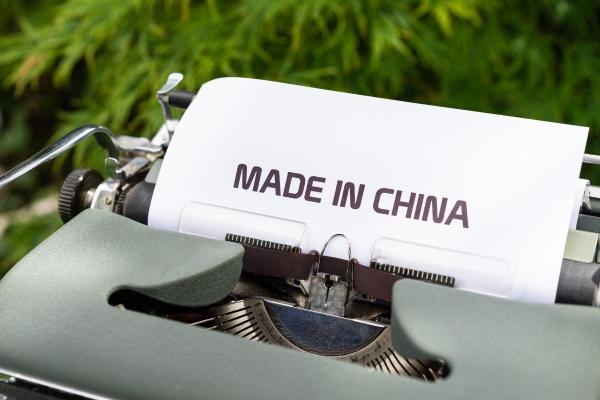
Originally, "domestically produced" meant goods manufactured locally. As economic globalization deepened, the meaning evolved—especially in industries like smartphones and automobiles, where "Chinese-made" now refers to products independently developed and produced in China, or those with over half their components domestically sourced.
To many people, however, "made in China" still implies lower quality—for example, Chinese cars are often seen as inferior to German or Japanese ones.
In the blockchain world, not only do investors and consumers look down on Chinese projects—but even the teams behind these projects themselves lack confidence, often disguising their origins to appear foreign.
A case in point involves Weibo blogger "FeiX Fei," who discovered a vulnerability in Soda on September 20. He reported it directly to the development team, only to be initially responded to in fluent English. After confirming the bug, the developers suddenly switched to panicked Chinese messages.
Pretending to be an overseas team isn't rare among Chinese projects. An industry insider once shared tips at an offline meetup on how to rebrand a Chinese project as international: besides creating Twitter accounts, official websites, and Discord channels, teams should hire foreign or globally recognized security auditing firms and obscure their team identities in promotional materials to create an illusion of decentralization.
Why must Chinese projects imitate foreign ones? How did they become so stigmatized? And where exactly do they fall short?
Chinese DeFi: Learning Without Innovation
This wave of DeFi mania originated abroad. In mid-June, Compound led the charge with liquidity mining, amplified by Coinbase, igniting the market.
Yet it wasn’t until mid-August—when total value locked (TVL) in DeFi approached $9 billion, a tenfold increase in three months—that major Chinese public chains finally woke up and began announcing their own DeFi initiatives.
- August 10: Nebulas (ANS) released its R&D roadmap for H2 2020, highlighting DeFi services as a priority.
- August 11: GXChain (GXC) announced plans to launch oracle and cross-chain related products, officially entering the DeFi space.
- August 16: Qtum unveiled Qiswap, a decentralized exchange design compatible with the Ethereum Virtual Machine.
- ...
- August 27: NEO revealed its DeFi ecosystem project Flamingo, aiming for an official launch by mid-September.
By September, just as Chinese public chains were gearing up, DeFi hype began cooling down. Market attention shifted toward Uniswap’s token launch, while other interests drifted toward NFTs and beyond.
"It’s tough for Chinese public chains—if they build DeFi, they get criticized for the mess; if they don’t, they’re also criticized," Xiaoyun noted. "Many of these chains are pressured into rushing DeFi development, otherwise their token prices won’t move, and investors start demanding accountability."
After DeFi boomed on Ethereum, ETH broke its July 2018 high, reaching $439. Meanwhile, most Chinese public chain tokens remained dormant.
As previously discussed in TechFlow's article “DeFi Can't Escape Ethereum”, due to factors like asset depth, transaction performance, and centralization, other public chains face a long road ahead in competing with Ethereum in DeFi.
Faced with this gap, Chinese DeFi projects adopted a "Copy to China" model.
Blockchain blogger "Bear Bear Hub" summarized the essence of Chinese DeFi into two points: first, porting existing Ethereum-based DeFi models onto domestic chains; second, building foundational DeFi protocols on their own chains—mostly DEXs or full-stack solutions.
"Almost entirely copying ERC-style DeFi mechanics without innovation—basically just deposit-and-mine plus liquidity mining."
Beyond public chains, at the application layer, Chinese DeFi lacks any product comparable to leading foreign counterparts. On DeBank’s TVL leaderboard, no Chinese DeFi project appears in the top 10. dForce’s Banker, DODO, YFII, HBTC, and ForTube Bank V2 rank 12th, 21st, 24th, 23rd, and 26th respectively—but combined, their TVL doesn’t match SushiSwap, ranked 10th.
Looking back, these applications remain mere followers in the wake of foreign-led innovations. Overseas projects dominate the赛道 (track), and both internet and blockchain industries exhibit strong "first-mover advantages," naturally forming barriers of capital and traffic. Simple imitation makes it nearly impossible to achieve a "leapfrog" breakthrough.
This wave of DeFi innovation—including AMM-powered DEXs, liquidity mining, yield aggregators, and vampire attacks—was pioneered abroad. Chinese projects are merely aping them, stumbling along like someone learning to walk.
Beyond lacking innovation, Chinese DeFi faces a more urgent and severe challenge: the token price trap.
Due to overall market corrections, incentive mechanisms, and insider trading ("rat holes"), tokens like dForce’s DF and ForTube’s FOR plummeted 81.7% and 67% from their peaks within a month—prompting community members to threaten legal action. Token price has become a heavy burden for project teams. Should they focus on building products—or propping up the token price? That is the question.
Chinese DeFi: Trapped by Token Prices
In 2017, outspoken director Feng Xiaogang pointed the finger at audiences for China's production of low-quality films.
"People love saying we produce too many trash movies—but aren’t there also many trash viewers, which leads to so many trash movies?"
Applying this logic, could the困境 (predicament) of Chinese DeFi be linked to the culture of domestic crypto communities?
Analyst Li Feng believes most domestic investors care only about token prices, judging projects solely by short-term price movements—an attitude detrimental to the sustainable growth of Chinese projects.
"A rising price means a good project; a falling price equals a scam—the price trap ensnares not just investors, but also project teams," Li Feng stated.
Under normal circumstances, token prices fluctuate based on broader market trends and project fundamentals—but such cycles are too slow. Both investors and teams crave quick pumps and fast exits.
When project teams begin serving token price alone, doing real work becomes less efficient than designing inflationary economic models, coordinating pump groups, or even partnering with Ponzi schemes and MLM teams.
The result of artificially inflating prices beyond fundamentals is short-lived hype turning into pure speculation—"the higher it goes, the harder it falls"—a fate common to most Chinese projects.
Investor Zhang Bin categorizes project teams into four types: 1. Working hard, token rises; 2. Not working, token rises; 3. Working hard, token stagnant; 4. Not working, token stagnant. He believes most Chinese projects fall into the latter two categories.
Compared to foreign communities, a stark difference emerges: discussions in Chinese project communities center almost entirely around "price movements" and "when will the next pump happen." In contrast, foreign communities typically ban price talk and instead focus on technical progress and product development.
Take Chainlink, a standout project this year. Philip, head of Chainlink China Community, has repeatedly emphasized that price discussions are strictly prohibited—a norm widely accepted within the community.
This "no price talk" policy fosters a healthier, less stressful environment—and allows teams to actually focus on building.
Take Aave, the leading DeFi lending protocol. Shortly after its token launch, it dropped 80%, falling below its initial offering price. For the next two years, it traded near rock bottom, with many declaring the project dead.
Then came 2020’s DeFi boom. Aave’s total value locked surged from $1 million in January to $1.5 billion today—an increase of 1,500x. Reflecting this fundamental strength, its LEND token rose over 100x since the beginning of the year.
Token price is a double-edged sword: the louder the praise during rallies, the harsher the curses during crashes. If both investors and teams remain trapped in this price obsession, what should be a mutually beneficial relationship turns into mutual destruction.
There was a time when "Made in China" was synonymous with knockoffs and poor quality. Yet today, whether in smartphones, 5G telecom, engineering, or high-speed rail, Chinese innovation has moved from imitation to leadership, gaining global recognition.
In blockchain, Chinese players once dominated Bitcoin mining and centralized exchanges. But at the protocol and application layers, they’ve lagged behind. What lies ahead?
Like Chinese football fans torn between hope and despair, we still hold out hope for Chinese DeFi—to stop chasing trends and copying, and instead lead with genuine innovation. May investors show more patience, and project teams embrace long-term vision and creativity.
*TechFlow reminds all investors to beware of FOMO risks. The views expressed herein do not constitute investment advice.
Join TechFlow official community to stay tuned
Telegram:https://t.me/TechFlowDaily
X (Twitter):https://x.com/TechFlowPost
X (Twitter) EN:https://x.com/BlockFlow_News






