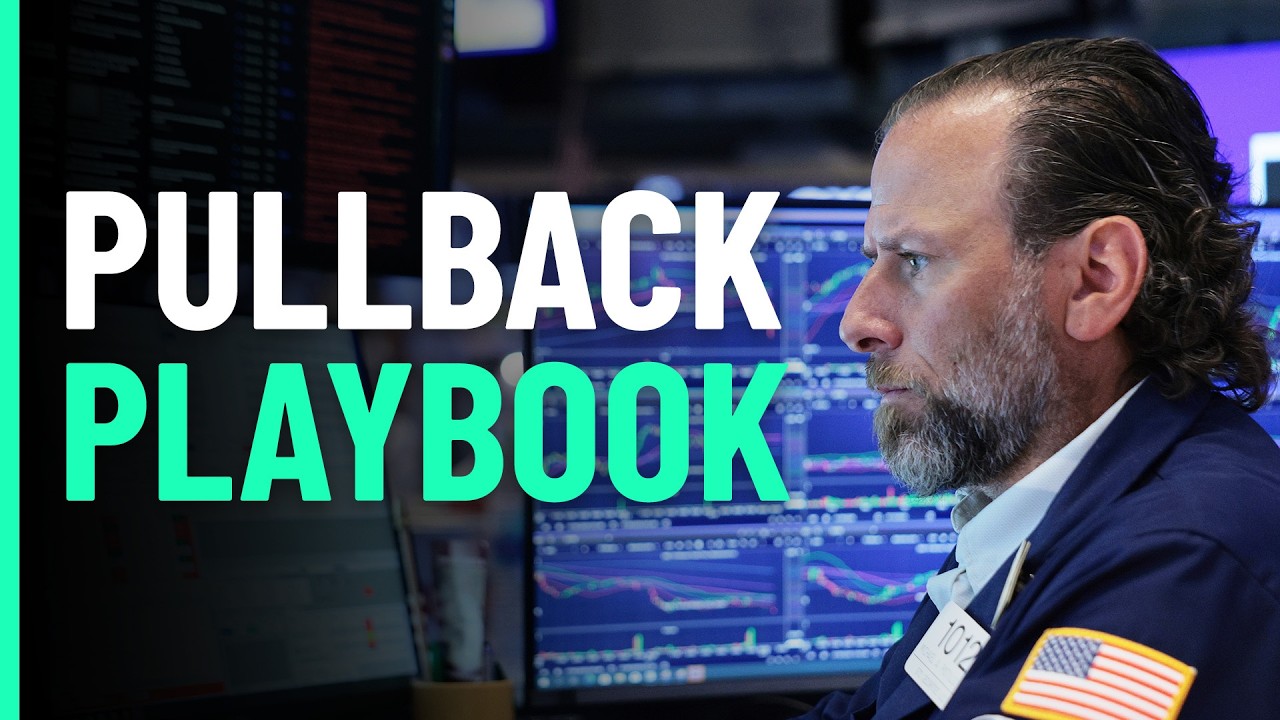
Podcast Notes | Wall Street 30-Year Veteran's US Stock Barbell Strategy: Buy Apple, Nvidia, Microsoft for Tech, Allocate Industrials, Financials, Healthcare for Defense
TechFlow Selected TechFlow Selected
Podcast Notes | Wall Street 30-Year Veteran's US Stock Barbell Strategy: Buy Apple, Nvidia, Microsoft for Tech, Allocate Industrials, Financials, Healthcare for Defense
"Don't bet on who the ultimate winner of LLM will be; be the one selling shovels."
 Navigating Web3 tides with focused insights
Organized & Compiled: TechFlow
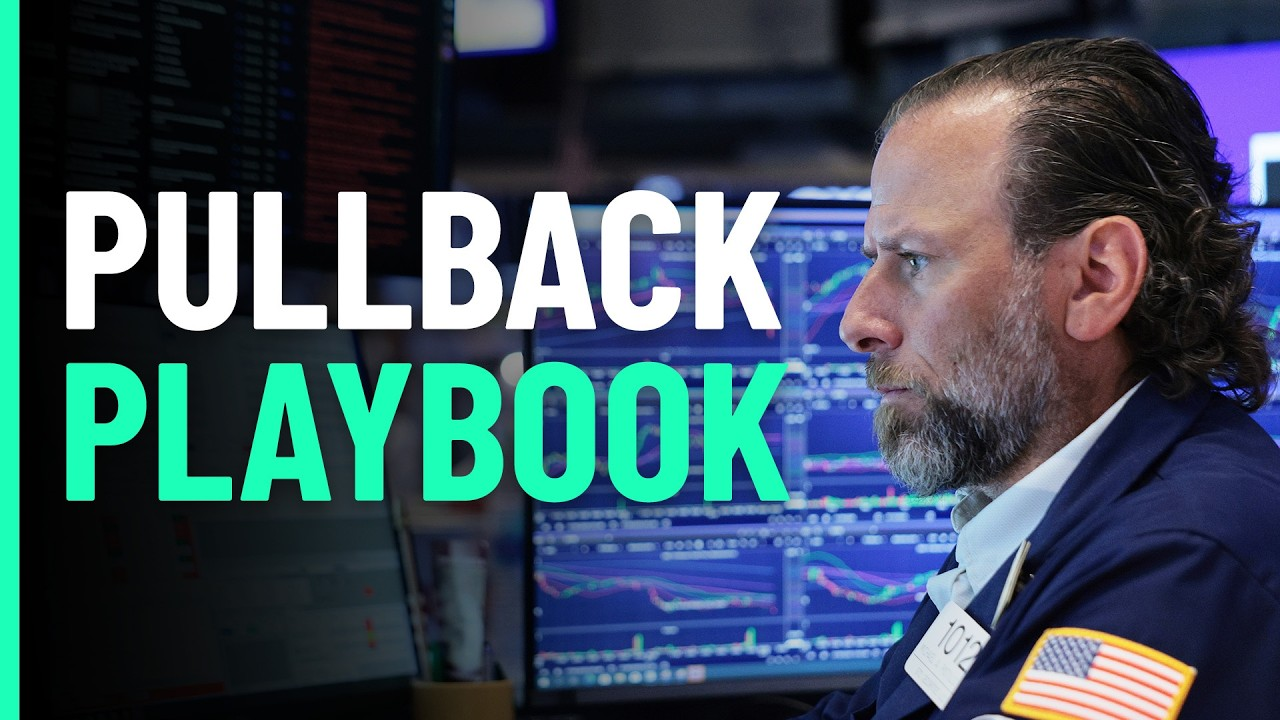
Guest: Art Hogan, Chief Market Strategist at B. Riley Wealth
Host: TheStreet
Source: TheStreet
Original Title: Playbook for the Next Market Pullback (Buy These Stocks Now)
Release Date: July 13, 2026
Key Takeaways
Art Hogan has worked on Wall Street for over thirty years, formerly Chief Market Analyst at Jefferies and Head of Research at Lazard Capital, now Chief Strategist at B. Riley Wealth, and a frequent guest on CNBC/Bloomberg. This episode is titled "Pullback Playbook," but the core is actually a debate about concentration vs. diversification: when your Nvidia position grows from 5% to 12%, do you continue to enjoy the rewards of concentrated betting, or admit the portfolio is imbalanced?
Hogan's answer is a barbell: on one end, continue holding his three favorite tech stocks (Apple, Nvidia, Microsoft), and on the other, add positions in three sectors making a comeback (Industrials, Financials, Healthcare). He set a year-end target of 7800 for the S&P 500, biased to the upside and potentially touching 8000. But he also made the Sword of Damocles clear: if the Iran situation drags on until Labor Day with oil prices still in the $75-80 range, Q3 earnings growth could be halved directly.
Highlights Summary
Three Overlooked Sectors Are Outperforming
"Q2 earnings will mark the first time in five quarters that all 11 sectors of the S&P 500 achieve earnings growth simultaneously. It's no longer just Tech and Communication Services dominating."
"The Industrials, Financials, and Healthcare sectors have improved significantly this year, and on days when tech stocks plummet, they are often the best performers."
Tech Stocks: Buy the Pickaxes, Don't Bet on the Winners
"Don't guess who the ultimate winner of LLMs will be; that's a horse race where only the top three survive. Be the person selling the shovels."
"Nvidia is currently the best name in the tech sector: valuation below market average, gross margins near 80%, and continuously expanding reach using free cash flow. This year it has instead become a source of funds; this is a buying opportunity."
Opportunity in Fallen Angels
"If I could only make one portfolio adjustment in the second half, I would buy a 'fallen angel' beaten down by the market. Nike or Lululemon; these brands have been hurt too much, but the opportunity is right there."
Inflation Is the Real Enemy
"The American consumer is something you shouldn't bet against in a hundred years. But sticky inflation can make consumers start watching their pennies; that's what really needs worrying about."
Main Text
Chapter 1 Barbell Strategy: Tech + Three Sectors
Host: The market is seeing gains across the board. Without relying on holding cash, what kind of portfolio can withstand a larger-scale decline?
We should always ask ourselves a question: Is the portfolio only AI and the tech sectors it drives, or are there other directions worth diversifying into? The answer is always yes.
AI is driving a large portion of earnings growth, but not all. In the coming weeks you will see that Q2 this year will be the first time in five quarters that all 11 sectors of the S&P 500 achieve positive earnings growth simultaneously. For a long time in the past, only Tech and Communication Services (where the Mag 7 reside) were contributing growth. Now the situation has changed.
So this is a good time for investors to rethink "what else." "What else" can include many things. Small-cap stocks have become part of the answer. But I want to specifically point out three sectors: Industrials, Financials, and Healthcare. They are all outperforming this year, earnings have improved significantly, and M&A activity is injecting extra catalysts for them.
How to operate specifically? Very simple: If you initially allocated 5% to Nvidia, and now it has grown to 12%, rebalance once every quarter, withdraw a portion from the overweight position, and put it into Healthcare, Financials, and Industrials. This is the structure of the barbell.
Chapter 2 The Other End of the Barbell: Why Industrials, Financials, and Healthcare Are Outperforming
Host: We understand the tech growth end of the barbell, what specifically is the other end?
Industrials, Financials, and Healthcare; we believe these are the three sectors with the most room to exceed expectations this year.
The logic for Industrials is very straightforward. Data center construction requires significant industrial input, and at the same time, the demand for rebuilding US infrastructure is extremely urgent. Industrials are undergoing a revival, and it will continue.
There are several drivers on the Financials side. The capital market is extremely active; in the past few months we have seen a large batch of large IPOs, and there are more to come. Last quarter's M&A transaction volume was eight times that of the same period a year ago. But more importantly, the Financials sector has been overlooked for too long; it is just starting to regain attention. Last quarter it was already one of the best-performing sectors in the S&P 500, and we believe this will continue throughout the year.
Healthcare is my favorite. Currently there are a large number of exciting new drugs in Phase III clinical trials, and while small biotech companies have no problem doing R&D and clinical trials, they have almost no ability to commercialize the products. So you see big pharma acquiring crazily; Eli Lilly alone has already made six deals this year. The regulatory environment for M&A approval is also loosening, which speeds up the whole process.
These three sectors are the other end of the barbell.
Chapter 3 Buy Individual Stocks or Buy ETFs
Host: How to allocate these three sectors? Directly pick specific bank stocks, healthcare stocks, industrial stocks?
There are two ways. We have a recommended list; one of the top choices on the industrial side is ATI, on the financial side we favor JPMorgan Chase and Visa, and on the healthcare side Eli Lilly and AbbVie have been the best-performing names on the list for the past few years. You can definitely do stock picking.
But you can also use a simpler way: buy sector ETFs. Every sector of the S&P 500 has corresponding index products; you can directly allocate ETFs for these three sectors to participate in their upside, without needing to do the research yourself.
If you only want to do the simplest barbell, buy tech ETFs on one end, and ETFs for these three sectors on the other; the effect is the same.
Chapter 4 Wait Until Earnings Are Out Before Acting
Host: Large banks and regional banks are all reporting earnings this week. Do you suggest adding to Financials before earnings, or wait until after hearing the numbers?
I suggest waiting. This is a very good question.
When a company's stock price is already near historical highs, like JPMorgan Chase, with a market cap nearing $900 billion, even if its earnings numbers are very good, good revenue, good profit, good guidance, the market reaction may be counterintuitive. "Buy the rumor, sell the news" happens often during earnings season.
So wait until all large banks have reported, wait until the dust settles, and look back in a week or two. At that time JPMorgan Chase will likely still be at about the same price level, but you no longer need to worry about the severe volatility on earnings day.
Host: Are regional banks also worth watching?
Very much so. The US has the largest number of banks among developed countries; we are probably "overstaffed." The compliance costs and technology costs of operating a bank are getting higher and higher. In the next 24 months, you will see a lot of consolidation and M&A among regional banks. Small community banks will be merged into larger regional banks, and even super-regional and money center banks will take the opportunity to expand their geographic footprint. This is the core reason we are bullish on regional banks: there will be fewer banks in the future, and the value of survivors will rise.
Chapter 5 What Tech Stocks to Buy on Pullbacks
Host: We've finished talking about the defensive end of the barbell, back to the offensive end. Today SanDisk fell 8%, ARM fell 8%, Micron fell 4%; in this kind of pullback, what would you add to on the tech side?
These stocks have risen 50% to 125% year-to-date; this kind of intraday volatility will be the norm rather than the exception.
On the tech side we are most bullish on three.
Apple ranks first. It has finally given an AI strategy: a fast follower, making Apple Intelligence more practical through cooperation with multiple companies. Previously everyone was struggling with how Apple would do AI; it has now answered. The new iPhone launch is also ahead. It has ample cash on hand, management is shareholder-friendly, stock price is near historical highs, but I think there is still room.
Microsoft is undervalued. It was thrown out together with the entire software sector because the market thinks AI will disrupt all software. We disagree with this judgment, especially regarding Microsoft. It is embedded in the workflows of 95% of companies in the S&P 500; wanting to replace it is extremely difficult. It is currently one of the cheapest in the tech sector.
The best name is still Nvidia. Its valuation multiple is below market average, gross margins are near 80%, and it continues to expand its business footprint using free cash flow. This year it has instead become a source of funds; others are selling it to chase others, which is precisely a buying opportunity.
Chapter 6 What to Reduce and Avoid
Host: Within the tech sector, what would you reduce positions in now?
First, be careful with newly entered hot varieties. SK Hynix's ADR just listed in the US, rising about 160% in the past 12 months; you are buying in at the high. More importantly, long-term shareholders on the Korean side now finally have an exit channel. This structure is hard to play; I will remain cautious.
Second, the debt financing pipeline for hyperscale AI is showing cracks. In the first half they very easily raised $300 billion in debt; the second half will not be that easy. But the demand for spending will not stop. Those public companies and upcoming IPOs that rely on continuous cash burning to run models; what you are buying is actually a faith in "future return on capital." I prefer to be the person selling the shovels.
Host: Name some companies you are avoiding?
SpaceX's IPO is spectacular, but provided that you believe their $18 billion revenue last year can become $380 billion by 2030. This window is completely unclear to ordinary people. Its valuation has already been pulled into today's stock price; you are essentially betting on what will happen five years later, and this thing could be right or wrong. This is not prepared for people without a big enough heart.
Another angle: Large language models are a horse race, but there won't be seven or eight winners on this field, only the champion, runner-up, and third place. Now everyone thinks Anthropic's B2B route is the strongest, but that means the other five or six contestants may not make it to the finish line. Betting on who will win now is very difficult.
Chapter 7 Best Move for Second Half: Pick Up "Fallen Angels"
Host: If you could only make one portfolio adjustment in the second half, what would you do?
Buy a "fallen angel" beaten down by the market. Nike or Lululemon.
These brands have been hurt too much, but precisely because they fell hard, the opportunity is large. I didn't specify specifically which one to choose, but if let me do one thing, it is to pick up this kind of quality consumer brand that has been overly punished.
Chapter 8 Biggest Risk: Iran Situation → Oil Prices → Inflation → Earnings
Host: You gave a year-end target of 7800 points for the S&P 500, what is the biggest risk?
You have already stated the answer yourself. The longer the Iran conflict drags on, the longer energy prices remain at high levels, the greater the inflation pressure, the greater the interest rate pressure; all these added together are the market's biggest headwinds.
In the past month we all assumed an exit could be found quickly; last week oil prices once fell back to pre-conflict levels, then the situation heated up again. If by Labor Day we are still here discussing Iran, with WTI in the $75-80 range, gasoline near $5, economic growth will slow, and earnings expectations will be downgraded. The US is a consumption-driven economy; when consumers' disposable income is squeezed by gasoline prices, problems arise.
Currently the crude oil market is still in backwardation, near-month prices higher than far-month, meaning the market believes oil prices will come down in Q4. If the forward premium flips once, speculators start believing oil prices will remain high or even higher, then corporate decisions and consumer decisions will change because of this. Q2 S&P 500 earnings growth rate might be near 20%; by Q3 it might be halved directly. You calculate yourself what this means for the stock market.
Host: If the economy really slows down, does the defensive end of the barbell still hold up?
It holds up. You can save money on many things, but you cannot not see a doctor or not use a bank. Healthcare, financial services; these are necessities, not options. This is why these three sectors naturally carry defensive attributes. They are "needs" rather than "wants."
Chapter 9 Rapid Fire: One-Sentence Judgments (Selected)
Host: What has a bigger impact on the market, CPI or bank earnings?
CPI. Bank earnings won't have problems; CPI determines where the Fed goes next; this is the only thing the market cares about.
Host: If CPI falls back, buy the dip immediately or wait for confirmation?
Wait for confirmation. CPI often jumps up and down. You need to see it falling for two consecutive months, not one month.
Host: What worries you more, sticky inflation or consumer slowdown?
Sticky inflation. Betting on an American consumer collapse hasn't won in a hundred years. Inflation is what makes consumers start watching their pennies.
Host: Will the Fed cut rates this year?
No cut. The only move this year will be to stand pat. Rate cuts are most likely in the first half of next year.
Host: In the second half, who has more upside room, tech growth or small-cap value?
If interest rates bounce up a bit, tech will take the lead again, and small-caps will slow down.
Host: Industrials or Financials?
Financials have more upside room. Industrials have already performed very well in the past year or two and will continue to be good, but Financials are just starting to be seen.
Host: Hold or reduce tech?
Let the bullets fly. Especially those that have been sold off since last October, almost all Mag 7, all software stocks. There are still a large number of things in the tech sector that haven't run yet; as long as the memory chip frenzy cools down a bit, capital rotation will return to them. If now it's all chips rising, wait until it cools down, money will go elsewhere.
Host: Is the memory chip boom overhyped or undervalued?
Supply-demand imbalance is real; building fabs is hard; supply cannot catch up with demand for a while. But valuations of some stocks are indeed overhyped.
Host: If you could only buy one tech stock today, what would you buy?
Apple. It is the best in this batch, and there are a large number of positive catalysts ahead, especially the launch of the new generation iPhone.
Host: Which tech stock must be avoided?
Meta. I'm not quite sure where they are going. They did have a nice rebound, but the business model is jumping around. Among the Mag 7 it is the one I'm least interested in.
Host: Year-end S&P 500 target price?
Currently the official target is 7800, biased to the upside. If companies generally raise guidance during this earnings season, full-year EPS goes up, using the same valuation multiple, it might touch 8000. Ask me again in three weeks.
Host: What can take us to 8000?
Earnings.
Host: What will destroy it?
Inflation eats earnings.
Host: What level of inflation?
CPI rising from the 3s to the 4s, and lasting until Q1 next year. That is the real headwind for earnings.
Join TechFlow official community to stay tuned
Telegram:https://t.me/TechFlowDaily
X (Twitter):https://x.com/TechFlowPost
X (Twitter) EN:https://x.com/BlockFlow_News
 深潮TechFlow