








Anthropic, Rejected by 21 Top-Tier VCs: The Most Expensive Misjudgment in AI History
TechFlow Selected TechFlow Selected
Anthropic, Rejected by 21 Top-Tier VCs: The Most Expensive Misjudgment in AI History
Reviewing this farce, all we see is one word: “They deserved it!”
 Navigating Web3 tides with focused insights
Author: Xin Zhixuan
Editor’s Note: Who would have thought that a startup founded by OpenAI’s core team would be rejected by 21 top-tier VCs—only for those same VCs to later scramble and pay a 300x premium just for a seat at the table?
In 2021, Anjney Midha pitched Anthropic’s business plan to 22 elite venture capital firms—and got turned down 21 times.
Fast-forward to January 2026: Anthropic closed its latest funding round, raising $25 billion, with a valuation soaring to $35 billion.
To put that in perspective: it’s equivalent to ten 2023 OpenAIs.
Those investment “gurus” who once slammed the door shut under the guise of “risk management” are probably now queuing up outside restrooms, sobbing.
This isn’t just a slap in the face—it’s the most expensive collective “cognitive tax” of the century.
21 Rejection Letters: The “Blind Spot” Moment of Top-Tier VCs
The firms that rejected Anthropic were all figures Midha once regarded as industry “heroes.”
Consider Anthropic’s lineup back then: OpenAI’s core defectors—the very architects of GPT-3.
Today, that caliber of talent would secure funding before the pitch deck was even finalized.
Midha thought this time was a sure thing—only for reality to deliver an immediate, stinging slap.

Back in 2021, large language models were seen by VCs as bottomless money pits.
Compounding the issue, Anthropic’s team displayed an almost obsessive commitment to “AI safety,” coupled with a nonprofit background—something mainstream VCs simply couldn’t grasp. Traditional capital promptly slapped the label “high-risk outlier” on the company.
It wasn’t until Spark Capital led Anthropic’s Series C round that the penny finally dropped. Jason Shuman later admitted:
“Projects that everyone understands early on usually don’t amount to much.”
How steep was the price of this “cognitive delay”?
In May 2021, Anthropic raised $124 million in its Series A round, led by Jaan Tallinn.
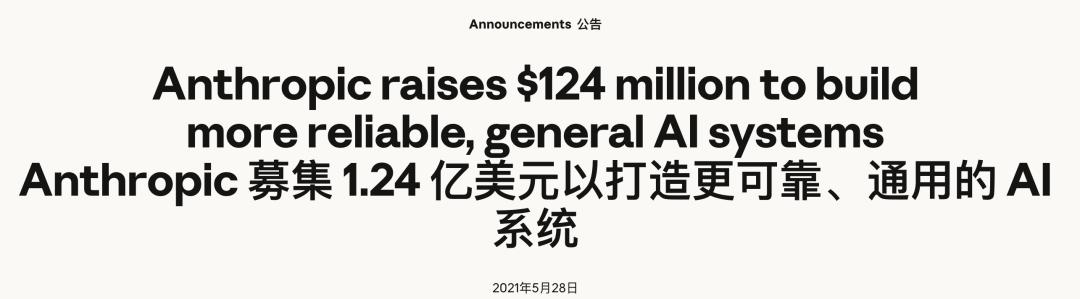
Compared to today’s $35 billion valuation, the 21 firms that passed on Anthropic missed out on nearly a 3,000x return.
Risk Management Is the Greatest Risk of All
In this drama, Sequoia Capital perfectly embodied what it means to be “caught between a rock and a hard place.”
According to reports, Roelof Botha—the global leader of Sequoia—repeatedly declined to lead early investments in Anthropic.

His stated rationale sounded impressively high-minded: “concentration risk”—i.e., fear of overexposure to AI, which might upset portfolio balance.
Such platitudes—technically correct in traditional finance—proved disastrous in the face of AI’s exponential growth.
Sequoia’s face was so badly bruised that it had no choice but to pivot. By early 2026, AI’s actual contribution to U.S. GDP had surged to 40%.
At that point, portfolio allocation became irrelevant—AI was now a survival asset. Sequoia swiftly overhauled its leadership, installing Alfred Lin and Pat Grady, who rapidly overturned Botha’s conservative doctrine.
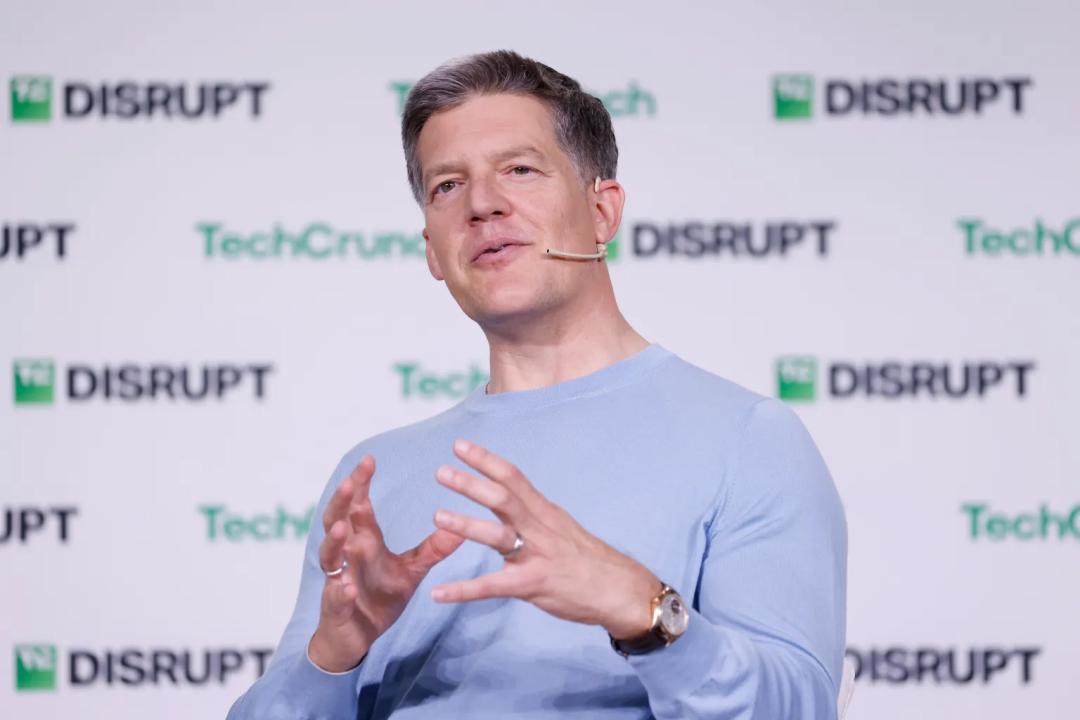
Roelof Botha publicly addressed the leadership transition at Disrupt 2025, defending Sequoia’s “free speech” culture.
In January 2026, Sequoia finally swallowed its pride and squeezed into Anthropic’s latest round.
The irony? Anthropic’s valuation had ballooned from $1 billion in the Series A to $35 billion.
By obsessing over “risk avoidance,” Sequoia stood idle on the sidelines for five years—only to end up paying more than a 300x “cognitive premium.”
This wasn’t Sequoia’s problem alone. The data at the time was brutally telling:
Before Spark Capital stepped in, most VCs preferred investing in innocuous SaaS software rather than backing Anthropic—a company burning billions annually on compute.
Rather than risk being “wrong,” these investors feared being “first”—and ended up looking like fools caught swimming naked in the tide of history.
The “Non-Mainstream” Capital That Delivered a Decisive Blow
While mainstream VCs were still crunching ROI spreadsheets, who rescued Anthropic?
A group of “madmen.”
Jaan Tallinn—who led Anthropic’s $124 million Series A round in May 2021—is the Skype co-founder and a fervent AI safety advocate. He completely upended Wall Street’s conventional playbook:
“I’m not investing to profit from LLMs—I’m investing because I’m terrified AI will kill us all.”
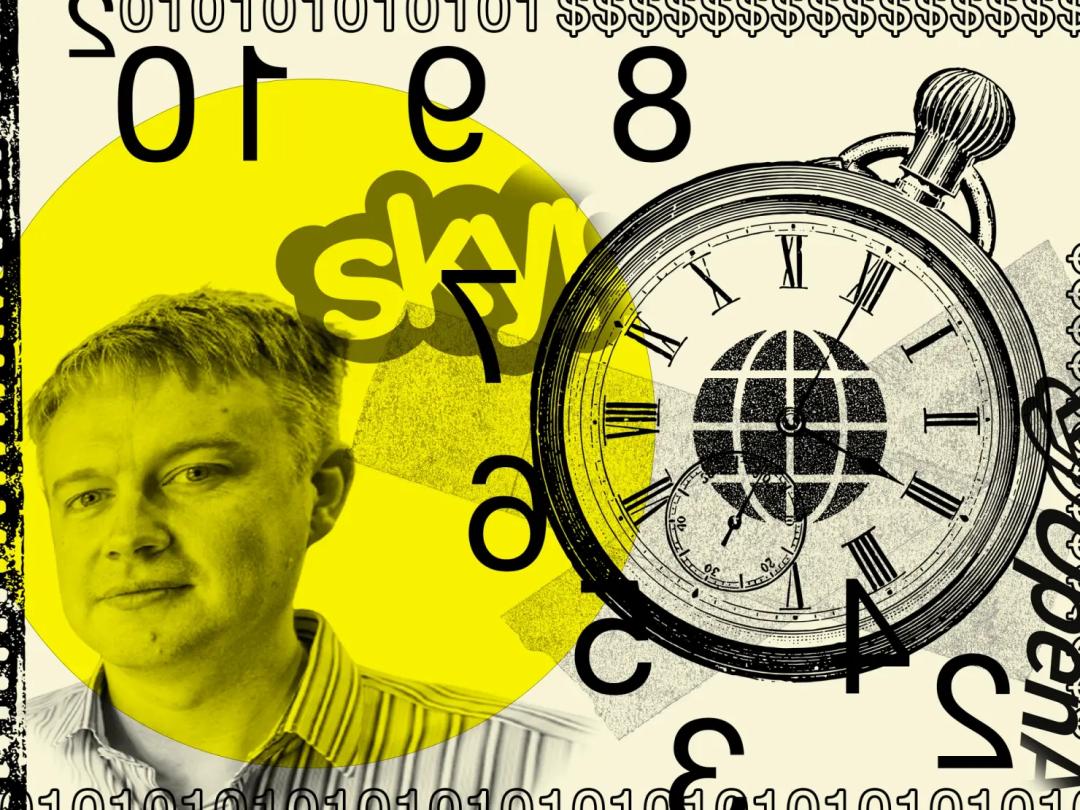
His logic was “capital substitution”: replacing profit-obsessed, balance-sheet-driven capital with capital driven by existential concern for humanity.
Other backers included former Google CEO Eric Schmidt and Facebook co-founder Dustin Moskovitz.
Their common traits were obvious: wealthy, unconventional, technically savvy—and free from LP pressure.
This underscores a crucial point: In 2021, AI safety obsession—dismissed by institutional investors as “toxic”—was, to true tech leaders, the strongest possible moat.

Without Tallinn’s “bet on human survival,” Anthropic likely would have collapsed after its Series A.
That lifeline allowed Anthropic to weather two years of R&D without commercial pressure—enabling it to nail down the core architecture of its R1 series models.
Ironically, funds once dismissed as “charity” delivered the most explosive returns in financial history by 2026.
The Harsh 2026 Reality: Not Investing in AI Equals Economic Suicide
By 2026, VC frenzy around Anthropic wasn’t about making money—it was about staying alive.
Macroeconomic data shows that if you strip out AI’s contribution, U.S. GDP growth plummets below 0.7%.
AI is no longer a “trend”—it’s the sole ventilator keeping the U.S. economy breathing. Analyst Siddharth put it bluntly:
“Pull the AI oxygen tube, and the economy flatlines.”
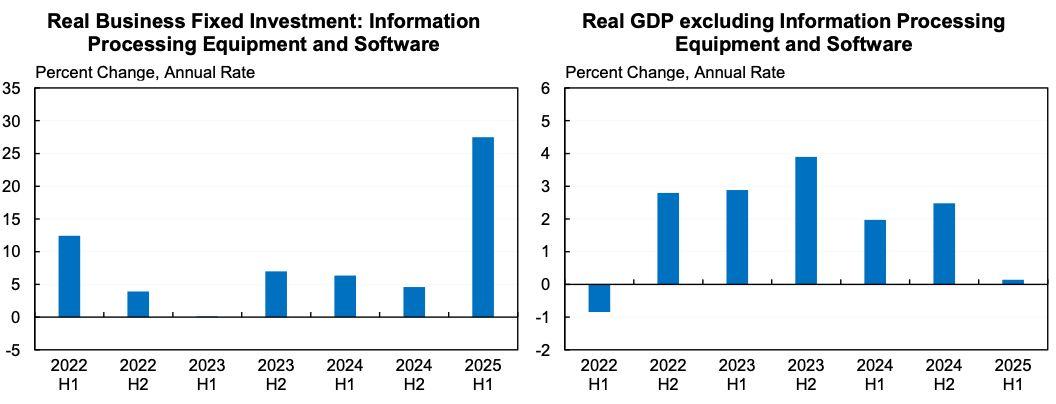
In H1 2025, U.S. real GDP growth hovered near zero once you excluded investment in information processing equipment and software (i.e., AI infrastructure). Meanwhile, IPE&S investment surged 28% year-on-year.
VC logic has also undergone a complete reversal. In 2026, capital is rushing headlong from general-purpose foundation models into vertical-specific intelligent agents.
Amit Goel points out that VCs have finally realized enterprise AI solutions—deeply embedded in vertical domains and requiring no coding—are the new gold rush.
And here lies another layer of irony.
In 2021, VCs rejected Anthropic because they didn’t understand “safety” or “large models.”
In 2026, they’re being left behind again—this time, by next-generation boutique funds—because they still don’t grasp “domain-specific knowledge.”
This five-year cognitive war proves one thing: capital doesn’t create the future—it only scrambles to buy standing-room tickets once the future becomes unavoidable.
From 21 rejection letters to a $35 billion valuation, Anthropic has used hard numbers to rip away the most polished veneer of the VC world.
Now that AI is the sole pillar propping up GDP, capital’s entry has nothing to do with foresight—it’s pure survival instinct.
Stop mythologizing VC foresight. Those 21 rejection letters are irrefutable proof: the vast majority of that $35 billion represents a “cognitive tax” paid by latecomers.
That’s reality. Either see it clearly and bet in 2021—or kneel and pay up in 2026.
Join TechFlow official community to stay tuned
Telegram:https://t.me/TechFlowDaily
X (Twitter):https://x.com/TechFlowPost
X (Twitter) EN:https://x.com/BlockFlow_News


