








After the issuance of Mainland China’s Document No. 42, what is the optimal RWA token standard?
TechFlow Selected TechFlow Selected
After the issuance of Mainland China’s Document No. 42, what is the optimal RWA token standard?
The mainland’s classification of RWAs is objectively positive, but not entirely so—indeed, it can even be described as a long-overdue notice.
 Navigating Web3 tides with focused insights
By: Shi Si Jun
On February 6, 2026, the People’s Bank of China (PBOC), jointly with eight other regulatory authorities, issued Document No. [Yinfa 2026] 42. Market interpretations of this document have already proliferated. This article aims instead to conduct a vertical analysis that integrates Real-World Assets (RWA) with the current state of on-chain markets.

1. Understanding Document No. 42
In the author’s view, reading the main text alongside its annex—the “Regulatory Guidelines for the Overseas Issuance of Asset-Backed Securities Tokens Based on Domestic Assets”—reveals significant nuance. Crucially, Document No. 42 devotes substantial space to defining and regulating “Real-World Asset Tokenization” (RWA). This effectively constitutes formal regulatory recognition of RWA as a legitimate business model—and provides a clear, compliant pathway for application and registration.
Three key points merit attention. We quote the original text directly before offering contextual interpretation.
First, RWA is precisely defined:
“Real-world asset tokenization refers to activities involving the use of cryptographic and distributed ledger or similar technologies to convert ownership rights, income rights, and other entitlements associated with assets into tokens (or ‘tokens’ in the broader sense) or other instruments possessing token-like characteristics—including equity interests, debt certificates—and subsequently issuing and trading such instruments.”
With a definition established, how should it be applied? The document continues:
“Activities conducted via designated financial infrastructure, subject to prior approval by the competent authority in accordance with applicable laws and regulations, are exempted.”
Who may participate specifically? The document therefore sets forth explicit procedural requirements for applying to tokenize and deploy RWA assets:
The domestic entity holding actual control over the underlying assets must file a registration with the China Securities Regulatory Commission (CSRC), submitting a registration report, full overseas issuance documentation, and comprehensive disclosures covering the registrant’s identity, details of the underlying assets, and the token issuance plan.
Thus, in the author’s view, the combined reading of the main text and annex makes it unequivocal: RWA assets are now formally distinguished from virtual currencies—previously subject to strict crackdowns—and are no longer governed under the same regulatory framework.
2. Global Evolution of RWA Standards
As mainland China establishes its regulatory definition, what is the current state of global RWA markets? With regulatory uncertainty easing, practical application becomes the next critical challenge.
Today’s market remains entrenched in an era of fragmented, competing token standards.
This complexity creates industry-wide interoperability challenges for RWA. Let us examine prevailing token standards for RWA applications.
This article traces developments from Hong Kong’s ABT (Asset-Backed Token) standard introduced in 2022, through bond-focused ERC-3525 and ERC-3475, to DeFi-era innovations like Aave’s aTokens, stETH, and AMPL, and finally to leading on-chain stock platforms—Ondo and xStock—and how they adapt to the unique demands of stock tokenization.
2.1 Hong Kong and ABT
On October 31, 2022, the Hong Kong government released its “Policy Statement on Virtual Assets Development,” which prominently highlighted Asset-Backed Tokens (ABTs).
Conventionally, tokens fall into four broad categories—distinguished by their functional purpose and value source.
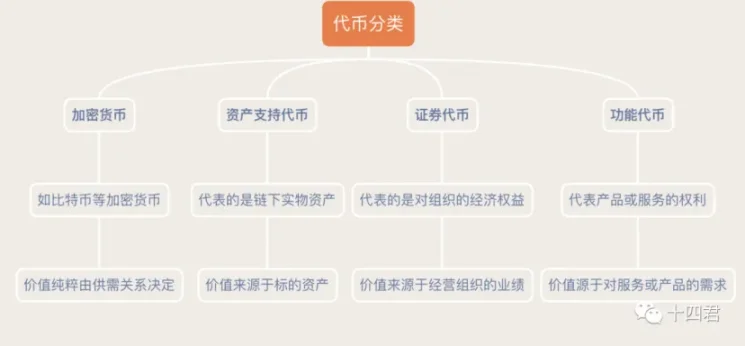
Notably, the conceptual framework reflected in mainland China’s recent document closely mirrors Hong Kong’s earlier practical explorations—all requiring off-chain physical assets or legally enforceable rights as value anchors.
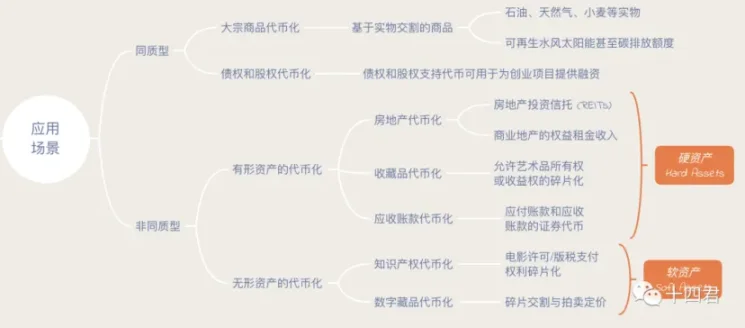
Accordingly, when assets undergo compliant tokenization, on-chain properties generate tangible enhancements:
- Fractionalization: Dividing ownership rights into smaller units to facilitate pricing, trading, and liquidity
- Liquidity: Defined by speed of conversion into cash; order books are broadcast and shared on-chain
- Cost Efficiency: Smart contract-based transactions eliminate or significantly reduce third-party intermediation costs
- Automation: Blockchain-based smart contracts operate without manual intervention, supported by trust-minimized infrastructure
- Transparency: Immutable recordkeeping is a defining feature of on-chain transactions
From the user perspective:
- For institutions: Fragmentation enables efficient execution of large orders, yielding both liquidity and cost benefits
- For end users: Transparency and automation foster a trustworthy environment safeguarding individual rights
Currently, equities and bonds represent the most immediately viable applications—both aligning seamlessly with the aforementioned advantages: liquidity, automation, and fractionalization.
3. Bond-Specific Standards: ERC-3525 and ERC-3475
Numerous initiatives emerged around the time of HK’s ABT announcement, with ERC-3525 and ERC-3475 emerging as notable attempts at standardization:
- ERC-3525 focuses on managing semi-fungible tokens (SFTs), refining numerical-level composability and decomposition of assets—aimed primarily at onboarding traditional financial assets onto blockchains
- ERC-3475 emphasizes formalizing semi-fungible tokens, establishing more rigorous definitions for low-standardization contractual agreements—targeting the digitization of conventional commercial contracts
Objectively speaking, neither standard has seen widespread adoption. Both were designed “standards-first, then use-case”—rather than evolving organically from existing, high-volume applications. As a result, their visibility has steadily declined (far less prominent than later innovations such as aTokens and stETH).
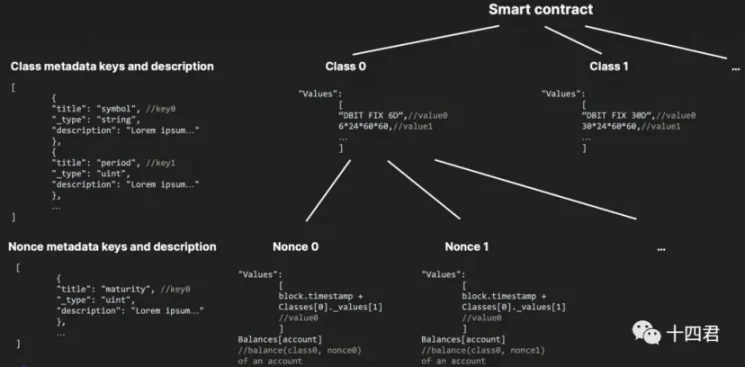
In the author’s view, this stems from the overly ambitious scope of their design philosophies—for instance, ERC-3475 (illustrated below) attempts near-universal inclusivity, directly raising barriers to both user comprehension and application-layer integration.
Ultimately, overreaching ambition leads to implementation paralysis—“writing everything” effectively means writing nothing actionable. Limited real-world usage follows logically.
4. Bond-Specific Applications: aTokens & stETH
Let us now shift focus to the “application-first, then standardization” paradigm.
4.1 Real-Time Compounding Model: Aave’s aTokens
Aave ranks among Web3’s most prominent DeFi infrastructures—specializing in on-chain asset staking, lending, and yield generation. Its aTokens serve as staking receipts, fulfilling several core functions:
- Deposit Proof: Holding an aToken represents equivalent ownership of the underlying asset within the Aave protocol, accruing interest automatically over time.
- Lending Mechanism: aTokens quantify users’ deposit balances, determining their maximum borrowing capacity.
- Automatic Interest Distribution: The quantity of aTokens held increases dynamically in line with prevailing deposit rates.
- Transferability & Liquidity: Users may freely transfer or collateralize aTokens across protocols to capture additional yield or leverage them within other DeFi products.
Each of these features maps directly onto the future trajectory envisioned for RWA.
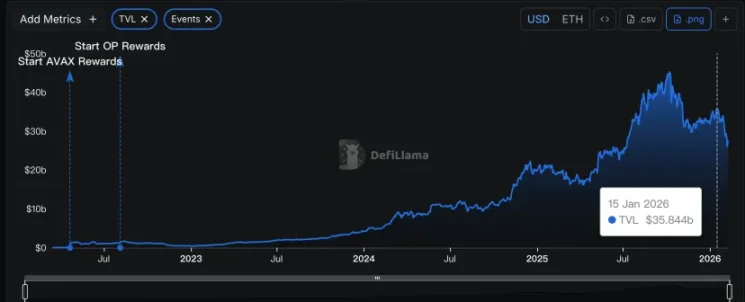
Market performance further confirms robust growth: Total aToken assets under management have reached approximately $30 billion.
Why has the aToken model succeeded so decisively?
Clearly, its consistent ~100% annual growth rate qualifies it as a benchmark success story.
Fundamentally, aTokens are exceptionally well-aligned with existing market infrastructure—precisely because they originate from Aave, an entity deeply attuned to blockchain-market adaptation as a prerequisite for scalability. By contrast, the two earlier standards ultimately faltered on exactly this point: mainstream asset dashboards and wallets struggle to integrate such novel token types.
“Adaptation” is not merely a buzzword—it hinges on resolving a pivotal question: If on-chain assets cannot generate yield, their practical utility is severely diminished.
Yet if yield generation is required, how should interest be delivered to users?
Staking durations vary per user; interest accrual rates fluctuate over time; demand differs across asset classes, driving divergent lending spreads.
Distributing interest periodically would dramatically increase operational overhead and administrative complexity for project teams—costs inevitably passed on to users.
Some argue this is fundamentally a blockchain performance issue—prompting development of new high-throughput L1s to rival Web2 server performance. Yet those efforts often stall at the steep cost of user migration.
Aave’s elegant solution embeds yield directly into everyday user interactions.
aTokens employ a “scaled balance” mechanism to compute users’ effective balances:
Liquidity Index = Initial Index × (1 + Rate × Time)
Under this logic, interest compounds automatically during every transfer—whether sending or receiving—and triggers minting events upon each transaction.
For the protocol team, this eliminates separate interest-distribution transactions. For users, interest accumulates imperceptibly yet reliably—even if unseen, it will be fully accounted for in subsequent operations, ensuring zero loss.
This minimalist, elegant design embodies deeply native blockchain thinking.
Moreover, this conceptual approach laid the groundwork for subsequent evolutions—including stETH, Ondo, and xStock—establishing a lineage of on-chain asset standards.
4.2 Rebase Model: Lido’s stETH
stETH simplifies the staking and withdrawal logic beyond simple interest-plus-time accumulation—instead modeling returns purely as proportional shares.
stETH = User’s staked ETH amount × (Protocol’s total assets / Total internal shares)
One might wonder: How can stETH exist without explicit interest? If all staking yields returns, shouldn’t a one-day depositor receive different returns than someone who staked for a year?
The answer lies in Lido’s daily automatic rebase mechanism. Consider this example:
- Suppose you deposited 1 ETH one year ago into a pool totaling 100 ETH—your share was thus 1%.
- Lido fetches staking rewards daily from Ethereum’s Beacon Chain and executes a rebase across the entire protocol.
- After one year, your withdrawal reflects the accumulated ~4% return.
- If instead you purchase that same 1% share on the final day, you pay a price reflecting nearly 104% of the original cost (after 364 days of accrued rewards)—and capture only one final rebase event.
Why adopt this design?
Because stETH delivers yield automatically on a daily basis—requiring no waiting period or manual claim. This is its greatest usability advantage.
Unlike aTokens—which require an explicit transaction to realize yield—stETH updates balances automatically each day, enabling seamless compatibility with virtually any wallet interface.
Only then does the user visually observe growing returns—a mental model aligned with familiar banking concepts: daily automatic crediting of interest, fostering peace of mind.
Ultimately, the distinction between the two models reflects differing use cases.
Aave operates in volatile lending markets where interest rates swing sharply—some high-yield periods may deliver a month’s worth of returns in a single day. Lido, by contrast, offers stable, predictable returns—where marginal daily yield differences matter little, allowing optimization toward superior UX.
Are either model suitable as foundational standards for the RWA era?
The author contends neither is directly transferable—but both offer valuable lessons. Next, we turn to the central protagonist of today’s discussion: on-chain equity models.
5. On-Chain Equity RWA Scenarios
Although equity tokenization represents a relatively small segment of the overall RWA market ($900M vs. $27B), equities possess uniquely strong liquidity attributes and rich potential for on-chain innovation.
Key players include Ondo and xStock.
Over the past six months, top-tier DEXs and wallets have intensified investment here. Objectively, these leading platforms demonstrate striking consensus in anticipating future trends.
- July 1, 2025: Jupiter enabled xStock trading and launched extensive promotional campaigns.
- September 25, 2025: Solana Foundation launched an official RWA-focused Twitter account.
- January 22, 2026: Jupiter partnered with Ondo Finance to list over 200 tokenized equities.
- January 24, 2026: Binance Wallet added support for Ondo assets in Professional Mode.
- February 3, 2026: MetaMask launched tokenized U.S. equities and ETFs, declaring “the market is shifting on-chain.”
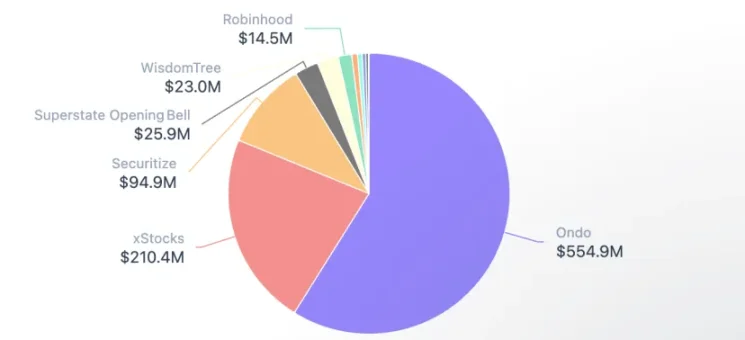
These platforms implement a share-based rebase model—specifically, a “on-chain shares + Multiplier scaling” mechanism.
On Solana, this mechanism extends the mainstream Token-2022 standard: each token allows issuers to define a configurable “Multiplier” parameter. The raw balance held by users—termed “raw amount”—represents their underlying share allocation.
Whenever corporate actions occur—such as stock splits, reverse splits, or dividend distributions—the issuer dynamically adjusts the Multiplier parameter, thereby modifying the displayed (UI) balance multiplier.
This creates a clear dividing line: wallets lacking Multiplier support will display inconsistent or misleading balances, while compatible wallets correctly render the UI amount—the value shown to end users.
6. Conclusion and Reflection
This article spans roughly 4,000 words, surveying leading players and evolutionary trajectories across both mainstream on-chain asset tokenization and real-world asset tokenization.
Numerous localized insights have been embedded throughout each section. Now, however, we must return to the core theme: “cold reflection.”
Viewed over the long term, RWA has existed for nearly a decade.
- Early Exploration (2016–2019): Experimental asset-onboarding stages focused primarily on stablecoins.
- Institutional Adoption (2020–2022): RWA entered DeFi lending—e.g., tokenized equities tested briefly by BN/FTX before shutting down.
- Compliance Era (2023–present): Regulatory clarity accelerated; certain RWA categories expanded rapidly (e.g., stablecoins, U.S. Treasuries), and new asset classes and platforms gained traction.
Thus, while mainland China’s formal RWA classification is objectively positive, it is not unambiguously favorable—or even timely. It reads more like a belated notification. After all, Hong Kong previously introduced its own ABT framework—yet did it achieve meaningful traction?
Comparatively, progress remains modest—largely attributable to Hong Kong’s highly cautious licensing regime. Will regulators opt for bold, sweeping liberalization—or incremental, tightly constrained experimentation? Either path risks deterring platform builders seeking to construct robust infrastructure.
New regulations introduce openness—but openness does not guarantee alignment with genuine user needs or market demands.
Consider Aave’s aTokens: their success stems from solving a concrete problem—idle on-chain capital utilization—enabling users to lend assets profitably.
Similarly, stETH excels by bridging the Proof-of-Stake (PoS) gap. Though concentration risk exists (e.g., Lido’s dominant stake), it delivers reliable, stable staking returns. Likewise, Jito exemplifies an alternative staking model—worth exploring further.
Both prioritize user experience, meticulously balancing compatibility requirements with operational efficiency for protocol teams.
Therefore, token issuance itself is not the objective—the true value lies in embedding on-chain liquidity, fractionalization, transparency, and automation into tokenized assets.
Rather than rushing to define a “perfect” standard upfront, developers should respect rules and consensus—leveraging existing infrastructure incrementally.
Consider conventional equities: exchanges do not operate 24/7, whereas on-chain markets do.
Gold markets across jurisdictions maintain distinct trading hours—but on-chain gold has none.
This temporal gap represents on-chain finance’s true competitive edge: solving price discovery in otherwise illiquid or closed markets. Compared to pre-market trading, it offers greater sensitivity; compared to cross-exchange arbitrage, it incurs lower friction. And globally integrated liquidity enables multidimensional, cross-jurisdictional price discovery—potentially reshaping corporate valuation itself. Future company valuations may no longer depend solely on NYSE listings—but rather, NYSE-listed firms may first consult on-chain markets for pricing signals.
Join TechFlow official community to stay tuned
Telegram:https://t.me/TechFlowDaily
X (Twitter):https://x.com/TechFlowPost
X (Twitter) EN:https://x.com/BlockFlow_News


