30-Year Wall Street Veteran: Bitcoin Insights Taught by Horse Racing, Poker, and Investment Legends
TechFlow Selected TechFlow Selected
30-Year Wall Street Veteran: Bitcoin Insights Taught by Horse Racing, Poker, and Investment Legends
I'm not focused on the price of Bitcoin itself, but rather on those asset allocators who hold substantial wealth, are well-educated, and have successfully achieved capital compounding over decades.
 Navigating Web3 tides with focused insights
By: Jordi Visser
Translation: Luffy, Foresight News
When I was five, my father first took me to the Monticello Raceway in upstate New York.
He handed me a racing program and began teaching me how to interpret its contents: past performances, jockey records, track conditions. To me, those numbers and symbols were like a secret language.
For many years afterward, we frequently returned there. That racetrack became his classroom. He never asked me to “pick the winner.” Instead, he always guided me toward another question: Is there betting value in this race?
Every time I completed an odds assessment for a race, he would challenge me to explain my reasoning. Then, drawing on his experience, he’d point out information I’d missed or dimensions I should have explored more deeply. He taught me:
-
To identify patterns in race records
-
To weigh the relative importance of different influencing factors
-
To assign realistic odds based on analysis rather than guesswork
-
Most importantly, to continuously reassess odds as new information emerges
Unknowingly, he trained me to predict future outcomes using a Bayesian approach. I’ve applied this skill to every major decision in my life—especially during my more than 30 years on Wall Street.
Today, this analytical framework has led me to what I believe is the most mispriced bet of my career: Bitcoin.
When I analyze Bitcoin using the same horse-racing odds methodology my father taught me, I see an asset with roughly 3:1 odds. Yet many of the smartest people I know assign it 100:1 odds—or consider it worthless.
This divergence in valuation isn’t just significant—it’s the kind of rare opportunity that appears only a few times in a career.
Learning to Bet on the Future
The method my father taught me was rigorous, not casual. Before assigning any odds to a horse, I had to do thorough homework. I treated studying the racing program like academic coursework:
-
A horse’s past performance under varying track conditions
-
Jockeys skilled in specific scenarios
-
Changes in competition level, equipment, and anticipated race pace
-
Bloodline and training patterns
He even taught me to remain skeptical of human intentions. Not every horse races at full effort—some are “saving energy” for future races, and some trainers follow predictable tactical patterns. These subtleties had to be factored in.
Then came the actual betting phase.
I learned to observe when smart money entered the market and to monitor odds fluctuations in the final minutes before a race. But the core rule was simple: I had to write down my own odds estimate before looking at the betting board.
This wasn’t about guessing—it was about building defensible logic behind my judgment. For example, why should this horse have a 20% chance of winning (5:1 odds) rather than 10% (10:1) or 5% (20:1)? Only after completing this process and clearly articulating my reasoning would he allow me, as a novice, to check the public betting data.
And that’s when the magic sometimes happened. Occasionally, a horse I assessed at 5:1 odds would show up on the board at 20:1.
This edge didn’t come from being smarter—it came from doing the work that most oddsmakers simply skip. The greatest opportunities hide in others’ oversights.
He also drilled into me another key principle: If a race’s odds already reflect fair value, then don’t bet at all. “There’s always another race.”
Choosing inaction when you lack an edge is one of the hardest disciplines in markets—and one that many investors never master.
Betting as a Mindset
Years later, I realized the method my father taught me mirrored professional poker players’ and decision theorists’ frameworks developed over decades.
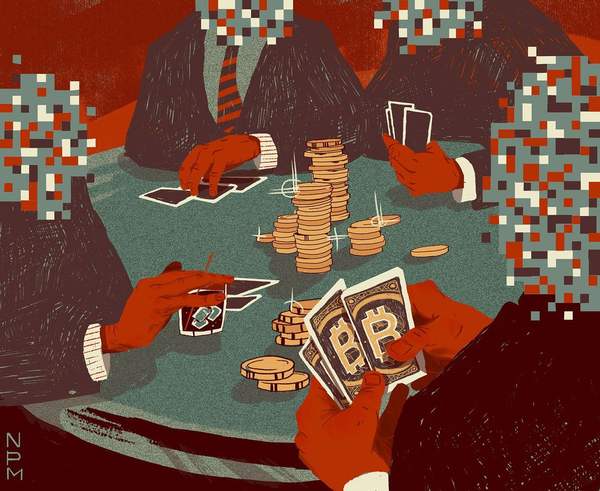
Annie Duke’s book *Thinking in Bets: Making Smarter Decisions When You Don’t Have All the Facts* provided the theoretical foundation for what I’d learned at the racetrack. Her central insight is simple yet profound: Every decision is a bet on an uncertain future; the quality of a decision must be judged separately from its outcome.
You can make a highly rational decision and still lose. Even if fairly valued, a horse with 5:1 odds will lose 80% of the time.
What truly matters is:
-
Whether your decision process was rigorous
-
Whether your odds assignment was well-reasoned
-
Whether you held an edge when placing the bet
A few years ago, I spoke with Annie and told her her book echoed exactly what my father taught me at the racetrack. I’ve long known this logic helped my investing—but it also shaped how I think about health and happiness.
We ended up discussing her psychology background more than poker or her book, because ultimately, it’s all connected. This framework isn’t limited to poker or investing—it applies to any domain where decisions must be made amid incomplete information.
But the core lesson remains consistent: We live in a world of imperfect information. Learning to think probabilistically and separating decision quality from outcomes is key to long-term improvement.
Munger: Markets as Racetracks
Charlie Munger offered a unifying insight that ties everything together: The stock market is essentially a pari-mutuel betting system.
In a pari-mutuel system, prices aren’t determined by some objective intrinsic value but by the collective betting behavior of all participants. The odds displayed don’t tell you what a horse is “worth”—they only reflect the proportion of total bets placed on each horse.
Markets operate the same way.
Stock prices, bond yields, and Bitcoin valuations aren’t set by TV commentators or social media narratives—they’re defined by the actual flow of capital.
When I apply this lens to Bitcoin, the real odds aren’t found in what a few wealthy individuals say on CNBC, but in the relative sizes of various asset pools:
-
Bitcoin vs. fiat currencies
-
Bitcoin vs. gold
-
Bitcoin vs. global household wealth
These ratios and relative performance trends reflect the true beliefs of collective bettors—regardless of what they say publicly.
Here’s the twist: If someone claims Bitcoin is worthless, from a pari-mutuel perspective, they’re not entirely wrong.
Despite Bitcoin’s strong performance, growing user base, and a decade of global monetary experimentation and fiat devaluation, its scale remains tiny. Compared to traditional stores of value, the amount of capital allocated to Bitcoin is negligible.
In betting terms, the crowd has already voted with their actions: They’ve barely bet on Bitcoin at all.
And that’s precisely where my odds assessment begins.
Jones, Druckenmiller, and the Power of Positioning
Paul Tudor Jones and Stanley Druckenmiller—two of the greatest macro traders in history—share a core principle most investors overlook: Position sizing often matters more than fundamentals.
“The crowd is always late,” Jones once said. Druckenmiller was sharper: “Valuation tells you nothing about timing. Positioning tells you everything about risk.”
Once everyone is on the same side of a trade, marginal buyers vanish. Market moves depend not on opinions, but on passive buying and selling flows.
This aligns perfectly with Munger’s pari-mutuel insight. What matters isn’t just the size of the betting pool, but also:
-
Who is betting
-
Who is watching from the sidelines
Viewing Bitcoin through this lens reveals a striking pattern: The wealthiest participants in the fiat system—the ones with the most capital—are largely bearish on Bitcoin.
Demographics confirm this:
-
The older you are, the less likely you are to hold Bitcoin
-
The more traditional financial education you have, the more likely you are to view Bitcoin as a scam
-
The wealthier you are, the greater the potential loss from betting on Bitcoin
This is why I never bring up Bitcoin at Wall Street dinner parties—it’s as sensitive as politics or religion.
Yet Jones and Druckenmiller’s experience shows: You don’t need to know Bitcoin’s future.
You only need to recognize that the extremely low positioning by global capital holders creates the very kind of asymmetric opportunity these traders have exploited throughout their careers.
Forecasting Bitcoin Like a Horse Race
So how do I assess Bitcoin’s odds?
I start exactly as my father taught me: Do your homework first—then look at the market odds.
Bitcoin emerged during an era of exponential technological growth, born from the global financial crisis and widespread distrust of governments and centralized control.
Since its inception:
-
Government debt has exploded
-
Traditional systemic repair tools have been exhausted
-
Future progress will heavily depend on innovations like artificial intelligence
I believe AI is a powerful deflationary force. Paradoxically, however, it may push governments to spend more and accelerate currency devaluation—especially amid the global AI race with China.
We’re moving toward an age of material abundance, but the path there will disrupt nearly every large institution.
Corporations built on code and currently holding power and wealth are now forced to act like governments:
-
“Printing money” via massive capital expenditures on data centers
-
Taking on more debt
-
Front-loading spending to secure future dominance
-
Shorts focus on bubbles; I focus on the desperation of the wealthy.
In the end, AI will make such spending deflationary too, squeezing corporate profits and triggering massive wealth redistribution.
In such a world, financial regulatory frameworks will require digital currencies capable of keeping pace with AI-driven agents—precisely where network effects become valuable.
But Bitcoin is no longer just an innovation—it has evolved into a belief system.
Innovations can be disrupted by better ones, but belief systems operate differently. Once reaching critical mass, they behave more like religions or social movements than ordinary products.
When I assign probabilities to Bitcoin’s possible futures, its risk-reward ratio falls roughly between 3:1 and 5:1—already accounting for risks like quantum computing, shifts in government support, and new competitors in crypto.
Only then do I look at the “betting board.”
I don’t focus on Bitcoin’s price. Instead, I examine the positioning of the group I know best: wealthy, well-educated asset allocators who’ve successfully compounded capital for decades.
Most still assign Bitcoin 100:1 odds—or worse, consider it worthless. Their portfolios reflect this: either zero allocation or minimal exposure.
The gap between my odds assessment and theirs is enormous.
According to Druckenmiller’s framework, this is the classic combination of “high-quality asset + extremely low positioning”—precisely when attention is most warranted.
Managing Position Size to Avoid Ruin
Even with favorable odds and minimal positioning, recklessness is never justified.
My father never let me bet my entire bankroll on a 20:1 longshot—and the same rule applies here.
Druckenmiller has a simple heuristic: High-quality asset + extremely low positioning = increase your bet. But “increase” must always be calibrated to conviction level and risk tolerance.
For most people, risk tolerance depends on two factors rarely discussed in Bitcoin circles:
-
Age and investment horizon
-
Future spending needs and obligations
If you’re young, with decades of human capital ahead, your ability to withstand volatility is fundamentally different from someone in their 70s withdrawing retirement funds. A 50% drawdown at age 30 is a learning experience; the same drawdown at 70 could be a crisis.
Therefore, I believe Bitcoin allocation should follow a gradient principle:
-
Longer investment horizon, higher future income, fewer short-term liabilities → reasonable to increase allocation
-
Shorter horizon, fixed income, clear near-term expenses (children’s tuition, medical costs, retirement withdrawals) → more conservative allocation
In reality, the industry is gradually shifting toward a new norm. Institutions like BlackRock and major banks now openly recommend allocating 3% to 5% of diversified portfolios to Bitcoin or digital assets. I don’t believe this number should be blindly copied, but it’s a useful benchmark—it signals that the debate has shifted from “zero allocation” to “how much to allocate.”
My view is clear: Everyone must do their own homework to determine the right allocation for themselves.
But I also believe institutional “recommended ranges” won’t stay static. As exponential AI disruption makes predicting even three-year cash flows harder, asset allocators will be forced to seek growth in a world where business models are constantly rewritten by algorithms.
At that point, Bitcoin’s appeal will extend beyond “digital gold” to become something closer to a “faith moat”—not the traditional “competitive growth moat.”
Competitive moats rely on code, products, and business models—all easily disrupted by superior alternatives. In the AI era, such moats will erode faster than ever.
A faith moat, however, is built on an increasingly solidified collective narrative: the shared belief in a monetary asset’s value amid currency devaluation and rapid technological change.
As AI accelerates, picking the next software or platform winner will grow increasingly difficult. I expect more allocators to shift part of their “growth asset” allocations toward assets whose advantages stem from network effects and collective belief—not industries vulnerable to AI disruption. Exponential AI development is rapidly shortening the lifespan of innovation moats. Meanwhile, Bitcoin’s faith moat gains time-based resilience—the faster AI advances, the stronger it becomes, like a hurricane gaining power over warm ocean waters. It is the purest financial instrument of the AI era.
Thus, there’s no universal allocation percentage, but the framework is universal:
-
Start small enough that even a 50%–80% drawdown won’t ruin your future
-
Set position size based on age, investment horizon, and real-world needs
-
Recognize that as AI makes traditional growth assets harder to predict and Bitcoin’s faith moat deepens, the “acceptable allocation range” in institutional portfolios will likely rise steadily
You wouldn’t bet your entire net worth on a 3:1 shot—but neither should you treat such an opportunity like a $5 novelty bet.
Timeless Wisdom Beyond Bitcoin
Reflecting on those afternoons at Monticello Raceway, I don’t remember specific races or horses—only the analytical framework.
My father never taught me how to pick winners. He taught me a mindset capable of compounding over decades:
-
Do your homework before checking market odds
-
Build an independent probability assessment system instead of following the crowd
-
Focus on positioning and capital flows, not just narratives and headlines
-
Choose inaction when you lack an edge
-
When your research sharply contradicts consensus and positioning is extremely low, increase your bet decisively
The racetrack taught me how to assess odds. Annie Duke taught me to make decisions like a bettor and separate process from outcome. Munger showed me that markets are pari-mutuel systems. Jones and Druckenmiller revealed that positioning often matters more than valuation.
Through this framework, today’s Bitcoin resembles the horse my father described—“should be 3:1, priced at 20:1”—with the added twist that very few wealthy investors are betting on it.
My father always said: Not betting without an edge is just as important as betting boldly when you have one.
Right now, to me, Bitcoin represents one of those rare moments when research, odds assessment, and positioning align perfectly.
The crowd will eventually join—they always do. By then, the odds will be completely different.
Join TechFlow official community to stay tuned
Telegram:https://t.me/TechFlowDaily
X (Twitter):https://x.com/TechFlowPost
X (Twitter) EN:https://x.com/BlockFlow_News
 @jvisserlabs