What happened to El Salvador after canceling bitcoin as legal tender?
TechFlow Selected TechFlow Selected
What happened to El Salvador after canceling bitcoin as legal tender?
Learn more about how El Salvador is moving toward sovereignty and strength.
 Navigating Web3 tides with focused insights
By: Efrat Fenigson
Translation: AididiaoJP, Foresight News
Over the past week, I visited El Salvador for the third time in a year, and it’s clear this country is undergoing a real transformation—not theoretical talk or superficial changes, but a fundamental shift in how people live, think, build, and envision their future. The moment that crystallized everything came during a private dinner with President Nayib Bukele—an event I was fortunate to attend over the weekend.
I’ve been following his work for years. On my podcast, I interviewed nine locals—Salvadorans and expats alike—as well as entrepreneurs, builders, community organizers, and everyday citizens. A year ago, I tweeted that my dream was one day to meet him.
What I didn’t expect was that when I approached him at the end of the dinner for a photo and said, “Hello, I’m Efrat,” before I could even finish introducing myself, he immediately replied:
“I know you. I’ve watched your podcast.”
That moment was unforgettable, because it made me feel that every experience from this week was deeply connected to the larger story unfolding in this country.
The Nation’s Threefold Vision
This week featured three events—“Regain Health,” “Adopt Bitcoin,” and “Historic Bitcoin”—each revealing different facets of El Salvador’s evolving trajectory.
The “Regain Health” symposium, led by Salvadoran doctor Kenneth Fernandez-Taylor, explored the intersection between physical health and sound money. Discussions focused on how unsound money and the time preference for long working hours shape stress, uncertainty, and long-term health. In a nation that has already regained public safety and is now striving for economic freedom, the link between health and money feels tangible, not abstract. Four years ago, when the world was descending into madness amid a doomsday-like pandemic, a health summit gathering truth-seeking, liberty-loving doctors, healers, and experts would have seemed like an impossible dream. But in El Salvador, dreams are becoming reality.
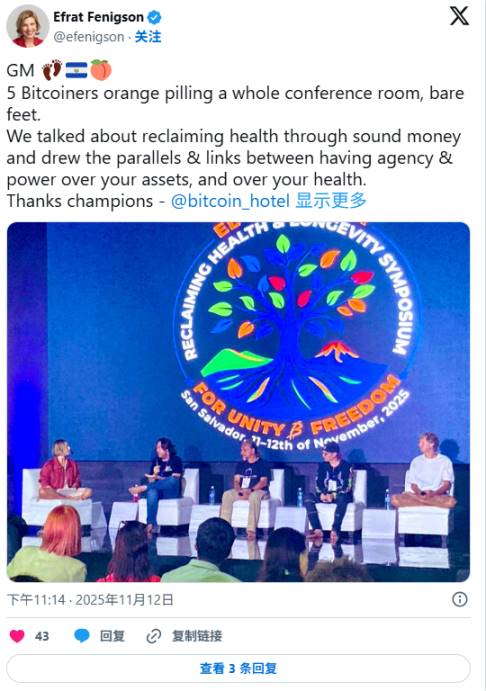
At “Adopt Bitcoin,” I witnessed the foundational engine driving this change. Circular economies like El Zonte’s “Bitcoin Beach,” “Berlin,” and “MurphLife” demonstrated what happens when people earn, spend, and save in satoshis. Communities such as “Bitcoin Babies,” “Orange Women,” or Argentina’s “La Crypta” emphasized that Bitcoin belongs to everyone. Merchants naturally accept Bitcoin. Children grow up immersed in its culture. “My First Bitcoin” announced a new chapter: providing educational materials, frameworks, and guidance to support community-led Bitcoin education across more than 70 projects in over 40 countries. The startup pavilion was filled with founders who’ve established offices and launched businesses from El Salvador. I kept hearing one recurring theme, simple and clear: here, you can get things done.
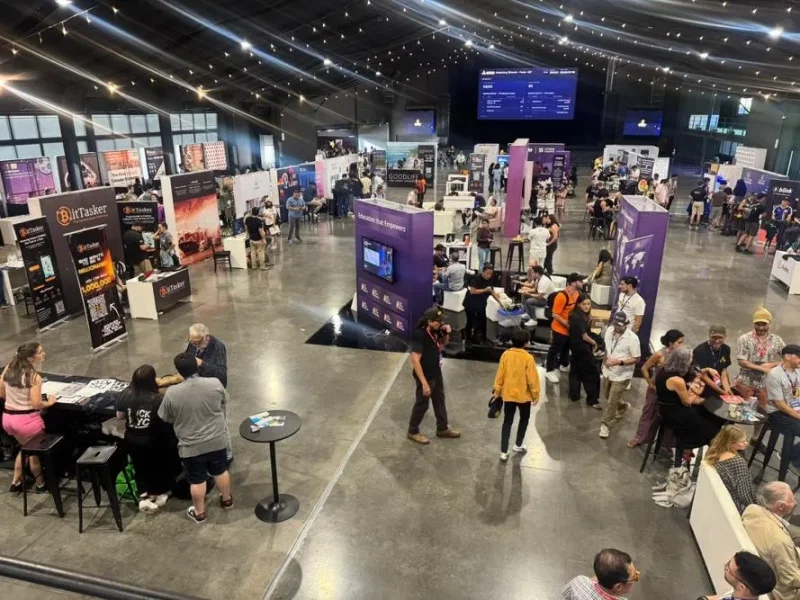
Photo: Michael Horlomon Jr.
https://x.com/unkle_skunkle/status/1989823319093240030/photo/1
Bitcoin and the Historic Moment for El Salvador
Yet the climax of the week—and the event that set the tone for everything—was “Historic Bitcoin.” This was the first government-led Bitcoin conference globally, organized by El Salvador’s newly created Bitcoin Office (led by Stacy Herbert and her team), held inside the National Palace and National Theater. These are deeply symbolic locations; choosing such solemn venues for a Bitcoin conference speaks louder than words. The halls were filled with ministers, entrepreneurs, and international speakers—from voices in the U.S., Europe, Latin America, and Africa. Attendees received a booklet titled “El Salvador, the Bitcoin Nation,” featuring a cover photo of President Bukele—clearly signaling that Bitcoin is national strategy.
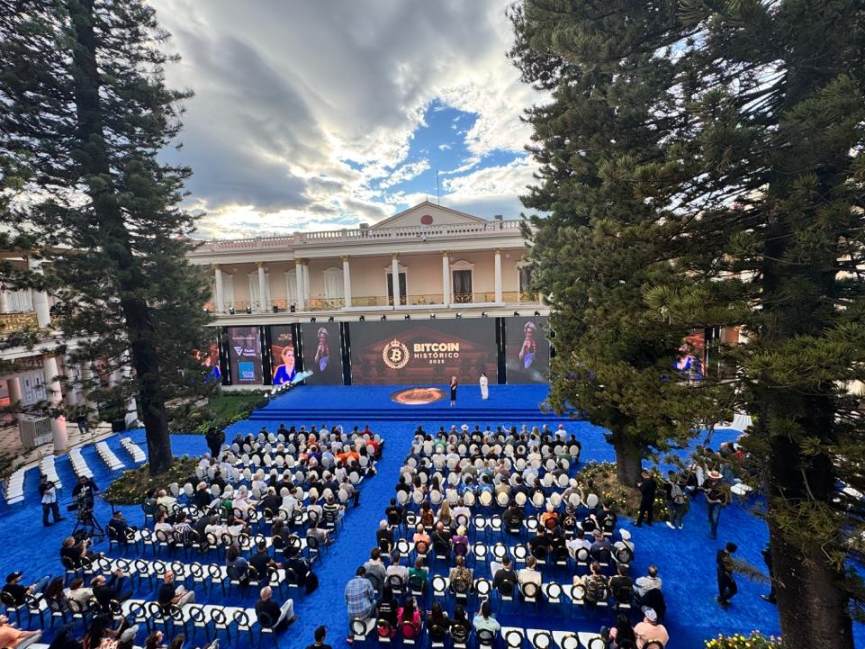
Photo: Efrat Fenigson
Outside in Gerardo Barrios Plaza, the conference extended into public space, with sessions translated into Spanish and streamed live for local families, students, and elders. Shops and stalls accepted payments in satoshis. Bitcoin felt like it had returned to its natural habitat, woven into the fabric of daily city life, making the public part of the event itself.
Several announcements highlighted the country’s direction: the Ministry of Agriculture signed a cooperation agreement with “The Beef Initiative” to strengthen domestic beef production. Steak ’n Shake announced El Salvador as its first entry point into Latin America, accepting Bitcoin from day one.
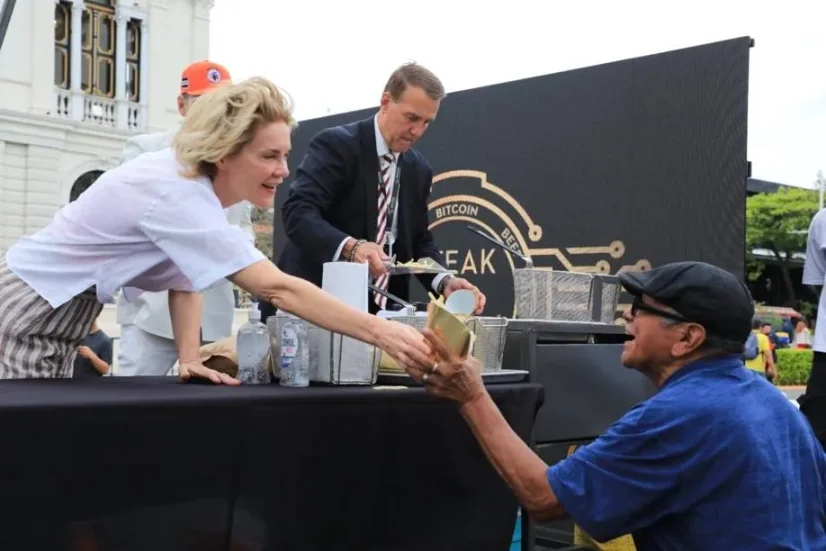
Image source: Translating El Salvador
https://x.com/TranslatingES/status/1989744516228673658/photo/4
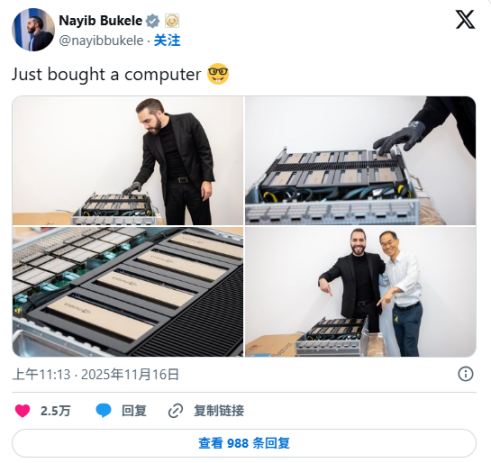
The government revealed plans to procure Nvidia B300 chips, capable—with support from Hydra Host—of locally training and running advanced AI models. This marks a step toward sovereign computing infrastructure, reducing reliance on Big Tech data centers while laying the foundation for El Salvador to develop domestic AI capabilities. Following its recent $17 million funding round, Mempool announced it will incorporate in El Salvador. With support from Lina Seche and the Bitcoin Office, 500 classrooms will be renovated under the “Two Schools a Day” initiative—a key component of the nation’s large-scale modernization and expansion of educational infrastructure—for Bitcoin and financial education. Together, these moves paint a coherent picture: a nation building its future simultaneously across multiple fronts.
Ricardo Salinas’ presence added a powerful highlight to “Historic Bitcoin.” In his speech, he stated, “El Salvador stands on the right side of history,” specifically noting dramatic improvements in public safety: “It’s safer than Japan. I wish my country were like this.” One of Latin America’s most influential entrepreneurs voiced a sentiment shared by many visitors this week.
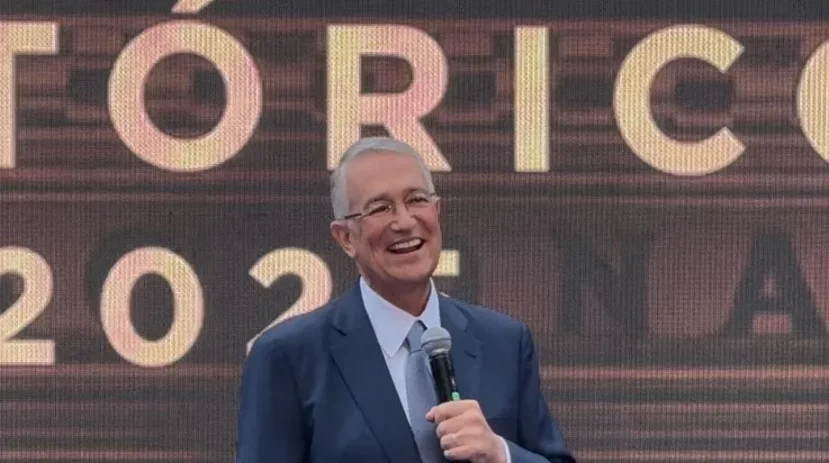
Photo: Efrat Fenigon
The Presidential Dinner
Yet the clearest window into that future came during the dinner itself.
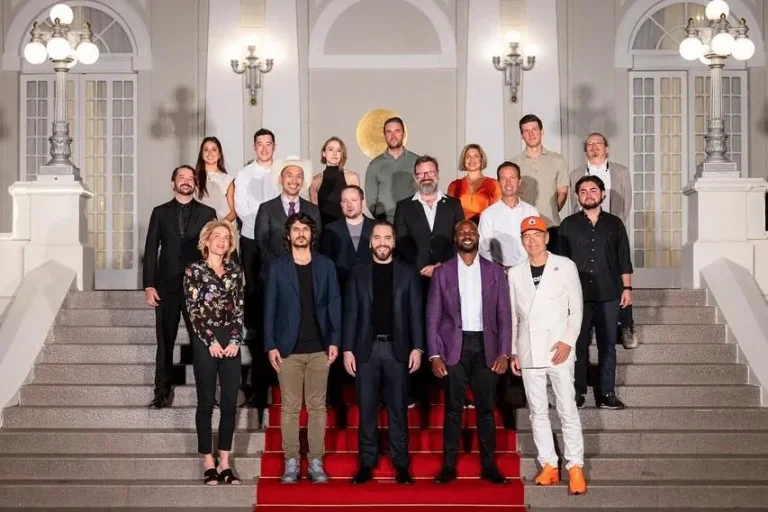
Photo: El Salvador Bitcoin Office
Bukele is nothing like his caricatured image abroad. He is sharp, quick-witted, humorous, and deeply knowledgeable about Bitcoin culture. As soon as he sat down, he joked, “Guys, we’re doomed—Bitcoin is dead,” referring to the price briefly dipping below $100,000. He isn’t a politician faking relatability or reading from a script—he genuinely understands Bitcoin.
When the conversation turned to Bitcoin’s long-term trajectory, he said something I’ll never forget: “Bitcoin should be money.”
Not an investment, not an asset class—but money. He sees the endgame clearly, and knows the path there. The communities using Bitcoin daily are precisely the force turning the idea into a functional monetary system.
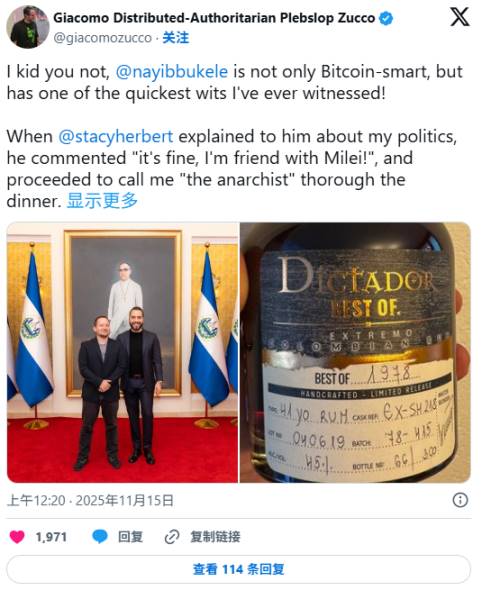
His wit complements his analytical depth. When Giammarco Zucco, director of Plan B Network, was introduced as an “anarcho-capitalist,” Bukele instantly responded: “No problem—I’m friends with Milei too,” and spent the rest of dinner playfully calling him “the anarchist.” After Wiz gifted him a samurai sword and Giammarco handed him a bottle of rum named “Dictador”—a lighthearted jab at media narratives—someone reminded Bukele he doesn’t drink. He shot back: “No worries—I don’t usually swing swords either.”
Toward the end, when Giammarco thanked him, Bukele smiled and delivered a line that perfectly captures his governing philosophy: “I’m sorry I run a government—but it’s a very small one.”
The Happy Whistleblower
I’ve visited many countries sliding further into darker paths: more surveillance, more centralization, more control, more violence. What’s happening in El Salvador is the opposite: safe without oppression, structured without suffocation, free yet responsible. After decades of violent gang domination, Salvadorans feel liberated. You can see it on their faces—they are friendly, relaxed, grateful. On my last trip, I saw a 75-year-old man riding a bicycle through El Zonte at sunrise, whistling. “When do people whistle?” I asked myself. “Happy people whistle. People whistle when they feel safe.” That simple moment became a silent metaphor for this place in my mind.
Yes, the country still has to navigate institutions like the IMF. The recent decision to repeal Bitcoin’s legal tender status is indeed regrettable, but having glimpsed what lies beneath the surface, it feels like one step back, four steps forward. Progress is never linear. But the direction is unquestionable: toward monetary sovereignty, digital sovereignty, educational sovereignty, and civic sovereignty—all forces moving in unison.
This week gave me a glimpse of a nation remaking itself.
While most of the world struggles under global agendas—staggering economies, fragile security, broken social structures—El Salvador is reshaping its reality and stepping into a new timeline.
Meeting Bukele didn’t feel like meeting a president.
It felt like meeting an architect—one determined to liberate his country and paving the way forward.
Join TechFlow official community to stay tuned
Telegram:https://t.me/TechFlowDaily
X (Twitter):https://x.com/TechFlowPost
X (Twitter) EN:https://x.com/BlockFlow_News
 @BitcoinMagazine