Interview with Arthur Hayes: Zcash is the final 1000x opportunity, all moves aimed at accumulating more Bitcoin
TechFlow Selected TechFlow Selected
Interview with Arthur Hayes: Zcash is the final 1000x opportunity, all moves aimed at accumulating more Bitcoin
"I believe in the long-term potential of a certain asset, but my short-term goal is to maximize my Bitcoin holdings."
 Navigating Web3 tides with focused insights
Compiled & Translated: TechFlow
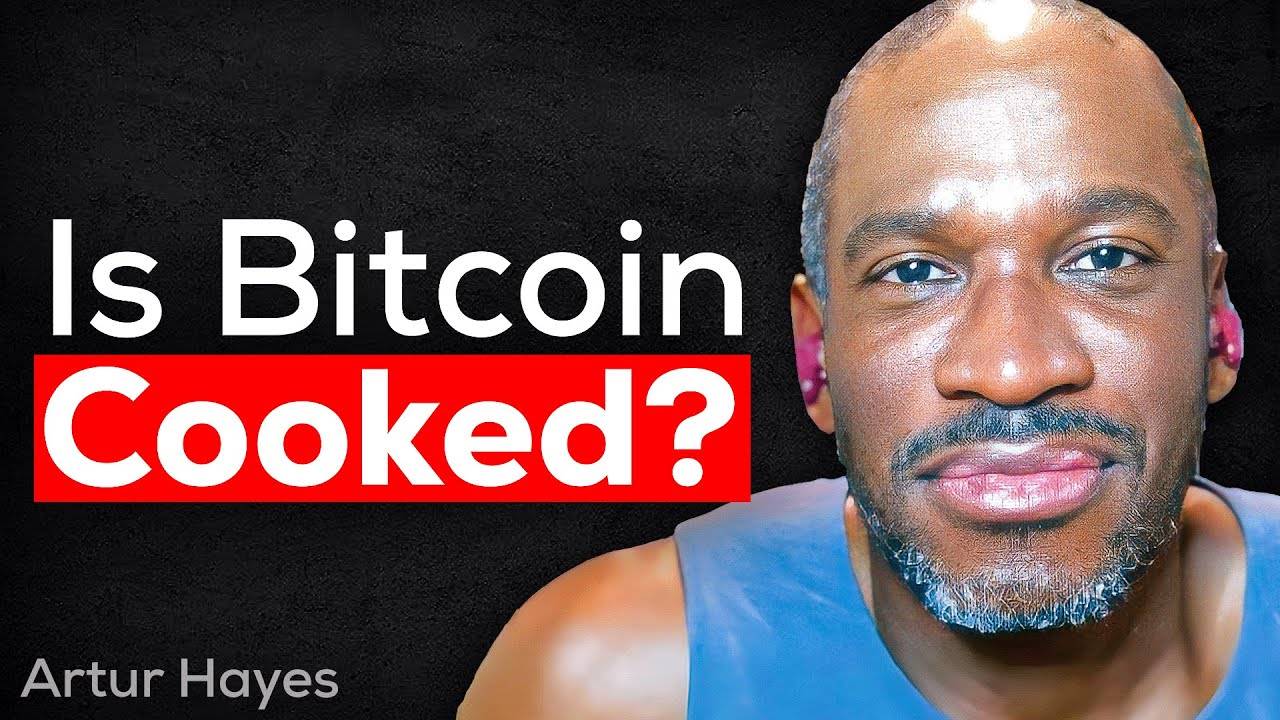
Guest: Arthur Hayes
Host: Michael Jerome
Podcast Source: threadguy
Original Title: Arthur Hayes: BTC Price Targets, Trading Advice, Bear Market and More | TG Podcast
Air Date: November 15, 2025
Key Highlights Summary
-
I am extremely optimistic about the current market. Bitcoin is one of the best-performing assets in human history.
-
For investors who are patient, have cash on hand, and can avoid using high leverage, this is an ideal time to invest.
-
The current market performance is largely driven by investor impatience and excessive use of leveraged trading.
-
Many family offices still invest in VC funds because they enjoy the interaction with bankers and institutional fund managers, the sense of being admired, and attending ceremonial meetings and events. This psychological need makes them willing to invest in underperforming funds.
-
All investment activities are ultimately aimed at generating returns, which will eventually be converted into more bitcoin holdings.
-
Zcash is the last project in the cryptocurrency space that still has the potential for a 1000x return.
-
In the end, I decided to continue accumulating Zcash. I believe it has the potential to reach 20% of Bitcoin's value. My investment plan is nearly complete, but if prices pull back, I might buy more.
-
If any politician publicly advocates policies similar to the austerity measures between 1929 and 1930, that would be the signal invalidating my bullish view.
-
Gold and silver are tools used by nations to resist fiat currency devaluation, while Bitcoin and select cryptocurrencies are weapons used by the people to fight inflation.
-
The best investors can hold two seemingly contradictory views simultaneously. I believe in the long-term potential of certain assets, but in the short term, my goal is to maximize my Bitcoin holdings.
-
My advice to newcomers is to set aside those "high-risk get-rich-quick" ideas. You can observe your emotions and understand this urge for quick gains, but don't let it control you.
Arthur Hayes on Grassroots Cryptocurrency vs. Venture Capital (VC) Dynamics
Host: Do you think there’s a disconnect between crypto venture capital (VC) and the on-chain liquid market?
Arthur:
I don’t see it as a disconnect—it's about incentives. These investors behave exactly according to their incentive structures. If they need to deliver returns to limited partners (LPs) and must collect management fees in a certain way, then naturally they operate under the standard crypto VC model. Under this model, most crypto venture funds underperform Bitcoin and Ethereum—the exact performance depends on the type of fund.
In fact, traditional venture funds aren’t doing great either. Aside from major names like Andreessen Horowitz (a16z) or Sequoia, many VC funds don’t actually generate real profits. Their returns often fail to beat the S&P 500, let alone the Nasdaq. Instead of paying high management fees, you'd be better off just buying an ETF—it would outperform 99% of VC funds.
I remember mentioning this to a wealthy individual once. He was a family office investor, part of a prominent family, and his colleagues asked me why they should still invest in these mediocre-performing VC funds. They kept talking about finding the “next hot VC fund.” I told them I understood, but eventually he admitted it was really about “vibe.” They enjoyed interacting with bankers and institutional fund managers, liked being fawned over, and loved attending ritualistic meetings and events. That psychological satisfaction made them willing to invest in underperforming funds. They feel this is what being an investor means—being recognized and praised.
So in a way, while these VC funds may seem disconnected from the market, they are actually fulfilling a psychological need for their target audience—not just delivering financial returns.
Who Is Arthur Hayes?
Host: I’d love to hear your story. Many viewers watching this live stream might be a new generation of crypto enthusiasts—people who got into Solana, memes, or Axiom Crew in 2024. Could you briefly introduce yourself?
Arthur:
Sure! I first encountered cryptocurrency in 2013. Before that, I worked as an ETF market maker at Citibank and Deutsche Bank in Hong Kong. Then I lost my job. In early 2013, I happened to read the Bitcoin whitepaper when Bitcoin was around $200. It deeply resonated with me because I’ve always been interested in gold and concerned about how the Federal Reserve and global banking systems destroy money’s value through monetary policy. These were topics I studied during business school. The concept of cryptocurrency made perfect sense to me. As someone passionate about financial history, I was incredibly excited—I believed cryptocurrency could be as important as the invention of the printing press.
Luckily, after losing my job, I had some savings and support from friends. Instead of seeking another traditional job, I decided to enter the crypto space. That’s when I came up with the idea of starting a Bitcoin and cryptocurrency-related business—the birth of BitMEX.
My goal was to build a derivatives exchange that I, as a trader, would want to use. Later, together with two co-founders, Ben Delo and Samuel Reed, I launched BitMEX in 2014. In 2016, we introduced the perpetual contract—a financial derivative that changed the industry. By 2018, BitMEX had become one of the largest cryptocurrency exchanges globally.
Afterward, I faced charges from the U.S. government and served time in prison, but was later pardoned. Now, I’m back in the market, focusing on managing my own capital. We founded Maelstrom, a firm focused on early-stage token investments and advisory services. Some of our successful cases include Ethena and EtherFi, along with several liquidity trading projects. You might occasionally see me promoting my investments on X. We’re also launching a private equity vehicle investing in emerging small but critical crypto infrastructure projects.
How to Position in the Market and Understand the Psychology of Leveraged Trading
Host: How are you currently positioning yourself in the market? What was your reaction when you saw Bitcoin drop to $98,000?
Arthur:
At Maelstrom, about 98% of our capital is already deployed in the market. We do keep some cash aside, but since most of our investments were made at lower costs, market volatility doesn’t affect us much. So I remain relatively calm. And because we don’t use leverage, I can assess market trends more calmly.
I know many listeners may hold leveraged positions, especially long positions on Bitcoin or other cryptos. I understand this can be stressful—using leverage requires not only getting the market direction right but also precise timing on entry and exit. More importantly, leveraged trading involves periodic funding fees, which often force traders to change strategies due to short-term fluctuations—like thinking, “It hasn’t performed well in the past 24 hours, should I adjust my strategy?”
This kind of psychological pressure is especially evident during high volatility. For example, when you’re bullish but the price only rises 1% or 2%, or even worse, Bitcoin breaks below the psychological $100,000 level despite favorable macro conditions. At that point, leveraged holders may feel anxious—not just due to funding costs, but also lack of patience or ability to hold on. That’s the biggest challenge of leveraged trading.
I understand why people choose leverage. For many hoping to improve their financial situation quickly, time and capital may be limited, so they turn to leverage for fast returns. However, once the market doesn’t move as expected, this strategy often leads to anxiety or losses.
From a macro perspective, I believe the current economic environment is very favorable for cryptocurrency. I’m still buying some assets, mainly Zcash. Although the broader market hasn’t entered the “altseason” yet, if you’ve been watching high-liquidity assets and Zcash over the past 18 months, your performance should have been quite strong. While most other coins have underperformed, the overall market remains in an uptrend. Therefore, I am very optimistic about the current market.
I believe for those who are patient, have cash available, and can avoid using high leverage, now is an excellent time to invest. If we look back at November and December 2021, the market was at all-time highs, sentiment was euphoric, and everyone was optimistic. At that time, central banks were mainly discussing inflation. For instance, the Fed clearly stated it needed to slow down the economy and announced plans to start hiking rates in March 2022. If you looked at the rate hike cycle chart then, the curve was clearly upward.
However, comparing today’s situation, the market environment has significantly changed. Credit growth has stalled, and Fed officials are now discussing reserve shortages in the system and possibly restarting quantitative easing (QE). If you look at current central bank easing or rate hike cycle charts, most central banks are cutting rates rather than hiking.
From a political standpoint, discussions now revolve more around AI, immigration, and other hot topics. Politicians across countries are promising voters various benefits—“free services” or “extra welfare”—but almost no one talks about broad tax increases. While some propose taxing the top 1%, it’s more of a voter-pleasing tactic than a real fiscal solution. The real strategy politicians adopt is printing money to fulfill these promises, not raising taxes. Over the next 12 to 18 months, the possibility of credit contraction is nearly zero. This stands in stark contrast to the policy environment at the market peak in 2021.
The market may appear weak now because we're in a transition phase, with both the Fed and the People's Bank of China gradually increasing monetary easing. In the U.S., the presidential election is coming in 2026. The Republican Party (“red team”) recently underperformed in key elections in New York, Virginia, and others. Trump, as an experienced politician, knows exactly what measures are needed to win. Republican “stimulus” might focus on AI, data centers, weapons production, and mortgage relief, while Democrats would likely push climate policies, social justice programs, free meals, and public transit. Despite differing policy focuses, both sides are essentially funding their voter bases through money printing. For cryptocurrency investors, this ongoing expansion of money supply is exactly the lifeline of the market.
Whether it’s “socialism,” “industrial state,” or “capitalism,” these are just different political packaging aimed at attracting different voter bases. But ultimately, their core strategy is printing money to pay for these promises—not raising taxes. This “inflation tax” is the only politically feasible way to resolve the massive debt accumulated over the past 40 to 50 years.
Because of this, I am very optimistic about the current market. Simply reading the news reveals these trends. I don’t need complex indicators, magic charts, or technical analysis tools—just observing the policy directions politicians are pushing is enough to identify future investment opportunities.
What Would Invalidate Arthur’s Bullish View?
Host: So, under what conditions would your bullish outlook become invalid?
Arthur:
If any politician publicly advocates policies similar to the austerity measures between 1929 and 1930, that would be the signal invalidating my bullish view. Let me give an example: Andrew Mellon, the U.S. Treasury Secretary at the time, was a famous banker who proposed an extreme economic stance during the early stages of the Great Depression. His core idea was “liquidate credit, liquidate labor.” He believed those living extravagantly on borrowed money should pay the price, the system needed resetting, all bad debts must be cleared, and only then could the economy return to health.
Of course, his original words were more refined, but the core idea was: if someone took on massive credit without generating sufficient income to service the debt, they should go bankrupt—not be bailed out by the government. It was precisely this policy that led to a sharp credit contraction in the early 1930s, directly triggering the Great Depression. This is well-documented in economics textbooks. The result? The policy was extremely unpopular, leading President Hoover to suffer a crushing defeat in the next election.
Therefore, if today any politician—whether a Chinese “communist,” a U.S. leader, or politicians elsewhere—publicly advocates similar austerity policies, such as allowing credit to decline and refusing to bail out failing businesses, that would be a major signal. However, I haven’t seen any signs of this yet. In fact, no major politician in any G7 country is willing to take such a stance. The only possible exception might be Milei in Argentina, but Argentina’s economy is too small to have any meaningful impact on global markets.
G7 politicians avoid austerity because it brings enormous social and economic risks. Large-scale credit contraction could lead to soaring unemployment and significant wealth loss among the rich. Such outcomes are unacceptable in democratic elections, as voters won’t support them. Even in non-democratic regimes, internal support would be hard to secure.
Why Has Cryptocurrency Underperformed Recently?
Host: Why has cryptocurrency underperformed in the current market environment?
Arthur:
If you bought Bitcoin in January 2025, your current price might be flat or slightly down. If you invested in smaller altcoins, you might face larger drawdowns. But if you bought Bitcoin two years ago, your return is positive. If you bought Bitcoin between April 9 and 11 this year—what some call “Liberation Day”—your gain is roughly 30% to 44%.
So if you’re new to the crypto market or just opened leveraged positions, I completely understand you might feel like you’re losing money. But we should view Bitcoin’s performance over a longer time horizon. Bitcoin is one of the best-performing assets in human history. The issue is, if you’re new to Bitcoin or expect short-term returns, you might feel the market isn’t moving as expected. But in reality, the market doesn’t cater to your timeframe. I believe the current market performance is primarily due to investor impatience and excessive use of leveraged trading.
Many people don’t realize that sometimes other assets may temporarily outperform Bitcoin, but over the long term, as long as money continues to devalue, Bitcoin will remain one of the top-performing assets. And we’ll also see specific altcoins outperform Bitcoin. But if you simply pick a random three-month window to measure investment performance, the result might be as random as rolling dice.
Arthur:
I’m not currently focused on leveraged trading. Of course, using leverage isn’t inherently wrong. If you want to be a leveraged trader, you must stay highly alert to the market. For example, you probably can’t sleep eight hours every night—you need to monitor market movements constantly, set phone alerts. You also need to understand changes in open interest, master time-series data, analyze global capital flows, especially across Asia, Europe, and North America.
These are essential skills for becoming a successful leveraged trader. If you can’t do these, you shouldn’t try leveraged trading—you’re not putting in enough effort. Leveraged trading demands full-time attention, 365 days a year. Only then can you possibly succeed. But if you’re just casually opening positions after work, hoping to make quick money, you’re likely to get into trouble. Again, leverage itself isn’t the problem—the key is whether the trader has sufficient focus and expertise.
Host: We all know you have a unique perspective on the “catch-up trade” between Bitcoin and gold. You believe there’s a big difference in how the market perceives gold versus Bitcoin. I’m curious—how do you see this now? For those still watching Bitcoin catching up to gold, how do you think this will evolve?
Arthur:
In my non-crypto portfolio, nearly 100% is invested in physical gold mining and silver mining stocks. If I explain my investment logic, my core belief is Bitcoin is the people’s tool against currency devaluation. Anyone can own Bitcoin, and no one knows you own it. We can even memorize private keys—that’s a uniquely powerful feature.
But central bankers face similar challenges. If you’re not a U.S. central banker, you need to ensure your nation’s or economy’s reserves can withstand inflation driven by the U.S. For the past 10,000 years, both nations and individuals have turned to gold as the primary asset to solve this problem.
So if I were a central banker or government official, I’d choose gold to protect against asset confiscation or inflation. Gold is a historically proven solution. In contrast, Bitcoin has only existed for 15 years, while gold has 10,000 years of history. Choosing gold isn’t just about stability—it aligns with institutional traditions. As a sovereign official, if I chose Bitcoin and failed, I could lose my job. But if I chose gold and things went wrong, I could say, “This is what we’ve always done.”
Besides, gold storage is more traditional and reliable. We have vaults, armed guards—we don’t need to understand complex cryptography or private key management. In contrast, Bitcoin custody and security require new technologies and knowledge, creating a huge barrier for many governments. So when I see the U.S. seizing Russian assets, I realize any country could face the same risk. To avoid this, I’d store gold within my own borders, protected by my own military.
Of course, as an individual, I might hold Bitcoin and believe in its value. But at the national level, gold remains the safer choice. Therefore, in my investment strategy, I hold both: gold and silver are tools used by nations to resist fiat currency devaluation, while Bitcoin and select cryptocurrencies are weapons used by the people to fight inflation.
They may perform differently, but their core logic is similar—both aim to combat currency devaluation. But their buyer bases differ—gold is primarily bought by nations, while Bitcoin is the people’s choice. That’s why I hold both. I believe we shouldn’t see gold and Bitcoin as opposing forces, but as complementary. If you look at the biggest gold buyers since February 2022 (when the U.S. seized Russian funds)—it’s central banks. Do you think this trend will continue? Do you believe the world will see more conflict and division ahead? If yes, buy gold—nations will keep accumulating it.
On the other hand, if you believe countries will keep solving problems by printing money, leading to inflation, then buy Bitcoin—it’s the people’s money, a digital-age response to inflation. I believe both gold and Bitcoin allow me to profit from these two trends. That’s my view on gold. It’s not an either-or choice—it’s both. Though my crypto allocation is higher, gold remains an essential part of my portfolio.
The Story of Naval Pitching Zcash to Arthur
Host: You both hold Bitcoin and gold—this portfolio is fascinating. I can understand why someone like Naval would choose Bitcoin over traditional gold. Now, let’s talk about Zcash. I’ve heard you mention Naval’s story a few times—can you share it? What sparked your interest in Zcash? I recall you said BitMEX was the first exchange to list Zcash, right?
Arthur:
Yes, BitMEX was the first exchange to launch Zcash futures contracts. Around 2016, Zcash was one of the hottest coins in the market. Zuko (Zcash’s founder) was promoting it everywhere. Everyone had high hopes for privacy tech, believing Zcash could make Bitcoin more private.
At the time, I was very interested in Zcash, mainly because it used a slower token distribution model, similar to Bitcoin mining, just seven years later. So we launched futures contracts even before any Zcash tokens were in circulation. In autumn 2016, these contracts were very popular. By the end of 2016, when Zcash’s genesis block was mined, the price on Poloniex briefly surged to $3,000 due to near-zero initial supply.
But as mining progressed, inflation became visible, supply increased, and prices fell. My biggest concern with Zcash at the time was its “trusted setup.” This required users to trust the Zcash development team to complete the initialization process. Although they livestreamed the process for transparency, some risk remained. Also, 20% of Zcash’s mining rewards went to the founding team, which sparked controversy.
Additionally, critics pointed out that a large portion of circulating Zcash wasn’t even using privacy features. This made Zcash seem like a “downgraded” version of Bitcoin—launched seven years later with far weaker network effects.
So for a long time, I didn’t pay much attention to Zcash. Then, during a privacy-focused interview, I happened to have dinner with Naval. We talked about Zcash, and I congratulated him. He told me, “Yes, this is only my second-biggest bet. I believe Zcash is the last project in cryptocurrency that still has the potential for a 1000x return.” That caught my attention.
Then he addressed each of my concerns about Zcash. He mentioned Monero’s privacy wasn’t perfect—especially in the age of AI and big data, researchers in Japan had already managed to de-anonymize Monero. He also noted Zcash had eliminated the original “trusted setup” with the Halo 2 upgrade, and mining subsidies had phased out two years ago.
After hearing his analysis, I started re-evaluating Zcash. Naval is a highly successful investor—many of his calls have been accurate. So I decided to adopt a “buy first, research later” approach. During dinner, I contacted my brokers and bought some Zcash. Interestingly, none of my six brokers were willing to execute the trade—ironically, that made me even more confident in my decision.
When I got home, I verified everything Naval mentioned—and found it all true. Zcash’s technical improvements, privacy potential, and the end of mining subsidies gave me confidence in its future.
Since then, I’ve fully committed to investing in Zcash. At the time, Bitcoin was around $110,000, and Zcash’s price kept rising. I enjoy seeing market enthusiasm for Zcash—both praise and criticism show the asset is alive.
Eventually, I decided to keep adding to my Zcash position. I believe it has the potential to reach 20% of Bitcoin’s value. My investment plan is nearly complete, but if prices pull back, I might buy more. Recently, Zcash rebounded from a low of $400 to around $500—I believe as more people understand its privacy features and usability, its price will rise again.
Meanwhile, I’m experimenting with new wallet technologies to ensure I can operate smoothly. I’m ready to keep moving forward in this market.
The Era of Privacy and Zero-Knowledge Proof (ZK) Technology Is Coming
Host: Recently, I noticed Murt promoting Zcash. He said that over the next five to ten years, the focus of cryptocurrency will be adding privacy layers to existing infrastructure and systems—essentially making all cryptocurrencies privacy-enabled. What do you think? Are we approaching a new era of privacy technology?
Arthur:
Absolutely, because AI technology is now extremely advanced—whether you call it AGI or something else, it’s essentially a powerful predictive engine. Governments will use these tools to fully control our digital lives. Whether this control is good or bad, we’re becoming more vulnerable in the process. We actively use smartphones and social media—that’s the biggest voluntary act of data sharing with governments. We upload photos, share locations, send chat logs—all because we want to connect with the world via the internet, experience community, and enjoy technological convenience—at the cost of sacrificing our privacy.
Many worry about China accessing our data, but let me ask: Do you use Google? If so, your data is already in the hands of the U.S. government. So the issue isn’t about China—it’s about who is more trustworthy. But regardless, privacy is already gone. Without zero-knowledge proof (ZK) technology to protect our privacy, our personal data will be easily tracked and de-anonymized by these systems. The power of zero-knowledge proofs lies in verifying your identity (e.g., confirming you’re Arthur Hayes) without exposing additional personal information.
Now, there’s growing discussion around “ZKYC” (zero-knowledge know-your-customer). I believe this technology will be crucial—it allows identity verification while protecting user privacy. This is especially important for those wanting to run AI technologies without exposing their data globally.
So I fully believe in the future of privacy technology. As people realize governments may use AI to monitor and control behavior, demand for privacy will surge. Maybe Zcash is part of the solution. I do see privacy protection becoming a movement, with more people starting to care about this issue.
How to Balance Long-Term Vision with Short-Term Trading
Host: You once mentioned a project called “Hype” that delivered a 126x return, and you sold when it was up 10%. How do you balance long-term investment conviction with short-term market volatility? For example, how do you handle unlock events or other investors’ actions?
Arthur:
The best investors can hold two seemingly contradictory views simultaneously. I believe in an asset’s long-term potential, but in the short term, my goal is to maximize my Bitcoin holdings. For me, all investment operations are meant to generate returns, and those returns are ultimately converted into more Bitcoin. That’s my core objective.
For example, if I can buy Hype at a certain price and sell when it triples, using the proceeds to accumulate more Bitcoin, that’s an ideal trade. I’ll wait for a pullback to re-enter. Through such moves, I successfully increased my Bitcoin holdings. As a professional trader and investor, I love this process.
Of course, if you’re a long-term holder uninterested in short-term fluctuations, that’s perfectly fine too. If you believe a project can deliver 126x returns—even if it takes 12 months or longer—you can buy and hold.
But for me, I adjust my strategy based on market dynamics. If I think the market might enter a weak phase or needs new products to justify higher valuations, I’ll sell and wait for a better entry. If the project proves its value and beats competitors, I’ll consider buying back in.
For example, new products like perpetual contracts on Nvidia stock are very appealing to me. I discuss with my team whether these projects are worth long-term investment. While I still believe Hype could deliver 126x returns, I’m willing to wait for market validation. I have enough time to observe and adjust.
Host: You clearly have strong conviction in Hype, and I know you’re also closely following the development of perpetual contracts. As the inventor of perpetual contracts, you’re no longer directly involved in developing these protocols. Does it feel strange watching these projects grow in the market?
Arthur:
Not at all. Now I enjoy life more—skiing, traveling—instead of managing teams or handling daily operations. I find this state great. People like CZ can take over now. I’ve completed my mission, and I’m satisfied.
Host: So it’s that “I’ve done my part, now I can step back” feeling?
Arthur:
Exactly. There are many young, energetic people ready to make their mark. I’d love to see projects like Hyperliquid completely disrupt CME, rendering it worthless. If that happens, I’d be thrilled—even without direct profit.
I support these projects because I believe in their potential. After years in this industry, I hope to see Hyperliquid or other firms like Binance or BitMEX change market flows so drastically that people must choose: either embrace perpetual contracts or exit the market.
If all CME products become perpetual contracts, it proves our innovation at BitMEX was correct. Perpetual contracts have become one of the most successful products across global exchanges. It also proves the capability of Jeff Yang’s team—they built this incredible protocol with just 11 people. I met one of their team members at a party recently, and she told me they still have only 11 people. That’s amazing—I’m proud of them.
Host: That’s incredible—11 people! How big was BitMEX’s team back then?
Arthur:
We had 250 people. Actually, I discussed Hyperliquid with Paradigm’s team, and we agreed that staying small is advantageous. Once a team grows, problems arise—personnel conflicts, having to fire people. These are things I don’t want to deal with. As CEO, most of my past time was spent solving HR issues instead of focusing on making money—that’s not how I want to work.
Host: I noticed you recently bought some Uniswap (UNI) tokens—not a large amount, but after they launched their fee mechanism. What’s your take on this project?
Arthur:
I believe, in the short term, the crypto market may show strong bullish sentiment toward Uniswap. But more importantly, this mechanism paves the way for regulatory clarity in the U.S., enabling more functional tokens to be developed within legal frameworks. It also creates opportunities for future superior token projects.
We’re moving toward a future full of growth and innovation. Tokens like Uniswap can earn millions daily and reinvest those earnings into the market. These tokens aren’t just governance tokens—they can achieve long-term value appreciation. We’ll see more “pseudo-equity tokens” in the future. These tokens not only allow companies to profit but also align incentives with token holders.
Host: Do you think this “pseudo-equity token” model will become mainstream?
Arthur:
I believe so. Each crypto cycle gradually moves in this direction. In the past, we often heard founding teams promise to distribute earnings to token holders, but they rarely followed through.
Take Uniswap, for example—its price once reached $35–$40 but later dropped to $3–$4. Or dYdX, the original Hyperliquid project, which once had a market cap of $28–$30 billion but is now nearly zero. They did make a lot of money, but token holders got nothing in return.
In fact, many founding teams of token projects haven’t fulfilled their promises—for whatever reason. Like Uniswap, whose token peaked at $35–$40 but fell to $3–$4. Or dYdX, the original Hyperliquid project, which introduced innovative concepts like permissionless listings, saw its market cap soar to $28–$30 billion, but is now nearly worthless. These projects earned substantial revenue, but token holders didn’t benefit.
Many new tokens launched in 2023 and 2024 suffer from high market caps but low liquidity. They lack clear product-market fit and sufficient customer bases. Even if they generate revenue, earnings aren’t returned to token holders. If a project performs well, as a token holder, I’d want to share in that success.
Projects that truly deliver—like Hyperliquid—show that even without VC backing, with a strong technical team and wealth returned to token holders, massive success is possible. We supported your project by buying your tokens, but if you only give us excuses like “regulatory issues,” “governance matters,” or “DAO votes” without returning profits, your project will eventually be淘汰ed by the market.
How to View This Cycle?
Host: Recently I saw some veteran industry insiders saying on Twitter that this cycle is the worst ever—completely incomparable to previous cycles. What’s your take on this cycle?
Arthur:
Every cycle has its theme. And in every cycle, there are always people who made money in the last one—they’ll scoff at the new themes, calling them unserious or “kids’ toys.” In reality, this is just frustration from missing out on the current cycle.
I firmly believe market price is paramount. In cryptocurrency, the most important thing is price and market—enabling people to trade these assets. Market volatility is normal—I get it. That’s the essence of crypto. People once thought movies with dialogue were vulgar, women wearing shorts on TV were vulgar, the internet was vulgar. So every technology defining the next era is seen as vulgar by the previous generation.
If you tell me memes are vulgar, NFTs are garbage, then I become interested in these “vulgar” things—because they might be the mainstream of the next cycle. That’s exactly why I’m willing to invest in them.
Host: Culture always develops this way. The most controversial and conflicting things are often the ones that eventually break through.
Arthur:
That’s the nature of technological progress. Every generation feels threatened by the innovations of the next. The new generation wants to drive progress through these new things. It’s a natural cycle.
The older generation always says, “Kids these days…” If you invest in what excites the younger generation, then when they grow old, those things become societal norms. And that’s exactly where you should invest.
Host: So, Arthur Hayes, how do you avoid being left behind by the times? After achieving success, how do you stay sharp and keep up with the pace instead of becoming outdated?
Arthur:
The most important thing is communication—truly understanding new things and actively participating. I enjoy traveling, observing what people do, what interests young people. You can’t just sit in an office discussing traditional financial products like government bonds or Bitcoin ETFs with private bankers. Those can make money, but if you want to stay young, you must keep moving forward. If you stagnate, you decay—and eventually get被淘汰ed.
Whether it’s exercising or talking to people, learning what they’re doing. If you don’t try to engage, you gradually “die.” It’s the law of the universe. If you’re unwilling to deeply understand the younger generation’s mindset, or skip conferences and ignore new trends, you’ll eventually stagnate. You might maintain this state for a while, but ultimately you’ll be淘汰ed.
So I strive to stay relevant. Of course, others are better than me at keeping up—but I genuinely enjoy market changes. If I love the market and want to understand developments—especially in crypto—I must observe closely, at least stay informed. Even if I don’t participate, I must always track trend shifts.
Advice for New Crypto Entrants
Host: Many young people are watching this live stream, many of them new to crypto—especially newcomers who entered because of Solana’s rise in 2024. They may feel confused. There are many voices in the market—like “you only have two years to succeed, otherwise you’ll be stuck at the bottom forever.” There are also suggestions like GCR’s high-risk wealth doubling strategies. This atmosphere puts immense pressure on many, even leaving them overwhelmed.
So, if you were in this environment, what advice would you give these newcomers? How to adjust their mindset and find the right direction?
Arthur:
First, I’d say time and compound interest are the two most powerful forces in the world. You might have heard this: assuming 2% inflation, from 1913 to now, the dollar’s purchasing power has declined by 99%. This shows even small changes, compounded over time, can create massive impacts.
So my advice is set aside those “high-risk get-rich-quick” ideas. Observe your emotions, understand this rush for quick gains, but don’t let it control you. Tell yourself: if I can achieve 5% annual compound growth over time, instead of risking massive losses chasing high returns, I can still build substantial wealth over time. It’s a simple math principle—but it requires patience and discipline to execute.
If you truly want to try high-risk trading—like leveraged trading—you must prepare thoroughly. High risk means you must become a full-time trader—constantly monitoring market movements, deeply understanding market microstructure, familiarizing yourself with your trading products, liquidity, and who trades when and why. If you’re willing to commit fully and have sufficient knowledge, then you can consider using leverage.
But if you can’t do that, long-term investing is a better fit. Set a fixed savings rate, stick to it, and don’t obsess over market volatility. If you don’t have enough time or energy to learn high-risk investing skills, then all high-risk trading will only lead you into financial trouble.
Join TechFlow official community to stay tuned
Telegram:https://t.me/TechFlowDaily
X (Twitter):https://x.com/TechFlowPost
X (Twitter) EN:https://x.com/BlockFlow_News
 深潮TechFlow