What signals did the Federal Reserve's latest Fintech meeting reveal?
TechFlow Selected TechFlow Selected
What signals did the Federal Reserve's latest Fintech meeting reveal?
The era of confrontation has ended, and the era of dialogue has begun.
 Navigating Web3 tides with focused insights
Author: Sleepy.txt
Editor: Jack
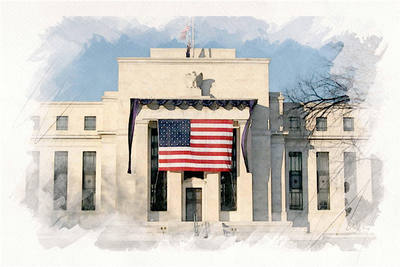
October 21, Washington D.C. The meeting room at the Federal Reserve headquarters was packed—people who were considered troublemakers in the financial system just a few years ago.
The founder of Chainlink, the president of Circle, the CFO of Coinbase, and the COO of BlackRock sat face-to-face with Federal Reserve Governor Christopher Waller to discuss stablecoins, tokenization, and AI-powered payments.
This was the Fed's first-ever Payment Innovation Conference. Not open to the public, but livestreamed in full. The agenda listed four topics: integration of traditional finance and digital assets, stablecoin business models, AI applications in payments, and tokenized products. Behind each topic lies a multi-trillion-dollar market.
Waller opened with a statement that quickly spread across the crypto community: "This is a new era for payments at the Fed—the DeFi industry is no longer seen as suspicious or something to be mocked." After this remark went viral, Bitcoin rose 2% that day. In his opening speech, Waller also said, "Payment innovation is moving fast, and the Fed needs to keep up."
The payment innovation conference featured four roundtable discussions. Beating has summarized their content—below are the key topics and highlights:
The Fed’s “Slimmed-Down Master Account”
The most significant proposal from Waller was the concept of a “slimmed-down master account.”
The Fed's master account is the gateway for banks to access its payment systems. With one, banks can directly use payment rails like Fedwire and FedNow without intermediaries. But the bar is high and the approval process lengthy—many crypto firms have waited years without success.
Custodia Bank is a prime example. This Wyoming-based crypto bank began applying in 2020, was delayed by the Fed for over two years, and eventually sued the central bank. Kraken faced similar hurdles.
Waller noted that many payment companies don’t need all the features of a full master account. They don’t need to borrow from the Fed or run intraday overdrafts—they just need access to payment infrastructure. So the Fed is exploring a “slimmed-down” version that offers basic payment services while managing risk.
Specifically, this account would not earn interest, may have balance caps, no overdrafts, and no borrowing privileges—but the application process would be much faster.
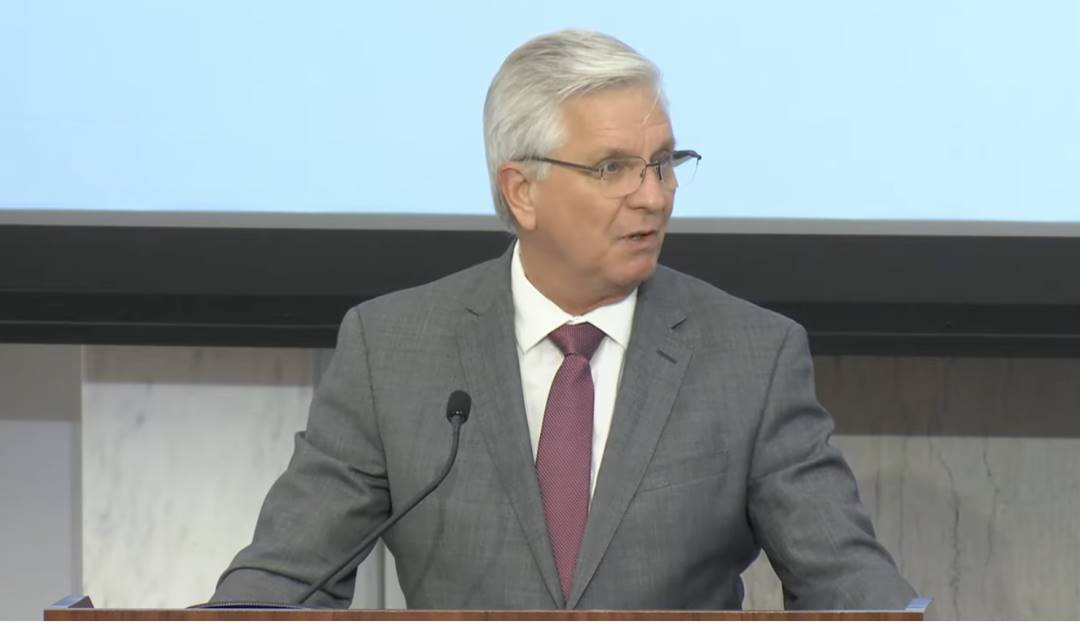
Federal Reserve Governor Waller
What does this mean? Stablecoin issuers and crypto payment firms could gain direct access to the Fed’s payment system without relying on traditional banks.
This would significantly reduce costs and boost efficiency. More importantly, it marks the first time the Fed formally recognizes these companies as legitimate financial institutions.
Discussion One: Traditional Finance Meets the Digital Ecosystem
The first panel focused on “Integrating Traditional Finance with the Digital Asset Ecosystem.” Moderated by Rebecca Rettig, Chief Legal Officer at Jito Labs, the panelists included Chainlink co-founder Sergey Nazarov, Lead Bank CEO Jackie Reses, Fireblocks CEO Michael Shaulov, and Jennifer Buck, Global Head of Treasury Services and Depositary Receipts at BNY Mellon.
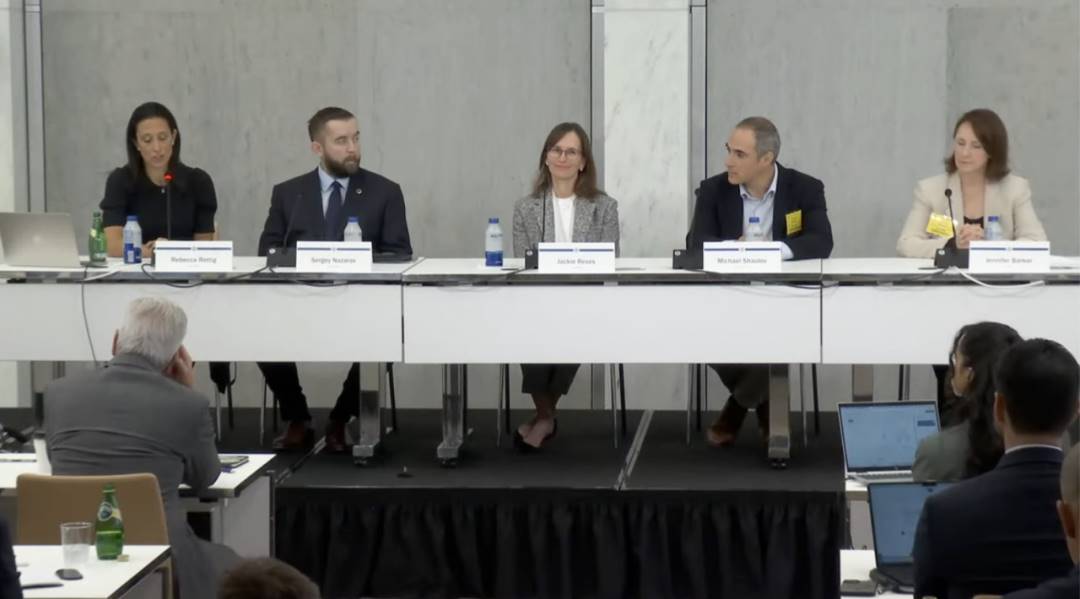
From left to right: Jito Labs’ Rebecca Rettig, Chainlink’s Sergey Nazarov, Lead Bank’s Jackie Reses, Fireblocks’ Michael Shaulov, BNY Mellon’s Jennifer Buck
Interoperability Is the Biggest Barrier
Chainlink’s Nazarov stated upfront: the biggest issue today is interoperability. There is a lack of unified compliance standards, identity verification mechanisms, and accounting frameworks between blockchain-based assets and traditional finance. As launching new chains becomes cheaper, fragmentation is worsening—making standardization even more urgent.
He called on the Fed to enable payment systems to interoperate with stablecoins and tokenized deposits. He emphasized that payments represent the demand side of the digital asset economy—and if the Fed provides clear risk management frameworks, the U.S. can maintain leadership in global digital payment innovation.
He pointed out that discussing “regulated DeFi” at the Fed would have been unimaginable a year ago—an indicator of a positive shift. Nazarov predicted a hybrid model will emerge in the next 2–5 years: a “Regulated DeFi Variant,” where smart contracts automate compliance processes.
Traditional Banks Aren’t Ready—The Core Bottleneck Is Knowledge and Talent
Lead Bank’s Reses argued that even with a blueprint for integration, most banks are unprepared. Traditional banks lack wallet infrastructure, systems for handling crypto deposits and withdrawals, and crucially, staff who “understand blockchain products.”
She framed the problem as a gap in knowledge and capability, stressing that the main obstacle isn’t technology itself, but “the knowledge and execution capacity of core banking teams.” These teams, lacking understanding of emerging blockchain products, simply don’t know how to effectively regulate or supervise such innovations.
This unpreparedness is especially evident on the retail side. While institutional KYC systems are mature, retail users still struggle to access these tools. This reveals an awkward truth: even when banks want to participate, their service capabilities remain limited to a few institutional clients—far from mass adoption.
The Industry Needs Practical Regulation and Risk Control Frameworks
The discussion also touched on AI-driven fraud, leading to debate about the “reversibility” of on-chain transactions. Traditional wire transfers can be reversed, but blockchain transactions are final. Reconciling finality with regulatory demands for reversibility remains a serious challenge. Reses urged regulators to proceed “slowly and steadily,” noting, “Innovation is always great—until your own family gets scammed.”
Fireblocks CEO Michael Shaulov steered the conversation toward deeper economic and regulatory concerns. He warned that stablecoins could reshape credit markets and thus impact the Fed’s monetary policy. He highlighted a key regulatory gray area: placing banks’ “tokenized deposits” on public blockchains—where liability remains unclear. This ambiguity is currently blocking bank projects. He called for further study into how digital assets affect bank balance sheets and the Fed’s role in this space.
Finally, BNY Mellon’s Jennifer Buck presented a “wish list” of four priorities for traditional banks: enabling 24/7 payment operations, establishing technical standards, enhancing fraud detection, and building liquidity and redemption frameworks for stablecoins and tokenized deposits.
Discussion Two: Stablecoins—Troubles and Opportunities
The second panel focused on stablecoins. Moderated by Multicoin Capital co-founder Kyle Samani, the panelists included Paxos CEO Charles Cascarilla, Circle Chairman Heath Tarbert, Fifth Third Bank CEO Tim Spence, and DolarApp CEO Fernando Tres.
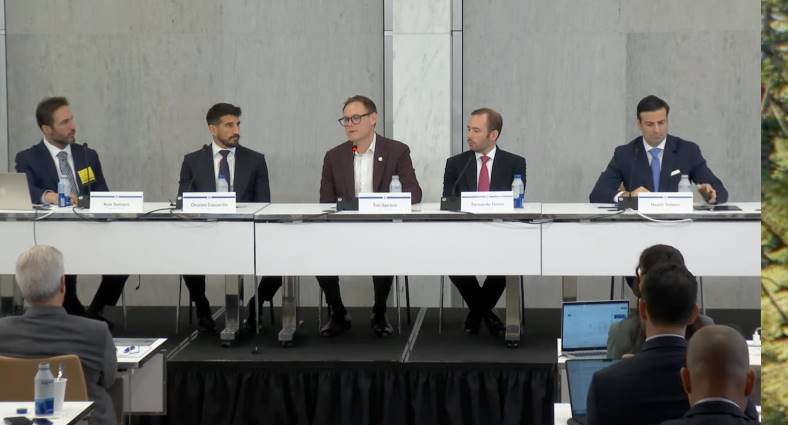
From left to right: Multicoin Capital’s Kyle Samani, Paxos’ Charles Cascarilla, Fifth Third Bank’s Tim Spence, DolarApp’s Fernando Tres, Circle’s Heath Tarbert
Strong Demand and Use Cases for Compliant Stablecoins
In July, the U.S. passed the GENIUS Act, requiring stablecoin issuers to hold 100% high-quality reserve assets—mainly cash and short-term U.S. Treasuries.
Since the law took effect, compliant stablecoins have risen from under 50% of the market at the start of the year to 72%. Circle and Paxos are the biggest beneficiaries. USDC’s circulation reached $65 billion in Q2, capturing 28% of the global market, with annual growth exceeding 40%.
On use cases, Spence offered the most pragmatic view from a bank’s perspective. He believes the strongest, most immediate application is “cross-border payments,” which directly solves pain points around legacy clearing delays and FX risk. In contrast, programmability needed for AI agent commerce remains a longer-term prospect.
DolarApp’s Tres added a Latin American perspective, noting that for countries with unstable local currencies, stablecoins aren’t speculative tools but essential means of value preservation. He reminded the U.S.-centric audience that stablecoin use cases are far broader than they might assume.
The “Dial-Up Internet” Experience Bottleneck
Cascarilla identified the industry’s biggest growth hurdle: user experience.
He compared current DeFi and crypto to early “dial-up internet,” stating bluntly that crypto hasn’t been sufficiently abstracted.
He believes mass adoption will only happen when blockchain technology becomes well-abstracted and “invisible.” “No one knows how a smartphone works… but everyone knows how to use it. Crypto, blockchain, stablecoins need to be like that.”
Cascarilla praised companies like PayPal, whose integration of stablecoins into traditional finance signals an early shift toward usability.
A Threat to the Banking Credit System
Tarbert from Circle and Spence from Fifth Third Bank joined the discussion—themselves a signal, given their traditional banking affiliations.
Spence attempted to redefine banks’ identity, proposing “ScaledFi” (scaled finance) instead of “TradFi” (traditional finance), calling the label “old” the “least interesting thing” about banks.
He also warned that while stablecoins won’t drain bank “capital,” they will drain “deposits.” The real threat lies in stablecoins paying interest—even disguised as “rewards” like Coinbase’s USDC incentives—which could severely undermine credit formation in the banking system.
Banks’ core function is taking deposits and making loans (credit creation). If stablecoins attract large volumes of deposits through flexibility and potential yield, banks’ lending capacity will shrink—threatening the entire economy’s credit structure. This echoes the earlier disruption caused by money market mutual funds (MMMFs) to the banking system.
Discussion Three: AI Hype vs. Reality
The third panel focused on AI. Moderated by Modern Treasury CEO Matt Marcus, the panelists included ARK Invest CEO Cathie Wood, Coinbase CFO Alesia Haas, Stripe’s AI lead Emily Sands, and Richard Wedeman, Web3 Strategy Lead at Google Cloud.
AI Is Ushering in the Era of “Agent Commerce”
Wood predicted that AI-driven “agent payment systems” will shift AI from “knowing” to “doing”—acting autonomously on behalf of users in financial decisions like paying bills, shopping, and investing. This will unleash massive productivity gains. She declared: “We believe that with such breakthroughs and productivity releases, real GDP growth over the next five years could accelerate to 7% or higher.”
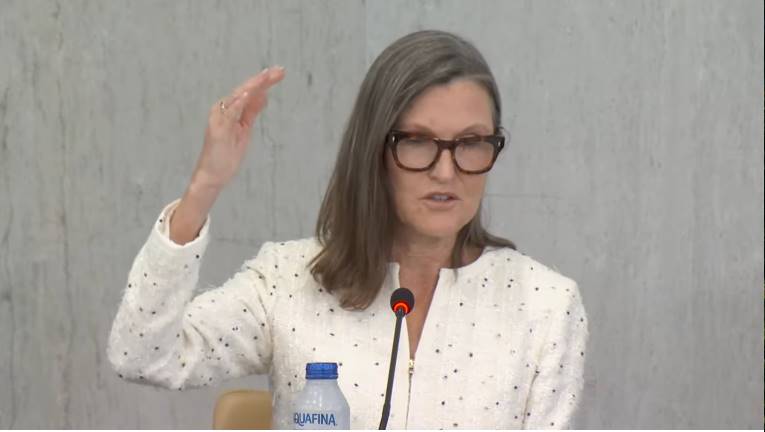
ARK Invest CEO Cathie Wood
Wood also named AI and blockchain as the two most important platforms driving this wave of productivity. Reflecting on U.S. regulation, she suggested early hostility toward blockchain ironically worked in America’s favor—forcing policymakers to rethink their stance and sounding the alarm for the U.S. to reclaim leadership in the “next-generation internet.”
Stripe’s Emily Sands emphasized from a practical standpoint that while AI agent shopping (e.g., one-click checkout via ChatGPT) is already happening, mitigating fraud risk remains “one of the most urgent challenges.” Merchants must clearly define how their systems interact with AI agents to prevent new forms of fraud.
On financial efficiency, AI’s impact is striking. Coinbase’s Alesia Haas revealed that by year-end, half of Coinbase’s code is expected to be written by AI bots—effectively doubling R&D capacity. For reconciliation, one person can settle crypto transactions in half a day, whereas processing an equivalent volume of fiat transactions requires 15 people over three days—showing how AI and crypto drastically cut operational costs.
Stablecoins Are Critical Financial Infrastructure for AI Agents
A second consensus emerged: AI agents need a new, native financial tool—and stablecoins are the natural solution.
Google Cloud’s Richard Wedeman explained that AI agents cannot open traditional bank accounts like humans, but they can own crypto wallets. Stablecoins offer a perfect fit—programmable and ideal for AI-driven microtransactions (e.g., two-cent payments) and machine-to-machine (M2M) settlements.
Coinbase’s Alesia Haas added that stablecoins’ programmability and increasingly clear regulatory environment make them ideal for AI-driven transactions. The rapid monetization speed of AI companies (ARR growth 3–4x faster than SaaS firms) also demands payment infrastructure that supports new methods like stablecoins.
Additionally, stablecoins and blockchain provide new anti-fraud tools—such as using on-chain visibility to train AI fraud models, address whitelisting/blacklisting, and transaction finality (eliminating chargeback risks for merchants).
Discussion Four: Tokenizing Everything
The fourth panel discussed tokenized products. Moderated by Corinne Sullivan, VC lead at Brevan Howard Digital, the panelists included Franklin Templeton CEO Jenny Johnson, DRW CEO Don Wilson, BlackRock COO Rob Goldstein, and Kara Kennedy, Co-Head of JPMorgan’s Kinexys.
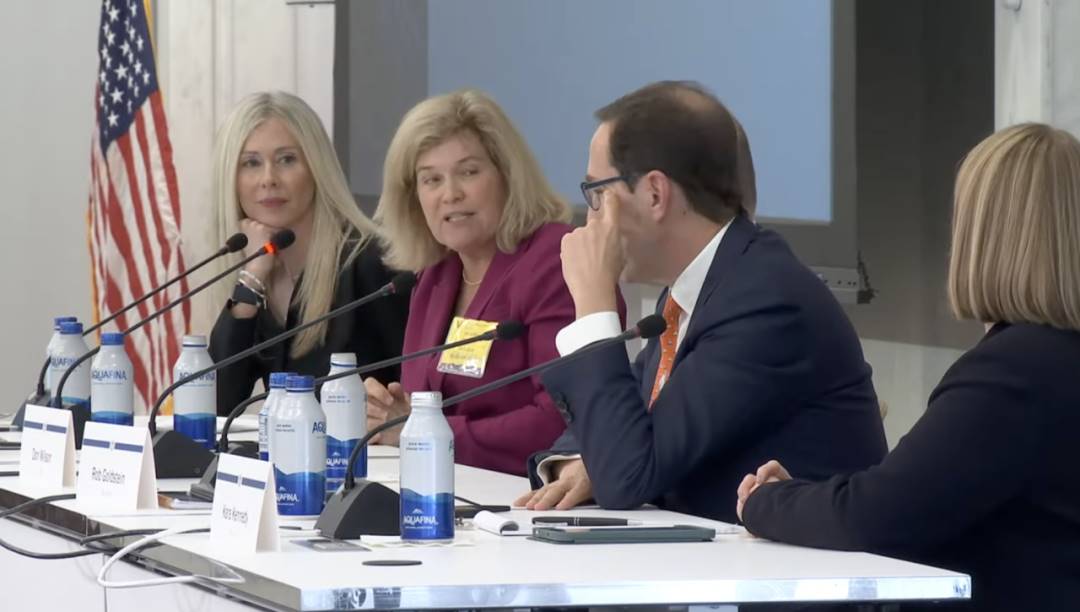
From left to right: BHD’s Corinne Sullivan, Franklin Templeton’s Jenny Johnson, BlackRock’s Rob Goldstein, JPMorgan’s Kara Kennedy
Tokenization of Traditional Financial Assets Is Inevitable
Panelists agreed: asset tokenization is irreversible. BlackRock’s Goldstein put it most directly: “It’s not a question of if, but when.” He noted that digital wallets already hold around $4.5 trillion—and this number will grow as investors begin directly holding tokenized stocks, bonds, and funds via blockchain portfolios.
DRW’s Wilson offered a more specific forecast: within five years, every actively traded financial instrument will be traded on-chain. Franklin Templeton’s Johnson likened this to past tech shifts, observing: “Technology adoption is always slower than expected—then suddenly it takes off.”
Tokenization isn’t a distant vision—it’s already happening. Today, traditional and digital assets are converging: traditional assets (like stocks and Treasuries) are being tokenized for use in DeFi, while digital assets (like stablecoins and tokenized money market funds) are entering traditional markets.
Institutions are already moving. Johnson revealed Franklin Templeton has launched a native on-chain money market fund (MMF), enabling intra-day yield calculations down to the second. Kennedy shared progress at JPMorgan’s Kinexys, including minute-level overnight repo trades using tokenized U.S. Treasuries and a proof-of-concept for JPMD deposit tokens. Wilson confirmed DRW is already participating in on-chain Treasury repo trading.
We Must Avoid Replicating Crypto-Native “Bad Practices”
Despite the promise, traditional finance giants remain highly cautious about risk. They stressed that tokenized assets and stablecoins or deposit tokens should not be interchangeable—markets must apply collateral “haircuts” based on credit quality, liquidity, and transparency.
BlackRock’s Goldstein warned against many so-called “tokens” that are actually complex “structured products”—and misunderstanding these structures is dangerous.
DRW’s Wilson sharply criticized the recent flash crash in crypto markets (October 11), exposing serious flaws: unreliable oracles and conflicts of interest where exchanges profit by internally clearing trades and cutting off user deposits.
He insisted these are “bad practices that traditional finance must not replicate before entering DeFi.” Strict infrastructure oversight and market quality standards must come first. Additionally, for compliance (AML/KYC), regulated banks must use permissioned distributed ledgers (Permissioned DLT).
Racing Toward Digital Finance—Who’s Winning?
The message from this conference was clear: the Fed no longer sees the crypto industry as a threat, but as a partner.
Over the past one to two years, global competition in digital currency has intensified. The digital yuan has made rapid progress in cross-border payments, reaching $870 billion in transaction volume in 2024. The EU’s MiCA regulations are now in force, and Singapore and Hong Kong are refining their crypto regulatory frameworks. The U.S. feels the pressure.
But the U.S. approach differs: rather than pushing a government-led central bank digital currency (CBDC), it embraces private-sector innovation. The recently passed Anti-CBDC Surveillance Nation Act explicitly bans the Fed from issuing a digital dollar. The U.S. strategy is to let companies like Circle and Coinbase build stablecoins, and firms like BlackRock and JPMorgan drive tokenization—while the government focuses on rule-making and oversight.
The clearest winners are compliant stablecoin issuers—Circle and Paxos have seen their valuations surge in recent months. Traditional financial institutions are also accelerating: JPMorgan’s JPM Coin has processed over $300 billion in transactions. Citibank and Wells Fargo are testing digital asset custody platforms.
Data shows 46% of U.S. banks now offer crypto-related services, up from just 18% three years ago. Market response is clear too. Since the Fed signaled regulatory easing in April, the stablecoin market has grown from over $200 billion at the start of the year to $307 billion.
This strategy reflects deep political and economic considerations. A CBDC implies direct government monitoring of every transaction—a concept difficult to accept in American political culture. In contrast, privately issued stablecoins can preserve the dollar’s global dominance while avoiding controversy over excessive government power.
Yet this approach carries risks. Private stablecoin issuers could form new monopolies, and their failure might trigger systemic risk. Balancing innovation with risk prevention remains the key challenge for U.S. regulators.
In his closing remarks, Waller said consumers don’t need to understand the technology—but ensuring its safety and efficiency is everyone’s responsibility. It sounds like bureaucratic talk, but the message is clear: the Fed has decided to bring the crypto industry into the mainstream financial system.
No policy documents were released, no formal decisions made. But the signal sent was stronger than any official directive. An era of dialogue has begun—the era of confrontation is over.
Join TechFlow official community to stay tuned
Telegram:https://t.me/TechFlowDaily
X (Twitter):https://x.com/TechFlowPost
X (Twitter) EN:https://x.com/BlockFlow_News
 BlockBeats